Tag: Media Investment Summit 2025

  • Loyalty’s no longer blind: India’s marketers say it’s earned, not bought

    Loyalty’s no longer blind: India’s marketers say it’s earned, not bought

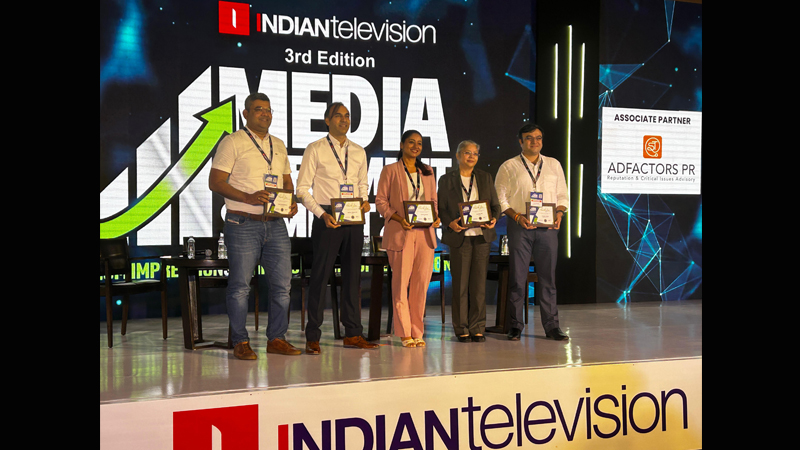
    MUMBAI: In a world of swipe-right consumption and split-second brand switches, loyalty is less about freebies and more about frictionless delivery. This was the consensus at Indiantelevision.com’s Media Investment Summit 2025 during panel six, ‘Decoding the Evolving Indian Consumer: What Drives Loyalty in 2025?’ Moderated by Omnicom Media Group India CGO Anand Chakravarthy, the session dissected how Indian consumers are thinking, buying and staying (or straying) from brands today.

    Featuring voices from pharma, beauty, wellness, QSR, BFSI, and heavy industry, the session proved that while brand allegiance may be waning, there’s a silver lining for those who can predict—and personalise—customer moments with precision.

    Mahuya Chaturvedi of Century Paper framed loyalty as a “contract between buyer and brand”, akin to dating in a pre-app era. “It used to be purer”, she quipped, “fewer choices, fewer distractions. Now the moment that contract’s terms aren’t met—customers walk”.

    She argued that brands must over-index on at least one pillar—price, performance, trust, or experience—to sustain recall. “In commoditised sectors like paper, scientific selling and product knowledge—not the product itself—drives repeat”, she noted.

    Sayantani Das of Jumboking Burgers traced loyalty’s new anatomy, “It used to be about NFM (Net Frequency and Monitored value); now it’s about emotional bandwidth and physical availability”. She shared that metro station outlets triggered repeat behaviour simply by being the default option. “Loyalty is no longer a campaign, it’s a commuter habit”, she said.

    For the healthcare crowd, loyalty isn’t convenience—it’s consequence. Pulak Sarmah of Sun Pharma stressed, “Consumers don’t obsess over brands like we do. They want reliable solutions. If Saridon says pain goes in five minutes, it better work in five”.

    Ritu Mittal of Bayer Consumer Health added, “People in pain don’t want to experiment. Trust runs through families. That’s loyalty you can’t buy—it’s earned over generations”.

    When discussing pharmacists’ roles in the ecosystem, she revealed how new launches like Saridon GO were backed by frontline chemist education. “Pharmacists aren’t just retailers—they’re trust brokers”, she said.

    Krithika Sriram of PLIX noted that loyalty no longer depends on product quality alone. “Those are hygiene factors now. If you’re not helping customers in their wider journey—through diet plans, coaching, or credible education—you’re just another supplement on a shelf”, she said.

    By offering custom meal plans alongside apple cider vinegar tablets, Plix increased stickiness without a discount in sight. “Transparency works”, she added. “We told consumers: nothing will change in seven days. Stick with us for 12 weeks—and it worked”.

    For Nishant Nayyar of Kaya, loyalty is about staying relevant—physically and emotionally. “We realised if you close a retail outlet, loyalty drops. We’ve learned to stay at a customer’s moment of truth for as long as possible”, he said.

    Kaya’s strategy involves using doctors as “influencers”, not celebrities. “Their authority on FDA-approved treatments becomes our marketing currency”, Nayyar explained. Kaya now releases digestible, science-backed video content to explain results without overwhelming jargon.

    Drawing from her past life in banking and insurance, panelist Anjali (ex-BFSI, currently at D2C firm Dana) recalled, “Customers hated that we only called them once a year—to sell a renewal”. Her team countered by building content-based engagement models to create consistent touchpoints throughout the year. “Loyalty in BFSI isn’t about points. It’s about not ghosting your customer”, she said.

    As the session closed, Chakravarthy prompted each panelist to finish the sentence: “In 2025, the future of loyalty lies with brands who…”

    Their answers said it all:

     .  “…stand for something and do more than transactional strategies” — Krithika Sriram

     .  “…solve real-life consumer problems and create moments of delight” — Nishant Nayyar

     . “…humanise science”— Ritu Mittal

     .  “…are radically transparent” — Sayantani Das

     .  “…are agile enough to evolve with each customer’s heartbeat” — Mahuya Chaturvedi

     .  “…offer extreme personalisation through AI” — Pulak Sarmah

    In short, loyalty isn’t dying—it’s diversifying. And in 2025, it seems you don’t own your customer. You earn them, repeatedly.

  • AI rewires adland: Programmatic performance is the new marketing must-have

    AI rewires adland: Programmatic performance is the new marketing must-have

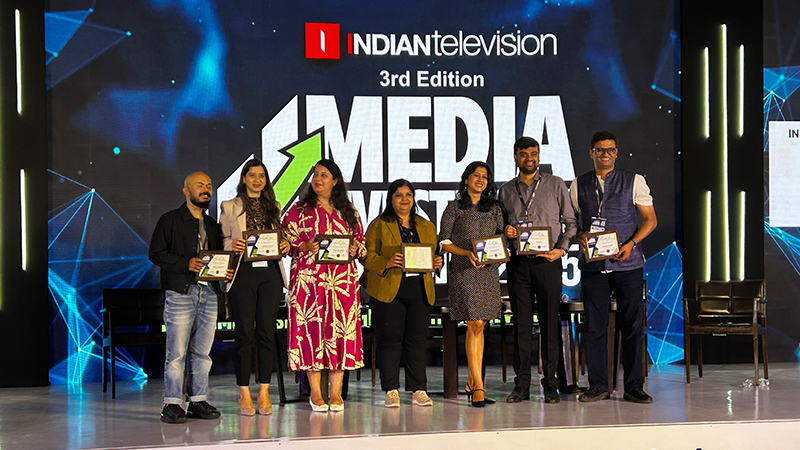
    MUMBAI: No bots were harmed in the making of this conversation—but several were summoned. At Indiantelevision.com’s Media Investment Summit 2025, the panel ‘The Future of Programmatic & Performance Advertising: How Smart Can AI Get?’ brought together a league of marketers who’ve all but handed over their media briefs to machine learning.

    Moderated by Deloitte south Asia ED Irvinder Ray, the session explored how programmatic advertising has gone from being a budget line item to becoming the spine of digital media strategy.

    Kotak Life Insurance EVP & head – digital business Prasad Pimple laid out the insurance conundrum, “Not all customers can buy all products. We filter prospects by income band, age, and even eligibility”. With such a defined funnel, precision targeting is critical. “Everything we do today is data-informed, whether the data comes from our CRM or platforms like Google”, he added.

    AI, for Kotak, is now part of the underwriting pipeline, campaign segmentation, and even voice-based customer profiling—making programmatic indispensable for performance and compliance alike.

    Fino Payments Bank head of marketing Prashant Choudhari backed automation with a marketer’s pragmatism. “At any given point, at least 50–60 per cent of my media budget is programmatic. It helps with frequency capping, cost control, and better storytelling”, he said.

    Choudhari explained how programmatic empowers smaller brands to punch above their weight. “It frees up time to work on narrative and creativity. Technology does the grunt work, and marketers focus on emotion”, he added.

    “Walking into a bar and being greeted by name is personal. Being handed your usual drink without asking—that’s personalisation with memory”, said PayU Payments head of marketing Argho Bhattacharya. He used the analogy to illustrate how programmatic media and zero-party data allow brands to predict—not just reflect—consumer needs.

    Bhattacharya cited how PayU moved from cohort-based messaging to individual targeting. “We no longer set campaigns by clusters. We do it by individual intent”, he said, citing PIN-code-level targeting for telecom dealers and energy providers, which delivered a campaign click-through rate (CTR) of 2.9 per cent and a brand uplift of 25 per cent.

    Sachdeva also introduced the idea of always-on learning loops—real-time feedback mechanisms that adapt messaging based on ambient conditions like AQI, rain alerts, or commute times. “We don’t just predict needs. We mirror the environment”, he added.

    Blis associate director sales Ishika Sharma focused on creative optimisation and exclusion logic. “We ran a campaign where creatives changed not just by city, but by street, down to the PIN code”, she said. The campaign avoided targeting existing customers by mapping Wi-Fi footprints and excluding IPs already associated with a service.

    She warned against overstepping. “Too much targeting becomes surveillance. We must balance personalisation with respect”, she added.

    VDO.AI CBO Akshay Chaturvedi explained how AI helps balance brand building with performance. “We used AI to layer performance KPIs over branding campaigns, so nothing was wasted. A single video could deliver awareness and CTR”, he said.

    Chaturvedi also stressed multi-channel orchestration. “We use our own AI engine to decide what content to push where—Youtube, Zee5, Whatsapp, or the client’s CRM. It’s all synchronised”, he said.

    The panel agreed that programmatic has shifted from being a media tool to a business enabler. Whether it’s AQI-based insurance ads or pizza shops pinging you mid-commute, the future of advertising is smarter, faster, and sharper.

    As Ray concluded, “Tech can find the segment. But it takes human insight to tell the story. AI and marketers aren’t in competition—they’re co-authors”.

  • TV’s desi power play: How regional storytelling is uniting a billion hearts

    TV’s desi power play: How regional storytelling is uniting a billion hearts

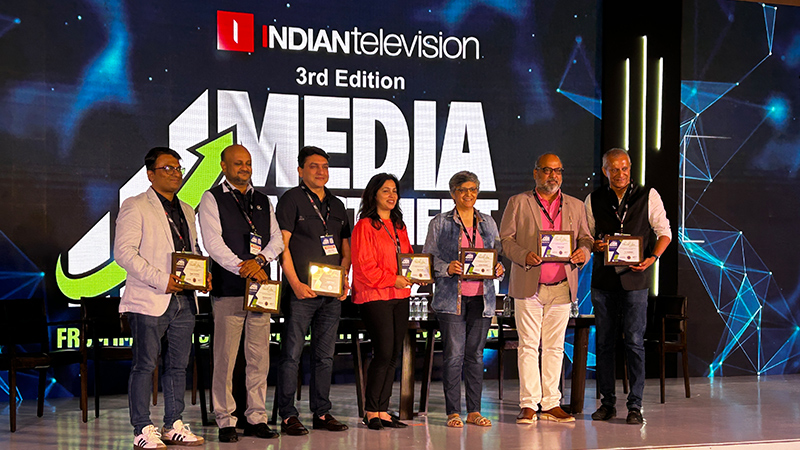
    MUMBAI: At the 2025 edition of the Media Investment Summit by Indiantelevision.com, a potent mix of data, drama and desi sensibilities took centre stage. In a session titled ‘From Regional to National: How Television Unites & Influences Billions’, top executives from insurance, FMCG, media, and broadcast peeled back the layers of India’s most underrated soft power—television.

    Chaired by Tam Media Research CEO L V Krishnan the panel drove home a core truth: in a country as complex as India, regional is not a stepping stone to national—it’s the soul of it.

    Zee Entertainment chief growth officer Ashish Sehgal opened the session with a clear stance on storytelling. “We’re looking at a command-level segmentation exercise in a vast, culturally diverse country. The same storyline can vibrate differently across states, languages and values”, he said. The key, he noted, was not translation—but transcreation. What works in Maharashtra needs rethinking for Manipur.

    Sehgal highlighted how television continues to command trust, “People spend more time watching TV in the living room than browsing online in isolation. That communal screen-time is where influence breeds”.

    Britannia GM – media Riya Joseph added flavour with paint ads and biscuits. “If we use one ad template for Rajasthan and another for Karnataka, we’ve already lost the battle. Paint colours, biscuit flavours—even the tone of a jingle—need localisation”, she said. In Joseph’s world, the biscuit is serious business. “The challenge isn’t just shelf space—it’s shelf recall in a noisy media universe”, she added.

    Britannia’s hyperlocal campaigns often start as social experiments and end up earning massive engagement with minimal media spends. “When we celebrated pronunciation quirks around ‘croissant’, it went viral. Because it came from their lives, not ours”, she quipped.

    For insurance brands, the entry barrier isn’t price—it’s comprehension. “In a culturally vibrant and diverse country like India, where every corner celebrates its own festivals and traditions across different languages and cultures, marketers have a unique opportunity to connect deeply with consumers through festive storytelling. These festivals, rich with emotion, symbolism, and values, offer a goldmine of inspiration— but to create an impact that lasts, the story must not only reflect the festive spirit but also stay true to the brand’s core message.”, said Edelweiss Life Insurance CMO Abhishek Gupta.

    Gupta pushed for story-first advertising. “Across India, every region holds real stories of loss, hope, aspiration and renewal. These aren’t fictional narratives—they’re lived realities. Marrying those with brand promise creates resonance and trust”, he said, adding that regional storytelling builds both loyalty and local advisory networks.

    Shemaroo Entertainment business head – Hindi GEC Sagar Hosamani leaned into faith-based programming as a vehicle for localisation. “Every festival must reflect the cultural nuance of its origin. Devotion isn’t one-size-fits-all”, he said.

    Hosamani highlighted that storytelling isn’t just about language but ritual, colour, iconography and emotional pace. “If we shoot a Navratri segment in Mumbai and call it pan-Indian, we miss the mark. It must feel local to be loved nationally”, he said.

    Madison Media Sigma CEO Vanita Keswani offered a sharp media planner’s take, “There’s no ‘national vs regional’ anymore. It’s both. Every brand plan today has multi-layered targeting—regional, hyperlocal, and mass”.

    Measurement, she stressed, is now possible down to the taluka level. “We can measure Sun TV’s performance in Madurai versus Chennai versus Coimbatore. From search queries to WhatsApp bot data, the tools are in place”, she added. Keswani emphasised that regional content is increasingly outperforming national content in engagement-led metrics.

    Live Times founder Dilip Singh closed the discussion with a rousing pitch for television’s credibility. “There are 400-plus channels in India, yet audiences still turn to TV for breaking news. During high-stakes events, TV rooms become war rooms”, he said, citing the post-India-Pakistan strike coverage where mobile viewership dipped but TV soared.

    Singh called for fact-first newsrooms. “It’s not about being the fastest. It’s about being the most accurate. Truth is our only product”, he said.

    All panellists agreed that India’s complexity demands cultural fluency, not marketing convenience. As Sehgal concluded: “You speak my language, my brain listens. You speak my culture, my heart responds”.

    At a time when digital fragmentation is rising, the session underscored how television—through regional storytelling—remains India’s most unifying screen.

  • Personalisation gets a makeover at Media Investment Summit 2025: Brands speak human in the digital age

    Personalisation gets a makeover at Media Investment Summit 2025: Brands speak human in the digital age

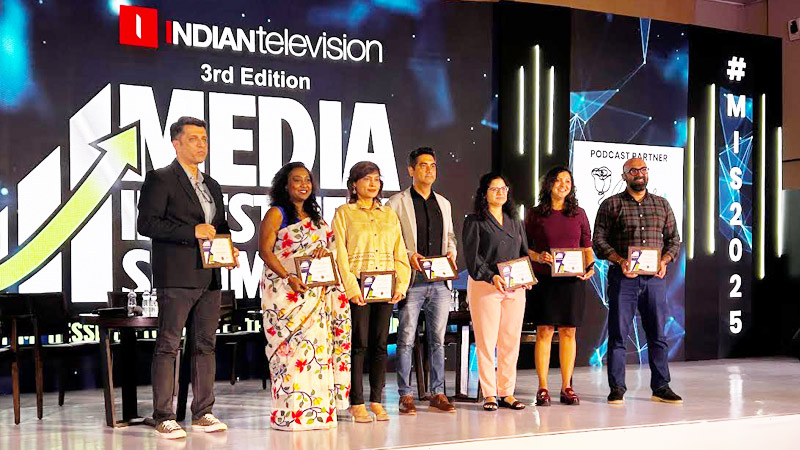
    MUMBAI: It was anything but business as usual at Indiantelevision.com’s Media Investment Summit 2025. The curtain rose with a compelling session titled ‘Panel 1: Building Personalised Brands in the Digital Age’, where marketing mavericks laid bare the future of branding—minus the fluff, minus the spam, and all about relevance.

    Moderated by Giri Digital Solutions director of content & new media Abhishek Prakash the panel saw brand leaders unpack the hard truth: personalisation is not a “nice to have”—it’s the survival toolkit in an age of shrinking attention spans and overflowing feeds.

    “Personalisation has evolved beyond just calling someone by their first name”, opened Prakash. “In our YouTube MCN, we work with creators and brands to develop narratives that reflect emotional resonance, not robotic targeting”.

    Cipla director & head of growth & omnichannel marketing Aditya Das stressed the human side of data. “For Cipla, hyper-personalisation begins with understanding pain points, not just segments. The focus is on emotional connection across every patient touchpoint, and data is only as good as the insight it brings to the doctor’s table—or app”, said he.

    Table Space CMO Megha Agarwal believes workspace personalisation is not just physical but deeply experiential. “Data without empathy is surveillance. Empathy without data is guesswork. For us, the coffee machine remembers the CEO’s latte, not the advertising copy”, she said. Agarwal laid out how real estate branding is not just pre-sale persuasion but post-sale retention, with employee satisfaction now a key conversion metric.

    “Attention is the currency today”, said Bharti AXA Life Insurance deputy VP marketing Harshita Hemnani. In a life-decision industry like insurance, relevance and purpose matter more than ever. “We’re not just selling policies—we’re helping customers meet life aspirations”, she added. Hemnani outlined four pillars of personalisation—technology, empathy, intelligence, and creativity—highlighting that only when all four converge does a brand message land meaningfully.

    Mahindra Holidays & Resorts VP – customer operations Shweta Srivastava stressed the role of immersive content and brand storytelling. “It has to be emotional”, she said, citing Google’s viral 2021 ad on partition reunions as a case study in storytelling with soul. She also touched on the power of augmented reality (AR) in helping customers visualise their dream holidays, saying, “It’s not fiction. It’s functional”.

    Tata Realty marketing head – west & south zone Kiran Bhambani argued that in commercial real estate, brands are not just selling square footage but a daily experience. “Our job is to reduce attrition, not just sell walls”, she said. Using virtual tours, voice-led campaigns, and CRM automation, Tata Realty now offers clients an office that listens before it speaks.

    Business Standard VP – marketing head Moneesh Chakravarty warned against drowning in dashboards. “If spreadsheets could make decisions, we’d all be billionaires”, he joked. His mantra: marry intuition with insight. “You need to treat media not as traditional or digital—but as responsive”.

    In their final remarks, panellists urged marketers to stay human in their automation. As Prakash put it: “Don’t just personalise—empathise. Make the algorithm feel like a friend, not a stalker”.

    Srivastava summarised it with flair: “Personalisation is no longer about inserting names in emails. It’s about making people feel seen and heard—consistently, contextually, and with care”.

    With that, the panel set the tone for the summit—personalised branding is not about shouting louder. It’s about speaking clearer and closer to the consumer’s heart.