Tag: Media Industry

  • HT Media’s Q2 report reflects continued losses amid revenue gains

    HT Media’s Q2 report reflects continued losses amid revenue gains

    Mumbai: HT Media Limited reported revenue from operations of Rs 42,375 lakhs for Q2 of fiscal year 2025, a 7.5 per cent increase over Q1 (Rs 37,851 lakhs) and a 7.6 per cent increase year-over-year from Rs 39,399 lakhs. This upward trend reflects the firm’s aggressive digital strategy and market resilience. However, operating costs outpaced revenue growth, with total expenses rising to Rs 48,867 lakhs from Rs 46,544 lakhs in the previous quarter, driven primarily by material costs, employee expenses, and finance charges. The escalating costs reflect broader inflationary pressures impacting raw materials and payroll, challenging HT Media’s path to profitability.

    For the six months ending September 2024, HT Media reported consolidated revenue of Rs 90,638 lakhs, marking a 3.9 per cent rise from Rs 87,215 lakhs in the same period last year. Yet, with rising operational expenses—particularly in staffing and other essential areas—the company recorded a net loss of Rs 5,695 lakhs. The quarter’s EBITDA (Earnings Before Interest, Taxes, Depreciation, and Amortisation) stood at Rs 3,273 lakhs, although the profit before tax was reported as a loss at Rs 939 lakhs.

    The financial report underscores challenges in key segments. HT Media’s print and publishing revenue contributed the lion’s share at Rs 33,420 lakhs, but radio broadcasting and entertainment and digital segments also demonstrated resilience. However, employee benefits climbed to Rs 10,923 lakhs in Q2, a 7.5 per cent increase over Q1, impacting bottom-line growth.

    In line with its strategic restructuring, HT Media has sought to cut liabilities, including the partial disposal of investment property and reclassification of assets held for sale. The company’s long-term liabilities fell from Rs 25,303 lakhs in March 2024 to Rs 20,849 lakhs in September 2024, aided by asset sales and targeted debt management.  

    HT Media reiterated its commitment to recalibrate its portfolio, focusing on emerging revenue streams in digital content and radio. These areas saw significant audience engagement, with digital revenue climbing to Rs 5,551 lakhs, an increase of 18.7 per cent over the previous quarter.

    Looking ahead, HT Media remains focused on capturing digital market share, leveraging its audience reach across diverse platforms. Key challenges remain in managing operational costs amid inflationary pressures and aligning revenue generation with sustainable profit margins. With a current liability ratio of 0.85 times, the company plans to optimise cash flow by driving operational efficiencies.


  • Zeel reappoints Punit Goenka as MD & CEO, eyes future growth

    Zeel reappoints Punit Goenka as MD & CEO, eyes future growth

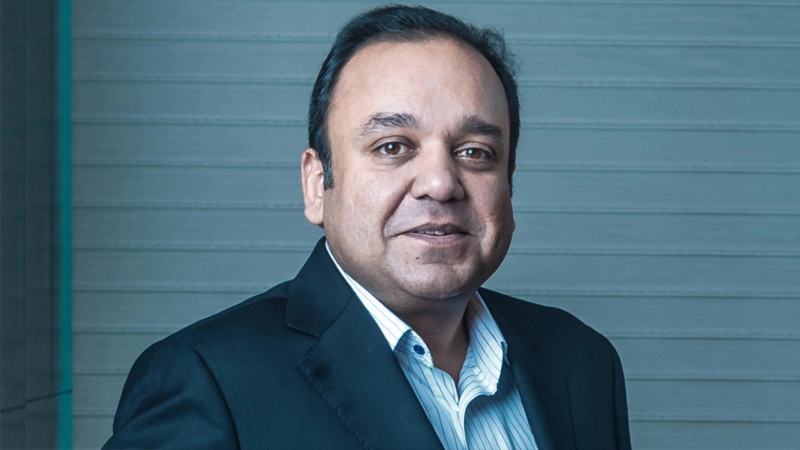
    MUMBAI: Abraham Lincoln once said, ‘Nearly all men can stand adversity, but if you want to test a man’s character, give him power.’ Embracing this ethos, Zee Entertainment Enterprises Limited (Zeel) reappointed Punit Goenka as MD & chief executive officer, reaffirming its commitment to leadership stability and growth. 

    With more than 25 years in the media industry, Goenka is set to lead the company for another five years, from 1 January 2025, to 31 December 2029, focusing on content quality and profitability. The board of directors’ approval on 18 October 2024, marks a strategic move to ensure continuity and enhance shareholder value.

    The announcement comes amidst Zeel’s ongoing transformation, with Goenka leading initiatives aimed at optimising operations and driving content excellence. Under his stewardship, the company achieved significant growth, expanding its footprint to over 1.3 billion viewers across 190+ countries. Zeel has become a diversified entertainment powerhouse, with strong positions in broadcasting, digital streaming, films, and music.

    “We are confident that Punit’s vision and leadership will continue to drive Zee forward,” stated a company spokesperson. “His ability to identify growth opportunities and strengthen Zee’s market presence has been instrumental in our success.”

    Goenka’s reappointment comes as ZeeL pursues a strategic growth plan focusing on frugality, optimisation, and content quality. In recent years, the company streamlined its operations into four main segments: broadcast, digital, movies, and music. By realigning its organisational structure, Goenka aims to boost productivity, promote cross-functional collaboration, and enhance profitability.

    His emphasis on efficiency extends to resource utilisation, with recent measures leading to a significant improvement in the company’s EBITDA margins. In the first half of FY25, Zeel, reported a year-over-year increase of 330 basis points in its EBITDA margin, highlighting the impact of effective cost management and strategic content investments.

    Goenka’s leadership has also guided the company through multiple industry accolades, including the broadcaster of the year award and recognition for treasury transformation initiatives. He has been a proactive figure in the entertainment ecosystem, contributing to regulatory and industry bodies such as the Indian Broadcasting & Digital Foundation (IBDF) and the Broadcast Audience Research Council (BARC).

    Looking ahead, Goenka plans to deepen Zeel’s content creation capabilities, focusing on delivering top-tier entertainment that resonates with diverse audiences. 

    “We are committed to creating stories that not only entertain but also drive positive societal change,” he said. Goenka’s strategy also includes furthering the company’s Environmental, Social, and Governance (ESG) efforts, which have recently centred on sustainable development and social impact projects.

    Zeel has made strides in mapping its ESG footprint, implementing programs for women empowerment, heritage preservation, and rural development. Under Goenka’s guidance, the company aims to reduce its environmental impact while enhancing governance practices through stakeholder collaboration.


  • DB Corp Q2 profit plunges 17.6 per cent; Radio segment shows resilience

    DB Corp Q2 profit plunges 17.6 per cent; Radio segment shows resilience

    Mumbai: DB Corp Ltd (DBCL) announced its financial results for the quarter and half-year ended 30 September 2024. DB Corp reported a 17.6 per cent year-on-year decline in net profit for Q2 FY2025, dropping to Rs 825.36 million from Rs 1,002.45 million a year earlier. The company attributed the weak performance to a high base effect and sluggish market activity exacerbated by an extended monsoon season.

    In the first half of FY2025, DB Corp’s total revenue grew by a modest 2 per cent year-on-year to Rs 11,988 million, supported by a high base effect from the previous year, where state elections had significantly boosted ad revenues. Advertising revenue showed minimal growth, rising just 1 per cent to Rs 8,291 million, as the impact of state elections in H1 FY2024 and national elections in H2 FY2024 continued to skew year-on-year comparisons.

    Total revenue for the quarter fell by 3.2 per cent to Rs 5,824.75 million compared to Rs 6,019.19 million in Q2 FY2024, primarily driven by a dip in advertising revenue, which slid 6.7 per cent to Rs 4,014 million. Circulation revenue also saw a slight decline, dropping 2.5 per cent to Rs 1,175 million.

    DB Corp MD, Sudhir Agarwal, remarked, “In Q2 FY25, we did not meet our revenue growth targets due to the extended monsoon season, which slowed market activity and consumer spending, coupled with a high base effect from Q2 FY24, an exceptionally strong quarter driven by state election advertising. However, we are confident in our growth trajectory as we adapt to current market conditions. Our Digital Business is thriving, with MAUs nearing 20 million as of August 2024, despite pilot monetisation. Our foundation for future success remains strong, backed by editorial excellence and robust advertiser support. As India’s economic landscape evolves post-elections, we are well-positioned to enhance stakeholder value and further cement our market leadership.”

    The company’s EBITDA also suffered, shrinking by 13.9 per cent to Rs 1,442 million, resulting in a 25 per cent EBITDA margin, down from 27.8 per cent last year. The decline in profitability signals challenges within the print media sector, where soft newsprint prices were not enough to offset the revenue slump.

    The radio segment emerged as a bright spot, with advertising revenue growing 16.3 per cent to Rs 414 million this Q2 FY2025. EBITDA in this segment increased by 22.3 per cent to Rs 132 million, demonstrating resilience despite broader market headwinds. DB Corp business recorded an 11 per cent year-on-year increase in advertising revenue to Rs 801 million, with EBITDA margins rising by 250 basis points to 33 per cent in H1 FY2025.

    Performance highlights for H1 FY2025:  

    – Total revenue increased by 2 per cent to Rs 11,988 million, compared to Rs 11,755 million.  

    – Advertising revenue grew by 1 per cent to Rs 8,291 million, up from Rs 8,247 million.  

    – Circulation revenue stands at Rs 2,367 million, compared to Rs 2,404 million.  

    – EBITDA rose by 10 per cent to Rs 3,351 million, aided by advertising revenue growth and effective cost control measures.  

    – Net profit increased by 12 per cent year-on-year to Rs 2,004 million, compared to Rs 1,790 million.  

    – Radio business revenue grew by 11 per cent year-on-year to Rs 801 million versus Rs 720 million.  

    Performance highlights for Q2 FY2025:  

    – Total revenue reached Rs 5,825 million, down from Rs 6,019 million due to a high growth base last year.  

    – Advertising revenue stood at Rs 4,014 million, down from Rs 4,301 million.  

    – Circulation revenue decreased to Rs 1,175 million from Rs 1,205 million.  

    – EBITDA fell to Rs 1,442 million with a margin of 25 per cent, compared to Rs 1,676 million.  

    – Net profit decreased to Rs 825.36 million from Rs 1,002.45 million.  

    – Radio business revenue grew by 16.3 per cent year-on-year at Rs 414 million versus Rs 356 million.  

  • I&B discusses strategies for unleashing M&E’s potential with industry experts

    I&B discusses strategies for unleashing M&E’s potential with industry experts

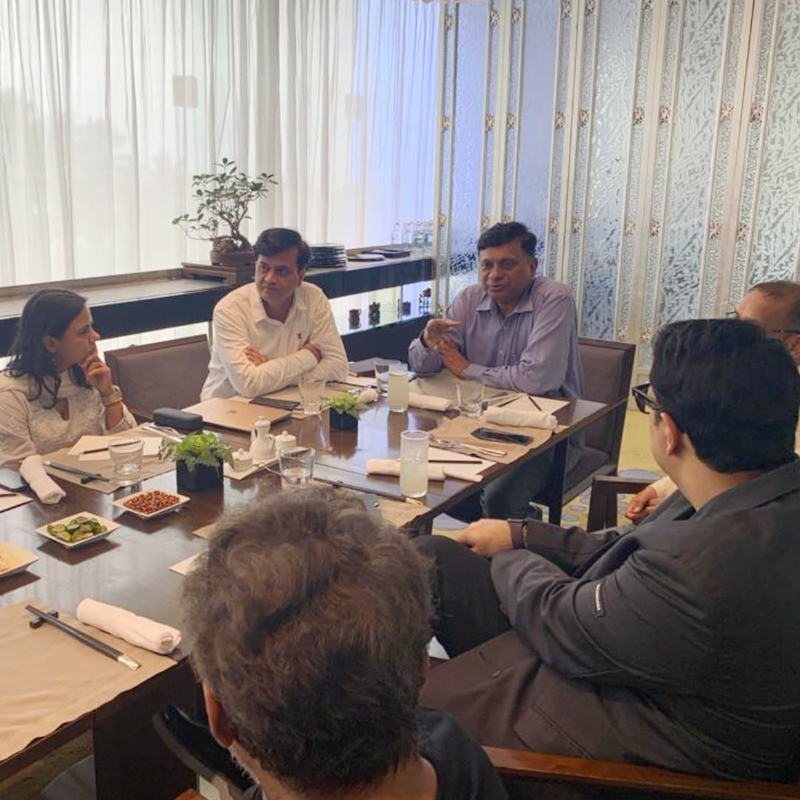
    Mumbai: Development of the audio-visual sector requires industry-friendly policies, collaboration, and regular interaction between the government and industry stakeholders.

    On Monday, a meeting in Mumbai was organised by the National Film Development Corp. where acclaimed filmmakers and industry professionals marked their presence, namely, Maddock Films founder Dinesh Vijan, Dharma Productions CEO Apoorva Mehta, Ayan Mukerji, R. Balki, Abundantia CEO Vikram Malhotra, Amazon Prime Video’s Gaurav Gandhi and Aparna Purohit, Netflix’s Monica Shergill, PEN India chairman Jayanti Lal Gada, Balaji Motion Pictures CEO Bhavini Sheth, Producers Guild of India president Shibasish Sarkar, Nitin Tej Ahuja CEO Producers Guild of India, and producers Mahaveer Jain & Madhu Mantena.

    The deliberations centred around the strategic initiatives taken by the government to unleash the potential of the media and entertainment industries. The I&B ministry’s efforts at easing filming in India through the Film Facilitation Office and the onboarding of Invest India to expand its outreach to the domestic and international industry were highlighted.

    The recently launched incentive scheme for international productions and official co-productions was discussed in detail, including the benefits it would bring to content creation in India. The industry was urged to leverage the FFO ecosystem and their suggestions on the incentives were duly noted.

    The government’s efforts to make the forthcoming 53rd edition of the International Film Festival of India a success were emphasised, along with the opportunities being created for the industry. Feedback was sought on the amendments made in the Draft Cinematograph (Amendment) Bill, 2021. The feedback received from the industry participants was positive and they unanimously accepted the proposed amendments.

    The stakeholders were also apprised of the ministry’s recognition of the industry’s concern towards theatre density in India and the consequent development of a single window ecosystem and a model law for the ease of permission for construction of screens/theatres was in progress. The attention of the industry was drawn to many other interventions being made by the Ministry in the audio-visual sector.

    I&B secretary Apurva Chandra summed up the discussion as fruitful and said, “The engagement with industry served as a perfect opportunity to apprise the various stakeholders of the efforts being made by the ministry to give an impetus to the film industry. The response from the participants was encouraging and we have urged them to leverage these various platforms to support our endeavour to make India a global content hub.”

  • Partha Sinha re-elected as The Advertising Club president

    Partha Sinha re-elected as The Advertising Club president

    Mumbai: The advertising, marketing and media industry’s apex body – The Advertising Club has announced the managing committee for the current fiscal at its 68th annual general meeting. Bennett, Coleman & Co., president – response Partha Sinha has been re-elected to lead the body.   

    “I am honoured to be re-elected as the president of The Advertising Club,” said The Advertising Club president Partha Sinha, speaking about the appointment. “In spite of being extraordinarily challenging, the last 24 months of the pandemic allowed us to innovate and deliver some of the most impactful engagement initiatives.”

    “From the first-ever online edition of the Effie awards that created a new benchmark for virtual events and the in-person emvies that was attended by 1,000 media enthusiasts, to raising the bar on Abby’s awards by associating with the One Show and collaborating with the United Nations on Unstereotype Alliance – the team exemplified excellence with each activity. I am thankful to the team we’ve worked with and look forward to working closely with them again to take The Advertising Club to newer heights,” he further added.

    The office bearers of The Advertising Club for 2022-2023 are president, Partha Sinha, vice president Rana Barua, secretary Shashi Sinha, joint secretary Mitrajit Bhattacharya and treasurer Dr Bhaskar Das.

    Managing committee members include Prasanth Kumar, Vikram Sakhuja, Ajay Kakar, Debabrata Mukherjee, Rahul Johri, Aditya Swamy and Manasi Narasimhan. In addition, the co-opted industry professionals include: Punitha Arumugam, Sonia Huria, and Pradeep Dwivedi

    The list of leaders who will continue to bring value to TAC through their expertise and deep understanding of the respective industry segments include Avinash Pant, Raj Nayak, Ajay Chandwani, Sapangeet Rajwant, Namrata Tata, Rathi Gangappa, Sidharth Rao, Alok Lall, Vikas Khanchandani and Malcolm Raphael. Partho Dasgupta will continue as a member of the managing committee as the immediate past president for the ensuing year, it added.

  • Varsha Ojha joins Shemaroo Entertainment as marketing head

    Varsha Ojha joins Shemaroo Entertainment as marketing head

    Mumbai: Varsha Ojha has been appointed as the head of marketing and communications at Shemaroo Entertainment.

    Varsha will take the lead in end-to-end marketing initiatives as part of her new position at the company. She will be in charge of brand strategy, digital marketing, and communication across all media channels.

    Varsha comes on board with almost two decades of rich experience across the entire gamut of the media industry. Previously, she was the head of marketing and digital at Radio City and Mid-Day. She has launched several industry-first initiatives and been the recipient of numerous awards for her campaigns. Varsha will be taking up the marketing responsibilities from Rahul Mishra as he has taken up a new role in Shemaroo heading the web3.0 initiatives of the organisation.

    Shemaroo Entertainment CEO Hiren Gada commented, “We are delighted to have Varsha onboard and welcome her to the Shemaroo family. Varsha comes with the same passion for entertainment as we all do at Shemaroo. Her proven expertise and high–performance track record, combined with her belief in the power of creativity will play a key role to take our brand a notch higher.”

    Varsha Ojha said, “Entertainment has been very close to my heart and being part of Shemaroo is going to be an exciting new phase for me. I admire brands that constantly innovate and evolve with time and it’s an honour to work with Shemaroo which has been entertaining India for the past six decades. I am thrilled to take this role and look forward to working with the dynamic team to steer the brand’s growth aligned with its overall ambitions.”

    Varsha has worked across media platforms ranging from print, TV, digital, and radio which includes Sony, Disney, Zoom, Hindustan Times amongst others.

  • MRUC India appoints Vivek Malhotra as additional director

    MRUC India appoints Vivek Malhotra as additional director

    Mumbai: India Today group chief marketing officer Vivek Malhotra has been sworn as additional director of Media Research Users Council (MRUC) India board. MRUC India is a not-for-profit industry body that produces research studies such as the Indian Readership Survey (IRS).

    Malhotra earlier served as a technical committee member on IRS published by MRUC which is considered the largest continuous readership research study in the world. He is a part of the technical committee of the News Broadcasting Association (NBA), an industry body representing the leading national broadcasters, and also the technical committee of TV audience measurement agency Broadcast Audience Research Council (Barc) India.

    Malhotra is a media veteran who has led the marketing and strategic planning divisions across print, television, and digital properties of India’s pioneering media entities. He has been associated with India Today Group since April 2016. Previously, he had stints with BloombergUTV, Star News, and CNBC TV18.

    MRUC India membership comprises broadcasters, publishers, agencies, advertisers and research universities with 150 members in total.

  • Media and Disability: How inclusive are our TV ads?

    Media and Disability: How inclusive are our TV ads?

    Mumbai: In yet another reminder of why we need to look beyond the label of ‘differently abled’, Indian athletes created history, by hauling 19 medals- their best ever- including five gold, eight silver and six bronze at the recently concluded Tokyo Paralympics. In a remarkable display of bravado, the Indian Paralympic athletes contingent even surpassed their Olympian counterparts, who also had their best outing this year.

    Perhaps this is the cue we need, to stop slotting people into the ‘disabled’ box, conveniently forgetting there’s a person behind the label. While this is true for all spheres of our lives, there is no dismissing the fact that mass media, such as advertising, wields the power to shift narratives around disability at a much wider and deeper level than other tools of communication. However, advertising featuring people with disabilities lags far behind, found a recently conducted study by the US-based data measurement firm, Nielson. An analysis of the firm’s Ad Intel data, that looked at nearly 4.5 lakh primetime ads on broadcast and cable TV in February 2021 found that only one per cent ads included representation of disability-related themes, visuals, or topics.

    Just three per cent of ad spend went to ads featuring disabled people or that were inclusive of disability themes in the creative, the study further noted. Most of the time, disability is absent from advertising, except when it’s focused on products that treat disabilities. Rarely do ads show disabled people in everyday life, such as working, parenting, household chores or enjoying activities, said the August 2021 report titled ‘Visibility of Disability: Portrayals Of Disability In Advertising’.  Pharmaceuticals, health care treatments, devices and similar categories made up nearly 50 per cent of the total dollars spent in disability-inclusive ads, the study found.

    While they study is primarly based in the US, the scenario would not be very different in the Indian advertising landscape. Today, as the world takes baby steps towards a more inclusive, diverse and woke representation everywhere, advertisers have the opportunity to showcase people with disabilities in everyday life, engaging with the products and services brands offer. And it can do this simply by better reflecting the real lived experience of people with disabilities.

    Some brands have managed to strike the right chord of empathy, without over-dramatising or trying to emotionally manipulate the audience. Google Photos had come out with a heartwarming real-life narrative of a visually disabled young man in 2016, who was about to undergo a corneal transplant and regain his vision after almost 15 years. The five minute film, created by Lowe Lintas, chronicled the journey of Amit Tiwari, a resident of Jhansi, who suffered from severe corneal dystrophy in both eyes, which left him almost completely blind when he was in high school. The film showed how with a little help from Google Photos’ image search and organisation features, Amit was able to rediscover all those memories he had been a part of, but missed out on seeing.

    Inclusivity, however, does not mean just an increase in representation in pharmaceuticals ads but across the category spectrum. While treatment and managing care are important aspects of living with a disability, an overabundance of these types of representations can reinforce stereotypes of people with disabilities. Hence, it’s important that life with a disability is portrayed as more than just prescriptions in creatives, by showing it as more relatable, while being realistic.

    The 2016 ad by KFC for the fast food company’s ‘Friendship Bucket’ managed to tick all the right boxes on this count. The ad for its Friendship Bucket, featuring a differently disabled person shows two friends sitting in a KFC restaurant communicating in sign language. The ad celebrates all ‘unique friendships’ in an adorably regular manner without much ado and with all the cheeky warmth of a true buddy, ending with a voice-over saying ‘Dost jitney alag hote hain, Friendship utni kamal ki hoti hai!

    Nestle too came up with an endearing ad for Nescafe coffee featuring a stand-up comedian who stammers in 2015, while an ad for Birla Sun Life had woven a story around a father and his autistic son. These are people who had, till almost a few years ago, seen no representation in mainstream advertising.

    When brands from a broader range of industries are more inclusive of disabilities in their creative, they help balance the narrative and normalise living with a disability. And when the ad gets it right with its intent and execution, it has an impact on all audiences, not just those living with a disability.  

    In recent times, JK Cement’s digital social media campaign titled ‘Yeh Yaarana Pucca Hai‘ comes to mind. The six-minute-long film takes an emotional route to deliver a strong message on the need to create an inclusive infrastructure for differently-enabled students and access quality education to all children by providing them with equal opportunities. Through this campaign, the cement brand makes an effective pitch to society that every child has the right to education and how each one of us, as responsible citizens, can ensure the same.

    The campaign was launched as part of a bigger initiative ‘Banaye Har Raah Aasaan’, where JK Cement built 251 ramps in one single day in schools across Jaipur, Rajasthan on 5 August.

    Hopefully, the next few years will see a much more varied and diverse representation of people belonging to all sections and from different walks of lives, so that these ads will no longer be seen as niche or exclusive, but as a part of life. However, for any communication to connect with its audience, it should either be relatable, tug at our heartstrings, jolt us from our cocooned lives, or at the least hit a chord somewhere within us. If not, it could come across as contrived or worse, as an attempt at commercialisation of a social cause.

  • Httpool India onboards Simran Bedi as partner director

    Httpool India onboards Simran Bedi as partner director

    India: Httpool, an Aleph Holding company and global partner of major media platforms, on Thursday announced the appointment of Simran Bedi as partner director for India operations. She will report to Httpool India, managing director, Amit Gupta.

    Bedi has over 18 years of experience in the media industry, including revenue generation, digital shopping and commerce, business development, branding, and experience with core branding solutions. Before joining Httpool, she worked at Publicis Media, responsible for leading buying and trading for the supply-side and leading affiliate business.

    “As we prepare to exponentially scale the Httpool India business for the past one decade, one of our key areas of focus has been securing the right talent. Simran comes with a wide-ranging and in-depth experience of proven success across geographies, including India,” said Amit Gupta. “Her hands-on approach and wealth of experience in trade and agency partnerships and media planning will allow us to continue delivering demonstrable value to our partners both on the platform and demand side. We are looking forward to the next stage of our journey together with Simran.”

    Speaking on her new role, Bedi said, “Httpool represents some leading media platforms, each having a distinct value proposition to meet advertiser demands and KPIs. Responsible for revenue growth across multi-platforms in the Indian market along with trade partnerships in the Asia Pacific region carries the highest responsibility, and I am determined to exceed the expectations.

  • Edelweiss bearish on Q3 performance of media industry

    Edelweiss bearish on Q3 performance of media industry

    MUMBAI: Financial services conglomerate Edelweiss is bearish on the third-quarter performance of the media industry. The firm has predicted it to be one of the toughest quarters for the industry with a  decline in both revenue and EBITDA. The report has also suggested that ad growth of broadcasters is likely to be under severe pressure due to an economic slowdown and high base while subscription revenue growth for broadcasters is likely to remain robust owing to the new tariff order (NTO).

    The report anticipates ZEEL’s Q3 revenue, EBITDA and PAT to decline by 5 per cent, 22 per cent and 21 per cent YoY respectively. It has also predicted advertisement revenue to decline owing to the economic slowdown, cutback in ad spends by large categories like consumer goods, auto, telecom and retail and withdrawal from the FreeDish platform. However, it belives subscription revenue growth to remain roboust owing to the tailwind from NTO and viewership gains in portfolio channels.

    “Amidst this challenging environment, we expect ZEEL's revenue to decline 5 per cent YoY, with domestic ad revenue declining 13 per cent (on a base of 22 per cent) and subscription revenue growing ~19 per cent YoY (on a base of 29 per cent). We expect EBITDA margin to contract ~630bps YoY owing to decline in ad revenues,” it added.

    It anticipates SUN TV Network’s Q3 EBITDA and PAT to decline by 12 per cent, 26per cent and 15 per cent  YoY respectively. Sun TV Network’s ad growth likely to be impacted by the broad-based ad slowdown and increased competition in regional markets. On the other hand, subscription revenue growth is likely to remain robust in the quarter as well.

    "Overall, we anticipate SUN TV’s revenue growth to decline 12 per cent YoY on account to dwindling ad revenue and absence of movie release (blockbuster movie in the base – Sarkar). Advertising growth for the business is expected to decline by low to mid double digit YoY. Subscription growth expected to be 16 per cent in Q3FY20 on a base of 24 per cent (9 per cent growth in DTH; 40 per cent in cable). The production business did not have any releases this quarter. We estimate EBITDA to decline 26 per cent in the wake of weak ad revenue growth and increased investment in fresh programming for SUN NXT and other tele channels,” the report adds.

    At the same time, it predicts a flattish performance of DTH operator Dish TV as well. Moreover, the pressure on subscriber addition and ARPU is predicted to remain given stress in rural economy and migration of customers to the FreeDish platform. Overall, a fall of 4 per cent qoq in both revenue and EBITDA, while ARPU is likely to decline at Rs 108, as per Edelweiss estimates.

    After a transform change last year with the roll out of NTO, the Telecom Regulatory Authority of India (TRAI) has released a few amendments to the new price regime very recently. While the proposed changes are beneficial for customers, broadcasters’ subscription growth could slow down due to the price revision as the financial services group suggests at the same time.

    While the amendments are consumer friendly, the report suggests that the new guidelines can lead to reduction in end-consumer ARPUs owing to the constraints placed on – bouquet discounting , price-linked bouquet inclusion of channels, and cap on the network capacity fee. However for broadcasters, this could lead to slowdown in the subscription revenue growth in the NTO as the prices are likely to come down.

    “On the flipside, we might also see – i) increased offtake of channels due to the downward price revision. ii) Migration of FreeDish customers to pay TV which could partially offset the slowdown in subscription revenues,” it adds.

    “Q4FY20 to be impacted marginally due to these amendments as they are effective from 1 March 2020. Overall, this is likely to be potentially negative for broadcasters given – ad revenue growth has been sluggish and resumption looks challenging; larger portion of growth for broadcasters in FY20 had been driven by the subscription revenues. However, in the long run, this would have a positive impact for the  broadcasters, as this reduces the OTT migration risk by reducing the price differential,” Edelweiss points out.