Tag: Media HR Summit

  • Video and Broadband Summit 2019 to discuss way forward with NTO & changing digital landscape

    Video and Broadband Summit 2019 to discuss way forward with NTO & changing digital landscape

    MUMBAI: How is the new tariff order (NTO) impacting the broadcast and video distribution landscape in India? How can broadcast networks effectively partner with LCOs and MSOs to successfully navigate the post-NTO environment? These are some of the key themes which will be discussed at the Video and Broadband Summit 2019.

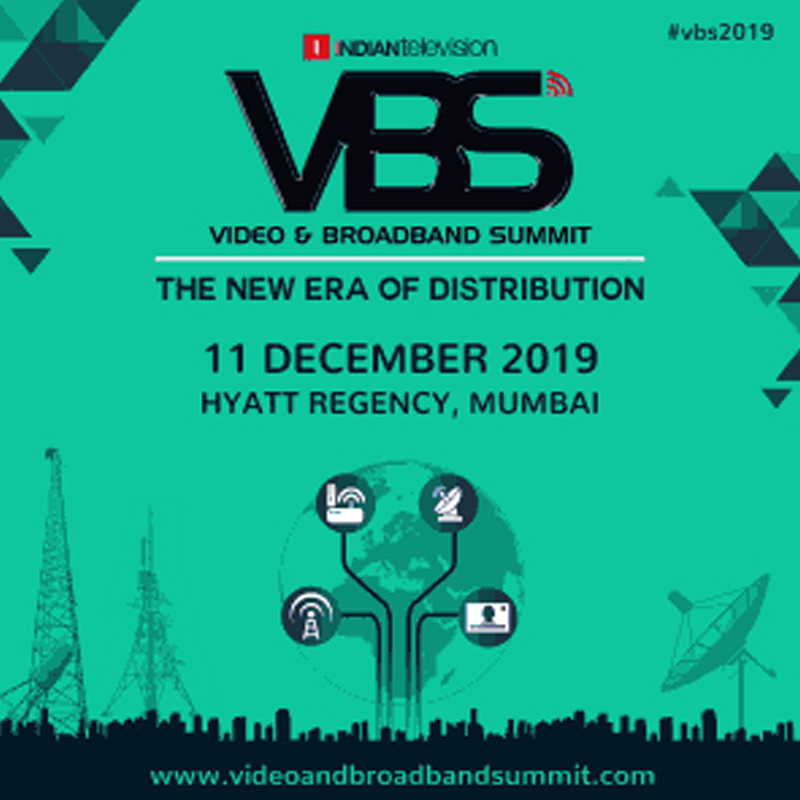
    Running in its sixteenth year, the summit will be held in Mumbai on 11 December and will bring together stalwarts from television broadcasting, internet and distribution sectors under one roof to discuss and deliberate key issues facing the sector and recognise the accomplishments of key stakeholders.

    Over the last one-and-a-half-decades, VBS (earlier IDOS) has grown to become India's definitive Pay-TV and video distribution get together. However, this year’s summit is critical given that 2019 has witnessed some of the most fundamental changes in the pay TV and broadcast industry.

    While, on the one side TV networks, LCOs, MSOs and DTH players are still adjusting to the fundamental changes introduced by the NTO – described by many as the most significant reform in broadcast TV in decades – on the other, India has seen exponential growth of OTT players. Together, these changes will fundamentally alter how Indians consume entertainment in the years to come.

    If these changes were not enough in themselves, the telecom and internet distribution sectors are also undergoing fundamental changes. While, the entry of Reliance Jio Fibre has not proved to be the ultimate disruptor industry experts were expecting it to be, the recent Supreme Court ruling on the AGR (adjusted gross revenue) issue, asking telecom companies to pay Rs 92,000 crore has considerably dampened the industry sentiment and can negatively affect their ability to raise funds for broadband, network expansion and digital India.

    Not surprisingly, since the Supreme Court ruling, all major telecom operators in India, ranging from Airtel, Vodafone Idea and Reliance have announced mobile tariff charge hikes by as much as 20 per cent. Given that Airtel and Reliance are also deeply entrenched in providing broadband services, any tariff hike can impact broadband penetration as well.

    The delegate profile for this year’s VBS is a reflection of the concerns facing the industry. As many as 60 per cent of the participants in this year’s VBS will be LCOs, MSOs and distributors, while 15 per cent delegates will be coming from broadcast networks including Star India – also a summit partner. Significantly, 25 per cent of the delegates this year will come from telecom, broadband, technology and data platforms. Without doubt, apart from getting the industry perspective on various issues ailing the industry as well as future opportunities, the summit will also provide an excellent opportunity for networking between the various stakeholders in the media and entertainment industry.

    Some of the key sessions in the summit will be:

    • Free To Air: The roadmap ahead
    • NTO: The future roadmap; TRAI consultation paper and how will the amendments to the existing tariffs play out?
    • Transforming the sector to fuel growth: What are the key issues facing the sector? How can more transparency and discipline be injected into it?
    • The distribution challenge: How are distribution companies innovating to stay ahead of the curve? What measures are they adopting to counter relentless disruption?
    • Internet: The changing role in video distribution
    • Role of the LCO: How has the role of the LCO changed under the new regulatory framework and its significance going forward? 
    • The advertisers’ view: Advertisers’’ view on dynamic Pay-TV landscape and how AdEx is likely to fare going forward with more changes anticipated to the NTO.

    To discuss all these relevant issues, the summit has also lined up a distinguished panel of more than two dozen speakers. Among them are:

    The VBS summit is an initiative of Indiantelevision.com. Started in 2000 by media and television analyst Anil Wanvari, Indiantelevision.com is the first online information and interactive service focusing on the Indian television and media business. Indiantelevision.com organises close to a dozen events every year, among them are The Indian Telly Awards, Tele-Wise Tamil, Media HR Summit, Brandvid Awards, Vidnet, The Indian Telly Technical Awards, and The Content Hub.
     

  • Inclusivity makes a strong business case for media companies

    Inclusivity makes a strong business case for media companies

    MUMBAI: In the last few years, diversity and inclusion have caught heightened attention in organisations across the world. Although diversity is less of a concern for media companies, inclusion is what needs to be addressed. The motive behind this should its relevance today and the impact it has on business.

    At the recently concluded Media HR Summit hosted by Indiantelevision.com, a panel discussion moderated by D&I evangelist and founder and MD Vividhataa, Diversity Hiring Consultants Ratnaprabha Sable revolved around the issues regarding D&I. Voices of Inclusion author Deepa Shankar, Mondelez International diversity and inclusion lead (independent consultant) Priyadarshini Gupta, NeoSeven Solutions global HR expert Monika Navandar took part in the discussion.

    Gupta explained that diversity is about having diverse perspectives, thoughts and viewpoints on the table while innovating something or creating a new product, service or working together, collaborating. According to her, having diverse thought processes on the table is important.

    Talking about the need for diversity in an organisation, she also said that a diversity agenda should have a business case for it. She gave the example of an American KPO that was investing a high amount of money in training employees in the age group of 22-25 who would end up leaving the organisation in less than a year. Instead, it started recruiting retired people with the necessary skill sets for whom skipping jobs or moving high or quickly in their career did not matter. As a result training cost reduced significantly impacting topline and bottom line of the organisation.

    “Inclusion is about what I am doing in order to help a talent who has been brought back into the system to make them feel they belong to the organisation and the person thrives and grows,” Shankar commented. She also added that inclusion is also about policies which support the diversity agenda.

    Navandar contradicted a point from another session where panellists made a point about having tech and analytical skills. According to her, people should play to their strengths as there are so many other jobs.

    While there’s a common tendency of discussing only on gender-specific issues, it came out during the discussion that diversity moves beyond this. The panel also discussed the issue of unconscious biases which even sometimes affects recruitment processes.

    In the context of the media and entertainment industry, it was agreed that diversity is not a big concern there but inclusion needs to be worked upon such as accepting smokers and non-smokers, people who have alcohol vs those who don’t have. More importantly, Sable highlighted the need for backward integration. She contended the importance of creating jobs for people with disabilities, acid attack victims and mental health issues. According to her, organisations need to identify jobs where these people can be placed in or trained for.

    The media industry has the advantage of having different sets of people compared to other industries. Moreover, multicultural workforce brings out multicultural content making the business case strong for diversity agenda. However, looking at supplier, product and service delivery diversity along with consumer diversity is also important while working. Hiring a diverse slate of people and recruiting from different industries, not just from media will also enhance diversity.

  • Integrating data analytics, combining diverse generations are challenges for HR department of media cos

    Integrating data analytics, combining diverse generations are challenges for HR department of media cos

    MUMBAI: The digital transformation has not left any niche behind, even if it is the human resources department of the media and entertainment industry. HR has moved far beyond backend and soft skills; data analytics is now in a crucial position.

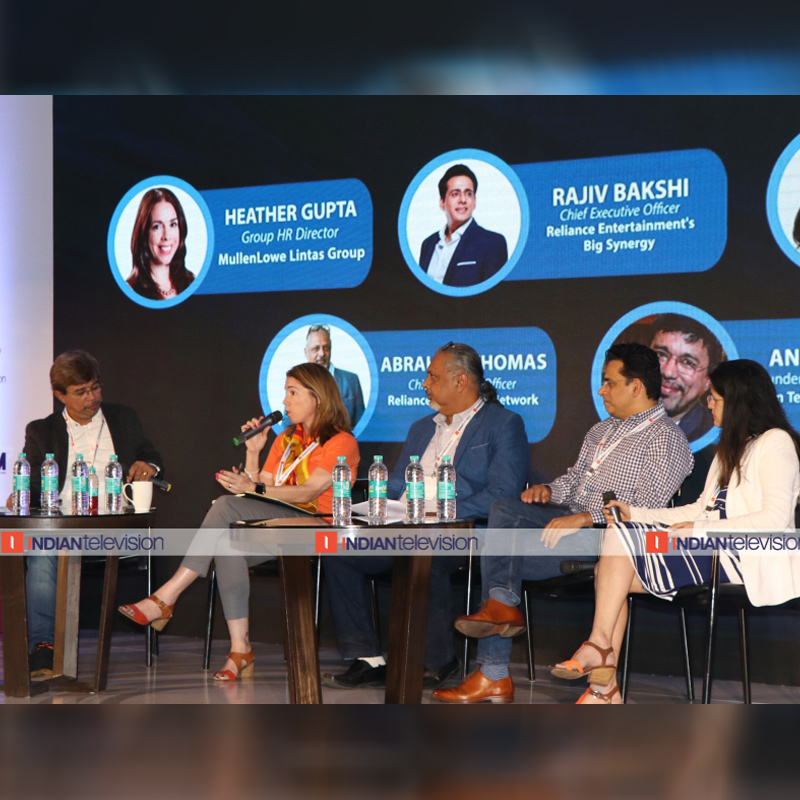
    Indiantelevision.com founder, CEO and editor-in-chief Anil Wanvari held a session “Responding to megatrends” in its first-ever Media HR Summit. MullenLowe Lintas group HR director Heather Saville Gupta, Reliance Entertainment’s Big Synergy CEO Rajiv Bakshi, Madison World executive director Lara Balsara Vajifdar and Reliance Broadcast Network Ltd CEO Abraham Thomas participated in the panel discussion.

    MullenLowe Lintas’ Gupta said that the media industry is most dynamic. Other industries do not have to deal with such face-paced movement. Adding to this, Thomas said, “Two disruptions which have actually changed our lives as consumers and professionals are digital disruption and the huge societal change that has come upon us. We currently have almost five different generations working together.”

    According to Thomas, the role of HR has become a watchdog looking for trends and insights in the industry. The HR department is like a composer, trying to scale the company goals. Thomas is of the view that HR role has suddenly become front-end and frontline. He opined that with digital, HR is the other important buzz word.

    Bakshi added that while that bastion was held by the word ‘transformation’ for the last three years, now HR has arrived to play the role of not just a partner but also an anticipator. HR has to anticipate business trends for the survival of the company.

    “HR is very important for the agency as our business is all about people. HR is not just the HR head’s responsibility; it is each and every senior management’s responsibility especially in an agency business which is full of young people coming with its own set of challenges,” Vajifdar said.

    According to her, media is getting a good share of young employees who are ambitious, impatient, have a sense of purpose for work and don’t want to listen to someone just because they are senior.  She said that they want their leaders to command respect not just demand and expect.

    Gupta’s company delves in producing 30-60 second TVCs where upscaling older employees is a challenge while millennials understand digital faster. Added to this are the budget constraints while hiring, training, recruiting and retaining employees due to smaller client budgets.

    Bakshi added that one major challenge the industry is facing is creating a value proposition which will attract multi-generation people. This means creating an organisation where there are stalwarts, experienced people as well as energetic youngsters who have to collaborate for the same project. He also added that HR needs personalisation with the help of data analytics. This can be done via customised training programmes and incentives.

    Experts also agreed that younger employees look for direct communication from authority to get a sense of what they are doing. Hence, taking out time for personalised informal communication without any agenda is important. Any key factor is HR management is to align personal goals with the company’s and get employees to look at the bigger picture with greater contribution to society.

  • Megha Tata on Discovery’s work culture, her leadership style, women empowerment

    Megha Tata on Discovery’s work culture, her leadership style, women empowerment

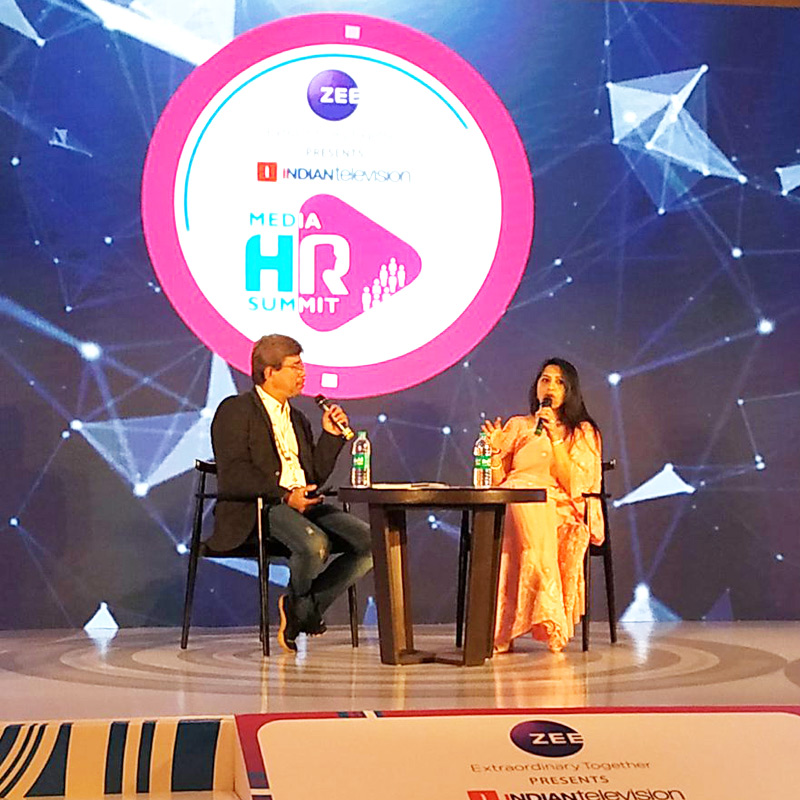
    MUMBAI: Megha Tata, a broadcast sector veteran, moved to Discovery in February 2019. Her arrival could come at no better time for the American broadcaster with special proposition genres looking at innovation for growth. At the stage of Indiantelevision.com’s Media HR Summit on Wednesday, she spoke of her leadership style, challenges she is facing as a leader and the company’s culture of treating employees during an engaging chat with Indiantelevision.com founder, CEO and editor-in-chief Anil Wanvari.

    “What excited me in this role is without a doubt the brand. Discovery is a brand I have grown up with not only as a consumer but also as an industry. Discovery India has been here for 25 years and I have worked here for 28 years. So, both Discovery and I have grown together. So, I have a very fond connection and affinity to the brand,” said Discovery Communications India South Asia MD.

    When asked what qualities in her attracted a legancy brand like Discovery, she outlined a few probable reasons. The first was credible experience in the broadcast industry, second her leadership skills spanning previous experiences, and third her ability to listen and communicate properly, getting along with people easily, optimism, positivity and the networks she grew over the years.

    Yet to reach the 100-day mark with her new employer, Megha explained how Discovery’s onboarding process helped her grasp an understanding of the organisation in the first two weeks. She also added that it is not exclusive to the top executives but to every new hire.

    “I have been fortunate and privileged to have inheriting a fantastic leadership team and we all know any organisation is about people. It’s the people who either make or break the organisation. So, I am a big believer in that and I am a very people’s person and my job is to facilitate thinking and give them a direction and vision,” she pointed out.

    The former BTVI COO also spoke about the presence of women in the industry. 

    “I have been in the media industry for almost 28 years and I have seen the change which has happened when I was an executive to where I am today and many women have grown in this industry. They have grown in multiple departments, we have legal heads who are women and we have women in technical departments. In my previous organisation, we hired the first ever female technical engineer representing a news channel. Having said that, more women need to go out there and ask for what they want,” she remarked.

    She also added that a lot of women give up because of self-doubt. Hence, she suggested believing in oneself, acknowledging weaknesses while playing to strengths. According to her, asking for more is important as opposed to being subdued.

    In this milieu of flux which is happening with the changes, uncertainties and ambiguities, mobile, agile, and entrepreneurship-level thinking is needed in any organisation. One of the challenges, she feels, is the lack of talent to deal with this ambiguity. She said there is a limited talent pool as well as limited opportunities. Either you get experience or you get that agile thinking attitude but getting a combination is difficult, Megha argued.

    Talking about her leadership style, Megha said that she is not a micro-manger but needs be in the loop of the overall process. She likes to empower people she hires. The Discovery India topper said if someone has been hired for a certain goal, she believes in the person’s ability to deliver that particular goal. Trust is very important, she added.

    In the context of Discovery’s high focus on people and culture, she said that even the HR department in the company is called as ‘people & culture’. She also added that the culture of Discovery is about inclusiveness, diversity, creating an environment of trust and comfort within employees. She added that she does not have any intent to change that but enhance the exisiting processes.

    While Discovery’s growth slowed down in the recent past, she sees that challenge as an opportunity. Whether it is digitisation, NTO impact, leadership in the kids’ genre, Megha seems fearless. She also added that her aim is to grow the kids business to emerge as the top three player, along with having new d2c business that's on the anvil.

  • Media HR Summit deep dives into emerging trends, work culture & HR tech

    Media HR Summit deep dives into emerging trends, work culture & HR tech

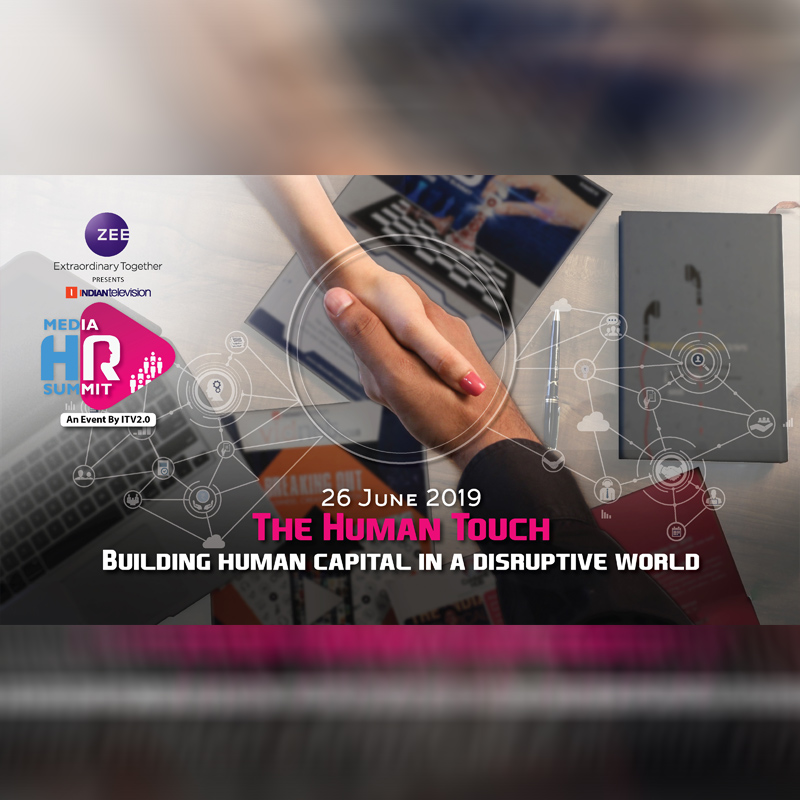
    MUMBAI: Indiantelevision.com hosted the first-ever Media HR Summit in partnership with ZEE in Mumbai on 26 June at The Westin. The day-long conference concluded with some insightful discussions around how corporate and HR leaders are steering media companies into the future on the back of good teams, HR analytics, diversity and inclusivity at the workplace.

    The conference was divided into four sessions, three fireside chats and three presentations related to work culture, emerging trends in HR, employee engagement models, future-focused people strategies, changing nature of employment amid the rapid changes in the media and entertainment industry.

    Indiantelevision.com founder, CEO and editor-in-chief Anil Wanvari set the tone for the day with his welcome note. He argued that the media and entertainment industry has never been full of so many opportunities. At the same time, he added that it is facing challenges in terms of talent acquisition and retention. Wanvari pointed out that the human resources department has never been given the due it deserves, highlighting the key reason behind the summit.

    Following the welcome address, Indiantelevision.com CEO moderated a session titled “Responding to megatrends”. MullenLowe Lintas group HR director Heather Saville Gupta, Reliance Entertainment’s Big Synergy CEO Rajiv Bakshi, Madison World executive director Lara Balsara Vajifdar, Reliance Broadcast Network Ltd CEO Abraham Thomas participated in the panel discussion.

    During the hour-long panel discussion, the point about the media industry getting younger emerged as a key theme. All the panellists agreed that companies need personalised communication for millennial employees. However, as older generations also work at these companies, making a value proposition for all the age groups was deduced as a challenge. Moreover, speakers stated that. with the rapid change, HR has moved beyond a soft skill or a backend process. On the other hand, digital transformation is also affecting the sector and data is becoming more important day by day.

    The next item on the agenda was a fireside between Shemaroo Entertainment Ltd director Jai Maroo and Wanvari. Shemaroo has been an excellent example of evolving over the years with new entrepreneurial ideas. While the company is going through a rigorous change, Maroo mentioned key winning traits every company needs to follow – putting people first including employee, vendor, clients; the ability to reinvent when needed; seeing where the company is standing at the ecosystem, value chain. While it has unleashed a 5x transformation plan, getting the HR team aligned with that is a key challenge.

    That was followed by another interesting fireside chat between Discovery Communications India South Asia managing director Megha Tata and Wanvari. Tata who has been one of the few women leaders in the media and entertainment industry outlined the reasons as to why women find it hard to shatter the glass ceiling. She noted that the ecosystem may not have been supportive of women who are rising through the ranks. The veteran media executive added that women also give up halfway through their journey due to various reasons.

    Moderated by KPMG India people and change associate director Ajay Venkatesh, the next session revolved around a very compelling topic – building a great team. ABC Consultants FMCG, Internet, Media, and Development Sector director Deepika Ramani, Balaji Telefilms Ltd group head HR Ashish Pinto, Jagran Group head HR Sagorika Kantharia, VATS Consulting founder Vikas Vats, and Saregama India Ltd general manager HR Sonalika Johri took part in the discussion.

    The speakers articulated how different strokes should be used for different folks while hiring. All the experts also agreed that agility and an analytical bent are having a big impact on business. However, companies also need to look at how they use the analytics, the panel said. While digital transformation is already happening, cross-scaling talent is also important, concluded by the speakers.

    The conference further continued with a presentation by Publicis head HR Nikhil Natekar on “Future focused people strategies”. He spoke about cultural evolution, diversity inclusion, skill-based hiring and growth path for Gen Y who are going to be future leaders. He then sat down for a chat with She means Business content creator and workshop facilitator Dipika Singh.

    VATS Consulting’s Vikas Vats presented his thoughts on 'Future of Indian HR in the Digital Age'. He highlighted that there are times when HRs need to work like CEOs. He also added that while using technology is important, focusing on people is more important.

    The events of the day progressed with the session “Tackling the tech leap” moderated by HR Sampark founder and national president Ashish Banka. Reinova Biz director HR Shubham Tripathi, Dentsu Aegis Network South Asia head HR business partner Sunil Seth, Associate Professor at Department of Applied Psychology, University of Mumbai Vivek Belhekar, Consultant Analytics Rajesh Save participated in the panel. The panelists agreed that adopting and adapting technologies is very important. While HR was late to join the party of analytics, now both AI and ML have emerged as key requirements for the HR industry too. AI is now taking an active role in both hiring and firing. Belhekar and Save then gave a presentation on Artificial Intelligence in Human Resources.

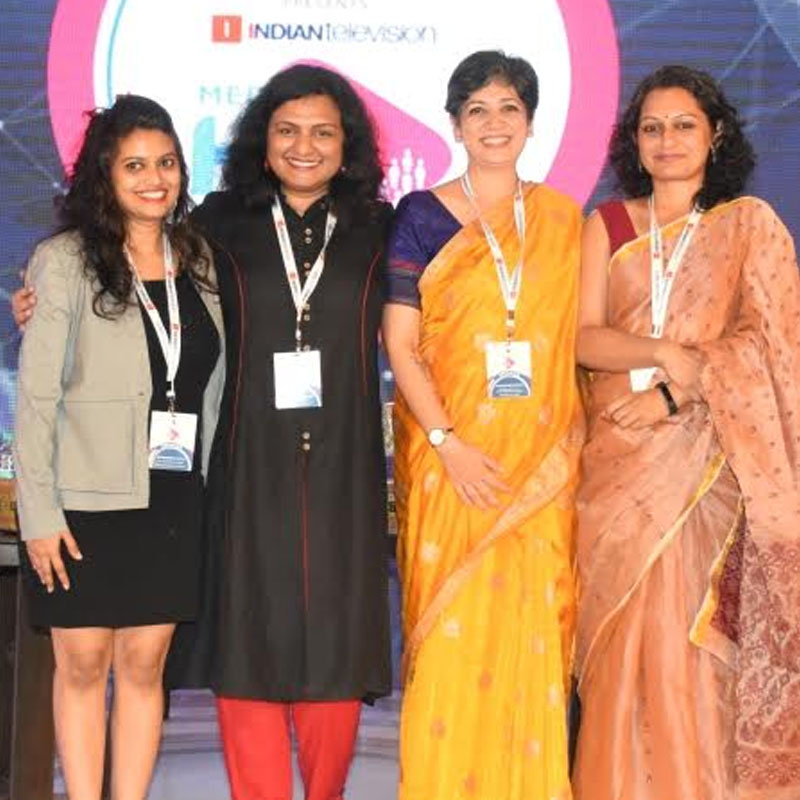
    The day ended with a compelling session on “Diversity, equity, and inclusion”. Part of the panel were Voices of Inclusion author Deepa Shankar, Mondelez International diversity and inclusion lead (independent consultant) Priyadarshini Gupta, NeoSeven Solutions global HR expert Monika Navandar, with D&I evangelist and founder and MD–Vividhataa, diversity hiring consultants Ratanprabha Sable moderating the session. While diversity is not a big issue in the media industry, inclusion is a big piece that is being worked around, the speakers said. The experts agreed that the media industry needs to be inclusive at little things. Moreover, the industry should also look at creating job opportunities for disabled people, acid attack victims, and mental health patients was an important point that was voiced during the session that kept the audience hooked on till the very end.

  • M&E thought leaders, HR heads to kick off first Media HR Summit

    M&E thought leaders, HR heads to kick off first Media HR Summit

    MUMBAI: The first edition of Indiantelevision.com’s Media HR Summit kicks off today with a stellar line up of thought leaders from India’s media and entertainment industry.

    With ‘Building human capital in a disruptive world’ as its theme, the day-long conference is an endeavour to delve deep into the challenges the M&E industry faces today and understand how corporate and HR leaders are steering their companies into the future as they seek to attract, develop and retain talent.

    The summit, organised in partnership with Zee, will comprise panel discussions, fireside chats and presentations.

    “The Indian Media & Entertainment Industry is at an inflection point where convergence, consolidation and technological innovations are reshaping all parts of the M&E value chain. The oft-repeated cliché “what got us here, won’t get us there,” has never been more relevant. Talent capability & availability both are amongst the biggest challenges we need to address to successfully navigate the emerging landscape. It is imperative that we build and retain a workforce that is ready for a generational shift in skills. We are proud to partner with Indiantelevision.com’s 1st Media HR Summit that aims to address these challenges and help HR leaders across sectors to share thoughts and perspectives on building a dynamic workplace in a digitally transformative world,” Zee Entertainment Enterprises Ltd chief people officer Animesh Kumar said.

    Some of the key themes that will be discussed at the Media HR summit will include culture and chemistry, emerging trends in HR, employee engagement models, building equity in the workplace, empowering a network of leaders, future-focused people strategies and changing nature of employment.

    The summit will see speaker representation across the M&E spectrum – broadcasters, media agencies, and production houses – as well as veteran HR leaders.

    Discovery’s Megha Tata, MullenLowe Lintas Group’s Heather Saville Gupta, Mondelez’s Priyadarshini Gupta, Publicis’ Nikhil Natekar, Dentsu Aegis Network’s Sunil Seth, Shemaroo Entertainment’s Jai Maroo among others will offer their insights into the changing HR dynamics during the conference.

  • ZEE partners with Indiantelevision.com for Media HR Summit 2019

    ZEE partners with Indiantelevision.com for Media HR Summit 2019

    MUMBAI: Since inception, Indiantelevision.com has always attempted to sincerely engage with India’s media and entertainment industry in a bid to offer innovative content and broaden the scope for dialogue. Extending this endeavor to a key sphere of the ecosystem, Indiantelevision.com is now putting together its first-ever Media HR Summit in partnership with ZEE, the title sponsor for the conclave.

    Media HR Summit intends to delve deep into the challenges that India’s M&E industry faces today and understand how corporate and HR leaders are steering their companies into the future as they seek to attract, develop and retain talent. ZEE, one of India’s biggest and most sought after employers, coming on board as the main partner further highlights the importance of this initiative and bolsters its credibility.

    “The Indian Media & Entertainment Industry is at an inflection point where convergence, consolidation and technological innovations are reshaping all parts of the M&E value chain. The oft repeated cliché “what got us here, won’t get us there”, has never been more relevant. Talent capability & availability both are amongst the biggest challenges we need to address to successfully navigate the emerging landscape. It is imperative that we build and retain a workforce that is ready for a generational shift in skills. We are proud to partner with Indiantelevision.com’s 1st Media HR Summit that aims to address these challenges and help HR leaders across sectors to share thoughts and perspectives on building a dynamic workplace in a digitally transformative world,” Zee Entertainment Enterprises Limited chief people officer Animesh Kumar said.

    Media HR Summit, which is scheduled to take place on 26 June at The Westin in Mumbai, aims to tackle key themes like culture and chemistry, emerging trends in HR, employee engagement models, building equity in the workplace, empowering a network of leaders, future-focused people strategies and changing the nature of employment.

    The conclave features a stellar line of speakers and leaders that have shaped some of India’s finest organisations.  With participation from broadcasters, production houses, brands, media agencies and joint industry bodies, the Media HR Summit 2019 boasts representation across the M&E spectrum.

    Animesh Kumar, Discovery Communications India MD south Asia Megha Tata, MullenLowe Lintas Group’s HR director Heather Saville Gupta and Publicis’ head human resource Nikhil Natekar among others are some of the senior executives that will offer their perspective on the current landscape through panel discussions, fireside chats and presentations.