Tag: Media & Entertainment sector

  • India emerges as content hub: I&B ministry hosts WAVE Summit 2025

    India emerges as content hub: I&B ministry hosts WAVE Summit 2025

    Mumbai: India is positioning itself as a global content hub, with the Ministry of Information and Broadcasting spearheading initiatives to foster innovation in the broadcasting sector. The WAVESummit, scheduled from 5-9 February 2025, will challenge content creators with 27 unique opportunities, providing a national and international platform for talent showcasing and employment generation.

    On 17 October 2024, information and broadcasting minister of state, L. Murugan inaugurated a symposium on ‘Emerging Trends and Technologies in Broadcasting,’ hosted by the Telecom Regulatory Authority of India (TRAI) during the India Mobile Congress 2024. The event witnessed key addresses by industry leaders, including TRAI chairman Anil Kumar Lahoti, ministry of I&B secretary Sanjay Jaju, and TRAI secretary Atul Kumar Chaudhary.

    Murugan emphasised that India’s broadcasting sector is undergoing a transformative phase due to technological advancements. With the rise of social media, the landscape of content creation has dramatically expanded, turning India into a major player in the global content economy. “We live in a content-driven economy, and India is emerging as a content hub,” said Murugan. He also highlighted the government’s focus on promoting content production through a streamlined single-window system to enhance the ease of doing business, particularly in the AVGC (Animation, Visual Effects, Gaming, Comics) sector.

    Further supporting content growth, the union cabinet recently approved the auctioning of FM radio channels in 234 new cities, aiming to boost local content and create more employment opportunities. Murugan reaffirmed the government’s commitment to leveraging technological advancements to strengthen the broadcasting sector’s contribution to India’s economic and cultural development.

    Jaju, in his special address, emphasised the potential of digital radio and direct-to-mobile (D2M) broadcasting. He mentioned ongoing trials conducted by Prasar Bharati in collaboration with IIT Kanpur and Saankhya Labs, aiming to deliver content directly to mobile devices using low- and high-power transmitters. Jaju also underscored the transformative potential of 5G technology, particularly when combined with immersive media such as augmented reality (AR) and virtual reality (VR), which could redefine the content consumption experience.

    The symposium also focused on discussions around strengthening the regulatory framework. Chaudhary highlighted the necessity of adapting regulations to meet emerging technological needs. He noted that today’s discussions aim to shape future policies that ensure a balanced and inclusive broadcasting ecosystem.

    Lahoti highlighted the booming growth of India’s media & entertainment sector, projected to reach Rs 3.08 trillion by 2026, driven by new media platforms and immersive technologies. He reiterated TRAI’s commitment to fostering innovation through forward-looking regulatory recommendations.

    The symposium explored the future of immersive technologies, D2M, and 5G broadcasting. The event featured over 100 national and international participants, with expert speakers from various industries, including broadcasting and telecommunications.
  • We should aim for the M&E industry to grow more than $100 bn by 2030: I&B secretary at Ficci Frames Fast Track’ 22

    We should aim for the M&E industry to grow more than $100 bn by 2030: I&B secretary at Ficci Frames Fast Track’ 22

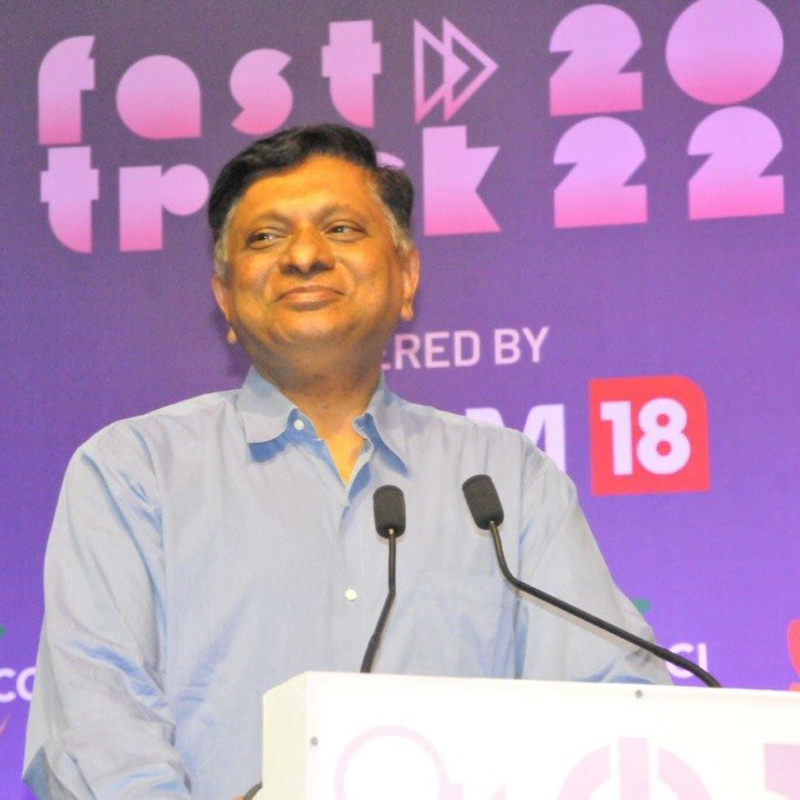
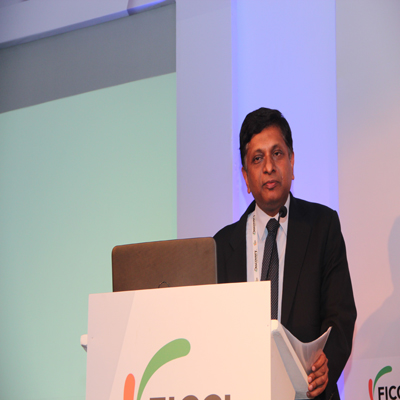
    Mumbai: The union secretary for information and broadcasting Apurva Chandra has exhorted the media and entertainment industry to set a target of growing the industry to more than $100 billion by the year 2030. “India will be a $10 trillion economy in the next ten years. We should aim for a media and entertainment industry worth more than $100 billion by 2030. The ministry of information and broadcasting will do whatever it takes to support the M&E industry and help it grow.” The secretary was addressing the inaugural session of Ficci Frames Fast Track 2022 in Mumbai on Tuesday, 27 September 2022.

    The secretary announced that Invest India is going to be leveraged in order to bring in higher foreign investment into India in the film sector. “The ministry has merged various film units under one; NFDC, based in Mumbai, is going to be the hub of the cinematic arm of the government. With this, we want to revamp the Film Facilitation Office. We are going to hand this over to Invest India, the main investment arm created by the government under the leadership of prime minister Narendra Modi to attract industry to India. More than $100 billion of FDI is coming to India this year. We want to leverage Invest India to bring in foreign investment. We will reach out to foreign filmmakers to come to India.”

    The secretary informed that the government will work with states to facilitate and promote film shooting in India. “We recently announced an Incentive Scheme for Audio-Visual Co-production and an Incentive Scheme for the Shooting of Foreign Films in India at the Cannes Film Festival. With incentives given by states too, it becomes a viable and attractive package for filmmakers.”

    The secretary announced that the government of India will work with the states and formulate a ‘Model Theatre Policy.’ “Over the past five-six years, the number of theatres has been on a decline. We need to reverse this trend. We will assign the Film Facilitation Office to work with Invest India to come up with a single-window portal for opening theatres, so that more and more theatres can come up and the public can get more avenues to watch the magic of films in theatres. We will also work with the states to create a ‘Model Theatre Policy,’ so that the states can adopt and work on the same.”

    Observing that viewing habits of people have changed due to the Covid-19 pandemic, the secretary noted that when ticket prices were brought down to Rs 75 three days ago, all shows were full. “This shows that if price points are right, people can afford theatres. The craving to go to the theatre is there, so we need to work on how we can bring people back to theatres.”

    The secretary said that he had a fruitful meeting with some stalwarts of the film industry on Monday, on the proposed amendments to the Cinematograph Act. “All stakeholders present supported the proposed amendments for the introduction of anti-piracy provisions and age classification with the UA category.” With the support of the film industry, we hope to table the amended bill in the winter session of parliament, he added.

  • Maharashtra govt proposes tax exemption for AVGC sector in state

    Maharashtra govt proposes tax exemption for AVGC sector in state

    MUMBAI: The Animation, Visual Effects, Gaming and Comics (AVGC) sector in Maharashtra is in for some treat. The sector, which so far has gone unnoticed in the state, has finally got itself a space in the fourth IT Policy, which will be sent to the Cabinet soon.


    “I agree that the state has so far not focussed on the Media & Entertainment (M&E) sector,” said Government of Maharashtra principal secretary-industries Apurva Chandra at FICCI Frames 2015.


    According to Chandra, AVGC is a part of the IT sector and hence has been included as a sub-section in the soon to be submitted IT Policy. “The perception is that the state is not friendly to the sector and we aim at shedding that with this policy,” said Chandra.


    Chandra agreed that the AVGC sector, which was once strong in Maharashtra has been overtaken by Bangalore, where the government is taking several initiatives. “We would like to bring more AVGC centres into the state,” he added.


    Maharashtra has the right ecosystem, the creative people and robust IT set up, which can give a boost to the AVGC sector.


    One of the major points, which have been covered in the proposed policy is that of entertainment tax. The policy provides doing away with three kinds of taxes:


    · Entertainment tax exemption for movies 100 per cent made in Maharashtra.

    · Giving 100 per cent exemption from entertainment tax to animated movies, which have been converted from 2D to 3D in the state.

    · 100 per cent tax exemption to live action movies, which minus the opening credits and end credits, has 50 per cent visual effects during the running time of the movie.


    The AVGC policy also contains the provision for AVGC parks. “As part of this, all the incentives given to IT Parks will be made available to AVGC Parks. One such is the integrated IT Township, which will also become an integrated AVGC Township. Under this any land, whether it is private or public, above 10 hectare can be cleared as IT or AVGC Township. In this township, 60 per cent of the land will be for industrial moves like setting up studios and 40 per cent will be open to all. Above all a higher FSI (floor space index) would also be given. This can bring a lot of discipline not only in IT but the AVGC sector as well,” informed Chandra.  


    AVGC centres will also be promoted in cities of Maharashtra through several incentives. “We will be providing financial support and are proposing a corpus fund of Rs 50 crore through the state government. In terms of clearance also, the state government is ready to support,” he added.


    The policy also proposes a certification charge refund from the agencies. “Capital subsidy for larger AVGC centres will also be given,” he informed.  


    The National Centre of Excellence, which was announced by the Finance Minister in Delhi has also been proposed to the Maharashtra government. The Media and Entertainment Council is currently working closely with the Information and Broadcasting Ministry and other state governments to facilitate this for Maharashtra.