Tag: Media companies

  • BrandVid – Can a brand become a media company?

    BrandVid – Can a brand become a media company?

    MUMBAI: Traditional media companies today have a very diverse story and narrative no matter what the subject. A consistent story is shared across paid, earned and owned media. However, media companies are more than that today. They create programming and/or distribute it. They also share the content via various media channels.

    But what we’ve been increasingly seeing is that brands have now started to become media companies by creating and distributing their in-house content. 

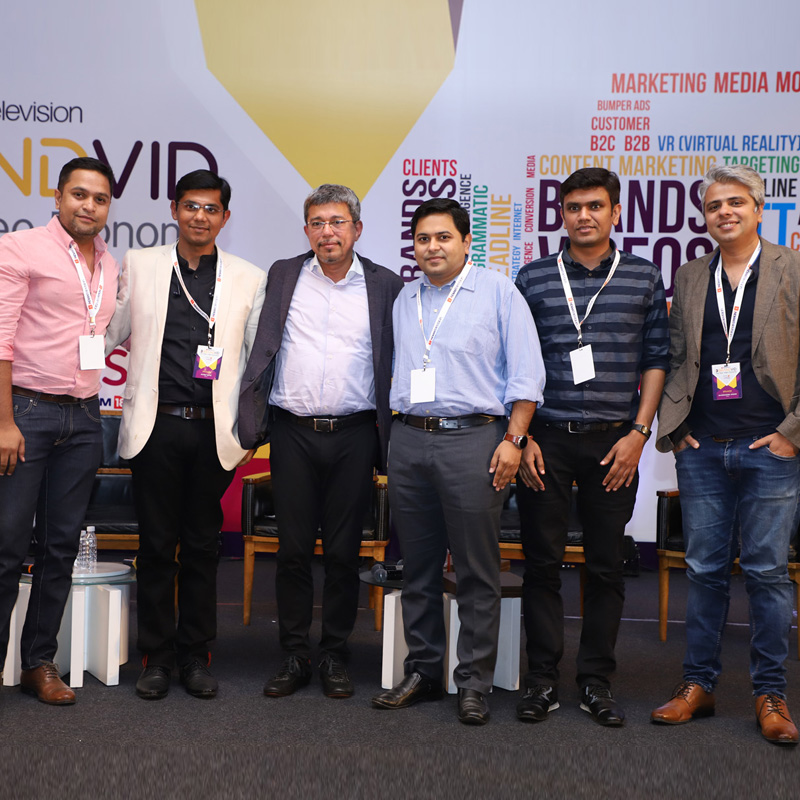
    It is challenging for a traditional agency to sustain and survive in a competing environment like this. But is there a way where brands, agencies and publishers can co-exist and collaborate? Well, that was precisely the topic of discussion at BrandVid 2018, powered by Colors. The session saw industry leaders discuss on whether a brand can after all become a media company. And if yes, how can they monetise their assets. 

    Clearly disagreeing with the proposition, Firstpost business head of revenue & strategy Anurag Iyer believes that the objective of becoming a media company and becoming a brand are completely different. He said, “Redbull as a business looks at its studio business as a separate entity and has great traction back to its website, but does its film on adventure and sports result in more Redbulls being sold? I don’t think so! But does it have a great brand rub off with their audiences? Absolutely!”

    On the other hand, Online Fashion portal Myntra is a brand as well as an e-commerce company that is also a media company to some extend as it creates in-house content. But does that mean it will become a full-fledged media company in the time to come? Probably! Myntra VP marketing Achint Setia is of the opinion that brands need to first figure out the role of content and the business objective. For a brand, its business objective is to drive revenue and sales and that’s where content plays a critical role. “Brands have a role to play in consumer’s mind and they should stick to that role. However, that role can get enhanced and more meaningful with the right use of content.”

    But while brands are struggling to find their sweet spot in the cluttered media ecosystem, there hasn’t been a better time for agencies as they get to have the cake and eat it too. Isobar Group MD South Asia Shamsuddin Jasani wants partake of that cake. Though it is a difficult proposition, big global brands want to monetise their content. Global FMCG giants Mondelez and Pepsi want 20-30 per cent of their spends to be recovered via video content and Isobar doesn’t want to miss out on that opportunity. 

    A lot of brands mistake content’s role in their business lifecycle. It is not about monetising content for the sake of it or about using content as an ROI drive. It is more about using content to have a deeper relationship with your community. 

    Shamsuddin said, "Big advertisers feel there is some monetisation that needs to happen and they are all grappling with how to create those monetisation opportunities. As an agency, we are working with brands to create those IPs. As brands, they will do it and as agencies we will have to do it because we don’t have a choice or they will push us to do it.”

    Although it’s a vicious and profitable cycle, but when does a brand pause, take a step back and think whether they are overstepping their business objective and should rather focus on sales and revenue? That’s exactly what Marico head of media and digital marketing Ankit Desai thinks. He believes it will be a few hits and a lot of misses for brands if they go the media company route. “While media companies can deal with many misses and start over again, it’s a different ball game for brands as it is linked back to business objective where you don’t have the option of repetitive failure since your marketing money will be wasted and that’s really the challenge.”

    Getting customer attention is a task for most marketers today. The millennial consumer will not stick to your content no matter how well made it is if it isn’t engaging and informative enough. It will take a lot of time for brands to understand the young customer of today. Agreeing that brands will become media companies in the future, Fastrack head of marketing Ayushman Chiranewala said that you cannot time when it will actually happen. He however thinks that it will come from a different business need which will be to be on the top of customer mind because getting the customer attention will only keep getting difficult in the future.

    Brands will become media companies in the times to come and there is no denying that but the timeline is likely to vary. For Myntra, it may happen in less than three years from now whereas Fastrack believes it will take five to 10 years. Interestingly, today content creators are also becoming brands in themselves. They create an IP and later sell products around the IP, eventually creating a brand. 

    All in all, maybe the world in the future will not be about everyone trying to do everything but about a lot of collaborations and partnerships. But every brand and creator should keep their minds open and think about consumer intent first.

  • Brightcove OTT Flow to democratize OTT services

    Brightcove OTT Flow to democratize OTT services

    MUMBAI – Brightcove Inc.  has launched Brightcove OTT Flow, a turnkey OTT solution for media companies and content owners everywhere to rapidly deploy high-quality, direct-to-consumer, live and on-demand video services across platforms. Developed in partnership with Accedo, OTT Flow offers an end-to-end technology solution via a simple, cost effective commercial model. With OTT Flow, Brightcove and Accedo dramatically lower the barrier to entry to starting a multi-platform OTT service, allowing organizations to take their content over-the-top in weeks rather than months.

    OTT solutions to date have often required multiple vendors and bespoke solution development for each platform, resulting in high upfront development costs, time-consuming implementations, and challenges maintaining and upgrading applications and platforms.

    “There is seemingly insatiable demand around the world for new video programming choices and the industry is rushing to meet that demand with new service launches. IHS is actively tracking well over 2,000 different OTT video and multi-screen deployments in 70-plus countries. With new players entering the market on almost a weekly basis, the timing has never been better for solutions that accelerate these service introductions,” said IHS Technology Consumer, Media, Telecoms & Displays, chief analyst and VP, Ben Keen.

    At its core, OTT Flow   will allow video content delivery with a consistent UX across multiple platforms, including desktop, iOS (smartphone & tablet), Android (smartphone & tablet) and Google Cast.  It will also provide support for ad-supported (AVOD) and subscription (SVOD) video on demand models with ecommerce, CRM, and billing engine interfaces.  Subtitle and caption support would be other added advantages. When it comes to pricing, companies setting up an ad-supported OTT video service can get started with OTT Flow at $0,000 per month. Organizations seeking to launch a subscription-based OTT service can begin at $15,000 per month.

    “Brightcove OTT Flow dramatically changes the dynamics of launching new OTT services, making OTT accessible to nearly any content owner. Combining Accedo’s multi-platform application expertise with our video platform and solutions capabilities, we are bringing to market  a turnkey solution that eliminates technical barriers  and simplifies the OTT cost structure for anyone seeking to take their content over-the-top. As media companies around the world seek to engage their audiences  and drive revenue, they can take advantage of OTT Flow as an easy and affordable path to quickly launch beautiful OTT services,” Brightcove medoia SVP and GM Anil Jain said.

    Brightcove Video Cloud integrated with Accedo App Grid® and VIA® GO with a  subscription management and payment processing for SVOD. It comes with   pre-integrated ad-serving support from Google DFP.

    “Consumer demand for great content available across multiple devices has been increasing dramatically over recent years. With that demand set to rise even further, media companies are looking for solutions to launch new OTT services easily and effectively while providing an attractive user experience. This joint solution enables them to meet that consumer demand and launch compelling services in a much shorter timeframe than ever before,” Accedo CEO Michael Lantz had commented.

    OTT Flow is priced to make setting up and operating OTT services an economic proposition that any serious content owner can embrace. By eliminating the need to invest significant capital in upfront development and platform costs, OTT Flow’s pricing model is designed to fit a customer’s operating model.

  • Brightcove OTT Flow to democratize OTT services

    Brightcove OTT Flow to democratize OTT services

    MUMBAI – Brightcove Inc.  has launched Brightcove OTT Flow, a turnkey OTT solution for media companies and content owners everywhere to rapidly deploy high-quality, direct-to-consumer, live and on-demand video services across platforms. Developed in partnership with Accedo, OTT Flow offers an end-to-end technology solution via a simple, cost effective commercial model. With OTT Flow, Brightcove and Accedo dramatically lower the barrier to entry to starting a multi-platform OTT service, allowing organizations to take their content over-the-top in weeks rather than months.

    OTT solutions to date have often required multiple vendors and bespoke solution development for each platform, resulting in high upfront development costs, time-consuming implementations, and challenges maintaining and upgrading applications and platforms.

    “There is seemingly insatiable demand around the world for new video programming choices and the industry is rushing to meet that demand with new service launches. IHS is actively tracking well over 2,000 different OTT video and multi-screen deployments in 70-plus countries. With new players entering the market on almost a weekly basis, the timing has never been better for solutions that accelerate these service introductions,” said IHS Technology Consumer, Media, Telecoms & Displays, chief analyst and VP, Ben Keen.

    At its core, OTT Flow   will allow video content delivery with a consistent UX across multiple platforms, including desktop, iOS (smartphone & tablet), Android (smartphone & tablet) and Google Cast.  It will also provide support for ad-supported (AVOD) and subscription (SVOD) video on demand models with ecommerce, CRM, and billing engine interfaces.  Subtitle and caption support would be other added advantages. When it comes to pricing, companies setting up an ad-supported OTT video service can get started with OTT Flow at $0,000 per month. Organizations seeking to launch a subscription-based OTT service can begin at $15,000 per month.

    “Brightcove OTT Flow dramatically changes the dynamics of launching new OTT services, making OTT accessible to nearly any content owner. Combining Accedo’s multi-platform application expertise with our video platform and solutions capabilities, we are bringing to market  a turnkey solution that eliminates technical barriers  and simplifies the OTT cost structure for anyone seeking to take their content over-the-top. As media companies around the world seek to engage their audiences  and drive revenue, they can take advantage of OTT Flow as an easy and affordable path to quickly launch beautiful OTT services,” Brightcove medoia SVP and GM Anil Jain said.

    Brightcove Video Cloud integrated with Accedo App Grid® and VIA® GO with a  subscription management and payment processing for SVOD. It comes with   pre-integrated ad-serving support from Google DFP.

    “Consumer demand for great content available across multiple devices has been increasing dramatically over recent years. With that demand set to rise even further, media companies are looking for solutions to launch new OTT services easily and effectively while providing an attractive user experience. This joint solution enables them to meet that consumer demand and launch compelling services in a much shorter timeframe than ever before,” Accedo CEO Michael Lantz had commented.

    OTT Flow is priced to make setting up and operating OTT services an economic proposition that any serious content owner can embrace. By eliminating the need to invest significant capital in upfront development and platform costs, OTT Flow’s pricing model is designed to fit a customer’s operating model.

  • 2010 will be known as the year of radio -By ENIL CEO Prashant Panday

    2010 will be known as the year of radio -By ENIL CEO Prashant Panday

    The way the world changed in the first decade of the 21st century can be gauged by the year-end covers of two prominent magazines. Time Magazine (Dec 7th issue) called this decade the “Decade from Hell”. In contrast, Business Today‘s cover (Dec 27th issue) called this decade “India‘s best decade.” Clearly, the center of gravity of the world of business has shifted towards the East!

    While Indian industry battled the slowdown of 2009 rather bravely, and the Indian economy still grew at over 7 per cent, the advertising industry wasn‘t that lucky. As the downturn hit the ad industry, the bean counters took over and the focus of CEOs shifted towards management of bottom lines.

    The first item to be cut was obviously the advertising line. Most media companies – who rely heavily on advertising for revenues – saw revenue drops of between 5 and 25 per cent in the first nine months of 2009. While the last quarter of the year looks better, the overall growth in 2009 is still expected to end negative.

    There were more companies recording revenue de-growths than those recording positive growths. For every one Colors coming in and grabbing new revenues, there was a Star Plus and Zee that lost revenues heavily. The sum total: negative growth. Borrowing the terminology of business news channels, the “market width” was negative!

    The few media companies that recorded positive growths in revenues did so on the back of inorganic growth (some parts of the business did not exist last year). Or they were in the early part of their growth cycle (hence last year‘s comparative revenue base was small). In other words, the quarters were incomparable.

    Different media sectors exhibit different growth rates to “maturity” (time taken to grow to a reasonable size). My observation is that radio companies typically take three years to hit maturity – i.e. to max out on ad volumes. After this, revenue growth happens only on the back of pricing increases.

    In the case of newspaper editions, I am told this can extend for up to 10 years. Many Hindi publications (Hindustan for eg) have grown aggressively in recent years on the back of an increase in editions, and these editions obviously represent “inorganic” growths.

    In the case of TV, it‘s more complicated. With unhindered competition, it is difficult to say how much time a channel takes to maturity. A successful channel like Colors appears to be hitting mature levels of GRPs, ad volumes and revenues in record quick time. Another channel like NDTV Imagine still appears some distance away from that. The revenue growth of Colors should be seen as inorganic growth.

    In 2009, almost all “mature” companies experienced air-pockets in their path, and saw revenues tank. The notable exception? Sun TV of course! This one behemoth – much like China – continues to grow with scant regard for the problems the rest are facing!

    How did media companies react to this slowdown? In the most obvious way. Cutting costs. Payroll, marketing, programming, G&A, travel….even electricity were all cut to barebones levels. Headcounts were cut. Incentives were cut. Product companies cut back drastically on R&D (Consumers should expect to see a deficit of innovative products in 2-3 years time). Most media companies also took salary cuts. In the end analysis, anything that could be cut was cut. Today, media companies are structured like they should have been in the first place. Fit and ready to run the marathon!

    So the key question is: Is the worst behind us? Most would respond by saying: Yes. But is the worst really behind us? My strong suspicion is that we have now recovered from last year‘s levels, but are still a few months away from a real recovery. Real turnaround could be delayed till August-September of 2010 (next season). Most media companies are recording growths on year-on-year basis post November 2009 (low base effect of 2008). But how many are recording growths compared to two years back? Very few. Reversing this 2-year decline will take time and I see that happening only by August-September 2010. The pain will continue longer!

    The key challenge for the media going forward in 2010 is managing ad pricing. Pricing has taken a huge hit in 2009. Average media pricing is down by about 25 per cent as advertisers asserted themselves on the back of negative sentiments. To be fair, most advertisers have had big savings in 2009. Media companies have co-operated wholeheartedly as the businesses of their clients got hit.

    As client businesses revive, our hope is that inventory pricing will climb back to at least 2008 levels, if not higher. Now the media companies are looking for an appropriate quid pro quo!

    The second challenge is managing the bottom line as the markets recover – and as costs start to surge. One of the key costs to be cut in 2009 was payroll cost. Now with the media markets opening up, there is a huge pent-up pressure on payrolls that needs to be released slowly. Companies will have to be careful in rewarding key people – while still keeping overall payroll budgets in check. Likewise, programming and marketing costs will tend to surge. Not to mention travel and the G&A.

    Keeping a focus on costs will have to continue for at least another full year if not longer. A connected challenge is one of holding on to key people. As the market booms, there is always a willing “buyer” of managerial and creative talent!

    To be sure, 2010 will be a better year than 2009. There is no doubt about that. At least in terms of profitability. Hopefully, media companies will go back to putting some of that profitability back into what is required for long-term growth: Brand building, programming, training…I also expect that there will be a large number of M&A deals in 2010 and beyond.

    The crippling impact that 2009 had on the weaker players could put many of them on the block. With the stock markets willing to bet again on the more profitable media companies, there should be a large number of deals fructifying. In the TV space, hopefully, some of these acquisitions will lead to an extinguishing of the channel! There‘s just too much unworthy stuff still being broadcast!

    I am quite sure that 2010 will be known as the year of radio. Phase III policy of radio reforms is around the corner. Hat‘s off to the Ministry of I&B for betting big on radio! If they announce the policy quickly, the auctions of as many as 800 channels in 300 new towns could well be completed in 2010 itself.

    And by 2011, the radio industry could start offering a serious alternative to regional print publications. With much economic activity expected in the smaller markets in the next decade, the potential for radio to become a far bigger medium is very tangible.

    But before the government thinks of growth, it has to address the “survival” question first. It‘s a known fact that the radio industry is bleeding from multiple cuts – and this has been going on right from its inception in 2000. With more than Rs 20 billion invested in just Phase II in One Time Entry Fees and capex, and more than Rs 5 billion of accumulated losses incurred in the last three years, there is no way the industry can survive. Unless the government chips in with support yet again.

    The radio industry has requested for the licence period to be extended from 10 years to 15 (if not 20). This would give them some time to get some returns on their capital. The other bugbear, of course, is music royalties.

    In most of the Phase III towns, there is simply no viability till the time that music royalties can become reasonable. In most developed radio markets, radio broadcasters pay up to 4 per cent of their revenues as music royalties. This is when more than 90 per cent of the population listens to radio every week. In India, we are requesting for the same – but scaled down to reflect the percentage of listenership that radio has at present. When radio listenership becomes 90 per cent in India, we are willing to pay 4 per cent then. This is a good time for the music industry to aid in the growth policies of the government. Can they accept this global benchmark for at least the new Phase III stations?

    If the radio industry survives (government extends licence period) and if music royalties are sorted out, it‘s possible that in the next few years, radio will become 8 per cent of the ad industry. It‘s my view that as soon as the government completes Phase III, it has the opportunity to immediately announce Phase IV. It should draw its attention back to the bigger towns and increase the number of channels to at least 25.

    If Colombo and Singapore can have 25 channels, why can‘t Mumbai and Delhi? There are, of course, the usual spectrum problems. The government needs to clean out the current “squatters” on the FM band. And demand more accountability from AIR – either they launch more channels of their own, or they make it available to the private sector. After all, air waves are public property – let there be good use of the same.

    If this happens, and if a multitude of programming formats becomes available, radio listenership will grow fast. And with that the share of radio could rise to upwards of 10 per cent of the total ad industry. Of course, there will be a lot more investment needed to be made – but if there is viability and a semblance of profitability, then the radio industry will not be found lacking!

    All in all, I expect the tide to change soon. I expect a lot more radio to become available in 2010 and then, again, going forward. The next five years could well be the most glorious years for radio – a great future….if, of course, it survives the present!
     

  • IPTV likely to generate significant revenue within first three years: Accenture survey

    IPTV likely to generate significant revenue within first three years: Accenture survey

    MUMBAI: More than half of communications industry executives believe that Internet Protocol Television (IPTV) can generate significant revenue within the first three years of service, according to findings of a survey released by Accenture and the Economist Intelligence Unit.

    The survey of nearly 350 executives from telecom, broadcasting and media companies across 46 countries in the US, Europe and Asia revealed industry-wide confidence in the longer-term outlook for IPTV, with 60 percent believing that IPTV will generate significant revenues within three years.

    However, confidence in the short-term outlook remains mixed, with slightly more than half (52 per cent) of respondents saying they are not confident in the ability of IPTV to generate significant revenues within the next 12 months. On the other hand, one-fifth (20 per cent) of respondents said they are confident or very confident, and more than one-quarter (28 per cent) said they are somewhat to fairly confident, that IPTV will generate significant revenues within a year.
    The report notes that the business case for IPTV, its value-added benefits and its potential remain strong. In the long-term, the key to achieving high performance through IPTV is to be visionary, ambitious and open to innovation from many sources. For the shorter term, the key is to quickly adapt to consumer feedback and jump over technology hurdles.

    When asked what they believed would be the principal revenue source for IPTV, about half (46 per cent) of the industry executives surveyed selected advertising. However, network operators, as a subset of all respondents — which included equipment vendors, consumer electronic companies, content providers and broadcasters/studios — disagreed, with three-quarters (74 per cent) of network operators saying they believe that subscription fees for premium content will provide the largest recurring revenue stream, followed by basic content subscription fees and then ad fees.

    This difference in opinions reflects the broad uncertainty around how media will be delivered and what customers will be willing to pay for. Carriers are used to subscription revenues and believe that the IPTV experience will soon be comparable to or even better than current video offerings, whereas media executives are more cautious and skeptical of a scenario where a new revenue stream is created so rapidly. The reality is that both revenue streams will be important, but the challenge will be to harness the power of this new technology to create a new video experience that makes consumers and advertisers willing to pay more than they do today.

    When asked to identify reasons for pursuing the IPTV market, the greatest number of respondents (42 per cent) cited new revenue streams, followed by acquiring new customers (28 per cent) and increasing sale of broadband access connections (21 per cent).

    Overwhelmingly, executives believe that discounted pricing through service bundling will be the primary motivation behind consumer spending. Nearly two-thirds (64 per cent) of all respondents — and three-quarters (74 per cent) of network operators surveyed — said they believe that discounted service bundles provide the greatest enticement to buy IPTV. The ability to move content between devices was also cited as an important enticement, selected by 38 percent of respondents, as was the convenience of a single bill for multiple services, selected by 31 per cent of respondents.

    Yet there are obstacles to IPTV adoption. One-quarter (25 per cent) of respondents said that the primary short-term obstacle to IPTV adoption is a quality-of-service issue relating to unproven architectures, low bandwidth and other technology issues. The same number (25 percent) said they believe that quality-of-service issues will be resolved over the next three years, leaving stiffer competition from alternative TV providers as the toughest challenge to the adoption of IPTV. Another challenge to IPTV adoption, cited by 19 percent of respondents, is high subscription fees due to the high cost of network access and equipment.

    When asked which types of companies are most likely to generate revenue from IPTV, the vast majority (87 per cent) of respondents selected content providers, followed by telecommunications providers (72 per cent). Not surprising, more than two-thirds (69 per cent) of respondents said that traditional broadcasters have the least to gain from IPTV, a view held strongly by respondents across all company types, including broadcasters themselves.

  • FCC schedules Kids TV hearing for 26 September

    FCC schedules Kids TV hearing for 26 September

    MUMBAI: The US Federal Communications Commission (FCC) is expected to reconsider its children’s TV rules in light of changes suggested by a group of broadcasters and activists. According to an Associated Press report, the commission has scheduled the issue for its 26 September open meeting.

    The organisation had issued new children’s TV rules for the digital age in 2005. But, after facing resistence from various sides, the body had stayed the effective date of the rules.

    As per the report, the commission is expected to approve some version of the deal, which heads off lawsuits filed by both kids-TV activists and media companies.