Tag: Media business

  • Nxtdigital board approves transfer of digital, media & communication biz to HGSL

    Nxtdigital board approves transfer of digital, media & communication biz to HGSL

    Mumbai: Nxtdigital (NDL) board of directors has approved the proposed scheme of arrangement between NDL and Hinduja Global Solutions Ltd (HGSL) and their respective shareholders for the demerger of the digital, media and communications business undertaking of NDL into HGSL on a going concern basis.

    The board also approved the share exchange ratio for the proposed transfer. The ratio was approved based on the comprehensive valuation exercise carried out and recommended by two independent valuers – KPMG Valuation Services LLP and SSPA & Co Chartered Accountants. As per the valuation, each shareholder of NDL holding 63 equity shares will receive 20 fully paid equity shares (post bonus) of the face value of Rs 10 per share of HGSL.  

    These new share allotments in HGSL will be over and above the existing shares of NDL held by the shareholders, thus retaining their existing shareholding in NDL.

    “The media and entertainment industry is going through a digital transformation on the back of emerging technologies,” said Nxtdigital managing director and CEO Vynsley Fernandes. “The proposed transfer, once completed, will fuel our expansion plans in the digital space, as we look to harness analytics and automation to grow our digital portfolio across video, broadband, OTT, WiFi and other services.”

    “NDL shall pursue other high growth-oriented business opportunities in a restructured manner including rebranding, renaming in consonance with potential M&A proposals,” said the statement.

    The proposed scheme is subject to all shareholder and regulatory approvals and the approval of the National Company Law Tribunal (NCLT).

  • Essel Group chairman Subhash Chandra settles 91% debt to 43 lenders

    Essel Group chairman Subhash Chandra settles 91% debt to 43 lenders

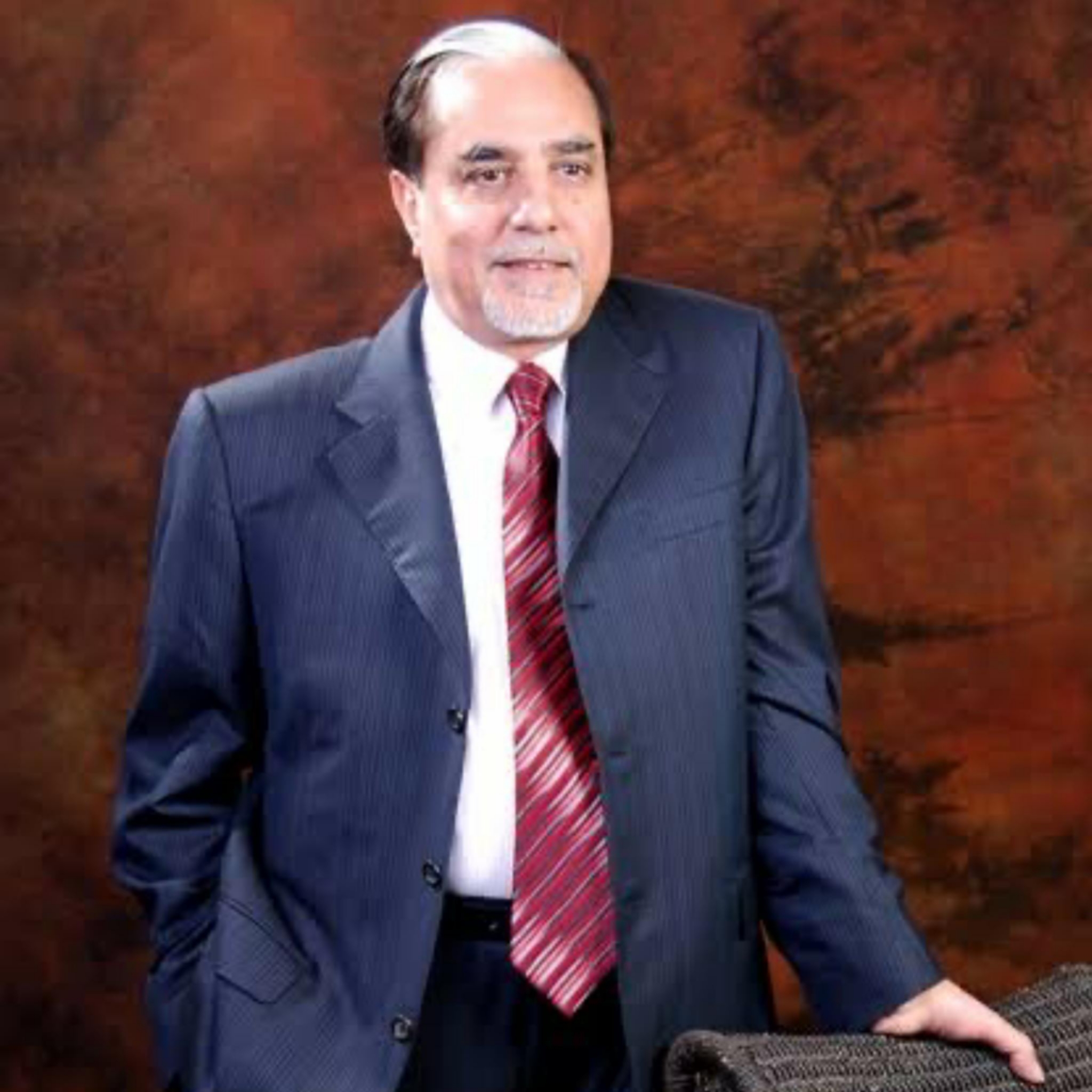
    Mumbai: Essel Group chairman Subhash Chandra has issued a second Open Letter sharing details of the debt resolution process and the steps taken to pay off the lenders. The Zee founder revealed that over 91 per cent of the debt has been settled to 43 lenders, and the remaining dues are in the process of being paid.

    In his first Open Letter issued on 25 January 2019, Chandra had apologised for the hardships faced by the lenders due to the liquidity crisis triggered by the IL&FS case and committed to repay the monies to the best of his abilities. The asset divestment process took a setback during the pandemic, which slowed down the overall debt resolution process, he wrote on Tuesday.

    “I am happy to report that we have come out of the financial stress situation by settling 91.2 per cent of our total debt to 43 lenders in 110 accounts. 88.3 per cent amount has been paid, while the remaining 2.9 per cent is in the process of being paid. We are making all the required efforts to settle the remaining 8.8 per cent of our total debt,” wrote Chandra. “I have no regrets for parting with a substantial ownership in the business and specially in the ‘jewels of the crown’. This was done to keep the family’s honor.”

    The Essel Group chairman further added that he intends to settle the remaining outstanding dues before the end of this fiscal year or before.

    He also shared that he does not regret the decision taken to part with a substantial portion of his ownership in his key businesses, attributing this decision taken to preserve the honour of his family, while reiterating the exit from the Infrastructure, Financial services & Print Media businesses.

    Elaborating on his next steps in terms of setting up a venture in the video space in the digital ecosystem, Chandra said, “I have earned a fair experience in the video business; hence I am exploring new ways / business opportunities in the “video in digital space” as well as AI/ML (Artificial Intelligence & Machine Learning) in the video space, without getting into any conflicts with ZEEL, in any manner. I will provide the specifics very soon and you all will witness the initial phase of launch, of yet another pioneering venture.”

    Noted Investment Banker, Venture Capitalist and Stock-Market expert, Vallabh Bhansali said, “In nearly forty years of our friendship, he has always made me feel proud. His achievements as a visionary businessman pales before his act of honour to sacrifice all he built for the sake of it. So also his humility to admit his errors openly. In fifty years of my business career, I can’t think of a parallel.”

  • ‘We look at the IPL as a business and a media investment’ : Hiren Pandit- GroupM ESP managing partner

    ‘We look at the IPL as a business and a media investment’ : Hiren Pandit- GroupM ESP managing partner

    Being a regional player in the media business, Deccan Chronicle saw an opportunity in IPL to grab the national platform in line with the company’s strategy to step into new markets. It bought the Hyderabad team franchise which was named as Deccan Chargers while GroupM ESP played the consultancy role.


    Indiantelevision.com’s Ashwin Pinto caught up with GroupM ESP managing partner Hiren Pandit to find out about the plans for IPL, its usefulness as a brand-building exercise and the progress that has been made so far.


    Excerpts:

    What progress has GroupM ESP made since launch?
    We work in the areas of entertainment, sports and partnerships. We have broken the entertainment business into two spaces – film and TV content. We have done over 250 hours of branded content programming on TV. One of them was for NGC’s Genius where we got in Lufthansa as a partner for that show.


    In the film space, we help with in-film placements and also with partnerships. We do 25-30 in-film placements and partnerships a year. We got Reebok involved with Goal. Reebok launched a range of Goal products in their stores.


    Another innovation was helping Virgin Mobile partner with Channel (V) for the first live movie shot. Richard Branson actually danced on stage. We also worked with the Johnny Walker Golf tournament. Now we are working on the IPL with our partner Deccan Chronicle. We act as a consultancy for them.

    What is the aim when you are providing solutions to clients?
    We look for long-term strategic solutions. It is about creating a consumer connect in an increasingly fragmented market. Consumers spend time on different things at the same time. The effectiveness of the 30-second spot is reducing. Spends are going towards non-traditional media. We need to be present in this space. We give clients solutions that are out of the box and go beyond conventional media buying. Media is anything that consumers relate with and our aim is to provide solutions to clients that consumers can relate to. The Goal deal was one such example.


    In the partnership space we have deals for content creation, sales. We partner companies with implementation capabilities. The thinking, planning is what we do. The implementation is sourced. We are looking at a partnership for the marketing of sporting events and sports products. We also work with production houses. We worked with Miditech for the NGC show. The client requirement is our priority. A partnership is driven by a client need.

    What role does the IPL play in the overall scheme of
    things?

    We look at the IPL as a business opportunity. The intention was to see if we could do something substantial in that space with a partner. Deccan Chronicle loved the idea. We helped them bid for the team, players, seating, corporate boxes. We believe that it is a team that we also own.


    There are two poles of thinking. Some feel that it will not work. We feel that it will work. It is already a $2 billion industry straight away. The industry has been created overnight. The way the top players come in shows that the boards back it strongly. IPL is about cricket first and then entertainment. You cannot let the two merge. If it does, then the event will not do well. The cricket element should not be touched. As long as the quality of that is high, everything will fall into place.

    How does IPL help Deccan Chronicle from a brand
    building perspective?

    It gives Deccan Chronicle a platform on the national stage. It has two editions – in Andhra Pradesh and Tamil Nadu. They are looking to launch in other markets. They are also looking at a business daily. The IPL gives them visibility across the nation.


    While Deccan Chargers is a separate business, it can be used as a platform to build awareness for Deccan Chronicle. Markets like Delhi and Jaipur will get to know of Deccan Chronicle through the IPL which otherwise would not have been possible. It makes it easier for them to enter new markets.


    At the same time they have put in a lot of money to get the team and we have to make sure they get their money back.

    What was the strategy you followed in bidding for
    Hyderabad and the players?

    Initially we wanted to launch two to three teams. However the IPL rules did not allow that. So we decided to have a franchise in either Hyderabad or Bangalore or Chennai. Hyderabad was our first priority. We did a lot of homework in terms of different revenue streams. We predicted the kind of revenue television would bring in. We also predicted local revenues.


    We were, thus, able to figure out the bidding range we should be at. There were other players like GMR who are Hyderabad-based and so we needed to ensure that we came out on top to keep them out of Hyderabad. We got what we wanted. As far as the team is concerned, it took us two weeks of work to form a strategy. We gave ourselves five options of teams each of which were unique by themselves. They took into account the IPL rules as well as the local talent available in Orissa, Hyderabad and Andhra Pradesh.


    There was $5 million available. $17 million was the total base bid price of all players. Since the total purse that could be spent was $40 million, $23 million was the possible variation. We listed what we believed players would be bought at. Some players were given at 25 per cent or 50 per cent or 80 per cent depending on their availability to play. So you had more money to play with. VVS Laxman was graceful enough not to take icon status so that we would have more money. We followed a batting order process to select players we wanted. Some players were got reasonably but we did not overprice ourselves with any player.


    We looked at it from a T20 perspective. We wanted players who can bat up and down the order like Afridi. Gibbs can also do the same. Gilchrist has a dual role of a batsman and wicketkeeper. Symonds is also a match winner.


    Ladbrokes has rated us as one of the top teams to win the IPL. The onus is for the players to make sure it happens. The job of delivering a good side has been done. It is now a question of on-field delivery.

    Could you talk about the team’s positioning?
    The name of the team is Deccan chargers. We are not a team of stars. We are a unit and this needs to come across. We are there to play hard and win. We do not want superstars. We want players who will operate as a team. We are a bunch of individuals playing as a team. Deccan Chargers are all about Deccan. Hyderabad Deccan is associated with royalty. The charging bull, red eye, gold colour all stand for certain attributes.

    What plans are there to attract women and children?
    We have certain plans. One of them is a school programme. In the stadium, we are looking to create a family enclosure so that women can come. We had thought about having a women’s only enclosure but that may be some time way. We are trying to create a family entertainment atmosphere. You need to make it pleasurable outing for the family. The venue has to be comfortable.


    We started communicating with people from the day that we got the Hyderabad franchise. We ran an ad asking what people would want the team to comprise of. The build up started from there. We are doing activities in malls and multiplexes in Hyderabad. We have made a huge bat so that people can sign wishing the team good luck.

    What about creating a fan base? How long will it take
    to create one like say a Manchester United following?

    It will take at least two to three years. This is our second task. We need to make sure that fans know that it is a privilege for us to be associated with them. This year time has been too short to start the process of building a fan base. The only fan following we have as of now is on our website where half the hits come from the US.


    They already want a T-Shirt and so build up is happening. We are looking at privileged dinners, special ticketing offers, T-shirts, player interaction as time goes by. People at the moment are not used to a city-based team that has players from different loyalties. That connection has to be built up by the franchisees. Today fans relate to cricket with the country but over time people will root for their city. They will believe that an Andrew Symonds can play with VVS Laxman in the same time. This is when fans will start to bond with teams.

    IPL gives Deccan Chronicle a platform on the national stage. It makes it easier for them to enter new markets

    How is the team doing in terms of sponsorships?
    We have structured our deals differently from other franchises. Everybody is selling logos on T-shirts – front and back.


    We will have a team partner. That partner will have ownership of the team. The logos on the team will go to the partner.


    The second partner is entertainment. Anything to do with entertainment from cheerleaders to fours and sixes hit goes to that party. The third partner is the performance partner. This is for things like man of the match, six sixes in an over etc. Then there is a partner for pre game entertainment. The fifth partner is the apparel partner. Each association is distinct and has clear value. We do not want to be like a F1 car.


    The entertainment partner has to be related to entertainment. The performance partner has to be known for performance. Otherwise you mix things and brands get associated with things that do not fit with what they stand for. We have structured our partnerships so that we leverage the value. We will announce deals in this regard next week, as that is when our players will be together.


    Since we are a newspaper we advertise in it. Other teams would have to buy ads. SRK uses the PR route and has also tied up with Telegraph locally. Our media costs come down since we are a media owner. We look at the IPL as a business and a media investment. If someone is losing money it could be that he is using it as an investment for his own benefit. In this case you need to look at it as a media investment and not as a revenue opportunity.


    If you treat it as a business you can make money in the first three years. In three years we expect to make money and it could be for our pocket and also for media investment opportunities.

    One of the challenges is to keep the brand alive after
    the event ends. What plans does Hyderabad have?

    It is not just about a fan base for us. It is also about giving back to cricket. Deccan Chronicle wants to be associated with cricket at the grassroots level. We will start coaching camps, academies. Our partners will also be involved here. This is the difference between just being a sponsor and being a partner.


    Our involvement with cricket is not just about IPL. We will tie up with the Hyderabad Cricket Association, Orissa Cricket Association to see how we can get involved with their tournaments and bring value. We are also looking to get involved with other sports.

    What about taking the team abroad for matches?
    That might be an option as long as the sanctity of the on field play is not compromised. If it is a charity game for instance, then it has to be clear.

    If a team fares poorly in the IPL and finishes eighth,
    will the franchise suffer?

    It depends on the quality of play. If the matches were close and hard fought, then fans will not mind. If, however, the team consistently played badly and failed to compete, then not only will the fans ask questions but so too will the sponsors. It will also be a challenge to fill up the stadium as you go forward. There will be a chain reaction.


    As far as players are concerned, if one plays badly then the news will travel and the player will be dropped. It is about delivery. A lot of money has exchanged hands on account of expectations. The effort needs to be put in.

    What on-air and mobile plans do you have?
    Our site is already up and running. There are lots of forums and debates. On the mobile we will look at it in terms of ticketing and SMS. But the real fun will come when 3G applications come in and they will impact how people view cricket. This will be in the form of streaming video.
    What about tying up with channels for content related
    to the Hyderabad team?

    We are in talks with channels that want to do off-cricket coverage of our team. We will do this in conjunction with our players.
    With the IPL trying to attract women and children, do you see this helping other forms of the game in expanding the viewer base?
    I don’t see it affecting test cricket. It might help ODIs after a period of time. T20 means a faster rate of scoring which will be transferred to ODIs. If you score six to seven an over in T20, you will see the same rate in ODIs. When a lot of action is going on in terms of high scoring, we have noticed that more women tune in.
     

    On the negative side the kind of stroke play that takes place should not deviate from what quality cricket is. Technique should not suffer due to T20.

    GroupM ESP also has a tie up with John Abraham. What
    is the nature of this deal?

    We have got into the celebrity endorsement and management space. We look after his sponsorships and endorsements. We are looking at other celebrities. The celebrity space has blown apart with Dhoni and Yuvraj and MGs (minimum guarantees) being the norm. We are not sure about taking that route.
     

    The celebrity management space is different in India. Abroad, companies manage this sphere. In India, though, individuals manage it. The Indian model must evolve. There is no valuation process in place to see if the return on investments are good. It has to be a win-win situation between the celebrity and the client. Right now, this is a cluttered space.


    The brands that John has endorsed like ESPN and Wrangler stand for values that fit John. You need to keep in mind the sentimental values of individuals. Many celebrities, though, endorse brands where there is no fit. The association is unreal and nobody believes it. Consumers are not dumb.

    How do cricket and Bollywood stack up against each
    other?

    Celebrities have to be careful about the brands they endorse. If they make a mistake, then they pull their own brand value down. Bollywood is less risky. If an actor has a flop, his value does not go down. If a cricketer, however, gets dropped from the national side, there is a huge difference. Brands that he is endorsing will not get full value. The young cricketers are coming in at scary price points. I am not sure how many brands can afford them. If he is not in the team six months later due to in injury, the
    brand is in trouble. The valuation equation should make sense.
  • Hinduja TMT to de-merge media, IT/BPO biz

    Hinduja TMT to de-merge media, IT/BPO biz

    MUMBAI: Hinduja TMT Ltd. will de-merge the company’s IT/BPO and media businesses into separate entities. The board of directors of the company are meeting tomorrow to provide in principle approval for this.

    The media business is likely to be brought under a holding company, a source said. HTMT has been weighing several options while deciding on separating its IT from media business. One option is to have the cable TV and broadband business under one entity while keeping the content business separate. Another possiblity could be to have a common entity for the media businesses.

    “I have nothing to comment at this stage. The board is meeting tomorrow,” HTMT MD K Thiagarajan said.

    Last month, speaking to Indiantelevision.com, Thiagarajan had admitted that de-merger was very much in the plans. “It couldn’t be done in 2005-06 fiscal because of certain taxation issues. The programme is still alive and we hope to de-merge early this fiscal. A committee of directors are looking into the issue.”

    HTMT has subsidiary companies which are into cable TV distribution, a cable movie channel, and movie financing and production. IndusInd Media & Communications Ltd (IMCL) runs cable TV through the Incablenet brand while CVIL operates CVO, a Hindi cable movie channel. IN Network Entertainment Ltd. (INEL), a wholly owned subsidiary of HTMT, is in film and content finance, production and distribution.

    Recently, Zee Telefilms had announced its plans to de-merge Siticable, a wholly owned subsidiary, into a separate company called Wire and Wireless (India) Limited (WWIL). This would bring specific focus into the cable business and be attractive to investors.

  • CNBC TV18’s ‘Industry Vector series spells the relevance of technology in media business

    CNBC TV18’s ‘Industry Vector series spells the relevance of technology in media business

    MUMBAI: Technology is making all the difference to the way the people the world over access news. CNBC-TV18 will showcase the Industry Vector series 2006 today at 10:30 PM The channel hosted the Industry Vector series, where ‘The Relevance of Technology in the Media Business’ had been the focal point.

    The repeat of the show will air on 26 March at 2:30 PM Reliance Entertainment Pvt Ltd chairman Amit Khanna, CERG Founder and economist Omkar Goswami along with CNBC’s Senthil Chengalvarayan debated on the issue, while exploring the current media scenario in India.

    As technology is making all the difference, the source is no longer just one single window. The average Indian not only has the world at his fingertips, he also has it within a few seconds.

    The convergence of two key trends – the growing demand for rich media and the exploding availability of affordable bandwidth, have combined to propel the media industry to growth levels unheard of even a few years ago. The new digital transmission system, is just one example of how technology is radically altering the way the media industry thinks and operates, informs an official release.

    Have Indian media organizations truly been able to capitalize on these new technologies, to give them the competitive edge? Have they been able to utilize technology to explore new options and orient them to the changing nature of competition? In fact, how exactly does one keep pace with the rapidly changing technology, and still at the same time maintain the organisation’s profitability? What impact will the changing nature of the media market have on the major and minor players?

    The Industry Vector series is an eight episode series on CNBC-TV18, which started from the second week of March 2006 running right up to April 2006. The eight hot sectors this series will focus on are: Infrastructure, Manufacturing, Media, Pharma, Logistics, Banking & Financial Services Industry, Education and ITES.