Tag: media and entertainment

  • Viacom18’s Sonia Huria to join Amazon Prime Video as communications head for India

    Viacom18’s Sonia Huria to join Amazon Prime Video as communications head for India

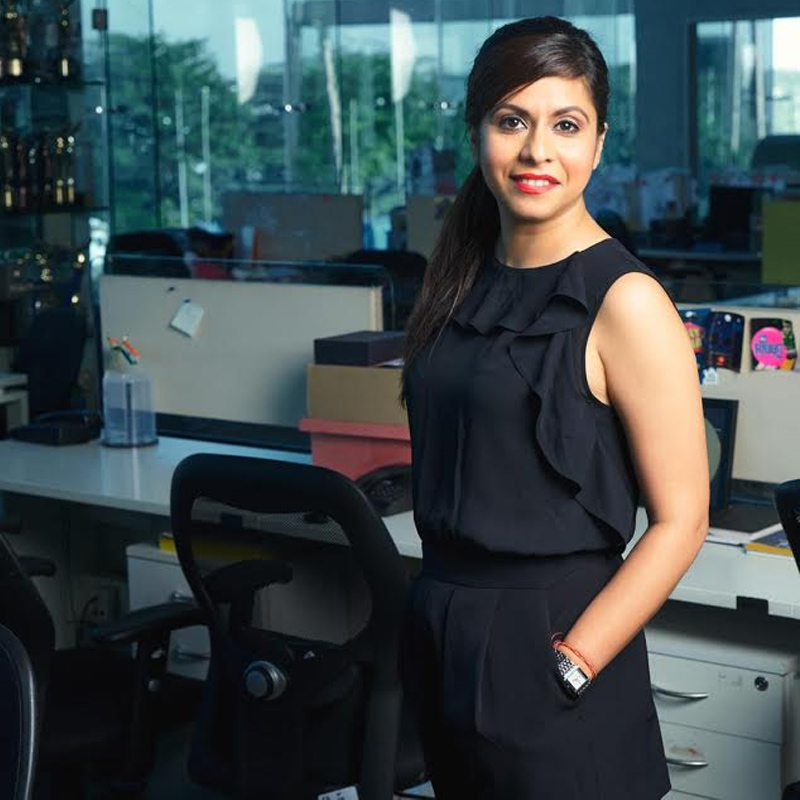
    KOLKATA:Viacom18 corporate marketing, communications and sustainability head Sonia Huria has ended her 12-years long stint with the organisation. She will join Amazon Prime Video to lead all its communication efforts for India operations. 

    Huria will be a part of the global communications team – leading PR and Communications for Amazon Prime Video in India. She will be reporting to Amazon Prime Video PR Asia Pacific and Canada PR head Tobias Tringali who is based in Seattle. 

    Ramping up Amazon Prime Video’s communication outreach, Huria will bring in her extensive experience of the entertainment industry and corporate communication. She will be directly responsible for driving the PR narrative for Amazon Prime Video while also leading communication and reputation management across the media spectrum.

    With over 18 years of experience in the entertainment and the consumer space, she led brand and corporate communications for Viacom18 across all its five lines of business – broadcast entertainment, filmed entertainment, digital entertainment, experiential entertainment and consumer products – as well as led one of the industry’s most decorated internal communication functions. 

    Huria began her journey with Viacom18 in 2008, as part of the team that launched Hindi GEC – COLORS which became the no.1 channel in the category within a span of nine months from launch. Auguring the role of sustainability, Sonia has successfully created a model of multi-partner funded behaviour change communication content at Viacom18. First with the TV series Navrangi Re! which focused on sanitation in peri-urban India to more recently with MTV Nishedh. In addition to managing internal and external communication, Sonia also leads trade marketing and digital media for the organisation – ensuring streamlined messaging across touchpoints.

    As an industry thought leader, Huria serves as managing committee member at The Advertising Club. Under her leadership, Viacom18 has won several prestigious awards at PRWeek Asia Awards, South Asia Sabre Awards and Indian PR and Corporate Communications Awards (IPRCCA). She has been featured on Impact Magazine’s Top 50 Women Leaders in Advertising, Media and Marketing for four  years in a row.

  • Indian film, TV, online video services garnered $49.8 billion in 2019

    Indian film, TV, online video services garnered $49.8 billion in 2019

    KOLKATA: The film, television and online video services industry in India generated a total economic contribution of $49.8 billion (Rs 348,972 crore) in 2019, indicating a total growth of 61 per cent from a similar report in 2017, according to new research by Deloitte. The report also found that the industry supported a total of 2.6 million jobs. 

    Commissioned by the Motion Picture Association (MPA), with the support of FICCI, the Producers Guild of India (PGI) and Creative First, the report was launched on 10 July, during FICCI’s E-Frames virtual event, Future Tech or Future Tense.

    PGI president Siddharth Roy Kapur said, “Our dynamic industry not only provides high-quality jobs and powers the creative digital economy, but is also a huge proponent of India’s soft power around the world. This research highlights how film, television online video production and distribution directly stimulates a range of other industries and businesses, wielding an impact far beyond the direct economic activities of the sector. For that reason, it is crucially important that all stakeholders from the industry and the government play their part in creating an ecosystem that incentivises growth, encourages creativity and rewards innovation. This industry has a tremendous amount to offer, both in economic activity to help us regain a solid footing in response to Covid2019 and to telling the stories of India around the world.”

    FICCI Media and Entertainment chairman Sanjay Gupta said, “M&E is designated by the government as a champion service sector. The Covid2019 pandemic is a setback for the M&E industry – and it will require a huge effort from both industry and government to put the foot to the accelerator, incentivise production and all forms of distribution and transport our industry to the heights we all know it can achieve. The creativity and will are there; let’s hope the policymakers and regulators match our entrepreneurial drive.”

    Deloitte India Media and Entertainment partner and leader Jehil Thakkar said, “The report illuminates for us the broader trends of the film, television, and online video services sectors. Unsurprisingly, online video services made a statement, generating a total economic contribution of $2.1 billion (Rs 15,374 crore) in 2019, up from $230 million (Rs 1,612 crore) in 2017 – an increase of 854 per cent in local currency. India has developed a dynamic video on-demand ecosystem that is satisfying the huge appetite for quality content, especially during the Covid2019 pandemic. Perhaps the biggest threats to continued growth and more job opportunities is rampant piracy and the imposition of artificial barriers that impact on the quality of a customer’s experience. Addressing these challenges is the task of the day.”

    PVR Pictures CEO and PVR Ltd chief business planning and strategy Kamal Gianchandani said, “Exhibition is a beloved form of entertainment for Indian audiences, and will continue to offer an essential means of social engagement and enjoyment for hundreds of millions of people. Right now, movie-going is an entertainment experience that is greatly missed. Once it is safe to do so, I am confident that audiences will return to patronise theatres with a passion and in greater numbers than before. That said, India’s screen density of 6.5 screens per one million remains too low. Just think of the positive effect on the industry and economy if we could double it?” 

    MPA APAC president and managing director Belinda Lui said, “India’s film, television and video on demand market is fuelled by talent, innovation and unrivalled entrepreneurship. Industry stakeholders have developed a reputation for working with the government to identify challenges and find effective solutions. This creative, indomitable spirit is likely to be called upon in the current times to overcome a range of hurdles and ultimately, continue to deliver great quality content through a variety of channels to audiences both at home and across the globe.” 

  • Uday Shankar stresses lowering dependence on ad rev

    Uday Shankar stresses lowering dependence on ad rev

    NEW DELHI: FICCI Frames, for the first time, conducted a digital virtual conference on the media and entertainment industry. Discussing the role of the creative economy to revitalise economic growth were The Walt Disney Asia Pacific chairman and Star and Disney India president and FICCI senior VP Uday Shankar, Google India country manager and vice president and FICCI committee chairman Sanjay Gupta, ambassador of Italy to India HE Vincenzo De Luca, minister of state for finance and corporate affairs Anurag Thakur and minister of information and broadcasting Prakash Javadekar.

    Shankar touched upon important aspects on how to tackle the challenges due to pandemic and make the industry more vibrant. He said, “When FICCI frame was launched the total size of the media industry at that time was very low across the print, TV, radio but today it is a 20-25-billion-dollar industry. From about 100 channels in the year 2000 today we have 900 channels in the country. The size of the print industry which was about $1 billion is now at $4 billion.  India remains one of the few countries where the print business is reasonably healthy. The emergence of the digital industry has already become the nucleus of the media and entertainment sector.”

    He added, “Despite all the setbacks and hurdles, what we are facing is temporary. We can easily overcome them and make a big leap. As the industry has grown, its dependence on advertising has grown and it has helped all participants. But it has been a source of distraction also. If the industry has to grow to the next level, one thing that must be fixed is our ability and desire to get people to pay for what they consume and the only way the industry can grow."

    Shankar asserted that this year the industry is going to be hurt very badly due to Covid2019 and primarily due to the dependence on advertisers.

    “The content business has gone truly global and the opportunity to scale it up is much bigger. We have not been able to invest in content and take our ambition to the global domain. The industry needs to grow its content ambition. We need to think beyond weekly ratings and aim for Indian content to travel globally,” he said.

    Gupta said, “In 2019, the industry had a revenue of $20 billion and digital media accounted for 20 per cent but in 2020, the sector has shrunk to $15 billion. It is estimated that around 20 per cent may lose their jobs in the M&E industry. We need collective efforts within the industry and from government.”

    He also mentioned a point that despite years of applause for Bollywood, it has still not managed to create a truly global market. Gupta shared, “India gets less than seven per cent revenue from overseas market. Hollywood, in contrast earns more than 70 per cent from the global markets. We can be a $100 billion global industry by 2030 if we adopt significant policies and support to accelerate films and games."

    He gave some ideas to expedite some of the policy decisions which can help in the sector recoveries.

    “We need to possibly resolve some of the critical issues like tax burden on DTH and radio. Theatres can be allowed for multiple activities i.e. showing sports games and educational activities to maximise capital utilisation. The broadcasting sector will benefit by ensuring light-touch regulation to enabling the industry to continue on the recovery path with speed," shared Gupta.

    Thakur shared that in the last three years there has been a sea change in the entertainment industry as far as digital media is concerned. 

    “The creative economy is an interplay between human creative ideas, intellectual property, knowledge and technology. If we look at the global market of the creative goods it has doubled from $208 billion in 2002 to $509 billion in 2015. India needs to have a bigger chunk of this pie. While we create volumes, we also must create value and set our goals higher. From simply made in India, we must also aim to be designed and conceptualised in India," he said.

    Follow Tellychakkar for the consumer facing news & entertainment

  • Analysts bullish on broadcasters’ stock rebound thanks to ad revenue recovery

    Analysts bullish on broadcasters’ stock rebound thanks to ad revenue recovery

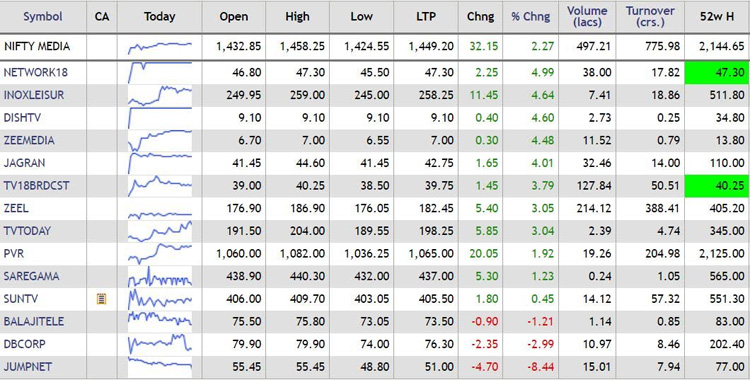
    KOLKATA: The Covid2019 pandemic hit the media and entertainment industry due to pressure on advertising revenue, uncertainty in subscription and closure of multiplexes. As the lockdown eases, operations have started normalising leading to a recovery in the business. On Tuesday, Nifty media index advanced 2.27 per cent while companies like Network18, Inox Leisure, Dish TV, Zee Media and Jagran Prakashan saw four to five per cent gains.

    Network18 was the highest gainer in the Nifty media index, advancing 4.99 per cent. Moreover, its stock has been gaining for eight days consecutively as of Tuesday.  It touched a new 52-week high hitting Rs 47.3 during the day while it ended the day at Rs 47.30. TV18 Broadcast stock has been gaining for the last three days as of Tuesday and has risen 10.45 per cent returns in the period. Its shares rallied 3.79 to end at Rs 39.60 , after touching a new 52-week of Rs 40.3. Zee Media Corporation Ltd (ZMCL) also gained 4.48 per cent on Tuesday. While Zee Entertainment Enterprises Ltd (ZEEL)’s gain was comparatively lower, both ZEEL and ZMCL have been gaining for the last two days as of Tuesday. 

    Figure: Nifty Media Index on Tuesday 

    Analysts are also bullish on the rebound of broadcasters’ stocks on the back of higher advertising revenue. “Now that advertising is coming back after unlock, there will be some rebound on the expectations of advertisement revenues. You may see media stocks getting better but not all stocks, particularly multiplexes, because malls have not opened up. But if you look at pure broadcasters, the valuation may go up. Depending on the how soon the recovery happens, there will be an upside. The cable operators, who are facing disruption in payment, will see things easing down," says SBICap Securities institutional equity research head Rajiv Sharma.

    “Print media will take a lot of time to rebound because advertising revenue has taken a hit and people are not taking newspapers. Broadcast will be the first segment to recover. Once fresh content comes in, there will be bigger recovery in advertising revenue. In the case of print and radio, this is more of relief rally. Structurally, radio and print are going to suffer even after Covid2019,” Elara Capital VP – research analyst (Media) Karan Taurani says.

    Among DTH players, Dish TV stock has been gaining for the last 17 days and has risen 125.47 per cent returns in the period. DEN Networks has gained 9.69 per cent on Tuesday. Another major multi system operators, Hathway Cable and Datacom has also gained 7.67 per cent.

  • Production houses keep their faith as they weigh impact of COVID-19

    Production houses keep their faith as they weigh impact of COVID-19

    MUMBAI: The iconic ‘Lights, camera, action’ has temporarily been silenced across the country. The COVID-19 pandemic is wreaking havoc on the once-thriving media and entertainment industry, stymieing its smooth functioning, at least for the time being. The silver lining, however, is that despite the global impact of the pandemic, production houses are hopeful of a brighter future. Industry experts are hoping that the short-term pain will be a long-term gain. While some feel that the nation will soon be back on its feet, others are thankful for the much-needed break for creative people. 

    Indiantelevision.com reached out to a cross section of players in the industry for reaction.

    The Film and Television Producers Guild of India CEO Kulmeet Makkar believes it is too early to predict the overall impact. It completely depends on how long this lockdown continues. “Everything is shut. How soon will theatres open is a huge question mark. Even if the essential commodities are made available, will cinema halls open for the public, considering the social distancing norm? Given all this, everyone except news channels is facing a huge setback,” he says.

    Production houses that had rented sets for their upcoming shoots had to hurriedly halt things. Indian Film and TV Producers Council director Shyamashis Bhattacharya says, “We are talking to all the studio owners both at an individual level as well from IFTPC that the rent of such studios should be waived off for the period where there has been no work. Film City, where the industry has the maximum number of sets, is controlled by the Maharashtra government; we are trying to reach out to them as well on this matter. I am sure they will take an empathetic view of our concern. For sets where the producer may not get any waiver on the rent, I am sure the broadcaster of that show will pitch in and help the producer.”

    Hats Off Productions co-founder Aatish Kapadia says that it is more important to look after the lives of daily wage earners and people who are in trouble because of work shortage than to worry about the rent.

    Unemployment and job cuts will be a grim reality that will hit the industry soon. Bhattacharya says: “Sacking of people would be an individual choice of every producer and that will depend on how long the lockdown continues. I don’t think anyone will like to sack people if they are able to manage financially.”

    Even though no jobs have been taken away yet, Makkar questions whether production houses can sustain those losses for long if the lockdown continues. For now, the focus is on the daily wage earners, the most hard-hit by the COVID-19.

    Playing their part to help fellow humans, industry biggies have come forward with a heart of gold.

    Red Chillies’ Shah Rukh Khan is making available his office for quarantine facilities. Balaji Telefilms’ Ekta Kapoor will donate her annual salary of Rs 2.5 crore towards helping daily wage earners and freelancers. The Yash Chopra Foundation will look after 3000 daily wage earners from the industry. The foundation will also transfer Rs 5000 to their individual bank accounts. 

    Meanwhile, streaming giant Netflix has contributed $1 million to the relief fund set up by Producers Guild of India. Sony Pictures Networks India will donate Rs 100 million. Zee Entertainment has also committed to help 5000+ daily wage earners who are working directly or indirectly in its overall production ecosystem.

    However, the question looming large is the sustainability for producers and broadcasters when revenue doesn’t kick in for a few months. Experts suggest that if the crisis continues, every stakeholder will see more than 15 per cent of the total yearly revenue being wiped out.  Although the initial support has been phenomenal, the government needs to step in soon. Even if the lockdown is lifted on 14 April, it will take time for things to get back to normal.  Every single month of inactivity would mean losing 10 per cent of the business.

    In the meanwhile, some parts of the production chain are still being oiled. A few production houses are doing background work to promote their shows on digital platforms. “We are doing a lot of collaborative work on Zoom calls and other Microsoft applications. The work is in progress with several channels. I am writing scripts for a web series and a film. Khichdi and Sarabhai Vs Sarabhai are back on television and to promote the shows every team is resorting to video conferencing. We are doing a lot of shoots on social distancing through our individual social media handles,” says Kapadia.

    Bhattacharya says that the scripting for some shows is being conducted via email exchanges. These are shows that were commissioned before the lockdown but couldn’t get started with the shoots. “As far as absolutely new ideas are concerned, I think the broadcasters will listen to them only when the situation normalises to some extent,” he says.

    Nonetheless, heads from the entertainment and media industry are hopeful that things would be better once the lockdown is lifted and the government plays its part in helping the stakeholders in the industry. But the industry will feel the pinch for the months to come.

    Let’s earnestly hope that the industry will emerge unscathed from this unprecedented and hard situation. 

  • Budget 2020 proposals offer few benefits to M&E industry: EY India

    Budget 2020 proposals offer few benefits to M&E industry: EY India

    MUMBAI: As always, the industry's hopes from union budget 2020 were high. According to a report from EY India while the budget proposals offer few benefits to the industry, some of the changes may have a material impact which will need to be assessed.

    “The budget proposals will provide relief to the foreign companies earning income such as license fees from making compliances in India, provide clarity and do away with avoidable tax litigation through reduction in withholding tax rate for technical fees as well as withholding tax provisions for e-commerce operators. New media and digital business qualifying under start up incentives will get additional impetus from the measures proposed. Reduction in newsprint import duties will help print industry which is going through a tough business cycle. Tax amnesty scheme for resolution of pending litigation offers an opportunity to reassess the tax game in the country,” the report adds.

    The report states that the proposed alternate personal tax regime will be relevant to mass employment by the industry in its content production processes, however, it is difficult to determine whether the regime will provide a material differential cash surplus to the employed.

    It also adds that expansion of domestic tax regime will lead to tax uncertainty for foreign companies with no resource to any credible advance ruling mechanism which will allow them to understand their tax position upfront.

    “Removal of exclusion relating to theatrical receipts would certainly put pressure on the finances of the film businesses with a 10 per cent withholding tax rate and increase their compliance burden. The uncertainty attached to film business certainly makes a strong case for a rate much lower than applicable 10 per cent withholding tax rate. Increase in import duties will lead to increased cost for businesses,” it adds.

    Key impacts:

    ·  Withholding tax rate on “fees for technical services” reduced from 10 per cent to 2 per cent, reducing potential litigation on withholding tax rate on content production services and certain other services which do not qualify as “professional services”.

    ·  Exclusion of consideration from “sale, distribution or exhibition of cinematographic films” removed from “royalty” definition that may make theatrical and other receipts from exploitation of cinematographic films taxable and subject to withholding tax at 10 per cent.

    ·  Expansion of domestic source rule will bring to tax income of a nonresident from (i) advertisements targeted at a customer located in India

    (ii) sale of data collected from a person in India and (iii) sale of goods or services using data of customer located in India.

    ·  The list of services subject to Equalisation Levy provisions remain unchanged.

    ·  Exemption provided to non-residents earning royalty and fees for technical services from the requirement of filing a return of income, subject to fulfilment of stated conditions.

    ·  Relief provided d to the print industry by reduction in customs duty on newsprint and paper.

  • Prime Focus Technologies wins TV Technology’s 2018 Product Innovation Award

    Prime Focus Technologies wins TV Technology’s 2018 Product Innovation Award

    Los Angeles, CA – December 28, 2018: Prime Focus Technologies (PFT), the technology arm of Prime Focus, has been awarded TV Technology’s 2018 Product Innovation Award for its ground-breaking native media recognition Artificial Intelligence (AI) platform, CLEAR™ Vision Cloud.

    A module of PFT’s CLEAR Media ERP Suite, Vision Cloud builds Machine Wisdom from intelligence to transform business operations and unlock new revenue potentials for Media companies. While standalone AI engines can recognize objects, faces, actors, locations, sound and more within individual video frames, Vision Cloud can identify complex sequences (like a specific character in a car chase/fighting on a train), actions (like punching/kissing) and video segments (like credits/promos/recaps). It delivers search results that are far more meaningful and contextual, and can be used to easily extract relevant content for multiple use cases – right from creation and post production to distribution and marketing. Vision Cloud leverages the collective intelligence of the industry's most sophisticated AI solutions, and draws on PFT’s decade long experience of collecting, curating and annotating content (400 million tags till date) to build own Machine Learning (ML) models.

    “We’re absolutely thrilled that TV Technology has selected CLEAR Vision Cloud for its Product Innovation Award this year,” said Adrish Bera, Senior Vice President, AI & ML, Prime Focus Technologies “Our objective behind creating Vision Cloud was to make content operations more efficient, cost effective and scalable and create new revenue streams. Validation by an expert jury and winning against stiff global competition is clear testimony to the superior technology innovation and business value that the product brings to the global Media and Entertainment (M&E) industry.”

    TV Technology’s Product Innovation Awards recognize excellence in manufacturing of products to serve the TV/pro video and radio/online audio industries. Winners are selected by a panel of professional users and evaluation criteria include innovation of concept and design, creative use of technology, price value, and suitability for use in a broadcast TV/pro video or broadcast/online radio environment.

  • Star India gets aggressive with global programme syndication sales

    Star India gets aggressive with global programme syndication sales

    MUMBAI: Leading Indian media and entertainment major Star India is quite confident that its new catalogue of historical dramas and contemporary soaps and series will gain traction as it continues with its international syndication drive. In an interaction with World Screen, Star India president international business and domestic distribution Gurjeev Kapoor said: “Our new line-up of shows like Love Ka Hai Intezar (The Wait For Love), Dhhai Kilo Prem (Imperfect Love), Tu Suraj Mein Saanj Piyaji (Soulmates season two) and Nimki Mukhiya (The Accidental Mayor) are generating a lot of interest. These shows have already captured the attention of audiences in India and are now on their way to winning [over] audiences worldwide.”

    According to Kapoor, Star India’s shows have begun to get traction in almost every territory globally–right from the US to the UK to Europe and the CIS, Latin America and Southeast Asia. In some of these markets, partners or sales agents have been helping the broadcaster to find buyers; in some of them, Star India’s programme syndication team in Mumbai and other regions is driving the sales. In Latin America, the company has partnered Latin Media Corp, for Europe and CIS it has been working with Intellecta Srl while in Southeast Asia it has been selling directly.

    The efforts have yielded results. For instance, Saras & Kumud (Saraswatichandra) has done well in seven Latin American nations, including Chile and Peru. Then Yours Truly, Paakhi (Tumhari Paakhi) has got a favourable response in Peru. Kapoor told the magazine that this has enthused the company to invest in dubbing a few more of its top shows. 

    Kapoor pointed to out that Is Pyaar Ko Kya Naam Doon has been its most successful breakthrough and it made history by becoming the first-ever Indian drama series to air in Turkey. “It broke many viewership records by quadrupling the channel ratings in that slot for our partner Kanal 7. This paved the way for many more Indian series on local Turkish television and Turkey continues to be a big market for us.”

    Indonesia, Malaysia and Thailand are some of the Southeast nations that have been lapping up a lot of the content Star India has been dishing out. Among the shows that have done well in the region, Kapoor said, are Mahabharat, Diya Aur Baati Hum, Veera and Chandra Nandini.

    Kapoor is also looking at adding to its partnerships for selling its programme formats. Star India has a partnership with Eccho Rights for three or four of its shows and is in conversation with other partners in local markets.

    He believes that good storytelling can traverse borders and cultures and forms the core of Star India’s international business. “Programme sales have been a driver in expanding Star India’s content footprint across the world. This is an area where we were good but we want to grow exponentially,” Kapoor concluded.

    Amen to that!

  • MIB favours self-regulation, TRAI says some regulation mandatory

    MIB favours self-regulation, TRAI says some regulation mandatory

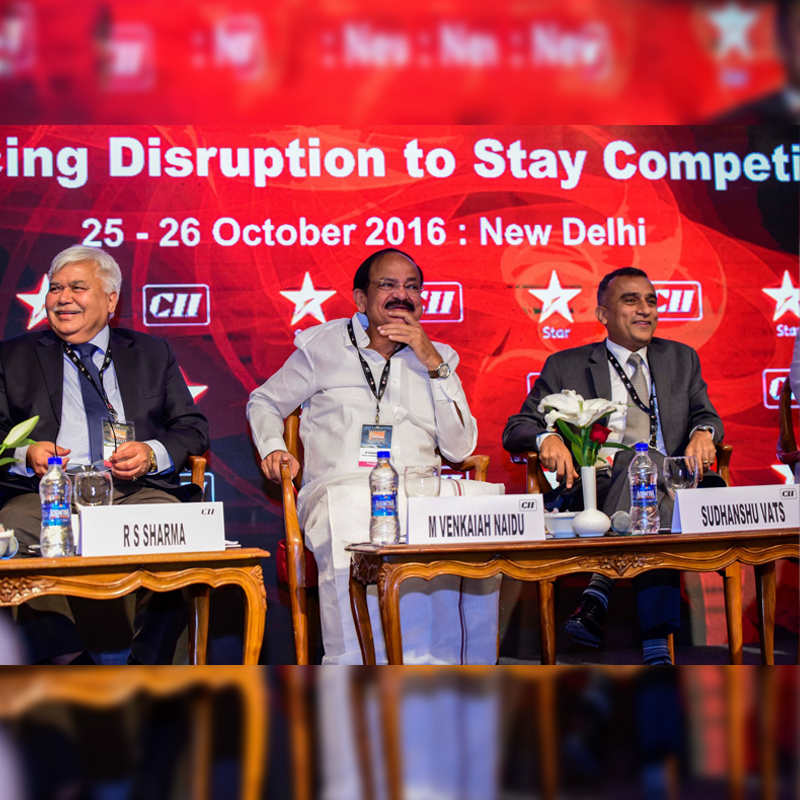
    NEW DELHI: Even as he favoured the idea of self-regulation in the media, Minister for Information and Broadcasting (MIB) M Venkaiah Naidu stressed that “regulation should not become strangulation” and added the government wants to be a facilitator for creating a good business environment for the media and entertainment (M&E) sector.

    Delivering the keynote address at the inaugural session of 5th edition of CII-organised `Big Picture Summit’ at New Delhi here yesterday Naidu said that digital and mobile tools have been leading to paradigm shifts in the M&E sector and the growth of varied platforms such as 4G, broadband, mobile technologies and digital media has enabled the sector to move towards “convergence across platforms and content”.

    According to the Minister, 500 million mobile phones were expected in India by 2020 and music streaming had grown from 49 per cent to 61 per cent in just one year with video on demand gaining popularity as number of internet connections had grown to 81 million of which 41 million used local languages. “The entertainment industry was today capable of creating five billion jobs a year,” he said.

    Referring to the broadcast segment, the MIB Minister said Indian television was very vibrant and exciting, which is exemplified in the over 800 TV channels licensed by the government.

    Dwelling on some initiatives taken by the government to boost the M&E sector, Naidu said that foreign direct investment norms had been liberalized further earlier in the year with an aim to help the industry grow. Similarly, the Minister said, the radio category too has shown impressive growth and the third Phase of auctions of Radio FM licenses was expected to bring in $390 million.

    While he was impressed with the growth achieved by cinema — India produced more films than any other country in the world — Naidu took note of a big problem of less number of screens in the country and that Indian cinema had a share of less than one per cent in world cinema.

    Expressing his concerns on the growth of the media, the Minister highlighted that there were some problems that had been inherited by this government and that those would take some time to be resolved as he plans to hold separate meetings with all stakeholders.

    TRAI Says Regulatory Framework Necessary For Big M&E Sector

    While MIB made a case for self-regulation, Telecom Regulatory Authority of India Chairman R S Sharma said some regulatory framework was necessary for such a large media sector, but regulations should be non-discriminatory, transparent, ensure quality and empower the consumer.

    Speaking at the inaugural session, along with the Minister and industry representatives, Sharma said India was a very cost-effective market where the average mobile recharge was just Rs 10. As connectivity had to be cost-effective and price-sensitive, cable television can be used to provide broadband connectivity as well.

    Holding forth on audience measurement, Sharma said there was still scope for better audience measurement systems as it was important to let the consumer decide what he wanted.
    As TRAI has a recommendatory role in the broadcast sector, except the carriage part where its recommendations can be implemented by it, Sharma also highlighted that several set of recommendations by the regulator on a variety of issues were pending at the Ministry concerned.

    Viacom18 Group CEO Sudhanshu Vats’ On Disruption & Competition

    Amongst the pantheon of Indian gods and goddesses, the Trinity of  Brahma, Vishnu and Shiv hold a special place as they ensure the world, as we know it, goes through a cycle of creation, preservation and destruction to continue growing and surviving. Is this also true for a business sector? Yes!

    Dwelling on the theme of the two-day media conference, ‘Embracing Disruption to Stay Competitive’, Sudhanshu Vats, Chairman of National Committee on Media & Entertainment, CII and Group CEO, Viacom18, said if the cycle, as highlighted in the Indian Trinity or to some extent in economist Schumpeter’s theory of creative destruction, is not followed by businesses (including those in the M&E sector), it’d be disrupted

    “Our systems discourage destruction. In our minds we have this notion that the word ‘destruction’ itself is wrong. But if you look back, our belief system has always emphasised on the need to destroy. If we don’t destroy, then we will be disrupted,” Vats said setting the tone for the Big Picture Summit and emphasizing the need for a well-balanced mix of all three — creators, preservers and destroyers.

    Vats went on to give some examples of the Big Picture Summit’s theme of disruption or reinvention to stay relevant and competitive, which are as follows:

    –    It’s a theme that explains how the sport of cricket reinvented itself 8 years ago to create a completely new avatar (called the IPL) that is arguably it’s most lucrative and successful one till date.

    –    It’s a theme that explains how a new Hindi GEC called Colors launched in 2008 and became number 1 in just 9 months of launch.

    –    It’s a theme that probably explains how a government owned distribution platform known as DD FreeDish revolutionized the world of Indian television so much so that it is a topic of conversation in the boardroom of every M&E organization.

    –    It’s a theme that explains how a show idea rejected by MTV, led to the creation of one of India’s most iconic YouTube channels: The Viral Fever.

    –    It’s also a theme that explains why a telco called AT&T is expected to close a deal to acquire a media conglomerate called Time Warner in what is amongst this year’s biggest acquisitions.  “Of course, I’d like to see this as ‘convergence in action’,” explained Vats.

    Dwelling on some industry vital stats — based on knowledge partner Boston Consulting Group’s yearly report for the event — Vats said the M&E industry’s size had been pegged at approximately Rs. 13, 000,00 million, almost one per cent of the Indian GDP with a direct employment base of half a million.

    “If we look at indirect employment, the number will multiply several times over. If we look at employment in sectors in which we have a multiplier effect, say telecom, tourism, sports and so on, and we are looking at a much larger base. If we have to, say, double in size (and this is not impossible)… then there are three fundamental truths that we need to prepare for. Bear in mind, that none of these can be leveraged if we fear ‘destruction’. Each of these truths has significant implications for us,” Vats elucidated.

    Vats also dwelt on several issues ranging from the need to develop direct-to-consumer offerings, importance of listening to suggestions and ideas, benefits of discovering new talents and embracing technology and data as a friend and not foe, apart from several other issues, including the need to put aside squabbles amongst stakeholders in the M&E sector.

    However, not the one to every shy away from making a factual statement, even though it may sound contentious, Vats aptly said the M&E sector was amongst the biggest stars of the PM Modi’s  `Make in India’ programme. “In the last two years, India has seen 35 new smart-phone factories, with a production capacity of 18 million devices per month and employment to 37,000 Indians. While the focus here – at least in the popular context- is on telecom handset manufacturing, think what is the use of the smart-phone with a 5-inch screen if you don’t have video content? I have no qualms in stating that our industry will play the biggest role in the 4G revolution that this country is about to witness,” he concluded.
     

  • MIB favours self-regulation, TRAI says some regulation mandatory

    MIB favours self-regulation, TRAI says some regulation mandatory

    NEW DELHI: Even as he favoured the idea of self-regulation in the media, Minister for Information and Broadcasting (MIB) M Venkaiah Naidu stressed that “regulation should not become strangulation” and added the government wants to be a facilitator for creating a good business environment for the media and entertainment (M&E) sector.

    Delivering the keynote address at the inaugural session of 5th edition of CII-organised `Big Picture Summit’ at New Delhi here yesterday Naidu said that digital and mobile tools have been leading to paradigm shifts in the M&E sector and the growth of varied platforms such as 4G, broadband, mobile technologies and digital media has enabled the sector to move towards “convergence across platforms and content”.

    According to the Minister, 500 million mobile phones were expected in India by 2020 and music streaming had grown from 49 per cent to 61 per cent in just one year with video on demand gaining popularity as number of internet connections had grown to 81 million of which 41 million used local languages. “The entertainment industry was today capable of creating five billion jobs a year,” he said.

    Referring to the broadcast segment, the MIB Minister said Indian television was very vibrant and exciting, which is exemplified in the over 800 TV channels licensed by the government.

    Dwelling on some initiatives taken by the government to boost the M&E sector, Naidu said that foreign direct investment norms had been liberalized further earlier in the year with an aim to help the industry grow. Similarly, the Minister said, the radio category too has shown impressive growth and the third Phase of auctions of Radio FM licenses was expected to bring in $390 million.

    While he was impressed with the growth achieved by cinema — India produced more films than any other country in the world — Naidu took note of a big problem of less number of screens in the country and that Indian cinema had a share of less than one per cent in world cinema.

    Expressing his concerns on the growth of the media, the Minister highlighted that there were some problems that had been inherited by this government and that those would take some time to be resolved as he plans to hold separate meetings with all stakeholders.

    TRAI Says Regulatory Framework Necessary For Big M&E Sector

    While MIB made a case for self-regulation, Telecom Regulatory Authority of India Chairman R S Sharma said some regulatory framework was necessary for such a large media sector, but regulations should be non-discriminatory, transparent, ensure quality and empower the consumer.

    Speaking at the inaugural session, along with the Minister and industry representatives, Sharma said India was a very cost-effective market where the average mobile recharge was just Rs 10. As connectivity had to be cost-effective and price-sensitive, cable television can be used to provide broadband connectivity as well.

    Holding forth on audience measurement, Sharma said there was still scope for better audience measurement systems as it was important to let the consumer decide what he wanted.
    As TRAI has a recommendatory role in the broadcast sector, except the carriage part where its recommendations can be implemented by it, Sharma also highlighted that several set of recommendations by the regulator on a variety of issues were pending at the Ministry concerned.

    Viacom18 Group CEO Sudhanshu Vats’ On Disruption & Competition

    Amongst the pantheon of Indian gods and goddesses, the Trinity of  Brahma, Vishnu and Shiv hold a special place as they ensure the world, as we know it, goes through a cycle of creation, preservation and destruction to continue growing and surviving. Is this also true for a business sector? Yes!

    Dwelling on the theme of the two-day media conference, ‘Embracing Disruption to Stay Competitive’, Sudhanshu Vats, Chairman of National Committee on Media & Entertainment, CII and Group CEO, Viacom18, said if the cycle, as highlighted in the Indian Trinity or to some extent in economist Schumpeter’s theory of creative destruction, is not followed by businesses (including those in the M&E sector), it’d be disrupted

    “Our systems discourage destruction. In our minds we have this notion that the word ‘destruction’ itself is wrong. But if you look back, our belief system has always emphasised on the need to destroy. If we don’t destroy, then we will be disrupted,” Vats said setting the tone for the Big Picture Summit and emphasizing the need for a well-balanced mix of all three — creators, preservers and destroyers.

    Vats went on to give some examples of the Big Picture Summit’s theme of disruption or reinvention to stay relevant and competitive, which are as follows:

    –    It’s a theme that explains how the sport of cricket reinvented itself 8 years ago to create a completely new avatar (called the IPL) that is arguably it’s most lucrative and successful one till date.

    –    It’s a theme that explains how a new Hindi GEC called Colors launched in 2008 and became number 1 in just 9 months of launch.

    –    It’s a theme that probably explains how a government owned distribution platform known as DD FreeDish revolutionized the world of Indian television so much so that it is a topic of conversation in the boardroom of every M&E organization.

    –    It’s a theme that explains how a show idea rejected by MTV, led to the creation of one of India’s most iconic YouTube channels: The Viral Fever.

    –    It’s also a theme that explains why a telco called AT&T is expected to close a deal to acquire a media conglomerate called Time Warner in what is amongst this year’s biggest acquisitions.  “Of course, I’d like to see this as ‘convergence in action’,” explained Vats.

    Dwelling on some industry vital stats — based on knowledge partner Boston Consulting Group’s yearly report for the event — Vats said the M&E industry’s size had been pegged at approximately Rs. 13, 000,00 million, almost one per cent of the Indian GDP with a direct employment base of half a million.

    “If we look at indirect employment, the number will multiply several times over. If we look at employment in sectors in which we have a multiplier effect, say telecom, tourism, sports and so on, and we are looking at a much larger base. If we have to, say, double in size (and this is not impossible)… then there are three fundamental truths that we need to prepare for. Bear in mind, that none of these can be leveraged if we fear ‘destruction’. Each of these truths has significant implications for us,” Vats elucidated.

    Vats also dwelt on several issues ranging from the need to develop direct-to-consumer offerings, importance of listening to suggestions and ideas, benefits of discovering new talents and embracing technology and data as a friend and not foe, apart from several other issues, including the need to put aside squabbles amongst stakeholders in the M&E sector.

    However, not the one to every shy away from making a factual statement, even though it may sound contentious, Vats aptly said the M&E sector was amongst the biggest stars of the PM Modi’s  `Make in India’ programme. “In the last two years, India has seen 35 new smart-phone factories, with a production capacity of 18 million devices per month and employment to 37,000 Indians. While the focus here – at least in the popular context- is on telecom handset manufacturing, think what is the use of the smart-phone with a 5-inch screen if you don’t have video content? I have no qualms in stating that our industry will play the biggest role in the 4G revolution that this country is about to witness,” he concluded.