Tag: media and entertainment

  • Nakul Chopra appointed as CEO of BARC India

    Nakul Chopra appointed as CEO of BARC India

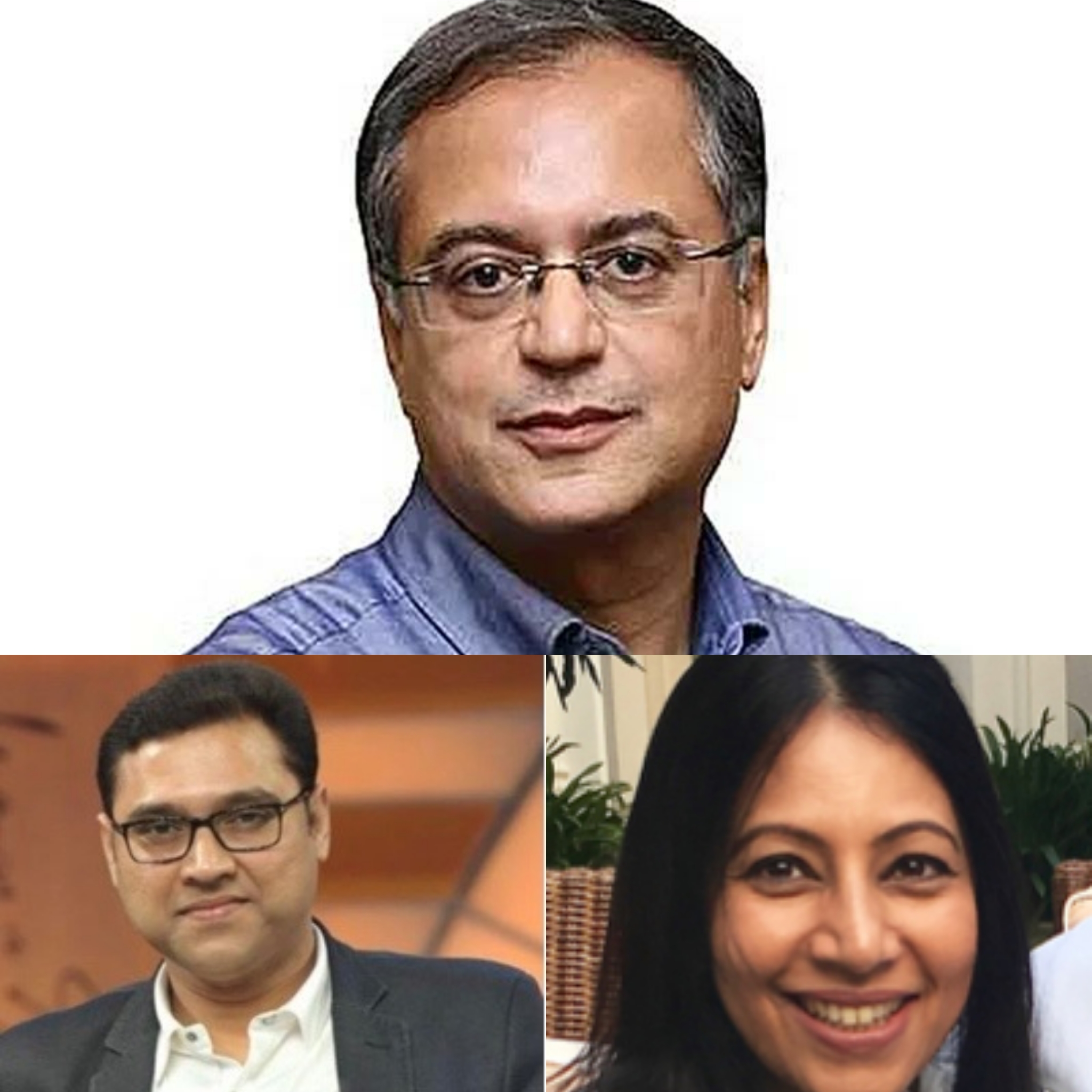
    Mumbai: Broadcast Audience Research Council (BARC) India has appointed Nakul Chopra as the chief executive officer of the TV audience measurement agency, effective 25 August. Chopra succeeds Sunil Lulla, who is moving on from the organisation to pursue his ambition as an entrepreneur.

    Chopra joined the BARC India Board in 2016 and was subsequently appointed the chairman of the company from 2018 to 2019. In January 2020, he was appointed a member of its Oversight Committee.

    “A marketing and media veteran of nearly four decades, Chopra brings with him a rich repertoire of experience in financial & general management, process management as well as navigating the corporate legal environment,” said BARC India in a media statement. “He has been an integral part of the Advertising and Media fraternity, and BARC India will benefit from his wealth of knowledge and experience of over four decades.”

    On his new role, Chopra said,“I have had the benefit of a long association with BARC. The organisation has grown in measure and strength. TV continues to be the definitive screen of the Indian home – its strong reach and connect continues to elicit the trust of advertisers. I look forward to working with the very capable BARC team in further building on TV measurement and continuing the journey toward screen agnostic measurement.”

    He has also held the position of CEO, India & South Asia, Publicis Worldwide, from 2004-17. Prior to that he served as EVP, Trikaya Grey Advertising from 1989 to 1995. Chopra has also been the President, Advertising Agencies Association of India (AAAI) from Aug 2016 – July 2018.  

    Meanwhile, the outgoing CEO, Sunil Lulla said he is looking forward to embarking upon an entrepreneurial journey after four decades of an exciting career in professional services. “I am privileged to have been able to contribute to BARC and this has been possible only because of the excellent team of professionals, a very supportive Board and the gold standard of Board-appointed committees. I wish Nakul Chopra all the success,” said Lulla, who had taken over the reins at the TV measurement company from Partho Dasgupta in 2019. 

    BARC India chairman, Punit Goenka said, “I thank Sunil for his stewardship of BARC and his efforts to enhance the strength of the BARC currency. I am very happy to welcome Nakul as the natural and unanimous choice of the Board for the continuing journey of adding robustness to the BARC currency and strengthening the governance of the world’s largest television audience measurement body”.

  • Sunil Lulla steps down as CEO of BARC India, say reports

    Sunil Lulla steps down as CEO of BARC India, say reports

    Mumbai: Sunil Lulla has put in his papers as chief executive officer of Broadcast Audience Research Council (BARC) India, according to multiple media reports.

    Lulla took over the reins at the TV measurement company from Partho Dasgupta in 2019. In his previous stint, he was the group chief executive officer at Balaji Telefilms.

    He is a veteran in the media and entertainment industry with a career spanning three decades. He was associated with Grey Group India as chairman and managing director and Times Television Network as managing director and chief executive officer. Lulla, who began his career with HMV/Sa Re Ga Ma, has also been associated with Sony Entertainment Television, MTV, J Walter Thompson.

    There is no statement or confirmation on the development by Lulla or BARC India at the time of filing this report.

  • Benchmark Broadcast partners with Adobe to upgrade video & audio services

    Benchmark Broadcast partners with Adobe to upgrade video & audio services

    Mumbai: In the last few years, the media and entertainment industry has taken a giant leap, thanks to the digital transformation that it has witnessed. The industry leaders now increasingly recognise technology’s strategic significance and do not see it merely as a tool for operational efficiency.

    On the other end of the spectrum, consumers are keen to explore new experiences, including audio and video content. Their consumption avenues are not limited to TV, but also cover OTT platforms, web, social media, and native apps. For media and broadcasting companies, the evolution is a lifetime opportunity, and it requires them to use agile and effective ways to create a niche for themselves.

    Setting ‘Benchmark’ since 2006

    Established in 2006 in Singapore, Benchmark Broadcast Systems is a consultant and technology partner for media and broadcast companies in Asia. The company has over 50 in-house engineers and more than 500 years of cumulative experience in the broadcast industry to empower broadcast and media clients. The team works for end-to-end systems integration, project roadmaps, site support and maintenance, and personnel training.

    From assessing requirements to designing systems, procurement, installation, and maintenance, Benchmark provides all services to its clients, which includes several broadcasters in the Indian sub-continent and Southeast Asia – CNBC, Mediacorp, Aljazeera, Nepal TV, and MyTV among many others.

    For the uninitiated, production companies work with multiple vendors who provide a complex array of equipment and software — from the network, storage, and compute infrastructure to editing software, ingest systems, and media asset management. Often, these companies struggle to put all of these complex pieces together and follow a streamlined workflow. As a systems integrator, Benchmark works with each client to identify and implement a customized solution to address their specific problem.

    The pandemic has not only catalysed the demand for digital content but also changed the production environments significantly. At this juncture, Benchmark set out to look for new-age solutions which help its clients respond to the changed environment and maintain their competitive edge.

    Adobe joins the saga

    Being a leader in creating digital experiences, Adobe’s solutions create environments that help media companies achieve their goals.

    In September 2020, the company introduced the Adobe Certified Service Partners for Video and Audio program. The program helps systems integrators gain the high-level knowledge and confidence needed to deliver their services in three strategic areas: support, workflow and system design, and in software integration. Systems integrators that meet proficiency requirements in all three areas become Adobe Certified Service Partners for Video and Audio. The program supports partners in several ways. Through training, engineers become proficient in each service areas, giving systems integrators a clear path to gaining skills that will enable them to compete in the industry and better serve their clients. They can also leverage the certification as a unique selling point to offer professional services to their clients.

    Benchmark Broadcast’s relationship with Adobe is not a recent one. The company has been successfully creating workflows for its clients by using Adobe Premiere Pro. Therefore, the leadership at Benchmark was excited to have their engineers be a part of the Adobe Certified Service Partner for Video and Audio program.

    The program modules offer structured lessons about best practices on building the right workflows throughout the production journey. This enables Benchmark’s engineers to be more efficient in managing timelines yet develop a deeper understanding of systems integration, as they aim to improve the Adobe ecosystem for clients.

    Amid the demand for complex remote production environments, production houses need trusted partners to help them with effective integration and the desired production workflow.

    By joining the Adobe Certified Service Partners for Video and Audio program, Benchmark attempts to enhance the customer’s trust. For a relatively small team at Benchmark, the certification becomes a testimony of its experience with the Adobe ecosystem and the ability to get the work done.

    By becoming an Adobe Certified Service Partner for Video and Audio, Benchmark Broadcast Systems is pushing the envelope in helping media and broadcast companies adapt to new consumer demands.

  • Fifth edition of Content Hub 2021 all set to get underway on 28 July

    Fifth edition of Content Hub 2021 all set to get underway on 28 July

    New Delhi: Change is the force of nature. More so, when it’s catalysed by digital technology, that not only transforms the way we live, but alters the way we envision the world. The last few years have done exactly that, disrupting the world of media and entertainment and heralding a new era where content is the king.

    Streaming has taken its rightful place as the go-to option for the new-age audiences worldwide. The voracious appetite for visual content has led to a fierce competition among media businesses – both traditional and digital to look for ways to deliver the best quality content in the least possible time.

    This content revolution will take centre-stage at the much-awaited fifth edition of The Content Hub 2021- ‘TV, Film, Digital Video, and Beyond’ being organised by Indiantelevision.com from 28-30 July, 2021. The mega annual event which brings together some of the biggest names from the world of media and entertainment industry together will go virtual this year.

    The three-day summit is co-presented by IN10 Media Network and ZEE5, and co-powered by Applause Entertainment and Tipping Point, the digital content unit of Viacom18 Studios. PTC Network is the supporting partner.

    Centred on the theme – ‘The New Dynamic’, The Content Hub 20201 will witness insightful sessions with industry stakeholders deliberating on how the new forces are transforming the way content is created and stories are told. It will also delve upon the impact of these changes on the business models for the world of films, TV and OTT.

    The three-day event will provide an opportunity to people from across the media industry to know and understand the new trends. So, whether they are content creators, broadcast/OTT professionals, advertising and marketing professionals, technology content providers, writers, directors, producers, content studios, and production houses, the event line-up promises engaging sessions for all.

    There will be over 25 virtual sessions, key notes, fire-side chats, and master classes from the best in the content ecosystem spread over three days, starting Wednesday. It will also give an opportunity to the participants to listen to successful content stories in both TV and digital format from the makers themselves!

    There will be a master-class with director Amit Masurkar and writer Aastha Tiku on ‘What went into the making of Sherni’. The movie featuring Vidya Balan in the lead role debuted on Amazon Prime in June. The event will also host a special masterclass with creators of the popular web-series Scam, with director, writer, producer Hansal Mehta, co-director Jai Mehta,  filmmaker Sumit Purohit, writers Karan Vyas, Saurav Dey and Vaibhav Vishal.


    Day One will begin with invigorating discussions on the challenges and opportunities before India’s content creators, the growth of OTT, the growing relevance of language personalisation in OTT advertising and the surge of real-life programming. There will also be a session on Factual Entertainment- The rising surge with Discovery Inc, South Asia, managing director, Megha Tata.

    Day Two will begin with presentations on content and consumption trends. There will be an interesting session on building a writer’s room, and creating engaging audio content. It will also witness conversations between industry stakeholders on the new creative regime, and how remote working has altered the way production takes place now.

    Some of the key speakers include : 

    Join us on 28 July for one of the biggest annual get-togethers of content creators from across the industry.

    To register visit: https://thecontenthub.in/index.html

  • TV ad spend touched Rs 35, 015 crore in 2020 despite pandemic

    TV ad spend touched Rs 35, 015 crore in 2020 despite pandemic

    New Delhi: Despite the pandemic’s devastating blow to businesses worldwide, the Indian media and entertainment sector showed ‘remarkable resilience’, according to PwC’s Global Entertainment and Media Outlook 2021-2025.

    TV advertising continued to expand in 2020 as the country emerged from the onslaught of the first wave and reached Rs 35, 015 crore, making India the fourth-largest market globally after the US, China, and Japan. Further expansion at a 7.6 per cent CAGR is likely to take TV ad revenues to the level of Rs 50,660 crore in 2025, according to PwC.

    The outlook for India suggests, multichannel advertising will account for nearly 92 per cent of the total TV advertising market in 2025. Online TV advertising will make modest inroads in the forecast period, with broadband penetration likely to remain extremely low at 7.3 per cent of households.

    The pandemic hit the industry hard, and according to PwC, the total global M&E revenue fell 3.8 per cent year on year in 2020, by far the most significant drop in revenue ever. While sectors like cinema, live music, and trade shows suffered unprecedented setbacks, the persistent growth of digitisation softened the blow for the broader industry.

    Amid all this uncertainty, PwC’s outlook suggests that India’s M&E industry is likely to reach Rs 412656 crore by 2025 at 10.75 per cent CAGR. A significant part of this growth story will be written by demand for great, localised content, increased internet penetration, and the creation of new business models. Technology and internet access will continue to influence the way Indians consume content, says the report.

    The report also shed light on how India is emerging as the fastest-growing Internet advertising market in the world at a CAGR of 18.8 per cent during 2020-2025. Around the world, pandemic lockdowns made home entertainment effectively the only choice, with internet access an essential. Growth in mobile ad revenue overtook wired revenue in 2019 and is expected to be 74.4 per cent of the total internet advertising revenue of Rs 30471 crore by 2025. In 2020 revenue from mobile internet advertising in India was Rs 7331 crore and will rise to Rs 22350 crore in 2025 – increasing at a 25.4 per cent CAGR.

    “This makes India the fastest-growing mobile ad market in the world, reflecting the growth potential, with over half the population yet to take up a mobile Internet subscription in 2020,” says the report.

    One of the worst impacts was seen on the cinema industry, which saw a 70.4 per cent collapse in revenues. With theatres shut, and movies heading to the OTTs, the box-office revenues in India plunged by 75 per cent year-on-year in 2020 to Rs 2,653 crore. However, according to PwC, the box-office revenue is expected to recover and grow at a CAGR of 39.3 per cent grossing up Rs 13,857 crore by the end of 2025.

    “The overall segment comprising box-office and cinema advertising is predicted to grow back to pre-covid level by mid of 2023,” says the report, providing a glimmer of hope to the industry.

    Meanwhile, the gaming market in India continues to enjoy exceptional growth and shows enormous potential. Video games and esports revenue reached Rs 11250 crore in 2020 and is set to expand to Rs 24212 Cr in 2025, at 16.5 per cent CAGR. India’s gaming market is dominated by the social/casual category, which accounted for 77 per cent of all video games and esports revenue in 2020.

    “India’s esports market is small but as awareness grows and, crucially, the mobile esports offering becomes stronger, this sector will see rapid expansion, at a 31.6 per cent CAGR over the forecast period,” it says.

  • Azaad TV aspires to be the most credible platform for rural India: Bharat Kumar Ranga

    Azaad TV aspires to be the most credible platform for rural India: Bharat Kumar Ranga

    New Delhi: Even as the fast-growing network of Over the Top (OTT) platforms take the media industry by storm, television continues to hold its position as the preferred screen choice for a majority of Indians. And, a vast section of this audience lives in rural India. In fact, the ownership of TV sets in rural India has outpaced growth in urban pockets, shows the latest data from the Broadcast Audience Research Council (BARC).

    With this, has come a paradigm shift, where consumers have once again taken the centre stage in determining how traditional broadcasters decide their content offerings. While there may be a plethora of content for urban viewers, there aren’t still enough choices for the rural audience. It is this vast market that Mumbai-based Beginnen Media is keen to tap into, with its new Hindi GEC- Azaad TV. The channel with its philosophy – ‘People First, Rural First’ hit the airwaves in May and caters exclusively to people in rural India. It’s currently available on DD Free Dish and select DPOs.

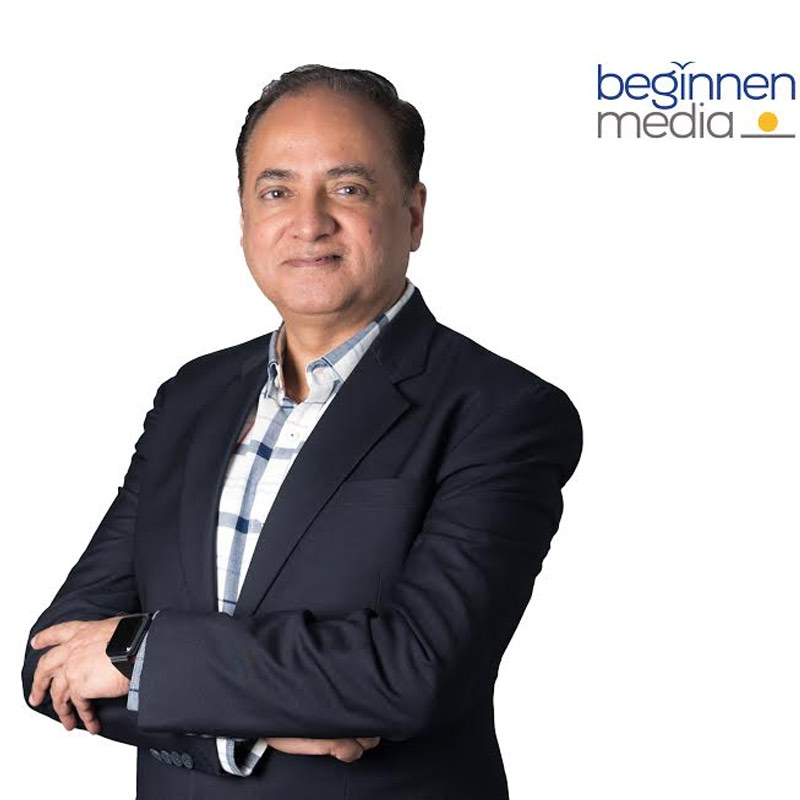
    In an exclusive interaction with Indiantelevision.com, Beginnen Media, managing director Bharat Kumar Ranga talks about his vision for the new channel, its financial model, content offerings, and introduces for the first time, the newly formed team that helped build the brand.

    Edited excerpts:

    On the decision to focus on rural India

    At Beginnen Media, we wanted to relook at the media and entertainment sector with a fresh perspective. We believe that the real transition is not from broadcasting to individual casting or TV to digital, but from being from creative/content-centric to being consumer-centric. We found a great opportunity in the rural segment. While the urban segment has been over-serviced by TV and digital platforms, consumers in rural India are still under-serviced with content that was originally created for urban viewers. They weren’t really considered primary consumers. So, we thought that there was an opportunity for us to see them as primary consumers and create stories exclusively for them.

    On how the target audience was identified

    We put most of our energies into identifying our target audience. We saw that rural people have a certain mindset, and we decided to focus on that. No matter which place they migrate to, they will carry that mindset with them. Though our content will cater to the Hindi-speaking audience, it will also try to reach out to Hindi-understanding markets like parts of Gujarat, West Bengal, Punjab, Maharashtra, where people may not speak Hindi, but they do understand the language. We want to design our content in such a way that people from across states relate to it. We have also hired specialist agencies that work on consumer products, like the Delhi-based agency- Futurebrands, which is led by Santosh Desai to provide us with data and insights.
    On the decision to go Free-to-air (FTA) and growth opportunities in the rural market

    In terms of distribution, the TV consumption in rural India is largely through DD Free Dish, and you cannot be on DD Free Dish if you are a Pay channel. So, we chose FTA so that we could reach out to that audience. Since we are the first rural GEC, we thought it makes much more sense to reach out to people quickly, and start building on that connection.

    Generally, people tend to confuse Free-to-air (FTA) with rural. While it is fair to say that most people who consume FTA channels are in rural India, and that is the market that we are entering into. But a significant part of the rural audience is also watching pay platforms, other than on DD Free Dish. So, we are venturing into a new category, where we are competing with not just the FTA channels, but also the Pay channels in the rural segment. FTA channels are also available in more households than Pay TV. It’s just that the FTA market has not unlocked its full potential yet. The over-supply of acquired content on these channels does not seem to be working anymore. The audience understands that the channels are recycling content, and they want something new, so that is why we hope that our rural model might work.

    On the content offerings and original shows

    Our original shows got delayed because of the pandemic. But since we had to start the channel distribution, we went ahead with the soft launch. We started building a connection with the audience. Now, our new shows are also under production and we hope that we will be able to sustain and keep the process running in case there’s a third wave too.

    In terms of content, we have put in a huge amount of energy to determine what our rural audience will like to watch. On the face of it, our content might not look different, but the larger differentiation is in the point of view of the people, that we will try to reflect in the shows. Currently, stories on pay platforms are set up in rural areas, but they are told to an urban audience. We wish to tell stories that reflect their point of view irrespective of where they are based.

    On the financial model and opportunities for advertisers

    As a rural entertainment channel, we need to have all kinds of revenue- subscription-based, advertising-based, as well as digital revenue. In terms of advertising revenue, we are looking at some sort of premium around the environment that we are giving to our advertisers- ‘digital virtues in a TV business’.  Firstly, we are providing a focussed target audience. For instance, if a campaign runs on any FTA channel, the advertiser may not know if it’s reaching the urban or rural audience. But, in the case of Azaad, the focus is entirely on people with a rural mindset. Secondly, the programming environment. If an advertisement is put on YouTube, it’s difficult to identify the content/genre that the consumer is watching. However, we will offer brand safety in terms of content that aligns well with the values of the brand. Advertisers will be interested in an entertainment platform that is consumer-focussed. We already have some regular advertisers like HUL on board. But the main exercise will begin once we launch original shows.

    On the distribution plans for the channel

    Simple to our plan, we have looked at all the MSOs. We began with DD Free Dish, where the channel is currently being aired. Then we identified some 50 individual distribution cable operators in rural areas. We are also in talks with 15 more such operators who are working in the outskirts of these areas. They may be lesser-known but attractive to us. We are also in touch with some top DTH and MSOs, but our priority is rural India and we will stick to that.

    Rural is a super mass category. We want to create a little space for ourselves, and we understand that it will take some time for us to create a relationship with the audience. We want to become the most credible platform for rural audiences.

    On the team that leads Beginnen Media

    Director – project & operations: Mohan Gopinath 

    A media and broadcast veteran, Gopinath carries nearly 25 years of work experience. He worked with Zee Entertainment Enterprises Ltd (ZEEL) for 18 years, turned entrepreneur, and co-created Bhu Entertainment in 2015. He also helped Viacom launch its first movie channel, Rishtey Cineplex.

    Chief marketing officer – Rachin Khanijo

    Khanijo carries over 17 years of extensive MarComm experience, during which he has worked at Eros Now as vice president, marketing, and COLORS as associate director – marketing. He has also worked as marketing head at &TV and brand director – Filmfare, Femina, and GoodHomes. At Beginnen Media, he handles marketing, corporate communications, on-air promotions, research & distribution.

    General manager, product: Doris Dey

    Dey spearheads Business Development, Programming & Content Strategy, Product Innovation, Content Creation, and Curation. In a career spanning 18 years, she has worked as a writer, creative director, and even Independent Producer (OTT). In her previous stint at Essel Group, she envisaged and launched &TV.’

    Chief revenue officer, Johnson Jain

    Jain carries over two decades of experience in the Media & Entertainment industry and specialises in advertising revenue. He has worked with leading media conglomerates including ZEEL, Sony Network (SET India) & 9x Group. He has played a key role in relaunching Zing in 2016.

    Chief financial officer, Dinesh Bhutra

    An associate member of the Institute of Chartered Accountants of India, Bhutra has more than a decade of experience in various sectors like Airlines, Telecom, Entertainment, Education, Finance, Media, Data Centre and Refinery including Jet Airways, Reliance Jio, Essel Corporate, MT Educare Ltd, ISSL.  At Beginnen Media, Bhutra also heads Commercial, Administration & Human Resources as its chief finance officer.

  • Promax India to host the Regional Conference & Awards 2021

    Promax India to host the Regional Conference & Awards 2021

    Mumbai: Honouring outstanding achievement in entertainment, marketing and design, the Promax India Regional Awards 2021 is all set to be held virtually on 11 June, the association announced on Monday.

    The event will witness some of the best creative works in entertainment, marketing, promotion and design from all regional markets of India compete across 25 categories. Since 1997, Promax has honoured creativity, innovation, and storytelling in the media and entertainment industry. Given the ‘new-normal’, it has embarked on a new innovative journey with the first-ever Promax India Regional Conference and Awards 2021.

    The event will see some prominent names from FMCG to the media industry deliberate on the rise of regional content, newer audiences, latest trends and new set of rules in the regional story of media & entertainment. Keeping in line with the evolving entertainment landscape, the sessions will feature Zee Entertainment Enterprises Ltd, executive vice president and cluster head, Siju Prabhakran, EY India, media and entertainment leader, Ashish Pherwani, Viacom18, head – regional entertainment (Kannada & Marathi Cluster), Ravish Kumar, Sony Pictures Networks India, head of originals, Saugata Mukherjee, Zee Entertainment Enterprises Ltd, cluster business head (East), Zee Bangla & Zee Bangla Cinema, Samrat Ghosh among others.

    Promax, country head & strategic partnerships (India, Hong Kong & Philippines) Rajika Mittra said, “Be it global or Indian brands, each one of them has broken new grounds in their respective sectors by localizing their content and communication to reach the Indian audiences. Keeping a close eye on these brands, we are proud to honour their work and encourage them to set new milestones. Even though the awards are to be held in a virtual setting, we look to transcend all geographical barriers and come together in celebrating the sheer brilliance by some of the finest brands out there.”

  • Curtains for Cinemas?: Industry pins hopes on vaccine roll-out amid second wave

    Curtains for Cinemas?: Industry pins hopes on vaccine roll-out amid second wave

    KOLKATA: The film entertainment segment of the M&E industry was perhaps the worst hit due to a long-term closure induced by the outbreak of Covid2019. With phased opening and beginning of theatrical releases, the allied segment had been on the course of recovery, but the second wave of the pandemic has abruptly derailed hopes of revival.

    After fresh lockdown guidelines were enacted in Maharashtra, shares of major multiplex chains like Inox and PVR slipped for two consecutive days, given the fact that the state contributes to around 35 per cent of all India box office.

    “As a responsible organisation, we completely relate to the Covid situation in Maharashtra. The revival process of the cinema industry had begun, and the recent curbs are much like a speed-breaker in the journey, which we shall surpass soon in a month’s time,” said Inox Leisure Ltd Alok Tandon.

    He went on to add that the performance of movies like Roohi and Godzilla Vs Kong showed that audiences are willing to turn up in big numbers for new and good quality content, even after an elongated lockdown.

    However, more than cinema occupancy, what’s adding to the woes of cinema owners is that the skyrocketing caseloads have once again disrupted the release calendar. Akshay Kumar-starrer Sooryavanshi, originally scheduled for March 2020, has been postponed indefinitely from its 30 April 2021 release date. Eventually other big ticket releases like Radhe will follow the same path, Elara Capital VP research analyst (media) Karan Taurani surmised.

    Like a playback of last year, this lockdown too will be lifted in a phased manner based on the number of daily cases, opined Taurani. But this time around it may not be as troublesome as 2020, and unlock will happen more swiftly thanks to the vaccine roll out being ramped up. However, he pointed out that theatres may well be the last to open up even if cases come down.

    On the other hand, Inox’s Tandon has reposed faith in upcoming content and increased turnout in the markets dependent on movies in other Indian languages, especially in the southern and eastern parts of the country. Over the past few months, movies like Master, Roberrt and Uppena had brought out the southern audiences in droves. Yuvarathnaa, Sulthan and Wild Dog are also currently performing exceedingly well in the South Indian markets, he added.

    “With Covid cases rising again, there are two major factors which will determine the future of theatrical revenues. One is the fear factor which can lead to lower footfalls even if theatres are open. Secondly, the slate: some films have again started postponing their releases. Unless there is a mass vaccination drive properly rolled out and a solid film slate of releases, the situation is probably not going to improve meaningfully,” EY India partner and media & entertainment leader Ashish Pherwani remarked.

    He also noted that the uncertainty around recovery timelines could result in further direct-to-digital releases, but that may not be a permanent trend. In a similar vein, Taurani mentioned that there is already a big backlog of films and April-June was supposed to be a period where cinemas could go back to 17-20 per cent occupancy on the back of big Hindi releases. Now, many of the mid-small budget producers will again go for OTT premieres. 

    Moreover, in-cinema advertising, which went down almost 90 per cent in 2020, will also be keenly impacted even if the theatres are open in some states.

    “Artificial intelligence has actively taken over the cinema advertising space and this allows for delivering appropriate content depending on location of the cinema, ticket price, demographic and occupancy,” said Harkness Screens Asia EVP Preetham Daniel. “Though the occupancy levels in the auditoriums are not as high as pre-Covid, the value of the advertisement, I believe will be equally impacted. Having said this, the revenue from advertising will definitely take a hit. We had seen the occupancy numbers and box office rising but given the second wave, we may see it drop again as some large releases will now get pushed to June.”

    The advantage of AI is the decision to play a particular ad will now be more accurate based on the heaps of data available on people behavioural pattern, he explained. This allows for brands to sign on long term as opposed to a weekly or monthly run. While Covid2019 also has affected the on ground activation campaigns for the brands, Daniel remained optimistic that it will eventually pick up as and when hyped movies hit cinema screens.

    “Thanks to a huge pent-up demand and a stellar line up of movies, 2021 is destined to be a blockbuster year for us, and we are still certain about it. In the current situation, we have pinned our hopes on the rapid and widespread vaccination drive, which we hope would arrest the surge in cases,” Tandon said.

  • M&E sector witnessed 24% degrowth in 2020: FICCI & EY report

    M&E sector witnessed 24% degrowth in 2020: FICCI & EY report

    KOLKATA: Following a pandemic hit year, the Indian media and entertainment (M&E) sector declined by 24 per cent to Rs 1.38 trillion in 2020, compared to Rs 1.82 trillion in 2019. However, the allied sector is already seeing recovery with improvement in revenues for most segments in the last quarter of 2020. It is expected to recover 25 per cent to reach Rs 1.73 trillion in 2021, touching almost pre-Covid level scale, according to a report by FICCI and E&Y.

    The report titled ‘Playing by New Rules: India’s M&E sector reboots in 2020’ states digital and online gaming were the only segments which grew in 2020, adding an aggregate of Rs 26 billion and consequently, their contribution to the M&E sector increased from 16 per cent in 2019 to 23 per cent in 2020.

    Other segments dropped by an aggregate of Rs 465 billion. Largest absolute contributors to the fall were the filmed entertainment segment (Rs 119 billion), print (Rs 106 billion) and television (Rs 102 billion). The share of traditional media (television, print, filmed entertainment, OOH, radio, music) stood at 72 per cent of M&E sector revenues in 2020.

    However, television stood as the largest sector despite a 22 per cent downturn in advertising revenues on account of highly discounted ad rates during the lockdown months. Moreover, the sector also witnessed a seven per cent fall in subscription income, led by the continued growth of free television, reverse migration and a reduction in ARPUs due to part implementation of NTO 2.0.

    On the other side, digital advertising did not see much impact, led by increased allocation from traditional advertisers who accelerated their investments in digital sales channels. SME advertisers continued to spend on the medium and experimented more with e-commerce platforms like Amazon and Flipkart.

    For the first time ever, OTT subscriptions surpassed the 50 million mark. From 28 million paid subscriptions, it went up to 53 million in 2020 leading to a 49 per cent growth in digital subscription revenues. Growth has been attributed largely to Disney+ Hotstar, which put the IPL behind a paywall during the year. Increased content investments by Netflix and Amazon Prime Video and launch of several regional language products also catalysed the growth, the report added.

    Online gaming crossed all the marks with 18 per cent growth helped by work from home, school from home and increased trial of online multi-player games during the lockdown. Online gamers grew 20 per cent to reach 360 million in 2020.

    Among the pandemic hit sectors, print’s revenue declines were led by a 41 per cent fall in advertising and a 24 per cent fall in circulation revenues. Theatrical revenues plummeted to less than a quarter of their 2019 levels, partly offset by direct-to-digital releases.

    “While the M&E sector usually grows faster than GDP, it also falls more than GDP degrowth, given the discretionary nature of advertising. In 2020, when the GDP fell by eight per cent advertising fell over 25 per cent while the sector overall fell by 24 per cent,” the report read.

    The M&E sector is expected to rebound in 2021 and double to around Rs 2.68 trillion by 2025, the recovery of various segments will vary albeit. TV, film, music will take one to two years, animation and VFX will take two to three years; print, radio, OOH will take the longest time, even more than three years.

  • What Santa could gift us this Christmas

    What Santa could gift us this Christmas

    MUMBAI: As children, Santa Claus was very real for us. Even if he sat under a fake Christmas tree in an Akbarally’s department store in Mumbai, with padding under his suit to give him that potbelly, and rouge on his cheeks, and a false snow white beard, which jiggled every time he said ‘Ho! Ho! Merry Christmas.’ For us, it was exciting to see other children big-eyed, nervous, eager smiles on their faces, as they waited their turn to get to Santa. Father Christmas, as he’s known in English folklore, embodies the very spirit of the season: that of love and giving.

    The world overall – and our media and entertainment industry –needs a lot of loving and giving this year. Bruised and battered by the Covid2019 induced lockdowns in various states, and countries, it is celebrating Christmas with severe restrictions in place. A new mutant strain of the SARS CoV2 virus that has popped up in the UK has made governments in almost every nation jittery. Curfews, various levels of lockdowns, and border closures have been re-imposed, once again choking the breath out of any economic revival that could have happened.  

    Fear is very much prevalent all around.  The season to be jolly appears to be pretty un-jolly. Christmas is going to be cold – really cold, without the warm emotions the season brings.

    The good news is that various vaccines are going to be available on a massive scale. But we don’t know clearly how long they will be effective; and how much time it will be before every one of us gets a jab.

    The good news is that jolly old Santa is still around. And if he is listening – which we are sure he is – we’d like him to shower the world with oodles of good gifts and tidings this Christmas 2020. Here’s a wish list from us at Indiantelevision.com for the world and the media and entertainment industry:

    ·    Miraculously, as if by sleight of hand or an act of God, the SARS CoV2 virus loses its potency, and does no harm to any human being. Yes, we cannot bring back the ones we have lost. But we can definitely do with knowing that we will lose no more and that we are free to go where we want to without terror coursing through our veins.

    ·    Now if that is not possible, ensure that the vaccines miraculously provide a permanent defence against the dratted bug and that with one fell stroke, every human being on this planet gets an injection. For that, the pharma companies and governments will have to be sensible, honest and get their acts together super quick.

    ·    The world we live in is a beautiful place. The lockdowns enabled us to see it for its beauty without the horrors and synthetic creations of mankind damaging it. Governments the world over and earth’s denizens need to remember this for eternity. Natural rather than artificial needs to be the mantra, if we want our future generations to enjoy it.

    ·    The economic engine needs to start chugging and gain momentum. Money, the magical fuel, needs to flow smoothly to enable this to take place.

    ·     Consumer sentiment needs to turn around from being cautious and hoarding to one which is open to spending and living life to its fullest.

    ·     For the media and entertainment industries, this means that brands will be willing to spend to get king and queen consumer to buy them.

    ·    Result: the print, television, OTT, cinema industries will serve as a good medium to induce consumers to make purchases through persuasive communications in the form of advertising and TVCs.

    ·    Net outcome: the red ink on the balance sheets of many a company will steadily turn to black.

    ·   The content that is pumped out on TV, cinemas, and OTT platforms is innovative and attracts sticky eyeballs, stickier than ever before.

    ·   Let new talent in every sphere of entertainment get a chance to flower, to showcase his or her skills.

    ·   Let inclusiveness be real, and be put into practice in day to day work: alternate sexualities, genders, differently-abled and folks from every caste and creed truly be given equal opportunity.

    This is our bucket list of what we would like Rudolf the red-nosed reindeer and his boss to bring us this year. It’s by no means comprehensive; it may not even be apt, but it is the message we are sending out to the universe; hopefully it will reciprocate in full measure.

    We would love you to share your wish list for Santa too. Do it. It can be fun. Please post in the comments below.