Tag: Media And Entertainment Industry

  • Govt. creates a conducive environment to attract foreign investments in M&E sector including visual effects & animation

    Govt. creates a conducive environment to attract foreign investments in M&E sector including visual effects & animation

    Mumbai: The government is continuously making efforts to portray India as an ‘incredible destination’ globally for filming. To make it a reality, the centre is focusing on various ways to ease out doing business in India, especially in the film and visual effects & animation sector. The ministry of information and broadcasting (MIB) has offered foreign filmmakers incentives, which will provide an impetus to the Indian media & entertainment sector in future. “Media & entertainment, including visual effects and animation, is one of the fastest growing industries in the country,” the I&B minister Anurag Thakur told the Lok Sabha recently.

    To boost the growth of the sector, Thakur further added that the government has set up the Film Facilitation Office (FFO) under the aegis of the National Film Development Corp.(NFDC), for providing a single window facilitation & clearance mechanism to accord online permissions for film shooting in India for both international & domestic filmmakers. In addition to this, NFDC organises “Film Bazaar” at the International Film Festival of India in Goa every year, which is the largest South Asian film market and attracts investors from around the world. The event encourages creative minds to come under one platform and collaborate with South Asian & international film communities.

    The minister also emphasized attracting investment from foreign filmmakers and promoting India as a preferred filming destination. The government announced in May two schemes i.e., an incentive scheme for audio-visual co-production and an incentive scheme for the shooting of foreign films in India to increase investment and boost the growth of the M&E industry.

    Currently, India has audio-visual co-production treaties with 15 countries, he mentioned and added, “This further enables international producers to invest in Indian projects.” Such collaboration helps in the effective contribution of technical, creative, and artistic personnel of the participant countries. Thakur mentioned that local IP creation and outsourcing work for foreign studios are key drivers of growth in the animation and visual effects industry.

    “The contribution of the Satyajit Ray Film & Television Institute and the Film & Television Institute of India via courses on animation and visual effects is providing skilled manpower in the industry,” he told Lok Sabha while answering a query.

    He mentioned that the government has also set up a task force earlier to unleash the potential scope of the animation, visual effects, gaming, and comics (AVGC) industry. The task force will monitor the development of progressive policies, promote growth and recommend incentives for increasing foreign direct investment in the AVGC sector. It will also help in developing world-class creative talent to meet domestic and global demand.

    The M&E ecosystem is a sunrise sector and is expected to generate revenue of Rs 4 lakh crore annually by 2025 and reach Rs 7.5 lakh crore (100 billion dollars) by 2030.

  • Applause Entertainment expands into Southern markets; unveils Chennai office

    Applause Entertainment expands into Southern markets; unveils Chennai office

    Mumbai: Aditya Birla Group’s venture Applause Entertainment on Tuesday announced its expansion in the southern market and set up a dedicated office in Chennai. Buoyed by the opportunities that regional OTT space presents, Applause will further develop its South content acquisition and creation strategy.  

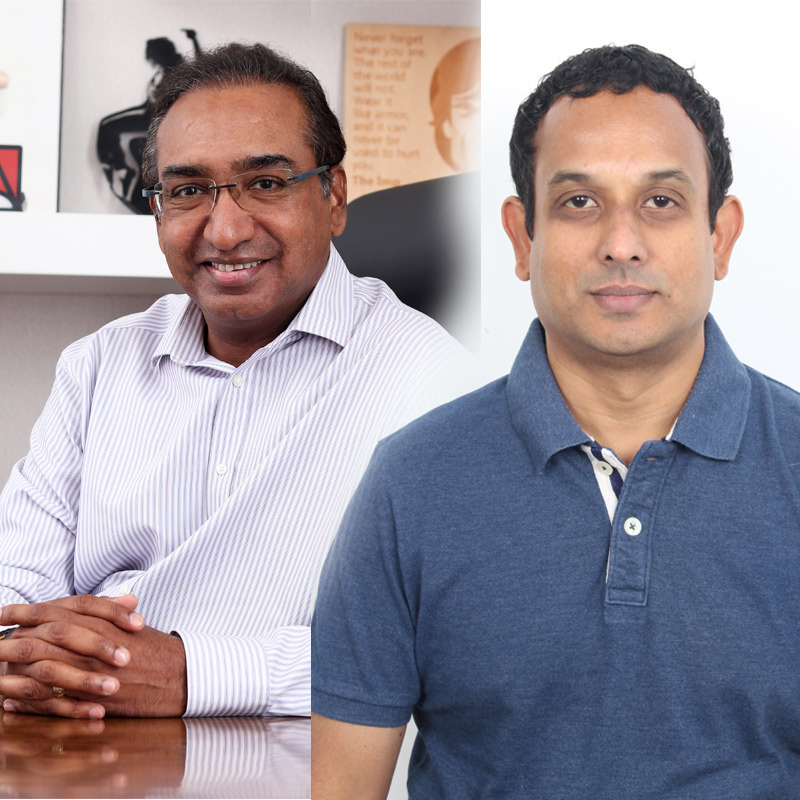
    Sign of Life Productions director and producer Pramod Cheruvalath has joined as the south – content head to spearhead this ambitious plan along with Applause Entertainment producer Vighnesh Menon.

    Pramod had earlier produced Iru Dhuruvam (Tamil) along with Applause Entertainment for SonyLIV and will now be responsible to build Applause’s content slate in all four Southern markets to create a diversified slate of premium series and movies across languages. Previously, the content studio has also produced series like Humble Politician Nograj (Kannada), Vadham, and Kuruthi Kalam (Tamil), apart from producing the second season of Iru Dhuruvam.

    Commenting on this expansion, Applause Entertainment CEO Sameer Nair said, “The global streamer has created a flat Earth and indeed, a global village. Content from every geography and in every language has the opportunity to reach audiences everywhere. After our successes in the Hindi/Hinglish category, we are really keen to work with the amazing talent in Tamil, Telugu, Malayalam and Kannada to tell rooted authentic stories for a domestic and international stage.  On-boarding Pramod to oversee the expansion is our first step in that direction. His extensive network, market knowledge and creative expertise will help build our unique hub & spoke business model in the key Southern markets”.

    Pramod Cheruvalath shared, “Ever since its inception, Applause Entertainment has backed and produced clutter-breaking content across genres. Regional content has unexplored potential and the ability to establish a strong connection with a local, national and international audience. Happy to take on this new role to work with Sameer and the team at Applause Entertainment to upscale the Applause Slate with genre breaking authentic and relatable South stories for a worldwide audience.”

  • NP Singh honoured as media personality of the year at Governance Now visionary awards ’21

    NP Singh honoured as media personality of the year at Governance Now visionary awards ’21

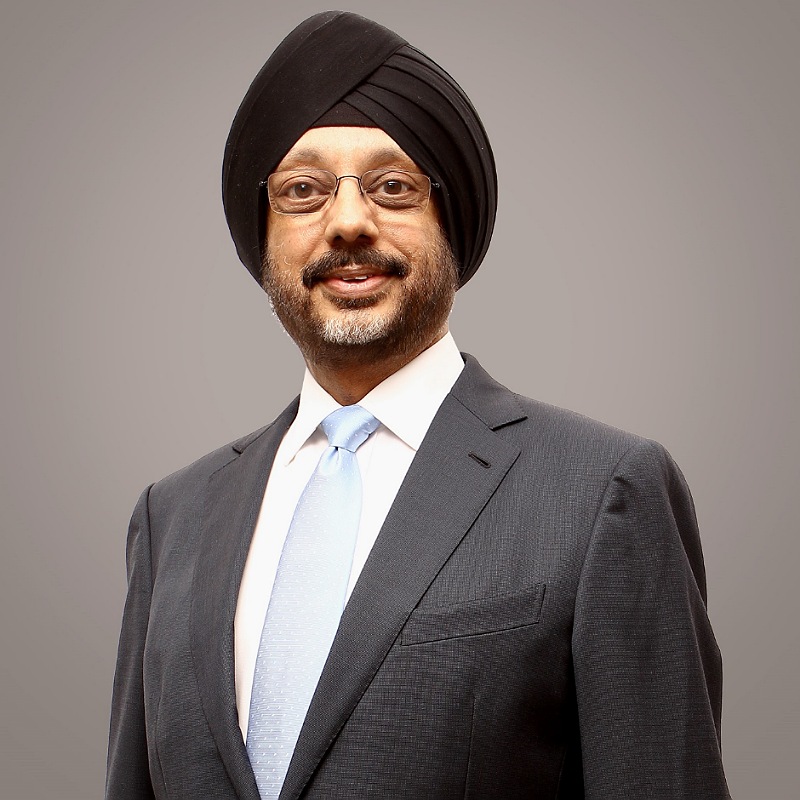
    Mumbai: Sony Pictures Networks India (SPNI) managing director and CEO NP Singh has been conferred with the media personality of the year award at the Governance Now visionary awards 2021. The award was bestowed upon him by the chief guest minister of law and justice Kiren Rijiju at a virtual ceremony organised by Governance Now MD Kailashnath Adhikari.

    “Singh’s visionary leadership and persistent efforts have substantially contributed to shaping Sony Pictures Networks India into the media behemoth it is today,” said the statement. “His passion, commitment, and hard work have contributed to the growth of SPNI and the advancement of the ever-evolving media and entertainment industry. He envisioned value for the industry in combining the might of SPNI and Zeel into one company. For him, being visionary means being ahead of the curve and leading from the front.”

    Governance Now is a public policy and analysis platform as well as a multi-media initiative for participatory reportage and analysis related to the governance of all institutions. The platform has more than one million website visits and 400k subscribers on its YouTube channel. It is owned by Indian M&E conglomerate Sri Adhikari Brothers Group with interests in broadcast, films, content production and publishing.  

    “The Indian media and entertainment industry has grown exponentially over the years, and as part of an industry that is brimming with leaders, I am indeed humbled and honored to be conferred with this recognition,” said NP Singh. “It is the ability to challenge the status-quo and make room for pioneering initiatives that propels us as leaders, benefiting the industry at large.”

    “Governance Now Visionary Awards is an attempt to honour the stellar work of visionaries across sectors who by their sheer commitment and vision have changed the course of the domain they operate in,” stated Kailashnath Adhikari. “These are challenging times that we are witnessing and our awardees that are selected after a rigorous process of screening by our expert jury have pushed the envelope time and again and proved their mettle. It is worth extreme pride that we bring this year’s edition of Visionary Awards. NP Singh has been instrumental in making Sony Pictures Networks India the media behemoth that it is. The proposed merger between Sony and Zee is scripting a new chapter in the course of Indian media and entertainment.”

  • Policymakers should create single national policy for M&E sector: K Madhavan

    Policymakers should create single national policy for M&E sector: K Madhavan

    Mumbai: Policymakers should create a single national policy for the media and entertainment sector, said CII national committee chairman and The Walt Disney Company and Star India country manager and president K Madhavan at the 10th edition of the CII Big Picture Summit on Wednesday. “Regulations like new tariff order (NTO) 1 and 2 did not address the interests of any stakeholders including consumers,” Madhavan stated.

    The event was attended by Trai chairman Dr PD Vaghela and ministry of information and broadcasting secretary Apurva Chandra. The summit was a gathering of stakeholders in the media and entertainment industry to achieve the goal of reaching $100 billion.

    In his speech, Madhavan noted that given the “power and influence” of the TV broadcast industry, it is essential that it be allowed to “freely flourish” with the power to “self-regulate.” “Self-regulatory bodies for both TV and digital are working extremely well in India, and have proved that they can effectively handle complaints and concerns without any interference from policymakers and regulators,” he said.

    He acknowledged Dr Vaghela for taking a keen interest to address the concerns of the industry on priority and hoped for a “positive and proactive” approach from the regulator going forward. Madhavan stressed the need for a national policy that could guide regulators for years to come and ensure that consumers, the industry, and all stakeholders find certainty and clarity in equal measure.

    The Indian media and entertainment industry is creating 2500 hours of original content each year for OTT and over 100,000 hours of content for television. The gaming industry caters to 420 million casual gamers and the AVGC sector provides high-quality, cost-effective content for the global market. The M&E industry also promotes India’s soft power across the world, in addition to directly and indirectly employing 4.5 million people. Ancillary industries like education, tourism, and even software are all boosted as the creative economy grows.

    Madhavan observed, “Ten years back, television had started migrating customers to digital, and HD channels were just being launched. There were barely 13 million broadband subscribers, and users spent only eight hours a month watching videos online. Today, we have about 800 million broadband internet users and 600 million smartphone users, and Indians watch over five hours of online video content a day compared to the global average of four hours a day. India is a digitally active country with a massive and diverse consumer base with a very high level of appetite for entertainment.”

    “Our film industry is eager to bounce back from the pandemic. CII, working alongside the Government of India, will seek to represent India at all the major film festivals in the upcoming year,” he concluded.

  • Media icon & film producer Pradeep Guha no more

    Media icon & film producer Pradeep Guha no more

    Mumbai: Media and entertainment industry veteran Pradeep Guha has passed away on Saturday. He was in his late 60s.

    Guha was battling advanced liver cancer and was admitted at Kokilaben Ambani Hospital in Mumbai. He is survived by his wife Papia and son Sanket.

    Guha was the managing director at 9X Media. Previously, he was chief executive officer at ZEE Telefilms. He was also associated with Times of India for nearly three decades. He produced the Bollywood film ‘Fiza’.

    Many veterans of the M&E industry paid tribute to Guha on social media.

    “Brevity, clarity, speed characterised Pradeep Guha. Like his simple signature, that was but a tick mark, as if it meant ‘just go ahead and do it’. Aim high, set quality standards, inspire the team and just do it was the simple strategy he employed. The legendary media man who put India on the Global Media map in many ways is no more,” said Times Network, managing director and chief executive officer, MK Anand.

    “His professional achievements are multifarious – dominance in print media, advertising excellence, beauty queens, mega format ground events, the list goes on. He was one of the earliest of the current generation of high flyers who burst on to the Indian corporate landscape in the late 80’s and blazed through the 90’s. The young turk who kept rising,” he added.

  • Rainshine Global launches four new fintech businesses

    Rainshine Global launches four new fintech businesses

    Mumbai: The US-based media and entertainment company Rainshine Global has announced the creation of four new fintech businesses including investment vehicle AISTRA Coin, credit solutions provider Rainshine Media CreditTech, premium video-on-demand platform Rainshine DiFa, and digital assets research and advisory services (DARA). These offerings will be anchored by Rainblox, the company’s proprietary blockchain platform.

    Rainshine is creating new subsidiaries for each of these new fintech businesses which will be launched progressively in the next six to nine months.

    Digital tokens: Rainshine will launch its first token under the brand AISTRA Coin, an investment vehicle designed to raise $100 million to finance, distribute, and trade new original content productions and list at global alternative trading system (ATS) exchanges. Rainshine’s digital tokens will create a new asset class for both institutional and high net worth investors, transforming the process of investing in new and high potential original audio-visual media content assets.

    Media credit: The company will launch two new subsidiaries under the banner of Rainshine Media CreditTech, one each for the US and India, to offer credit solutions to the media and entertainment industry. Rainshine is raising $50 million, combining both new equity as well as credit lines from leading financial institutions to initially develop the media credit business and later add DeFi (decentralised finance) tech solutions to broaden the pool of investors.

    Premium video-on-demand (PVOD) platform: The new platform called Rainshine DiFa (direct-to-fans) will provide both a white-labelled solution plus bolt-on to other global PVOD platforms or provide content developers a one-stop gateway to a global audience with fully baked digital marketing, payment, e-commerce, and audience interaction solutions.

    Digital assets research and advisory services (DARA): As new fintech and blockchain technologies collide with the traditional and the new streaming-driven M&E industry, industry players will need considerable support to comprehend, evaluate, and exploit new opportunities. Rainshine’s DARA group will work closely with industry players to help them develop and launch new products globally and ensure that they achieve their fullest potential.

    Blockchain platform Rainblox uses a smart contracts module that enables the creation of both transparency in the monetisation of assets and full execution of the required payments globally.

    “Rainshine is standardising financing and payment processes in the M&E industry that have been overly complex traditionally. It seeks to enhance trust and transparency for investors, content creators, and producers,” said the company in a statement.

    “The innovative offerings from Rainshine will accelerate the growth of its original content business and create new options for financing, distribution, and co-creation of content and fulfil its ambition of creating the next generation M&E company,” it added.  

    Rainshine Global’s founder, chairman, and CEO Neeraj Bhargava said the media and entertainment industry is positioned to become a $ three trillion globally connected industry by 2030 and that the company wants to be at the forefront of enabling the development of a creator-centric industry. “Riding on the second wave of digital disruption, we want to build a future-ready company that not only champions the stories that creators want to tell their audiences but also alleviates their pain points on financing, distribution, and retaining the fair share of their creations. We find ourselves in an exciting period where technology can accelerate growth and restructure the industry in a most positive manner,” he added.

    “The new generation of fintech and blockchain technologies are creating exciting options to finance the rapid growth of the M&E industry and access new paths to distribute globally,” said Rainshine Global, chief financial officer, Kishore Mirchandani. “I am truly excited about Rainshine’s innovative fintech offerings and the potential of RainBlox developing into a fully integrated platform for creator and production contracts, M&E asset fractionalisation and financing, digital assets management, global audience access, and listing in financial markets. Being an innovator in this era is an irresistible privilege that we at Rainshine are eager to embrace and build a transformational company.”

  • Inclusivity makes a strong business case for media companies

    Inclusivity makes a strong business case for media companies

    MUMBAI: In the last few years, diversity and inclusion have caught heightened attention in organisations across the world. Although diversity is less of a concern for media companies, inclusion is what needs to be addressed. The motive behind this should its relevance today and the impact it has on business.

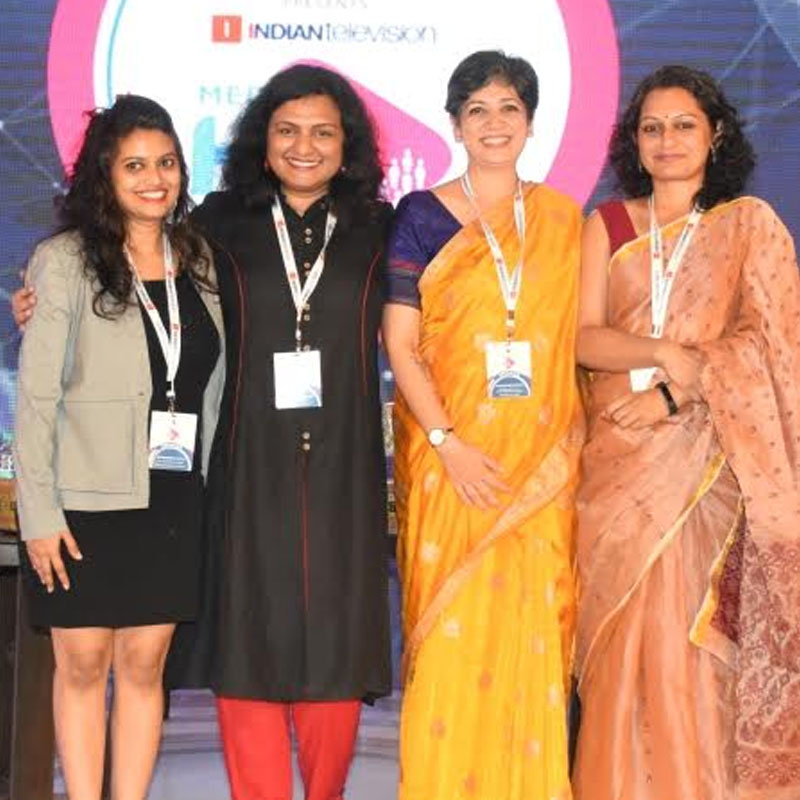
    At the recently concluded Media HR Summit hosted by Indiantelevision.com, a panel discussion moderated by D&I evangelist and founder and MD Vividhataa, Diversity Hiring Consultants Ratnaprabha Sable revolved around the issues regarding D&I. Voices of Inclusion author Deepa Shankar, Mondelez International diversity and inclusion lead (independent consultant) Priyadarshini Gupta, NeoSeven Solutions global HR expert Monika Navandar took part in the discussion.

    Gupta explained that diversity is about having diverse perspectives, thoughts and viewpoints on the table while innovating something or creating a new product, service or working together, collaborating. According to her, having diverse thought processes on the table is important.

    Talking about the need for diversity in an organisation, she also said that a diversity agenda should have a business case for it. She gave the example of an American KPO that was investing a high amount of money in training employees in the age group of 22-25 who would end up leaving the organisation in less than a year. Instead, it started recruiting retired people with the necessary skill sets for whom skipping jobs or moving high or quickly in their career did not matter. As a result training cost reduced significantly impacting topline and bottom line of the organisation.

    “Inclusion is about what I am doing in order to help a talent who has been brought back into the system to make them feel they belong to the organisation and the person thrives and grows,” Shankar commented. She also added that inclusion is also about policies which support the diversity agenda.

    Navandar contradicted a point from another session where panellists made a point about having tech and analytical skills. According to her, people should play to their strengths as there are so many other jobs.

    While there’s a common tendency of discussing only on gender-specific issues, it came out during the discussion that diversity moves beyond this. The panel also discussed the issue of unconscious biases which even sometimes affects recruitment processes.

    In the context of the media and entertainment industry, it was agreed that diversity is not a big concern there but inclusion needs to be worked upon such as accepting smokers and non-smokers, people who have alcohol vs those who don’t have. More importantly, Sable highlighted the need for backward integration. She contended the importance of creating jobs for people with disabilities, acid attack victims and mental health issues. According to her, organisations need to identify jobs where these people can be placed in or trained for.

    The media industry has the advantage of having different sets of people compared to other industries. Moreover, multicultural workforce brings out multicultural content making the business case strong for diversity agenda. However, looking at supplier, product and service delivery diversity along with consumer diversity is also important while working. Hiring a diverse slate of people and recruiting from different industries, not just from media will also enhance diversity.

  • Digitisation has increased M&E revenue: MIB’s Rathore

    Digitisation has increased M&E revenue: MIB’s Rathore

    MUMBAI: The Ministry of Information and Broadcasting (MIB) is patting its back for the digitisation success in India. Minister of State for MIB Rajyavardhan Rathore endorsed the growth of the media and entertainment industry and the benefits of digitisation.

    In response to a question raised in the Lok Sabha, he said that digitisation has led to enhanced revenue generation in the industry as it enhanced benefits to consumers as well as transparency in the subscriber base. The government passed the Cable Television Networks (Regulation) Amendment Act in December 2011 for digitisation of cable television networks in a phased manner.

    He also added “Digitisation enables efficient utilisation of the spectrum bandwidth and enhances the capacity to carry channels on the cable. The consumers get a wider choice of channels, improved quality of content and added services and the states benefit from lowered incidence of evasion of taxes. Cable TV digitisation has also given a boost to the indigenous manufacturing of set top boxes (STBs) and it also results in skill development & employment generation in digital environment."

    Rathore cited the Federation of Indian Chambers of Commerce & Industry (FICCI) report which estimated the growth of the industry at Rs 1660 billion in 2018 from Rs 1473 billion in 2017, while the figure stood at Rs 1026 billion in 2014.  

    Indian M&E sector has not only seen investments from foreign behemoths only but from large domestic conglomerates. In addition to that, the current digital wave is boosting the growth faster.

  • Transform by tackling moral dilemmas: Sudhanshu Vats

    Transform by tackling moral dilemmas: Sudhanshu Vats

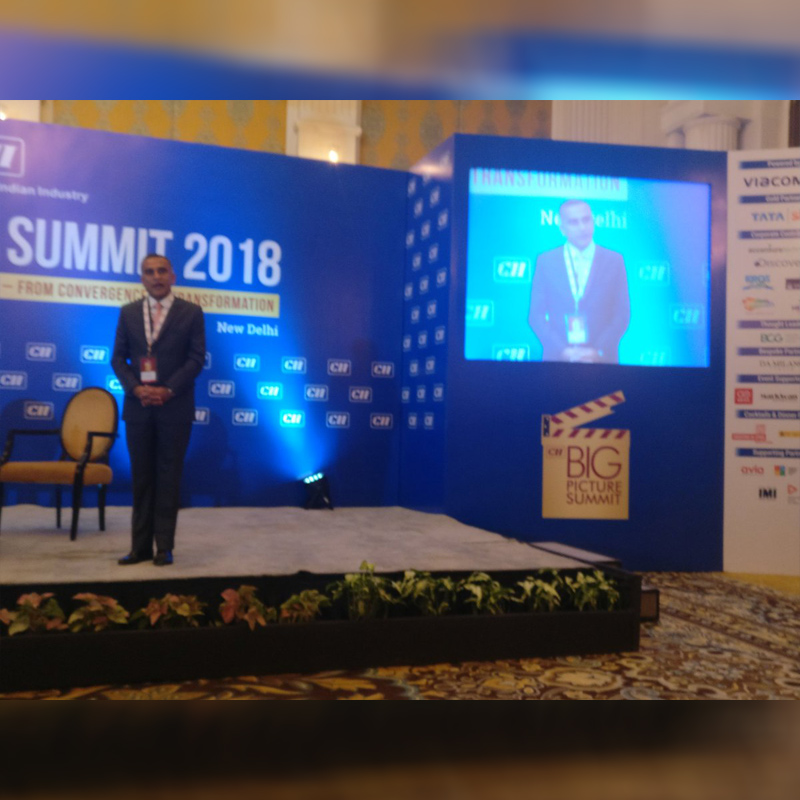
    MUMBAI: Media companies can no longer ask ‘if’ changes are happening. They are, there’s no doubt about it. But now it’s a question of how to respond. Addressing the CII Big Picture 2018 in New Delhi, Viacom18 group CEO and MD Sudhanshu Vats spoke on the topic of ‘Changing M&E landscape – from convergence to transformation’.

    According to him, the industry is battling moral dilemmas. “If you step back and introspect about all that is happening with our industry across the world, you will agree that we are battling several changes – and most of them are a result of moral dilemmas and our response to them. If we can tackle these dilemmas successfully (and defining success is the hardest part), we can believe that we have transformed,” Vats commented.

    Another issue bothering the industry is about misusing its reach and credibility to influence electoral processes across the world. Equally troublesome is ensuring fairness in terms of availability of content to consumers and parity across distribution platforms, especially in the future when convergence is going to dial up vertical integration across value chains.

    As the content consumption on digital is increasing rapidly, the access of media companies to consumer data will also go up. He said, “As consumption moves online, our access to data will increase. In many ways, data will be a competitive advantage and drive advertising revenues and personalised user experiences – what processes do we put in place to ensure it is not misused – how and where do we draw the line differentiating personalization versus privacy?”

    Correctly treating their biggest asset, human resources, both on screen and off, is also necessary. “How do we react when their individual, personal behaviour questions the fabric of the society we want to create? Think of this especially in light of the recent issues around diversity and inclusion that we’ve experienced. It’s important for everyone, but especially so for our industry,” he said.

    He also added that the list of moral dilemmas is endless. Hence, everyone needs to be cognizant of these dilemmas as organisations, industry bodies, policymakers and governments as they look to scale up businesses.

    “I’ve always been an ardent supporter of data and its importance in driving decision making. In this address, I have not used a single data point – because I believe that the course we take over the next decade will be determined more by these fundamental issues of values and how we tackle moral dilemmas than just commercial considerations,” he said.

    “Driving consensus will be difficult yet more important than ever before. This is even more so given that India is today amongst the world’s largest ‘open’ media markets and home to a multitude of players from all over and of all sizes,” he added.

  • ‘Make piracy an economic offence, good cos ‘badvertise’ too’

    MUMBAI: Protection and enforcement of copyright continues to remain a challenge for the Media and Entertainment industry. According to estimates, rogue or pirate sites earned 35 per cent more revenues than the Indian Film Industry in 2016.

    The need of the hour is to form enforcement models and effective strategies to counter the underground pirate economy. Taking the war against online piracy in India one notch higher, A session called ‘Decoding the pirate economy in interconnected world: from Noise to Action’ on online copyright infringement that has facilitated the emergence of pirate economy, was held at FICCI Frames on the first day of the three day conference on the Media and Entertainment industry.

    The panel moderated by MPA India MD Uday Singh was attended by DIPP joint secretary Rajiv Aggarwal, IAS, Inspector General of Maharashtra Police (Cyber) Brijesh Singh, Telugu Film Chamber of Commerce Anti Video Piracy Cell chairman Raj Kumar Akella, Star India legal VP Surender Mann, Strategic IP Information CEO Bharat Dube, Viacom18 group general counsel Sujeet Jain, and The Film and Television Producers Guild of India CEO Kulmeet Makkar.

    According to Singh, the Indian film industry’s attitude about the seven days window to make money at box office should change and one should look at piracy as a threat in a longer run. Public and private partnership is needed to deal with intellectual property violations. Hence, to curb online piracy in India, Maharashtra state is all set to get Maharashtra Intellectual Property Crime Unit, which may be called MIPCU.

    Though, Dube believes that advertising revenue is the primary driver for the content theft industry. The best way to deter advertising revenue from going to pirate networks would be to build comprehensive risk management frameworks in ad agencies, ad networks and advertisers to address this risk proactively. ISPs need to proactively build block lists and adhere to site blocking orders issued by the courts to limit access to pirate sites.

    “The problem is also with mindset where people do not see immorality or illegality in pirating movies,” he added.

    In one of his studies, Dube tracked 1,143 popular pirate sites in India and found that 73 per cent of the sites were ad-supported and had the potential of generating millions of dollars for pirates. It is estimated that large pirate networks can generate between $2-4 million while medium and smaller sites can generate up to $2 million annually. The low levels of industry awareness have resulted in advertisements of legitimate businesses appearing on pirate sites. This study found 425 legitimate advertisers advertising on pirate sites.

    Pirate networks also attract advertising from several High-Risk Advertisers such as, adult dating, pornography, malware, gambling and other unregulated products. This study found 361 advertisers in the high-risk category.

    “Piracy should be made an economic offence. Search engines should take responsibilities and advertising on illegal websites should stop. We have coined a word called ‘Badvertising’ for advertisements on such websites,” added Dube.

    Resonating with Dube’s thoughts, Jain also stated that the search engines have to behave more responsibly an that the bad advertising on rogue websites has to reduce. “Trinity of legislative, executive and judicial authorities need to fight piracy together. We need court orders to block websites completely to curb online piracy,” said Jain. He also pointed out that piracy should be classified as an economical issue for which measures are essential to improve civic sense. According to the IT act, there are intermediary guidelines which have a greater role to play. The responsibility on intermediaries has to increase to win this war against online piracy.

    Sharing similar thoughts, Mann happily agreed to help and support Maharashtra government against online piracy. Jain too accepted the opportunity to become a unit with the Maharashtra state to curb piracy.

    Makkar expressed their support for MIPCU and hope to see the end of piracy in India very soon. He also stated the importance of an awarenesss program. “We are working on some campaigns to spread awareness about the odds that come with piracy across cinema halls, TV channels, etc. ”

    Akella also resonated with the idea of collaborating industry and the state government. “India needs to take responsibility. Piracy is just not the loss of revenues. It affects us in a much larger way,” concluded Akella.