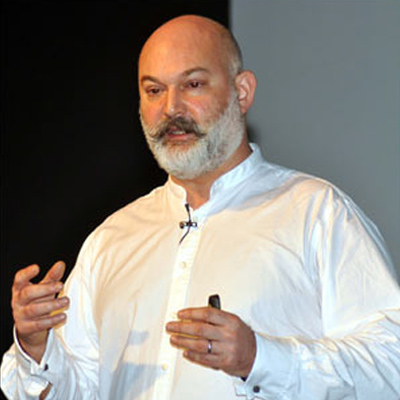
A broadcast journalist who turned to advertising purely because he loved it, Maxus global planning director Nick Vale enjoys the energy of the ad industry. He started as a TV buyer and has done media agency work and travelled around the world. He has no qualms in taking pride in some of the campaigns he has helped create and today leads the planning function of GroupM’s fastest growing agency.
Indiantelevision‘s Prachi Srivastava caught up with the dynamic Brit and needled him about topics varying from the role planning in media to the impact of fragmentation and the need for integration to competition within the GroupM agencies
Excerpts:
Q. What kind of independence do WPP agencies get as they are also competing with each other?
A: I think WPP wants its agencies to compete well with each other. Sir Martin Sorell came to us in 2008, when we were facing recession. Everything was getting tougher and he decided against time to really grow and launch a media agency which is incredibly brave. He simply said, “Give me an agency that‘s built for the future.”
We have set ourselves up to be something more interesting with a point of view that matched the businesses which we are leading into change. We are always looking for ways to think about what‘s next but remain grounded; about what‘s going to be the most important thing and big for our client and help them navigate the complexities of the world in which we are living today. We want to help clients make the right decision on where they should be investing money.
Q. How is it to work with Vikram (Sakhuja)?
A: Fabulous! Vikram has the same tremendous energy and enthusiasm, which is very becoming of Maxus as an entity. Thus he fits into it the ethos like a glove working with him is a real pleasure.
Another thing about his appointment is that we now have senior people spread fully across the globe which is great. While Vikram sits in Mumbai, I sit in London, the CFO sits in Singapore and we have got people in New York. It also goes to show how small the world is now, because Vikram operates a tremendously successful business sitting in Mumbai.
|
‘Vikram sits in Mumbai, I sit in London, the CFO sits in Singapore. This shows how small the world is now, because Vikram operates a tremendously successful business sitting in Mumbai’
|
Q. What changes have you seen in the planning process in the developed markets in last 4-5 years?
A: First thing to say is that the world is increasingly becoming localised. Some 10 years ago we lived in a world where we had a bunch of very developed markets and then we had everywhere else. The very developed markets – from a media agency point of view – started to move into a more strategic area so that there was more emphasis on highend strategic approaches. Then there was the introduction of the discipline of communication planning, which essentially was designed to bring all the pieces of communication together. And that‘s what all the developed markets were focusing on. There were lots of account planners who used to be with agencies.
What we see now is a much more patchwork – that is in terms of the way the world works. And it is much harder to say that you see there are some businesses or areas, which are more about strategy and others, which are not. We see much more localisation.
Part of the reason that we have build Maxus the way we have is that we strongly believe that for you to be a powerful agency going forward you need to be a larger conglomerate of local agencies with a strong central presence which is if you like building sharing across those agencies and spreading good practices across those agencies.
As opposed to a more top down approach where you would have a large room in somewhere like New York or London where you would have lots of skills like product planning and media practitioners who would then dictate what local markets should be doing. The result of this was you created what sounded like very clever great strategic work if you were in London, but it was very difficult to execute and would have little understanding of the sensitivity and culture of the local market.
And rather than have a job that is about writing central strategy and ensuring that it is delivered locally my role now is to actually look at some of the best works that are coming from the market and ensuring that that work is having an impact on other markets which may have similar types of issues or they have clients that have similar kind of issues.
According to me the really interesting work is happening in the developing markets and I see really exciting stuff coming from BRICS. And that‘s the market I am looking to. Markets like India are very very important to me. I see very exciting, extremely refreshing work from this market that I don‘t see from more traditional and more developed markets. Those markets have a very set way of working, basically set in delivery of similar type of product and we have become very good machines at delivering that product.
I see in markets like India work that is genuinely surprising. This market has a different flavor, because it comes from a different culture and it comes from a different view of what good looks like. And for me that‘s incredibly important. A lot of what I do is about nurturing that local goodness as opposed to forcing principles of a more developed market on it.
Q. What kind of work have you seen that is exciting?
A. What I see in Maxus is a very powerful embracing of new technology and for me that is crucial because that‘s where the future lies. The future lies in really understanding how we can create communication that is genuinely useful to people and start to create pieces of media that do more than amplifying a brand‘s message. In lots of western markets we have a set of way of doing things.
In India people are more excited by the possibility technology gives and are starting to create things which are genuinely interesting and creative.
I saw a brilliant piece work from the Maxus team out of India of a Titan watch which was a light activated watch and we created apps that were light activated and would light when you put them under light and Facebook pages that were only light activated. You could see the pages only if there was a light source and it talked about the watch.
That‘s not an idea that would necessarily come from some of our western markets. And it was one of Mashable‘s top six branded apps. It also helped achieve sales targets quickly, faster than planned.
Tanishq the brand from the Tata group wanted to speak to working Indian women and they wanted to create jewellery that appealed to those women. So we decided that instead of going out and researching about what these women want, we created activation where we crowd-sourced jewellery design from common women at home and we asked them to design their perfect jewellery and send it to us. And then we took all that, selected the best work and put it into production. And if you look at a category like jewellery, the cost of design entails a large out going, but with an idea like that, we sourced three years of design.
|
‘I see very exciting, extremely refreshing work from this market (India) that I don‘t see from more traditional and more developed markets’
|
Q. So, the planning agency is becoming more of a marketing partner than just an agency that plans spends across mediums?
A. Absolutely! To really draw a great communication, you need amazing creativity which is genuinely the role of the creative agency. We need to have the understanding of the brand, the business of the client, but you also need deep understanding about the consumer and the consumer experience and communication – and that‘s what the media agency is.
Increasingly media agencies are understanding that there is a very deep value that that they can bring to the brand and that‘s allowing us to increasingly suggest positions that may not necessarily be rooted in the planning and buying of traditional media space.
Q. Can you throw light on remuneration for media agencies? Is it also going to be target driven, incentive driven?
A. All of us increasingly look at a contract which frees you up to create great solutions and work in lots of different ways as opposed to shackling you to deliver the same product to the client. Our objective is to grow the client‘s business and we want to have opportunity to do that. So you might look on a contract where you might be charged at hourly basis or you might have a contract that might have some value-added elements – but the fact is we are no longer tied to working with a client as a percentage of advertising spend.
Q. In terms of structuring, specialist practices are coming up.
A. I think that‘s what we have been doing for sometime now. For the past decade or so the media agencies have been very busy diversifying their offerings and they have done that because they see that‘s where consumers are going. They see that actually it‘s not just advertising which is having a powerful effect on consumers, so it makes sense that if you are going to be a media agency you have to make sure that you are able to deliver across all the different channels and on the media type that is most relevant.
The world we are beginning to move into today is one where technology is driving much greater media change. We are beginning to build very strong thinking on digital based practices.
At Maxus we have a division Metalworks and what it does is to create pieces of technology that deliver on client‘s needs and that‘s an interesting space. We have build a flu tracker which tracks Google searches by users and also changes in climate and a number of other things and then uses all that data to predict when people will start to get the flu. And it helps us determine when we need to operate and up the digital communication in channels for our flu products.
We datamine stuff and are making predictive models that allow us to drive efficiency in advertising, communication. We have got that side which is very clever and future facing in place.
We have something on the creative technology side as well. For instance in the Sydney office we have a beer fridge. The beer fridge is locked and the only way you can get the beer out is if you tweet the beer fridge. If enough people tweet the beer fridge then the beer fridge will start delivering beer. But that has got a lot of interest as a beer vending machine. It is the case of a real world experience in the digital space. We can take that to principle to clients and create vending machines, which react to things going on in the digital world. You kind of blur the boundaries of what traditional communication used to be.
Q. How is the business and its structure changing?
A. The media business is becoming more specialist and increasingly so at an executional level. We are in a business where people are very adept at a few quite specialist things. Whether that be as a buyer who buys space at the best price at the best quality or whether that be on the delivery of something that is more creative, innovative or unusual.
The challenge is how to have a conductor who is sitting in the middle to ensure and that the orchestra is playing the same tune. And that is what we are building at this moment. The conductor is actually not one individual; he is a blend of three. The three are: the role of the client or the account director, and that is a very very senior person who has a very deep understanding of the client‘s need and the ability to get the orchestra to work together and deliver on those needs. He can be someone who can make things happen.
The second role is that of the strategic thinker whose job is to think about the longer term and to think about where his brand should be going in the future and ensuring that the brand has what it needs to get to where it needs to, while ensuring that even the short term objectives are met.
The third role is of the data specialist whose role is to essentially look at the all hard core information that is coming out of the client on a daily or hourly or weekly basis and making sense of it and ensuring that the strategic thinker is aware of what‘s going on and there is genuine rigour in his approach. That his approach is not just about the big idea and how it will be executed over time but that it is genuinely rooted in the way that the business is going. And of course that the execution is being managed by the accounts person.
Another way of looking at it is that increasingly we are speeding up in the way we deliver media. We are very very fast in the way we turn around communication now. If you look at, say, the search specialist, they are constantly monitoring what people are searching for, they are changing the words people are searching for, they are changing the way they are buying accross search words. If you like, they are a one person agency. And increasingly that‘s the way execution works; its going to move much quicker.
You have to have fast teams which are continuously optimizing, continuously changing to what‘s going on. And you can have slower teams who are more strategic who are more visionary. And whose job is to ensure that the fast teams are doing work that‘s aiming in the right direction.
No one has really done what I am talking about but we are going to move towards that over the next couple of years.
Q. What is the role of the client in such a scenario?
A. The client has to be actively involved with the various specialists he hires around him, whether it is the creative agency or the media agency or whosoever. His role and involvement are becoming all the more important. Often times, the client briefs an agency and the agency presents three weeks later and only 20 per cent of what is presented is accepted. But if the client is involved all the way, then it is quite likely 80 per cent will be accepted. It is a much much efficient use of resource. I openly call my clients to be involved in strategy and creativity.
|
‘We are hiring people for attitude rather than aptitude and then training them for aptitude’
|
Q. What about talent? How are you dealing with that?
A. I think there is an issue with talent. There always has been that for the past 10 years. How do you encourage really young people to come and work in our business, and I don‘t think that challenge will necessarily go away.
Increasingly we are hiring people who are very different from the kind of people we might have been hiring sometime ago. People who might be having expertise in something we might have not been involved in sometime ago. Instead of hiring people who are very very good at media, we are hiring people for attitude rather than aptitude and then training for aptitude.
We need to be open up a lot more to sharing to new ways of looking at things, and we need to hardwire it into the agency. So that we don‘t just have people who are only good at only one thing but can‘t think about anything else. And I guess the challenge is as we become more focused in specific disciplines, we ensure that our people have an attitude to travel and bring more interesting thinking to our clients which may go beyond the scope of what they specialise in.
Q. What is your view on the mobile device as a communication medium?
A. The best mobile stuff I see is on dual screening – so it is stuff where you are using your mobile to interact with something else in an interesting way And I am still unsure about things like mobile advertising and mobile banners. I am not sure if I see work in that sphere that is exciting me at the moment.
It is when people understand that the mobile is a device that was designed to augment you, to make you better and effective as human being, and then create pieces of communication that enable that, it will be effective. I think people who see the mobile as an entertainment device, as a small TV set, I am not very sure I buy it.
The mobile device allows pinpoint-targeting. At a specific time and space, we can give the user something which makes his life better. Which is quite really cool. Then mobile wallets are becoming quite common and to talk to some body in that wallet is exciting.

 To register for this event, the channel has launched a microsite http://notalkies.sonymax.tv/ “Those interested can log on this site and fill up the registration form. A team comprising of three deewanas can participate. All the participating teams will be slotted into different groups and they will have to compete against each other over a few exciting rounds of the game,” informs Sharma.