Tag: M&E

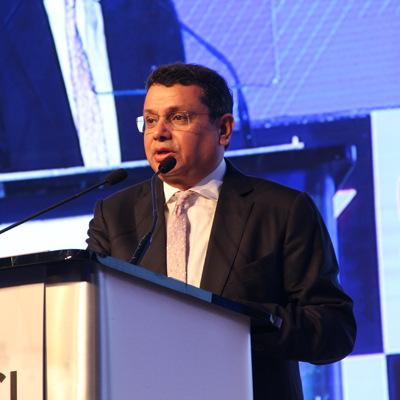
  • Uday Shankar@FICCI Frames 2016: The real digital challenge

    Uday Shankar@FICCI Frames 2016: The real digital challenge

    Good morning.

    Honorable Minister of Communications and Information Technology, Ravi Shankar Prasad Ji, Chairman TRAI R.S. Sharma, Mr. Mukesh Ambani, Ramesh Ji, friends from the world of media and entertainment.

    As co-chair of FICCI’s M&E committee, I have had the opportunity to address you for a few years now. I take this as a rare privilege and hence spend some time thinking through what I should say. A few weeks ago, as I was discussing the theme with some of my colleagues, a young assistant of mine – cocky on youth and his recent admission to Harvard Business School stated rather dismissively that there wasn’t anything new to be said as there wasn’t anything new happening in the M&E sector. While it sounded like a cynical assessment at that time it did set me thinking if there was indeed a grain of truth in what he said. On the surface, it does seem that not much has changed in the last several years except for some incremental growth or decline depending on which vertical you are talking about. Cable TV continues to struggle – struggling to improve its business case, struggling to improve its talent & technology quotient and above all to stay relevant in a rapidly changing world.  DTH, that set out to revolutionize distribution, increasingly seems to be intent on locking its destiny inside an isolated box in a networked world. Even the story of digitalization that started 6 years ago remains incomplete. The advertising revolution of the 90’s when a large number of international and Indian brands were built on television screens, doesn’t seem to be breaking new ground in terms of what I call brand revolution 2.0. Content creators, a community that I belong to, generally seem to be caught in a time warp with the same themes playing in a loop again and again –cursed destinies, rebirth and revenge and deference to elders in public while bickering in private, pretty much sums up what rules national entertainment. The quality of news of course, seems to cause only national consternation, with now even our friendly neighbor taking a pot-shot at our news channels!Over all, it seems the more things change the more they remain the same.  So maybe my colleague was right after all.  

    But then is the picture really as gloomy as this? Because beneath the surface ofentrenched stagnation, quietly – almost stealthily -there is a gigantic disruption playing out. A disruption that’s shifting the ground from beneath our feet.  

    My friends, allow me to recap the year for you.  The creative group to make the most waves last year were 4 youngsters, irreverent enough to take on our entire film industry and then build on that success by putting the entire country under a scanner.  This is a group who has the audacity to have a name so offensive that our news media calls them by their acronym AIB.  Yes, I am talking about All India Bakchod, who are perceived as comedians although this is not a group of people who make imbecile jokes while dressed in a funny manner.  More than once they have set the news agenda for the nation.  They have the gall to take on the combined might of big telcos and Mark Zuckerberg’sFacebook when they felt that the freedom of the internet was being parceled away.  They have used humour to put a spotlight on the state of fire stations in India or for that matter the behavior of the police force. As a group, these four youngsters made more headlines last year than probably all of the creative community put together.

    Very recently one of the pioneers of television entertainment told me that she was so frustrated by the frozen state of traditional media that she was going to create a digital enterprise to tell the stories that traditional media has been too scared to tell.  Of course, I am talking about the totally adorable – Ekta Kapoor.  Think about that for a moment – the person who created the archetype of saas and bahu feels the need to break away from these stifling constraints of the medium that she herself created.  Why?  When that happens, we all need to think hard.

    Friends, the most talked about launch in Indian M&E last year was not a new channel, or a new newspaper or a new production house – actually it was a mobile app that had the gall to ask consumers to go solo.  A call fundamentally at odds with the concept of content consumption in this country, that believes that the entire family watches TV together in the living room. Well, I am talking about the launch of our very own hotstar.  In just about a year, hotstar has been downloaded over 50 million or 5 crore times.  What is the implication of this?  Consider this – more people have watched the English Premier league on hotstar last year than on television.  Yes, EPL was watched by more people on hotstar than on television.  Even for a mass sport like cricket, in the larger cities, hotstar’s watch time is now starting to reach 50% of television.  I urge you to reflect on the potential of that statistic.   This infant service is already becoming a product of habit in India and now this year, my friends, we have set our sight on creating the first global Media & Entertainment product born out of India, when we take hotstar to the rest of the world in a few months.  The numerous and affluent south Asian diaspora which for the longest time has been frustrated by the lack of access to its favourite content will be able to watch cricket, movies and drama through hotstar.  While I am indeed happy for hotstar to be the pioneer, we are very aware that this is a trend that will get replicated again and again, very quickly.

    This colossal shift by no means is limited to television.  At the risk of earning her disapproval, let me share the story of my daughter – she is a serious academic whose job is to analyze the social sector and legislation for a living.  She is always on top of news and opinion articles and yet I have never seen her hold a physical newspaper in her hand.  Her daily dose comes exclusively from the digital universe. Her intake ranges from headlines under 140 characters to ebooks over 14 million characters long. She is a voracious consumer of movies and drama; yet goes to theatres morefor fun than for creative consumption.  Fixed schedule programming sounds as bizarre to her as silent movies to us.  She is obsessed with music but doesn’t own a single CD.  Her near infinite library rests entirely on her iPhone – the same goes for her friends and colleagues who use android devices.

    The world has changed.  There is a tectonic shift happening in our industry right in front of us.And yet, what we see in the world of traditional television is just stagnation. And this stagnation has been made worse by the funny denial that all of us seem to be living in. Even though this change is happening faster than anything we have ever seen, our approach towards it seems to be one of incrementalism.

    I see an even more obsessive desire to protect the antiquated business models that we have painstakingly built over the years and that technology and the youth are decimating like a bull-dozer rolling over glass bottles.  It reminds me of the story of a Japanese soldier who was left stranded and forgotten on a small island in the Pacific. Many years after Japan had lost the war and the world had returned to normal that lone soldier kept guarding that isolated island thinking he was still protecting the Japanese empire.  Herein probably lies the explanation why print companies found it difficult to make the transition to TV and why almost all the digital successes generally come from companies that did not exist even a decade ago.  This is because these are companies and people who are not chained by their legacy businesses.  Just imagine where businesses like Netflix, Twitter and Facebook were a decade ago and what global empires they have created in this short span of time.

    It is pretty clear to me that we are in a battle.  In this battle there are only two options that we have – we can either continue living in denial, hide back in our artificial walled gardens, watching as the bricks crumble down one by one or we can arm ourselves with the sameweapons that our challengers possess, and venture forth into battle, sometimes even against the same businesses that we have created. Change or Perish.

    There is one thing however that will continue to be the same: the power of stories. For those of us who had imagined a world where the so called user generated stories would unseat high quality creativity, the answer comes from the Netflix strategy.  Netflix – the most successful content provider in the US, the challenger to the media behemoths of the west has done so on the back of extremely high quality content, so much so that Netflix’s catalogue today represents the absolute best of American television.

    However there is a twist in the tale here.  No longer is the story enough, within the commoditized consistency of experience.  Technology and creativity are coming together to enhance the experience literally, almost daily.  Indians long used to a life of having to start all over again if the power went for a minute are rapidly getting used to being asked if we want to resume where we left off?

    The new screens have once again highlighted the importance of the story but they have introduced the centrality of the experience at the same time.  Design and engineering can no longer be divorced from the story – this is a radical departure from everything that we were taught all these years.  We learnt this the hard way through hotstar – how small changes even in the browsing experience could lead to dramatic shifts in consumption.  Today I am happy to remark that we at Star probably have more engineers in our team than any other media and entertainment company.  Equally we have more designers and more story tellers than anyone else because those are the three pillars on which we see future M&E companies getting built.  

    Clearly, we need to change the lens with which we look at talent.  In this new world neither technology nor talent will be limited by geographical boundaries.  The best engineers are as likely to be in Berlin as in Bangalore.  We already know that best designers and animators for Hollywood no longer need to be there – because they are already in Goregaon and let’s not forget our very own Priyanka Chopra who is the first home grown star of a truly global show.  We are looking at a truly global world.  But this global world has no patience for traditional forms of reverence.  At Star, we are grappling with this everyday – when we inducted culturally diverse talent we had to create space for that cultural diversity to exist. But that’s easier said than done.  Technology going global, talent going global also means adoption of a new tradition.

    Recently, I just saw amazon.in selling cow dung cakes online.  This humblest of the humble, the most traditional of fuels, being sold at 350 bucks for a small packet.  To me, that is the real power of the world that we are going into.  Power of the idea that someone actually thought that there is a market out there for cow dung cakes and the fact that that market is willing to a pay huge premium for it.  And the fact that the internet has created a market place where ideas and creativity are the only constraints.

    In this context let me draw your attention to the illustrious gathering on this podium today because if India has to make that leap into the new world where everybody can create value for himself or herself by sheer innovation then this group here must deliver.  Minister Ravi Shankar Prasad is not just a senior minister of the Union Cabinet – he holds the key to India’s transition into this digital world.  Chairman R.S.Sharma will have to decide how much can he accelerate that leap, and finally the whole country is looking at Mr. Ambani’s initiative called Reliance Jio to unshackle that truly global, truly democratic dream of 125 crore Indians.  Let’s all hope that they do the right thing, for it is in the best interest of this country they all must succeed.

     

  • MoF assures that GST will be a game changer for M&E and subsume service tax, entertainment tax & VAT

    MoF assures that GST will be a game changer for M&E and subsume service tax, entertainment tax & VAT

    NEW DELHI: In a major relief to the media and entertainment industry, two senior officials of the Finance Ministry assured the captains of the sector that VAT, service tax and entertainment tax would be subsumed in the proposed Goods and Services Tax.


    Terming GST as a game changer, Revenue Special Secretary Rashmi Verma said the rate was being worked out but she reiterated that it would be one and uniform for the entire country.


    Member Service Tax and GST V S Krishnan added that Infosys had been given the task of creating a special portal for GST collections and the progress was good.


    He said that three processes under way were in the public domain and the stakeholders and citizens could react. As all these were drafts, changes could still be made.


    These were the rate of taxation, the law relating to GST, and the technology. The fourth relating to returns would be put in the public domain today itself. Technology  was being taken care of by Infosys.


    He added that after GST came and the government got time to review its progress, it could be improved over time.


    They were responding to remarks made by some industry leaders on the second and final day of the two-day Big Picture summit organized by the Confederation of Indian Industry.


    Sector representatives included Farokh Balsara of Ernst and Young, Film Federation of India Vice President Ravi Kottarakara, Hinduja Ventures whole time Director Ashok Mansukhani and Zee Network’s legal expert Avnindra Mohan. A P Parigi, advisor to the Chairman of Network 18 moderated the session.


    Verma added that the problem of share of centre and states would be sorted out by the Ministry and need not worry the M and E industry which will just have to pay a single tax.


    There will be slabs, but that would be restricted to just two – higher and lower, she added.


    She said bringing the Centre and 29 states on one table had been difficult but most problems had been ironed out.


    The work of the portion of the state was being worked out but the citizens need have no doubt that he will have to pay just one tax. For the citizen, the apportioning was only of academic interest.


    She said there may be some tax levied by some local bodies in some states, but this would be between half per cent to two per cent. While ways were also being found to sort out this problem, it was clear that this would only relate to the manufacturing industry.


    She also clarified that the GST would apply both to services and goods.


    The M and E industry would benefit as the multiplicity of taxation would vanish.


    The entire information will be out on a GST portal by the third week of November, she said. The transitional problems were being worked out, she added.


    Answering a point made by one of the earlier speakers who asked whether the M &  E sector was being treated at par with sinful industries, she said this was not so. The only sinful industries for the Government were cigarettes and alcohol.


    Parigi suggested creation of a separate secretariat with representatives of industry and bodies like the CII. 

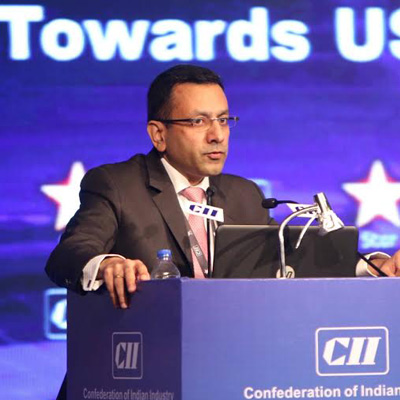
  • ‘M&E industry’s $100 billion dream remains elusive with choking of investment:’ Star India COO Sanjay Gupta

    ‘M&E industry’s $100 billion dream remains elusive with choking of investment:’ Star India COO Sanjay Gupta

    MUMBAI: Despite the India Shining and Digital India waves that the country has been witnessing, the $100 billion dream has remained elusive for the Indian media and entertainment (M&E) industry.

    Speaking at a CII conclave in New Delhi today, Star India COO Sanjay Gupta lamented this fact that saying that from 0.8 per cent of GDP three years ago, the industry had resolved to grow to 1.5 per cent within a decade. However, in the past three years, media as a percentage of GDP has instead fallen by two basis points and the $100 billion dream has continued to remain distant.

    “The biggest hurdle has been the choking of investment. To meet ambitious targets, a business either needs to generate large profits internally, which are then invested back into the business or they grow on the back of external investments – national or international. But the M&E industry boasts of neither,” he said

    CII National Committee on Media and Entertainment and Group CEO, Viacom 18 Group CEO and CII National Committee on Media and Entertainment chairman Sudhanshu Vats, Prasar Bharati CEO Jawahar Sircar, Information and Broadcasting Ministry special secretary JS Mathur and Minister of State for Information and Broadcasting Rajyavardhan Singh Rathore were among those present at the summit.

    During the past 15 years, the M&E sector has barely seen any new entrants and only around $4 billion in foreign direct investment (FDI). To garner $100 billion, the industry needs to invest at least $50 billion over the next decade – something that seems farfetched, given the present circumstances. “With M&E remaining an unattractive destination for investments, investors have no interest to invest in a fragmented and unprofitable business. Despite the 12 per cent year-on-year growth touted for the industry, the sector is paradoxically riddled with a host of unprofitable verticals. For example, sports is a $2 billion industry that could easily grow to around $10 in the next five years. Be it Hockey, Football, Kabaddi or Badminton, the new sporting leagues are being lapped up by the audiences,” Gupta said.

    Yet, the M&E industry has been unable to take off on the back of these investments. “Although Star India has been investing almost Rs 200 crore every season for the past two years, dividends are not commensurate. For this to happen, one needs to scale up the volume of content. In other words, more teams, more players and more days of Kabaddi are required annually to capitalize on this opportunity,” Gupta added.

    “A bizarre challenge confronts us here, however. Although Punjab and Haryana contribute large numbers of Kabaddi players, one cannot add more teams based in either of these two states because they do not have a single indoor stadium that could host a Kabaddi match. In Mumbai, the game is hosted at the NSCI Dome, but the biggest constraint is the availability of this facility for a reasonably long period of time. One venue for a city with more than 1,000 Kabaddi clubs simply does not make sense. In this case, consumer interest and the ability to invest are no hurdles, but the fact that the sporting infrastructure required is simply non-existent. Worse, there are no plans to address this situation,” Gupta continued.

    The movie business is no different. With around 7,000 screens, India has one of the world’s lowest screen densities. Despite breakthrough movies such as Queen, PK or Bajrangi Bhaijaan, revenues are stagnant, although the cost of producing these movies has soared dramatically in the past decade. Therefore, a $2 billion industry that sets a billion hearts racing earns zero profits.

    Even news channels fare no better. Without a robust business model, news channel have no money to invest in their business. Whether English or regional, number one channel or last, none of the channels make any money because none earn any money from subscription. Globally, subscription contributes as much as 60-70 per cent of the total earnings of a news channel.

    Television distribution is roughly a third of the total value of the media industry. In the past few years, immense investments have been made in both direct to home (DTH) and the cable business. But the tragedy of this sector is that even after many years of continued investment not a single company or business makes any money. Since the sector is considered a basic need from a consumer viewpoint, the prices at which content is sold by creators to platforms is regulated – prices frozen in 2003 haven’t changed in the past 12 years. In the same 12-year period, even the price of milk has jumped from Rs 12-15 a litre to Rs 35-40 a litre. 

    “Such anomalies are making the sector bleed. But no one seems to care,” Gupta lamented. “In Delhi, for example, the new government has doubled entertainment tax. Consequently, almost 30 per cent of revenue is paid as entertainment tax. The lack of political alignment and consistency of policy in the sector makes it impossible to plan a sustainable business model.”

    In 2015, where millions across the country receive their daily dose of news from Facebook feed, radio broadcasters can only air news snippets from All India Radio (AIR). “In the US, radio has gone hyper local and people spend an hour daily listening to radio. This gives a fillip to local brands since a quick and cheap platform is available to build their business. In India, conversely, there are a limited number of radio stations and limited content that can be aired – and without any news. It is no surprise then that even in large cities where FM exists, the time spent on radio per person is five minutes. Can any industry on Earth make money in such circumstances?” he asked.

    Gupta concluded by asserting, “Unless we unblock minds, we cannot unblock capital.”

    Accordingly, there is an urgent need to make distribution profitable, position animation as the next wave of export-oriented growth, support a serious scale-up of exhibition screens and sports stadiums and allow content innovation in radio. A hugely attractive pitch for domestic and international investors is required, giving them clarity on the policy environment for the next 10 years and confidence of generating sizeable returns on the investments.

    All stakeholders, businesses, policymakers and regulators need to stop being happy with the status quo and incrementalism. In the new era backed by technology, every sector from automobiles to financial institutions and even grocery shopping have witnessed dramatic growth and serious disruptions on the back of serious flow of capital.

    “M&E too needs to see brave new entrepreneurs, disruptive ideas and unconventional business models but this will only happen if we unblock the capital,” stressed Gupta.

  • Government plans to increase funds for M&E industry: CII

    Government plans to increase funds for M&E industry: CII

    MUMBAI: Minister of State for Information & Broadcasting (I&B) Rajyavardhan Singh Rathore assured the media and entertainment (M&E) industry that the government policies would be supportive and calibrated to enhance the modernisation and monetisation of the sector.


    Addressing the fourth edition of the CII Big Picture Summit 2015 in New Delhi, Rathore said, “In phase II of the auction of the frequencies for the radio, there was no provision for broadcasting news. This was changed during the phase III auction, when private radio was allowed to broadcast the news of the All India Radio (AIR) for a specified time.”


    Rathore mentioned that a lot of initiatives were being taken by the government to support the M&E industry in the country, such as channelising more advertisements to the digital media like YouTube, outsourcing some of the creative works of Doordarshan and AIR to the industry. More such steps would be taken in due course.


    In this regard, plans are underway to revamp the terrestrial broadcast of DD to couple it with internet and DTH so that there would be opportunities for making local programs based on events happening in smaller towns and rural areas. This would also give a boost to creation of contents, which have local flavour and relevance. 


    Acknowledging the industry demand that the monetisation of the M&E segment had not kept pace with the requirements, Rathore disclosed that the government had proposed to set up a university to develop soft skills needed for the industry.


    This university would specialise in providing skills to students in areas like gaming, animation and other avenues of creative pursuits relevant to the industry. He wanted industry to take a lead in this endeavour and create centers of excellence, which would enable the M&E industry to reach $100 billion by 2025. He also said that industry support was imperative to improve the content and appeal of the programs and for training media professionals.


    Responding to a suggestion made by the industry to bring down high incidence of tax levied on the M&E industry, the Minister said that the Good and Services Tax (GST), which the Government wanted to enact would have subsumed various taxes incidental on the industry. He hoped that the bill would be passed soon in the interest of the nation.


    Rathore observed that the Government was keen to create a single window clearance for shooting films in India, which could enhance the monetisation and profitability of the industry. He wanted CII to come out with a plan for creating a dynamic eco system for the film industry to flourish. At the same time, he said that inadequate number of cinema halls in India as compared to countries like the US and China could be more to do with real estate prices.


    Ministry of I&B special secretary J S Mathur said, “The process of digitisation in the M&E sector was at a higher pace and would show results in the coming years. He was of the opinion that smart phones, which could carry large quantum of data including films, news bulletins etc. would redefine the digital space in India.”


    He also mentioned that the Government was in the process of finalising the draft of the Intellectual Property Rights (IPR), which would enable more and more people to invest in India in various segments like content creation, production, animation, and gaming. 


    Prasar Bharati CEO Jawhar Sircar opined that a consortium approach should be followed by the industry and the Government to promote the convergence in the M&E industry to realise its potentials. He suggested that a shared approach should be there among the players to make use of the vast infrastructure of the government through innovative schemes that would put to use smart phones as carriers of innovative contents.


    CII National Committee on Media and Entertainment and Group CEO, Viacom 18 Group CEO and CII National Committee on Media and Entertainment chairman Sudhanshu Vats pitched for easing of doing business and greater application of convergence of technology to tap the potentials of the industry. Monetisation of the industry can be enhanced through proper government support to the industry.


    Narrating the problems being faced by the M&E sector, Star India COO Sanjay Gupta said that bandwidth problems, high cost, high taxes etc were adversely affecting the growth of M&E industry. He wanted a supportive policy regime to help the industry reach $100 billion mark by 2025.

  • M&E industry shows steep drop in Monster Employment Index over 12 months

    M&E industry shows steep drop in Monster Employment Index over 12 months

    BENGALURU: The Monster employment Index over a 12 month period between September 2012 and September 2013 reveals that online recruitment activity by the Media and Entertainment Industry (M&E) showed one of the lowest growths with a decline of 32 per cent. Only four of the 27 industry sectors monitored by the Monster Employment Index registered expansion in online recruitment activity during that period.

    As a matter of fact, the M&E industry was just ahead of the Printing / Packaging industry which was down 39 per cent, showing the steepest annual decline.  Import / Export sector which was up 12 per cent followed by Education which showed an increase of five percent, exhibited the highest annual growth among sectors. Healthcare, Bio Technology and Life Sciences, Pharmaceuticals sector with an increase of four percent), showed positive growth in online recruitment activity y-o-y during this period.

    Included among the top growth occupations was Marketing and Communications, despite a drop of eight per cent during September 2012 and September 2013, while Arts/Creative with a y-o-y drop of 31 per cent was amongst the lowest growth occupations.

    Online demand improved in three of 13 occupational groups monitored by the Monster Employment Index between September 2012 and September 2013.  Healthcare (up seven percent) professionals are the only one to report a positive annual demand amongst the occupational groups. Senior Management (down 49 per cent) exhibited the steepest annual decline among occupation groups.

    Online recruitment activity was up on the year in three of 13 locations monitored by the index. Ahmedabad (up 17 per cent) followed by Kolkata (up six per cent) led all cities in annual growth. Among major metro-areas, Kolkata (up six per cent) followed by Delhi-NCR (up four per cent) registered the highest annual growth. 

    “The annual decline in the Monster Employment Index is reflective of the current uncertain economic / political scenario. Employers continue to adopt a cautious approach while hiring in view of this prevailing scenario,” said Monster.com (India/ Middle- East/ South East Asia) MD Sanjay Modi.

  • Zeel Q2-2014 results exceed Q2-2013 results

    Zeel Q2-2014 results exceed Q2-2013 results

    BENGALURU:  The Subhash Chandra led content and broadcast player Zee Entertainment Enterprises Limited (Zeel) reported total income from operations of Rs 1,101.28 crore for Q2-2014, up 15.5 per cent as compared to the Rs 953.50 crore for the corresponding quarter of FY-2013  and  13.2 per cent higher than the Rs 973.25 crore for the preceding quarter Q1-2014. PAT for Q2-2014 at Rs 236.31 crore was 26 per cent higher than the Rs 186.7 crore for Q2-2013 and 5.5 per cent more than the Rs 223.9 crore for Q1-2014.

    Let’s take a look at Zeel’s Q2-2014 performance

    Advertising revenue for Q2-2014 at Rs 583.3 crore was 10.5 per cent higher than the Rs 528.1 crore for Q2-2013 and 10 per cent more than the Rs 530.1 crore for Q1-2014. Zeel claims that without sports, its ad revenues would have grown by more than 20 per cent in Q2-2014 as compared to Q2-2013.

    Zeel’s subscription revenue jumped 16 per cent in Q2-2014 to Rs 458.1 crore from Rs 394.95 crore in Q2-2013 and was higher by eight per cent as compared to the Rs 424.1 crore for Q1-2014.

    The company’s total expense for Q2-2014 at Rs 799.9 crore was 7.3 per cent more than the Rs 745.4 crore for Q2-2013, and 15.9 per cent more than the Rs 690.4 crore during Q1-2014. Operating cost which formed a major chunk of expense for Q2-2014 at Rs 504.1 crore was 5.2 per cent more than the Rs 479 crore for Q2-2013, and substantially higher by 22.7 per cent as compared to the Rs 410.8 crore for Q1-2014.

    Selling and other expense for Q2-2014 at Rs 187.5 crore was 24 per cent more than the Rs 169.5 crore for Q2-2014.

    Zeel chairman Subhash Chandra said, “The M&E industry growth is marginally impacted by the overall slowdown of the economy. The television sector, in particular, continues to grow on the back of better subscriber growth linked to increasing digitisation. There was an apprehension about the trends in advertising spends given the overall weakness in the economy, but the television media industry has continued to grow in double digits during the second quarter. Zeel has outpaced the industry advertising revenue growth once again.”

    Zeel managing director and CEO Punit Goenka said, “Sports performance for the quarter has been good, but due to a heavy sports calendar and rupee depreciation, the business is expected to be in losses for some time to come.”

    “Beginning next quarter, we will see a reduction in advertising inventory across the network in line with TRAI regulations. We are in the process of negotiations with advertisers and are confident that this will not have any major impact on revenue monetization. Digitisation will lead to fragmentation of audiences. At Zeel, we believe that this creates a huge opportunity to create new products for specific segments, which will allow us to monetise this opportunity, both from advertising and subscription standpoint. Therefore, we continue to innovate in terms of our format and content,” added Goenka.

  • Media companies’ digital revenues will overtake traditional by 2015: Ernst and Young

    Media companies’ digital revenues will overtake traditional by 2015: Ernst and Young

    MUMBAI: The average revenue of media and entertainment (M&E) companies will shortly cross the 50 per cent mark from majority traditional to majority digital, according to a new report, ‘Digital agility now! Creating a high-velocity media and entertainment organisation in the age of transformative technology‘, released by Ernst and Young. It has surveyed more than 550 senior executives from global M&E companies.

    Today, revenue from digital is 47 per cent and survey respondents say that by 2015 it will account for 57 per cent of revenue – thus making digital the new norm and the primary source of revenue for M&E companies.

        Over 550 senior executives from global media and entertainment companies see 57 per cent of their revenue coming from digital by 2015, up from 47 per cent today
        Organisational agility singled-out as a leading success factor in the digital era
        The study indicates that “digital leaders” have embraced smart mobile-social-cloud and big data analytics technologies to achieve agility

    The study goes on to identify the characteristics of M&E ‘digital leaders‘ – companies that are using new technology not only to deliver digital products and services, but to build more agile organisations capable of sensing and responding far faster to shifting customer expectations and marketplace opportunities and risks. The digital leaders are pioneering the path to a higher level of organisational agility as the M&E industry transitions to digital as its new norm.

    Ernst and Young global technology industry leader Pat Hyek said, “Mobile-social-cloud and big data analytics technologies are game-changers for M&E firms. These technologies can help M&E digital leaders who broke ahead of the pack in the early stages of digital to extend their advantages, as well as offer opportunities for those who fell behind to adapt quickly and catch up.”

    According to the report a major differentiator between these digital leaders and other survey respondents is a greater emphasis on mobile-social-cloud and big data analytics technologies for internal collaboration. For example, digital leaders are 60 per cent more likely than all other respondents to emphasise the importance of social media for internal communication among employees: 67 per cent said it was ‘very‘ or ‘extremely‘ important, versus 42 per cent of all others. The study points to the kind of rapid collaboration that is enabled by social networks and characteristic of an agile organisation, where silos are broken down by the ready flow of information.

    The study shows that digital leaders‘ advanced social listening programmes, leading-edge analytics and cloud-based infrastructure enable rapid deployment of new products and resources, and give companies the ability to quickly learn from and fix mistakes. This organisational agility is necessary to meet the demands of rapidly evolving digital consumer behavior.

    Ernst and Young Global Media and Entertainment Leader John Nendick said, “Media and entertainment companies no longer live in a world where everything lives in ‘their‘ world. It‘s a connected eco-system with consumer technology leading the way”.

    Other results from the survey include:

        Technology alliances: Digital leaders emphasise alliances that let them act faster than “going it alone”; 51 per cent rank alliances with technology and other M&E partners among their top three strategic priorities for digital transformation, versus 30 per cent for others.

        Second-generation deployments: Digital leaders were generally more than twice as likely to incorporate lessons learned from initial technology deployments to achieve more advanced functionality. For example, 49 per cent of digital leaders use second-generation mobile technologies to develop products/services versus 16 per cent of all others.

        Smart mobility: Similarly, 32 per cent of digital leaders use second-generation or later techniques in mobility to enhance employee engagement and communication, versus 13 per cent of all others.

        Cloud: Digital leaders emphasise the importance of cloud computing to enhance internal and customer-facing flexibility. For example, 74 per cent of digital leaders say it‘s important to host business tools in the cloud, versus 49 per cent of all others; and 43 per cent of digital leaders use second-generation cloud solutions to speed product/service development vs 12 per cent of all others.

        Big data analytics: Digital leaders are three times more likely than other respondents to use second-generation big data analytics techniques to improve customer engagement (26 per cent versus nine per cent). Among all respondents, 66 per cent rely on in-house resources to get insight into customers yet 41 per cent say they gain no insight from their data, suggesting they don‘t have the right big data analytics tools or skills in place and may be better off partnering to access external resources.

    Agility Index:

    The report concludes with an agility index that ranks the relative organisational agility of different M&E segments as well as enabling technology and digital leaders. The average score of all respondents is indexed to 100. A score of 110 denotes performance 10 per cent above average; 90 is 10 per cent below average.

  • Tata Elxsi introduces consulting services for M&E industry

    Tata Elxsi introduces consulting services for M&E industry

    MUMBAI: Global technology and engineering services provider Tata Elxsi has announced the launch of Strategy & Technology Consulting services (S&TC) for the Media & Entertainment industry.

    The bouquet of consulting services is directed towards Multi System Operators (MSOs), Broadcasters and Original Equipment Manufacturers (OEMs) facing challenges related to growth, expansion and technology in both mature and emerging markets, including US, Europe, Latin America and India.

    Tata Elxsi offers its experience in devising and improving customer-centric strategies to increase reach, engagement and monetisation, technology-led strategies to help clients identify, evaluate and deploy cutting-edge B2C technologies and operational aspects to help improve service delivery and quality.

    Tata Elxsi‘s VP and Head-Broadcast Business Unit M Thangarajan said, “Our customers face different and constantly evolving priorities and challenges across geographies. For example, government driven digital switchover policies in countries such as Brazil, India and Mexico present great opportunities as well as challenges for operators, including the choice of adopting technology in a phased manner versus leapfrogging, and related aspects of deployment and operations. The expertise and insight we have developed in mature markets will help us provide the right solutions and strategies for such customers.”

    Tata Elxsi has over 15 years of specialised and global experience in working with leading MSOs, Broadcasters, OEMs, platform and software vendors, supporting their technology, product and services roadmaps.

  • 1000 deals in M&E worth $50 bn in 2011: Ficci KPMG report

    1000 deals in M&E worth $50 bn in 2011: Ficci KPMG report

    MUMBAI: Deal activity in the Indian media and entertainment (M&E) industry stayed strong in 2011. More than 1000 deals were stitched as mergers and acquisitions and private equity funding accounted for over $50 billion, according to a Ficci KPMG report.


    The deal activity in the M&E sector witnessed a significant uptrend in 2011 with 42 transactions valued at $940 million as compared to 27 transactions valued at $693 million in 2010 and 27 transactions valued at $722 million in 2009.


    However, the deal activity did not touch the peaks of 2008, which saw 38 deals valued at $1.5 billion.


    Private equity funds closed 16 deals valued at $319 million, while, within the M&E sector, television was the largest contributor accounting for $320 million of the total deal value.


    “Consolidation will be a major theme going forward as media and entertainment companies will seek to grow inorganically by expanding into newer geographies and by adding to their existing portfolio. Consequently, robust deal activity is expected across all platforms and segments in 2012,” the report says.


    Marquee transactions in 2011 included the Walt Disney Company’s acquisition of an additional 41 per cent stake at a value estimated to be over $300 million in UTV Software, thereby taking its total shareholding in UTV to approximately 90 per cent, Providence Equity Partners’ PE investment in UFO Moviez India ($58 million), and HSBC’s PE investment in Avitel Post Studioz ($60 million).


    Television


    The large volume of funding received by this segment over the last five years has resulted in the continuing wave of consolidation. TV18’s acquisition of the Eenadu Group in early 2012 for a consideration of $395 million was the standout transaction of the year indicating the need for a complete channel bouquet focusing on profitable growth.


    The need for profitable growth and to more effectively build the business around its niche segments resulted in the Walt Disney Company making a delisting offer for UTV Software Communications.


    Educational Trustee Company, floated by the promoters of Dina Thanthi Group, acquired Metronation Chennai Television (NDTV-Hindu JV channel) for $3.2 million, further reinforcing the theme that businesses are focusing on core competencies and exiting segments that witnessed hyper competition.


    However, the regional ad market boosted by increasing reach and consumption in tier II and tier III towns is reasonably under capitalised. Regional channels with a disproportionate share between viewers and advertisement dollars are likely to witness investment interest from financial investors and large broadcasters.


    Intense competition in general entertainment and news genre has resulted in broadcasters offering content across niche genres such as food, lifestyle, music, technology, science, thus catering to an urban upscale audience that enjoys a disproportionate value of ad dollars.


    Distribution Biz


    The cable and satellite distribution market witnessed minimul deal activity. However, 2011 witnessed a landmark distribution tie-up between Star Den and Zee Turner. The two formed a 50:50 JV, Media Pro Enterprise India, to jointly distribute channels.


    The C&S distribution market has over the last few years seen its fair share of investment activity from financial and strategic players on the key premise that this unorganised market, dominated by local cable operators (LCOs), will witness disruptive changes brought forward through digitisation.


    In their quest to build a sizeable subscriber base, each player is saddled with high customer acquisition costs, leading to low profitability and being in the investment stage.


    Going forward, a consolidation may be witnessed amongst MSOs (multi-system operators) and capital be raised by them. DTH players, promoted by large business houses with diverse business interests, may pave the way for consolidation by exiting non-core, non-profitable operations.


    Print


    Favourable demographics saw larger players seeking to expand reach by entering new markets by acquiring smaller regional players.


    The newspaper industry, which is facing declining readership in many international markets, continues to thrive in India, driven by increasing literacy rates, consumer spending and the growth of regional markets and spatiality newspapers.


    The newspaper industry has high entry barriers as existing players have developed strong brand equity and have developed control over their distribution network. Hence, regional print companies with strong operating dynamics are expected to raise capital through the capital markets or PE to expand their presence across the media value chain and also launch city centric supplements.


    Consolidation is imminent as the large players will continue to seek regional players to add to their portfolio.


    Activity from international players may remain muted till such time that FDI caps are rationalised.


    Radio


    As the oldest and one of the most cost-effective form of advertising, radio has more reach than both traditional print media and television.


    Although deal activity was limited, 2011 witnessed the re-emergence of satellite radio services with Saregama India acquiring 10 per cent stake in Timber media.


    The Phase III round of licensing is expected to bring about regulatory changes such as relaxation of FDI limits, grating permission to own multiple frequencies in a city and a permission to air news and current affairs. As a result, this segment is likely to witness deal activity in the form of consolidation amongst existing players, PE investments/exit and increased interest from International strategic players such as Fox, Walt Disney, Hearst, Rogers Communications, Virgin Group and CTV Globemedia.


    Films


    India remains the largest film consuming market in the world and continues to attract interests from financial and strategic investors. With economies of scale and cost efficiencies being prime value drivers in the film exhibition space considering low value of ticket sales, the film exhibition segment is expected to witness further consolidation and also embrace technological innovation.


    On the back of investment received from Providence, UFO Moviez India acquired a majority stake in Scrabble Entertainment to globally expand its business of digitising screens.


    Large players in M&E ecosystem may consider taking minority stakes in production houses.


    Gaming


    Deal activity in the online gaming segment searched in 2011 as both financial and strategic investors clamoured to get a share of the industry, estimated at $280 million.


    Private equity players invested in Games2Win while UTV acquired additional 30 per cent stake in Indiagames in a deal worth $20 million. The growth prospect for the industry remains strong as global gaming firms enter into distribution alliances to promote their games through the web, mobile phones, consoles and gaming cafes.

  • E&Y elevates Farokh Balsara to M&E Practice leader EMEIA region

    E&Y elevates Farokh Balsara to M&E Practice leader EMEIA region

    MUMBAI: The research, audit and consulting major Ernst & Young (E&Y) has promoted Farokh Balsara to the Media & Entertainment (M&E) industry leader for Europe, Middle East, India and Africa (EMEIA) region.

    Based in Mumbai, Balsara has been E&Y‘s M&E Practice leader in India for over a decade. In his new role, Balsara will now drive the sector program throughout Europe, Middle East India and Africa. He is the first partner from India to lead a sector at an EMEIA-wide level.

    EMEIA area comprises 12 sub-areas – Africa; Belgium and The Netherlands; Commonwealth and Independent States; Central and South-East Europe; Algeria, France and Luxembourg; Financial Services Office; Germany, Switzerland and Austria; India; Mediterranean; Middle East and North Africa; Nordics; UK & Ireland.
     
    E&Y accounts, industries and business development leader – EMEIA Julie Tiegland said, “Over the last several years, he (Balsara) has built what is undoubtedly India‘s leading M&E Practice among all professional services firm, advising both Indian and multinational M&E companies.”

    “The appointment is also reflective of the growing importance of the Indian M&E sector on the global landscape and also of the strength of Ernst & Young‘s media and entertainment practice in India. As the M&E sector increasingly converges across boundaries, Farokh‘s knowledge and experience will be deeply valued by our clients across the EMEIA area. M&E is a priority sector for our firm globally and we are seeking to significantly strengthen our M&E market presence across the EMEIA region,” Tiegland added.

    Balsara said, “I am looking forward to taking on my new responsibilities as Ernst & Young‘s EMEIA leader for M&E Practice. E&Y is the market leader in working with the M&E industry and we would continue to strengthen our market leadership position. We have a strong M&E industry practice in France, Germany, UK, Italy, Spain, India and the Nordics and with the challenging business environment, our endeavor would be for our clients to benefit from cross coordination of ideas and best practices between developed and emerging markets. In my new role, I am looking forward to working with a strong EMEIA-wide team of professionals to significantly ramp up our Transactions and Advisory practice for M&E and growing the business through the provision of fresh, innovative services to our clients.”

    Balsara has over 25 years of experience and has extensively advised several large Indian M&E companies in risk management and in improving the efficiency and effectiveness of key processes.
     
    He is also experienced in performing a variety of market reviews and feasibility studies, and developing entry strategies for multinational M&E companies desiring to establish a business presence in India. In the past, he has also specialised in providing a range of Transaction Support Services (due diligence reviews, Valuation, M&A support, etc.) to multinationals, strategic investors and private equity funds across sector categories including television, films, new media, radio and music, advertising and marketing and print.

    E&Y‘s key M&E clients in EMEIA include Bertelsmann, Pearson, Lagardere, Publicis, Technicolor, Reed Elsevier, Vivendi and Axel Springer amongst others.