Tag: M&E

  • Broadcast biz ease exercise progresses, TRAI expects conclusive ideas by 11 Sept

    Broadcast biz ease exercise progresses, TRAI expects conclusive ideas by 11 Sept

    NEW DELHI: More time has been given by the Telecom Regulatory Authority of India for stakeholders to respond to its consultation paper issued last month on the ease of doing broadcast business.

    Stakeholders can send in their comments by 11 September and counter-comments by 18 September 2017 to the paper of 31 August based on views received by it on 19 April’s pre-consultation paper.

    The paper was issued noting that a business-friendly environment is a pre-requisite for the growth of a nation and makes a country a favorite business destination particularly with the fast changing regulatory framework for the media and entertainment sector. Seventeen questions were raised by TRAI.

    Noting that the media and entertainment sector in India is one of the fastest growing sectors, TRAI noted that it not only leads to employment generation but also helps in the growth and development of an economy.

    The economic liberalisation measures initiated in the early 1990s had focused on reduction of regulatory burden on enterprises as an underlying objective of the reform process. The government has launched an ambitious programme of regulatory reforms aimed at making it easier to do business in India. The programme aims at pinpointing the bottlenecks and ease them to create a more business-friendly environment. The efforts have yielded some results with India ranked at 130 according to the World Bank’s “Doing Business” report. But, there is still huge scope for further improvements.

    TRAI notes that the IMF has titled India as the brightest spot in the global economy. Several global institutions have projected India as the leading destination for FDI, and a number of recent global reports and assessments, show that India has considerably improved its policies, practices and economic profile. It is expected that enabling policies and determination to continue with economic reforms, various initiatives taken by the government such as ‘Make in India,’ Smart City Mission, Skill India Mission, Digital India, etc. would further spur the growth of the economy.

    The pre-consultation paper on the “Ease of Doing Business” in broadcasting which covered all media came just a few months after a similar paper on telecom. In the new era of convergence, the two sectors are expected to complement each other.
     
    The aim is also to remove entry barriers by laying down well-defined and transparent procedures and processes thereby creating level playing field and competition in the sector and to facilitate innovation and technology adoption for providing better quality of services to the consumers to steer further growth of the sector by attracting investment through investor friendly policies 

    Subjects to be covered are related to processes and procedures for obtaining permission/ license/ registration for the following broadcasting services and subsequent compliances connected with these permissions. The fields include:

    (a) Uplinking of TV channels 
    (b) Downlinking of TV channels 
    (c) Teleport services 
    (d) Direct-to-home services 
    (e) Private FM services 
    (f) Headend-in-the sky services 
    (g) Local Cable Operators 
    (h) Multi System Operators 
    (i) Community Radio Stations 

    Also read:

    TRAI seeks conclusive views on ease of doing broadcast biz

    TRAI begins work on data protection and government’s role

  • Guest Column: 5 Trends lending the Power to Believe in Indian TV industry

    Guest Column: 5 Trends lending the Power to Believe in Indian TV industry

    The four pillars influencing the M&E sector are: Infrastructure, Government policies, Devices and Digital Technologies. Growing consumer demand is inviting policy support driving innovation and resulting in increasing investments in the sector.

    There are 5 identifiable trends which lend television industry the power to dream and the analysts the power to believe.  These are:
    1. Positive Government Directives
    2. Surge in Digital consumption
    3. Consolidation the new buzzword
    4. Rural India beckons
    5. Data undergirds everything

    1. Positive Government Directives
    The M&E industry is expected to leap forward after a slow 2016. 2016 experienced two large government directives which affected the TV industry in negative ways for the short term. 

    Demonetisation came as a bolt from the blue and shaved off around 2% of ad revenues for the TV industry. 

    GST as another one to rationalise taxation across the M&E industry. While challenges abound initially, overall M&E industry is however a beneficiary for two reasons:
    • Availability of input credits across the board and inclusion of entertainment tax within the ambit of GST are both positive developments.
    • Formalisation of economy and widening of tax base will result in overall positive impact on GDP and thereby resultant positive impact on ad spends.

    public://guest.jpg

    Both Demonetisation and GST will however give a further boost to GDP in the long run. Over and above these, Cable digitisation is already creating a paradigm shift as a game changer with ARPU on an uptrend post digitisation.  Even as it is delayed, the same is expected to be completed in 2017.  

    2. Surge in Digital Consumption 
    The surge in digital consumption is compelling existing players to take a hard look at their business models.  OTT VOD is emerging as a parallel platform along with TV broadcast.   Entry of Netflix, Amazon Prime as global leaders; VOOT, OZEE, Hotstar and Sony Liv as broadcast network backed platforms; and Jio Apps and Airtel Wynk as telecom companies backed platforms joining the game with syndicated content offerings. 

    Development of a sustainable digital ecosystem will be required in the long run to address credible measurement and limited monetisation models.

    3. Consolidation the new buzzword
    Consolidation is gaining momentum across the value chain.  Even as there have been less number of transactions, the good news is that they are of higher value.  The three biggest ones are Dish TV and Videocon merger, Ten Sports acquisition by Sony and Reliance ADAG TV broadcast business takeover by Zee. 

    4. Rural India beckons
    Post commencement of rural measurement by BARC, the big story has bene that of the high levels of TV viewing habits of rural India. This has resulted in higher advertising spending in rural HSMs, introduction of new FTA channels and realignment of content focus for mass tastes.

    5. Data undergirds everything
    Along with the data dividends of digital becoming visible, BARC viewership data has led to consumer analytics becoming indispensable thereby leading to changes in content, distribution and ad strategies.

    Conclusion
    The long-term future for the television industry is very robust with CAGR projections above 14% for both segments of ad revenues and subscription revenues. The Indian Media & Entertainment industry is on the ball with Television leading the charge. 

    public://Untitled-3_17.jpg

    (Piyush Sharma, a global tech, media and entrepreneurial leader, created the successful foray of Zee Entertainment in India and globally under the ‘Living’ brand. The views expressed here are of the writer’s and Indiantelevision.com may not subscribe to them.)

  • Prime Focus reports flat results for first quarter

    BENGALURU: After the sale of certain investments and restructuring and integration costs in the previous fiscal (FY-17), including in the quarter ended 30 June 2016 (Q1-17), Prime Focus Limited (PFL) had reported healthy numbers for FY-17. The company has now reported almost flat revenue and EBIDTA numbers for the quarter ended 30 June 2017 (Q1-18, current quarter) as compared to Q1-17. Revenue Income from operations was 2.41 percent lower in the current quarter at Rs 5,135.22 million as compared to Rs 5,262.13 million in Q1-17. Total Income in Q1-18 was 0.82 percent lower year-over-year (y-o-y) at Rs 5,241.89 million as compared to Rs 5,285.09 million in Q1-17.

    EBIDTA including other income in the current quarter was flat (down 0.01 percent) at Rs 1,033.16 million (19.71 percent of Total Income) as compared to Rs 1,033.30 million (19.55 percent of Total Income) in Q1-17. The company says that adjusted EBIDTA was up 9 percent at Rs. 1,118mn (Q1-17: Rs. 1,023 million), with margin at 21.4 percent (Q1-17: 19.4 percent), with significant work being delivered on projects from India. The company reported foreign exchange gain for the period at Rs. 22 million.

    Total Expenditure in Q1-18 declined fractionally by 0.11 percent to Rs 5,239.58 million from Rs 5,245.19 million in Q1-17. Employee benefits expense in Q1-18 reduced 6.18 percent to Rs 2,966.46 million from Rs 3,161.77 million in the corresponding quarter of the previous year. Technician fees in Q1-18 reduced 1.30 percent to Rs 90.51 million from Rs 91.70 million in Q1-17. Technical Services cost in the current quarter fell by 18.86 percent to Rs 134.35 million from Rs 165.59 million in Q1-17. Finance cost in Q1-18 increased 24.08 percent to Rs 376.38 million from Rs 303.32 million in Q1-17. PFL says that Finance costs in the current quarter includes non-operating charges of Rs. 85 millon on account of amortizations of debt like items Other Expenditure in the current quarter increased 9.41 percent to Rs 911.06 million as compared to Rs 832.73 million in corresponding quarter of fiscal 2017.

    In its investor presentation, PFL says that its creative services revenue in Q1-18 was Rs 4,042 million, while in Q1-17 it was Rs 4,052 million. Adjusted EBIDTA for creative services increased in Q1-18 to Rs 804 million (19.9 percent margin) from Rs 682 million (16.8 percent margin) in Q1-17. The company says that EBITDA margin increased as India integration proceeded at a steady pace; significant work continued to be delivered on projects from India, and steps were being taken to upsize and upskill the Indian workforce. PFL launched PFAMES (Prime Focus Academy of Media & Entertainment Studies) for training entry level personnel in India. It claims that it has delivered movies like Transformers: The Last Knight, Wonder Woman, The Mummy, Pirates of the Caribbean: Dead Men Tell No Tales and King Arthur: Legend of the Sword among others. PFL says that it has an order book at in excess of $250 million with projects like M:I 6 – Mission Impossible, Godzilla Sequel, Pacific Rim: Uprising, American Assassin, Justice League, Geostorm, Avengers, Alpha, Blade Runner 2049, Thor Ragnarok and other major unannounced projects.

    PFL’s Tech/Tech Enabled services revenue in Q1-18 was slightly lower at Rs 822 million as compared to Rs 841 million in the corresponding year ago quarter. EBIDTA for Tech/Tech Enabled services increased to Rs 223 million (27.1 percent margin) from Rs 220 million (26.1 percent margin). Its order book for Tech/Tech Enabled services was at $200 million to be executed over next 3 to 5 years.

    ALSO READ :

    Prime Focus reports profit for third quarter of 2017

    Q2-2016: Prime Focus revenue up 47% ;EBIDTA doubles

    Reliance MediaWorks acquires 30 per cent stake in Prime Focus

  • TRAI seeks conclusive views on ease of doing broadcast biz

    NEW DELHI: Noting that a business-friendly environment is a pre-requisite for the growth of a nation and makes a country a favorite business destination particularly with the fast changing regulatory framework for the media and entertainment sector,the Telecom Regulatory Authority has issued a consultation paper on the ease of doing business in broadcasting based on views received by it on a pre-consultation paper issued on 19 April this year.

    Responses to the paper, which poses around 18 questions to stakeholders, have to be sent by 28 August with counter-comments if any by 11 September 2017.

    Noting that the M and E sector in India is one of the fastest growing sectors, TRAI has noted that It not only leads to employment generation but also helps in the growth and development of an economy.

    The economic liberalisation measures initiated in the early 1990s had focused on reduction of regulatory burden on enterprises as an underlying objective of the reform process. The Government has launched an ambitious programme of regulatory reforms aimed at making it easier to do business in India. The programme aims to pinpoint the bottlenecks and ease them to create a more business-friendly environment. The efforts have yielded some results with India ranked at 130 according to the World Banks’ Doing Business report. But, there is still huge scope for further improvements.

    TRAI notes that the IMF has branded India as the brightest spot in the Global Economy. Several Global Institutions have projected India as the leading destination for FDI in the World and a number of recent global reports and assessments, show that India has considerably improved its policies, practices and economic profile. It is expected that enabling policies and determination to continue with economic reforms, various initiatives taken by the Government such as Make in India, Smart City Mission, Skill India Mission, Digital India, etc. would further spur the growth of the economy.

    The pre-consultation paper on the ease of doing business in broadcasting which covered all media came just a few months after a similar paper on telecom. In the new era of convergence, the two sectors are expected to complement each other.

    The aim is also to remove entry barriers by laying down well defined and transparent procedures and processes thereby creating level playing field and competition in the sector and to facilitate innovation and technology adoption for providing better quality of services to the consumers to steer further growth of the sector by attracting investment through investor friendly policies

    Subjects to be covered are related to processes and procedures for obtaining permission/license/registration for the following broadcasting services and subsequent compliance connected with these
    permissions.

    The fields include:

    (a)Uplinking of TV channels
    (b) Downlinking of TV channels
    (c) Teleport services
    (d) Direct-to-home services
    (e) Private FM services
    (f) Headend-in-the sky services
    (g) Local Cable Operators
    (h) Multi System Operators
    (i) Community Radio Stations

    The questions raised are:

    1. Is there a need for simplification of policy framework to boost growth of satellite TV industry? If yes, what changes do you suggest in present policy framework relating to satellite TV channels and why?
    2.  Is there a need in present policy framework relating to seeking permission for making changes in the name, logo, language, format, etc. related to an operational satellite TV channel? If so, what changes do you suggest and why?  Is there a need for simplification of policy framework to boost growth of satellite TV industry? If yes, what changes do you suggest in present policy framework relating to satellite TV channels and why?
    3. Do you agree witb some of the stakeholders comments at the pre-consultation stage that Annual Renewal Process of TV channels needs simplification?
    4. Do you agree with stakeholders’ comments that coordination with multiple agencies/ Government departments related to starting and operating of a TV channel can be simplified? If so, what should be the mechanism and framework for such single window system?
    5. Is present framework of seeking permission for temporary uplinking of live coverage of events of national importance including sports events is complicated and restrictive? If yes, what changes do you suggest and why?
    6. Do you feel the need to simplify policy framework for seeking permission/license for starting and running of following services:  
    (iii) Teleport services
    (iv) DTH service
    7. As per your understanding, why open sky policy for Ku band has not been adopted when it is permitted for ‘C’ band? What changes do you suggest to simplify hiring of Ku band transponders for provision of DTH/HITS services?
    8. What are the operational issues and bottlenecks in the current policy framework related to:
    (iii) Teleport services
    (iv) DTH service
    How these issues can be simplified and expedited?  
    9. What are the specific issues affecting ease of doing business in cable TV sector? What modifications are required to be made in the extant framework to address these issues?
    10. Is there a need to increase validity of LCO registration from one year? In your view, what should be the validity of LCO registration?  
    11. What are the issues in the extant policy guidelines that are affecting the ease of doing business in FM sector? What changes and modifications are required to address these issues?
    12. Is there a need to streamline the process of assignment of frequency by WPC and clearances from NOCC to enhance ease of doing business? What changes do you suggest and why?
    13. What are the reasons for delay for allocation of frequencies by WPC? What changes do you suggest to streamline the process?
    14. What are the key issues affecting the indigenous manufacturing of various broadcasting equipment and systems. How these issues can be addressed?
    15. Is there any other issue which will be relevant to ease of doing business in broadcasting sector? .
    16. Are there any issues in conducting trial projects to assess suitability of a new technology in broadcasting sector?  
    17. What should the policy framework and process for consideration and approval of such trial projects?

    ALSO READ :

    Ease of doing b’cast biz date extended to 19 May

    TRAI seeks ideas on ease of doing b’cast business

    New portal to help ease of broadcast business


  • Guest Column: Start-up hacks: A cheat sheet for success

    With the convergence of technology and media, we are witnessing tremendous activity in the start-up space.  From content to distribution to broadcast to affiliate opportunities, there is no dearth of new ideas and their backers.  Surprisingly not all of them are covering all their bases to crack the start-up success code.

    Having been a part of four start-ups in leadership positions along with all the insights gained through studying hundreds of others, here are 9 ways that help us better understand them and reasons that make them succeed.

    1. Start-ups are not smaller versions of large organisations. Bonsai have a different life and game plan as compared to large trees. The two should not be compared and start-ups should not be expected to emulate the large organisation. 

    2. Start-ups do not adhere to a ‘set’ business plan – in most of the cases the challenge is to find one. As Mike Tyson famously said on his opponent’s pre-fight strategies: everyone has a plan till they get punched in the face. Business Plans are a necessary evil but for a start-up they are nothing more than fictional plans and rarely do they survive their first contact with customers.

    3. Customer Plan is much more important than the business plan. This may include customer engagement, customer stickiness, brand advocacy score, net promoter score, etc. “Your most unhappy customers are your greatest source of learning,” said Bill Gates.

    4. Data is the new oil. Data undergirds everything. Period.

    5. Start-ups need to fail fast, fail often, fail cheap and fail better. Constant experimentation and continuous learning is the name of the game rather than elaborate planning. Start-ups need to keep their persistence levels high. “You don’t learn to walk by following rules. You learn by doing and falling over,” as famously told by Richard Branson.

    6. Iteration is the key word for every aspect of the business. Launch and iterate. And again. Everything is changeable except the intent to give one’s best to making it big.

    7. Repeatability and scalability are two pivots to search in the early life cycle stage. Investing in growth in stage 0 is almost a sure-shot pre-requisite. Mostly start-ups are dealing with a new concept and/or a habit change. This may initially require selling only on the strength of price (not the brand or anything else) and may call for disproportionate investments and therefore profitability may be a long way off.

    8. Turmoil and chaos are integral to the existence of a start-up. Those who cannot stand the heat, need to get out of the kitchen.

    9. Lastly as Jeff Bezos said – Entrepreneurs must be willing to be misunderstood for a long time.

    The M&E industry as much needs start-ups as the rest of the economy.  As research shows, the success quotient can go up if the above factors are kept in mind.

    public://piyu.jpgPiyush Sharma, a global tech, media and entrepreneurial leader, created the successful foray of Zee Entertainment in India and globally under the ‘Living’ brand. The views expressed here are of the writer’s and Indiantelevision.com may not subscribe to them.
  • Guest Column: M&E industry in India: 5 not-to-be-missed trends

    The Indian M&E industry is growing at 15 per cent CAGR and is expected to double in size over the next five years. Almost all the sub-segments are growing in double digits. The existing ones are those in the middle of a consumption trend like on-demand content or beneficiaries of a regulatory push like digitisation.

    Here are the five biggest trends to watch out for:

    1.OTT

    Personalisation of content and delivery and real time access on multiple devices and platforms to make OTT mainstream. Big data through instant consumer analytics to become indispensable

    2.Digital Content as growth driver

    Growth to be driven by digital content in the internet industry in India as it doubles to $250bn in 5 years. Unprecedented proliferation of digital-first media brands like AIB, TVF, etc. Existing traditional media brands may reorient themselves to being digital-only brands. Repurposing widely popular content of the past on digital for consumption across multiple content formats may be a unique sound strategy.

    3.Immersive content as lead format

    Immersive content (VR/AR) to play an unexpected big role in the future. May become larger than any other format in the years to come.

    4.Technology to disrupt more than just content

    Technology to continue to disrupt the traditional ways of buying and selling advertising as programmatic, geo-targeting, etc becomes the new normal. TV and digital measurement to converge too as marketers look for platform-agnostic strategies.

    5.Convergence of M & E & Technology to undergird everything

    With cheap economics dictating the rationale, cloud-based services to drive content faster from creation to consumption thereby re-defining movement, distribution and management of content. Rapid convergence of media, entertainment and technology is interlinking content creation, distribution and consumption experiences.

    New media – signifying interplay between technology and media – is where the real excitement is. It offers a range of opportunities in content and platforms across gaming, video and music. Other than that, there are consolidation plays in traditional media like C&S distribution, film exhibition etc.

    public://Untitled-3_17.jpg

    (Piyush Sharma, a global tech, media and entrepreneurial leader, created the successful foray of Zee Entertainment in India and globally under the ‘Living’ brand. The views expressed here are of the writer’s and Indiantelevision.com may not subscribe to them.)


  • Prime Focus turns around

    Prime Focus turns around

    BENGALURU: Prime Focus Limited (PFL) has reported robust financial performance, including consolidated profit after tax (PAT) for the period ended 31 March 2017 (quarter – Q4-17 and current quarter, current fiscal; year FY-17 and current year) as compared to the corresponding year ago periods – Q4-16 and FY-16 respectively. PFL reported consolidated PAT for FY-17 at Rs 1,397.39 million as compared to a consolidated loss of Rs 3,168.29 million in fiscal 2016. For the current quarter, PFL reported consolidated PAT of Rs 457.66 million as compared to a consolidated loss of Rs 2,648,86 million in FY-16.

    The company’s consolidated total revenue from operations (TR) in FY-17 increased 55.7 percent to Rs 21,536.25 million from Rs 13,828.15 million in the previous year. Consolidated total Income in the current year increased 52.5 percent to Rs 21,780.76 million from Rs 14,283.57 million in the previous year.

    In its investor presentation, PFL says that strong growth across businesses drove consolidated income growth of 14 percent primarily led by encouraging growth in Creative Services driven by additional capacity and deliveries from India. Creative and Tech/Tech Enabled services contributed 78 percent and 16 percent, respectively. The company’s three main businesses are Creative Services – it works on Hollywood Blockbusters; Technology Services; and Films and Media Services (FMS) where it works mainly with Indian films.

    PFL’s adjusted EBIDTA for FY-17 increased 50 percent to Rs 5,014 million from Rs 3,348 million in FY-16.

    Total Expenditure in FY-17 increased 29.2 percent to Rs 21,261.99 million from Rs 1,6454,04 million in FY-16. Employee benefits expense in FY-17 increased 41.5 percent to Rs 12,163.23 million from Rs 8,596.69 million in the previous year. Technicians fees in FY-17 increased 49.4 percent to Rs 368.92 million from Rs 246.95 million in FY-16. Technical Services cost in the current year increased by 28.5 percent to Rs 591.61 million from Rs 460.37 million in FY-16. Employee Stock Options or ESOP costs in fiscal 2017 increased by almost six-fold in FY-17 to Rs 256.69 million as compared to Rs 42.83 million in the previous year.

    Finance cost in FY-17 reduced 51.2 percent to Rs 1,278.73 million from Rs 2,620.21 million in FY-16.

    Other Expenditure in the current year increased 54.1 percent to Rs 3,841.70 million as compared to Rs 2,492.55 million in fiscal 2016.

  • Ad, M&E stalwarts together in IAA’s Sony-backed first cricketing event in Mumbai

    Ad, M&E stalwarts together in IAA’s Sony-backed first cricketing event in Mumbai

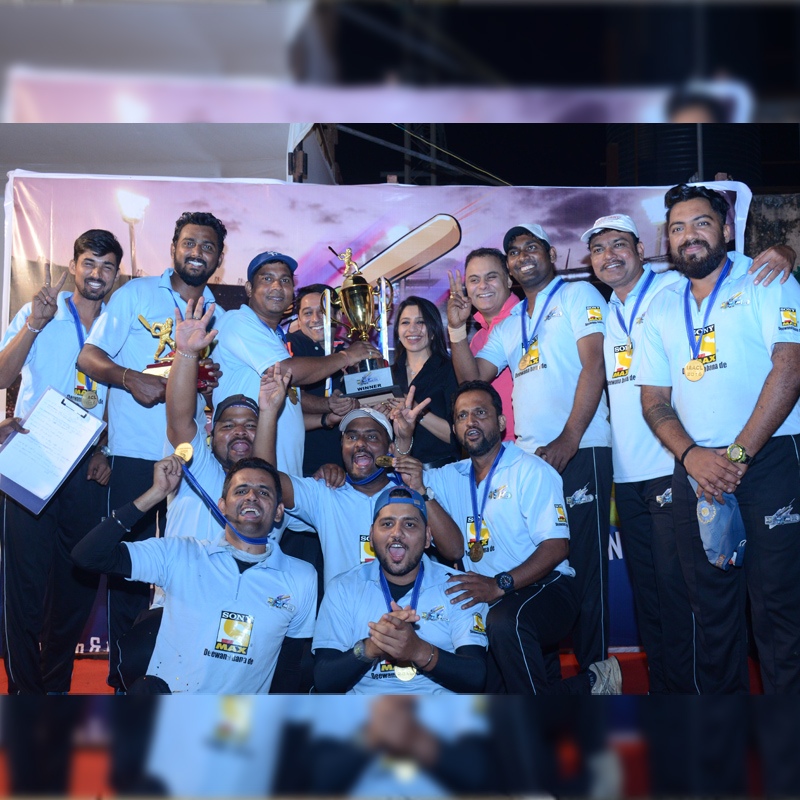
    MUMBAI: International Advertising Association (IAA) recently hosted the IAA Cricket League 2016, one of the most successful and largest cricketing events that brought the M&E and advertising fraternity together.

    Cricket being one of the most popular sports in the country and among corporate circles alike, the IAA Cricket League was a huge success with 24 teams from leading advertising and Media and Entertainment entities battling it out against each other to win the champion’s trophy. Presented by Sony Max, the two day event was held on November 5 & 12 at The Islam and Wilson Gymkhana at Marine Lines.

    With many intense rounds of games and a nail-biting finish, the Mid Day team was adjudged the winner, while The Social Street bagged the runners up title. IAA president Neeraj Roy, and IAA vice president Monica Tata presented the winner’s trophy to the victorious eleven from the Mid-Day team.

    Hungama Digital Media CEO & MD Neeraj Roy said, “Sincere thanks to Sony Max for supporting this event and also to all the 24 companies. The game has truly been a winner and my best wishes to Mid-Day. A special thanks to my colleague Atit Mehta for putting this event and also Sports 360 as well.”

  • Ad, M&E stalwarts together in IAA’s Sony-backed first cricketing event in Mumbai

    Ad, M&E stalwarts together in IAA’s Sony-backed first cricketing event in Mumbai

    MUMBAI: International Advertising Association (IAA) recently hosted the IAA Cricket League 2016, one of the most successful and largest cricketing events that brought the M&E and advertising fraternity together.

    Cricket being one of the most popular sports in the country and among corporate circles alike, the IAA Cricket League was a huge success with 24 teams from leading advertising and Media and Entertainment entities battling it out against each other to win the champion’s trophy. Presented by Sony Max, the two day event was held on November 5 & 12 at The Islam and Wilson Gymkhana at Marine Lines.

    With many intense rounds of games and a nail-biting finish, the Mid Day team was adjudged the winner, while The Social Street bagged the runners up title. IAA president Neeraj Roy, and IAA vice president Monica Tata presented the winner’s trophy to the victorious eleven from the Mid-Day team.

    Hungama Digital Media CEO & MD Neeraj Roy said, “Sincere thanks to Sony Max for supporting this event and also to all the 24 companies. The game has truly been a winner and my best wishes to Mid-Day. A special thanks to my colleague Atit Mehta for putting this event and also Sports 360 as well.”

  • Uday Shankar@FICCI Frames 2016: The real digital challenge

    Uday Shankar@FICCI Frames 2016: The real digital challenge

    Good morning.

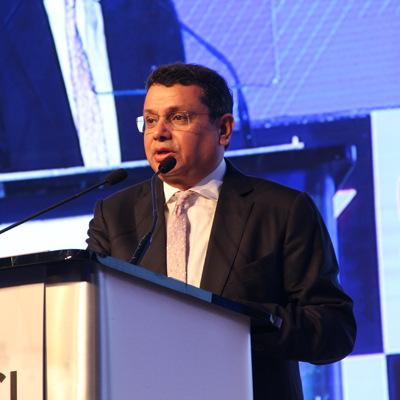
    Honorable Minister of Communications and Information Technology, Ravi Shankar Prasad Ji, Chairman TRAI R.S. Sharma, Mr. Mukesh Ambani, Ramesh Ji, friends from the world of media and entertainment.

    As co-chair of FICCI’s M&E committee, I have had the opportunity to address you for a few years now. I take this as a rare privilege and hence spend some time thinking through what I should say. A few weeks ago, as I was discussing the theme with some of my colleagues, a young assistant of mine – cocky on youth and his recent admission to Harvard Business School stated rather dismissively that there wasn’t anything new to be said as there wasn’t anything new happening in the M&E sector. While it sounded like a cynical assessment at that time it did set me thinking if there was indeed a grain of truth in what he said. On the surface, it does seem that not much has changed in the last several years except for some incremental growth or decline depending on which vertical you are talking about. Cable TV continues to struggle – struggling to improve its business case, struggling to improve its talent & technology quotient and above all to stay relevant in a rapidly changing world.  DTH, that set out to revolutionize distribution, increasingly seems to be intent on locking its destiny inside an isolated box in a networked world. Even the story of digitalization that started 6 years ago remains incomplete. The advertising revolution of the 90’s when a large number of international and Indian brands were built on television screens, doesn’t seem to be breaking new ground in terms of what I call brand revolution 2.0. Content creators, a community that I belong to, generally seem to be caught in a time warp with the same themes playing in a loop again and again –cursed destinies, rebirth and revenge and deference to elders in public while bickering in private, pretty much sums up what rules national entertainment. The quality of news of course, seems to cause only national consternation, with now even our friendly neighbor taking a pot-shot at our news channels!Over all, it seems the more things change the more they remain the same.  So maybe my colleague was right after all.  

    But then is the picture really as gloomy as this? Because beneath the surface ofentrenched stagnation, quietly – almost stealthily -there is a gigantic disruption playing out. A disruption that’s shifting the ground from beneath our feet.  

    My friends, allow me to recap the year for you.  The creative group to make the most waves last year were 4 youngsters, irreverent enough to take on our entire film industry and then build on that success by putting the entire country under a scanner.  This is a group who has the audacity to have a name so offensive that our news media calls them by their acronym AIB.  Yes, I am talking about All India Bakchod, who are perceived as comedians although this is not a group of people who make imbecile jokes while dressed in a funny manner.  More than once they have set the news agenda for the nation.  They have the gall to take on the combined might of big telcos and Mark Zuckerberg’sFacebook when they felt that the freedom of the internet was being parceled away.  They have used humour to put a spotlight on the state of fire stations in India or for that matter the behavior of the police force. As a group, these four youngsters made more headlines last year than probably all of the creative community put together.

    Very recently one of the pioneers of television entertainment told me that she was so frustrated by the frozen state of traditional media that she was going to create a digital enterprise to tell the stories that traditional media has been too scared to tell.  Of course, I am talking about the totally adorable – Ekta Kapoor.  Think about that for a moment – the person who created the archetype of saas and bahu feels the need to break away from these stifling constraints of the medium that she herself created.  Why?  When that happens, we all need to think hard.

    Friends, the most talked about launch in Indian M&E last year was not a new channel, or a new newspaper or a new production house – actually it was a mobile app that had the gall to ask consumers to go solo.  A call fundamentally at odds with the concept of content consumption in this country, that believes that the entire family watches TV together in the living room. Well, I am talking about the launch of our very own hotstar.  In just about a year, hotstar has been downloaded over 50 million or 5 crore times.  What is the implication of this?  Consider this – more people have watched the English Premier league on hotstar last year than on television.  Yes, EPL was watched by more people on hotstar than on television.  Even for a mass sport like cricket, in the larger cities, hotstar’s watch time is now starting to reach 50% of television.  I urge you to reflect on the potential of that statistic.   This infant service is already becoming a product of habit in India and now this year, my friends, we have set our sight on creating the first global Media & Entertainment product born out of India, when we take hotstar to the rest of the world in a few months.  The numerous and affluent south Asian diaspora which for the longest time has been frustrated by the lack of access to its favourite content will be able to watch cricket, movies and drama through hotstar.  While I am indeed happy for hotstar to be the pioneer, we are very aware that this is a trend that will get replicated again and again, very quickly.

    This colossal shift by no means is limited to television.  At the risk of earning her disapproval, let me share the story of my daughter – she is a serious academic whose job is to analyze the social sector and legislation for a living.  She is always on top of news and opinion articles and yet I have never seen her hold a physical newspaper in her hand.  Her daily dose comes exclusively from the digital universe. Her intake ranges from headlines under 140 characters to ebooks over 14 million characters long. She is a voracious consumer of movies and drama; yet goes to theatres morefor fun than for creative consumption.  Fixed schedule programming sounds as bizarre to her as silent movies to us.  She is obsessed with music but doesn’t own a single CD.  Her near infinite library rests entirely on her iPhone – the same goes for her friends and colleagues who use android devices.

    The world has changed.  There is a tectonic shift happening in our industry right in front of us.And yet, what we see in the world of traditional television is just stagnation. And this stagnation has been made worse by the funny denial that all of us seem to be living in. Even though this change is happening faster than anything we have ever seen, our approach towards it seems to be one of incrementalism.

    I see an even more obsessive desire to protect the antiquated business models that we have painstakingly built over the years and that technology and the youth are decimating like a bull-dozer rolling over glass bottles.  It reminds me of the story of a Japanese soldier who was left stranded and forgotten on a small island in the Pacific. Many years after Japan had lost the war and the world had returned to normal that lone soldier kept guarding that isolated island thinking he was still protecting the Japanese empire.  Herein probably lies the explanation why print companies found it difficult to make the transition to TV and why almost all the digital successes generally come from companies that did not exist even a decade ago.  This is because these are companies and people who are not chained by their legacy businesses.  Just imagine where businesses like Netflix, Twitter and Facebook were a decade ago and what global empires they have created in this short span of time.

    It is pretty clear to me that we are in a battle.  In this battle there are only two options that we have – we can either continue living in denial, hide back in our artificial walled gardens, watching as the bricks crumble down one by one or we can arm ourselves with the sameweapons that our challengers possess, and venture forth into battle, sometimes even against the same businesses that we have created. Change or Perish.

    There is one thing however that will continue to be the same: the power of stories. For those of us who had imagined a world where the so called user generated stories would unseat high quality creativity, the answer comes from the Netflix strategy.  Netflix – the most successful content provider in the US, the challenger to the media behemoths of the west has done so on the back of extremely high quality content, so much so that Netflix’s catalogue today represents the absolute best of American television.

    However there is a twist in the tale here.  No longer is the story enough, within the commoditized consistency of experience.  Technology and creativity are coming together to enhance the experience literally, almost daily.  Indians long used to a life of having to start all over again if the power went for a minute are rapidly getting used to being asked if we want to resume where we left off?

    The new screens have once again highlighted the importance of the story but they have introduced the centrality of the experience at the same time.  Design and engineering can no longer be divorced from the story – this is a radical departure from everything that we were taught all these years.  We learnt this the hard way through hotstar – how small changes even in the browsing experience could lead to dramatic shifts in consumption.  Today I am happy to remark that we at Star probably have more engineers in our team than any other media and entertainment company.  Equally we have more designers and more story tellers than anyone else because those are the three pillars on which we see future M&E companies getting built.  

    Clearly, we need to change the lens with which we look at talent.  In this new world neither technology nor talent will be limited by geographical boundaries.  The best engineers are as likely to be in Berlin as in Bangalore.  We already know that best designers and animators for Hollywood no longer need to be there – because they are already in Goregaon and let’s not forget our very own Priyanka Chopra who is the first home grown star of a truly global show.  We are looking at a truly global world.  But this global world has no patience for traditional forms of reverence.  At Star, we are grappling with this everyday – when we inducted culturally diverse talent we had to create space for that cultural diversity to exist. But that’s easier said than done.  Technology going global, talent going global also means adoption of a new tradition.

    Recently, I just saw amazon.in selling cow dung cakes online.  This humblest of the humble, the most traditional of fuels, being sold at 350 bucks for a small packet.  To me, that is the real power of the world that we are going into.  Power of the idea that someone actually thought that there is a market out there for cow dung cakes and the fact that that market is willing to a pay huge premium for it.  And the fact that the internet has created a market place where ideas and creativity are the only constraints.

    In this context let me draw your attention to the illustrious gathering on this podium today because if India has to make that leap into the new world where everybody can create value for himself or herself by sheer innovation then this group here must deliver.  Minister Ravi Shankar Prasad is not just a senior minister of the Union Cabinet – he holds the key to India’s transition into this digital world.  Chairman R.S.Sharma will have to decide how much can he accelerate that leap, and finally the whole country is looking at Mr. Ambani’s initiative called Reliance Jio to unshackle that truly global, truly democratic dream of 125 crore Indians.  Let’s all hope that they do the right thing, for it is in the best interest of this country they all must succeed.