Tag: M&E

  • Ridhima Lulla joins The Indian Chamber of Commerce as M&E Head of the Western India Expert Committee

    Ridhima Lulla joins The Indian Chamber of Commerce as M&E Head of the Western India Expert Committee

    MUMBAI: India’s leading body of business and industry, The Indian Chamber of Commerce (ICC), has appointed Eros Group’s Chief Content Officer Ridhima Lulla as the Head of the Western India Expert Committee in Media & Entertainment. Formed by a group of pioneering industrialists, ICC members include several corporate groups in the country, with business operations panning across India and abroad.

    Ridhima’s appointment is a testament of her talent and dedication towards the media and entertainment ecosystem. With her core focus on the creative expression, she plays a key role in the leadership team at Eros International, driving the company’s content strategy. She has been actively involved in Eros’s movie business with projects at all stages. Ridhima has also been strengthening the original content strategy for Eros Now, the premiere Video OTT platform by Eros, thus re-establishing its leadership position as a digital entertainment company.

    Commenting on the appointment, Ridhima Lulla said, “I am humbled and happy to join The Indian Chamber of Commerce board. The media & entertainment landscape in India is currently in a very exciting phase and I believe that the coming years are going to be crucial in how the world looks at the Indian M&E industry. At ICC, my aim will be to elevate the ecosystem with creative and collaborative thinking along with other worthy members on the board.”

  • Dish TV India concludes Grand Finale of M&E and Broadcasting industry’s first ever Hackathon

    Dish TV India concludes Grand Finale of M&E and Broadcasting industry’s first ever Hackathon

    MUMBAI: Dish TV India Limited, world’s largest single-country DTH Company, held the 30-hour Grand Finale of India’s first and largest M&E and Broadcasting industry hackathon ‘Dish-a-thon’ on June 23-24 2018 at CoWrks, Gurugram. 30 plus teams competed in a thrilling battle of innovation, creativity and technical skills for over two days to resolve challenges and come up with constructive solutions to advance digital transformation for great customer experience. This also included a grueling round of live demo and Q&A session with judges from Dish TV India. Team Git Init from DTU claimed the top position with Teams Voicebox and Zodiac finishing as the first and second Runners up, respectively.

    The winning teams created solutions like easy accessibility of DTH without using a remote, foolproof ready-to-use lead management system and AI enabled video commerce platform prototype. Dish-a-thon, powered by IncubateIND, was a unique hackathon aimed at inviting disruptive ideas covering path-breaking technologies like Artificial Intelligence (AI), Augmented Reality (AR), Virtual Reality (VR) and Big Data and witnessed spectacular participation of more than 1000 talented teams of young innovators, startups, students, developers, designers and data scientists across India.

    Gracing the finale with his presence, Dish TV India, Group Chief Executive Officer, Mr. Anil Dua said, “We received overwhelming response from all over India and we are thrilled with the success of Dish-a-thon. The innovative solutions designed by the top teams are pointers to the direction that technological advancements in Media & Entertainment industry will take. We are excited with the grand finish to our industry-first initiative and will work on these innovative ideas to turn them into revolutionary real-world solutions for the benefit of customers and the industry, as a whole.”

    Talking about the solutions created during Dish-a-thon, Dish TV India, Chief Technical Officer, Mr. V K Gupta said, “We are delighted to see participation from designers, developers, professionals, students and wizards from all over the country to create the future of M&E and Broadcasting industry. The teams used diverse themes in addition to their own disruptive ideas. These critical solutions based on absolute creativity will definitely have a wide impact on the entire industry and help us in further transforming and upgrading the television viewing experience for our customers.”

    Delighted at the grand finale, Dish TV India, Corporate Head – Marketing, Mr. Sukhpreet Singh said, “As an industry-first initiative, Dish-a-thon accomplished wide scale and depth while encouraging the nation’s brightest minds to innovate and drive digital transformation in DTH industry. The grand finale, beaming with the enthusiasm of participants, was a fitting culmination to a successful competition sowing the seeds for future disruptions in the industry.”

    Excited on the strong partnership with Dish TV India, Co-founder of IncubateIND, Samkit Sharma said, “We are proud to partner Dish TV, the pioneer in DTH industry in the inaugural year of Dish-a-thon. Dish TV has always been at the forefront of development with its path-breaking initiatives and the most receptive brand that has imbibed innovation in its culture. We are sure that some of the ideas that have come from this Dish-a-thon will be found useful by the leadership team of Dish TV.”

    Dish-a-thon was open for individual team of developers and startups. Dish TV, along with IncubateIND, shortlisted more than 40 teams for the 30-hour open-format grand finale. During the grand finale, participants got an opportunity to interact with industry experts and work with mentors to co-create and co-develop. The winners were recognized through certifications and cash rewards and also stand a chance to start a strategic engagement with DishTV. Before this, the first grand finale took place in Bangalore on June 16 & 17, 2018 with Team CoDish from Hyderabad claiming the title. Please visit dish-a-thon for further details.

  • M&E to add 1 mn jobs in 5 years: Sudhanshu Vats

    M&E to add 1 mn jobs in 5 years: Sudhanshu Vats

    MUMBAI: The Indian media and entertainment (M&E) sector is likely to be worth $1.7 billion in terms of service exports. The figure was estimated by Viacom18 group CEO Sudhanshu Vats while speaking at a CII inauguration.

    India’s services exports were $163 billion which is likely to hit $320-330 billion in five years. The M&E sector is a $21 billion industry with eight per cent being exports. By 2022, the M&E sector will contribute $8.5 billion worth of export revenue. In the overall pie of service exports across industries, M&E makes up one per cent and is likely to hit three per cent by 2022.

    Vats went on to state what makes the M&E sector apt to become the next big thing after IT in the country. With job creation being a government priority, the M&E industry directly employs 1.1-1.2 million people and with indirect employment that will be 3.5-4 million jobs. India’s current total employment is about 480 million and 10-15 million being added every year. The M&E industry will easily add one million direct jobs in five years and though the number may be small, they will be quality jobs that will be future proof.

    For other sectors, added factors build onto export cost such as the cost of product development/customisation, packaging, logistics, maintaining overseas offices etc. But in M&E, this is negligible. The only costs will be QC, subtitling, bandwidth, etc. “ Overnight, I can’t start making a drama that will be loved by say the citizens of Papua New Guinea – but I can make good dramas for Indian audiences – that might resonate in Papua New Guinea as well! This has an important corollary – while it holds true for other industries as well, it holds even more true for our sector where every almost output is a tradeable item – any domestic public policy aimed at making us competitive in India, will make us competitive across the world,” he said.

    The sector has an ability of a multiplier effect on other industries such as tourism, travel, healthcare, etc., the effects of which cannot be ignored. “We have all that it takes to ensure that India takes her rightful place with the next industrial revolution – one that will make human capital, creativity and cognitive ability even more important. From one per cent of our services exports today to about three per cent by 2022 – and significant, disproportionate upside from the standpoint of India’s labour markets, social policy, economic growth and global standing – that is the promise we hold,” he concluded.

    Also Read :

    Sudhanshu Vats on Viacom18’s growth strategy and why data analytics is key

    We are becoming more platform and screen agnostic: Sudhanshu Vats

  • M&E to cross Rs 2 trillion by 2020: FICCI-EY report

    M&E to cross Rs 2 trillion by 2020: FICCI-EY report

    MUMBAI: FICCI Frames 2018 saw the launch of its annual media and entertainment (M&E) report, this year by Ernst & Young (E&Y) titled ‘Re-imagining India’s M&E sector’ which captures key insights from the exciting and fast growing Indian M&E sector.

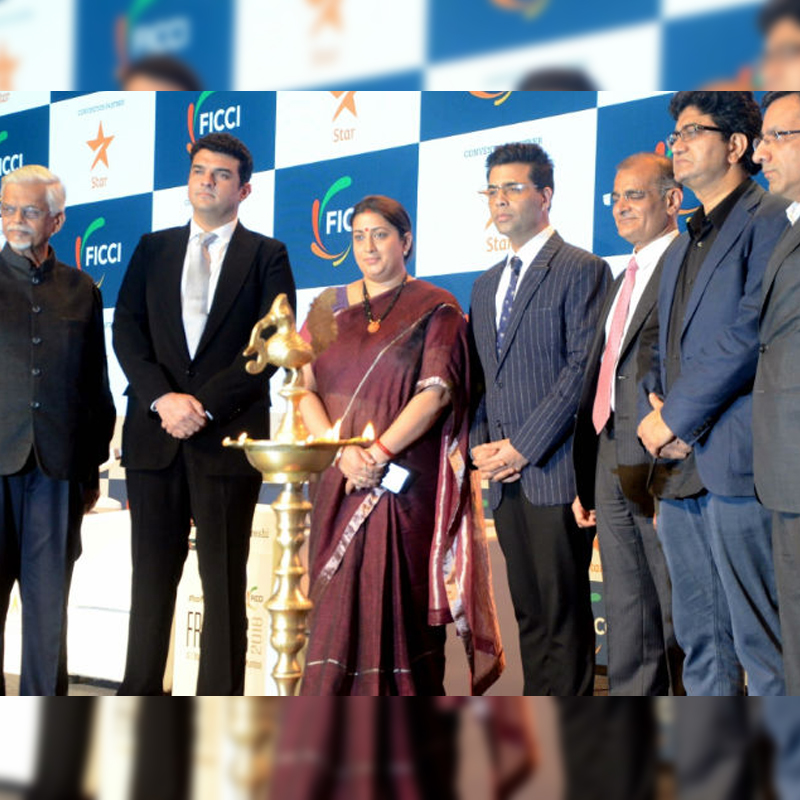
    Launched on Sunday in the presence of the Information & Broadcasting minister Smriti Irani and other industry stalwarts like Star India MD Sanjay Gupta, Siddharth Roy Kapoor, filmmaker Karan Johar and others, the FICCI-EY report highlights that the M&E sector continues to grow at a rate faster than the GDP growth rate, reflecting the growing disposable income led by stable economic growth and changing demographics.

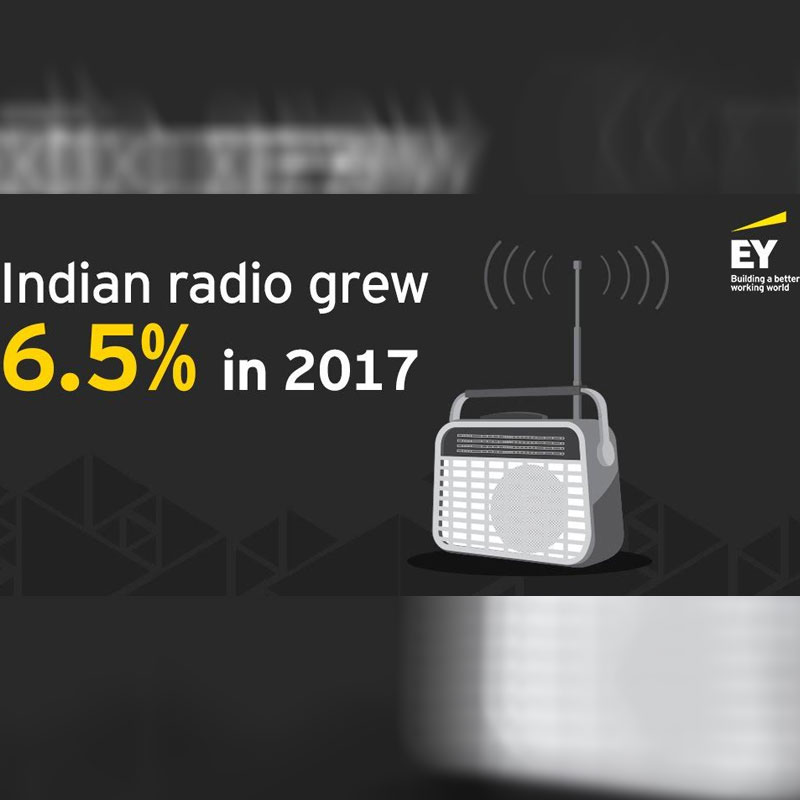
    The report suggests that the Indian M&E sector reached Rs 1.5 trillion in 2017, a growth of around 13 per cent over 2016 and is expected to cross Rs 2 trillion by 2020, growing at a compounded annual growth rate (CAGR) of 11.6 per cent. The digital segment led growth, demonstrating that advertising budgets are in line with the changing content consumption patterns.

    The report states that subscription growth outpaced advertising growth in 2017 but advertising will continue to grow till 2020 led by digital advertising. The report estimates that approximately 1.5 million consumers in India today are digital only and would not normally use traditional media. It is expected that this customer base will grow to 4 million by 2020 generating significant digital subscription revenues of approximately Rs 20 billion. Going forward, micropayment, enabled through the Unified Payment Interface (UPI) and Bharat Interface for Money (BHIM) platforms developed by the National Payments Corporation of India (NPCI) will further accelerate subscription revenues for entertainment content.

    EY India partner and M&E leader Ashish Pherwani expects digital and gaming sectors to grow between 2 to 3 times by 2020.

    Television
    While advertising is 41 per cent of the total revenues today, the report expects it to grow to 43 per cent by 2020. There are over 30 per cent households in India which are yet to get television screens, but being at the bottom of the pyramid, these households will tend to move first towards free and sachet products. 

    EY report states that the TV industry grew from Rs 594 billion to Rs 660 billion in 2017 and advertising grew to Rs 267 billion while distribution grew to Rs 393 billion. At a broadcaster level, however, subscription revenues including international subscription made up approximately 28 per cent of revenues. 

    Digital media

    250 million people viewed videos online in 2017 and the figure is expected to double to 500 million by 2020. 93 per cent of time spent on digital videos is in Hindi and other regional languages and OTT subscription in India is expected to touch Rs 20 billion by 2020.

    Digital media has grown significantly over the past few years and continues to lead the growth charts on advertising. Subscription revenues are emerging and are expected to make their presence felt by 2020. In 2017, digital media grew at 29.4 per cent on the back of a 28.8 per cent growth in advertising and a 50 per cent growth in subscription. Subscription, which was just 3.3 per cent of total digital revenues in 2016, is expected to grow to 9 per cent by 2020.

    Print

    Today, 98 per cent of readers read dailies and 20 per cent read magazines. Reader base is 395 million, or 38 per cent of the population. Readership has grown by 110 million over the last 3 years. Rural (52 per cent) reader base is larger than urban (48 per cent). 44 per cent of children aged between12-17 years read a newspaper or magazine. Magazines have a higher readership in urban area (57 per cent) as compared to rural areas (43 per cent).

    Print accounted for the second largest share of the Indian M&E sector, growing at 3 per cent to reach Rs 303 billion in 2017 and is estimated to grow at an overall CAGR of approximately 7 per cent till 2020. 

    This growth is expected despite the FDI limit remaining unchanged at 26 per cent and therefore, restricting access to foreign print players and the imposition of GST at 5 per cent on the advertising revenues of the print industry for the first time in history.

    Films

    Regional movies drove the growth in number of releases in 2017. Screen count increased from 9481 in 2016 to 9530 in 2017. Number of Hindi movies crossing the Rs 1 billion mark was highest in 2017 in the past five years. From 31 movies in 2016, Hindi dubbed movies increased more than three times to 96 in 2017.

    The Indian film segment grew 27 per cent in 2017 on the back of box office growth – both domestic and international, coupled with increased revenues from sale of satellite and digital rights. All sub-segments, with the exception of home video grew and the film segment reached Rs 156 billion in 2017. 

    The Hindi films comprise the majority component of the Indian film segment. They contribute almost 40 per cent of the net domestic box office collections annually, despite comprising only 17 per cent of the films made. Films in 29 other Indian languages account for approximately 75 per cent of the films released but they contribute approximately 50 per cent to the annual domestic box office collections. Hollywood and international films comprise the balance.


    M&A in M&E

    The Indian M&E sector witnessed a relatively new trend in deal activity with emerging segments such as gaming and digital gaining momentum, while the deal activity in the traditional media segments was slower. The slowdown can be partially attributed to challenges faced by the advertising segments of the industry due to demonetisation and GST. Overall, the number of transactions in the M&E sector decreased from 56 deals in 2016 to 40 deals in 2017.

  • Ficci Frames 2018: Smriti Irani for highlighting M&E’s economic importance

    Ficci Frames 2018: Smriti Irani for highlighting M&E’s economic importance

    MUMBAI: Even as the Indian media and entertainment (M&E) sector is projected to cross $31 billion by 2020, Minister for Information and Broadcasting (MIB) Smriti Irani said yesterday it is imperative that the country as a whole projected the economic value that the industry lends to the country’s economy.

    Speaking at the FICCI-Frames 2018 inaugural ceremony here, Irani said the Indian M&E industry is much more than just naach-gana (song and dance) and it was high time that the industry came forward to articulate the economic value and contribution that it gave to the Indian economy and exhorted the industry to use modern data analytics and technology to arrive at conclusions at the type of content the consumer desired.

    Referring to artificial intelligence or AI and other technologies, she said, “Technology is looked upon as a disruptor, but have we looked at technology from a creative point of view?”

    The Indian M&E sector hit nearly Rs 1.5 trillion ($22.7 billion) in 2017, growth of around 13 per cent over 2016. With its current trajectory, it is expected to cross Rs 2 trillion ($31 billion) by 2020, at a CAGR of 11.6 per cent. The digital segment-led growth demonstrates that advertising budgets are in line with the changing content consumption patterns, according to the FICCI-EY report ‘Re-imagining India’s M&E sector.’

    Launched on Sunday in the presence of the minister and other industry stalwarts such as Star India MD Sanjay Gupta, Siddharth Roy Kapoor and filmmaker Karna Johar, the FICCI-EY report highlighted that the M&E sector continues to grow at a rate faster than the GDP growth rate, reflecting the growing disposable income led by stable economic growth and changing demographics.

    The report states that the subscription growth outpaced advertising growth in 2017, but advertising would continue to grow till 2020 led by digital advertising.

    The report estimates that 1.5 million consumers in India today are digital-only and would not normally use traditional media. It is expected that this customer base will to grow to 4 million by 2020, generating significant digital subscription revenue of approximately Rs 20 billion. Going forward, micropayments, enabled through the Unified Payment Interface (UPI) and Bharat Interface for Money (BHIM) platforms, developed by the National Payments Corporation of India (NPCI), will further accelerate subscription revenue for entertainment content.

    EY partner and M&E leader Farokh Balsara stated, “The Indian M&E sector reached INR1.5 trillion in 2017 led by digital. With digital subscribers expected to reach 20 million by 2020, has Indian M&E reached its digital tipping point? We now need to reimagine the future of Indian M&E sector.”

    Said Gupta, “These are truly exciting times for our industry. It is amongst the fastest growing sectors in the country and has crossed the Rs 147 thousand crore mark. There is a revolution happening all around us, one that promises to, and in fact, has already started to redefine the future of media and entertainment.”

    “To compete well with the world, we need to set new standards of storytelling, we need to reimagine our stories. We cannot allow our legacy to shape our creativity. With digital, we have the license to break away from all the trappings of traditional media. We need to challenge where we release our films first, in a theatre or on a mobile screen. We need to challenge the constraints of 8 pm prime time, daily and hourly news formats and 22-minute episode lengths,” he added.

  • PFL reports growth in operating revenue

    PFL reports growth in operating revenue

    BENGALURU: Integrated media services player Prime Focus Ltd (PFL) reported 20 per cent year-on-year (yoy) growth in operating revenue at Rs 609.61 crore for the quarter ended 31 December 2017 (Q3 2018, quarter, the quarter under review) as compared with Rs 508.03 crore for the corresponding year ago quarter (Q3 2017). Total income increased by 20.3 per cent yoy in Q3 2018 to Rs 612.21 crore from Rs 508.84 crore. The company, however, reported a net loss of Rs 7.03 crore for the quarter under review as compared with profit after tax (PAT) of Rs 28.18 crore in Q3 2017. The company says finance charges considered for Q3 2018 were higher by Rs 5.5 crore on account of change in accounting treatment towards redemption premium on Standard Chartered PE NCDs–expensed as against capitalised in the balance sheet in earlier quarters.

    Adjusted operating EBITDA for the quarter at Rs 157.34 crore (25.8 per cent of operating revenue) grew by 27.8 per cent yoy from Rs 123.16 crore (24.2 per cent of operating revenue). Adjusted EBIDTA of Rs 157.34 crore for Q3 2018 includes ESOP costs of Rs 4.21 crore, foreign exchange (forex) losses of Rs 2.51 crore and Rs 10 crore of non-operating non-cash forex charges on account of balance sheet translation exposure and approximately Rs 20 crore for certain one-time Montreal setup costs and conservative provisions at PFW/DNEG.

    Total expenditure in Q3 2018 increased by 25.9 per cent to Rs 610.09 crore from Rs 484.43 crore in Q3 2017. Employee benefits expense in Q3 2018 rose by 25.9 per cent to Rs 332.61 crore from Rs 268.74 crore in the corresponding quarter of the previous year. Technician fees more than doubled (2.08 times) to Rs 15.12 crore from Rs 7.27 crore in Q3 2017. Technical services cost in the quarter under review increased by 72.4 per cent to Rs 28.45 crore from Rs 16.50 crore in Q3 2017. Finance cost in Q3 2018 increased 97.6 per cent yoy to Rs 45.32 crore from Rs 22.94 crore in Q3 2017. Other expenditure in the quarter increased 14.9 per cent yoy to Rs 106.08 crore as compared to Rs 92.36 crore in the corresponding quarter of fiscal 2017.

    Commenting on the results, PFL founder, executive chairman and global CEO Namit Malhotra said, “We are pleased to report a strong quarter with continued momentum across businesses. Ourcreative services continued to deliver marquee projects such as recent Hollywood blockbusters – Thor: Ragnarok and Justice League which have grossed over $800 million and $600 million, respectively. Our order book includes good projects like Venom, which is the next movie in the Spiderman franchise. In tech/tech enabled business, we added new clients and invested in new talent to strengthen our reach in North America while India FMS continues to deliver robust profitability in line with our expectations.

    “Given the significant growth we have witnessed in our creative services business and continued momentum visible going forward, the board has decided that Vikas should focus all his energies toward helping manage this growth and maximise the potential at PFW/DNEG. Vikas has relocated to London and will now be fully focused on his role as the CFO of PFW/DNEG. Nishant Fadia has now been re-appointed as the CFO of PFL. As you may know, Nishant has been with Prime Focus for the last 18 years and was the CFO of PFL till 2014 and since then has been the COO for the Group. I wish them both the very best as we look to take the Prime Focus Group to greater heights in the years ahead.

    “We are happy to continue to deliver performance ahead of plans and look forward to ending FY18 on a higher note.”

    Also Read:

    Prime Focus reports flat results for first quarter

    Hotstar tech partner Prime Focus signs deals with Turner & sports broadcasters

  • Industry holds bright outlook for budget 2018

    Industry holds bright outlook for budget 2018

    MUMBAI: With the D-Day already here, the media and entertainment industry is keeping its fingers crossed after a difficult year that bore the full brunt of the introduction of GST. With things settling and the general elections not too far away, a more populist budget is expected from FM Arun Jaitley and his ministry this year. While all eyes will be on the fiscal consolidation roadmap and borrowing plans, the government’s action plan for ease of doing business will be in sharp focus.

    Indiantelevision.com asked industry veterans for their views on what’s likely to transpire during the mega event today. This is what they had to say:

    public://Joy Chakraborthy.gif

    “This is the last budget before the general elections, I think it will be a populist and a good budget. It should help the spending and the overall industry which will directly help advertising.

    Broadcast industry went through a major cyclic process when demonetisation and GST happened. With helping the advertising industry this budget will bring good growth to the media industry as well. It will also help in increasing the consumption, expenditure.

    Over the sentiment will get better, India as a country is very sentiment driven. If the budget is good, the general public will also be happy and half the things are taken care.”

    — TV18 president-revenue & CEO Forbes India Joy Chakraborthy

    public://frank dsouza.jpg

    “Entertainment and media industry is not just a participant but also carrier of digital revolution in the country.  Therefore, policy makers should step up to rationalise the taxation aspects impacting digital ecosystem.  Towards this end, clarification may be provided on applicability of Rule 9A of the Income Tax Rules to income from sale of digital rights of feature films certified for theatrical exhibition.  Also, with the growth in production, distribution and consumption of ‘web only’ content, provisions similar to those for feature films may be applied or at least clarity may be provided on its deductibility as revenue expenditure.  

    Though India is one of the large cinema markets around the world when it comes to admissions, the market in tier II and tier III cities still remains underserved given the limited number of screens.  A weighted deduction may be provided for developing, maintaining and operating single screen theatres or multiplexes in such tier II and tier III cities.

    GST was introduced with an intention to subsume multiple taxes levied by the State and the Union.  This had come as a major relief to all the industries including the media and entertainment industry, with of course, industry discomfort on the rate of GST is undeniable.  However, many states (like Tamil Nadu and Gujarat) have started imposing local body entertainment tax on movies. Levy of local body entertainment tax on movies exhibited defeats the whole purpose of GST.  Therefore, the government should either remove the levy in itself or at least put a minimum cap on exhibition of movies.”

    – PWC partner-India entertainment and media sector leader Frank Dsouza

    public://Megha Tata.jpg

    “Now that the GST jitters are receding and GDP growth rebounding to 6.3 per cent in Q2 of FY 2017-18, I am confident about growth of broadcast industry in FY 2018-19. Having said that, I wish to see average GST rate for media and entertainment sector be brought down from existing 18 per cent to pre-GST levels of 15 per cent. I am hopeful about Finance minister keeping his words by reducing the corporate tax rate from 30 per cent to 25 per cent as promised by him in the union budget 2015-16 speech.”

    — BTVI COO Megha Tata

    public://Vikas Khanchandani.jpg“The M&E industry will continue on its exponential growth path as we get high speed data connectivity and the corresponding data costs continue to decline. Data growth has risen on the back of high video consumption on the go and will continue to play a pivotal role for growth in both M& E and Telecom sectors. Keeping in mind the expected growth, one long -pending wish I have from the Budget is the recognition of the M&E industry as an integral part of the Infrastructure sector so that it can avail of the various benefits and incentives that are given to the Infrastructure sector. This includes better financing options, to help boost the capital investments needed in digitisation and digitalisation, technology upgradation and new technology development and deployment. The net benefit of all of the above will always flow back to the consumer.”

    — Republic TV CEO Vikas Khanchandani

    public://piyush pankaj.jpg

    “To realise the Digital India dream, it is important to promote broadband. MSO are the best to roll out faster Broadband being already have fibre reaching homes, building, society etc. Being high capex requirement of business, the industry expect that Budget will give relief to Industry by removing the AGR.”

    — GTPL Hathway Ltd head-investor relations Piyush Pankaj


    public://Rahul Puri.jpg“The budget for 2018 will be a greatly important budget as the elections for 2019 are only a year away. I think there will be some changes to the direct tax structure this year as indirect taxes were given the biggest ever overhaul last year in terms of the introduction of GST. I also feel that there will be increased spending on infrastructure likely to be announced this budget as the government looks to employ some populist measures with one eye on elections.
    As for the entertainment industry, I hope some clarity comes through on GST with relation to multiplexes as it’s important that the industry sees consistency. I also am hopeful that as the government looks to help increase infrastructure capacity, the multiplex and retail segments get a much-needed boost.”

    — Mukta Arts & Mukta A2 Cinema MD Rahul Puri

    public://shaji.jpg

    “Transparency was one of the declared objectives of digitisation and this has been achieved with the efforts and investments by MSOs and operators. Today, majority of the benefits of transparency flows to the government and broadcasters. It’s time that the government recognised the contribution of small entrepreneurs in establishing this industry, the reality that television is much more than entertainment, and the need to share the benefits of transparency with MSOs, operators and consumers by way of overall reduction in taxes to the sector.”

    — KCCL CEO Shaji Mathews

    public://Varun.jpg

    “From a personal standpoint this will be an interesting budget to see how economic reforms and political compulsions are balanced. But from an industry stand point I’m hoping that digital transactions and e commerce get a positive deal and in effect making them further appealing to consumers. If done it will be a game changer for Digital India.”

    — The Glitch co-founder and content chief Varun Duggirala


  • Guest Column: M&E sector pins hopes on a developmental budget

    Guest Column: M&E sector pins hopes on a developmental budget

    The market size of the Indian media and entertainment (M&E) sector is estimated to be in excess of USD 20 billion. India has more than 180 million television households and approximately 900 television channels (including news and current affairs). The country also produces the highest number of films–around 2,000 films every year in more than 20 languages.

    The key sub-sectors under M&E include (1) broadcasting, (2) print, (3) films, (4) sports, (5) radio, (6) music, (7) digital advertising, (8) out-of-home advertising, (9) animation and VFX, (10) gaming, (11) live events. The M&E sector is expected to outpace GDP growth in 2018. Now, with everyone’s eyes on Budget 2018 proposals, the key expectations of the sector are outlined below:

    Mergers and amalgamations

    Industrial undertakings are allowed to carry forward tax losses in case of merger or amalgamation. The definition of industrial undertaking, includes manufacture of computer software, providing telecommunication services. However, the sector (including broadcasting, radio) has not been included in this definition. Accordingly, the benefit of tax losses is currently not available for M&E players in cases of consolidation.

    On account of evolving business models (including moving to a B2C model), there is a thrust on consolidations within the M&E sector. Considering this and the convergence of the broadcasting and radio sectors with telecommunications, the government should consider including broadcasting and radio under the definition of industrial undertaking for carrying forward tax losses. This would facilitate consolidations in broadcasting and radio.

    Infrastructure status

    Broadcasting is capital intensive and requires huge investment of funds on account of digitisation, upgrade of technology and infrastructure architecture. Currently, broadcasting is not granted infrastructure status and the government should consider granting such status to the sector. This, amongst others, would aid financing for future growth and help the sector achieve its potential.

    Foreign direct investment (FDI) in print

    Currently, FDI in print (news and current affairs) is capped at 26 per cent. This sector is trying to deal with the impact of digitalisation. Considering the trend of liberalising the FDI policy and sector’s needs for investment in digital assets, the government should consider increasing the FDI cap for print to 49 per cent. This would help in attracting foreign funds into the sector.

    Transfer pricing

    Safe harbour is a mechanism under which tax authorities accept the transfer price (under certain circumstances) declared by the taxpayers, without undertaking a detailed audit/scrutiny. The scope of safe harbour transactions has been enlarged in 2017 to provide certainty to taxpayers and transactions such as provision of software development services for IT/ITeS sector are part of the safe-harbour regime. However, transactions specific to the M&E sector are currently not a part of the regime.

    The government should consider including the transaction of distribution of content by an Indian company to its overseas group company under the safe-harbour regime. This would provide relief to M&E players in terms of obtaining certainty from a transfer pricing perspective.

    Withholding tax

    Over the last couple of years, the government has been forthcoming in terms of clarifying tax positions (for instance expense deduction for abandoned films, withholding tax in respect of advertising contracts and content transactions) by way of circulars to avoid litigation. Outlined below are a few issues that the government should consider clarifying the withholding tax position to reduce litigation:

    ·  Channel placement fees: The government should consider clarifying that such payments do not amount to royalty/fees for technical services considering the Bombay high court decision on this issue.

    ·  Live broadcast rights: Clarifying that such payments do not amount to royalty/fees for technical services should be considered based on the Delhi high court and Mumbai tribunal decisions on this issue.

    ·  Transponder fees: The government should also consider clarifying that a non-resident taxpayer can claim the benefit under a tax treaty for transponder fees and domestic tax law explanation of the process should not be       imputed to the tax treaty definition of royalty.

    Goods and services tax (GST)

    Services by way of admission to exhibition of cinematograph films is subject to GST at 18 per cent or 28 per cent, depending on the price of the ticket. In addition to GST levied by state and central governments, the right to levy and collect tax has also been given to local authorities and this right continues even after implementation of GST. It should be ensured by the government that such local bodies do not levy additional tax on exhibition of films. If levied, a corresponding reduction in GST rate should be granted.

    The M&E sector is at the cusp of exponential growth opportunities but to achieve such growth trajectory, the support of the government reforms is of utmost importance. Hopefully, on 1 February 2018, when the Budget proposals are presented, we would take a significant step in that direction.  

    Thakkar is Partner and Bhojwani is Director with Deloitte India. The views expressed are personal and Indiantelevision.com may not


  • M&E items get GST relief from 15 November 2017

    M&E items get GST relief from 15 November 2017

    NEW DELHI: In a major relief to the media and entertainment (M&E) sector, the goods and services tax (GST) has been slashed on a large number of items including electrical apparatus for radio and television broadcasting from 28 per cent to 18 per cent.

    Although the government has failed to address the primary issue of entertainment tax which is a great dampener in view of the losses due to video piracy, the reliefs announced are a winner. The change in taxation is effective from midnight of 15 November 2017.

    In its last meeting held in Guwahati in Assam, the GST council under the chairmanship of finance minister Arun Jaitley agreed to cut the GST on several items in the M&E sector.

    Goods on which the council had recommended reduction of GST rate from 28 per cent to 18 per cent in the M&E sector are:

    1. Electrical apparatus for radio and television broadcasting

    2. Sound recording or reproducing apparatus

    3. All musical instruments and their parts

    4. Cinematographic cameras and projectors, and image projector.

    The cable TV sector may also get some relief as the relaxation also covers:

    5. Wire, cables, insulated conductors, electrical insulators, electrical plugs, switches, sockets, fuses, relays, electrical connectors

    6. Electrical boards, panels, consoles, cabinets etc for electric control or distribution

    Apart from this, the council announced exemption from IGST/GST in temporary import of professional equipment by accredited press persons visiting India to cover certain events, broadcasting equipment, sports items, testing equipment, under ATA carnet system. These goods are to be re-exported after the specified use is over.

    The council also said that in order to obviate dispute and litigation, it is proposed that irrespective of whether permanent transfer of Intellectual Property (IP) is a supply of goods or service:

    (i) permanent transfer of IP other than Information Technology software attracts GST at the rate of 12 per cent.

    (ii) permanent transfer of IP in respect of Information Technology software attracts GST at the rate of 18 per cent.

  • India’s PFT Clear Media ERP suite to help US’ PBS content delivery

    India’s PFT Clear Media ERP suite to help US’ PBS content delivery

    MUMBAI: Prime Focus Technologies (PFT), the technology arm of Prime Focus, announced that its CLEAR™ Media ERP Suite has been selected by Public Broadcasting Service (PBS) to enhance their Network Operations Center (NOC) ecosystem efficiencies and sustainability, with the objective of reducing operational costs for content providers by migrating content delivery, initial QC (quality control) and transcoding operations to the cloud. PBS, with nearly 350 member stations, offers all Americans the opportunity to explore new ideas and new worlds through television and online content.

    PFT will deploy CLEAR’s Broadcast Cloud and Operations Cloud modules for automating PBS’s complete Direct to NOC file delivery process. All short turn external file-based content intended for the NOC will be ingested through CLEAR, thereby streamlining the member station organization’s process of receiving media across their ecosystem of content providers. PBS and PFT worked with member station Maryland Public Television to evaluate and deploy the system. CLEAR will also manage core operations like NOC-based media processing, initial automatic Quality Control (QC), delivery, storage and external file transfers. The deployment will also empower PBS’s team with a unified dashboard to track the status of business processes throughout the NOC in real time.

    “We expect that implementing CLEAR will help us improve operational efficiencies and increase throughput as we move a portion of our content operations to a cloud-based solution,” said PBS Operations VP Renard T. Jenkins.

    “Increasing the speed and accuracy of the NOC daily tasks, while improving access and visibility throughout the NOC delivery process is a step in the right direction for us. We feel it will enable us to focus on the imminent challenges ahead such as a future redesign and overhaul of PBS’ entire Media Supply Chain. We look forward to starting a new chapter in our journey to the cloud.”

    “We are excited to be supporting the team at PBS as they embrace digital transformation. Tailored specially to meet the content management needs of Media & Entertainment (M&E) enterprises with sprawling supply chains, CLEAR is perfectly positioned to help PBS improve efficiencies, lower costs and better serve their member stations,” said Prime Focus Technologies SVP Chris Ziemer.