Tag: M&E industry

  • IPL, FTA channels boost TV advertising by 10.3% in FY18: KPMG report

    IPL, FTA channels boost TV advertising by 10.3% in FY18: KPMG report

    MUMBAI: The media and entertainment industry is now on the road to recovery after facing headwinds due to major regulatory interventions such as demonetisation, GST and RERA, resulting in lower consumption and ad spend during FY18. 

    The KPMG in India’s – Media and Entertainment report 2018, launched on 5 September 2018, stated that strong and consistent economic growth fueled by a rise in consumption and growth in digitisation provided support, enabling the Indian media and entertainment (M&E) industry to grow at 11 per cent over FY17 to reach Rs 1,436 billion in FY18.

    The TV industry in India was estimated at Rs 652 billion in FY18, a growth of 9.5 per cent from FY17, having grown at a CAGR of 10.7 per cent between FY14-18. The market size consisted of advertisement revenues of Rs 224 billion and subscription revenues of Rs 428 billion in FY18.

    Television advertising grew at a rate of 10.3 per cent in FY18, aided by the strong performance of Indian Premier League (IPL), free-to-air (FTA) channels and consumer promotions by FMCG companies in the festive season. FMCG, telecom and auto sectors contributed more than two-thirds of the spends on television advertising in India. However, the first half of FY18 was majorly impacted by the implementation of GST and RERA as FMCG and real estate companies kept their ad spends on hold. Large broadcasters with a client base of national advertisers were less impacted than the ones with a predominantly local advertiser base.  

    The long term outlook for the M&E sector remains strong on the back of a buoyant Indian economy, robust domestic demand, particularly in rural and regional markets and growing digital access and consumption. This year, telecom-media-technology (TMT) convergence took centre stage. This has the potential to significantly change how media is created, distributed and consumed and media companies need to take a relook at their strategies and business models to successfully operate and thrive in the new paradigm.

    KPMG in India partner and head – media and entertainment Girish Menon said, “The India media and entertainment industry was affected by lower ad spend in FY18 due to goods and services tax (GST) rollout and the lingering effects of demonetisation. However, this effect has been temporary and the industry is seeing positive long term outlook on the back of rapid growth in digital access and consumption, coupled with strong domestic demand especially from the rural and regional markets. The sector grew by 10.9 per cent in FY18 to reach Rs 1,436 billion and it is expected to grow at a CAGR of 13.1 per cent over the next five years to reach Rs 2,660.2 billion by FY23. Growing presence of telecom and technology players in media distribution has led to convergence of business models across TMT and media companies will have to evolve to successfully operate in the new paradigm.” 

    According to the report, digital advertisement revenues have been growing rapidly in India, and the trend continued in FY18 with a growth of 35 per cent to reach Rs 116.3 billion. Key growth drivers were developments in digital infrastructure; increased inclusion of and adoption by regional, non-urban users; increase in the penetration of mobile phones; and increase in maturity in the digital ecosystem driven by public and private investments.

    KPMG in India head – technology media and telecom Mritunjay Kapur said, “Digital technology, coupled with radical shifts in consumption patterns have undeniably resulted in blurring of boundaries that define the TMT sectors. TMT convergence is now a reality and will likely cause significant disruptions across the value chain. Media organisations would need to re-evaluate their existing strategies and operating models to leverage the emerging opportunities and sustain against new evolving challenges.”

    Mobile gaming in India has seen a tremendous uptick. From a meagre contribution of 18 per cent in 2012 (the smallest segment), mobile gaming comprised 46 per cent of the global gaming revenue in 2017 and this number is set to reach 60 per cent by 2021. Mobile gaming already leads from the front in India with nearly 89 per cent of all gaming revenue in India generated by mobile games in 2017. The higher than expected growth in online gaming over the past 18 months has primarily been on account of the mobile gaming segment, which has benefitted from the fall in 3G and 4G data costs. “On the other hand, Esport is a very niche market and while it is growing, I’m not sure that it is going to become a very sizable number. The bulk of the gaming revenue is going to come from the online gaming business,” Menon added. 
  • GST relief for media industry in the offing?

    GST relief for media industry in the offing?

    NEW DELHI: There may be some relief for the media industry for certain segments in the offing relating to goods and services tax (GST) with the government open to reviewing certain norms.

    According to government sources, petitions from the media and entertainment industry has moved the government to review norms relating to sponsorship services by corporates and other bodies where reverse charge mechanism was not allowed.

    Reverse charge mechanism (RCM), which is one of the contentious issues raised late last year by some of the TV channels, has now been suspended until 30 June 2018 according to the sources.  The government is also looking at instituting a group of ministers (GoM) to look into RCM and its relevance in GST.

    GST, which was welcomed by most sections of the Indian business, has, however, resulted in increased paperwork and spends on manpower for most media companies.

    Earlier, it had been envisaged that GST — dubbed as one nation, one tax by the PM Modi government — would reduce the taxation burden on corporate houses and reduce multiplicity of taxes. It had also been envisaged that taxation on entertainment, cable and DTH services would come down under the GST regime as the entertainment tax levied by states would be subsumed in the GST.

    However, after GST was rolled out from April 2018, most companies,  including those in the media and entertainment sector, realised that GST compliance came with a price and, subsequently, a few states like Punjab have gone on to levy entertainment tax, which, in a way, has neutralised many of the benefits of GST.

    Also Read :

    GST: TV prod biz bemoans lack of clarity and increased paperwork

    Under GST, taxes on cable, DTH & entertainment services to come down

    GST on set-top boxes & optic fibre down to 18%

  • Guest Column: Invest NOW in Indian TV industry

    Guest Column: Invest NOW in Indian TV industry

    As per PWC 20th Annual Global CEO survey, top 5 concerns for entertainment and Media CEOs worldwide are : Changing consumer behaviour, availability of key skills, volatile energy costs, uncertain economic growth and speed of technological change.  Despite the concerns as above, nearly 35%global Entertainment and Media CEOs are confident about improvement in global economic growth and in 12-month revenue prospects.

    In an absolute contrarian play-out case of India, almost all these factors are weighing in favour of the growth of M&E industry in India. There is therefore every reason for investing in the emerging great Indian M&E story.

    Micahel Porter’s five forces analysis is a framework for analyzing the level of competition within an industry and business strategy development. It draws upon industrial organization (IO) economics to derive five forces that determine the competitive intensity and therefore the attractiveness of an industry.Porters Five Forces Analysis throws up an overall high degree of attractiveness for the M&E industry in India:

    public://f1_6.jpg

    Competitive rivalry

    With the M&E industry being highly fragmented with no single enterprise having large enough share to influence the entire sector along with high fixed costs & highly perishable products, the risk factor here at best is medium.

    Threat of new entrants

    With involvement of high sunk costs, high capital requirements and access to distribution difficult, at best the risk factor here is low.

    Substitute Products

    Once again risk factor here is low as Film industry, print media and internet and significant sporting events like World Cup, T20 etc & other cultural events

    Bargaining Power of suppliers

    Since the number of suppliers is very high which leads to the low bargaining power with them and with an ever increasing number of content providers, risk factor once again is low.

    Bargaining Power of customers

    Increased globalisation along with consumers’ loyalty towards one channel being less owing to a variety of alternative sources of entertainment being available, this factor can at best have a medium risk attached to it.

    Conclusion

    In its annual sector forecast for 2017-2021 survey undertaken by PWC across 54 countries, M&E sector is expected to grow at a CAGR of 4.2% which is lower than the projection for the average GDP growth. Lower than the average GDP growth will be for the first time in global markets signalling that the sector may be plateauing in many of these countries.

    Unlike such sectoral shrinkage in global markets, in India, M&E sector projected to grow at near 10.5% and TV at 11% plus is far above the projected economy GDP growth rate.

    The right time to invest in Indian M&E industry and in Indian TV industry is therefore right now.

    public://Untitled-4_3.jpg

    (Piyush Sharma, a global tech, media and entrepreneurial leader, created the successful foray of Zee Entertainment in India and globally under the ‘Living’ brand. The views expressed here are of the writer’s and Indiantelevision.com may not subscribe to them.)

  • Guest Column: Four market forces lending the power to risk in Indian TV industry

    Guest Column: Four market forces lending the power to risk in Indian TV industry

    Overall, the outlook for the M&E industry is very positive and robust. This is spearheaded by continuing top performance by Television and projected unprecedented performance by digital.

    Strong long term economic fundamentals driven by domestic consumption – as high as 70% of GDP- constitutes the core reason for the outlook to be rosy. This combined with delayed yet inevitable completion of digitisation with its resultant benefits.  In the long run, government policies of demonetisation and GST also lending further boost to GDP would further help.

    Rising share of FTA channels, even as it may pull down long term subscription revenue forecast, is expected to only contribute to the overall health of the industry.

    The future very clearly revolves around digital.  With the government’s unabashed push for digital consumption and digital payments, mass adoption of technology is a foregone conclusion. Digital media is no longer being viewed as an additional distribution platform but as a core revenue engine.

    Investment Outlook

    public://F1_19.jpg

    Driven by growth, the investment outlook through an analysis of the past as also last year 2016 is very rosy.

    public://F2_10.jpg

    Key Market Force for Investments

    Four key market drivers favouring India and Indian M&E industry in general and Television industry in particular, are:

    1. Favourable demographics
    2. Tremendous Market Potential
    3. Immense Talent Availability
    4. Increasing Digital consumption

    Favourable demographics

    Per capital income growth rate is projected to double from 2016 to 2020. India has the largest youth population in the world (350 million).  Spend on leisure activities in India is projected to grow at a CAGR of 8.4% up to 2025.

    Tremendous Market Potential

    Traditionally urban India has been a major source of revenue.  TV reach in rural markets has expanded rapidly from 78 million hhs in 2015 to 99 million in 2016 (up 27% yoy). Many TV broadcaster have therefore launched rural-specific ‘Free-to-air’ to tap the growing potential.

    Immense Talent Availability

    The M&E industry employs 0.6 million people as of 2016 which is likely to increase to 1.3 million by 2022. The government has set up M&E Skills Council (MESC) with a   mandate to develop 1.2 million skilled workforce by 2020.

    Increasing Digital consumption

    Penetration of high-speed broadband and wireless internet and proliferation of low-cost smartphone devices have led to an increase in consumption of digital media content such as online media, music streaming and on-demand video streaming. Plummeting data cost will continue to support high growth in the segment, particularly in video streaming.  Attracted but high growth, there has been an unprecedented increase in OTT service providers including world leaders in OTT like Netflix and Amazon.

    Conclusion

    Impending challenges galore. For every sub-segment of Media and entertainment industry. These relate to requirements to innovate, to evolve with this change and to evolve for building sustainable business models.

    Media and entertainment companies will need to be flexible and nimble to be able to make the most of this unfolding opportunity. The long-term future for the television industry is very robust with CAGR projections above 14% for both segments of ad revenues and subscription revenues. The Indian Media & Entertainment industry is expected to leap forward after a slow 2016.

    public://Untitled-3_17.jpg

    (Piyush Sharma, a global tech, media and entrepreneurial leader, created the successful foray of Zee Entertainment in India and globally under the ‘Living’ brand. The views expressed here are of the writer’s and Indiantelevision.com may not subscribe to them.)

  • FICCI Frames 2017: Stakeholders feel regulations cripple monetization

    MUMBAI: In keeping with the tone set in the morning about the changing scenario as far the political climate and censorship were concerned, every participant was keen to hear what the Government had to say about this on day one of the FICCI FRAMES meet here.

    Clearly not wanting to disappoint the M and E sector, Information and Broadcasting Ministry Secretary Ajay Mittal said the Ministry was conscious of these issues and was working on them.

    He expressed optimism that the entertainment industry will soon get an effective solution to their complaints, though he said he was not liberty at present to give more details about this. But the Government appreciated that “Creativity is a great thing, is the soul of society and it should not be affected”.

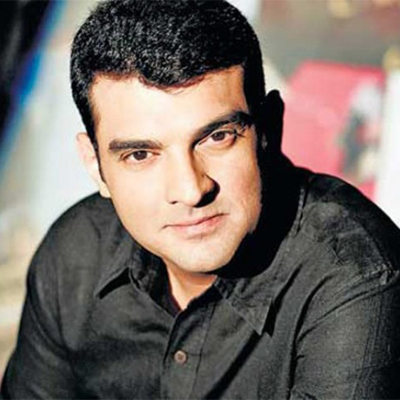
    Earlier in the same session, film producer Siddharth Roy Kapoor said, “I would strongly urge the government when it comes to the sub-titling and the litigation of the businesses, these issues must be left to the industry. The maximum support from the government should come from the tax regime, infrastructure sector and censorship.”

    Even as everyone appreciates the growth of the sector over the year, the ‘Do the Lions still roar: a reality check for the M&E industry’ was largely devoted to exploring whether the players in the content ecosystem have done their part to address the industry’s shortcomings or has the plot got lost in translation.

    The M&E industry has been a steady contributor to national revenues, employment growth and socio-economic development; it has shown a trajectory of growth over the past 15 years, been at the real cusp of ‘Make in India’ while promoting Indian culture and its soft power globally. And yet, it was largely dismissed as a glamour hub rather than a serious economic nerve centre.

    Of late, the industry has seen a battle of wits between stakeholders and the Government, thus preventing the sector from realizing its full potential. But the question sought to be explored in the session was whether the industry had done enough to highlight its own story.

    Moderated by The Times of India consulting editor and South Asian History and Culture senior fellow, IDF and editor Nalin Mehta, the session was attended by Union Department of Commerce joint secretary Sudhanshu Pandey, the Film and Television Producers Guild of India president Siddharth Roy Kapur, BAG Films & Media chairman and managing director Anurradha Prasad, Harvard Business School Professor of Business Administration Bharat Anand, Viacom 18 Colors CEO Raj Nayak, TataSky MD and CEO Harit Nagpal, and UFO Moviez India Ltd joint managing director Kapil Agarwal among the panelists.

    Asked about the impact of digitization of content and on the business, Nayak said, “People say that the data is the new oil but my philosophy is that the content is the new water. Digitization is no longer a new word. It is just that the number of pipes delivering the content has multiplied in different platforms. If I look at digitization, what is happening is that people have the choice of watching content wherever they want to. But the television audience today is 180 million households and still expected to grow by 80 billion households.”

    He added, “When we look at the monetization, 85 per cent is between Google and Facebook.Of the balance 15 per cent, the growth may be 30 to 35 per cent but it is so fragmented that everybody is losing money. Even when Netflix came, it came via television. If some breaking news is happening people will watch it, if there is some live speech going on or may be for sports, people will watch it on their television sets. As we evolved, we wanted bigger screens to watch television sets that show reality. For content creators, it is a great thing and it is not a golden but a diamond era for them. But the problem is when it comes to monetization because there is so much fragmentation I really doubt how most of these platforms will survive unless of course you are able to get subscription. If you are not able to make the right subscription revenue model, a lot of digital platforms will find it difficult to survive.”

    Asked whether the DTH players were making money from the content, Nagpal said, “People consume content in different ways. Some will spend Rs 20 on the content and some might take different channels in a bundling. So there are different segments. But the purpose of television digitization is to create the infrastructure which is digital and the customer can make his choice. We created a box between the customer and the television, but is that addressable? Officially, DAS Phase 1 and 2 are digitized. We were also supposed to bring transparency. The Government is one stakeholder, the broadcaster is the other stakeholder and the platform that distributes is the third one and the money is divided between the three of us.”

    Nagpal said, “DTH took 33 per cent of phase1 and phase 2 market and two-thirds is sitting with cable. On the service and entertainment tax, this 33 per cent component of digitization would be paying 80 to 90 per cent entertainment tax and 66 per cent of the digital cable sector is paying 10 to 20 per cent of the taxes. Is that addressability? So let not the government waste its time in deciding how I should be pricing myself. They should be making sure whether the digital transparent addressable platform that has been created rightfully.”

    Prasad asked, “Do we still roar? Sorry to say we don’t roar, we don’t have a voice. We have so many issues and for every issue we are going to the court. The stakeholders and the policy makers have divested their power and authority in the organization called TRAI and they vote themselves as they do not know how to move forward. Content needs to be curated, you have to be innovative and for that you need to spend money. You don’t have money flowing back to the system. So the money is getting divested. We don’t get the money back.”

    Sudhanshu Pandey said the service sector in India largely remained unorganized and had to find its own way to develop and grow. Fair market practices have to come in, and the finances should be there for that industry to grow. Some sectors regulators have come but there are many sectors without regulators.

    Agarwal asked: “How do you monetize the film content? The first window of monetization of the film content is theatre, then it goes to the satellite channel and then to other platforms. As a country we need more than 20,000 screens. The capital is there, the facilitation is there but it is restricted by regulations because at least 40 approvals are required. Today the screens are growing only by 2 per cent per annum. When we move from regulation to facilitation, the growth will start and the growth will just not come from the multiplexes but has to happen all over the country. The multiplex sector is very expensive.”

  • Prime Focus Tech gets funding from PE firm Ambit Pragma

    Prime Focus Tech gets funding from PE firm Ambit Pragma

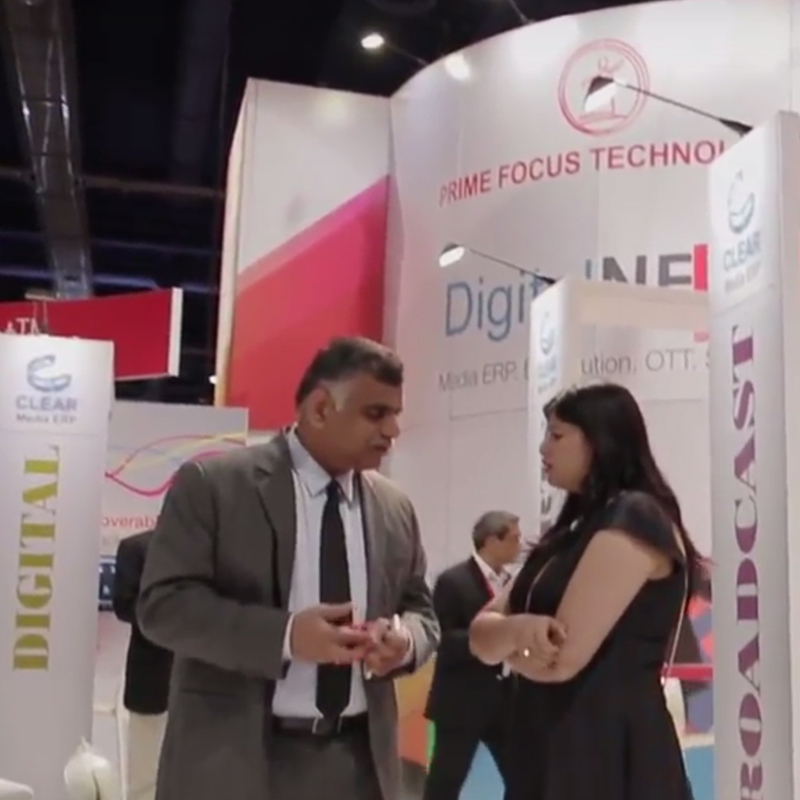
    MUMBAI: Prime Focus Technologies (PFT) – the technology offshoot of media services company Prime Focus – informed the Bombay stock exchange today that it had received its first round of funding from growth capital private equity fund Ambit Pragma.

    The amount or how much was being divested in favour of Ambit Pragma was not disclosed by PFT .

    It, however, elaborated that it proposes to use the investment for intensifying its development efforts of the software as a service (SaaS) products including its CLEAR Media ERPand gaining deeper penetration and growth in strategic markets such as North America and EMEA with increased sales and marketing efforts.

    PFT’s flagship product CLEAR Media ERP is targeted at M&E companies who increasingly adopt technology to tap the digital consumer landscape while enhancing efficiencies and lowering Total Cost of Ownership (TCO).

    CLEAR is the world’s first and most proven cloud based Media ERP Suite that virtualizes the content supply chain and builds a connected enterprise for M&E companies.

    PFT works with more than 300 clients in India and is the chosen technology partner for more than 100 clients globally including various leading broadcasters, studios, brands, sports and digital organizations.

    PFT’s award winning CLEAR Media ERP suite and Cloud Media Services have been successfully deployed for the last eight years in global M&E companies such as 21st Century Fox-owned Star India, Novi Digital, Hotstar, Miramax, Disney, Warner Bros, Global Eagle Entertainment, Cricket Australia, CBS Television Studios, 20th Century Fox Television Studios, FX Networks, Crown Media Holdings, Legendary Pictures, Starz Media, Lionsgate, A+E Networks, HBO, Mnet, CNBC Africa, SABC, IFC Films, HOOQ, Sony Music, Voot, Hearst Television, Showtime, BCCI, Indian Premier League and The Associated Press,among others.

    “Media ERP adoption in the global M&E industry has been growing steadily. With flat revenues and shrinking margins in traditional media, content enterprises especially broadcasters and studios have a tough time finding resources to invest in new monetization opportunities. M&E companies have to completely rethink technology investments and rejig their business model to survive in the new digital reality,” says PFT founder & CEO Ramki Sankaranarayanan.

    The investment by Ambit Pragma istremendous market validation of the business opportunity we serve and offers us growth capital to execute on our strategy for global leadership in the Media ERP space. We are delighted to have a like-minded partner in Ambit Pragma who appreciates the realities and opportunities within the M&E industry.”

    Adds Ambit Pragma CEO Rajeev Agrawal: “PFT is a global pioneer addressing the challenge s content enterprises are facing in this hyper digital market through their cutting-edge technology. The architectural road map of the product, its multiple use cases and their management’s thought leadership, represent a compelling opportunity for us to make the investment.”

  • Prime Focus Tech gets funding from PE firm Ambit Pragma

    Prime Focus Tech gets funding from PE firm Ambit Pragma

    MUMBAI: Prime Focus Technologies (PFT) – the technology offshoot of media services company Prime Focus – informed the Bombay stock exchange today that it had received its first round of funding from growth capital private equity fund Ambit Pragma.

    The amount or how much was being divested in favour of Ambit Pragma was not disclosed by PFT .

    It, however, elaborated that it proposes to use the investment for intensifying its development efforts of the software as a service (SaaS) products including its CLEAR Media ERPand gaining deeper penetration and growth in strategic markets such as North America and EMEA with increased sales and marketing efforts.

    PFT’s flagship product CLEAR Media ERP is targeted at M&E companies who increasingly adopt technology to tap the digital consumer landscape while enhancing efficiencies and lowering Total Cost of Ownership (TCO).

    CLEAR is the world’s first and most proven cloud based Media ERP Suite that virtualizes the content supply chain and builds a connected enterprise for M&E companies.

    PFT works with more than 300 clients in India and is the chosen technology partner for more than 100 clients globally including various leading broadcasters, studios, brands, sports and digital organizations.

    PFT’s award winning CLEAR Media ERP suite and Cloud Media Services have been successfully deployed for the last eight years in global M&E companies such as 21st Century Fox-owned Star India, Novi Digital, Hotstar, Miramax, Disney, Warner Bros, Global Eagle Entertainment, Cricket Australia, CBS Television Studios, 20th Century Fox Television Studios, FX Networks, Crown Media Holdings, Legendary Pictures, Starz Media, Lionsgate, A+E Networks, HBO, Mnet, CNBC Africa, SABC, IFC Films, HOOQ, Sony Music, Voot, Hearst Television, Showtime, BCCI, Indian Premier League and The Associated Press,among others.

    “Media ERP adoption in the global M&E industry has been growing steadily. With flat revenues and shrinking margins in traditional media, content enterprises especially broadcasters and studios have a tough time finding resources to invest in new monetization opportunities. M&E companies have to completely rethink technology investments and rejig their business model to survive in the new digital reality,” says PFT founder & CEO Ramki Sankaranarayanan.

    The investment by Ambit Pragma istremendous market validation of the business opportunity we serve and offers us growth capital to execute on our strategy for global leadership in the Media ERP space. We are delighted to have a like-minded partner in Ambit Pragma who appreciates the realities and opportunities within the M&E industry.”

    Adds Ambit Pragma CEO Rajeev Agrawal: “PFT is a global pioneer addressing the challenge s content enterprises are facing in this hyper digital market through their cutting-edge technology. The architectural road map of the product, its multiple use cases and their management’s thought leadership, represent a compelling opportunity for us to make the investment.”

  • Government plans to increase funds for M&E industry: CII

    Government plans to increase funds for M&E industry: CII

    MUMBAI: Minister of State for Information & Broadcasting (I&B) Rajyavardhan Singh Rathore assured the media and entertainment (M&E) industry that the government policies would be supportive and calibrated to enhance the modernisation and monetisation of the sector.


    Addressing the fourth edition of the CII Big Picture Summit 2015 in New Delhi, Rathore said, “In phase II of the auction of the frequencies for the radio, there was no provision for broadcasting news. This was changed during the phase III auction, when private radio was allowed to broadcast the news of the All India Radio (AIR) for a specified time.”


    Rathore mentioned that a lot of initiatives were being taken by the government to support the M&E industry in the country, such as channelising more advertisements to the digital media like YouTube, outsourcing some of the creative works of Doordarshan and AIR to the industry. More such steps would be taken in due course.


    In this regard, plans are underway to revamp the terrestrial broadcast of DD to couple it with internet and DTH so that there would be opportunities for making local programs based on events happening in smaller towns and rural areas. This would also give a boost to creation of contents, which have local flavour and relevance. 


    Acknowledging the industry demand that the monetisation of the M&E segment had not kept pace with the requirements, Rathore disclosed that the government had proposed to set up a university to develop soft skills needed for the industry.


    This university would specialise in providing skills to students in areas like gaming, animation and other avenues of creative pursuits relevant to the industry. He wanted industry to take a lead in this endeavour and create centers of excellence, which would enable the M&E industry to reach $100 billion by 2025. He also said that industry support was imperative to improve the content and appeal of the programs and for training media professionals.


    Responding to a suggestion made by the industry to bring down high incidence of tax levied on the M&E industry, the Minister said that the Good and Services Tax (GST), which the Government wanted to enact would have subsumed various taxes incidental on the industry. He hoped that the bill would be passed soon in the interest of the nation.


    Rathore observed that the Government was keen to create a single window clearance for shooting films in India, which could enhance the monetisation and profitability of the industry. He wanted CII to come out with a plan for creating a dynamic eco system for the film industry to flourish. At the same time, he said that inadequate number of cinema halls in India as compared to countries like the US and China could be more to do with real estate prices.


    Ministry of I&B special secretary J S Mathur said, “The process of digitisation in the M&E sector was at a higher pace and would show results in the coming years. He was of the opinion that smart phones, which could carry large quantum of data including films, news bulletins etc. would redefine the digital space in India.”


    He also mentioned that the Government was in the process of finalising the draft of the Intellectual Property Rights (IPR), which would enable more and more people to invest in India in various segments like content creation, production, animation, and gaming. 


    Prasar Bharati CEO Jawhar Sircar opined that a consortium approach should be followed by the industry and the Government to promote the convergence in the M&E industry to realise its potentials. He suggested that a shared approach should be there among the players to make use of the vast infrastructure of the government through innovative schemes that would put to use smart phones as carriers of innovative contents.


    CII National Committee on Media and Entertainment and Group CEO, Viacom 18 Group CEO and CII National Committee on Media and Entertainment chairman Sudhanshu Vats pitched for easing of doing business and greater application of convergence of technology to tap the potentials of the industry. Monetisation of the industry can be enhanced through proper government support to the industry.


    Narrating the problems being faced by the M&E sector, Star India COO Sanjay Gupta said that bandwidth problems, high cost, high taxes etc were adversely affecting the growth of M&E industry. He wanted a supportive policy regime to help the industry reach $100 billion mark by 2025.

  • M&E stocks take a beating as Sensex crashes 1600+ points; NDTV worst hit

    M&E stocks take a beating as Sensex crashes 1600+ points; NDTV worst hit

    MUMBAI: Triggered by global concerns over China’s falling economy and its impact on global markets, the benchmark BSE Sensex witnessed bloodbath on Monday, 24 August as it closed the day at 25,741.56, down 1,624.51 points (5.94 per cent). This is one of the biggest fall since 2009.


    Moreover, the Nifty was also down 490.95 points (5.92 per cent) to close at 7809.


    According to media reports, on the back of the market meltdown, investors lost more than Rs 7 lakh crore. The downfall not only left the major oil, goods and bank companies in the red but the Indian Media and Entertainment (M&E) companies were also badly hit. 


    In the media sector, news company NDTV India was the worst hit as it fell 16.27 per cent to close the day at Rs 88.50. This was followed by TV Today, which witnessed a fall of 13.99 per cent to close the day’s trade at Rs 192.15. On the other hand, multi system operator (MSO) Hathway Cable & Datacom at Rs 40.05 was down 13.78 per cent.


    Some of the other major M&E companies like Balaji Telefilms, direct to home (DTH) company Dish TV and Sun TV Network were not spared either. While Balaji Telefilms was down 12.31 per cent to close the day at Rs 72.65, Dish TV was down 11.85 per cent at Rs 96.35. The Maran owned Sun TV dipped 11.63 per cent to close at Rs 298.50.


    Eros International Media closed at Rs 441.95 after registering a 11.60 per cent decline. Even music companies were not left untouched from the stock market waves. Shemaroo Entertainment, Saregama and Tips recorded a fall of 10.74 per cent, 9.98 per cent and 9.53 per cent respectively.


    Other media companies including DQ Entertainment, Network18, B.A.G Films and Entertainment Network India Ltd (ENIL) were down by 9.38 per cent, 8.78 per cent, 8.59 per cent and 7.33 per cent respectively.


    The Dhoot family owned DTH company Videocon d2h was the sole company unaffected by the fall of the Sensex. The company’s stock was up by 0.33 per cent and closed at Rs 137. 75.


    Some of the companies, which were not as impacted as much were Zee Entertainment Enterprises Limited (ZEEL), which was down 6.11 per cent to end the day at Rs 359.65, Jagran Prakashan (down 5.20 per cent) and MSO Siti Cable (down 5 per cent). 


    HT Media bore a loss of 2.84 per cent, whereas the Orissa based MSO Ortel Communications was down 2.27 per cent to close the day’s trade at Rs 202.30. 


    Ascribing the market crash to global turbulence, finance minister Arun Jaitley said that the government along with the Reserve Bank of India (RBI) was watching the situation and hoped that things will stabilise once the transient impact is over.

  • There is a need for uniform tax regime in the country: Siddharth Roy Kapur

    There is a need for uniform tax regime in the country: Siddharth Roy Kapur

    MUMBAI: A country, which is considered filmy, with the kind of movies produced and the impact it has on the people, still faces numerous challenges. And one of this is the lack of cinema screens.


    In a panel discussion at the 2nd Media & Entertainment Law Forum 2014 conducted by Legal Era, Walt Disney India MD Siddharth Roy Kapur stressed on how even with a population of 1.2 billion, there are only 13 screens for every one million people. “In fact, 3 Idiots, the greatest hit and revenue generator so far reached out to only 3 per cent of the entire Indian population, in terms of screens. All the others saw it on TV,” informed Kapur.


    M&E industry contributes 0.5 per cent of the overall GDP of the country, of which movies is a Rs 12,000 crore business. Theatrical release, satellite rights, international rights and digital screening are all different models of revenue streams for the industry currently.


    “We have so far not represented ourselves in a way that we should have to the government. We need to work with the government so that they know how well we can contribute to the economy of the country. It is only then that they will understand our challenges,” added Kapur.


    According to Kapur, infrastructure, piracy, regulation and creativity if galvanised in the right direction can take the movie industry forward.  “There is not much regulation on the piracy front as well,” he said.  


    The country also needs to invest in talent to ensure creativity. “Apart from that, of course we need good movies. The industry has to focus on writing and paying more to the writers. We need to move out of the south Asian diaspora and cater to a wider audience world over,” he opined.


    An interesting point that came out during the panel discussion was the fact that regional movies contribute to 40 per cent of the total revenue the industry generates. “Mostly it comes from the Tamil and Telugu movies,” informed Reliance Big Films CFO Shibasish Sarkar.


    Addressing the growth of regional movies, Kapur said that though these are important markets their sensibilities are different. “So it is better to ally with local partners, in terms of directors or producers at least for a couple of initial movies and then get your hands dirty. We do one Tamil movie a year now,” he informed.


    Talking on the investment in movies, Sarkar said that any investor today looks at risk return ration before investing in a project. “Unfortunately, we have not yet been able to create an environment such that the investors can be made to feel confident of their investments,” he added.


    What’s more, even with popularity of Bollywood world over and 100 per cent FDI, none of that money comes to India. “There is no venture capital environment here,” said Cinema Capital Advisory managing director and founder Samir Gupta.


    Investors, according to Gupta, look for incentivised markets and so the government should be working at giving more incentives, if not at the central level, but at the state level. “There should be a legal framework for states, which can help them grow,” he said.


    India is a tough market for animation movies, feels Kapur. “Audiences are used to watching animated content on TV for free, and so it is very difficult to get them to buy a movie ticket worth Rs 300 for an animated movie.” Another reason why animation movies have not grown in the country, Kapur opines that it lies in the fact that Indian filmmakers are not good storytellers when it comes to animation.


    The panel also felt that there is a need for a uniform tax situation in the country. “Overall Goods and Services Tax (GST) is definitely a positive,” said Kapur. According to the panelists, in a uniform GST regime, entertainment tax will get subsumed into it, and this will be a complete game changer.