Tag: M&E

  • I&B discusses strategies for unleashing M&E’s potential with industry experts

    I&B discusses strategies for unleashing M&E’s potential with industry experts

    Mumbai: Development of the audio-visual sector requires industry-friendly policies, collaboration, and regular interaction between the government and industry stakeholders.

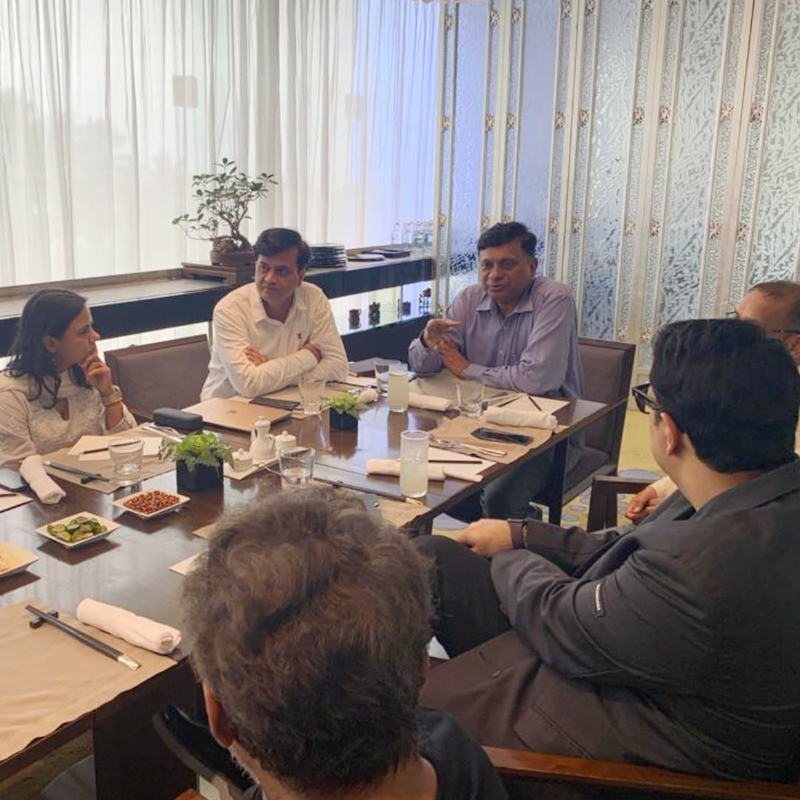
    On Monday, a meeting in Mumbai was organised by the National Film Development Corp. where acclaimed filmmakers and industry professionals marked their presence, namely, Maddock Films founder Dinesh Vijan, Dharma Productions CEO Apoorva Mehta, Ayan Mukerji, R. Balki, Abundantia CEO Vikram Malhotra, Amazon Prime Video’s Gaurav Gandhi and Aparna Purohit, Netflix’s Monica Shergill, PEN India chairman Jayanti Lal Gada, Balaji Motion Pictures CEO Bhavini Sheth, Producers Guild of India president Shibasish Sarkar, Nitin Tej Ahuja CEO Producers Guild of India, and producers Mahaveer Jain & Madhu Mantena.

    The deliberations centred around the strategic initiatives taken by the government to unleash the potential of the media and entertainment industries. The I&B ministry’s efforts at easing filming in India through the Film Facilitation Office and the onboarding of Invest India to expand its outreach to the domestic and international industry were highlighted.

    The recently launched incentive scheme for international productions and official co-productions was discussed in detail, including the benefits it would bring to content creation in India. The industry was urged to leverage the FFO ecosystem and their suggestions on the incentives were duly noted.

    The government’s efforts to make the forthcoming 53rd edition of the International Film Festival of India a success were emphasised, along with the opportunities being created for the industry. Feedback was sought on the amendments made in the Draft Cinematograph (Amendment) Bill, 2021. The feedback received from the industry participants was positive and they unanimously accepted the proposed amendments.

    The stakeholders were also apprised of the ministry’s recognition of the industry’s concern towards theatre density in India and the consequent development of a single window ecosystem and a model law for the ease of permission for construction of screens/theatres was in progress. The attention of the industry was drawn to many other interventions being made by the Ministry in the audio-visual sector.

    I&B secretary Apurva Chandra summed up the discussion as fruitful and said, “The engagement with industry served as a perfect opportunity to apprise the various stakeholders of the efforts being made by the ministry to give an impetus to the film industry. The response from the participants was encouraging and we have urged them to leverage these various platforms to support our endeavour to make India a global content hub.”

  • Tech Mahindra brings in N Dilip Venkatraman as global head, M&E

    Tech Mahindra brings in N Dilip Venkatraman as global head, M&E

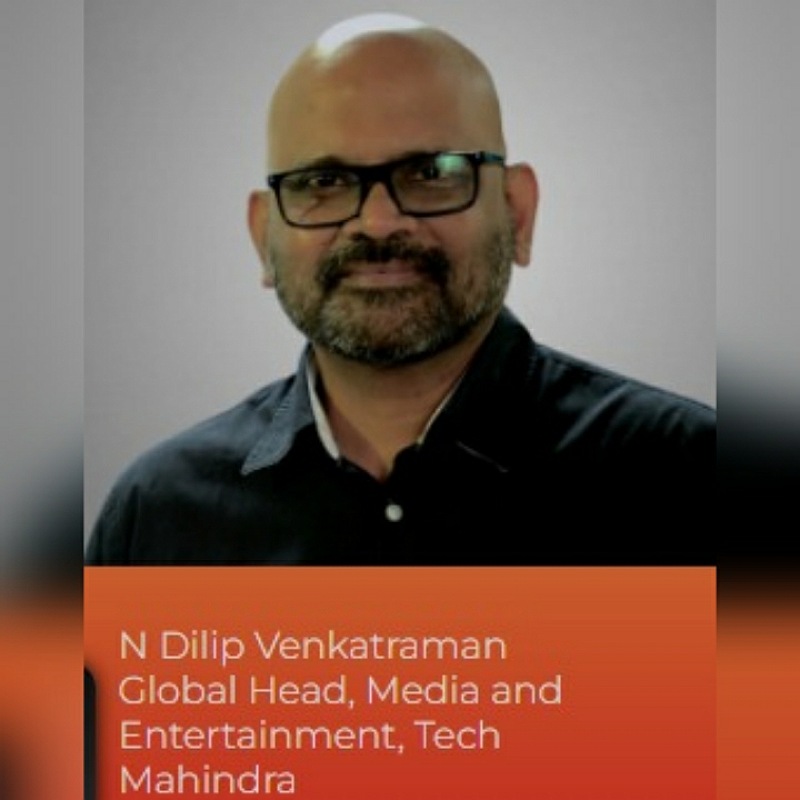
    Mumbai: Tech Mahindra has brought N Dilip Venkatraman on board as global head, media and entertainment.

    With over 20 years of corporate experience, Venkatraman has held key positions at India Today Group, Dish TV, Pugmarks, and Zee Network.

    Prior to joining Tech Mahindra, Venkatraman had launched a video technology startup VideoTap in 2016, which helps video content producers across genres to increase engagement within the video itself and achieve higher ROI.

    He was previously associated with iTV Network as group COO, strategy and business development, where he was responsible for planning strategic solutions and business development for the network. He also helped the media company revamp its digital strategy for the entire Network and relaunch newsx.com, inkhabhar.com, sundayguardianlive.com

    An alumnus of IIM-Bangalore, Venkatraman has also been the CEO of Network18-owned CNN-IBN & IBN7, where he was responsible for the strategic, financial, and operational management of the channels. 

    ​​​​​​

  • The Wonder Women are here: Honouring 100 women leaders from M&E, ad & marketing

    The Wonder Women are here: Honouring 100 women leaders from M&E, ad & marketing

    MUMBAI: Many a successful organisation in India's media, advertising, marketing and entertainment ecosphere have women leaders in key management and ownership positions. Where once women were assigned jobs related to programming or ad sales or media – and mostly at the middle management level – today many a lady professional by the sheer dint of their talent, hard work and excellence, have come to occupy the corner office as well as key pivotal management roles. But a lot more needs to be done. A lot more inclusiveness needs to come into the corporate world.

    In a bid to recognise those professional women who have risen to the top despite all odds, on the occasion of International Women’s Day, Indiantelevision.com is happy to present Wonder Women 2021 – 100 of the best from the world of media, advertising, marketing and entertainment. The intention is not only to honour these fabulous professionals but also motivate the next generation of women who are slowly moving their way up the ladder in different organisations across the board.

    The powerful list which honours 100 top women achievers from the industry has been put together with the help of an esteemed advisory board comprising of senior professionals from the industry including Applause Entertainment CEO Sameer Nair, House of Cheer founder Raj Nayak, RED FM director Nisha Narayanan, Lodestar UM CEO Nandini Dias, Discovery Communications MD-South Asia Megha Tata, Social Access founder Lynn de Souza, Armugum and Consultants founder Punitha Arumugam, Allied Blenders and Distillers (ABD) CMO Anupam Bokey, the Walt Disney Company head – human resources APAC & India Amita Maheshwari, IN10 Media Networks MD Aditya Pittiee, and Indiantelevision.com, founder and editor-in-chief Anil Wanvari.

    The moment is here, the names are out; find out who these standout ladies are here:

  • IMG Reliance to be rebranded following RIL acquisition

    IMG Reliance to be rebranded following RIL acquisition

    MUMBAI: The sports ambitions at the Mukesh Ambani-headed  Reliance Industries continue to grow. In the latest announcement, it is set to change the name of its Indian joint venture with the Mark McCormack founded firm International Management group (IMG), IMG Reliance. This will happen post its acquisition of the 50 per cent shares held by IMG Singapore in the Indian operation.

    Reliance informed regulators  that it will be paying out not more than Rs 52.08 crore for the acquisition.

    The duo had set up IMG Reliance to build a platform to help   market sports, fashion and media and entertainment in India.

    IMG-Reliance  had a turnover of Rs 181.70 crore  with net profit at Rs 16.35 crore in FY 2020, Rs 195.55 Crore with net profit at Rs 19.25 crore in FY 2019, and Rs 158.26 crore  with net  profit at Rs 15.82 crore respectively.

  • What Santa could gift us this Christmas

    What Santa could gift us this Christmas

    MUMBAI: As children, Santa Claus was very real for us. Even if he sat under a fake Christmas tree in an Akbarally’s department store in Mumbai, with padding under his suit to give him that potbelly, and rouge on his cheeks, and a false snow white beard, which jiggled every time he said ‘Ho! Ho! Merry Christmas.’ For us, it was exciting to see other children big-eyed, nervous, eager smiles on their faces, as they waited their turn to get to Santa. Father Christmas, as he’s known in English folklore, embodies the very spirit of the season: that of love and giving.

    The world overall – and our media and entertainment industry –needs a lot of loving and giving this year. Bruised and battered by the Covid2019 induced lockdowns in various states, and countries, it is celebrating Christmas with severe restrictions in place. A new mutant strain of the SARS CoV2 virus that has popped up in the UK has made governments in almost every nation jittery. Curfews, various levels of lockdowns, and border closures have been re-imposed, once again choking the breath out of any economic revival that could have happened.  

    Fear is very much prevalent all around.  The season to be jolly appears to be pretty un-jolly. Christmas is going to be cold – really cold, without the warm emotions the season brings.

    The good news is that various vaccines are going to be available on a massive scale. But we don’t know clearly how long they will be effective; and how much time it will be before every one of us gets a jab.

    The good news is that jolly old Santa is still around. And if he is listening – which we are sure he is – we’d like him to shower the world with oodles of good gifts and tidings this Christmas 2020. Here’s a wish list from us at Indiantelevision.com for the world and the media and entertainment industry:

    ·    Miraculously, as if by sleight of hand or an act of God, the SARS CoV2 virus loses its potency, and does no harm to any human being. Yes, we cannot bring back the ones we have lost. But we can definitely do with knowing that we will lose no more and that we are free to go where we want to without terror coursing through our veins.

    ·    Now if that is not possible, ensure that the vaccines miraculously provide a permanent defence against the dratted bug and that with one fell stroke, every human being on this planet gets an injection. For that, the pharma companies and governments will have to be sensible, honest and get their acts together super quick.

    ·    The world we live in is a beautiful place. The lockdowns enabled us to see it for its beauty without the horrors and synthetic creations of mankind damaging it. Governments the world over and earth’s denizens need to remember this for eternity. Natural rather than artificial needs to be the mantra, if we want our future generations to enjoy it.

    ·    The economic engine needs to start chugging and gain momentum. Money, the magical fuel, needs to flow smoothly to enable this to take place.

    ·     Consumer sentiment needs to turn around from being cautious and hoarding to one which is open to spending and living life to its fullest.

    ·     For the media and entertainment industries, this means that brands will be willing to spend to get king and queen consumer to buy them.

    ·    Result: the print, television, OTT, cinema industries will serve as a good medium to induce consumers to make purchases through persuasive communications in the form of advertising and TVCs.

    ·    Net outcome: the red ink on the balance sheets of many a company will steadily turn to black.

    ·   The content that is pumped out on TV, cinemas, and OTT platforms is innovative and attracts sticky eyeballs, stickier than ever before.

    ·   Let new talent in every sphere of entertainment get a chance to flower, to showcase his or her skills.

    ·   Let inclusiveness be real, and be put into practice in day to day work: alternate sexualities, genders, differently-abled and folks from every caste and creed truly be given equal opportunity.

    This is our bucket list of what we would like Rudolf the red-nosed reindeer and his boss to bring us this year. It’s by no means comprehensive; it may not even be apt, but it is the message we are sending out to the universe; hopefully it will reciprocate in full measure.

    We would love you to share your wish list for Santa too. Do it. It can be fun. Please post in the comments below.

  • Guest column: Pause, Reset, Play – The M&E sector’s mantra during pandemic

    Guest column: Pause, Reset, Play – The M&E sector’s mantra during pandemic

    MUMBAI: This Covid2019 pandemic has forever transformed the way content is consumed across the world. With people confined at home and all outdoor public entertainment shut, and with easy access to 24×7 TV and high-speed internet, viewers consumed content across screens like never before. This paradigm shift prompted the M&E industry to pause, re-assess strategies and finally, scramble back on its feet with a refreshed plan of attack.

    Like most of our contemporaries, we, at Endemol Shine India, were taken by complete surprise when India went into its first lockdown in March. Some of our ongoing shows had to be halted mid-way. Instead of throwing our hands up in despair, we utilised the forced break to go back to the drawing board to reset and put in place extremely detailed blueprints, SOPs and protocols, ready to be deployed for all production units when the lockdown opened.

    When Unlock 1.0 was announced, we were well prepared to hit the ground running. We immediately deployed our well-laid plans, and over the next couple of weeks, started productions across the country. A lot of precious prep-time was saved through meticulous pre-planning that was done between our operating teams and medical experts over numerous Zoom calls.

    Over the next couple of months, we successfully launched three Bigg Boss productions – in Telugu, Tamil and Hindi – all being some of the most complex on-ground productions in India that involve complex workflows and employ significant manpower throughout the day and night, across multiple months. It’s no less than war, but each day brings new learnings, and we are constantly on high vigil – the slightest error can be irreversibly catastrophic.

    Despite inevitable financial setbacks due to a few show cancellations and postponements, we have been able to deliver to our customers what Endemol Shine India has always stood for — top-drawer high quality content. The biggest lesson learnt from this crisis is to always stay prepared for the next one. A great Plan A is now hygiene; the ability to pre-emptively keep Plan B ready is now the true differentiator.

    The other side of the coin

    While the lockdown period stalled productions and original content on TV went off air, repeats of successful older shows saw substantial viewership.

    Ramayan returned to the small screen after 25 years, making DD the #1 channel in the country. Our very own Bigg Boss reruns contributed significant GRPs to our broadcaster partners. With original content back from July and with Bigg Boss and IPL driving viewership in Hindi and regional markets, broadcasters are also looking at a healthy turnaround in the advertising market. With the Covid numbers across India seeming in control and experts staying cautiously optimistic, the M&E industry is slowly but surely raising its head once again.

    These steady progressions have not only fuelled optimism but also investments into the sector. As global brands like Apple, HBO and NBC as well as a few of our domestic giants wait in the wings to test the waters, the timing couldn’t be better for content creators and producers.

    To make the best use of new and emerging opportunities in the post Covid era, it is imperative for organisations to reflect on long-term strategies, consolidate the green shoots and double-down on operating plans for 2021 and beyond. At Endemol Shine India, over the last couple of years, we have been actively pursuing a two-pronged strategy – preserve and grow our non-scripted portfolio, with newer formats and newer platforms; and significantly scale up our scripted portfolio.

    We believe that upstream participation in Intellectual Property (IP) creation is critical and have been investing a lot in creative development – through book rights, original stories, and talent tie-ups. While we are the producer of choice for non-scripted shows, our next frontier is to become the producer of choice in the scripted space. We have set ourselves an ambitious target of delivering 50 per cent of our business from scripted productions over the next three years. As the industry is pivoting around content across devices and as consumption habits change, we realise that we too need to adapt and diversify. To deliver our plans, we are organising ourselves around content. To service the platform demand across the variety of shows we produce, we have created dedicated teams of creative, commercial and production personnel across scripted, non-scripted and factual content.

    As we step on to this ambitious journey, we have identified three critical levers in our production playbook:

    1.    Modularity in execution

    Decentralised, empowered teams for each show, to deliver volumes without sacrificing quality. In 2021, quality supply at scale will be the single biggest USP of production houses.

    2.    Customer-centric approach

    Platform is king and feedback deserves utmost respect. As platforms re-orient their business models and discover newer consumption patterns in 2021, a strategic approach will differentiate production houses and decide who gets repeat volume business.

    3.    Eye on ROI

    The gains of diligent book-keeping cannot be under-stated. Also, we have realised that commercial efficiency and creative excellence are not always a zero-sum game. With granular planning, robust scheduling and tight execution, the interests of the platform and the production P&L can be aligned.

    Looking ahead

    In hindsight, the pandemic has been a steep learning experience, and luckily has not been the unmitigable hopeless disaster it threatened to be. On the contrary, it has made us deliberate and question the fundamentals of our operating models and come up with smarter ways of creating content for our diverse customer base.

    The industry as a whole, has become more resilient and adaptive to new realities – of consumption shifts, lower margins and cost efficiencies. The government can support by easing taxation across the value chain and offering meaningful incentives for productions showcasing our beautiful country, a move that can indirectly help spur domestic tourism. After all, an industry that positively engages 750+ million consumers daily for hours at end, can only boost the revival sentiment in the near and long run as we head into an interesting 2021.

    (The author is COO, Endemol Shine India. Indiantelevision.com may not subscribe to his views.)

  • CINTAA welcomes move to expedite extending industry status to entertainment sector

    CINTAA welcomes move to expedite extending industry status to entertainment sector

    MUMBAI:  Cine and TV Artists Association (CINTAA) has welcomed the Maharashtra government’s move to formulate a comprehensive policy for entertainment sector and expedite procedure of extending industry status.

    ''The decision of the Maharashtra government has come at a most appropriate time for the fraternity. This will undoubtedly bring in progressive ramifications to the sector,'' CINTAA said in a statement.

    The state government on October 23 announced that it will devise a policy for the entertainment sector as well as declare rebate of up to 25 per cent in shooting charges at Goregaon Film City, while also advancing the process to grant industry status to the sector. The decision to formulate a comprehensive policy was taken in a meeting chaired by cultural affairs minister Amit Deshmukh.

    The minister has asked Maharashtra film, stage and cultural development corporation limited (MFSCDC) to prepare a draft for the policy. “The comprehensive policy will cover all aspects dealing with various platforms such as films, theatre, documentaries, serials to over-the-top (OTT) content. It will be presented before the state cabinet for its final nod,” Deshmukh said.

    CINTAA stated that it has strived very hard to get support for the betterment of the fraternity in general and the actors community in particular. “Realizing the challenges faced and to be on par with other sectors, the idea to have an Industry status for us has always been our foremost objective and our pursuit has always been rationale driven. Our efforts have been truly paid,” it added.

    MFSCDC MD Manisha Verma said, “The policy will have a holistic approach towards all aspects related to the sector. We will consider simplification of taxation, increasing screens, fiscal incentives, changing technology besides generation of skilled manpower. It’s a labour-intensive industry and has the potential of job generation. All these aspects will be deliberated upon during a webinar with all stakeholders between 5 and 7 November. Valid suggestions and recommendations that we will get during the deliberation will be incorporated in the policy.”

  • Amazon Web Services appoints Manoj Padmanabhan as M&E business development head

    Amazon Web Services appoints Manoj Padmanabhan as M&E business development head

    KOLKATA: Amazon Web Services has appointed Manoj Padmanabhan as media and entertainment business development head. Prior to this, he was associated with Horizon Broadcast Electronics Pvt Ltd as director. 

    Padmanabhan’s experience spans over more than two decades in several industries including durables, telecom, broadcast, digital media. He has handled leadership roles in general management, P&L, sales & business development, marketing/brand management. 

    He worked with brands like Videocon, Sansui, Toshiba, Tata Indicom, Zee. He was associated with Zee for eight years where he also served as business head of Ditto TV.

  • M&E industry grew by almost 9% to reach Rs 1.82 tn in 2019: FICCI – EY report

    M&E industry grew by almost 9% to reach Rs 1.82 tn in 2019: FICCI – EY report

    MUMBAI: The Indian Media and Entertainment (M&E) sector reached RS 1.82 trillion (US$25.7 billion) in 2019, a growth of 9 per cent over 2018 states the FICCI EY report ‘The era of consumer A.R.T. – Acquisition Retention and Transaction,’ launched today. With its current trajectory, the M&E sector in India is expected to cross INR2.4 trillion (US$34 billion) by 2022, at a CAGR of 10 per cent*.

    While television and print retained their positions as the two largest segments, digital media overtook filmed entertainment in 2019 to become the third largest segment of the M&E sector. Digital subscription revenues more than doubled from 2018 levels and digital advertising revenues grew to command 24 per cent of total advertising spend.

    The sector continues to grow at a rate faster than the GDP, driven primarily by growth in subscription-based business models and India’s attractiveness as a content production and post production destination.

    The rapid proliferation of mobile access is enabling on-demand, anytime-anywhere content consumption nationwide. With a population of 1.3 billion, a tele-density approaching 89% of households, 688 million internet subscribers and nearly 400 million smartphone users, India’s telecom industry is poised to become the primary platform for content distribution and consumption. India ranks as one of the fastest-growing app markets globally, where entertainment apps are driving significant consumer engagement.

    Online gaming retained its position as the fastest growing segment on the back of transaction-based games mainly fantasy sports, increased in-app purchases and a 31 per cent growth in the number of online gamers to reach around 365 million.

    Uday Shankar, Senior Vice President FICCI, said, “Riding the wave of exponential progress made towards digital accessibility and adoption, the M&E industry has been a forerunner of a dynamic and aspirational India. New products and business models are being imagined to capitalize on the rise in media consumption. Global players are recognizing the need to build India-centric offerings. The coming years are likely to usher in greater innovation in content formats, means of dissemination, and business models.”

    Ashish Pherwani, Partner and Media & Entertainment Leader, EY India, stated, “The M&E sector witnessed a surge in content consumption as digital infrastructure, quantum of content produced and per-capita income increased in 2019.  Driven by the ability to create direct-to-customer relationships, the sector firmly pivoted towards a B2C operating model, changing the way it measured itself. As entertainment and information options grew and choice increased the era of consumer Acquisition, Retention and Transaction (ART) redefined the media value chain leading to the emergence of many new trends and strategies across content, distribution, consumption and monetization.”

    “The coronavirus outbreak will have a significant adverse impact on the sector, the situation is still evolving both in India and many parts of the world, the scale of the impact cannot be estimated immediately,” he added.

    Key findings

    Television:

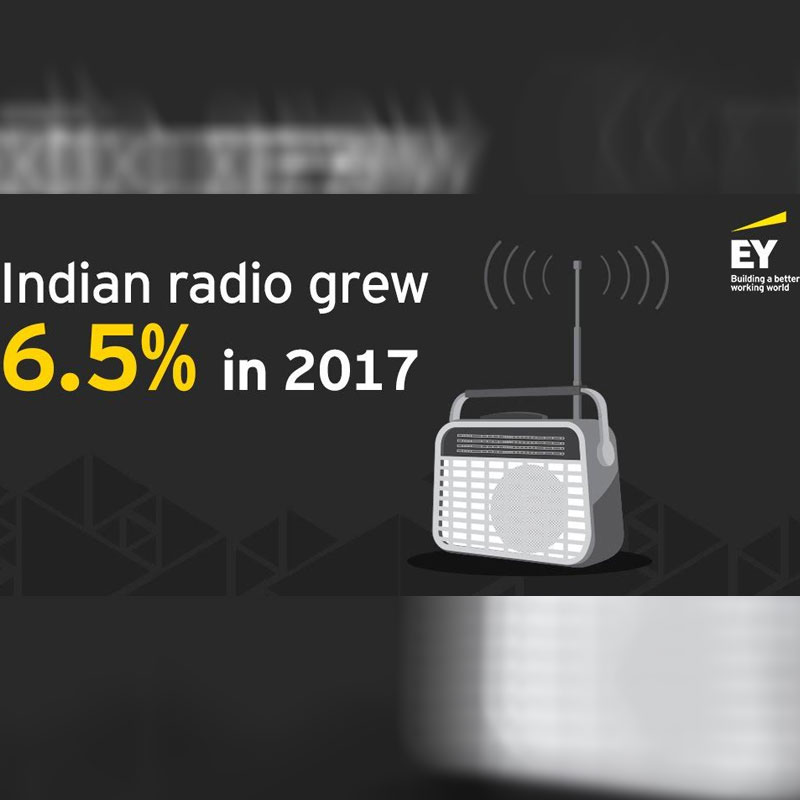
    The TV industry grew from Rs 740 billion to INR 788 billion in 2019, a growth of 6.5 per cent. TV advertising grew 5 per cent to Rs 320 billion while subscription grew 7 per cent to Rs 468 billion. Regional channels benefited from the New Tariff Order as their consumption increased by over 20% in certain cases. General entertainment and movie channels led with 74 per cent of viewership. On the back of several key announcements by the central and state governments such as Article 370, the Citizenship Amendment Act, and a general election, the news genre witnessed a growth to almost 9 per cent of total viewership, up from 7.3 per cent in 2018. In sports cricket emerged as the big winner in 2019 as it accounted for over 80 per cent of the sports viewership, up from 70 per cent last year, due to the ICC World Cup.

    Key insights – Television will remain the largest earner of advertising revenues even in 2025, approaching Rs570 billion. Viewership of regional language channels will continue to grow and reach 55 per cent of total viewership in India as their content quality improves further. Content viewed on smart TV sets will begin to reflect that consumed on mobile phones, providing a window for user generated content companies and other non-broadcasters to serve content on the connected television screen.

    Print:

    Despite a 3 per cent revenue degrowth at Rs 296 billion, print continued to retain the second largest share of the Indian M&E sector. Circulation revenues increased by 2 per cent to Rs 90 billion as newspaper companies tactically increased prices in certain markets. Advertising revenues fell 5 per cent to INR 206 billion in 2019 as AdEX volumes fell by 8 per cent. Margins improved as newsprint cost measures were implemented and companies benefited from the reduction of newsprint prices.

    Key insights – 2019 witnessed a significant growth in digital news consumers over 2018 when 300 million Indians consumed news online. Most large print companies had a defined digital business, with two companies crossing Rs 1 billion in digital revenues. Digital subscription, though nascent, has increased as several publications have put digital products behind a paywall.

    ·Digital media:

    In 2019, digital media grew 31 per cent to reach INR 221 billion and is expected to grow at 23 per cent CAGR to reach Rs 414 billion by 2022. Digital advertising grew 24 per cent to Rs 192 billion driven by increased consumption of content on digital platforms and marketeers’ preference to measure performance. SME and long tail advertisers increased their spends on digital media as well.  Pay digital subscribers crossed 10 million for the first time as sports and other premium content were put behind a paywall.  Consequently, subscription revenue grew 106 per cent to Rs 29 billion. Digital consumption grew across platforms where video viewers increased by 16 pe cent, audio streamers by 33% and news consumers by 22 per cent.

    Key insights: By 2020, OTT subscription market will approximate 10 per cent of the total TV subscription market (without, however, considering data charges).  We estimate over 40 million connected TVs by 2025, which will provide a huge opportunity for content creators to reach family consumers.  Better bandwidth will drive large screen consumption. By 2025, 750 million smart phone screens will also increase the demand for regional, UGC and short content, creating a short video ecosystem that can create significant employment.  The battle for content discovery will intensity and move to the unified interface.

    ·Films:

    The Indian film segment grew 10 per cent in 2019 to reach INR 191 billion driven by the growth in domestic theatrical revenues and both rates and volume of digital/ OTT rights sold. Domestic film revenues crossed INR 115 billion with Gross Box Office collections for Hindi films at Rs 49.5 billion – the highest ever for Hindi theatricals. Overseas theatricals revenues fell 10 per cenr to Rs 27 billion despite more films being released abroad primarily as films with superstars didn’t perform as well in 2019. 108 Hollywood films were released in 2019 as compared to 98 in 2018. The gross box office collections of Hollywood films in India (inclusive of all their Indian language dubbed versions) grew 33 per cent to reach Rs 16 billion. As single screens continued to reduce, the total screen count decreased by 74 to 9,527.

    Key Insights: Digital rights continued to grow in 2019 with an increase in revenues from Rs 13.5 billion in 2018 to Rs 19 billion in 2019. Digital release windows shortened with some movies releasing on OTT platforms even before their release on television. In-cinema advertising grew marginally to Rs 7.7 billion in 2019 as multiplexes and advertising aggregators started signing long-term deals with brands. Seventeen hindi films entered the coveted Rs 100 crore club in 2019, which is the highest ever. Interestingly, six movies made it to the rs 200 crore club in 2019, as opposed to three in 2018. The future will be driven by immersive content (technology and VFX rich) experiences to drive theatrical footfalls and some genres of films could migrate to home viewership only.  We can expect to see creation of a segmented Hindi-mass product for the heartland at low ticket prices.

    Mergers and Acquisitions in M&E

    While the number of deals increased to 64 in 2019 from 41 in 2018, the overall deal value was

     much lower at Rs 101 billion as compared to Rs 192 billion in the previous year. This was largely due to the absence of big-ticket deals with only four deals crossing the US$100 million threshold. The highest amount of investment was made in television, followed by digital, radio and gaming. Deal activity was spearheaded by new media such as digital and gaming, which witnessed 54 of the 64 deals in 2019, however, in terms of deal value, the share of traditional media segments such as TV, radio and film exhibition was 63 per cent.

  • The Quint Launches the ‘Me, the Change’ Initiative On First-Time Women Voters

    The Quint Launches the ‘Me, the Change’ Initiative On First-Time Women Voters

    MUMBAI: The Quint is happy to announce ‘Me, the Change’ – an editorial initiative that focuses exclusively on the aspirations of first-time women voters in the 2019 Lok Sabha elections. Facebook has partnered with the initiative as a presenting sponsor.

    ‘Me, the Change’ will showcase the stories of determined young women who have battled adversity to achieve the extraordinary, inspiring and changing the lives of others through their work. The initiative will host an event to felicitate these achievers to spark a discussion on the issues that matter to first-time women voters ahead of the 2019 elections. The Quint will use Facebook as an exclusive platform to amplify the stories covered under this initiative and ensure it reaches as many people as possible.  

    As part of the initiative, The Quint will conduct a nation-wide survey to understand what first-time women voters seek from the new government. Throughout the initiative, we will invite stories from, and of young women achievers. The Quint will also promote a ‘Go Vote’ initiative to educate young women about the power of their vote.  

    The initiative will go on-ground in multiple states and host regional ‘chaupals’ with women voters in the run-up to the Assembly elections in Madhya Pradesh, Chhattisgarh, Rajasthan and Mizoram. 

    Why First-Time Women Voters? 

    The 2019 Lok Sabha elections are touted to be a turning point in India’s history. According to contemporary research and data, the election will be greatly influenced by three factors; the number of first-time voters, their tendency to be politically unaffiliated, and social media's ability to shape political consciousness. 

    In this zoomed-in demographic, first-time women voters are seldom given attention. They are working hard, overcoming extraordinary hurdles, and slowly but steadily changing lives. But what do they want – a good salary? The freedom to marry a partner of their choice? More access to information? Or equal opportunity to make their mark? ‘Me, the Change’ was born out of these questions, and through video stories, on-ground events, a national survey and comprehensive coverage, The Quint will endeavour to highlight the aspirations of young women in India.

    Commenting on the role of the woman voter in India’s political landscape, Ritu Kapur, CEO and co-founder of The Quint said, “There is a quiet but strong emergence of the young Indian woman as a vote bloc. What better way to celebrate democracy then, than to provide a megaphone to this feisty voice that can push women-centric issues to the fore and bring gender parity to electoral politics? Through ‘Me, the Change’, The Quint wants to showcase the aspirations of India’s first-time women voters”.  

    Be it transforming their communities, working on the next big innovation, breaking conventions through music and art, or redefining the rules of business, young women from villages and small cities are achieving the unimaginable. They’re at the forefront of how India will change in the next decade. The question is, are we ready for them? #MeTheChange