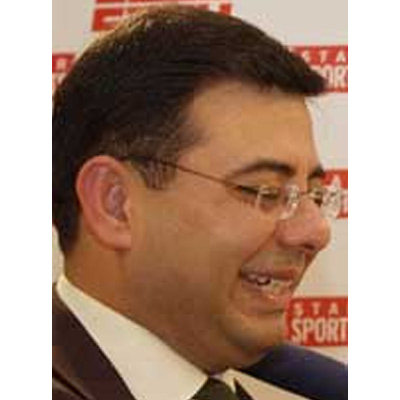
Tag: MD Rik Dovey

  • Madras High Court verdict on television rights Thursday

    Madras High Court verdict on television rights Thursday

    NEW DELHI: The cricket saga lurches on from one twist to another.

    Even as the Madras High Court today said it would deliver tomorrow interim orders on telecasting arrangements for the upcoming India-Pakistan cricket matches, ESPN Star Sports matched Zee Telefilms offer to produce, telecast and share the revenues with the Indian cricket board for the matches, while sharing a feed with the pubcaster Doordarshan.

    According to a report filed from Chennai by the Press Trust of India, reserving orders on a writ petition filed by Zee Telefilms challenging the Indian cricket boards decision cancelling the tender process, Justice KP Sivasubramanian said he would deliver orders tomorrow on live telecast of one-day as well as
    Test matches between the two sides.

    The judge will deliver orders on the main petition later.

    Meanwhile, in a letter to the Board of Control for cricket in India (BCCI), ESPN Star Sports MD Rik Dovey has said,In the event that the foregoing suggestion is acceptable to the BCCI, we suggest ESS and the BCCI jointly approach the honourable court and recommend that it authorises the implementation of this solution.

    Zee Telefilms had made a similar offer on telecasting the matches through a submission in the high court yesterday. However, pubcaster Prasar Bharati has rejected the “proposals” put forth by Zee and ESS and asserted that it would manage the production of the event on its own.

    Prasar Bharati today admitted that the BCCI had made it an offer to produce and market the India-Pakistan cricket matches that could be telecast by Doordarshan on mutually agreed commercial terms.

    Pointing out that such a scenario was acceptable to Prasar Bharati, which manages DD, its CEO KS Sarma said, “The BCCI offer is fine as far as the cricket board pays a minimum guarantee fee for the matches.”

    The revenue, as per the BCCI offer, was to be shared in the ratio of 70:30 in favour of the cricket board.

    Essel Group vice-president (corporate brand development) Ashish Kaul states, “It is strange that it took ESPN Star Sports so long to make an offer to BCCI and that too almost similar to our offer. Now it is quite apparent that these people are only interested in exploiting Indian cricket. Had they been so well intentioned and concerned about the welfare of cricket then they should have made an offer a long time ago”

    Despite repeated attempts, BCCI chief RS Mahendra could not be contacted for comments.

    The ESS letter to BCCI states that the media company would provide production of international standards and “at a minimum as required by the BCCI’s invitation to tender of 7 August last.” However, in return, ESS wants that it would get the rights to telecast the Indian-Pakistan cricket matches, while sharing the feed with DD on terms acceptable to the cricket board.

    ESS will deposit the advertising revenues which it receives following deduction of applicable agency commission, any cost incurred and fees payable to Prasar Bharati in relation to its telecast, any applicable taxes and mutually agreed production cost with the BCCI, Dovey has a conveyed to the BCCI
    secretary SK Nair.

    Yesterday, Zee had said that it is completely ready and willing, pending the final decision in the writ petition, to cover and telecast the forthcoming India vs Pakistan Cricket match series to be played in India.

    ZTL would do this entirely at its risks and costs and without any
    equity in its favour.

    The company had further said that it should deposit the entire advertisement revenue collected thereof (net of agency commission) both on its channel as well as Doordarshan, with the BCCI.

    ZTL will only require to be paid production costs as mutually agreed as well as any telecast fee, which ZTL would be required to pay to Prasar Bharati. ZTL shall also deposit with BCCI the entire amount which it may collect from international syndication sales without deducting our sales commission there from (BCCI had paid 15 per cent commission for the last series for international syndication sales),Zee had said.

  • ESS Sawhney moving to Singapore, to be replaced by former Kellog India MD

    ESS Sawhney moving to Singapore, to be replaced by former Kellog India MD

    MUMBAI: ESPN Star Sports bossman in India Manu Sawhney has been promoted and is moving to Singapore. 

    Sawhney, currently ESPN Software India Pvt Ltd managing director, has been promoted to ESS’ senior V-P programming and event management group and will be operating out of Singapore.

    Succeeding Sawhney as MD is RC Venkateish, formerly MD of Kellogg India and Japan. He will be responsible for advertising sales, marketing and distribution of ESPN India and Star Sports India networks and will report to Rik Dovey, MD ESS.

    Sawhney is replacing the current incumbent in the position Wayne Becker, whose contract with the network is not being renewed once it comes to an end. Upon Sawhney’s arrival in Singapore, he and Becker will work together to ensure a seamless transition.

    Both Sawhney and Venkateish will report directly to ESS MD Rik Dovey.

    Venkateish appointment comes at a critical time, what with the CAS rollout just over a month away. To smoothen the transition, Sawhney will be based in India for at least the next couple of months working closely with Venkateish and the management team to ensure a smooth transition.

    Even after that period Sawhney will be closely associated with operations in India as his brief is to oversee programming, acquisitions and scheduling of all the nine channels broadcast by ESS across Asia. That includes ESPN India and STAR Sports India as well.

    Once he makes the move to Singapore, Sawhney will be responsible for acquiring, managing and scheduling programming across nine ESS networks in the region –ESPN Asia, ESPN India, ESPN Taiwan, ESPN Philippines, MBC-ESPN (Korea), STAR Sports Asia, STAR Sports India, STAR Sports Taiwan and STAR Sports S.E.A. All nine feeds are customized in line with local audience preferences.

    Sawhney will also oversee the ESS Event Management Group (EMG) that specialises in creating, managing, promoting, producing and syndicating sporting events such as the Asian X Games, the San Miguel 9-Ball Tour, Aviva Asian Bowling Tour, KL World 5s futsal event and next month’s FA Premier League Asia Cup.

    Dovey was quoted in a company release as saying: “Manu Sawhney has played a vital role in growing our India business, redefining the value of sports viewing and making ESPN and STAR Sports in India the number one unique broadcasting bouquet. He has demonstrated his ability superbly in some of the toughest situations in the India market and we look forward to him bringing his skills into a central position at ESS. “

    Commenting on Venkateish’s appointment, Dovey was further quoted as saying, “Venkateish’s experience in India will be invaluable to the company’s objectives of growing demand for our on-air networks as well as building new businesses in India. He brings with him a keen understanding of the industry and its issues, and we are confident he will play a vital role in growing our pay TV business in India.”

    Sawhney joined ESPN Software India in 1996, and has been instrumental in building the India and South Asia operations. As the MD, he was responsible for ESPN India and Star Sports India networks including advertising sales, marketing and distribution.

    Said Sawhney, “I have seen the India operations grow from a start up to the highest paid penetrated services across India. We redefined sports viewing in India to become the biggest niche channel bouquet and undisputed leader of sports broadcasting. I am happy that the company has now entrusted me with one of the most challenging functions to oversee event management and programming of all the regional networks of ESPN STAR Sports.”

    Venkateish, meanwhile, is an alumnae of IIT Madras and IIM Kolkata, Venkateish has over 20 years’ experience in the FMCG business and has worked with Kellogg, Oral B, Nestle and Smith Kline Beecham with stints both in India and abroad. Venkateish said: “Sports has been a passion with me since childhood. I look forward to the exciting opportunity at ESPN Software India Ltd.”

    R.C. Venkateish, formerly the Managing Director of Kellogg India and Japan, will succeed Sawhney as the Managing Director of ESPN Software India. Venkateish brings over 20 years’ of FMCG experience to the position having held senior appointments at Kellogg, Gillette, Oral B, Nestle and Smith Kline Beecham both in India and abroad.

  • Customer-focussed platforms to rule broadcasting

    Customer-focussed platforms to rule broadcasting

    MUMBAI: In the future, broadcasters will gain from subscription revenues; public broadcasters will continue to play an important role; digital platforms will rule; consumers will continue to exercise limited choices despite a plethora of options; broadcasting and narrow-casting will co-exist; news channels will be judged on the trust factor; multi system operators will face competition from HITS (headend in the sky), DTH (direct to home), TELCOs, broadband operators.

    These views were expressed during the crystal ball gazing session dedicated to the television environment (aptly called “Broadcast – 2008, Crystal Gazing”) held during the latter half of the first day of Ficci FRAMES 2003. The panelists included Prasar Bharti CEO KS Sarma, Turner Broadcasting System, Asia Pacific, senior VP and GM Ian Carroll, BBC World MD Patrick Cross, ESPN Star Sports Asia Pacific MD Rik Dovey and SET India CEO Kunal Dasgupta.


    Prasar Bharti CEO KS Sarma who moderated the session said: “The more private channels concentrate on the commercial aspect, the more relevant is the role of the public broadcaster. The public broadcaster acts as a facilitator for a level playing field.”

    “In the future, public broadcasters will have to find new ways of programming instead of depending on any one model. I can say that even after 15 years on the Information Superhighway there will still be a public lane,” added Sarma.

    Turner Broadcasting System, Asia Pacific, senior VP and GM Ian Carroll gave a few predictions for the Indian environment for 2008. His take is as follows:

    * Hollywood will have discovered Bollywood in a major way despite competition from China.
    * DTH will be present but it will not dominate.
    * The successful operators will be those who build. integrated platforms around customers who get what the digital environment is all about. They will invest in brands and exclusive content.
    * Regulators will continue to face challenges and hurdles to frame laws and rules to suit a shifting environment.

    Carroll also dwelt on the importance of a digital environment in the future. The content provider must focus on the consumer and not so much on the technology. “The main aim should be to “WOW” the consumer. Give him a value proposition right at the start that makes sense. Digital is the promise and challenge of the multichallenge world. If these are not met then digital is just a booby trap technological word,” Carroll added.

    “The consumer wants more choice but remember that you are on a slippery slope while increasing the choices. The consumer is strange in that he does not exercise most of the choices he is presented with. For instance, one may only visit three websites out of a hundred. Interactivity is therefore key here,” Carroll opined.

    Citing the case of UPG channel on BSKyB, one of the top ten channels in the UK, Carroll stated that interactivity means differentiation. “Customers enjoy empowerment of control. The question arises as to whether investment in digital technology is a viable option and the examples of Time Warner Cable in the US and BskyB in the UK shows that it can be done. One should look to build what I call a virtuous cycle involving a platform, consumer, broadcaster and the content provider,” Carroll added.

    In this cycle, the system operator does not appropriate too much of revenue. Also the programme makers do not pull out of commitments. Carroll continued elaborating on the digital phenomenon: “Digital means brand power through services. Advertisers can get verification of who is the exact audience. While building scale it is not necessary to discount offerings and hence the importance of the brand value proposition.

    “In the US, there were six million digital homes. In 2007, there will be 40 million digital homes. In the UK, Cartoon Network was able to attract advertisers by giving them a niche audience. In the 4-15 age category 60 per cent of children in cable and satellite homes watch television. The constant challenge for us is to retain that audience,” Carroll added.

    BBC World MD Patrick Cross dwelt on the future role of news channels. He said: “The definition of broadcasting has broadened to include narrowcasting. The Indian entertainment industry is poised to reach Rs 280 billion by 2005. There has been a 22 per cent growth in the industry with news broadcasting taking center stage.”

    Cross also added: “The market will become increasingly competitive what with new channels to be launched from the likes of NDTV. The way ahead is to tap into niche markets. This is why BBC World developed India specific content like Face to Face, Mastermind. We will also have to face challenges thrown up by multimedia. In the future, the television will also serve as a computer, a video game console. So BBC World will also have to face the likes of Nintendo.”

    Cross also stressed the importance for news channels not to lose sight of the basics. ” While we have broadened platforms, we are available one must not forget to include radio and the internet quality of journalism which has to be at the forefront at all times. Getting it first through the mobile phone cannot replace getting it right through proper perspective, weightage.”

    “Trust is the only path for news channels. News channels must also stay accountable and sensitive to the needs of viewers. Editorial values must be consistent whether the user logs on to the net, listens to the radio or watches the telly, ” Cross added, “News channels would do well to focus on a rock solid core product which competitors will find very hard to match.”

    ESPN Star Sports Asia Pacific MD Rik Dovey said: “We are in the process of moving towards a four system delivery environment. There will be CAS with one or two DTH suppliers. Since DTH is coming well after the cable industry has been organized it will offer high end premium content in order to entice the viewer.”

    Pointing out that the situation in Britain was quite different Dovey stated: ‘ There, DTH was introduced before the cable industry was organised. Pricing will make the difference as to whether the subscriber chooses the CAS Set top or the DTH set top box. “

    Unlike a news channel a sports channel can serve up different variations of one product. A cricket match could be viewed from different angles, a person could catch up on the days highlights in five minutes.

    SET India CEO Kunal Dasgupta rounded off the discussion. He said: “Right now out of the Rs 100 billion in revenue for the cable industry, Rs 60 billion comes from subscription. The broadcaster does not see a lot of this money. In 2008, I predict that 80 per cent of revenue will be due to subscription.”

    “There are 88 million television homes at the moment. The number will increase to 120 million homes. There will be around 70 million cable homes at that time. In the UK the revenue from subscriptions and ads are on par. In 2001, 3.4 billion pounds of revenue came from ads and 3.7 billion pounds from subscription,” Dasgupta added.

    Dasgupta mentioned that the MSO (multi-system operators) would face competition from HITS, DTH, Telcos in the near future. Those broadband players who can provide an end to end solution will rule the roost. Telcos laying broadband pipes will have the challenge of inserting voice along with text and video.

     
    Dollar to rupee conversion rate: US$1 = Rs 47.66