Tag: MCOF

  • Hathway-MCOF show way forward on digitisation

    Hathway-MCOF show way forward on digitisation

    MUMBAI: The government-mandated DAS has been in limbo for a few months now. Even as set top boxes have rolled out in phase I and phase II towns, the issue of Consumer Application Forms (CAFs), despite claims by all, has yet to be resolved completely with the collections of these falling short of the mark. Then multisystem operators (MSOs) and last mile operators (LMOs) have been having a faceoff with the latter claiming ownership of their subscribers, while the MSOs have been insisting that they are pouring in investments hence they have the right to the cable TV viewer.

    But now a ray of hope seems to be emerging from behind the dark clouds with at least a couple of MSO working on what could be a model which could provide a solution to the vexatious problem of who owns the cable TV consumer: the MSO or the LMO? And in the process it would most likely give a real impetus to the realisation of the financial benefits of digitisation, and encourage its acceptance and spread nationally.

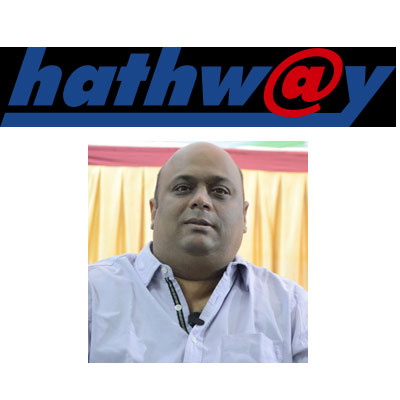
    Indiantelevision.com gives you an exclusive peep at what is being planned by one of the MSOs – the Viren Raheja-led Hathway Cable & Datacom – with the Arivnd Prabhoo-led Maharashtra Cable Operators’ Federation (MCOF).

    The two met on 5 December and agreedin principle that the MSO will share its subscriber management system (SMS) with its last mile operators – albeit in a limited capacity. Hathway, through this initiative, has taken a step forward in allowing the LMOs to bill the end consumers.

    “It is a great and welcoming move by Hathway,” says MCOF president Arvind PrabhooThe meeting between the duo was a result of the letter sent by MCOF to all MSOs, as a move to ensure smooth rollout of digitisation. It should be noted that MCOF had written to all MSOs after the Telecom Regulatory Authority of India (TRAI) gave MSOs the final deadline for starting gross billing by 15 December and submitting CAFs by 31 December.

    Calls to Hathway officials did not get a response. But sources close to India’s most evolved cable TV MSO admitted to indiantelevision.com that “yes, we have given the LMOs the right to bill and become the owners of their consumers. They are our trade partners and we want their rights to be maintained. And yes we want them to conduct their business using our SMS.”

    Hathway, apparently, has suggested two options to take things forward.

    The first is for smaller LMOs who who have a few 100 subscribers. The MSO says it could handle the billing for them. The LMO will function as the collection agent, earning a commission in the process for the subscribers who are part of his network. Hathway will be responsible for taxes in this case – including entertainment tax and service tax, wherever applicable.

    The second option is for larger LMOs with subscribers running into thousands and tens of thousands. These LMOs will be permitted to log online into the Hathway SMS with a unique ID and password and manage their subscribers, and even generate bills for them. If they choose this option, then they will be responsible for all the taxes and paperwork.

    Says the source close to Hathway.: “This system not only maintains the rights of the LMO over their consumers, but also makes the operation simpler for us. If we have to bill, activate, deactivate or change plans for all subscribers, we will have to set up those many call centres and infrastructure. It is easier for the customer as well, since for them the LMO is the touch point.”

    Hathway has been holding road shows all over Maharashtra to educate LMOs about its process and explaining to them that each of them can activate or deactivate boxes assigned only to them. Sessions have been held in Mumbai, Pune, Pimpri, Aurangabad, among other cities.

    However, there are still a couple of issues which have to be clarified and agreed upon between MCOF and Hathway. The first is in the area of revenue shares between the MSO and the LMOs. While Hathway has proposed a graded 60:40 to 57:43 split between MSO and LMOs, the latter would like it to be higher – say in the region of 45 per cent- in favour of the cable operators.

    The second issue that needs finalisation is: in whose name should the bill be raised – the LMO or Hathway?

    MCOF and Hathway are expected to meet this week to resolve these and any other issues that could crop up as well.

    “Hathway is the only MSO that has taken a step forward and has shown interest in resolving issues. Other MSOs have yet not approached us for any meeting,” says Prabhoo.
    Prabhoo need not worry. The floodgates may open sooner than he expects.
  • DAS & the LCO fightback for survival

    DAS & the LCO fightback for survival

    It’s the festival of lights. And for many the festival of noise courtesy exploding fireworks. In the hope of reducing the number of those belonging to the latter tribe, we, at indiantelevision.com, decided to put a display of firecracker articles for visitors this Diwali. We have had many top journalists reporting, analysing, over the many years of indiantelevision.com’s existence. The articles we are presenting are representative of some of the best writing on the business of cable and satellite television and media for which we have gained renown. Read on to get a flavour and taste of indiantelevision.com over the years from some of its finest writers. And have a happy and safe Diwali!

    Written By Seema Singh


    (Seema today is senior manager – PR & Communication at the Broadcast Audience Research Council. She wrote this article in 2013.)


    Posted on : 05 Dec 2013 09:45 pm


    MUMBAI: With no one giving them any guarantees about their long term survival under the government-mandated DAS regime, small time local cable operators (LCOs) are banding together as cooperatives in pockets nationally, agglomerating funds, and setting up their own headends. From Bengaluru to Kolkata to smaller towns, this is being mirrored across the country.  Digitisation has spurred a new wave of entrepreneurialism in the cable TV business.

    “Analogue cable TV spread like wildfire in the 80s and early 90s thanks to small time business men who invested and toiled away to deliver satellite TV via cable to homes,” says a cable TV industry observer.

     “Now digitisation in its current form is designed to kill those very last mile operators, big or small,” points out  Maharashtra Cable Operators Federation (MCOF) president Arvind Prabhoo.

    “Some have given up and have joined hands with the MSOs, fearing the huge investments needed for digitisation and the backlash from the national MSO,” says the cable TV industry observer. “But don’t expect all the guys who have built the cable TV industry to what it is today to yield without a fight; hence the new wave of entrepreneurialism.”

    Take the case of the Bengaluru boys.  70 independent cable TV operators got together to set up their own cable TV headend and distribution infrastructure in March 2013.

    Explains one of the members – Sagar E Technologies’ executive director Sudhish Kumar: “There were two reasons: digitisation and revenue share. We had at several instances raised voice against the MSOs with regards to billing, ownership of set top boxes (STBs) and ownership of consumers. The TRAI suggested revenue share model showed that the revenue shared between the LCOs and MSOs will be 35:65 or 40:60. We were being given a small pie. The same was the case as far as cable TV carriage, placement fees or value added fees. We were to get nothing.”

    Branded as Mirai Communication, the consortium is registered as a private limited company and has 10 directors. Its headend is located in Electronics City, Bengaluru. It is through this that the operator provides feeds across Bengaluru. “In Bengaluru we cover areas like: Central Bengaluru, Central Railway Station, Whitefield and ITPL among others,” informs Kumar.

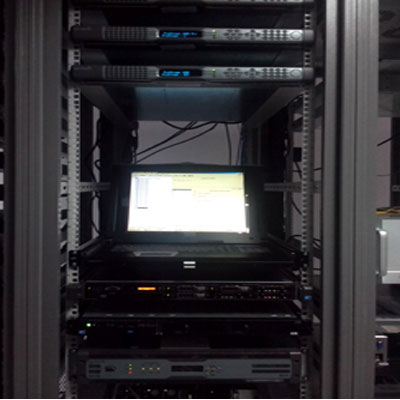
    And Kumar says its headend is future-ready technologically. “We have a Harmonic headend, costing Rs 3 crore, with a carrying capacity of 500 channels.” 

    Some 50,000 STBs imported from DTM, China with CAS from NSTV and SMS from Magnquest, have been seeded amongst its subscribers and the plan is to take the number to one lakh soon. Since some of the LCOs in the joint venture were link operators for the major MSOs in Bengaluru, their boxes have been replaced with the Mirai Communication STBs.

    “These are standard definition high quality MPEG4 boxes with one GB of DVR,” informs chief technology officer Sriram. The price tag of each box is between $16 and $19 (around Rs 1200). The final cost works out to Rs 2000- 2500. This includes CAS, cost of headend, import duty and the cost of STB.” 

    Issues with DAS implementation and revenue share got us together to setup our own headend says Sudhish Kumar

    The company has spent close to Rs 30 crore on the whole setup, which includes infrastructural help from Tata Teleservices, using the optical fibre it has laid across the garden city. “Though we have our own hybrid fiber-coax (HFC), we are using almost 400 km of Tata Teleservices underground OFC, since maintaining the network across the city is a huge task. It has given us drops at several points across the city through which the signal is made available to homes,” says Kumar.

    So what are the challenges the group has faced? “Well, the current 10 directors got along to form a team. We then proposed what we were planning to do to others in the city. It was a challenge to bring everyone to come together, but it has worked out well since,” he informs.

    Each of them was asked to choose between acting as a collection agent by becoming a link operator for a national MSO  becoming an owner by becoming a part of Mirai Communication. “Though it earlier seemed like a herculean task, with 70 operators coming together, we realised that we had to pay only Rs 2000-2500 per box. We were anyways paying Rs 1000-1500 to the MSOs for seeding boxes. So, now by paying extra Rs 1000-1500, we could own the STB and also keep our consumers intact,” explains Kumar.

    It was the Hyderabad based Fibre Optics that offered a one-stop solution and the challenge has not yet ended.  “It is an ongoing task. We have managed to get feeds from all broadcasters.  We are paying them for one lakh subscribers, when currently we have 50,000 subscribers. But, we hope to seed more boxes soon,” adds Kumar.

    What is the revenue share between the 70 cable ops who have formed the consortium? “Well! It is simple. The operator gets a share against the active boxes which are part of his own subscriber network,” he informs. Mirai Communication has started generating bills. “The revenue has started rolling out now,” he informs.

    Bengaluru’s operators are not the only ones, who have come together to setup their own headend. Following their footsteps are the 100 cable operators from Kolkata that recently announced the setting up of ‘Bengal Broadband’. As reported by Indiantelevision.com, the new entrant will be functional from FY2015 (LCO’s form ‘Bengal Broadband’ to be effective from FY15).

    Says Prabhoo, “LMOs all over India like in Bengaluru and Kolkata must group together and form a co-operative model in such a way that even the smallest LMO can survive and sustain. LMOs must register under small scale industry so that they can avail of collateral free bank loan up to Rs 1 crore.”

    We have seeded standard definition high quality MPEG4 boxes with one GB of DVR, informs Sriram
    While the State Bank of India already is providing such facilities, MCOF is also in talks with IDBI Bank and Canara Bank to offer the same. 

    “Time is running out for the MSOs and if they do not learn to act fairly soon enough then many co-operative headends will come up in most cities of India. One may find another 100-200 headends coming up with 200-300 different cooperatives formed and that will continue for a year or two and then there will be consolidation. And I see it happening. These are large cooperatives with a 500,000 or million universe,” adds Prabhoo.

    Kumar points out that they are already in talks with both independent MSOs across India and also LCOs in Mumbai, Delhi, Nasik, Kerala, Chennai, Hyderabad and Gujarat for setting up more such co-operative headends. “We are in talks with independent MSOs and asking them to collectively set up one headend for the entire country,” he concludes. 

    Change as we say is the only constant. Even in cable TV land. 

  • MCOF to meet MSOs to discuss billing issues

    MCOF to meet MSOs to discuss billing issues

    MUMBAI: The easier a process becomes, the better it is. It seems this is the process that Maharashtra Cable Operators’ Foundation (MCOF) has opted for in order to make the entire digitisation process a smooth ride. In a new initiative, the apex body of cable operators in Maharashtra has sent a letter to all the MSOs inviting them to a meeting where they would discuss about the proper implementation of digitisation.


    In the letter, of which Indiantelevision.com has a copy, the MSOs have been requested to schedule the meeting in the coming week.


    When both the parties meet, they are expected to discuss issues related to: interconnect agreement, billing, Consumer Application Form (CAF), package activation, a la carte channels choice, disconnection of set top boxes (STBs) without notice, misleading and false  information given about the LMO to the customer over call center, ownership of STB and uniform rates.
    We are making an effort from our side to meet each MSO separately, says Arvind Prabhoo


    The letter has come out a day after the Telecom Regulatory Authority of India (TRAI) gave the MSOs the final deadline of 15 December to submit the duly filled CAFs and also implement gross billing by December.  “CAF is not the only issue, there are issues related to service tax and billing,” says MCOF president Arvind Prabhoo.  “There is no clarity on whether the consumers will be billed on the service provided by the MSO or on the MRP of the package that the subscriber opts for,” he adds.


    The meeting has been called to discuss the issues concerning both the MSOs and the LMOs.


    “We are making an effort from our side to meet each MSO separately. In the meeting, we will try and understand the system of billing devised by the MSO and make suggestions, if required. If not, we will go hand-in-hand with MSOs, provided our legal status is maintained,” informs Prabhoo.


    The apex body which comprises more than 1500 LMOs is also unsure about the settlement mechanism between the MSO and the LMO once the billing is done. “The MSOs so far haven’t spoken to the LMOs on how they will pay the LMO for the customer it bills,” points out Prabhoo.


    Expressing concern on the 15 December deadline set for submitting CAFs, Prabhoo says, “If 50 per cent CAFs have been filled in one year on an average, how does TRAI expect the remaining 50 per cent to be filled in next three weeks? Also, with the holiday season coming in, is TRAI looking at switching off STBs, if the deadline is not met?”


    With TRAI pushing MSOs to start gross billing from December, Prabhoo comments, “The issue relating to entertainment tax is subjudiced. So when the MSO says it will start gross billing from next month, is it looking at levying entertainment tax as well?”


    It should also be noted that the Nasik Cable Operators Association has moved the Telecom Disputes Settlement and Appellate Tribunal (TDSAT) on billing. While TRAI was supposed to respond to it on 22 November, the tribunal has granted time till 23 January to the regulator to respond. “So when both entertainment tax and billing is subjudiced, why is TRAI pushing cable operators for contempt of court?” he questions.


    On the issue of TRAI asking the MSOs to either convince the LMOs to start billing or do it themselves, Prabhoo sternly says, “They can do it, if they want. We are not going to be delivery boys. We are owners of our own businesses. And we have the right to bill our own consumers and that is what we are fighting for.”

  • MCOF seminar aims to educate LMOs

    MCOF seminar aims to educate LMOs

    MUMBAI: Constituted just over a year ago to protect cable operators and safeguard their business, the Maharashtra Cable Operators’ Federation (MCOF), today organised its first business and education seminar in Mumbai.


    Held in Hindi and English,around 400 Last Mile Operators (LMOs) travelled from neighbouring states like Gujarat, Andhra Pradesh, Goa and Karnataka for it.


    The first session was to educate LMOs about the importance of customer care and enhancing the quality of service. Vishwamangal Education CEO Suman Keluskar who deals in soft skills highlighted the need for LMOs to be well groomed as well as train their subordinates to be the same to make customers feel good.
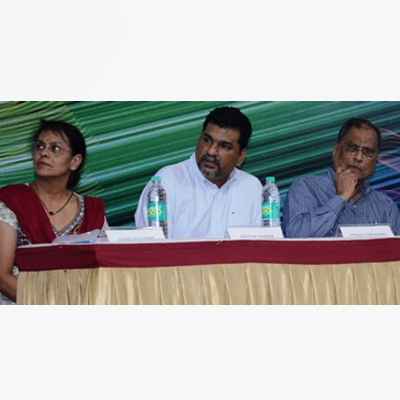
    Suman Keluskar, Vynsley Fernandes and Tony D’Silva spoke about customer care, global trends in cable TV and the upcoming HITS technology respectively


    “The reason why customers welcome a Pizza Hut boy is because he is nice to them,” she said, stressing that customers today were ready to pay for good service but for that to happen, LMOs needed to know the opportunities available to them as well as what customers were demanding. “Innovate in your production. Use the internet to advance yourself,” she said.


    Session two discussed how while LMOs across the globe have learnt to monetise their business, back home, it continues to be a loss-making one. Addressing the session, Castle Media director Vynsley Fernandes, started off by describing how developed countries such as the US, UK and Taiwan had faced the same issues that India is currently facing. But the cable ops dealt with them through innovation and have today grown to last mile digital system providers.


    “From the time the Gulf War happened and everybody wanted to watch TV, things are much different now. Multi-screen viewing is what is happening now,” he said.
    Citing the example of the US, where operators have increased their revenues despite a drop in the number of TV homes, and are expecting the ARPU to go up to $40 from $21 currently in the next five years, Fernandes reasoned this was because they had adapted to using TV along with the Internet and were offering viewers a multi-screen experience.


    He pointed out that concepts like Hybrid Broadband TV, second screen, catch up TV, time shift TV, TV on mobile etc. had already penetrated the US markets and helped cable operators exponentially.


    “Think long term as to whether you can monetise your product. Whenever you are investing in a technology, what is its future road map?” he urged, saying that the only challenge would come from OTT services such as Netflix and Hulu where movies and channels will go directly on the Internet without the need for an MSO or LMO. However, he was quick to add that this hasn’t met with much success in India, yet.

    While advertisers are approaching LMOs to target specific demographics on TV, the STBs taken up by LMOs are not so advanced, Fernandes said. Pointing out that in the US, LMOs provide a posse of services including entertainment, home monitoring, automation comfort, energy management and wellness assisted living, in India too, “an LMO should be the one-stop digital services’ stop for customers,” he concluded.


    Drawing upon his experience in broadcast and DTH to present his project on Headends in the Sky (HITS), former Sun TV CEO Tony D’Silva said this was a good prospect for LMOs to think about.


    D’Silva said that most consumers watch not more than 12 to 15 channels and so, it was necessary to create such packages and device-shifting technologies for the future.


    “You are at the threshold of a game change. Our main threat is the DTH players and we need to be above them and have a robust system,” he said, stressing that HITS was a much better option for LMOs than taking signals from MSOs. Under HITS, the agreements are directly with broadcasters, there are no carriage fees, and it would yield higher revenue (Rs 108) as compared to dealing with an MSO (Rs 59.5) or even independently (Rs 85).


    “The biggest cable company in the world today is Comcast. 17 million out of Comcast’s 22 million subscribers get supply services from HITS and Comcast gives its customers all the benefits that Fernandes spoke about,” said D’Silva, urging LMOs to adopt HITS through which they could choose and demand things as well as insert local channels, the revenue from which would be completely theirs.


    A local cable operator from Goregaon, Bernadette Dsouza, said: “I have come for the seminar to know about new opportunities as well as how to save my business from MSOs’ domination.”

    The good news is MCOF plans to hold such seminars in other states as well in the coming months.

  • Cable TV digitisation: Parliamentary standing committee meets TV trade in Mumbai

    Cable TV digitisation: Parliamentary standing committee meets TV trade in Mumbai

    MUMBAI: There’s been a lot of press and media coverage about the process of cable TV digitisation over the past year or so. Most of it stated has been a mixed bag with opinions about its progress swinging from disastrous to a fabulous rollout. Hence, the political class decided to find out on their own what digitisation has meant for the industry.


    The parliamentary standing committee on information technology – headed by Rao Bhirendra Singh – has been making a whistle stop tour of different regions where digitisation has been implemented. 22 October 2013 saw it landing in Mumbai. Prior to this, it has had stopovers in Rajkot and Ahmedabad as well.


    The various constituents of the TV ecosystem were summoned to update the committee on the pace of digitisation and their individual specific concerns. “Phase I and II have been completed,” says a government representative. “The committee wanted to be apprised of the learnings from the first two phases by the various players and their preparedness for the next round of digitisation which is slated to be completed by December 2014.”


    Each of the players had meetings in camera with the committee and presented their positions. First, the last mile cable operators (LCOs) or last mile operators (LMOs). The Maharashtra Cable Operators Association (MCOF) and Cable Operators and Distributors Association (CODA) represented the LMOs and spoke about the issues faced by them.


    Among the concerns they raised were the fact that they had put in physical labour repeatedly during the process of delivering and installing set top boxes. They stated that it is the LCO which bears the brunt of the cable TV viewer’s ire when channels are switched off by the MSOs. But they were optimisitic about their role in phase III and phase IV.


    “Our representatives said that we want to be active players in these phases and we are happy to know that the government seems to be intent on having a clear way forward,” says a cable TV operator.


    The main bugbear raised by the national and local MSOs – Hathway, DEN, Siti Cable and InCable, apart from others – was the issue of entertainment tax. (Maharashtra and Uttar Pradesh have the highest rates.) Their demand: that the LMOs should be made responsible for collecting and paying this levy. Earlier, in the analogue regime, it was the MSOs who had to carry the burden and it is crippling them.


    Says an executive from a leading MSO: “Once the billing system is in place in a digitised India, LCOs can collect the tax and pay it and give the remainder amount to MSOs.”


    However, an LMO says a better option would be “splitting of bills between MSO and LMO and LMO to subscriber to avoid double taxation for the TV subscriber.”


    Broadcasters and aggregators – represented by the  NBA (News Broadcasters Association), a representative from Sony Entertainment Television, Indiacast, MediaPro and TheOneAlliance. The aggregators strangely stayed mum, while broadcasters harped on the usual complaints of carriage fees, lack of subscription revenues and the heavy dependence on advertising. The conversation also drifted to talks about content on television and how channels need to be careful about their content. “This is a major issue as there is no clarity about how the viewer and broadcaster are going to get value out of digitisation. If there is no elbow room for channelising of money for broadcasters then how are they going to focus on better content,” says a broadcasting industry representative.


    More such meetings are being planned according to industry sources. “Finally, we will prepare a report and submit it to the parliament for review,” says a source close to the committee.


    Hopefully, their reports and inputs will make things easier for all concerned as India’s cable TV ecosystem gears up for its most challenging phase – that of rolling out almost 80 million boxes in small towns and rural India.
    (Inputs from Meghna Sharma and Seema Singh)

  • MSOs miss 15 November CAF deadline

    MSOs miss 15 November CAF deadline

    MUMBAI: Multi system operators (MSOs) have bought themselves some more time to collect duly filled consumer application forms (CAF) from cable subscribers across 38 cities falling under DAS phase II.


    The earlier deadline for CAF collection was today, that is, 15 November, and consumers failing to comply would have had their transmission cut off, even after possessing set top boxes. However, as learnt from several sources in the industry, MSOs failed to meet the timeline and are now seeking further extension.  


    While a few MSOs including Hathway Cable & Datacom have extended the deadline to 20 November, smaller Kolkata-based MSOs say the procedure will be complete by 23 November.


    It was the Telecom Regulatory Authority of India (TRAI) that had previously extended the original deadline from 20 September to 15 November. When contacted, TRAI principal advisor N Parameswaran said considering it was a national holiday today, “any decision on the final date would be taken only on 18 November.”


    “The MSOs have voluntarily decided to extend the date to 20 November,” informed Maharashtra Cable Operators Federation (MCOF) president Arvind Prabhoo, adding that the regulator had asked the MSOs to send a review of DAS phase I, covering points like billing and CAF, in the interim.


    Kolkata-based Manthan and Siti Cable confirmed that they have achieved 100 per cent CAF collection whereas the Cable Operators Digitalisation Committee of the Association of Cable Operators convener Swapan Chowdhury said a 100 per cent CAF was impossible to achieve in the City of Joy with so many festivities. “We have increased the deadline for duly filled CAF to 23 November,” he said.


    Cable Operators Federation of India president Roop Sharma opined that CAF collection is a difficult task at hand for operators.


    “Considering that the broadcasters have not yet declared the rates for the channels, it is difficult for the consumer to decide which ones they want to subscribe,” she said.
    Clearly, we have not heard of the last of CAFs, phase II – as yet.

  • It’s family time this Diwali

    It’s family time this Diwali

    In this world of cut-throat competition where life is full of struggles and work for the people in the corporate world, Diwali is a moment of relief. The lights of Diwali doesn’t just spread brightness around but also illuminates their inner self as they get a chance to have family time. Few corporate head honchos talk about their plans this Diwali and talk about their memorable Diwali moments.

    I am spending time with my family and friends but I won’t be bursting any crackers as I am against it. Diwali is a festival of lights and not noise.

    One of the fondest memories of Diwali is when I once made sweets and kandil at home and kept it in a way that everybody could see it. These days we usually buy sweets from outside.

    Raj Nayak, CEO, Colors

    On Diwali, everybody is at home and if something happens we have to be on our toes. And thus, I would be working on Diwali.

    I remember how as a kid I used to wake up early morning at 4.00-4.30 and be the first one to burst crackers. Later, when I became a cable guy, it was to go and adjust the CNN dish.

    Arvind Prabhoo, president, MCOF (Maharashtra Cable Operators Association)


    Festivals are the best time to be at home and with the family. I too will be home and play with my children and grandchildren. On Diwali, we’ll have a puja and then we would burst crackers. Every year, we plan a family get together to celebrate the festival of lights. Even this year, the families of my three brothers and few colleagues will come to my home to celebrate the festival.

    The best Diwali in my life was in 2004 when my daughter got married just before Diwali.

    M Rajendran, MD, Raj network


    This Diwali, I will praying to the almighty that light enters many lives and the earth becomes harmonised. I will also be lighting lamps and celebrating with friends.

    I have a hilarious memory of Diwali. When I was a seven year old, a rocket cracker flew into our house and went inside our landlord’s lungi, who was standing on the top floor balcony. Thankfully, the rocket had already burst earlier.

    Swapna Sundari, COO, Raj Network (Telugu market)


    For me the festival of lights has always been about spending some quality time with family, friends and relatives. Enjoying food and sweets, and of course burst a few crackers. But this time around, Diwali will be even more special as I will get to spend time with my twin daughters who are two years old and are learning everything slowly. It is going to be a really special time with them.

    Krishna Desai, network head, Kids Entertainment, India, Turner International


    I always remember Diwali as the festival when we spent time with close friends and family, burst lots of crackers and enjoy the variety of sweets on offer. However, this time around, Diwali will be a quiet affair. I will spend time with my family and kids.

    Rohit Lamba, head, network distribution, business development & affiliate sales, Times Global Broadcasting Company Limited


    Well, Diwali, the festival of lights, is a great occasion to sit back and spend time with family and friends. But, I also take this opportunity to rethink on key issues relating to my professional and personal life.

    Sandeep Arora, vice president, sales – India & SAARC Service Provider (Telco), Cisco Systems


    I remember how as a kid Diwali used to be a time when the entire family got together and spent time with each-other. Everyone used to be excited as this was a time to buy new clothes and eat great food. But now I feel we need to be conscious about not adding to the already polluted environment by bursting crackers. It would be best to celebrate a noise free Diwali and have fun too.

    Uday Singh, managing director, Motion Picture Association (India)


    We celebrated the second anniversary of Helios on 1 November. Diwali has become a special event for us because it brings with it double celebrations. Another reason I love Diwali is because I am a big gambler and I love playing cards. While I play cards almost every weekend, Diwali gives me an opportunity to play the game with more fervor.

    Divya Radhakrishnan, managing director, Helios Media


    Diwali is a family affair for me. Whenever possible, I try to visit my hometown where my parents live and we light lamps, burst crackers with the children. My parents usually shuttle between Nanital and Bombay, so when they are in Bombay it becomes much easier for us. But we always make a point to be together on Diwali. Since childhood it has been a complete family affair and I looked forward to the festival. I try to keep it like that. We avoid going out and try to be together.

    Ashish Bhasin, chairman India and CEO South East Asia, Aegis Group


    Diwali is all about puja, bhajan and family time. Usually we go out every year, but this time we will be celebrating the festival with relatives and close friends. Diwali is much more than a holiday as it is also the beginning of the new year for Hindus. For Gujaratris, it’s a special occasion, to say saal-mubarak. For us, these two days are very important and auspicious. Diwali is the occasion where you can greet people with not only love and affection but also with gifts and mitthai. It is an occasion to stop worrying about the calorie counts and eat as many sweets as you want to. It is a colourful occasion and very lively atmosphere.

    J.D Majethia, producer and actor/director, Hats Off Productions


    When we were kids we used to celebrate Diwali with lots of crackers, but now the festival is much more than bursting crackers. It is one occasion when we get together with family and get a little religious. It is so hectic in Mumbai that socialising becomes a little difficult. This is a day for extended family get together.

    Ravi Mansukhani, CEO, Incable


    The festival is for family and friends. It is about lots of food and playing cards. This year, I will celebrate the festival with my family and friends in Mumbai first and then head to Delhi to meet my parents. My kids are excited to be with their grandparents this Diwali.

    The fondest childhood memory of Diwali is how we wanted to be the one to burst the longest ladi in the neighbourhood along with loads of other fireworks. Though with time I have grown to become more eco-friendly and thus fireworks now is a big ‘No no’.

    Gaurav Gandhi, group COO, IndiaCast


    Diwali for me is a day which is spent well with family, performing puja and playing teen patti. There was a time when I used to burst a lot of crackers. But once I grew up I realised how annoying it could be for others, so I don’t burst crackers anymore, but yes I have to admit that it used to be great fun bursting crackers.

    Ferzad Palia, senior VP & GM, English entertainment, Viacom18 Media


    My (escape) plan for Diwali is to drive down to the peace and quiet of Goa. The most memorable Diwali for me was last year when I celebrated the festival with my niece and nephew in North Korea. They had enough fireworks to give North Korea an inferiority complex.

    Anil Kakkar, founder/chief creative officer, Gasoline

  • Maharashtra’s LMOs to blackout TV on 2 Oct

    Maharashtra’s LMOs to blackout TV on 2 Oct

    MUMBAI: A mid- week holiday is always welcome and is a good time to catch up with friends and family as well as your favourite TV shows and channels. However, this Gandhi Jayanti will see a different type of revolt on television in the west Indian state as the Maharashtra Cable Operators Federation (MCOF) has decided to put their foot down on the alleged “harassment” that they have been facing from the MSOs.


    From 6:00 pm to 9:00 pm tomorrow, 2 October, about 3,000 cable operators under the MCOF have decided to blackout their screens opposing the ‘high-handed’ behavior that MSOs have adopted towards LMOs (Last Mile Operators), as MCOF president Arvind Prabhoo puts it. This includes the areas of Mumbai, Pune, Pimpri-Chinchwad, Nasik and Indore in MP where DAS I and II have been implemented. Approximately 15-20 lakh customers in Maharashtra alone will not get to see their favourite shows during prime time. LMOs in Gujarat have also been approached and a response is awaited from them.
    Arvind Prabhoo feels that it is time to start treating LMOs as equals and respect their demands


    The federation says that its intention is not to harass customers but just demonstrate that cable operators are united and it is high time MSOs give them their due credit in the cable TV chain. Communications to customers have already started in the form of SMSes and emails as well as leading papers – both English and Marathi – are being used to inform people about the flash blackout.


    “If the MSOs and broadcasters sit and talk with us there is no need to do this but no one is listening to us,” stresses Prabhoo. He does not even feel that the two will reach out to the LMOs before evening of tomorrow. Initially the plan was to shut it down for a whole day but due to legal regulations, it was reduced  to three hours.


    This isn’t the end as well. If nothing comes out of this then more such days will see blackouts with increased hours especially during festive times.


    There is a possibility that MSOs may take legal action against MCOF for this move but it is ready to fight the biggies. “This is exactly what we are opposing. When an MSO switches off channels on its own, no one questions its decision but the local guy is questioned. No legal action is taken but we have to bear all the brunt from both the MSOs as well as the customers,” adds Prabhoo. Recently, InCable had decided to switch off signals to all sports channels, right before the Champions Trophy T20, a way to bully the LMOs to cough up more cash, claims the federation.


    The issues that LMOs have been grappling with are many. Prabhoo points out that last minute decisions taken by MSOs lead to chaos which has to be resolved by local operators. This happened during DAS Phase I when STBs (Set Top Boxes) were being installed in homes. Unending trips to customers to fill forms is a burden on them as well, discloses Prabhoo. MSOs have the power to switch off signals to channels arbitrarily as well as make channels unavailable on a-la-carte rates so that only packages exist. “They should talk business, not superiority or inferiority,” adds Prabhoo.


    For now, the impending blackout is on the cards for tomorrow. Unless discussions take place soon, cable TV viewers in Maharashtra could well be in for more evenings of just looking at a blank TV set or one with a flickering static-riddled picture.

  • Maharashtra’s LMOs to blackout TV on 2 Oct

    Maharashtra’s LMOs to blackout TV on 2 Oct

    MUMBAI: A mid- week holiday is always welcome and is a good time to catch up with friends and family as well as your favourite TV shows and channels. However, this Gandhi Jayanti will see a different type of revolt on television in the west Indian state as the Maharashtra Cable Operators Federation (MCOF) has decided to put their foot down on the alleged “harassment” that they have been facing from the MSOs.

    From 6:00 pm to 9:00 pm tomorrow, 2 October, about 3,000 cable operators under the MCOF have decided to blackout their screens opposing the ‘high-handed’ behavior that MSOs have adopted towards LMOs (Last Mile Operators), as MCOF president Arvind Prabhoo puts it. This includes the areas of Mumbai, Pune, Pimpri-Chinchwad, Nasik and Indore in MP where DAS I and II have been implemented. Approximately 15-20 lakh customers in Maharashtra alone will not get to see their favourite shows during prime time. LMOs in Gujarat have also been approached and a response is awaited from them.

    Arvind Prabhoo feels that it is time to start treating LMOs as equals and respect their demands

    The federation says that its intention is not to harass customers but just demonstrate that cable operators are united and it is high time MSOs give them their due credit in the cable TV chain. Communications to customers have already started in the form of SMSes and emails as well as leading papers – both English and Marathi – are being used to inform people about the flash blackout.

    “If the MSOs and broadcasters sit and talk with us there is no need to do this but no one is listening to us,” stresses Prabhoo. He does not even feel that the two will reach out to the LMOs before evening of tomorrow. Initially the plan was to shut it down for a whole day but due to legal regulations, it was reduced  to three hours.

    This isn’t the end as well. If nothing comes out of this then more such days will see blackouts with increased hours especially during festive times.

    There is a possibility that MSOs may take legal action against MCOF for this move but it is ready to fight the biggies. “This is exactly what we are opposing. When an MSO switches off channels on its own, no one questions its decision but the local guy is questioned. No legal action is taken but we have to bear all the brunt from both the MSOs as well as the customers,” adds Prabhoo. Recently, InCable had decided to switch off signals to all sports channels, right before the Champions Trophy T20, a way to bully the LMOs to cough up more cash, claims the federation.

    The issues that LMOs have been grappling with are many. Prabhoo points out that last minute decisions taken by MSOs lead to chaos which has to be resolved by local operators. This happened during DAS Phase I when STBs (Set Top Boxes) were being installed in homes. Unending trips to customers to fill forms is a burden on them as well, discloses Prabhoo. MSOs have the power to switch off signals to channels arbitrarily as well as make channels unavailable on a-la-carte rates so that only packages exist. “They should talk business, not superiority or inferiority,” adds Prabhoo.

    For now, the impending blackout is on the cards for tomorrow. Unless discussions take place soon, cable TV viewers in Maharashtra could well be in for more evenings of just looking at a blank TV set or one with a flickering static-riddled picture.

  • MCOF to hold seminar for LMOs

    MCOF to hold seminar for LMOs

    MUMBAI: With Last Mile Operators (LMOs) viewing digitisation as a threat and legal tussles between them and Multi System Operators (MSOs) on the rise, the Maharashtra Cable Operators Federation (MCOF) has organised an educational and business seminar on ‘challenges and opportunities post DAS’ to address their growing concerns.

    To be held on 23 November at the Prabhodhankar Thakarey Krida Sankool in Vile Parle, Mumbai, the seminar will see the who’s who of the industry educate LMOs about the kind of business opportunities lying in wait.

    Addressing operators from Maharashtra, Andhra Pradesh, Gujarat and Goa will be Castle Media director Vynsley Fernandes, who will speak on ‘global industry standards and trends’; HSBC Securities (Telecom and Media) lead analyst Rajiv Sharma, who will touch upon the financial aspects; former Sun group CEO Tony D’Silva, who will discuss HITS (Headends in the Sky) technology, UPASS managing director Ravindra Deshmukh and PING Network founder Prashanto Das, who will talk about global trends in broadcasting.

    Also among the invitees are small scale industries and the State Bank of India (SBI) regional head.

    Says MCOF president Arvind Prabhoo: “There is a lot of confusion about digitisation and LMOs feel the business is going out of their hands but if you understand what digitisation is and how to go about it as well as reorient yourself to the changing scenario, then you don’t look at it as a challenge but as an opportunity. I want LMOs to know that digitisation is not a threat and remove the fear factor from their mind.”

    A few women cable operators are also expected to attend the seminar that will be conducted in both Hindi and English. Nearly 500 to 600 LMOs are likely to participate with registration fees fixed at Rs 500 per head. Leading Marathi and Gujarati newspapers will be carrying advertorials tomorrow and day after to promote the event.

    Apart from challenges and opportunities post DAS, the seminar will also cover topics such as maximizing broadband penetration, optimised network architecture in DAS and future proof, Value Added Services (VAS), identifying right equipment and spares, supply tie ups and employee training.