Tag: MCOF

  • MCOF raises questions on Hathway, Den pushing existing STBs under Jio brand

    MCOF raises questions on Hathway, Den pushing existing STBs under Jio brand

    KOLKATA: Maharashtra Cable Operators’ Foundation (MCOF) has flagged off several unethical practices in the television distribution segment. In a letter written to the Telecom regulatory authority of India (TRAI), it has alleged that some multi system operators (MSOs) are violating rules and taking the unethical route of business. 

    MCOF has expressed concern about Den Networks and Hathway for imposing replacement of existing STBs by STBs under Jio brand in the last six months. The federation has claimed that the two MSOs have not replaced the expired standard interconnection agreement (SIA) with the model interconnection agreement (MIA) without offering any explanation for the rebranding.

    “The LCOs who resist the imposition are made to toe the line by disabling their access to the Prepaid Portal resulting in service interruptions ton the subscribers. In addition to the arm-twisting, the MSOs have lined up numerous dummy operators to replace the existing LCOs who usurp their business and assets,” the letter added.

    MCOF stated that Jio is not a registered MSO nor has it signed interconnection agreement (ICA) with LCOs. Moreover, Hathway and DEN continued to rely upon expired SIA overlooking repeated requests to adopt MIA. 

    It has also claimed that BRDS provides signal feed to its network in Kolhapur and connected areas but deploys InCable STBs. InCable has been alleged of providing feed to Sampark Network (Powai Mumbai and Bhiwandi Area) through STBs that the latter has deployed. 

    “We fail to understand as to how auditors have overlooked the mismatch between CAS, STB inventory and conflicting branding, head-ends can be used as pass-through pipes for signals from another MSO, random off-site checks by broadcasters through watermarking have not detected the malpractices,” it added.

    Against this context, MCOF has asked copies of ICA between Jio and Broadcasters and status of MSO License to Den and Hathway. It has also called for clarification on whether a mere share purchase deal allows the buyers to change brands and automatically subrogate the company whose shares it buys. 

    It has also requested the industry watchdog to share the steps it is taking to prevail on MSO to sign up fresh ICA with LCOs by mutual consensus rather than arm-twisting via Prepaid Portal Access denial. MCOF has also asked directions for the course of actions that LCOs should take to safeguard against likely disabling of STBs that are drawing signals from third party head-end or suspension of feed sharing between MSOs. 

  • Cable operators seek discounted tariffs from pay channels

    Cable operators seek discounted tariffs from pay channels

    MUMBAI: Maharashtra Cable Operators' Foundation (MCOF) has requested Indian Broadcasting Foundation (IBF) to urge its members – the pay channels – to offer discounted pay tariffs, if not waiving them altogether, for a period of four months from 20 April to 20 August.

    The MCOF has primarily cited two reasons for making this request. First, there has been no original content for the past two months. Second is the subscribers’ inability to pay for the channels.

    In a letter addressed to IBF president NP Singh, the MCOF stated that the request is specifically regarding IBF members that operate pay channels with monthly tariff ranging from Rs 10 to Rs 19 for SD feed and variable extra for HD feed.  

    “Our subscribers have been pointing out that all the channels have been recycling programmes for close to two months. Further, no one is in a position to assure as to when fresh programmes will be aired. Same is the case with sports and movie channels, which will be slower in offering fresh content as compared to GECs and other genres,” said the letter.

    MCOF further stated: “The subscribers therefore will either discontinue these channels on their own, or we as the last-mile link will be compelled to do so since MSOs are pressuring us to pay upfront when our subscribers are unable to pay. We therefore believe that it would be in everyone's interests that pay channels offer steeply discounted pay tariffs, if not waive it altogether for a period of four months.”

    The situation, said the MCOF, may be reviewed in mid-July and a suitable call be taken in respect of “GECs as a class distinct from sports and movie channels.” The cable federation expressed hope that this “ethical action” will not only create goodwill with subscribers but also retain customers for the channels to ensure that advertising income does not go down much.

    “We hope that you will appreciate the fact we too will be sacrificing our marketing fee and yet are willing to do so in the interests of the entire value chain. We hope to receive an early revert in mutual interests,” concluded the letter.  

  • MCOF seeks government relief for last-mile cable operators

    MCOF seeks government relief for last-mile cable operators

    MUMBAI: In the wake of the Covid2019 crisis, Maharashtra Cable Operators Foundation (MCOF) has written a letter to the union minister of information and broadcasting Prakash Javadekar submitting its propositions for long-term relief and transformation of the last-mile cable operators. 

    “Like all other businesses, we too are impacted adversely due to lockdown and economic slowdown. In fact, the impact on us is more severe, since our services including broadband have been classified, and as essential services have to be kept operational. Though we are sure that everyone knows the costs and risks of this, the financial squeeze out of failure to collect our legitimate dues may not be known to many,” MCOF president Arvind Prabhoo stated. 

    He also mentioned that they anticipate a cutting down of spend on both services for a couple of forthcoming quarters and a need to restructure the business that involves two sets of much stronger players: broadcasters and MSOs. 

    Here are the excerpts from the charter: 

    ·  The basic service tier of 200 channels priced at Rs 130 has been requested to be exempted from GST

    ·  LCOs  to be registered with the MIB and accorded recognition as a class distinct from MSO with role-specific duties and rights

    ·  LCOs be treated at par with telcos and allocated part of USOF grants for their Internet-related projects

    ·  The fibre networks belonging to LCOS be evaluated and accorded HCPA (Horizontal Connectivity Provider Agency) status for e-governance and telecom expansion purposes.

    ·  Future-oriented training modules be designed and imparted to cable network executives under the National Skilling Mission.  

    MCOF’s letter to IBF

    Indian Broadcasting Foundation (IBF) also recently wrote a letter to the Union Minister of Information and Broadcasting Prakash Javadekar seeking an economic relief and rehabilitation package. While IBF has made 18 requests, Maharashtra Cable Operators Foundation (MCOF) also sought specific benefits for the last-mile operators.

    “It is very unfortunate that the media business has grown without interactions, leaving aside integration across the value chain. Current business and resource emergencies provide all of us a once-in-a-lifetime opportunity to rectify all past mistakes and redraw roadmaps for mutual benefits. It is with these views and a sincere desire to ensure not only survival but also growth for all that we are writing this letter to you,” Prabhoo stated. 

    He added that they believe with in view of the power of the media, there is a considerable possibility of most of the 18 point charter of propositions being accepted.

    “We write as the players from the most critical last-mile deliveries which are no less important than the content itself. We do hope that IBF has not taken “I, me, and myself” approach but has considered needs of the entire value chain,”

    He added that they are sure that they too are suffering no less than broadcasters and also rendering services at high costs and risks. Hence, the association has asked to know specific benefits that they may expect to trickle down to them and enable them to keep the services flowing. 

    “We need not impress upon you the fact that without roots no tree can survive and all benefits you may extract would become infructuous if the 60 per cent+ market serviced by LCOS disappears. We have held back submitting our requests cum demands to minimise conflicts and cut short response time for the authorities,” the letter added.

    However, the association is yet to hear from the MIB or IBF. 

  • Cable subscription collection sees 80% drop due to COVID-19

    Cable subscription collection sees 80% drop due to COVID-19

    MUMBAI: Cable operators have been facing problems in the collection of subscription fees since the third week of March as restrictions on social distancing started. Moreover, the countrywide lockdown has caused them more distress. Subscription collection of the operators from customers has fallen down, as Maharashtra Cable Operators’ Foundation (MCOF) stated. 

    “After the ministry of information and broadcasting permitted cable TV as an essential service, cable operators have been able to get their limited staff to attend to network-related issues. With no public transport, workers staying at faraway locations have not been able to attend,” it stated.

    “Subscription collection from customers has come down drastically as many societies and colonies have imposed restrictions on any entry into their complexes,” it added.

    MCOF mentioned that cable operators have to make payments to their respective MSOs upfront if they wish to activate any channel/package. But all MSOs get almost 30 to 60 days’ credit before they make any payment to the broadcasters. This is mainly due to the fact that MSOs have to generate monthly usage reports for the month, based on which the broadcasters will raise their invoices. These broadcaster invoices will then be processed by respective MSO accounts teams and payments made. 

    Against this backdrop, various cable associations have appealed to TRAI, MIB, and respective MSOs to either adopt post-paid services for April or to issue credit facilities to cable operators who are unable to collect.

    The AIDCF (All India Digital Cable Federation), the body of MSOs, has decided to keep only the mandatory channels of Doordarshan active for any STB which is not renewed in April. 

    It stated that cable operators are not financially strong to fund the MSOs and activate channels, especially when collections have dropped by 80 per cent or more. 

    Cable associations have advised cable operators the following: 

    ·   Cable operators should push customers to pay online using NEFT/UPI/wallets/credit or debit cards and activate services for those who have paid.

    ·    For those customers who do not pay online, cable operators can downgrade them to Free To Air Channel (FTA) Packs, since most viewing is happening on news channels (most of which are FTA channels) and DD providing re-runs of its popular serials at nil cost. Pay broadcasters have run out of fresh programming and all sporting activities having come to a halt, these can be activated for customers who make payments to cable operators. 

    ·   Cable operators are free to levy a convenience fee of up to Rs 30/- per month from a customer to renew the services without any upfront payment. Customers can opt for this by calling/messaging their respective cable networks and confirming their willingness to pay the same.

    “In over 25 to 30 years of this business, cable networks have gone through various natural calamities but we have always ensured that the subscribers get near-uninterrupted services. We request customers to stand by their respective cable operators as a mark of solidarity by using any online method of convenience to pay their cable operators or speak to their cable operator and exercise their best option,” the federation urged. 

  • Corona : MCOF requests TRAI to defer NTO 2.0 implementation

    Corona : MCOF requests TRAI to defer NTO 2.0 implementation

    The Maharashtra Cable Operators Federation (MCOF) has requested the Telecom Regulatory Authority of India (TRAI) to defer the implementation of the amended tariff order (NTO 2.0) in view of the crisis created by Coronavirus. MCOF president Arvind Prabhu said that they are awaiting response from the regulatory body. The Association of Film and Video Editors has also decided to stop the shooting of TV serials, web series, etc. from 19 till 31 March 2020.

    The federation has written in a letter today to the authority that in the normal course of business, LCO business entails many visits to Customer premises for Collections of Post-paid Subscription and on- site Service Support. It added that NTO2.0 will necessitate more frequent interaction with Subscribers firstly to refit them into New Basic Plan options and secondly to enable them to make the right choices of Pay Channels and Packages.

    It has also been said that the field executives will be exposed to many subscribers and vice versa and thus has a higher probability of turning into a Passive Carrier, if not a patient himself, which is ill- advised in the days of Corona Virus spread. At the present scenario, almost everyone is resorting to Social distancing to contain the spread.

    It has also added that the problem is compounded in large cities where the cable executive often travels and aboard Public Transport to reach his office . It mentioned that while the future situation is not predictable , the psychological need for minimal interaction would be hard to overcome.

    “We therefore request you to kindly defer the implementation of NTO 2.0 until things settle. The interim period would also be useful for more interactions with and by the Industry and whole-hearted participation by each Value chain Member,” the letter stated.

    “We also request that the deferment be made applicable to DTH and IPTV Operators too so as to ensure Status quo across the Sector.  This is without prejudice to the rights of stakeholders who have legally challenged the Tariff regulations and the outcomes are subjudice at this stage,” it added.

  • MCOF’s Arvind Prabhu on post-NTO era, LCO concerns, OTT regulation

    MCOF’s Arvind Prabhu on post-NTO era, LCO concerns, OTT regulation

    The cable and broadcasting ecosystem started the year 2019 with a disruption – the new tariff order (NTO). With the implementation of NTO, the most dissatisfied section of the ecosystem was local cable operators (LCO) as they found the revenue-share business model would make their survival difficult which caused massive protests from LCOs. As months passed, the turmoil settled, but the ecosystem is yet to benefit from NTO, according to Maharashtra Cable Operators Foundation (MCOF) president Arvind Prabhu.

    In an interview with Indiantelevision.com, Prabhu spoke on major challenges faced by the ecosystem after NTO, how the industry evolved post-NTO, how LCOs can survive in the future with upgradation in technologies amid OTT onslaught, etc. Prabhu will also share his insights on the current state of industry at Indiantelevision.com's Video and Broadband Summit 2019, India's definitive Pay-TV and video distribution get together. 

    Edited excerpts:

    Has the industry settled down after the NTO was implemented?

    The industry has settled down but not the benefits of the NTO as envisaged by TRAI within the ecosystem. Consumers are not getting the benefits of the NTO. So the actual implementation of NTO is still found pending.

    What are the major changes you noticed post-NTO?

    What we would like to highlight is that because of the lack of proper implementation, the consumer is still not getting his choice of channels. There has been an increase in the monthly rates and we still feel the transparency is not there. The transparency which was required is still not there. Also, earlier there were two TV sets in households. Now, the second TV is still not active in post- NTO era. Only the primary TV set has been activated in the new tariff order. So, almost 20-25 per cent of our connections have still not activated.

    Initially, local cable operators showed strong disagreement to the revenue sharing model with MSOs. Has the situation changed?

    The situation has still not changed. The local cable operators (LCOs) are still not happy, especially with the network capacity fee (NCF) factor. We are still demanding the entire NCF should be given to LMO. So, the sharing with the broadcasters, the sharing of 80-20 is still not agreeable to us. There was an open-house discussion recently where lots of suggestions were given, therefore we are awaiting that to come.

    If the model does not change, have you thought of alternatives to prevent the loss?

    The revenue share model has to change. It looks like the broadcasters are going to be reducing the charges. Earlier, we thought broadcasters inflated their charges. From Rs 19 to they have gone down to Rs 12. Obviously, the ARPU is going down. If the ARPU is going down, then the revenue share also needs to be relooked and everyone in the ecosystem has to survive. If the cable operators do not get their fixed price, then they would not be able to survive. We are seeing a lot of cooperative head-ends coming up, a lot of infrastructure-sharing happening. But traditional TV is also now aligning with telcos. BSNL has opened its doors to providing its services as also Reliance Jio. There is going to be a little bit of turmoil in the market. The traditional linear viewing is changing.

    What are the other major concerns of LCOs?

    ,One of the major problem is who is the owner of the set-top box. Even today, the set-top box is given by the MSOs to LCO at Rs 1,150 or Rs 1,200. The receipt they are giving is the installation charge. As per TRAI, the installation charge is Rs 300 and registration charge is Rs 100. So, they cannot charge more than Rs 400 at any case. But they are giving the box at Rs 1,150 and saying it's installation charge. This is a violation of GST they are doing and the ultimate ownership of the box is still a question mark because the Multi-System Operators (MSOs) are taking money from LMOs, keeping the money to themselves, getting the depreciation themselves and also not paying GST.

    Also, the grievance is we are not given the choice to choose the channel that a consumer wants. As a consumer, I should have freedom of choice. But the DPOs are selling their packs, broadcasters selling their packs. I have no mechanism where I can sell my own packs. So, these all are part of NTO that was supposed to happen and that has not happened and the  tariff has gone up. So, now we are at a cross-roads.

    If you ask me whether NTO is a good thing, I will say NTO is a very good thing. It is bringing a lot of transparency, it gives equitable revenue to everyone but broadcasters and MSOs both are flouting the rules. Broadcasters are still doing fixed fee deals and MSOs are still not giving the actual audits. TRAI had also mentioned consumers be offered both prepaid and postpaid options. Now, as an LMO, LCO I am a consumer to the DPO. I have only got a prepaid option whereas my consumer is postpaid. So, what has happened is the entire liquidity of cable operators goes into prepaid mode whereas when the MSOs have to make the content  payment they make, they are easily getting three months of payment difference. So, basically MSOs are sitting on  cash. They are under-reporting to broadcasters, they have done fixed fee deals, they are not paying broadcasters also on time but they are taking prepaid from cable operators for the entire universe. The MSOs are benefitting more than anybody else.

    During the first phase of NTO implementation, a large number of consumers complained against LCOs for not giving a-la-carte channels? Why did this occur?

    Again, there was no awareness then. LCOs cannot give a-la-carte channels. Who gives a-la-carte channels? It is an MSO who has to facilitate the LCO to pass on the a-la-carte channels. MSOs are not giving a-la-carte channels, only DPO packages or the broadcaster packages. Earlier consumers were not getting that facility. Now, consumers thought the LCOs were not giving. Unfortunately, MSOs were not doing their duties and cable operators were facing the wrath of customers.

    As LCOs work on-the-ground, they are generally aware of consumer feedback. Do they think consumers are happy with the new price regime?

    Few consumers are very very dissatisfied because we are forcing packages on them and the prices have increased. Few of them – who were very very smart and educated and understood –  are very very happy with what is happening. A lot of awareness needs to happen. True pictures will emerge when we allow  consumers to select the a-la-carte channels. By and large, the ratio is 50-50.

    There are other changes in the ecosystem as well. How the OTT onslaught is affecting LCOs?

    OTT is making a lot of inroads. That is one of the points we are trying to make to TRAI that they have to bring OTT under this ambit. Because you are seeing a channel which is Rs 90 on cable or IPTV or DTH, on OTT it's available for free. And most of the people are now watching on their handheld devices. If they are getting all their entertainment and sports on an OTT platform that is not charged, it is not fair. It has to be charged and it has to be brought under regulation.

    Has Jio’s entry impacted the LCOs?

    Not much. Because they are struggling to reach a critical point. The pricing they have done also is quite affordable for LCOs to match and at Rs 699 for their basic internet charges, you know only cable operators can match those. Not much but it can be a threat.

    Why did LCOs lose a huge amount of subscribers during this phase?

    25-30 per cent of second  TV set owners may have gone to OTT or IPTV or they are not just renewing. They are finding it a luxury. Earlier they could get two TV sets coonections in Rs 300-400. Now, it's going to Rs 800-1000.

    With all the changes in technology, the emergence of new players, how do you foresee long-term future of LCOs?

    Those LCOs who upgrade themselves and do FTTH, will survive in the long run. Those LCOs who are not upgrading and think they will only do what they were doing and not invest in infrastructure, they will vanish. 

  • Maharashtra stares at possible 3-hour cable TV blackout today as LCOs flex muscle

    Maharashtra stares at possible 3-hour cable TV blackout today as LCOs flex muscle

    MUMBAI: Cable operators across the country, and particularly in Maharashtra, seem to have upped the ante in their confrontation with the Telecom Regulatory Authority of India (TRAI) over the new tariff order that will be applicable to the broadcast sector from 29 December 2018. At a protest gathering in the city on Wednesday, the Cable Operator and Distributors’ Association (CODA) called for a cable TV blackout from 7 to 10 pm today.

    The cable operator fraternity has taken affront to the TRAI formula that dictates the revenue sharing model. As per the regulator’s math, MSOs and LCOs will split the network capacity fee (NCF) of Rs 130 in a minimum 55:45 ratio, with no share for the broadcasters. Consumers will have access to 100 FTA channels, including 26 mandatory Doordarshan channels, by paying the NCF. For pay channels, broadcasters will pocket 65 to 80 per cent of the MRP with the MSO and LCOs sharing the rest in a 55:45 ratio.

    “The protest is about two things, one is the price hike which is going to affect the customer and second the revenue share. The cable operators must get 40 per cent and the remaining 60 per cent should be divided between the broadcaster and the MSO,” said CODA’s Anil Parab.

    Apart from the sector regulator, the Maharashtra cable operators seem to have trained their guns at the Star India Network too. There’s a protest planned at Lower Parel’s Urmi Estate, which houses the Star India office, at 2 pm on 28 December. Not just that, LCOs say they will also refrain from pushing Star’s channel pack to consumers.

    “We are boycotting Star India channels. We are going to sit outside Star office in Lower Parel on 28 December at 2 pm. We will not book Star India channels initially,” added Parab.

    The reason for their ire at Star is the broadcaster’s alleged refusal to meet and negotiate with cable operators.

    “All the broadcasters except Star are in communication with us and are willing to sit across the table to iron out differences,” Maharashtra Cable Operators’ Federation committee member Asif Syed told Indiantelevision.com.

    He also said that dissuading consumers from opting for the Star pack won’t be all that difficult given the personal equations LCOs share with most of them.

    “It takes about a week to change the viewing preference of consumers. We have first-hand experience of this,” he added.

    While the distribution ecosystem is now up in arms, it was Star India that fought the TRAI tooth and nail in the Madras High Court and then the Supreme Court over the tariff order.

    In private conversation, however, some operators agree that they should have voiced their concerns on the matter ahead of time. The last-minute agitations may not yield the desired results, but the faction-riddled cable fraternity is determined to put up a united front.

    “We demand that the revenue sharing should be around 60 and 40 per cent. 60 per cent of the pay channel revenue should be shared between the MSOs and the broadcasters, and the remaining 40 should purely go to the LCOs. On the FTA channels, minimum fee of Rs 20 should be taken by the MSO for carrying channels up to the LMOs headend, as after that he distributes on his own network. 80 per cent of the networks where FTA channels are carried are in the hands of the LCOs. 20 per cent of the FTA channels revenue should be given to the MSOs,” argues MNS Cable Sena VP Jagdish Joshi.

    While the LCOs are spoiling for a fight, MSOs don’t seem to be wanting a piece of the action.

    “The protest is about the amendments in the sharing revenue model on pay channels and want it to be changed to 60:40 from 80:20 currently. There is no support from us,” a member of the senior management of a national MSO told Indiantelevision.com on the condition of anonymity.

    This protest isn’t just a Mumbai phenomenon. LCOs from over 30 associations across the country descended on New Delhi’s Jantar Mantar on Wednesday asking TRAI to amend the tariff order.

    The Vadodara Cable Operator Association, joined by their counterparts from Ahmedabad, called for a complete blackout on 28 December night to let their displeasure known to the regulator during a gathering at the Gandhinagar Gruh.

    In Hyderabad on Tuesday, the Old City Cable TV Operators Welfare Association threatened to blackout paid channels and stop payments to MSOs if they were compelled to pay based on the new tariff regime.

    “We are not against the tariff order; we just want some amendments to be done before the implementation. As per the trends going in the country, if the revenue share is very unfair, nobody is ready to do business in the country,” Joshi concluded.

    Stepping up its efforts to enable a smooth transition, TRAI said it is preparing a detailed Migration Plan for all the existing subscribers. On Wednesday, the regulator issued a circular allaying fears of a potential blackout.

    “The authority has noticed that there are messages circulating in the media that there may be a black-out of existing subscribed channels on TV screens after December 29, 2018. The authority is seized of the matter and hereby advises that all broadcasters/DPOs/LCOs will ensure that any channel that a consumer is watching today is not discontinued on 29.12.2018. Hence, there will be no disruption of TV services due to implementation of the new regulatory framework,” the circular said.

    Earlier this month, filed a petition seeking clarification on the issue of 15 per cent cap on discount on a bouquet price of TV channels to consumers that had been set aside by Madras High Court while upholding TRAI’s right to regulate the broadcast sector. The matter will be listed when the top court resumes post the winter break in January 2019. There’s another case being heard in the Delhi High Court involving Tata Sky, Airtel Digital TV and Discovery India that will be heard on 10 January.

    The LCOs are closely monitoring these matters. They also don’t rule out raking up the ongoing issue with the TDSAT. For now, however, they intend to show their might to TRAI and the broadcasters as the country prepares to adopt a new tariff regime. It remains to be seen what impact they can conjure up.

  • DAS Phase III: Govt. insists 76% STB seeding; stakeholders claim huge shortage

    DAS Phase III: Govt. insists 76% STB seeding; stakeholders claim huge shortage

     
     NEW DELHI: The Government has claimed that the percentage achievement of coverage of Digital Addressable System (DAS) Phase III so far is 76 per cent, even as reports from multisystem and local cable operators in various states alleged there was huge shortage of set top boxes.
     
    In fact, the 13th Task Force meeting – the last to be held before the deadline of 31 December – was told that the percentage achievement was 86.25 if Tamil Nadu that has some legal and other issues is excluded. The meeting was told there were only 405 zero seeding areas till the last report.
     
    But reports from MSOs and LCOs to Indiantelevision.com from various parts of the country including Maharashtra, Madhya Pradesh and West Bengal said there is acute shortage of set top boxes (STBs) and indicated under 50 per cent seeding.
     
    In the 13th Task Force meeting presided over Special Secretary J S Mathur, Joint Secretary (Broadcasting) R Jaya said the number of urban areas to be digitised in Phase lll after updation of 27 States/UTs is 6016. While changes had been made in some urban states on the basis of reports from some state governments and union territories, comments were still awaited from the States/UTs of Maharashtra, Karnataka, Bihar, Tamil Nadu, Lakshdweep and Dadra Nagar Haveli. 
     
    Out of the 685 areas including West Bengal (where 280 areas were removed soon after the Task Force meeting), 450 areas had less than 1000 TV households and 226 from 1000 to 5000 TV households.
     
    Jaya said out of 510 MSOs registered for Phase lll areas as on the date of the meeting, only 190 MSOs are entering seeding data in the Management Information System (MIS). A total of 135 MSOs have still not logged into MIS and 185 MSOs have logged but have not reported any seeding. She said the Ministry had granted 567 registrations so far. Ninety applications are under process and 35 applications are pending clarifications. Affidavits are awaited from 170 applicants. About 100 applications were received in November and December. 
     
    She said the Home Ministry in July 2015 decided that no security clearance was deemed for issue of registration to MSOs. Since this would involve amendment in the rules, till that time, provisional registrations are being issued by the Ministry. The Joint Secretary further mentioned that the applications are still being received and in some cases the registrations are pending for want of documents. She also mentioned that as informed in the PowerPoint presentation made at the meeting, the MSO dark areas were minimal. 
     
    A Toll free facility has been operational for the last two months and an average of about 500 calls are being received every day over the last 10 days. 
     
    About 400 officers from AIR and Doordarshan have been nominated to inspect the headends of MSOs and in this regard inspection reports have already been received from 50 officers. 
     
    Shortage of STBs and their delivery and pending interconnect agreements with broadcasters as reported by some MSOs, were also mentioned. It was informed that requests had been received from Uttarakhand, Andhra Pradesh and Maharashtra and some MSOs for extension in cut-off date for Phase lll of digitisation. 
     
    It was also pointed out that seeding data received from direct to home (DTH) operators was based on PIN codes of places. DTH operators were requested to confirm their data as per the urban areas notified by the Ministry to confirm correct seeding status in Phase lll areas. 
     
    The representative of DTH mentioned that they have at present 16 million active set top boxes and another two million STBs, which shall be activated soon after the 31 December timeline in Phase lll areas. He added that apart from this, four million STBs are catered to by DD Freedish and another eight million by digital cable. He said the the seeding data for each notified phase lll urban area would be sent very shortly. He stated that the data for seeding of 16 million STBs may be taken. 
     
    It was decided that the seeding data may be accepted. Jaya said the data for two million STBs to be activated after the cut-off date shall however be included only after report of their activation is finally received. 
     
    A representative of Ortel Communications mentioned that due to component shortage with STB manufacturers, the delivery of STBs ordered by them is affected despite advance payment made by them. He added that they have seeded 30 per cent of STBs so far and have a stock of about 20 per cent. 
     
    Mathur said the notification for the cut-off date for Phase lll had been issued on 11 September, 2014, which was more than a year ago. Further, several awareness campaigns, Task Force and MSO sub-group meetings and orientation workshops for the State and district Nodal officers have been held during this period. In addition concerned officials of the State Governments including the Chief Secretaries have been sensitised from time to time on the importance of the initiative. Hence there was no case whatsoever to consider any extension in the cut-off date. 
     
    On a query by the Indian Broadcasting Foundation (IBF) representative about 700 MSOs have single headend for both final phases, Jaya said an advisory was issued to all registered MSOs informing them that in case they have a single control room for Phase lll and Phase lV areas, they must take separate lRDs from broadcasters for taking digital signals in Phase lll areas and analogue signal in Phase lV areas. 
     
    A representative of the Telecom Regulatory Authority of India (TRAI) said it was made clear in all meetings that analogue signals can not be transmitted in Phase lll areas after 31 December, 2015. MSOs and broadcasters were required to make arrangements in advance for feeding Phase lll and Phase lV areas. He added that as per the interconnect regulations analogue transmission is permitted in Phase lV areas and MSOs and broadcasters should find a technological solution to the problem of segregating the feeds from the same control room. 
     
    When the IBF representative apprehended piracy problems in Phase lll areas, he was told the broadcasters must take action as per the law against those indulging in piracy. He was told that it is their responsibility to ensure that analogue signals are not transmitted in Phase lll areas without affecting transmission of analogue signals in Phase lV areas. 
     
    He was also told that the Ministry will write to all State/UT Governments to take action against those violating the law. Jaya remarked that broadcasters have to cancel the agreements entered by them for analogue signals in Phase lll areas.
     
    The Maharashtra government representative said difficulties have been reported from the field in implementing digitisation in the state within the timelines. 
     
    The Maharashtra Cable Operators Federation representative said about 60 per cent areas in Maharashtra are not served by the national MSOs. He said about one million STBs are to be seeded, which is not possible. He added that 40 registrations are pending to be issued by Ministry. 
     
     
    A representative of consumer organisation Savera said consumers were facing difficulties in redressal of their complaints from the MSOs/LCOs, and suggested the Consumer Affairs Ministry be added for redressal of the complaints. He also suggested that the Ministry may hold workshops on cable TV digitisation in all districts for awareness of the consumers. He was told that 11 workshops were held by Ministry for implementation of Phase lll and similar workshops have been planned to be held in Phase lV also. Besides, five advertisements on separate dates were issued in newspapers pan-India and both News and general entertainment channels (GECs) have been carrying ads and scrolls accordingly for information of all.
  • MCOF to organise 2 day event ‘NAFDI’

    MCOF to organise 2 day event ‘NAFDI’

    MUMBAI: Maharashtra Cable Operators Federation (MCOF) is set to unfold its two day special event named NAFDI (National Agenda for Digital India). The event will see Last Mile Operators (LMOs) participating from across the region.


    “With this event we are trying to chalk out a plan for the upcoming days. I know 31 December is knocking at the door but there are still few options that we can discuss and that’s what the event is all about” said MCOF president Arvind Prabhoo.


    The two day event commences on 28 November and will conclude the next day on 29 November. The organisers are also trying rope in executives form the regulatory bodies.


    “LMOS’ from all over the country have shown their keenness to attend this event to carry forward the Prime Ministers dream of Digital India” informed MCOF 


    The Agenda


    Agenda for NAFDI  (National Agenda For Digital India).


    Day 1


    9am- tea and breakfast


    9:20 a.m. : Welcome speech.


    9:40 to 11:00 a.m. : DAS DEADLINE – A THREAT OR OPPURTUNITY

    (Discussion on analogue sunset 31st December 2015 , action required for smooth implementation and maximum penetration of digital boxes)


    11:00 a.m. to 12:00 p.m. : LESSONS FROM PHASE 1 AND 2

    (Analysis on past mistakes done in phase 1and 2, its pros and cons faced by LMOs and where they stand now. Changes in MSO Strategies and their impact/B2B prepaid and STB sales)


    1:00 to 2:00 p.m. :lunch break.


    2:00 to 3:00 p.m. : RIGHT TIME TO SHAPE THE FUTURE

    Impact of FDI in Cable, pro consumer regulation and ICA.


    3:00 to 4:00 p.m.CONVERGENCE OF INFRASTRUCTURE AND SERVICES.

    (Role of Telcos and PSUs in Digital India)


     4:00 to 5:00 p.m.OUTSOURCING, THE NEXT BIG LEAP

    (Resource sharing, profiting from outsourcing)


    5:00 to 6:00 p.m. question and answers / tea break.


    Day two 29th Nov.


    9:00 to 9:30 a.m. :  Tea and breakfast


    9:30 to 11:30 a.m. : BROADBAND – THE FUTURE : Monetising the Pipe.


    11:30 to 1:00 p.m.Infrastructure development and F.D.I push…role of existing M.S.O affiliated LMOs .Changing Regulations, their impact and imposing GST…100% FDI approved.


    1:00 to 2:00 p.m. : lunch break.


    2.00pm onwards. National Alliance requirements on one India and one solution for digital India LMOs , suitable platform required.


    Tea break and summit curtain falls.

  • IDOS 2015: The Broadband Drive

    IDOS 2015: The Broadband Drive

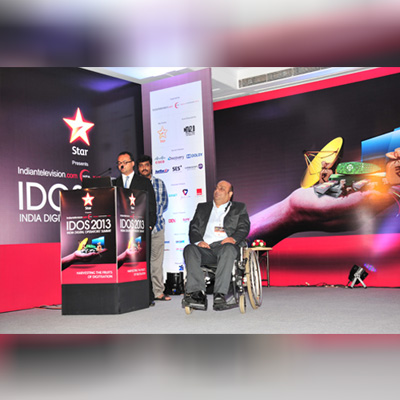
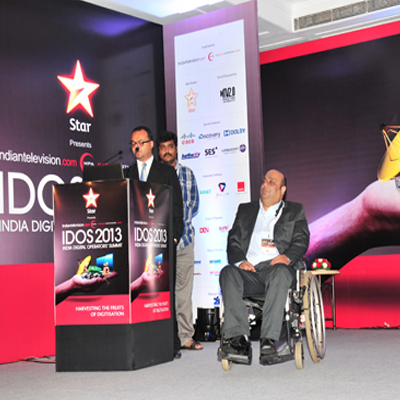
    GOA: The penultimate session of the Indian Digital Operators Summit (IDOS) 2015 was a panel discussion on ‘The Broadband Drive.’ 


    The session was moderated by Indiantelevsion.com founder, CEO and editor-in-chief Anil Wanvari and Media Partners Asia executive director and founder Vivek Couto. The other members of the panel were Maharashtra Cable Operators Foundation (MCOF) president Arvind Prabhoo, Hathway MD & CEO Jagdish Kumar, Ortel Communications Limited head of broadband Servises Jiji John, Lukup Media founder and CEO Kallol Borah and Broadcom India MD, head – business development, India and South-East Asia Rajiv Kapur.


    The session began with Jagdish Kumar saying that earlier, Hathway had positioned itself as a cable company that also offered internet, and now it had started positioning itself as one that offered both cable and broadband. Hathaway had doubled its turnover from broadband as compared to last year. However, the company had yet to firm up plans for OTT, said Kumar.


    Kumar was of the opinion that the government should take the eight per cent revenue share from data revenue of the cable industry only after higher internet penetration levels took place after two or three years. “This has to be looked upon as an infrastructure development,” he added.


    “Average revenue per user (ARPU) is not the driver for broadband to be taken up as a business by MSOs or LMOs. It is margins that actually matter. The reason why MSOs and LMOs have taken up broadband is because there was a requirement,” said John.


    In his view, access devices have multiplied over time and with that the consumer wanted to see videos on whatever device, whenever, and wherever. “While mobile internet is the only option when one travels, it is wired broadband that offers the proper stable throughput. Systems such as DOCSIS 3.0 offered a better experience than television did,” John added.


    For Ortel, broadband was an important stream and DOCSIS 3 was being tested in a limited way. Ortel garnered subscriber numbers in three digits during the pilot phase revealed John. “We have now started offering video free to broadband customers,” said John.


    The company is looking at charging a customer approximately Rs 1000 – 1200 for 10 mbps broadband and Rs 1999 for 50 mbps. “This will subsidise content charges to broadcasters for the free video offerings to subscribers,” he said.


    Similarly, Hathway was also considering bundling of HD content free along with broadband, according to Kumar.


    India has its own unique business and environmental challenges, which include unpredictable power and last mile cable laying amongst others. However, technology was available to serve India and/or China specific solutions, said Broadcom’s Kapur. “On the subscriber side, PC penetration is low and operators saw the STB only as a live video delivery necessary evil. Some operators would proactively drive broadband, while others would react only,” he said.


    Emphasising that if broadband was considered as a ‘use case’ as opposed to a pipe, Kapur said that services delivered to the consumer could be quite game changing. “Broadcom is very bullish about broadband in India. Broadband is the only answer for a cable operator to retain customers as well as raise ARPUs. Progressive minded cable operators will take advantage of the fact that networks could be two way and will establish a service that would retain a customer with a higher ARPU. The higher ARPU customers were in turn needed to subsidise the lower ARPU customers. Rather than government driven, a private sector sustainable business and profitability driven long term sustainable business model is required,” Kapur opined.


    The pipe is already in place said MCOF’s Prabhoo. “The question is about how one utilises it. There is enough fibre waiting to be exploited for Phase III of digitisation. MCOF is educating its members about the ways to monetise the pipe. On an experimental basis, MCOF tied up with a PSU, a national ISP that brought the pipe to a particular place, and from there, over the last 20 days, we have connected 25 branches of a nationalised bank with secured leased lines. This would be scaled up to about 125 over the next few days. Over the next three months, this would further be scaled up to 525 branches across the state of Maharashtra,” he informed.


    This would help build LMOs confidence that they could deal with a PSU explained Prabhoo.


    Also, some MCOF members had established WiFi service hotspots, which had initially offered high speed internet free of charge for the first six months, and now could be availed though a voucher at a small price of Rs 5 for three hours, or Rs 10 per day from small vendors such as a ‘paan shop.’ Prabhoo claimed that through the commissions on voucher sale alone, a paan shop owner’s earnings had gone up by Rs 8000 per month. 


    Bullish on the broadband sector in India, Prabhoo said that he envisioned a number of innovations coming into the business.


    Explaining his company’s product, Lukup Media’s Borah said that it offered on-demand multiscreen TV service and operates as an OTT platform through a multiscreen home gateway that brought internet delivered content to television and other consumer devices. In the coming months, Lukup also planned to bring linear broadcast TV channels and internet access though a single connection.


    Questioning as to why cable companies were not sharing infrastructure in the way telcos were, Wanvari of the opinion that cable companies could compete on products. Kumar agreed that there was merit in cable companies sharing infrastructure for a lot of backend processes and expected this to evolve naturally over a period of time. On the other hand, Prabhoo said that LMOs would be willing to upgrade their infrastructure to work with telcos for providing broadband.