Tag: MCMC

  • TRAI & Malaysian counterpart announce collaboration

    TRAI & Malaysian counterpart announce collaboration

    NEW DELHI: The Telecom Regulatory Authority of India (TRAI) and the Malaysian Communications and Multimedia Commission (MCMC) have agreed to exchange information and regulatory best practices in the fields of broadcasting and telecommunications, including new and emerging areas.

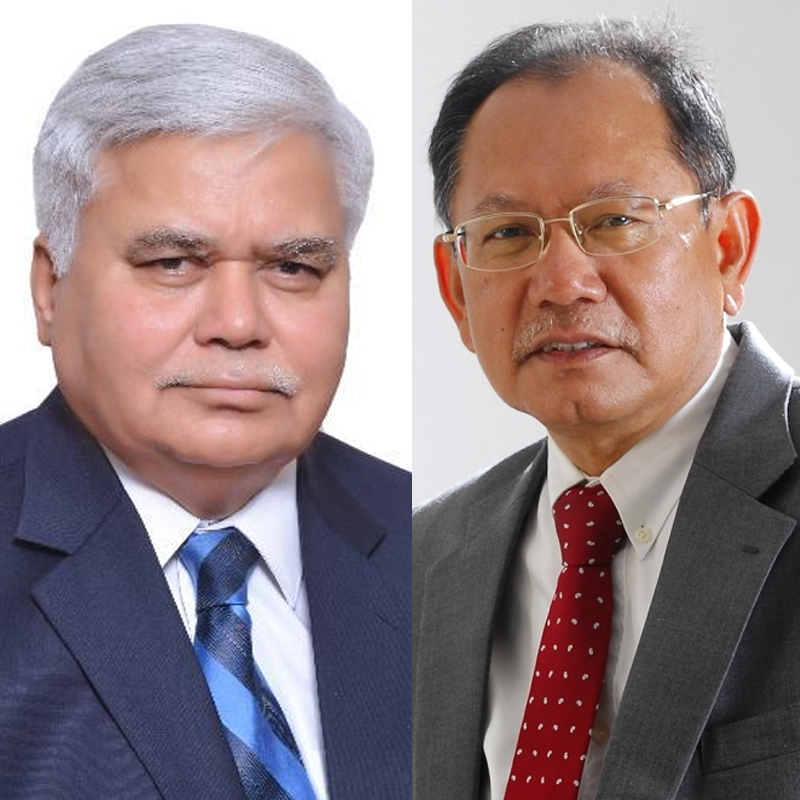
    A Letter of Intent (Lol) was signed by the TRAI chairman R S Sharma and MCMC chairman Halim Shafie in the presence of the Malaysian high commissioner to India Hidayat Abdul Hamid. This historic agreement would help both the regulators to work closely in enhancing mutual cooperation and bilateral relations.

    The signing of this agreement assumes significance for both India and Malaysia as both countries can learn from each other.

    The other activities planned under the agreement to promote international and technical cooperation between the two organizations are:

    Exchange, deployment and attachment of experts, including but not limited to during bilateral consultations;

    Jointly conducting capacity building exercises in the fields of broadcasting and telecommunications regulation;

    Collaboration in various international forums including but not limited to the Association of Southeast Asian Nations (ASEAN), Asia-Pacific Telecommunity (APT) and International Telecommunication Union (ITU); and

    Any other forms of cooperation that are mutually agreed upon by the Parties in the fields of broadcasting and telecommunications regulation.

  • Election Commission mandates poll-related behaviour of media before state polls

    Election Commission mandates poll-related behaviour of media before state polls

    NEW DELHI: With elections to five states on the anvil, the Election Commission has prohibited conduct of Exit polls and dissemination of their results in the hour fixed for commencement of polls in the first phase and half hour after the time fixed for close of poll for the last phase in all the States, as also stated in Section 126A of the Representation of Peoples Act 1951.


    The Commission has clarified that there have been violations in the past of Section 126 of the Act which prohibits displaying any election matter by means of television or similar apparatus, during the period of 48 hours ending with the hour fixed for conclusion of poll in a constituency. There are allegations sometimes during elections of violation of the provisions of the above Section 126 by TV channels in the telecast of their panel discussions/debates and other news and current affairs programmes.


    “Election matter” has been defined in that Section as any matter intended or calculated to influence or affect the result of an election. Violation of the aforesaid provisions of Section 126 is punishable with imprisonment upto a period of two years, or with fine or both.


    Elections in November and December are being held for Chhattisgarh, Madhya Pradesh, Mizoram, Rajasthan, and Delhi.


    A mechanism has been laid out with three-tier Media certification and Monitoring Committees (MCMC) at District, State and Election Commission level to deal with the menace of paid news, it said. Revised comprehensive instruction on ‘Paid News’ has been issued on 27 August 2012 and is available on the Commission’s Website. Necessary instructions have been issued to the CEOs of the poll going states to ensure briefing of political parties and Media in the districts about ‘Paid News’ and the mechanism to check ‘Paid News’. Representatives of Political Parties and Media Organizations of poll going states have also been briefed at Election Commission. The MCMCs of all states have been trained to do their job.


    The Commission has reiterated that the TV/Radio channels and cable networks should ensure that the contents of the programme telecast/broadcast/displayed by them during the period of 48 hours referred to in Section 126 do not contain any material, including views/appeals by panelists/participants that may be construed as promoting/prejudicing the prospect of any particular party or candidate(s) or influencing/affecting the result of the election.


    During the period not covered by Section 126 or Section 126A, concerned TV/Radio/Cable/FM channels are free to approach the state/district/local authorities for necessary permission for conducting any broadcast related events which must also conform to the provisions of the model code of conduct and the programme code laid down by the Information and Broadcasting Ministry under the Cable TV Networks (Regulation) Act 1995 with regard to decency, maintenance of communal harmony, etc.


    The Commission said they are also required to stay within the provisions of Commission’s guidelines dated 27th August, 2012 regarding paid news and related matters. Concerned Chief Electoral Officer/District Election Officer will take into account all relevant aspects including the law and order situation while extending such permission.


    It drew attention of the media to guidelines issued by Press Council of India to follow for observance during the election:


    (i) It will be the duty of the Press to give objective reports about elections and the candidates. The newspapers are not expected to indulge in unhealthy election campaigns, exaggerated reports about any candidate/party or incident during the elections. In practice, two or three closely contesting candidates attract all the media attention. While reporting on the actual campaign, a newspaper may not leave out any important point raised by a candidate and make an attack on his or her opponent.


    (ii) Election campaign along communal or caste lines is banned under the election rules. Hence, the Press should eschew reports, which tend to promote feelings of enmity or hatred between people on the ground of religion, race, caste, community or language.


    (iii) The Press should refrain from publishing false or critical statements in regard to the personal character and conduct of any candidate or in relation to the candidature or withdrawal of any candidate or his candidature, to prejudice the prospects of that candidate in the elections. The Press shall not publish unverified allegations against any candidate/party.


    (iv) The Press shall not accept any kind of inducement, financial or otherwise, to project a candidate/party. It shall not accept hospitality or other facilities offered to them by or on behalf of any candidate/party.


    (v) The Press is not expected to indulge in canvassing of a particular candidate/party. If it does, it shall allow the right of reply to the other candidate/party.


    (vi) The Press shall not accept/publish any advertisement at the cost of public exchequer regarding achievements of a party/government in power.
    (vii) The Press shall observe all the directions/orders/instructions of the Election Commission/Returning Officers or Chief Electoral Officer issued from time to time.

  • Guidelines to deal with paid news ahead of elections

    Guidelines to deal with paid news ahead of elections

    NEW DELHI: There is some amount of seriousness in tackling the issue of paid news. The Election Commission has issued guidelines to the Chief Electoral Officers of all the states and Union Territories to deal with candidates‘ advertisements on television channels owned by political parties or their functionaries and office bearers during elections. These will come into effect immediately.

    The latest guidelines have been issued to bring better uniformity in dealing with such instances even when no consideration of cash and kind is involved in extending campaign publicity to candidates.

    The guidelines say that six months before the due date of expiry of Lok Sabha or the State/UT Legislative Assembly, as the case may be, a list of television channels, radio channels and newspapers circulated in the State and Union Territory and their standard rate cards shall be obtained by the CEOs and forwarded to the Commission.

    The latest guidelines were issued on 16 August to put in place a mechanism to deal with the problems of ‘paid news‘. The Commission had earlier issued guidelines on 8 June 2010, 23 September 2010, and 18 March 2011 relating to this issue.

    The Commission said in a recent press note that it had been receiving various complaints and references regarding ‘paid news‘ and advertisements on TV channels owned by political parties or their functionaries during the process of elections, thus disturbing the level playing field, as these are not reflected in the candidate‘s election expenses account.

    The Media Certification and Monitoring Committee (MCMC) at district and state level will monitor all political advertisements in relation to candidates, either overt or covert, and will intimate the Returning Officer for issue of notices to candidates for inclusion of notional expenditure based on standard rate cards in their election expenses account, even if they actually do not pay any amount to the channel/newspaper. This will also include publicity by or on behalf of candidate by Star Campaigner (s) or others, to impact his electoral prospects. A copy of the notice will also be marked to Election Expenditure Observer.

    In case of bye-election to Parliamentary or Assembly constituency, the standard rate card will be obtained by the District Election Officer concerned immediately on announcement of the bye-election and MCMC will take due action immediately afterwards.

    Like in the case of paid news, the Chief Electoral Officer and District Election Officers will brief political parties and media houses about the above guidelines before the commencement of the
    election campaign.

    In case of any technical doubt relating to the application of the standard rate card, the matter would be referred to the Directorate of Advertising and Visual Publicity of the Information and Broadcasting Ministry for advice.

    The practice of paid news has to be seen as an attempt to circumvent the provisions of Sections 77 and 123 (6) of Representatives of the Peoples Act 1951 which prescribe accounting and ceiling of election expenses and make exceeding such prescribed limits a corrupt practice in elections.

    The Commission has directed that maximum vigilance may be observed by making use of the existing provisions of law so that the incidence of ‘paid news‘ or surrogate advertisements in print and electronic media in the context of elections is arrested.

    Legal provisions under Section 127A of the 1951 Act make it mandatory for the publisher of an election advertisement, pamphlet, etc., to print the name and address of the publisher as well as printer and failure to do so attracts penalty of imprisonment up to two years and/or fine of Rs 2000/-. Section 171 H of the IPC prohibits incurring of expenditure on, inter alia, advertisement without the authority of the contesting candidate.

    ‘Paid news‘ would also fall in the category of ‘other document‘ liable to be included in ‘election pamphlet and poster‘ and action taken accordingly. Hence, an obvious case of news reporting in the print media dedicated/ giving advantage to a particular candidate or the party while ignoring/ causing prejudice to other candidates and parties would require investigation.