Tag: McKinsey

  • ChyronHego appoints Neil Foster as COO and CFO

    ChyronHego appoints Neil Foster as COO and CFO

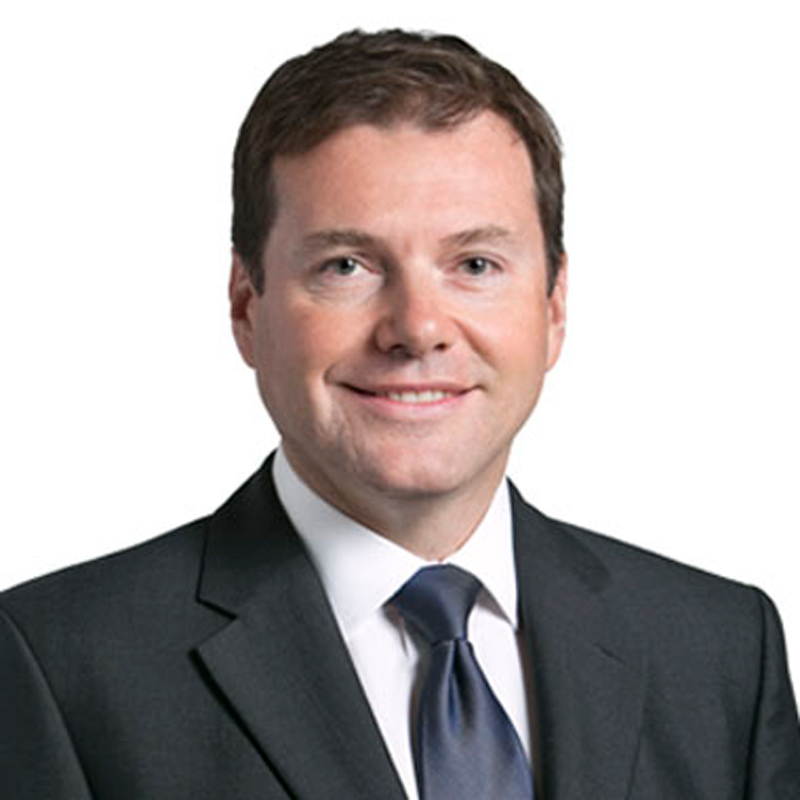
    MUMBAI: With an aim of continuing its global growth both organically and through acquisitions, ChyronHego’s has appointment Neil Foster as chief operating officer and chief financial officer. Foster will be based at the ChyronHego headquarters in Melville, New York reporting directly to the company’s president and CEO Johan Apel.

    “We’re very privileged to welcome Neil to our senior management team as we continue to deepen and scale our operations in support of our continued expansion in global markets,” said Apel. Adding further, “With his rich experience in executive-level management at high-profile, global enterprises, Neil will play a valued leadership role in our rapidly growing company.”

    Foster brings to ChyronHego more than 25 years of executive experience in various strategic, operational, financial, and corporate development roles at the nexus of media, technology, and entertainment.

    “I am thrilled to join ChyronHego and Johan’s team at this exciting time in the company’s evolution,” Foster added. “With innovative products and services that empower graphics and data for the broadcast and sports industries, ChyronHego is well-positioned as a leader in one of technology’s most attractive vertical markets for software applications. I’m looking forward to applying my strategic, operational, and financial expertise to help ChyronHego create value for shareholders.”

    Prior to joining ChyronHego, he served as executive vice president, operations, for Take-Two Interactive Software Inc. He has also held a number of roles in the recorded music business, including executive vice president, finance and operations, for the Columbia/Epic Label Group of Sony Music Entertainment, and co-president of Sony Music Entertainment Canada. Foster’s early career included positions at McKinsey & Company Inc. and PricewaterhouseCoopers.

  • ChyronHego appoints Neil Foster as COO and CFO

    ChyronHego appoints Neil Foster as COO and CFO

    MUMBAI: With an aim of continuing its global growth both organically and through acquisitions, ChyronHego’s has appointment Neil Foster as chief operating officer and chief financial officer. Foster will be based at the ChyronHego headquarters in Melville, New York reporting directly to the company’s president and CEO Johan Apel.

    “We’re very privileged to welcome Neil to our senior management team as we continue to deepen and scale our operations in support of our continued expansion in global markets,” said Apel. Adding further, “With his rich experience in executive-level management at high-profile, global enterprises, Neil will play a valued leadership role in our rapidly growing company.”

    Foster brings to ChyronHego more than 25 years of executive experience in various strategic, operational, financial, and corporate development roles at the nexus of media, technology, and entertainment.

    “I am thrilled to join ChyronHego and Johan’s team at this exciting time in the company’s evolution,” Foster added. “With innovative products and services that empower graphics and data for the broadcast and sports industries, ChyronHego is well-positioned as a leader in one of technology’s most attractive vertical markets for software applications. I’m looking forward to applying my strategic, operational, and financial expertise to help ChyronHego create value for shareholders.”

    Prior to joining ChyronHego, he served as executive vice president, operations, for Take-Two Interactive Software Inc. He has also held a number of roles in the recorded music business, including executive vice president, finance and operations, for the Columbia/Epic Label Group of Sony Music Entertainment, and co-president of Sony Music Entertainment Canada. Foster’s early career included positions at McKinsey & Company Inc. and PricewaterhouseCoopers.
  • Mihir Sharma joins Bloomberg as columnist

    Mihir Sharma joins Bloomberg as columnist

    MUMBAI: Mihir Swarup Sharma has joined Bloomberg News as a view columnist. He will be focusing on business and economy in India.

    Sharma brings over 18 years of deep journalistic experience and was trained as an economist and political scientist in New Delhi and Boston. Prior to joining Bloomberg, he was a columnist at The Indian Express and Business Standard, and was conferred the Sriram Sanlam award in recognition for his work in financial journalism.

    A member of the Harvard University Fellowship between 2000 and 2003, Sharma has contributed significantly as an economist to reputable universities including his alma mater Harvard University, Institute of International Economics and Massachusetts Institute of Technology.

    In 2015, Mihir published a book Restart: The Last Chance for the Indian Economy to considerable critical acclaim. It was awarded the Tata LitLive Best Business Book of the Year and was long listed for the Financial Times–McKinsey Business Book of the Year.

  • Mihir Sharma joins Bloomberg as columnist

    Mihir Sharma joins Bloomberg as columnist

    MUMBAI: Mihir Swarup Sharma has joined Bloomberg News as a view columnist. He will be focusing on business and economy in India.

    Sharma brings over 18 years of deep journalistic experience and was trained as an economist and political scientist in New Delhi and Boston. Prior to joining Bloomberg, he was a columnist at The Indian Express and Business Standard, and was conferred the Sriram Sanlam award in recognition for his work in financial journalism.

    A member of the Harvard University Fellowship between 2000 and 2003, Sharma has contributed significantly as an economist to reputable universities including his alma mater Harvard University, Institute of International Economics and Massachusetts Institute of Technology.

    In 2015, Mihir published a book Restart: The Last Chance for the Indian Economy to considerable critical acclaim. It was awarded the Tata LitLive Best Business Book of the Year and was long listed for the Financial Times–McKinsey Business Book of the Year.

  • Anand Mahindra is Forbes India Entrepreneur for the Year 2013

    Anand Mahindra is Forbes India Entrepreneur for the Year 2013

    MUMBAI: Forbes India has been a champion of entrepreneurial capitalism, in line with the Forbes DNA defined almost a century ago in the US.


    It shares the vision that over the next 10 years, India will have a never-before chance to create an entrepreneurial renaissance. It believes in the spirit of fair play. It believes that entrepreneurs need to follow the rules. And this is recognised through Forbes India Leadership Awards wherein outstanding leaders are appreciated every year.


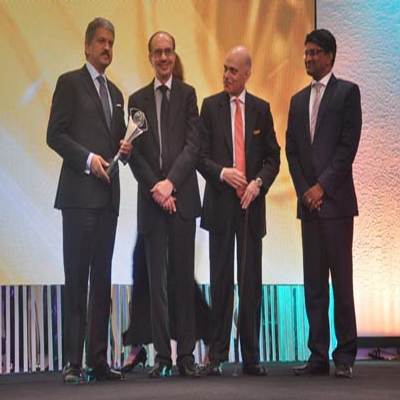
    This year, the entrepreneur of the year went to Mahindra & Mahindra chairman and managing director Anand Mahindra, who was chosen for the high honour for growing his group more than 10-fold in 10 years in several continents.


    The long-list of nominees for each category was prepared by June and was judged by jury headed by ICICI Bank non-executive chairman KV Kamath. McKinsey & Co India chairman Adil Zainulbhai, Blackstone Advisors India chairman Akhil Gupta, Indian School of Business Dean Ajit Rangnekar, AZB Partners senior partner Zia Modi, and founder and group editor of Network18 Raghav Bahl brought in years of experience to the jury.


    KPMG was the knowledge partners for the event, which helped with the number crunching essential for the process.


    The following are the Forbes India winners for 2013:


    1)Start Up for the Year


    Phanindra Sama  – redBus


    2)Nextgen Entrepreneur for the Year


    Tarang Jain – Varroc Engineering


    3)Entrepreneur with Social Impact


    Ranjan Sharma – IKSL


    4)Conscious Capitalist Company for the year


    HUL


    5)Best CEO – Multinational Company


    Francisco D’souza – Cognizant Technology Solutions Corp


    6)Best CEO – Public Sector


    Rakesh Tandon – IRCTC


    7)Best CEO – Private Sector


    Chanda Kochhar – ICICI Bank


    8)Woman Leader for the Year


    Chitra Ramkrishna – NSE


    9) Lifetime Achievement Award for the Year


    Brijmohan Lall Munjal – Hero MotoCorp


    10)Entrepreneur for the Year

    Anand Mahindra  – Mahindra & Mahindra
     

  • ‘India’s diversity makes distribution a big challenge’ : Brandscapes CMD Pranesh Misra

    ‘India’s diversity makes distribution a big challenge’ : Brandscapes CMD Pranesh Misra

    In a rapidly changing business environment where brands need to be constantly rejuvenated, it is not only important to analyse but also interpret data from a marketing agenda perspective.


    The most significant change that has happened in India is the growth of the services over the consumer products sector. Mobile is also emerging as a strong personal medium, which marketers and advertisers have not fully exploited yet.


    In an interview with Indiantelevision.com’s Ashwin Pinto, Brandscapes Worldwide chairman & managing director Pranesh Misra talks about how there is need for a marketing data centric company to build profitable growth strategies.


    Excerpts:

    When you started Brandscapes Worldwide in 2008, what was the aim?
    The vision was to be a marketing data centric company. Our difference would be to not only analyse but also interpret data from a marketing agenda perspective.

    What progress has been made so far?
    We have got success with global clients. We work with clients across different markets like Carlsberg, Citibank and Coca-Cola. They employ us in different geographies across the world. We work with their issues in over 40 markets and we do projects there. In India, we get clients who are not only interested in the analytics part of it but also want us to advise in the marketing and brand strategy.

    How are you addressing this need?
    We have announced five different practices that we will focus our attention on. These are market research, data mining, marketing science, involving advanced statistics modelling to project the future. The fourth practice is dashboards which is putting all the information together in an easy-to-digest manner. The fifth strategy is the strategy planning dimension.

    What are the challenges that you face?
    The primary challenge is that when you start with data analytics, there is not enough good quality data available. In international markets it is easily available as people have invested a lot of money behind it. We have worked with clients in the SME sector here who have not done any research. This is where we felt that doing customised research for these clients would be useful. We set up our own discipline in the area of research.


    The second challenge is finding the right caliber of people. This is a people driven business. It is about understand marketing and how data can be applied to it. I have been able to put together a solid team of 10 leadership team members. Each member has 20-30 years of experience in fields like research, marketing, media strategy, sales and distribution. It is this eclectic mix of talent that I have gotten together. These are the leaders who recruit the next generation of talent and create an organisation.

    What is the advantage you offer to clients vis-a-vis competitive services?
    We are trying to create a new area. I don’t think that marketing consulting is being offered the way that we offer it. Many companies offer brand consulting which is more into the brand strategy area. Then there are large companies like McKinsey and PriceWaterHouse Coopers who are management consultants and who also do marketing consulting. Our focus is on marketing and we have people with experience in this domain. We have holistic knowledge of all areas and so play in market research, data mining.


    We are trying to carve out a niche for ourselves between the bigger consulting houses and narrow focussed marketing consulting players. We give holistic solutions around marketing problems. We are not general consultants nor are we very specific. We are not just analytics focussed or market research focussed.

    “The biggest mistake that has riddled many big companies is that their
    thinking moves slower than the consumers”

    Could you give me some examples where clients have benefited?
    As a consultant I cannot give specific examples; I can give broad ideas. There was a global FMCG client looking at a particular category. They wanted to do 20/20 planning on this category. This involved looking at 60 countries, collecting data of different natures like demographics, category penetration, competitive strength and weakness data and category development index data. Then we created a model around which data could be simplified and synthesised. On this basis we created clusters of countries. Then we did deep dive analysis in these clusters to see a common link. This was a macro level solution.


    On a micro level there was an FMCG whose brand was not doing well. We got access to retail data. We had to find an insight to take the brand further. One big pack size was not doing well while the others were growing. This size accounted for 25 -30 per cent of sales and was declining. This was the first clue and we dug deeper. Competition was coming with a slightly smaller pack size at a much cheaper price while this company had pushed the price up. We did price sensitivity testing which led to the right price point being found.


    A Marketing Dashboard was developed for a shopping mall. This helps it keep track of Key Performance Indicators relating to its tenants – and take strategic and tactical action on an ongoing basis. Strategy Maps were used to guide a global NGO on how to change its branding approach for better success in some countries.

    How have you grown over the past couple of years?
    We started with 15 people. Now we have around 85 people. We have grown at an average of 45 per cent in terms of revenues. The client roster has grown from three cornerstone clients to around 12.

    Which sector is the most challenging to deal with?
    No sector is particularly more challenging than another. It comes down to your domain knowledge. Since we have domain knowledge on consumer goods and services, banking and financial, retail and in healthcare, we are focusing in these segments. We have knowledge there. If you tell us to look at an industrial sector, it would be a challenge,. We don’t understand the topography of that sector.

    What mistakes do companies make when they go about their marketing?
    The biggest mistake I would say that has riddled many big companies is that their thinking moves slower than the consumers. Consumers move ahead very fast in terms of their attitudes. Companies sometimes focus on the unchanging consumer and lose ground. You fail to move with the consumer in this scenario. Information availability is so much that consumers accept new information very quickly. This is a big challenge.

    What other obstacles do companies face?
    In a country like India, sales and distribution is a challenge, especially for new companies. How do you reach out to big markets? When multinationals come in, the challenge is about pricing. They believe that the same prices that are in the developed markets should work here. They get a shock when nobody picks up their product. This is a pitfall that you have to work around.

    Which categories will spend the most on advertising and marketing this year?
    It would be the service sector. Telecom will be one of the biggest drivers in terms of mobile telephony, followed by consumer durables and financial products.


    During the downturn did the spends of clients on research get affected?
    We didn’t feel the pinch as we are still a young organisation. But I know that a downturn does not mean that research spending will fall. In fact research happens more as people want to be more careful about spending more ad money and marketing money. Research takes place more in downturns.

    How is India different as a market from other countries?
    In India, distribution is a big challenge. There is a lot of diversity compared to a country like the UK which is fairly homogeneous. It is not about where do you enter in India but about how do you get going. India’s complexity is a challenge in terms of distribution, pricing, target segmentation. You have to be careful in terms of deciding which markets do you go to and which audience do you address.

    You have a JV with Design Bridge. How has this worked for you?
    It has worked out well. We have worked for several clients together. They bring the actual design part of it. We don’t have any creative resource here. So what we do is the first part that is strategy planning. Then you have to create a look and feel, logo design for a product. They do that creative part of it.


    In the healthcare category we have a JV with Healthy Marketing Team. They are focussed on helping clients quickly zoom into the brand positioning strategy in the healthcare segment. We partnered with them, have trained our people on their system and have brought that to
    our clients here.

    What marketing strategies work well for alcohol companies in India, given that direct advertising on television and print is not allowed?
    Associating with a sporting event like Golf works. Spirit brands want to have a lifestyle association; they want to project a certain lifestyle and be in a premium space. Alcohol companies also take space in retail outlets. Besides, a lot of attention is spent on packaging of the product, which works towards effective brand building.
    In the financial and insurance sector a lot of companies follow a guilty tag to get parents to buy products. Is that a wrong way to go about selling products like insurance?
    It depends on the situation. Too much of guilt can be counter productive. In some situations, guilt might work. But from my perspective, a positive outlook is better than guilt. Consumers after a while do not want to receive too many negative messages.
    Which marketing avenue is most effective in terms of ROI – print, television, radio, online?
    It differs from category to category and brand to brand. This is what our marketing modeling mix practice estimates. We are able to pinpoint for a market which element gives higher ROIs.
    Is new media becoming more important?
    Yes! It is credible as a medium as people share their opinions and experiences here. It is becoming a credible source of information. A lot of companies, especially international, go to new media first to get answers about consumers.

    But are companies tapping into this medium properly in India?
    It is still a new medium here. Some companies are doing it well while others are experimenting. Mobile is about SMS at the moment. I think that as rich media comes in through 3G, marketers will use it a lot more.


    As far as online is oncerned, Indian consumers are already using that medium in categories like hotels and airlines. They want to find out what others feel about a particular brand. This is an area where a dramatic change will happen in the next three to four years. Companies have to understand that the Internet will play a critical step in the decision making process. Companies will need to have a larger presence online.


    They can be a part of the online conversation, at least in terms of keeping track of what consumers are saying, and then take corrective action if there is negative feedback. They can also find out what consumers feel works for the brand and why they choose it over competition.

    When you look at the marketing and advertising scenario what are the two biggest changes that have happened over the past five years?
    The growth of the services over the consumer products sector is a big change that has happened in India. Also, the emergence of mobile as a personal medium is a change. This has not been totally exploited by marketers and advertisers, but I think that this is a life changer today. Younger consumers have evolved.