Tag: McKinsey

  • When AI Gets Real Mphasis adds meaning to machine intelligence

    When AI Gets Real Mphasis adds meaning to machine intelligence

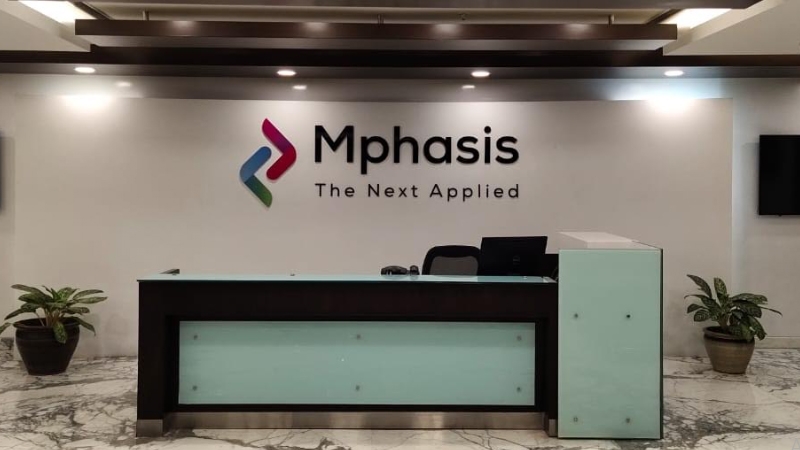
    MUMBAI: Artificial Intelligence may be the buzzword of the decade but Mphasis wants to remind the world that without intelligence, it’s just artificial. With its new global campaign, AI Without Intelligence Is Artificial, the Bengaluru-headquartered technology firm is calling out the hype and bringing focus back to context-driven, human-centred innovation.

    The campaign, which marks the global launch of Mphasis NeoIP, redefines what it means to make AI “real” for business. NeoIP is a next-generation platform that combines enterprise knowledge, contextual data, and automation into a continuous, intelligent process helping companies evolve instead of endlessly reinventing themselves.

    The global AI industry may be booming McKinsey estimates that generative AI could add up to 4.4 trillion dollars in annual global productivity yet many companies are still struggling to translate that promise into profit. “In a market flooded with AI-centric solutions, Mphasis asks a critical question, what happens when intelligence is missing from AI?” said Mphasis global chief marketing officer and head of hyperscalers & strategic partnerships Veda Iyer. “True AI must evolve with business needs. AI without context is simply not enough.”

    At the heart of the new campaign is a challenge to stop viewing AI as a shiny new tool and start treating it as a thinking partner. NeoIP does just that, fusing Mphasis’ proprietary solutions with third-party technologies and client systems to create an AI ecosystem that is intelligent by design, secure by default, and scalable by nature. The approach reduces the constant reinvestment typical of traditional digital transformation efforts.

    Set to roll out across digital, social, and experiential platforms, the campaign targets decision-makers across banking, healthcare, insurance, and hi-tech industries. The tone is provocative yet purposeful showing how contextual intelligence, not just code, drives measurable transformation.

    Iyer explained that Mphasis’ approach is rooted in intelligent engineering, where AI doesn’t just automate, it adapts, optimises, and learns. “Our goal is to help businesses build AI systems that think ahead systems that are not static, but evolve continuously to drive long-term success,” she added.

    Through NeoIP, Mphasis is already working with leading financial institutions to modernise infrastructure, enhance security, and future-proof operations. The results echo the core philosophy behind the campaign that AI must be intelligent by design to create real, lasting impact.

    As the world races to embrace automation, Mphasis’ message lands with timely precision: intelligence is the soul of AI without it, all that’s left is an empty buzz.

  • YouTube India taps Gunjan Soni to drive next phase of growth

    YouTube India taps Gunjan Soni to drive next phase of growth

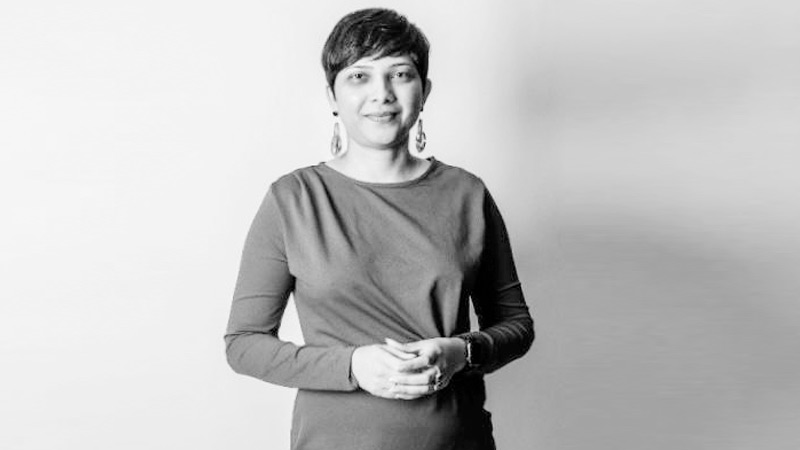
    MUMBAI: YouTube has picked a heavyweight to steer its India ambitions. Gunjan Soni, the former Zalora chief executive and Myntra marketing whiz, has been named country managing director, YouTube India — in a move that underlines the platform’s laser focus on India’s booming creator economy.

    Announcing the appointment, YouTube Asia Pacific vice-president and managing director Gautam Anand  hailed India as one of YouTube’s “most vibrant and crucial markets”, adding that Soni’s arrival signals an even stronger commitment to creators, users, and India’s digital future.

    With over two decades of leadership experience across e-commerce, tech, consulting, and media, Soni brings heavyweight credentials. Her CV reads like a greatest hits album: she led the turnaround of Jabong under Myntra, turbocharged Zalora’s regional expansion in southeast Asia, helped launch Hotstar at Star India, and pioneered data-led marketing at McKinsey.

    Fortune 40 under 40 honouree and board member at CBRE group, Soni is no stranger to building brands at scale — nor to nurturing ecosystems where creativity and commerce collide.

    Now based in Mumbai, Soni’s new playbook for YouTube India is packed with ambition: strengthening the creator economy, expanding shopping and video commerce, growing shorts and connected TV, and deepening user engagement across generations. In her own words, the goal is to “unlock intuitive, innovative formats” that empower Indian storytellers — from school kids shooting shorts to grandparents binge-watching devotional channels.

    “As a family of enthusiastic YouTube users ourselves — from my seven-year-old nephew to my 70-something mother — I’m truly excited to lead a platform that touches lives across generations,” said Soni in a spirited note to the community.

  • Nazara Technologies COO Sudhir Kamath cashes out chips after impressive run

    Nazara Technologies COO Sudhir Kamath cashes out chips after impressive run

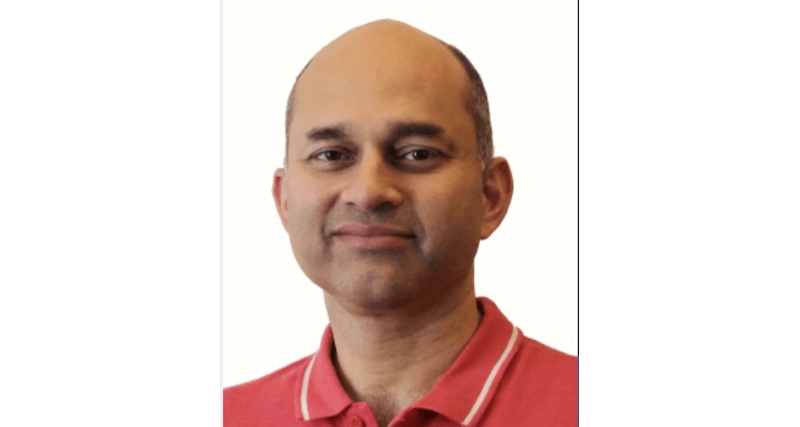
    MUMBAI:  In a departure,  that’s sent ripples through India’s gaming industry, Nazara Technologies’ chief operating officer Sudhir Kamath is folding his hand after a two-and-a-half year winning streak.

    The gaming and sports media powerhouse confirmed yesterday that Kamath will step down from his post on 1 April, with the veteran executive citing family reasons for his departure from the Mumbai-based firm’s C-suite. It made this declaration through a regulatory filing with the Bombay stock exchange. 

    “Kamath is exchanging his corporate royal flush for a full house back home,” quipped one industry insider, referencing the executive’s previous life as co-founder and CEO of online poker platform 9stacks, where he dealt cards for over five years before Nazara poached him in October 2022.

    His decision to relocate to his native city marks the end of a diverse career that has seen him play across multiple tables – from McKinsey’s consulting halls and Nigerian oil fields to the competitive word tiles of the Scrabble Association of India, where he spelled out success as president from 2020 to 2022.

    During his tenure at Nazara, Kamath helped the company level up its operational strategy while navigating the increasingly competitive gaming landscape. industry analysts suggest his departure comes at a pivotal moment as India’s gaming sector faces regulatory challenges and fierce competition from international players.

    While Nazara’s managing director Nitish Mittersain and board  has yet to name a successor, the company’s shares remained stable following the announcement, suggesting investors aren’t throwing in their cards just yet. The firm continues to expand its portfolio across esports, gamified learning and mobile gaming.

    For Kamath, who once turned an amazing return as an early investor in fruit exporter INI Farms, this latest move appears less about game over and more about selecting a new avatar closer to home.

  • Uday Shankar & what’s driving the Star-Disney-Viacom18 merger

    Uday Shankar & what’s driving the Star-Disney-Viacom18 merger

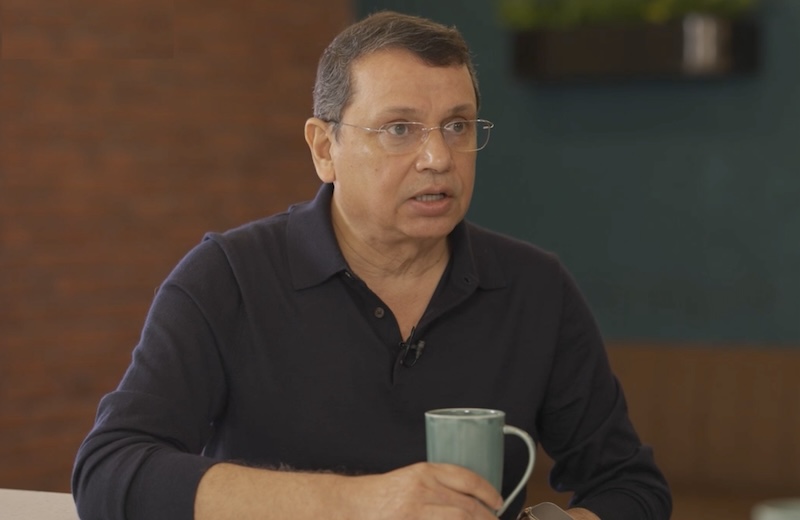
    MUMBAI: Uday Shankar has been lying low for quite a while, avoiding mixing and sharing his wisdom with journalists – a breed from which he emerged  – as he goes about reshaping a new media and entertainment powerhouse coming out of the merger of Disney Star with Reliance Industries’ Viacom18. 

    But the incoming vice-chair took some time out to speak to McKinsey.com. Speaking to the consulting firm’s insights section online, Uday, highlighted what drove the merger.

    “..India is one of the few markets where television still has reasonably good health, within that, a lot of it is changing. Connected TVs and handheld devices have become very substantial and mainstream,” he said. “You’re competing with global players: Google and Meta. Most of digital-advertising revenue goes to these two companies. So you need to pivot; you need to create a business. We saw an opportunity to leverage our inherent strengths and make that strategic pivot. That’s the primary rationale for the merger.”

    He added that the streaming business also requires innovation and disruption with AVoD and SVoD models having limited revenue potential in India. 

    “While there are a lot of people today who are willing to pay for content and who are interesting or important to advertisers, there are also a lot of people who are not relevant for either of these models,” explained Uday. “You need to create unique or native monetisation models to create value from that base. Whoever manages to create new revenue streams definitely has an advantage. So I think all these opportunities exist.”

    Uday then went on to say he’s learnt from every leader he has worked with, from Rupert, James, Lachlan and Mukesh Ambani who he currently continues to work closely with. 

    “The first thing is they’re all very clear about why they’re doing what they’re doing—and that clarity is very helpful,” he elucidated “They all play to win. And they all have a high threshold for failure. They’re patient, and they’re not willing to give up. And then, they all work on trust. They all take their bets on people. And once they trust people, they’re willing to back them up. And I learned that myself. I take my bets on people; I trust them once they earn my trust. And I back them up.”

    To read the full interview logon to 
    https://www.mckinsey.com/industries/technology-media-and-telecommunications/our-insights/uday-shankar-on-indias-media-and-entertainment-evolution#/

    Picture courtesy: McKinsey.com’s video interview with Uday Shankar
     

  • Melanie Zimmermann joins Criteo to lead its global retail media practice

    Melanie Zimmermann joins Criteo to lead its global retail media practice

    Mumbai: Criteo (NASDAQ: CRTO), the commerce media company, has announced the appointment of Melanie Zimmermann to lead its global retail media practice. As general manager, global retail media, she will be responsible for further building and scaling Criteo’s retail media business and developing its sales strategy worldwide to better support evolving client needs and solidify Criteo’s leading position in commerce media.

    Zimmermann comes to Criteo from Macy’s, where she successfully built Macy’s Media Network, the company’s retail media network that reaches more than 46 million customers across Macy’s and Bloomingdale’s and influences more than 440 million transactions online and in-store. In her most recent role as VP, Head of Macy’s Media Network, she was responsible for developing and executing strategy and leading all retail media operations from media planning, sales, campaign management and analytics.

    At Criteo, Zimmermann will report to chief revenue officer Brian Gleason and her team will be in charge of driving the global vision and strategy of Criteo’s retail media practice and forging alignment across regions. She will also play a pivotal role in retail media product strategy and prioritization, closely connecting commercial needs and product development.

    Zimmermann’s hire comes on the heels of Stephen Howard-Sarin’s appointment as managing director of Retail Media in the Americas in December 2023. Most recently at Instacart as VP and general manager of Retail Media, Howard-Sarin brings to Criteo over a dozen years of retail media experience with leadership positions at eBay Ads and Walmart Connect. His focus is on building and growing Criteo’s retail media footprint with advertisers and retailers in the Americas and reports to Americas executive managing director Sherry Smith.

    “As we continue to evolve alongside the industry, we’re excited to expand our deep bench of retail media talent with the addition of two key industry leaders. Melanie has an impressive track record of building and scaling a high-performing retail media network. Her experience at Macy’s kept her at the forefront of innovation and will be a key asset as we help unify an ecosystem that’s poised for a new stage of growth,” said Criteo CRO Brian Gleason. “In addition, I am confident that Stephen’s diversified experience leading retail media teams for the last decade will help grow our footprint and continue to transform the business in the Americas.”

    According to McKinsey, commerce media could generate over $1.3 trillion of enterprise value in the U.S. alone, positioning it to transform the world of digital advertising in a manner not seen since the rise of programmatic. Retail media as a subcomponent of that category is expected to generate $100 billion in ad spending by 2026.

    “With its massive global retailer footprint and thousands of brand advertiser partners, Criteo is not only a pioneer in retail media, but it’s also constantly evolving its unique position by tapping into strategic growth areas and building solutions to create an ecosystem that drives the most value for retailers, brands, and agencies,” said Zimmermann. “I’m excited to join the company as it continues to develop solutions for its clients’ specific needs and help them reach their full potential with retail media.”

    Zimmermann started her career in consulting with Bain & Company in Europe before joining Macy’s in 2013, where she held different leadership positions including corporate strategy over the last 10 years. With both hires, Criteo expands its roster of executives with deep industry expertise to further shape the future of commerce media.

  • Guest Column: How multi-channel marketing strategy works post pandemic

    Guest Column: How multi-channel marketing strategy works post pandemic

    MUMBAI : With Covid-19 behind us and all restrictions easing up, it is hardly surprising that things are returning to pre-pandemic levels. It is critical to recognise that businesses and organisations are prepared for such huge changes since, as we all know, we are not returning to the way we used to run our operations. Now that the market has opened up, there is enormous potential for marketers from all sectors to capitalise on these changing trends; organisations never expected to adjust into hybrid working so rapidly. According to McKinsey, firms have accelerated and been digitised in the last two years. It was expected to take it upto 2025, but they hastened it up by three years.

    The pandemic has already demonstrated the necessity of multichannel marketing, which multi-channel marketers were aware of. It has considerably increased the use of digital channels. What makes multichannel marketing so crucial in today’s market is using diverse marketing techniques and platforms to contact and engage with a wide range of customers in a number of ways. The primary goal of multichannel marketing is to guarantee that the message reaches the target audience regardless of whatever devices they use.

    The following are some strategies to consider while developing multichannel marketing strategies:

    1. Leverage Data

    Information is one of the most powerful tools accessible to marketers. Multichannel marketing generates a vast quantity of consumer data cache. Even if a message does not convert or produce an average or mediocre outcome, it nevertheless generates data. This never-ending cycle of developing and enhancing messages and content is the foundation of true multichannel marketing. Previous data and analytics may also be used to get information about what customers want at each touchpoint. Analyze the data and detect trends in your multichannel marketing initiatives to help you target customers more effectively.

    2. Hybrid channel to elevate campaign

    The most difficult problem for any multichannel marketing plan is determining the best mix for a campaign, and strategies to begin with research. Identifying the channels to produce the best outcomes in terms of client involvement. Few channels risk oversaturation and missing out on a greater number of prospective consumers, while many channels exhaust resources and create a gap in the customer experience. Multichannel marketing must be utilised to generate important and beneficial consumer experiences at every connection, rather than simply having a balanced number of channels.

    3. Real connection with clients

    The Covid-19 pandemic has caused a significant change in remote work for organisations all around the world. Working remotely has many benefits, but it has also increased isolation and digital weariness, resulting in digital overload. Savvy marketers have long recognised the significance of building genuine connections with their consumers, which means breaking through the digital clutter and reintroducing the customer to the actual world. Tangible and observable objects provide a sensory experience that digital interactions cannot provide.

    The only constant is change, and as a marketer, you should be aware of it and be prepared to adapt to new difficulties and modify on the run. Multichannel marketing is critical for every marketer aiming to connect customers in a significant way. An effective multichannel marketing strategy necessitates a focus on how channels should perform independently. The goal is to convert targeted audiences into customers through improved interactions; interacting with consumers across numerous channels at various touch points means more opportunities to engage and convert consumers into customers.

    The author is Arun Fernandes, Founder-CEO, Hotstuff Medialabs

  • McKinsey examines COVID-19 disruptions in business

    McKinsey examines COVID-19 disruptions in business

    Mumbai: McKinsey has published an updated research ‘COVID-19: Implications for business’ examining when the pandemic might end and attempted to estimate when some pandemic-related disruptions could return to normalcy. The study details McKinsey’s latest perspectives on the coronavirus outbreak, the twin threats to lives and livelihoods, and how organisations can prepare for the next normal.

    Some parts of the world felt a surge of optimism in the spring, as vaccination rates were climbing and COVID-19 cases dropping. Those regions now face the disappointment of a reversal, thanks to the spread of the Delta variant. Such whiplash is starting to feel like a way of life for people everywhere, as well as for industries including shipping, retail, and healthcare.

    Among high-income countries, cases caused by the Delta variant reversed the transition toward normalcy first in the United Kingdom, during June and July of 2021, and subsequently in the United States and elsewhere. McKinsey’s analysis supports the view of others that the Delta variant has effectively moved overall herd immunity out of reach in most countries for the time being. The United Kingdom’s experience nevertheless suggests that once a country has weathered a wave of Delta-driven cases, it may be able to resume the transition toward normalcy. Beyond that, a more realistic epidemiological endpoint might arrive not when herd immunity is achieved but when COVID-19 can be managed as an endemic disease. The biggest overall risk would likely then be the emergence of a significant new variant.

    The research finds that while many of consumers’ pandemic-inspired digital habits are sticking, the acceleration into digital channels now seems to be levelling off in both Europe and the United States. Companies can build on their digital surge by creating strategies based on long-term value, investing aggressively in tech talent, and being smarter about how they work with data.

    US consumer spending recovered in the second quarter of 2021, driven by increasing vaccination rates, stimulus payments in March 2021, and the general reopening of the economy. Consumers’ pent-up demand and willingness to spend in some discretionary categories caused spending to grow at 20 to 30 per cent year over year, reaching four to seven per cent above pre-COVID-19 levels.

    One of the most economically pervasive pandemic effects is a boom in shipping costs. In a video explaining why container shipping prices have surged, McKinsey partners say that sending a container from Asia to Europe or North America cost roughly $2,000 before the pandemic and $12,000 or more today. Though demand should remain high in the coming months as retailers prepare for the holiday season, prices should begin to come down by the end of the year.

    McKinsey’s July survey of 100 large private-sector US hospitals revealed that amid returning patient volumes and continuing COVID-19 hospitalisations, challenges in clinical-support staffing remain high. 84 per cent of survey respondents report trouble with turnover and vacancies in their nursing staffs. This may only be the start of greater challenges, as 22 per cent of the nursing workforce reported in our Spring 2021 Future of Work in Nursing Survey that they may leave their roles providing direct patient care in the next year.

    Some of this week’s other key findings from the sector research:

    ·         The COVID-19 pandemic has triggered an acceleration of digital-payment adoption in the Middle East, as it has in other regions. Payments players with the right strategies can capitalise on this revolution in a region that is traditionally heavily dependent on cash.

    ·         Amid increased consolidation, digitisation, and specialisation in the insurance industry, private equity is investing in specialty-insurance carriers and brokers and benefiting from the long-term capital insurance companies provide.

    ·         Between September and November of 2020 alone, 178,000 women in the United Kingdom lost their jobs. In an interview with McKinsey, Smart Works CEO Kate Stephens said that the UK charity, which provides support to women who are job hunting, saw a corresponding 21 percent rise in the number of women seeking its services, many of which are now offered remotely.

  • Gutenberg launches Singapore office

    Gutenberg launches Singapore office

    MUMBAI: Integrated digital marketing communications firm Gutenberg will launch its ninth office in Singapore, which will be strategically important for expanding into the Association of Southeast Asian (ASEAN) market.

    Gutenberg founder and CEO Harjiv Singh says, “I am excited to launch our Singapore office. Singapore is truly a global digital hub with fantastic infrastructure and opportunities for expansion into ASEAN. We are also delighted to announce a new client Smarten Spaces, a Singapore-headquartered company focused on Artificial Intelligence-based smart communities and smart city solutions”.

    Adding his reasons for the expansion, he says, “McKinsey, in a recent report, called the 10 member states of ASEAN an economic powerhouse. ASEAN’s 600 million people comprise one of the largest trading blocks in the world, and the rapid growth of its digital market will be an exciting business opportunity for us”.

    Speaking on behalf of Gutenberg’s new client, Smarten Spaces, an artificial intelligence (AI) platform that helps real estate companies and enterprises globally digitise spaces and experiences that enhance performance and productivity, Smarten Spaces founder and CEO Dinesh Malkani expressed his delight at Gutenberg’s expansion to the ASEAN market. He mentions, “Smarten Spaces partnered with Gutenberg as we were looking for a global integrated marketing communications firm that brought industry expertise around AI, a strong global footprint and marketing experts who understand how to build our brand”.

    With 70 per cent of the population under the age of 40, ASEAN’s GDP is expected to have rapid growth in the coming decade from its current US$ 2.3 trillion. Economic growth will be accompanied by strong growth in the digital sector. The digital market in ASEAN is estimated to grow to more than US$ 200 billion by 2025.

    With the launch of its new office, Gutenberg brings its global branding initiative, “Global Storytelling Series” to Singapore. There will be a panel discussion with CEOs on “Leadership and Storytelling in a Digital World”

  • Iyengar quits Disney, leads digital at Albertsons

    Iyengar quits Disney, leads digital at Albertsons

    MUMBAI: The Walt Disney Company vice-president Narayan Iyengar quit this month, and joined Albertsons Companies as the SVP, digital marketing and e-commerce. Iyengar was the Disney VP (eCommerce and digital travel trade) from May 2015 to January 2017. Earlier, between September 2013 and May 2015, he was Disney’s VP — eCommerce & Digital Analytics.

    Albertsons announced that Iyengar has been selected as the senior vice-president, digital marketing and e-commerce. In this role, Iyengar will be responsible for leading all aspects of digital marketing including loyalty programs, shopper marketing and the overall digital presence, as well as the e-commerce business, including home delivery.

    “As a company, we’ve made significant investments in the customer experience over the last two years, from new technology that originated in our Culinary Kitchens and Technical Center to our comprehensive data and analytics platforms,” said Chief Marketing & Merchandising Officer Shane Sampson. “E-Commerce, digital and social media channels hold unlimited potential for delivering the kind of personalized service our customers want. Narayan’s expertise will enable us to deploy new service and marketing models to attract more shoppers and grow our business both in stores and online.”

    Iyengar’s career spans nearly 20 years in e-commerce, digital and business transformation. He joins Albertsons from the Disney, where, as the VP, he built, enhanced and optimized e-commerce capabilities across an eco-system spanning 20 websites and apps. Iyengar has an MBA in management from Columbia Business School in New York, where he was on the Dean’s list, and an Engineering degree in Electronics & Communication from University of Mysore, India.

    Prior to this, Iyengar was a leader in McKinsey’s Digital and Business Technology group where he focused on helping global firms drive business value using technology. He started his career as a software engineer with IBM Global Services in 1996, as a part of the e-commerce team, and subsequently held several technology delivery and leadership roles in different firms.

    Iyengar said, “I look forward to working with Shane and the Albertsons leadership team across all 14 divisions to enable and enhance their core business by using digital tools across more product lines to personalize the shopping experience for customers.”

  • Iyengar quits Disney, leads digital at Albertsons

    Iyengar quits Disney, leads digital at Albertsons

    MUMBAI: The Walt Disney Company vice-president Narayan Iyengar quit this month, and joined Albertsons Companies as the SVP, digital marketing and e-commerce. Iyengar was the Disney VP (eCommerce and digital travel trade) from May 2015 to January 2017. Earlier, between September 2013 and May 2015, he was Disney’s VP — eCommerce & Digital Analytics.

    Albertsons announced that Iyengar has been selected as the senior vice-president, digital marketing and e-commerce. In this role, Iyengar will be responsible for leading all aspects of digital marketing including loyalty programs, shopper marketing and the overall digital presence, as well as the e-commerce business, including home delivery.

    “As a company, we’ve made significant investments in the customer experience over the last two years, from new technology that originated in our Culinary Kitchens and Technical Center to our comprehensive data and analytics platforms,” said Chief Marketing & Merchandising Officer Shane Sampson. “E-Commerce, digital and social media channels hold unlimited potential for delivering the kind of personalized service our customers want. Narayan’s expertise will enable us to deploy new service and marketing models to attract more shoppers and grow our business both in stores and online.”

    Iyengar’s career spans nearly 20 years in e-commerce, digital and business transformation. He joins Albertsons from the Disney, where, as the VP, he built, enhanced and optimized e-commerce capabilities across an eco-system spanning 20 websites and apps. Iyengar has an MBA in management from Columbia Business School in New York, where he was on the Dean’s list, and an Engineering degree in Electronics & Communication from University of Mysore, India.

    Prior to this, Iyengar was a leader in McKinsey’s Digital and Business Technology group where he focused on helping global firms drive business value using technology. He started his career as a software engineer with IBM Global Services in 1996, as a part of the e-commerce team, and subsequently held several technology delivery and leadership roles in different firms.

    Iyengar said, “I look forward to working with Shane and the Albertsons leadership team across all 14 divisions to enable and enhance their core business by using digital tools across more product lines to personalize the shopping experience for customers.”