Tag: McDonald’s

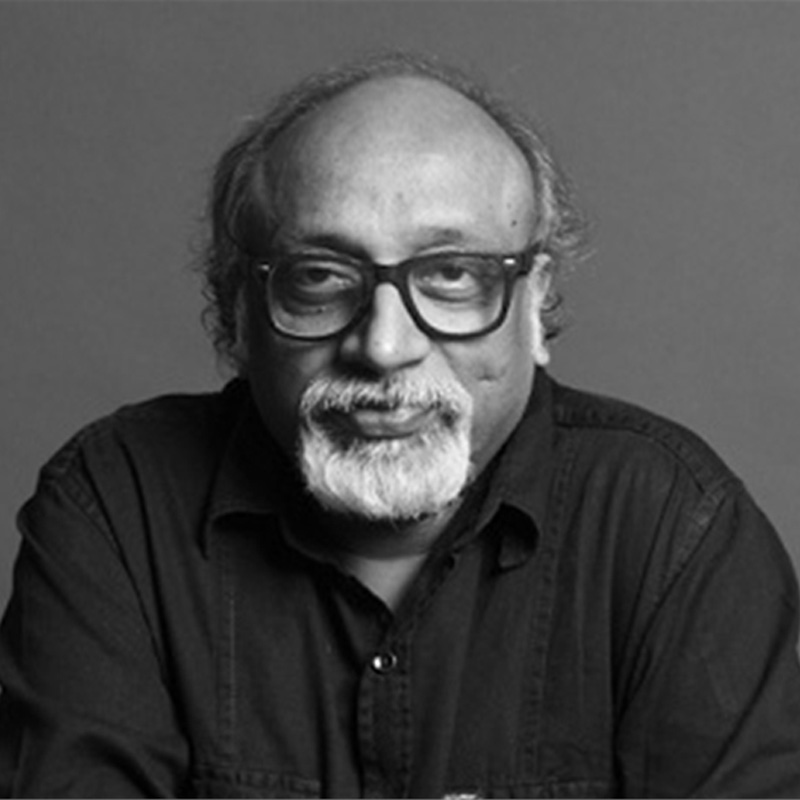
  • When creative entrepreneurship saw a renaissance: Leo Burnett India national creative director KV Sridhar

    When creative entrepreneurship saw a renaissance: Leo Burnett India national creative director KV Sridhar

    As an industry, 2011 has seen a creative resurgence last year. Big brands and big agencies did a lot of creative work on big campaigns. There was good work from Vodafone, Airtel, Docomo, Reliance, Cadbury, McDonald‘s, Cole and Pepsi.

    The other thing that has happened in the past year is the emergence of the independent creative agencies. We have not seen creative entrepreneurship thriving since the last 30 years. The last renaissance of creative entrepreneurship was with Enterprise, Contract and Ambience; this can be called the golden era in that aspect. Ravi Gupta set up Trikaya around that time while Gopi Kukde and his Onida campaign also happened simultaneously.

    After that though, the creative entrepreneurship in the country died down. All the Indian creative agencies were sold out to international agencies with Chaitra becoming Leo Burnett, Sistas becoming Saatchi and Saatchi, etc. All these agencies merged with international companies working with global brands, therefore creating a vacuum for creative entrepreneurship.

    If you see, all new creative agencies are doing very well. Whether it is Aggi and Padhi or it is Raj Kurup or Priti Nair or Prashant Godbole, all of them have started something in their own capacity. It is very heartening to see that they are doing campaigns which have actually changed the perception of the people and may actually challenge the work of the top three agencies. I just hope that this time around the Indian entrepreneurship is not sold out to multinationals in a hurry. I only wish that these guys hold on to the Indian flag for a little more time and then buy out the foreign guys as the future is India.

    What has been disappointing and has been consistently so over the past couple of years is the growth of digital media. It is a medium that holds lots of promise and it should become big, but it did not become so big.

    Effective Creativity

    You need creativity to be more effective. If you have a solution, it maybe very effective on paper, but in the market it may not be as good if you need more money for people to see it. So you need creative work which not only does the job with lesser money but also in a much more emphatic manner. Therefore creativity and effectiveness go hand in hand. In recognition of that, even Cannes introduced the Effective Awards, the pre-requisite for which is that you should have won a creative award first and then put up the case for the Effective category.

    The clients are becoming increasingly demanding. Large clients are doing good creative work. Today, the big guys have understood that creative is the only way to be effective and it also helps you spend less money.

    You need a creative person when you need to make a rupee work like a hundred bucks. To make a rupee work like a rupee, you need a CA not a creative agency. Therefore creativity is the biggest currency which clients are cashing on and it is the biggest currency that all agencies possess today.

    There are two things here. One is that humanity and the insights have become much more valuable. Moreover, the transparency of communication and the way you do business is becoming more important. The values brand posses is far more important than the technological superiority because tech itself is becoming a commodity.

    The World A Global Village

    In this day and age with social media and borderless communication, you can’t pretend to be what you are not. It will take a nanosecond to get exposed. It takes one tweet to expose someone’s misdeeds. See what happened to Dow chemicals. An agitation in a small town of India in Bhopal actually catapulted and became a global thing and then put pressure on the company. So today, brands are trying to understand how humanity is connected with each other and how this information travels without loosing absolutely any time and how to deal with this borderless, timeless communication.

    People with a Premium

    Everything is becoming a commodity now. Nothing is patented, everything is commoditized. The only thing which you have and own is the emotional equity with your consumer. The emotional bond that the brand has actually created is far more superior to the patent of the technology that it has. All the patents can be copied, but my affinity for Apple cannot be copied or replicated because of the joy I get using an Apple phone and the emotional equity I share with the brand.

    Today, marketing, advertising, and entrepreneurship itself has changed. The way you manufacture things, the way you sell things, everything starts with people and ends with people. Therefore, the people who understand people are at a premium.

    You need people who understand how human beings behave. What motivates them to do what they do? And finally what is it that you need to do to make them do what you require them to do? So understanding human behaviour is becoming very important to business. All these new values are coming in and they have given a new lease of life to people like us who know nothing apart from how to communicate with people. No amount of internet or new media is going to take that away from us. At the end of the day every medium or every business deals only with human beings. No McKenzie’s of this world, no digital companies can ever take our jobs away because we understand human beings.

    As long as we get new talent which has passion, zest for life and can understand how people behave, we have a bright future. We don’t need to go with a microscope; we only need to relive our past experiences, how our mother used to behave in different situations and understand that and then try and use it to connect with many mothers in the world to sell your products.

    Those with a passion for advertising come to advertising, despite getting high paying jobs at other places. Because they believe they can use their creative talent to entertain people and engage them. People who lasted long in advertising, they are the ones who know nothing apart from liking and studying human beings and discovering insights to connect with consumers.

    Also, today life itself has become much richer. I believe that the first standard years of life, that is the first 16 years, whatever you see observe and learn stays with you. What I have experienced in the first 16 years of my life is very little when compared to this generation’s 16-year-olds. This generation’s 16-year-olds have got a much wider world view and they have more experiences and knowledge and more understanding and, thus, are more mature. Also, till the age of sixteen, they have no selfish motives.

    Therefore, I am very confident that the next generations of people who come into the field are much richer and better than us. They would have had much better and richer experiences to draw from and connect back to people. So I am very optimistic that everything about our profession is going to be better tomorrow.

    We were quite scared in the 80’s and 90’s because foreign companies were coming here. There was uncertainty regarding what will happen. People thought that computers will come and take over and there will be no jobs and foreign companies will come here and suck our blood dry and export it to other countries. We did not know about the world economy and, therefore, have no clue how to get integrated into this new bold new world.

    But through liberalization we understood the benefits of it. We realised that machines can’t do everything. So, we had actually not seen the threat and what happened subsequently in 2007 and 2008, changed our view of world economy.

    In 2007-08 we were growing at around 15 to 20 per cent, our business and economy was good. Our banks were not exposed and our real estate was doing well and still is. But we have understood the impact of being in a global economy and with global customers. Despite doing a 20 per cent and contributing to profit, we have understood that if our cousins in the UK or US don’t do well, you have to finance them. So we have taken salary cuts so that people in the US and in Europe don’t loose their jobs.

    The Indian companies eyed the opportunity, paid more money and took the talent away from MNCs. Also, the client started to cut fee. So apart from the 15 per cent commission thing, the second shocker to the industry was the task of retaining talent without paying more, or at lower pay. Also, how do you work with the same client at 20 per cent or 30 per cent less fees? Those two things have really taught us that we need to run faster and faster to stay in the same place.

    I feel we are better prepared this time around. Most of the things that we do in the bad times are actually things we should do in the good times so that bad times never occur. If you think that travelling business class is a waste, and in bad times we travel by economy. Now, it has become a norm.

    We know how to retain the talent, we know how to command premium in hard times. We know how to sell products in a time of bad sentiment. We know that we need to make our customers prioritise. It all depends on how you argue with your customer and make him prioritise. If people prioritise and find you/your product/service as a necessity, they will buy it.

    Lessons learnt

    The marketing people have learnt a lot of lessons. So, this one is not going to be as bad as the previous one. The Indian exposure to world economy has increased many folds in the past three to four years, but this time around, we are much more prepared. Even people are planned, so they know what it means to be in a multinational company. They know what kind of risk is involved and what the upside is and what is the downside. They know that if anything happens in France or Germany, this company will be affected.

    This time around the companies are prepared, so are the people and clients as well. So we know how to handle it. People have also understood that during the slow down, the companies which invested in branding have benefitted. In hard times, it is not the discounts that you give, but the assurance and trust you give to your customers. If you withdraw the discount, people don’t buy it and you fall into a trap and then each time you give a discount, it is eating into your pocket. On the other hand, investing 50 per cent of that discount into advertising will help build brand affinity. Then the chances of even in bad times people buying you are much higher. So people are putting back into advertising.

    I am super optimistic as a person. I think we have learnt some good lessons and we will sail through even if we have to go through hard times. Actually, what is hitting us very badly is our domestic issues like not having a majority government, the government not functioning properly, lack of new and contemporary policies, lack of encouragement to the economy and the continuing indecisiveness is stalling the entire mechanism. The confidence is very low as we have hardly made any progress in the past three years.



  • O&M and Lowe amongst most effective agency offices

    O&M and Lowe amongst most effective agency offices

    MUMBAI: They might not have won many metals at Cannes Lions 2011 but if a new index is to be believed, Ogilvy & Mather Mumbai and Lowe Lintas Mumbai are two of the world’s top five most effective agency offices.

    While Ogilvy & Mather has been ranked at No. 2, Lowe Lintas Mumbai was placed fifth in the results of the inaugural Effie Effectiveness Index that were extracted after analysing finalist and winner data from 40 worldwide Effie competitions.

    Interestingly, while two of the top five most effective agency offices are from India, the other three are from South America.

    Marketing network Effie Worldwide and the global marketing intelligence service, Warc, revealed the results of the inaugural, Effie Effectiveness Index, at the 58th Cannes Lions International Festival of Creativity.

    The index has also claimed that Procter & Gamble is the most effective advertiser; McDonald‘s the most effective brand; Omnicom the most effective advertising holding company; and BBDO Worldwide the most effective advertising agency network, globally.

    Moreover, the top five most effective advertisers around the globe include Procter & Gamble, Unilever, Kraft, Nestle and Coca-Cola.

    The top five most effective brands are McDonald‘s, Pepsi, Coca-Cola, Chevrolet and Vodafone.

    According to the results, the top five most effective agency holding groups in the world are Omnicom, WPP Group, Interpublic (IPG), Publicis Groupe and Havas Advertising.

    The other most effective agency offices are Sancho BBDO of Bogota, Colombia (1), OMD (Bogota, Colombia) (3) and BBDO (Santiago, Chile) (4), while the top five independent advertising agencies are Wieden + Kennedy, (Portland, Oregon, USA), Kinograf (Kiev, Ukraine), Rabarba (Istanbul, Turkey), BBH Singapore and a fifth place tie between BMF (Sydney, Australia) and Propaganda House (Kiev, Ukraine).

    The top five most effective agency networks are BBDO Worldwide, McCann Worldgroup, Ogilvy & Mather, DDB Worldwide, and JWT.

  • Disney targets five local productions; to kick off with ‘Vicky Aur Vetaal’

    Disney targets five local productions; to kick off with ‘Vicky Aur Vetaal’

    MUMBAI: Walt Disney is stepping up its localisation drive in India. One major push in this: have five locally produced live-action Hindi shows tailored for Disney Channel in a year’s time.

    “Local live-action programming is the way to pump up Disney Channel. We plan to have five original shows within a year and are in talks with various production houses,” Walt Disney Television International (India) executive director, programming and production, Nachiket Pantvaidya tells Indiantelevision.com.

    Disney will have 130 hours of locally produced content over the next one-year period. “India is the first market in the TV business outside the US where Disney has gone in for original local production,” adds Pantvaidya.

    The plan is to increase local content on Disney Channel from 20 to 40 per cent in a year’s time. The move falls in line with Disney’s step-wise localisation strategy. This involved languaging the content, creating local environments through interstitials, acquiring local content like Karishma Ka Karishma and lastly, original local production.

    Disney Channel is all set to premiere its first original live action Indian production Vicky Aur Vetaal, a contemporary version of ancient Indian folklore, on 8 October.

    Disney is also actively considering the option of producing a local movie for TV aimed at the Indian audiences, Pantvaidya says.

    So is Disney also looking at producing animation content in India? “We have nothing planned at this stage. The problem with animation is that the costs do not justify a product just for local TV. It has to spread across markets,” says Pantvaidya.

    Disney has commissioned production house Cinevistaas Ltd. for making Vicky Aur Vetaal. Disney has joined hands with other prominent names in the industry like programming director Suraj Rao, music duo Shantanu Moitra and Swanand Kirkire (composer and lyricist) and singer Babul Supriyo.

    The series will air every Sunday at 10:30 am on the Disney Channel. Speaking on the developments of the new show, Cinevistaas vice chairman and managing director Sunil Mehta said, “We started production in August last year, with six episodes complete. We have signed on for 26 episodes which can be extended.”

    The story pans out with Vetaal trapped upside down from a banyan tree for three hundred years and is rescued by an eleven year old brat Vicky. Vetaal’s magical powers have also become rusty landing the pair into trouble, thus the chosen theme “Vetaal ka magic gadbad ghotala.” To undo the mess, Vetaal uses an eccentric ‘spell book’ which has a life and attitude of its own. Inspite of the havoc the pair bring to the show, it also promises to subtly bring out certain moral undertones of responsibility for ones actions.

    “Disney Channel’s commitment to localisation has been a well planned endeavor and we are extremely happy to be delivering on it. We believe in the strength of Indian stories. Our creative idiom with Vicky Aur Vetaal was to contemporize and keep it relevant to today’s generation. In the process of narration, we are able to involve kids in the storyline by addressing their day to day issues in a fun way,” says Pantvaidya.

    With its entry into India, Disney sought pioneer live action programming in a cartoon driven kids market and, according to Pantvaidya, within a span of two years the market has tripled its size.

    Says Walt Disney Television International (Asia Pacific) senior vice president and managing director Nicky Parkinson, “We seek to strengthen connections with kids and their families by developing creative, quality local content that reflects the lives of the local audiences. This major initiative is a strong step forward in establishing Disney Channel further as a committed local player in this country, and also a reflection of the Walt Disney Company’s commitment to seeking great creative from the global marketplace.”

    For the promotional activity around Vicky Aur Vetaal, Disney Channel has launched a theme-driven marketing campaign involving TV, Radio, Internet, and outdoor apart from an off-air promotion which includes touch-points at McDonalds and other outlets frequented by kids.

    In the week preceeding the launch, an on-ground teaser campaign was unveiled whereby ‘authentic duplicates’ of certificates were issued announcing a change of name of the person in question. This, along with marriage proposals from strangers and even inanimate objects like trees got people really curious about what was going on, creating the much desired buzz around the campaign. Besides, Disney has used out of home initiatives in malls across 22 odd markets in the country to create optical illusions. The revealer campaign will be unveiled in 2-3 days.

  • McDonald’s & NGC kick off ‘Roboraptor Contest’

    McDonald’s & NGC kick off ‘Roboraptor Contest’

    MUMBAI: McDonald’s, food service retailer in association with National Geographic Channel flags of its latest in-store promotion for kids, the ‘Roboraptor Contest’.e

    McDonald’s outlets across Mumbai, Pune, Ahmedabad, Vadodara, Bangalore and Hyderabad will promote the ‘Roboraptor Contest’, where kids can win toys from the animated series Dragonball Z with every happy meal.

    In addition, the ‘Roboraptor’ a remote controlled dinosaur, as the bumper prize is up for grabs.

    McDonald’s, food service retailer in association with National Geographic Channel flags of its latest in-store promotion for kids, the ‘Roboraptor Contest’. Every ‘Happy Meal’ entitles kids to participate in the ‘Roboraptor Contest’. With a coupon from the happy meal box kids can SMS the six-digit code to 7007 and winners will be chosen randomly and announced daily at the McDonald’s outlet.

    The bumper prize, will be announced at the end of the promotion, which will culminate on 7 October 2006.

  • North India leads India’s organized retail growth, even small towns have immense potential, said Vikram Bakshi, MD, McDonald’s

    Day 1 at ‘THE SHOP’ – North India leads India’s organized retail growth, even small towns have immense potential, said Vikram Bakshi, MD, McDonald’s – Young India is gaining confidence and wants change, retailers have to provide their consumption needs, said Sanjeev Agrawal, President-Marketing, Future Group

    New Delhi, June 28, 2006: THE SHOP, the two-day summit on organized retailing, commenced today at the Taj Palace, New Delhi with the inaugural address from Vikram Bakshi, Managing Director of cDonald’ (North & East India), who stressed that North India is leading the growth of organized retail in India. The SHOP is the first ever retail forum focusing on India’s most promising retail zones. The Retail Theatre at The SHOP had international experts, captains of the industry, CEOs of India’s key retail chains across formats and categories addressing key retail issues – presenting Views, Reviews, Trends, Possibilities, Success stories, Vision of marketing Gurus, SWOT analysis and a lot more.


    According to Mr. Vikram Bakshi, Managing Director, McDonald’s, “The retail industry in India is witnessing a very interesting phase where different retail formats and categories are emerging and opening up, not just in the metros and larger cities, but also in smaller towns. Northern India is an emerging retail market with all International brands and national retailers targeting the North. Among the northern states in India, Punjab has the highest potential to develop as a key growth market for retailers. McDonald’ s itself has 88 outlets in India, 64% of which are located in the North.”


    “The Shop” is the zonal version of the annual “India Retail Forum” event that takes place in September in Mumbai and is the Asia-Pacific’s largest platform for retailers across the globe to come together and discuss the latest trends, visions and ­­­­­­­ challenges of the Retail Industry.


    Speaking at the forum, Mr. Sanjeev Agrawal, President – Marketing, Future Group, said, “Retail as a medium is about being inclusive and not exclusive keeping the real India in mind. The ‘Real India’ frame has many more people than we think. It is imperative to recognize the section of consumers one is targeting. And in India the debate is not between aspiration and value but in creating a convergence of both. We at Pantaloon, believe that retail must constitute everything for everyone and through our brands we wish to target every segment of the retail market.”

    Mr. Sushant Dwivedy, Business Head Leed, Microsoft Business Solution said, “Mass marketing is dead and every individual consumer needs to be treated separately. Technology can be used in the Retail Industry to provide better service to consumers and build loyalty factors. The Industry needs more web enabled services. Success for retailers will be driven by smarter operations.”

    ‘The Shop’ introduced new retail formats to retailers and potential franchisees and retail real estate developers and equip regional players with necessary support and systems and learning from masters in the business of retail. Showcasing the best in retail offering, providing an in-depth analysis of retail business trends and formulating a differential winning strategy, THE SHOP saw the participation of the very best retail concepts, successful brands, retailers and distributors from all over India.


    Mr. Amitabh Taneja, Editor in Chief, Images Group and organizers of the summit, said, “We will witness retailer

    s who have their own well-merited views and concepts which would change retail thinkers to reset enchmarks in many areas and share their huge aura of experience with the audience. IMAGES is now all geared up to focus on India’s most promising Retail zones with a series of events titled ‘THE SHOP’ felicitating interaction of international and national players with these regions in order to facilitate retail expansion and strengthen sourcing from regional brands and manufacturers.”


    Over these two days the forum will witness national and regional retailers
    across formats & categories, shopping centre developers, potential
    franchisees, investors, retail support & systems, vendors, govt officials, trade bodies. Some renowned people like Vikram Bakshi, MD, McDonald’s, Andrew Levermore, CEO, HyperCity Retail, Vijay Menon, CEO, Mobile Next, Sanjeev Agarwal, President, Marketing, Pantaloon Retail, Sushant Dwivedy, Business Head Leed, Microsoft Business Solutions, Sam Matthew , Head- Client Solutions, Total Outsourcing, Wipro, N. Sathiyanarayanan, Senior VP, Lifestyle, Denny Gerdeman, CEO, Chute Gerdeman, USA, Ratan Jalan, CEO, Apollo Health and Lifestyle, Sandeep Ahuja, CEO, VLCC, Tim Eynon, CEO Prozone and Director Provogue, Bipin Gurnani, CEO, Piramyd, Gopalratnam Kannan, Country Manager, Swatch Group India, Partha Datta Gupta, CEO, Barista and many more.


    Over the years Images has received global recognition for its bold initiatives to support retail growth in India and Images (that includes Conclaves, CEO meets, Exhibitions and Awards) are known for their impact — attracting industry big wigs with almost cent per cent attendance of the key stakeholders.

    About Images Multimedia

    IMAGES is an industry support platform – specific to the Fashion & Lifestyle, Retail and Retail Real Estate sectors – deriving support from its competencies in Research, B2B and B2C publications, Education & Training, Consulting, and Events and Awards of international standards. The Group has been closely involved with over 1000 key lifestyle brands, retailers, the entire retail support network, and real estate developers from across the globe for over a decade now.

    IMAGES Fashion & Retail magazines enjoy the largest readership in their segments across the Indian sub continent & Middle-East with over half a million readers. IMAGES F&R Research wing has been closely monitoring the trends in the market and has been feeding industry, government and media with vital information for strategy formation in association with world’s top consulting & research organizations like McKinsey, AT Kearney, KSA, AC Nielsen ORG MARG, etc.

    For more information please contact: Bhavya Suri, Perfect Relations,
    9871597740, Reena Varghese, Perfect Relations, 9910234004