Tag: Mayur Puri

  • My Music, My Rights: A deep dive into culture, music and rights with Varun Grover & Mayur Puri

    My Music, My Rights: A deep dive into culture, music and rights with Varun Grover & Mayur Puri

    Mumbai: Music is deeply ingrained in India’s rich cultural history, reflected in ancient texts and mythology. With roots tracing back to the celestial chants of the Sāma Veda, our musical heritage is intertwined with spirituality and culture. The divine pantheon, including deities like Brahma, Vishnu, Shiva, and Saraswati, emphasises the integral connection between music, wisdom, and artistic expression.

    Despite the global celebration of India’s musical diversity, the challenges faced by music creators persist. Aiming to spark a dialogue on music’s intrinsic value and the crucial support needed for creators, The Indian Performing Right Society (IPRS) launched its nationwide campaign, “My Music, My Rights” around the auspicious occasion of Vasant Panchami. A recent EY study reveals that while India produces over 20,000 original songs annually, generating substantial revenues, many creators struggle financially.

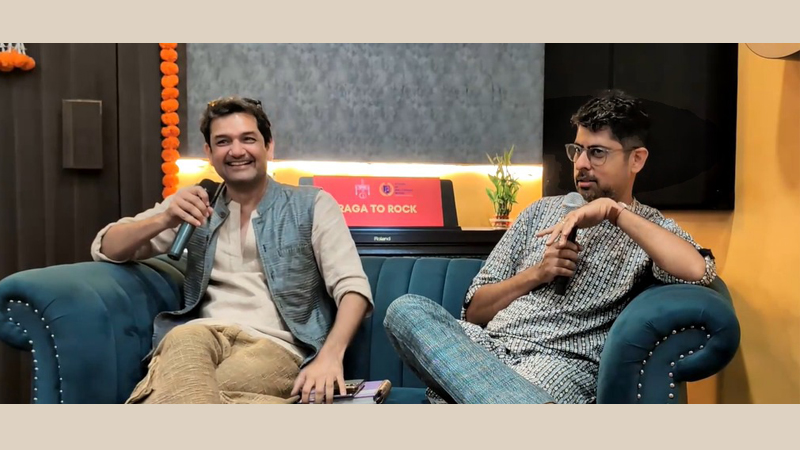
    Adding significance to the same, an event titled “Raga to Rock” was held on 15 Jan wherein eminent author, poet, actor, and film director Varun Grover and leading songwriter, film director, and IPRS board member Mayur Puri, shed light on India’s rich musical heritage and its evolution to the present day. Additionally, a captivating musical drama, ‘Suro Mein Lipate Kisse’, curated by the very versatile writer and storyteller Ulka Mayur offered a visual depiction of this musical journey.

    On the sidelines of the event, Indian Television caught up with Varun Grover and Mayur Puri to gain more insights regarding the campaign and much more…

    Edited Excerpts:

    On inspiration that fuels Varun’s creative process as a multifaceted artist

    Varun: Curiosity! I am just curious about a lot of things. I want to do comedy which can only cover certain topics. Then there is poetry which can be written for children but can’t be written for a film. Then I write that separately. But I love music because it’s very easy to connect with music. You don’t have to learn an instrument or sing but still you’re a very key part of the music album. Becoming a part of the music world was the only skill I had to try it. So it is curiosity and a sense of wonder that I have about lots of things, that is, music, comedy, screenwriting and cinema. I love to be a part of all of these and I had a hope that I could be. So that is why I do multiple things. I’m just a hungry kid in a supermarket.

    On Varun’s directorial debut

    The film is titled – All India Rank and it is my first film as a director. It’s a very personal story, set in the 90s. That is roughly the same time I went to an IIT coaching in 1998. At that age, there are confusions about life and things and people want you to sort out your entire life in those years. Those are the years when you are not allowed to vote, consume alcohol, or marry but people want you to get your life sorted or the society terms you as a loser. So that pressure and the age where you’ve just hit puberty, there’s so many other things to explore in life. That confusion was the core of the film and the core of the story and I wanted to make it my first film because it’s a personal story. The film is set to release on 23 Feb. It’s a bittersweet comedy-drama with lots of music. Everything in the films is very indie in terms of new cast and new composer. Also according to me, for every situation in the film, there should be a song like the legacy we have in Hindi cinema. So the film originally has five songs and then we acquired three songs, out of which one is and original and two of them are old songs (Title track of Rangeela & Papa Kehte Hain from Qayamat se Qayamat Tak). Five of them are written by me. In total, the film which is of 90 mins, has eight songs.

    On the goals and significance of the ‘My Music, My Rights’ campaign in empowering music creators and preserving our musical heritage

    Mayur: A lot of music is being created, especially independent music. Traditionally it has been that music companies would invest in music or producers would invest in music and would let people create music input and then monetise and utilise it in different ways and exploit it wherever possible. The word exploit is literally used for the monetisation of music and creators have been receiving only a very small or trickled-down portion of it. But lately, we are seeing, with the advent of digital mediums, what has happened is, the data in the music industry has become transparent. So numbers of the consumption through digital mediums are very clear nowadays. That is why independent music that has been made without the help of any bigger support is growing and making money.

    Yet, some creators remain unaware of their rights. These encompass eight categories: recording, copying, selling, publicising, translating, adapting from the original master, and recording in a distinct manner. So creators should first know about ‘My Music, My Rights’. People need to recognize the effort behind creative work and acknowledge the associated rights. Are we truly investing in listening to music, considering the lack of subscription models in India? Subscribing to a service ensures the creator receives compensation, a crucial aspect absent in the freemium model. People need to grasp that creating a piece of music involves investing one’s life. Last year we had ‘Fair Play, Fair Pay’ and now ‘My Music, My Rights’.

    On rights that singers/composers have vs lyricists

    Mayur: The rights that singers and composers have are quite similar. Their rights fall under the category of performing rights. Singers have more avenues compared to lyricists. They receive more love as compared to us. Their struggles are distinct; ours, however, revolves around the challenge of gaining recognition. Without recognition, there’s no remuneration, and for the recognition we need representation. The legal structure for royalties has existed for years, but execution has been a challenge. Digital platforms have brought transparency, ensuring singers and composers receive royalties. However, the concern lies in the inadequacy of the amount received.

    On a favorite era or genre in Indian music that holds a special place in their heart, and how has it influenced your work

    Varun: I love all eras of music, so to say, starting from the 50s. For example, there’s been RD Burman in the 80s whom I highly admire. Then there used to be a TV show on Doordarshan called ‘Bharat Ek Khoj’ which had an amazing title track. It was a fusion of Western music along with the lyrics which were derived from the Vedas. So I love and listen to all sorts of music, be it Hindustani classical music or songs like ‘Tandoori Nights’ (smirking).

    Mayur: I appreciate the current era for its remarkable creativity, with outstanding lyricists like Varun, Irshad bhai, Swanand bhai, and, of course, Amitabh. The youth is producing remarkable work. However, I have reservations about the mastering and compression in today’s music. The warmth present in 80s music recorded on quarter-inch or two-inch tape has diminished due to digitalisation, resulting in a shrill sound. Technically, we’ve taken a different path, not necessarily negative, just different. Despite this, composition and lyrics-wise, I don’t think this generation is any less than the 50-60s era.

    On the importance of having a foundation in Indian classical music before pursuing a career in other music genres, and its benefit to aspiring musicians in India

    Mayur: We possess Indian classical music, but what we label as folk music here is distinct. While other countries’ folk music tends to be rudimentary, Indian folk music stands out with its complexity. It features various beats and patterns, making it on par with classical music. It’s rare to find an Indian without some internal understanding of our classical music. The need is actually to teach an instrument to each child in every school and college in India which foreign countries do. The problem is we don’t have enough music schools and we don’t have a centralised music education system. Every Indian naturally develops an inherent sense of classical music.

  • International Music Creators Seminar 2023 spurs collaborations, advocacy, and visionary discourse

    International Music Creators Seminar 2023 spurs collaborations, advocacy, and visionary discourse

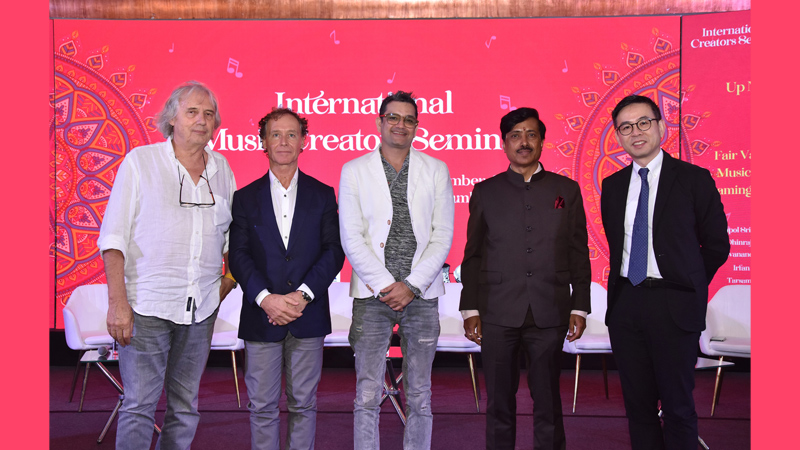
    Mumbai: The Indian Performing Rights Society (IPRS) hosted the International Music Creators Seminar on behalf of CISAC and the Asia Pacific Music Creators Alliance (APMA) on 5 December 2023. The APMA International Music Creators Seminar 2023 featured insightful panel discussions, each dedicated to exploring different facets of the music industry.

    The first panel was about how artificial intelligence will revolutionise the music industry. Renowned artists and industry experts who attended the panel highlighted the positive potential AI tools have for creators, and the exciting AI revolution that is already happening cannot be stopped. Generative AI can extend the frontiers of human creation, enhance artistic expression, and deliver to creators new licensing opportunities and revenue streams. But AI also requires smart regulation. The industry needs to come together to prevent AI from undermining human creativity and threatening the livelihoods of creators.

    In the discussion Dr. G.R. Raghavendra – Senior Consultant IPR, DPIIT, former Joint Secretary, Govt of India, Achille Forler Founder Silk Road Communications, João Kruss Gomes Chairman MACA, Mayur Puri – lyricist & screenwriter alongside moderator Benjamin NG, Regional Director for Asia Pacific, CISAC shed light on leveraging AI while ensuring regulatory frameworks uphold creators’ rights. “The integration of AI in music creation presents boundless opportunities for artists globally. It’s imperative to develop robust regulations to safeguard creators’ rights in this evolving landscape,” mentioned lyricist, IPRS Board Member and APMA vice chairman Mayur Puri.

    Commenting on the same, Senior Consultant IPR, DPIIT, former Joint Secretary Govt. of India Dr. G.R. Raghavendra said, “In the vast landscape of AI, it’s important to dispel the notion that it’s inherently risky. Throughout the course of technological evolution, every leap forward has been met with the creation of rules and protections to ensure responsible usage. AI, such as ChatGPT, is essentially a machine that can’t replicate the depth of human abilities—it’s not that creative or original. When we talk about using someone’s work, whether in AI or any other field, seeking permission and offering fair compensation is not just a courtesy; it’s a fundamental aspect of ethical practice. In the grand scheme of technological advancements, maintaining fairness and ethical standards becomes the cornerstone of integrating AI responsibly into our lives. So, as we navigate this exciting era of innovation, let’s keep in mind the importance of consent, fair compensation, and ethical considerations in the realm of AI.”

    The second panel, fair value of music in the streaming economy delved into the streaming landscape, emphasizing the need for creators to receive equitable returns from this burgeoning market. Discussions led by leading creators, legal experts, and industry veterans Dhinraj Shetty – MD Sony Music Publishing (India), Swanand Kirkire – lyricist, singer & Actor, Irfan Aulia – Musician, Managing Director, Massive Music, Chairman of the Supervisory Board of Collective Management Organization Wahana Musik Indonesia, Notapol Srichomkwan – songwriter and chairman MCT, Tarsame Mittal – Music Entrepreneur, moderated by Satoshi Watanabe of CISAC, highlighted the necessity for adaptations and government interventions to ensure a fair music ecosystem.

    The third panel, the future of female representation & contribution in the Music Industry, featured discussions by lyricist and screenwriter Kausar Munir, music composer Sneha Khanwalkar, composer and music producer Merlyn D’Souza, music composer and producer Hiral Viradia, and Nanni Singh – chief executive showcase events, moderated by poet and lyricist Irshaad Kamil, on gender dynamics in the music industry. The panel passionately advocated for breaking down stereotypes, fostering inclusivity, and creating a diverse and inclusive musical landscape.

    “The industry must actively foster an environment that embraces diversity and empowers female creators. It’s time to dismantle barriers and create more opportunities for women in music”, stated eminent lyricist and screenwriter Kausar Munir.

    Javed Akhtar, legendary lyricist, screenwriter, poet, and chairman of IPRS, expressed his satisfaction with the event’s success, stating, “The International Music Creators Seminar 2023 underscores the power of collaborative innovation. The recently established collaboration with KOMCA ushers in a transformative period, encouraging a dynamic interchange of creation between India and Korea. Our commitment to creating an inclusive and equitable music industry where creator rights are safeguarded and creativity is nurtured was highlighted through stimulating panel discussions. Our narrative revolves around breaking down barriers, creating opportunities, and envisioning a world where creators and creativity flourish. We look forward to bringing such platforms to India and elevate our artists.”

    The International Music Creators Seminar provided a platform to underscore the importance of cross-border partnerships and smart regulation for a vibrant and equitable creative landscape.

  • IPRS marks 54th anniversary with launch of “IPRS Learn & Earn – Indie Edition”

    IPRS marks 54th anniversary with launch of “IPRS Learn & Earn – Indie Edition”

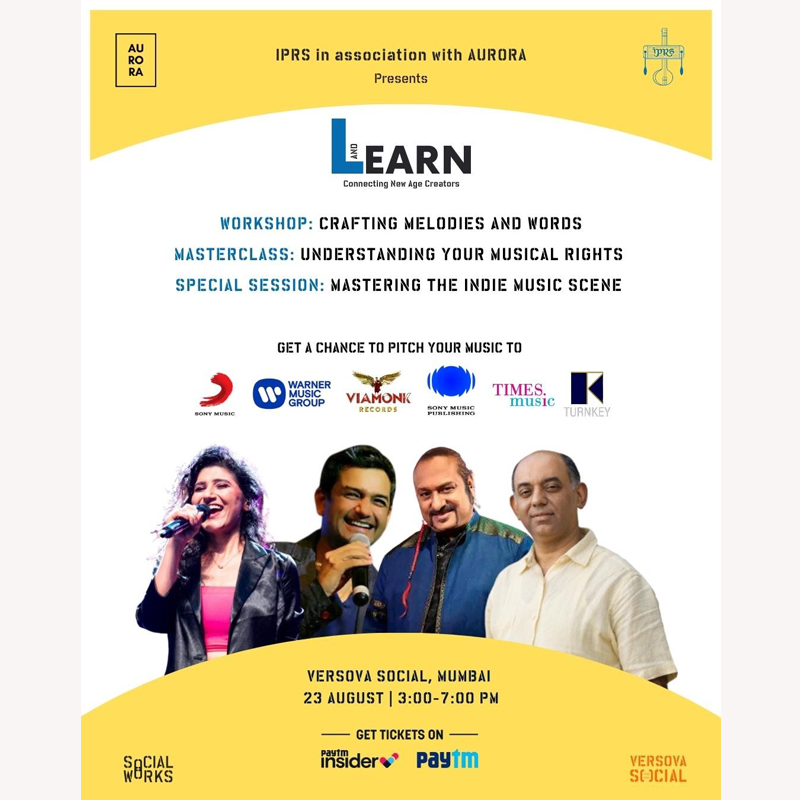
    Mumbai: The Indian Performing Right Society (IPRS) is delighted to announce the launch of the IPRS Learn & Earn – the Indie Edition on 23 August. Building upon the success of the previous IPRS knowledge series ‘Learn And Earn,’ which gained remarkable momentum among IPRS members nationwide last year, this year’s initiative aims to take the program to new heights. Designed to engage budding creators and independent artists, the event’s launch on IPRS’s anniversary day holds special significance.

    Expanding from its role as a copyright society, IPRS is dedicated to nurturing and promoting fresh talent. The objective of the IPRS Learn & Earn – the Indie Edition is to empower budding musicians by offering them an exclusive avenue to interact with industry experts and established creators. Through this event, IPRS reaffirms its commitment to fostering emerging talent, facilitating the growth of music creators, and advocating for essential causes within the music community.

    The initiative is not just about copyright protection; it’s also about shaping the future of music. The event is a testament to IPRS’s pivotal role in uniting music creators, industry pioneers, and stakeholders. This dynamic platform strengthens the music community while highlighting IPRS’s contribution to promoting creativity, growth, and positive transformation.

    The event’s diverse line-up includes knowledge sessions tailored for independent artists, covering the Art of Songwriting, Establishing a Career as an Independent Artist, and Managing Rights as a Creator. Moreover, the event will feature a Creators Showcase & Music Listening session, providing emerging talents the opportunity to present their original works directly to influential A&R representatives and industry experts.

    Event Details

    Learn & Earn – Connecting New Age Creators

    Date: 23rd August

    Time: 3 pm – 7 pm

    Location: Versova SOCIAL, Mumbai

    This event offers an unparalleled chance for creators at all stages of their journey to be part of something truly extraordinary. Whether an aspiring musician eager to forge a successful music career or an experienced creator seeking fresh insights, this event is tailor-made to elevate their musical journey and equip them with invaluable knowledge.

    Event Highlight

    Crafting Melodies and Words – The Art of Songwriting: Led by singer-songwriter producer Shashaa Tirupati and renowned lyricist and screenwriter Mayur Puri, this workshop is a deep dive into the heart of songwriting. Participants will explore the intricate interplay between melodies and lyrics, mastering the art of music production that resonates with the audiences.

    Mastering The Indie Music Scene by Leslie Lewis: New-age creators get an opportunity to join music maestro Leslie Lewis to unlock the secrets of thriving as an independent musician and gain invaluable advice, proven strategies, collaboration insights, and a dose of inspiration to flourish in the competitive music landscape.

    Managing rights as a creator: The session is designed to arm the artists and songwriters with the knowledge needed to safeguard their creations, ensuring they receive the recognition, credit, and value they deserve.

    Creator showcase & networking: The event will offer a platform for budding talent to present their original compositions to influential A&R representatives and forge connections with fellow musicians, leading creators, and industry experts, laying the foundation for future collaborations and opportunities.

    IPRS CEO Rakesh Nigam commented on the event stating, “As we assemble under one roof on August 23rd, we’re not only commemorating a milestone; we’re celebrating the spirit of innovation and transformation that defines IPRS. As the music industry evolves, IPRS continues to lead this change, steadfast in creating a dynamic and inclusive community for music creators. With a focus on education, collaboration, and empowerment, IPRS reaffirms its role as a driving force behind the success of creators in the ever-evolving landscape of the Indian music industry. I take this opportunity to thank all distinguished guests, mentors, and our panel of experts, without whose wholehearted support this event wouldn’t have been possible.”

  • #Throwback2020: Scriptwriters on the new normal

    #Throwback2020: Scriptwriters on the new normal

    MUMBAI: The great irony about the year 2020 is that a year that will forever be defined by one of the worst pandemic known to humankind is also one that redefined entertainment and paved the way for many millions. It would not be wrong to say that 2020 was the writer’s year. Over the course of the last 12 months, streaming platforms served us gems like Scam 1992, Mirzapur, Paatal Lok and Panchayat, to name a few. The television industry is also experimenting with content. While film and TV producers are grappling with challenges in production, writers are swamped with creating content to meet the consumption demand.

    Production houses are in need of scripts more than ever – a kind of a blessing in disguise for writers, who are working furiously to wrap up pending episodes and current seasons. From the lows of lockdown to the highs of the post-Covid production boom, writers have one thing in common: they have had to adapt swiftly to a new normal.

    The lull of lockdown

    Screenwriters Association member Satyam Tripathi revealed that with the abrupt imposition of lockdown, work came to a grinding halt, and just like any other industry, writers were also affected. But personally for him, working in the confines of his home and coordinating through online platforms was a welcome change, as otherwise a lot of time is wasted in the physical meetings.

    Zoom also provides a workaround, albeit a rather clumsy one, to the key feature of the writers room – the whiteboard, where character arcs and plot lines are scribbled, erased and obsessively rearranged until final things get into place.

    “For a creative person, perhaps this was a time where a lot of introspection was happening in terms of the content we write, in the manner in which we approach our work. When you face a hard time it is then you realise how much you are really connected with the emotions you write about. In those times there was so much insecurity around us in terms of money, work, and life itself,” Tripathi mused. 

    Author, writer, documentary filmmaker Jaya Mishra, who has written for shows like Kehne Ko Humsafar, Cold Lassi aur Chicken Masala, spent her time dashing off scripts in the first few months of the lockdown. “There was pressure to deliver the scripts because nobody realised how much time it would take to get back to normalcy. People wanted to finish the writing processes of all the shows; basically that was the only work we were doing at that moment,” she shared. “But how does one write about normal life when life was not at all normal? The world was at a standstill. I couldn’t focus because all my shows are romantic comedies and there was no romance, I mean how do two people even meet anywhere without the fear of the virus?”

    She went on to add that shows which were almost ready to go on floors required last-minute changes. So, there was a lot of rewriting that happened during that time. 2020 eventually gave Mishra the chance to take a pause from hurtling between writing and delivering scripts. She devoted this free time to her other love – crocheting.

    At present, her in-tray is overflowing. She has started work on her second book, which has been a long time coming. Mishra’s first book was the fiction novel Kama~the story of Kama Sutra published by Om Books. She has her hands full writing for Alt Balaji’s Toxic, Married woman, United, and is also penning screenplay dialogues for an unnamed original series with One Life Productions.

    Director, lyricist, and Happy New Year writer Mayur Puri defined the first few months of lockdown as tough, with shoots cancelled and no dubbing taking place. Apart from this, Puri’s company which does a lot of translation projects for OTT platforms saw a period of lull.

    Said he: “Before the lockdown, my company produced 30 hours of content and the idea was to make it to 45 hours of content till 2021 but now it looks quite difficult to achieve. In fact, for the first three months, there was no work but from October onwards we have reached our monthly targets. I am hoping by the first quarter we will be back on track as far as bulk business is concerned.”

    On the bright side, more projects have started flowing in from June and July onwards. Puri now has three projects lined up for release this year, including Disney and Marvel Studios’ Black Widow, and Free Guy. All the movies were commissioned in 2020.

    Besides volume, the nature of work has also changed for writers. People who were earlier writing two movies are now working on four projects. The past year has also been a wake-up call for screenplay writers. “For instance, when it comes to OTT, there is more pitching and development before actual writing happens. So, writers are becoming more disciplined, they now understand that style of working. Since the writing activities have increased, hopefully it will harbinger better content for us.”

    Production blues

    The industry breathed a sigh of relief when the government allowed filming to resume, under strict guidelines. Of course, production while being Covid compliant comes with its own share of hassles.

    Writers are now being asked to rethink what could be feasible as there are restrictions in terms of shooting, budget, people and much more. They are asked to lean on fewer characters along with special effects and VFX to provide scale and make the show more relatable.

    To make the scripting process more convenient, multiple staff are splitting into mini-rooms, with senior-level producers doing Zoom sessions while lower-level personnel work offline on script changes or other details. Some showrunners are also scheduling one-on-one Zoom or Google Meet sessions with members of the staff in an effort to ensure that everyone is getting the support they need.

    Despite the occasional technical hiccups, like bad internet connections, sound and the transition to teleconferencing has been a source of comfort to many in this new quarantined world.

    Mirzapur writer and creator Puneet Krishna is currently basking in the success of his original series. But the behind the scenes story is not so sunny. Mirzapur was in the middle of post-production, so it was an ordeal for him to shoot while following Covid protocols. Due to this, the dubbing process became elongated.

    Tripathi, who is busy developing an OTT series with Reliance Big Synergy, did not have any programmes on air so he did not face any immediate challenges. He got an ongoing show – Zee TV’s Ishq Subhanallah – just when the lockdown was lifted. The only problem he encountered was when somebody on set tested Covid positive, forcing him to rewrite certain scenes.

    Regardless of directives, that vary from studio to studio, screenwriters say their anxiety lies largely in the uncertainty looming over them. 

    Puri asserted that it is important for a writer to have the freedom to take his pick of work. “What we look at is we get enough choice of projects and decide what is best suited for me and when the work stops you are not left with any choices,” he noted. “Not having a choice of subject was one big challenge. I am a small entrepreneur who runs a business of writing. For me, it was very difficult because payments stopped coming and I have a team of writers I need to pay. Thankfully, when work started my team picked up the pace and we started working harder and we accommodated Diwali bonuses also. I think the worst has passed and we are in a better position.”

    The silver lining

    The emergence of OTT platforms has been a gamechanger for writers. Puri said that thanks to these streaming services, writers are now getting recognised. In addition, with most theatres shit or running at 50 per cent capacity and no big budget movie releases happening, the race for box-office numbers is virtually non-existent. Now, it is completely a contest of skills, which is why Puri believes the overall quality of writing should go up.

    He quipped, “With OTT there are so many stories which can be now explored which are not conventionally box-office. The only criteria is to make the content right and think of the audience as an intelligent audience. The value of writers is going up, in terms of the value, payment, and respect for their work. I am hoping this continues even when the theatres are open.”

    Acknowledging that there has been a spike in OTT consumption, Krishna noted that people who were releasing films in cinema halls are now opting for OTT release –so it has become a level playing field. At the same time, he is hopeful that once things normalise, people would flock back to movie theatres.

    Forecast for the future

    Digital adoption in various walks of life surged by leaps and bounds in 2020 and writing is no exception. For a while now, more and more people have voiced that TV, movie and OTT scripts shouldn’t be made with paper, as paper scripts being tossed around a set might cause problems. So, writers suggested alternatives such as electronic scripts and electronic sign-in/out should be explored in the post-Covid world.

    But what about the big picture? Mishra was of the view that the entertainment industry is going very strong.

    “Fortunately, the market has been pretty good to writers. A lot of ideation went on, it has helped me to work on new shows. All this work came to me in the last five months. We are still in a better position compared to directors, actors and producers,” he said.

    Tripathi opined that the market is still picking up and will take time to settle. The entertainment industry was already facing issues after TRAI’s intervention, digitisation, and then the BARC incident happened. And while the OTT juggernaut is no blip on the radar, traditional linear TV still has a lot going for it. “The industry was kind of settling in when the pandemic knocked on our doors. I also believe that the OTT spike is just a rumour, it is more of an urban phenomenon. Because during the lockdown we have realised that reruns are doing much better than any form of content,” he added.

    A lot of negativity that has come to be associated with daily soaps will decrease, and audiences will react to it, claimed Tripathi. That is why a lot of older shows are working as they bring a sense of nostalgia and good times.

    Writers also echoed the view that smaller budgets and fewer crew on sets would force directors to tell more intimate and pertinent stories.

    These are exciting times to be a screenwriter, with the industry in transformative stage, new forms being explored and a burgeoning need for content among new and diverse consumers. The page is fresh and the quill is ready, now it remains to be seen what story they write.

  • Pritam and Prabhu Deva come together for R…Rajkumar

    Pritam and Prabhu Deva come together for R…Rajkumar

    MUMBAI: The song Gandi Baat from Eros International and NextGen Films’, R…Rajkumar is already rocking the chartbusters with its high tempo beats and Rajkumar aka Shahid Kapoor’s dance moves. Director-choreographer Prabhu Deva has surely mixed some magic in the song.


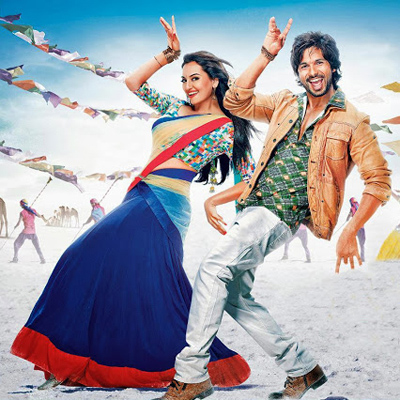
    Up now is another song, titled Saare Ke Fall, a quirky peppy number starring Shahid Kapoor and Sonakshi Sinha that will keep audiences asking for more.


    Written by Mayur Puri and composed by maestro Pritam, Saare Ke Fall was the first schedule shot, keeping with director Prabhu Deva’s tradition of always commencing a film’s shoot with a song. Shot at the picturesque Salt belt in Bhuj, filming the song turned out to be quite a challenge given that the cast and crew travelled to the location on a tractor, which was two and a half kilometers away from the base.


    Commenting on the song, composer Pritam Chakraborty, says, “Saree ke fall is one of my most beautifully picturised songs with unique choreography and have enjoyed every time I have watched it. I can’t simply get over the background dancers.”


    Adds producer Viki Rajani, “While brainstorming on this particular track, we thought it would be ideal to shoot at a location like Bhuj as it has not been used in movies often and suited this particular situation in the film. With R…Rajkumar, Pritam and Prabhu Deva come together for the very first time making it a special film for the both of them.”


    R…Rajkumar starring Shahid Kapoor and Sonakshi Sinha, directed by Prabhu Deva is scheduled to release on December 6, 2013.