Tag: Maxus

  • Digital the silver lining amid dark ad clouds

    Digital the silver lining amid dark ad clouds

    MUMBAI: As the industry braces itself for the impending slowdown, there might actually be a sector that is preparing to manage an increased workflow. Digital marketing is expected to maintain its pace or even speed up this year as advertisers look to scale back spends on expensive mediums like print and hoardings.

    Experts say there will be no major deviation from Mindshare‘s early year forecast that digital would grow at 30 per cent in 2012, in the same rate as the earlier year.

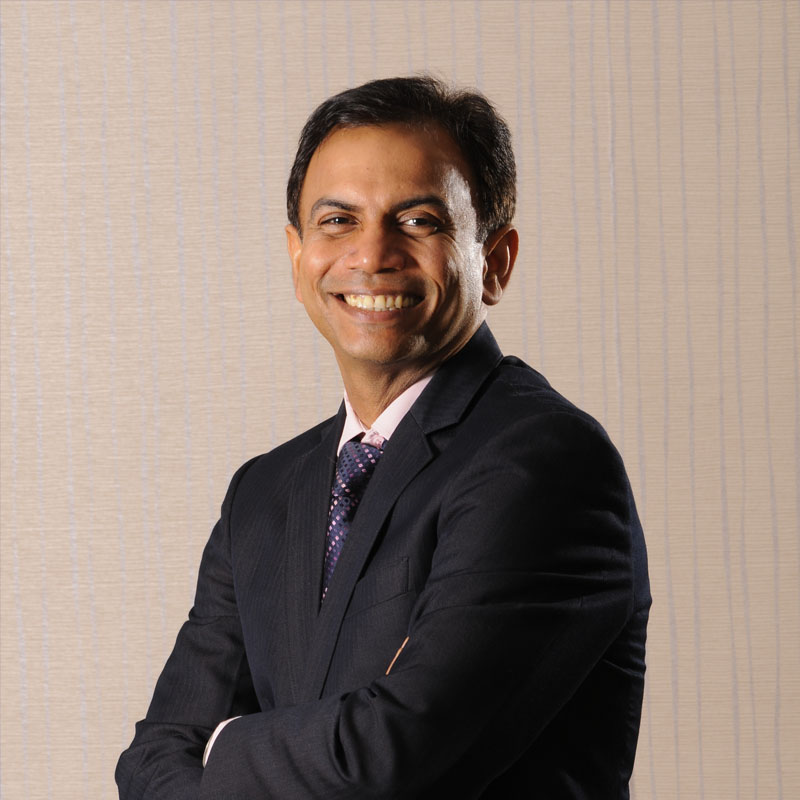
    Maxus, part of WPP group, agrees that digital will not see any specific slowdown this year. “It should grow at 30-31 per cent from the first part of the year trends,” says Maxus South Asia head of digital Unny Radhakrishnan.

    In fact, insurance companies like HDFC are looking at increasing their digital spends this year.

    Says HDFC Life EVP marketing and direct channels Sanjay Tripathy, “I only see the spends going up because the whole media pie has been asymmetric all this while. If you look at the reach frequency formula and compare it to TV, print, radio and then digital, you will agree with me. There are more people spending time on digital in comparison to other traditional media touchpoints. I only see the digital percentage increasing in the overall pie.”

    With India‘s economy slowing and the bottom line of companies coming under pressure, advertising spends are bound to become increasingly result oriented. This is where digital scores over its media counterparts as it allows for more targeted marketing and better measurable RoI.

    Says Brandlogist CEO Saurabh Parmar, “Digital offers clients an ease in measuring RoI and helps target a wider demographic. What is more important is that digital offers an economic advertising to the small and medium-sized businesses that aspire to advertise among the masses but do not have the budgets of TV and print.”

    As consumers tighten up their purse strings, they would want to carry out detailed research as well before they arrive at a purchase making decision. The Internet is becoming the research tool of choice for several consumers, offering brands the opportunity to become more visible and interactive.

    In the wake of such trends, Parmar feels that the percentage of ad spends dedicated to digital will see a spurt to 11 per cent in 2012, up from 3-5 per cent last year.

    While building brands take a backseat in times of slowdown, it is an exercise that can‘t also be neglected.

    Admits Mindshare principal partner Jai Lala, “Digital, specifically social media, offers brands a platform to interact with its customers. This serves a two-pronged benefit of getting feedback and enhancing the brand image by being responsive and interactive. This is one of the main reasons why digital is growing so rapidly.”

    Also Read:

    Ad Slowdown Looms

    Signals are for a mild ad slowdown: Mindshare‘s Lala

    Slowdown to impact outdoor advertising
  • Maxus wins Manappuram Gold Loan’s print mandate

    Maxus wins Manappuram Gold Loan’s print mandate

    MUMBAI: Media agency Maxus has won the print mandate for Manappuram Gold Loans.

    Maxus’s Bangalore office will get to service the account from June.

    The mandate was earlier being handled by Lintas.

    Maxus already handles the non-print media mandate for Manappuram since May 2010.

    A player in the non-financial banking service (gold loans) category, Manappuram as a brand has adopted a strategy revolving around brand ambassadors with a strong regional appeal, who talk to the masses in their own language and educate them about gold loans.

    Mohanlal and Akshay Kumar are some of the celebs on board.

  • GroupM introduces GroupM Next, picks Chris Copeland as CEO

    GroupM introduces GroupM Next, picks Chris Copeland as CEO

    MUMBAI: GroupM has launched an innovation unit, GroupM Next, to support the ongoing efforts of its four agencies- Maxus, MEC, MediaCom and Mindshare.

    The agency has named GroupM Search CEO Chris Copeland as the CEO for GroupM Next. Mindshare leader of digital media operations for North America Cary Tilds will be the chief innovation officer of the new unit.

    GroupM Next will focus on providing insights and will help the core partners and emerging players in online, mobile and social develop. The unit will assist them in the creation and management of partnership opportunities, integration into technology and data systems and education to deliver best practices. It also will build on the body of original research focusing on consumer use of new platforms and devices and the impact of that usage on brand marketing.

    GroupM North America CEO Rob Norman said, “GroupM Next is dedicated to creating, capturing and ensuring the implementation of the best thinking and new insights from our community in the digital, social, mobile and addressable media markets. Our goal is to create an active partnership across GroupM and our clients to develop actionable insight and a clear path to action on the platforms that are changing our industry.”

    Copeland is with the organisation since 2000. He has led the development and integration of the global search marketing offering for GroupM agencies. In his new role, he will leverage his experience with emerging media companies to steward the GroupM Next programme in partnership with agency leadership. The focus will be participating with those companies leading changes that most impact consumer media consumption, brand favorability and purchase behavior.

    Copeland said, “There are a number of companies that are transforming media and the way consumers and brands behave. These changes are of paramount importance to GroupM and its clients. It’s our job to provide unmatched competitive advantage for our clients with these partners. It’s the job of GroupM Next to assist our agencies and their clients in realizing this opportunity.”

    Tilds had joined Mindshare in 2007. In her new role, she will be identifying and implementing specific technology and platform opportunities into existing proprietary systems and workflows to ensure that GroupM agencies and their clients can participate with speed and relevance.

  • Lodestar UM wins PSI’s ‘Freedom 5’ and ‘Axshya communication’ accounts

    Lodestar UM wins PSI’s ‘Freedom 5’ and ‘Axshya communication’ accounts

    MUMBAI: Lodestar UM has been appointed as the media AoR by Population Services International (PSI), for Freedom 5 (Intra-Uterine Device for Women).

    The agency has also won media mandate for the Axshya communication campaign (awareness about Tuberculosis) project.

    The win comes on back of a multi-agency pitch that also saw participation of agencies like MediaCom, Maxus and Carat.

    Lodestar UM will be responsible for planning, buying and implementation across all mainline media i.e. TV, Print, Radio and Outdoor. The campaign on Tuberculosis has already broken in March 2012 while the Freedom 5 campaign is slated for release in May 2012 and will cover the pan-India market.

    Lodestar UM VP Anindya Ray said, ‘We are happy to be appointed as the AOR for the PSI campaigns against Tuberculosis and in driving demand for Freedom 5. We look to maximize the efficacy of the campaigns through use of appropriate tools and research based intelligence in order to push specific action.”

    Lodestar UM COO Anamika Mehta added, “Our endeavor is to create insightful ideas with a watchful eye on driving immersive communication experience in order to drive perception change. This is a huge responsibility and we look forward to partnering PSI.’’

    PSI (India) communications director Monica Bakshi said, “In India two people die of tuberculosis every three minutes, yet a majority of the population do not feel they are at risk from the disease. It is important to communicate that anybody can get TB, treatment is free and that an affected person must complete the full course of treatment. The first phase of the campaign highlights the urgency to get tested for TB, if one has a cough for two weeks or more. We have previously partnered successfully with Lodestar UM on other behaviour change communications campaigns, and are happy to have them on board to add media teeth to this important pan-India initiative.”

    The Freedom 5 communication seeks to bring about a behavioural change amongst married women in adopting proactive measures to avoid unplanned pregnancies. PSI intends to use its network of doctors across key markets to interact first-hand with the target audience and bring actionable change in perceptions.

    The Tuberculosis awareness campaign seeks to raise self-risk perception of the disease amongst the general population, and specifically targets adults between the ages of 15-54 years from the C and D socio-economic groups. People with a cough for two or more weeks are encouraged to have their sputum tested, for free, at the nearest Designated Microscopy Centre (DMC). The treatment for tuberculosis is free and is for a period of 6 to 8 months.

    The Tuberculosis campaign will not stop at awareness generation but will go beyond the traditional use of media and drive action.

  • Shailja Vohra joins Maxus as ESP head

    Shailja Vohra joins Maxus as ESP head

    MUMBAI: Maxus, a GroupM media agency, has announced the appointment of Shailja Vohra as ESP head.  She will be based out of Delhi office and will report to Maxus and Motivator South Asia MD Ajit Varghese.

    Vohra earlier served as head of programming and operations for Fox Traveller and acquisitions for NGC. Before that, she had a long stint at Discovery in programming.

    Maxus MD Ajit Varghese said, “At Maxus, we have always believed in incubating specialised people in areas of content, activation and digital apart from integrated planners leading business teams. With Shailja‘s programming background and her passion for the space, we believe it can add a fresh perspective of looking at content and also look at ways of driving content strategy for brands across platforms, formats than just AFPs”.

    Vohra said, “It‘s a privilege to be part of Maxus ESP team. I am joining them at an interesting juncture both when Content is taking a Central role in Communication Planning and Brands are looking at newer formats to engage with consumer. I would love to take the practice to the next level along with GroupM collaboration and capabilities.”

  • Maxus appoints Mangesh Korgaonkar as GM – Mumbai

    Maxus appoints Mangesh Korgaonkar as GM – Mumbai

    MUMBAI: Maxus India has roped in Mangesh Korgaonkar as general manager-Mumbai.

    Korgaonkar will be heading one of the strategic business units (SBUs) of the agency in Mumbai. The other unit is being headed by Vidyadhar Kale.

    Korgaonkar will be reporting to Maxus India managing partner Kartik Sharma and will play a key role in product development and business development.

    Sharma will be handling agency‘s key clients like Tata Sky, Fiat and Colors.

    Korgaonkar comes in with over 15 years of experience. Prior to Maxus, he was with Madison as general manager.

  • Yatra.com awards media mandate to ZenithOptimedia

    Yatra.com awards media mandate to ZenithOptimedia

    MUMBAI: ZenithOptimedia has won the media duties for online travel company Yatra.com and will handle all media planning and buying duties for it.

    Yatra.com said its marketing spends are in the region of Rs 300 million.

    The win was the result of a multi-agency pitch held in Gurgaon. The other media agencies that participated in the pitch include Madison, Maxus and Universal McCann.

    The media account was handled earlier by Motivator.

  • TME-MPG to handle Parle media duties

    TME-MPG to handle Parle media duties

    MUMBAI: Manufacturers of biscuits and confectionery products, Parle, has shifted its media account from Maxus-TME to TME-MPG.

    Top sources in the agency confirmed the news to Indiantelevision.com.
     
    The size of the business is estimated to be Rs 500 million.

    Earlier TME was handling the confectionery part of the business while Maxus was looking after the biscuits and snacks range.
     
    The company had put its media mandate to review in May 2010 which ended the long-standing Parle-TME India partnership. In July 2010, Maxus India won the entire Parle Products portfolio and eventually Parle brought back TME.
     

  • ‘Challenge is to harness the future focused SMG culture to build a differentiated product’ : SMG India chairman and LiquidThread MD CVL Srinivas

    ‘Challenge is to harness the future focused SMG culture to build a differentiated product’ : SMG India chairman and LiquidThread MD CVL Srinivas

    Engineering and management degrees are quite common for professionals working in automobiles. But it is a surprise to find folks who have chosen to get educated in these two disciplines before plunging into advertising. Take CVL Srinivas for instance who has an engineering degree from BITs Pilani and a management degree from XLRI, Jamshedpur.


    Today, Srini, as he is called, serves as the chairman of the Publicis-owned Starcom MediaVest Group India and also as the managing director of LiquidThread, one of its divisions.


    He has 14 years of exposure to the media business, having scored numerous successes for leading media agencies such as Madison, Fulcrum and Maxus over the period as a senior manager or head. 

    Srini is wont to do what he wants to do, like taking a four year break from media and advertising, and at a time when his career was roaring. In 2007, he gave up a plush job as CEO, Maxus Asia Pacific to become a consultant with Surewaves, a company that specialises in media convergence solutions. He then went to consult a private equity (PE) fund in the media sector and also worked with BCCL‘s Private Treaties as director for two years.


    SMG was his media comeback vehicle earlier this year. And it has been on fire under his and his colleague Mallikarjundas CR‘s stewardship. It has focused on three pillars of insights and research, digital and branded content. In the process, it has not only managed to retain old businesses but also gained some new accounts. Among the 15 brands it pocketed include: Yahoo, Biba, Sab, Pix and Aircel.


    Indiantelevision.com‘s Prachi Srivastava spoke to Srinivas about his charge, its performance and the way forward.


    Excerpts:

    How has the performance of the company been in this year, as it comes to an end?
    We are fairly satisfied with what we have achieved this year. We have managed to grow both topline and bottom-line at a healthier pace than the past few years. In terms of new business, we had a surge of wins in the past few months. We have so far bagged 15 businesses this year including one of the biggest media pitches of the year Aircel (TV and Digital).

    What was your focus this year?
    We wanted to build on the strong foundation of SMG and accelerate growth. The focus was on (1) People – where we infused talent across levels and realigned a few units, (2) Product – investing in Insights, Digital and Content and (3) Process -streamlining the operation thru‘ a newly created Business Impact function.

    You have been with multiple agencies. What difference do you see in the work culture? 
    Each agency has its own work culture, but broadly speaking the end output in this market is hardly differentiated. You hear it from clients all the time, that they hardly see any difference between one agency and another. Our challenge is to harness the future focused SMG culture to build a differentiated product.

    There were different specialist units earlier. Why were they merged in Vivaki?
    SMG had a host of specialist units in Outdoor, Retail Branding, Rural activation etc. While they helped make the product more holistic, their ability to scale up was limited. By migrating them to VivaKi, we helped these units get access to clients of our group and brought about a lot of operational efficiency. This in turn has helped SMG focus on the core product. We now have the best of both worlds.

    “Ours is a Human Experience Company that is a storehouse of insights & research that can help integrate communication plans across media and non-media channels”

    Are clients showing an inclination towards the new media (digital, internet, mobile, retail) or they continue to be comfortable with traditional form?
    There is definitely a lot more interest in digital now, than before. Not just the usual suspects, but even FMCG clients are today talking digital and investing in the medium.

    How is LiquidThread doing since its launch in India?
    We had an existing content practice in India. This made it easier to launch LiquidThread (LT) in this market. We have had a good year and have done some interesting work for our clients. There have been a few cases this year where LT created the campaign idea. We see it as integral to the communication strategy.

    How do you see the economic slowdown affecting Starcom or the advertisers‘ spend?
    Earlier forecasts were predicting an industry growth of around 15 per cent, but these days the consensus seems to be closer to 8-10 per cent. We expect to grow at a far higher pace than this given our client profile and diverse revenue streams.

    Is it as bad as the slowdown in 2008? What have been the learnings from 2008 slowdown that you apply now?
    It is too early to say if it will be as bad or worse. Right now most clients are in a wait and watch mode.

    Television today has the efficacy for advertisers. How does it affect the other mediums?
    We are largely still driven by television as the key medium. It not only has a high base but is growing faster than print and other mass media forms. While fragmentation has split the viewership across more channels, the evolution of Content on TV has kept the interest levels high for both viewers and advertisers. Digitization of the medium is going to give a further boost. For a growing economy like ours, where most categories are still under-penetrated, TV will be the lead medium for a long time to come.

    Is reallocation of resources happening from client‘s side across different media?
    Clients are willing to experiment lot more today than they used to 5 years ago. There is definitely money flowing into digital, experiential marketing and events.

    Has the concept of return of investments (RoI) changed with the clients? What is the measurement metrics followed now?
    Very few clients are able to get the true measure of RoI and lot more needs to be done here by the industry. There is an over-emphasis on the “efficiency” of a media plan in our market. So in most cases, RoI measurement is limited to measuring how “efficient” the media plan is. This leads to a frenzy of CPRP and CPT calculations and debates. Marketers need to realise that the cheapest media plan is not necessarily the best option for building their brand. The agencies need to raise the bar on this one and encourage clients to invest in capturing more data. This is the starting point if one has to build robust RoI metrics.


    SMG is pioneering lot of work in this area which I hope will benefit our clients in the coming years.

    Have the dynamics for communication to rural market changed? How are you helping your clients communicate to their rural consumers?
    Three significant developments have helped improve communication to rural markets. Firstly, the increased penetration of mass media allows conventional advertising to reach large pockets of rural India. Next, there are better technological aids to manage and monitor rural communication and contact programs. And finally there is a much better understanding of rural consumer behavior today than 5-10 years ago.

    How will Starcom MediaVest‘s business be split in Print/ TV/ FM/ outdoor/ Internet etc?
    We have more than 10 per cent of our revenue coming from digital and hope to make it 20 per cent within the next 1-2 years. We have a fairly equal split between TV and Print.

    As a media planner, how do you view the emerging radio and digital scenario?
    For radio, a lot more needs to be done at the policy level to make the medium advertiser friendly. Currently radio stations are not differentiated enough for advertisers and listenership is extremely fragmented. The stations follow a herd mentality. Radio needs to deliver niche audiences. They should also be more relevant in this day and age and compete with the immediacy of digital media. As far as digital is concerned, it is the fastest growing medium and today there is absolutely no escape from it for any advertiser. Print is the medium that will get most affected by the growth of digital.


    But we still see a dominant readership in print…

    For a majority of the population, Print is still the first choice for daily news. For advertisers, Print is still the first choice for announcement value and immediacy. According to TAM, Print has grown at 7 per cent in Nov 2011 v/s Nov 2010, led by Services and Banking. The reason why print is still a dominant media in India is that every few years, new categories come into the market and most new categories start with print and only then they come onto TV and then other mediums, whether its education, insurance or healthcare. As and when digital penetration increases, Print could start feeling the pinch. Print needs to learn how to co-exist with digital if it has to remain relevant.


    What is your strategy to integrate media plan across different verticals? How do you make that more effective?
    Our dream is to grow our client‘s business by transforming behavior through uplifting, meaningful human experiences. By investing in the right kind of talent and techniques we are trying to bring a more refreshing and relevant approach to communication planning for our clients. We do not see our job to be that of a media agency that releases advertising, but that of a Human Experience Company that is a storehouse of insights and research that can help integrate communication plans across media and non-media channels.

    What do you have to say about the cut throat competition in the media industry?
    I think it‘s a good thing to have competition in the media industry as it keeps us all on our toes helps us get better in what we do.

    Over the past five years what changes have you seen in media business, planning and buying?

    Three things that are worth mentioning – a lot more focus on digital media, advertisers willing to invest in impact and a change in the profile of a media agency, especially with the influx of insights, digital and content talent.

    Is youth still the hardest segment to capture?
    Youth was a difficult to reach segment. With the emergence of digital media and several niche channels on TV, there are several options available. What is more important is the possibility to stay constantly engaged with the youth thru‘ social media platforms. Targeting the youth is not just a one-way effort, but an opportunity to build communities, conversations and advocates for brands. There is no better time than now to have Youth as a target audience.

    When it comes to television, how do you stack up the genres as per the deliveries?
    The IPL and one day cricket is at the top of the league followed by reality shows, general entertainment channels (GEC), blockbuster movies, and then some of the other genres. It‘s more a question of what kind of audience one is trying to reach out to and the content you are looking to advertise, which determine the genre.

    What kind of research you conduct before deploying digital media for any purpose?
    At SMG we have an online panel that captures the latest trends across several markets including India. We have also done some interesting studies to understand the consumption of digital media among various target audiences in the region, including India. Apart from the available sources, our multi-disciplinary Insights & research team works closely with our communication planners for key campaigns.

    What are your plans for 2012?
    We have a few exciting plans for 2012. Apart from further strengthening our Product and developing our Talent pool, we are looking to partner with a few exciting players in core areas of our business. The momentum we have generated in 2011 with 15 new business wins is helping us aim for higher growth. We see a steep growth in our Digital and Content businesses.

  • Ormax Media eyes 100% growth in FY’12

    Ormax Media eyes 100% growth in FY’12

    MUMBAI: Media research and consulting firm Ormax Media aims at doubling its revenues in FY‘12 as it looks at the regional markets and plans to launch new products across categories.

    The company had achieved an 80 per cent growth in 2010-11 over the earlier year.

    “We saw almost 80 per cent growth from 2009-10 to 2010-11. In fact, the plans for 2011-12 are for an even higher growth rate, of about 100 per cent. We believe that we are still a young company and while we are now firmly established and positioned as media and entertainment experts, there are still many frontiers to cross,” said Ormax Media co-founder & CEO Shailesh Kapoor.

    Kapoor claims that his firm has no competition at present as there is no research company investing in creating media and entertainment knowledge the way Ormax Media is. “If anyone were to start attempting this today, it would take them at least 2-3 years to reach to our level of data and products,” he said.

    The company has invested in creating products and tools over the last three years that can be used across the industry. Ormax boasts of 18 trademarked products and believes that there are many other needs that can be addressed.

    “We have done extensive work in the news genre, but I believe we have a lot more to contribute in that area. Regional channels is another area I‘m extremely keen on, especially down South. We have made several breakthroughs in Bollywood, and today, eight leading film production companies are working with us. However, I believe that the potential of film research in India is several times bigger than what is being explored currently. So, as you can sense, there is so much to do across categories. It should keep us busy for a while,” Kapoor added.

    At present, Ormax Media is working with 35 TV channels and has worked on 18 films. It is also targeting media agencies to widen its reach. It is working with Mindshare, Maxus and Lintas.

    “There have been two areas in which we do work relevant to media agencies. One of them is evaluation of media associations. For example, if a brand has invested heavily in sponsoring a programme, we will help them measure the actual impact of the association. We have done several such studies now, and have a very powerful index called Branding Effectiveness Index (BEI) to measure the success of such media associations. The second area is cricket. Our syndicated study, Day After Cricket (DAC), tracked ad recall and likeability during World Cup and IPL this year. In fact, we are coming out with a consolidated report on the two events, which will be enormously useful for advertisers and agencies for taking more informed cricket buying decisions,” Kapoor elaborated.