Tag: Mautik Tolia

  • Remote production and live sports

    Remote production and live sports

    MUMBAI: As sporting events came to a standstill due to Covid2019, technology came to the rescue for broadcasters. Ensuring social distancing, channels have adapted to remote production swiftly. Though it's not a new trend, the pandemic has given it a boost.

    In remote production, the PCR is located far from the actual location of the game, wherein a director, who is controlling it, decides which feed to take from the ones he is receiving from cameras positioned at the stadium. Besides stadium feed, the director also receives the commentators' feed who are being patched live from their home as well as the graphics team. The director assembles and mixes all the feed from different locations to get the final output.

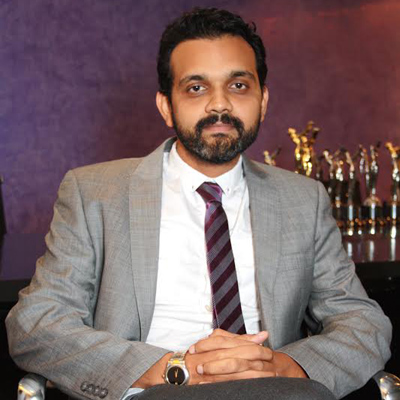
    Bodhitree Multimedia co-founder and director Mautik Tolia, who had a 12-year stint at Neo Sports Broadcast, says: "On a theoretical level, remote production is easy to happen, but on a practical level, it would face some challenges with respect to bandwidth and connectivity. To execute the whole thing seamlessly is quite tricky but will have to start making these experiments amid the ongoing crisis.”

    He adds that it will cost 20-25 per cent of the traditional production of live sporting events.

    Many international companies such as TVU Networks and Dalet Digital Media Systems are providing highly equipped, low-latency, long-term and good broadcast quality solutions.

    TVU Networks VP – product management Matt McEwen says, “Even though sports are not back just yet, the production crews have already been using this technology to create live coverage from home with sports talk programmes. They are already becoming familiar with this technology and there is no doubt that this technology will continue to be used as live sports resume.”

    In India, Star Sports and Sony Sports have indulged in remote production for non-live chat shows.

    A source close to a leading sports broadcaster says, “Remote production for non-live chat shows is already going on. Our main concern right now is to keep viewers engaged and market whatever property we are able to create." However, he adds that the decision on remote production for live sports will only be taken when there is a clear idea from the various governments’ and sports federations' decision to open for the usual sporting calendar.

    “Broadcasters are looking for an easy way to access the content; something which is accessible through the internet that even if the bandwidth is bad they should be able to work on it,” says Dalet Digital Media Systems regional sales manager Rahul Goyal.

    McEwen explains that live remote production is already possible using commodity internet connections and cloud-based production tools.  This has not only significantly reduced the cost of production but has also made it more flexible with what can be achieved.

    He further adds, “For instance, IP connectivity has made it possible to have live coverage from virtually anywhere…even someone’s home! Crews working on production don’t even need to be in the same location. Lower costs and increased flexibility should result in more event coverage which will please audiences.”

    Echoing the same view, Goyal says, “Remote production had started before the Covid2019 crisis. When we talk about remote production, it’s mainly to use fresh video from different sources or acquiring various files from somewhere and working on editing and VPN platforms to get the final output.”

    Well-versed in live sports production, Tolia explains that remote production works with Artificial Intelligence and Machine Learning and has gained prominence in games like football. A technologically advanced camera tracks the ball and different players in the game. This is done when the computer is fed with the data of ball movement from the cameras placed at the stadium that sends the captured feed to PCR.

    TVU Networks’ McEwen believes that eventually all sports events will benefit from it. In particular, niche sports and other events that were previously not covered live will benefited.  

    Marquee events such as Olympics 2020 and Euro Cup have either been cancelled or suspended by a year or indefinitely. Even if some sporting events take place across the globe, they are going to be closed doors. In-stadia fans create drama and fuel the enthusiasm of TV viewers and of course boost players’ morale.

    McEwen says, “As we transition to IP and commodity internet connectivity, it is much easier to expand coverage to areas where it may have previously been too expensive to provide coverage. For instance, it may be possible to add live coverage of fans during a game even if they are not at the event itself. Low-cost, highly efficient, and robust encoders now exist that make this possible. It is also possible that fans themselves could utilise smart phones to contribute to a production as the camera and encoding technology on these devices have become so good, especially when combined with suitable transmission technology.”
  • Industry must scale down together to ensure one party does not cannibalise another: Bodhi Tree CEO Mautik Tolia

    Industry must scale down together to ensure one party does not cannibalise another: Bodhi Tree CEO Mautik Tolia

    MUMBAI: The TV production industry had to hurriedly drop everything and wrap up shoots in order to comply with government directives to stop shooting and avoid large gatherings. With shoots re-opening in the near future, production houses will have to implement several changes in the way they function.

    Bodhi Tree Multimedia CEO Mautik Tolia says that production processes will see drastic changes. “Crews will have to be made smaller. Sanitization stations will need to be put up on sets. The temperature of the crew will need to be monitored. Set areas will have to be kept under very strict controls to make sure all areas from the food getting served, props, equipment used are disinfected on a recurring basis.”

    He feels that the decision to halt production to curb the spread of the COVID-19 had to be taken immediately, but it has left almost everyone grappling for solutions as the media and entertainment fraternity has never witnessed a standstill like this. A strong ecosystem consisting of clients, vendors, technicians and talent relationships will help them get through this testing phase.

    “This lockdown is bound to have a ripple effect across the entire chain from broadcasters to the very last worker on sets. We are anticipating the industry to lose close to a few thousand crores in the wake of this lockdown because of the COVID-19 outbreak,” he says.

    This pandemic has also robbed the daily wage workers of their livelihood. Unfortunately, layoffs and pay cuts will be the grim reality that cannot be denied. Tolia says: “We have 40-50 daily wage workers. Some of them have returned to their hometown and are waiting for the lockdown to end. Some of them are in Mumbai. We are in touch with them and make sure of their well-being, ensuring that relief reaches them. We will not lay off people. Instead, we are finding ways for everyone to come together collectively as a company and finding a balance to ensure that everyone is taken care of in the interim with feasible measures.”

    Even though budget cuts are on the anvil, it will be mindful about not compromising on the quality of the content.

    Tolia suggests that the entire ecosystem will have to find a way to scale down together in terms of current market rates.  He says that it is not a matter of an individual company but the entire industry which will have to make corrections across the system from actors, technicians, vendors, set rentals, etc. to come out of the crisis.

    “It will have to be done in a manner where all stakeholders have to come together in the spirit of co-cooperation and solidarity keeping in view the long term and making sure that one party does not cannibalise the other. That is the only way the industry will be able to tide this over,” he adds.

    Due to the lockdown, the company had to halt the shoot of two projects which are on the floor. But the teams are utilising this time to focus on pre-production, research and development.

    The creative team at the production house is keeping busy with ideating, developing new content, continuing with the scripting of existing shows so script banks can be put in place. Casting is also going on with actors sending self-tests from home.

    “We are constantly ideating and brainstorming to understand the changes occurring, both at a practical and philosophical level. While nothing has changed for us with these processes, we will continue to create storylines for our future shows with an understanding of the fact that content value can never go down. In addition, we are also building our bank in terms of scripts for our current on-air shows,” says Bodhi Tree Multimedia founder-director and CCO Sukesh.  

    As creative professionals and writers, Tolia and Motwani feel it is a good time to create a development slate of content that can be pitched to platforms over the next year. It is a time to think and reflect on what kind of content will work in the coming years.

    According to Motwani, COVID-19 is a part of reality and the organisation will have to embrace the new normal. The idea is not to exploit the pain of this time but rather get inspired and inspire and create hope for society with the kind of stories that are created. 

    Tolia adds, “The entire media and broadcast fraternity will be compelled to integrate this reality in some way and it will definitely reflect in our ideas and in our current stories. While some shows may use the impact more subtly in the background, some shows could entirely be centred on the new reality of our pursuits to counter COVID-19. Constant brainstorming sessions on how we as storytellers can capture these times are being implemented.”

    Elaborating more on their OTT venture with Voot’s Marzi and The Raikar Case, Tolia and Motwani say it has helped them immensely with the learning curve on original shows. While Marzi is an adaptation of an international format, The Raikar Case is an original creation that took 1.5 years to write.

    Motwani adds, “It is one of those shows which has a combination of interesting characters, dialogues and twists in each episode. It is probably one of the first ‘whodunit’ in the Indian digital space.”        

    Marzi revolves around the importance of consent with a psychological touch to the storyline. While it has been adapted from a British show called The Liar, Motwani says that it has helped them find the art of science in adapting an international format.

  • More localised stories is the way forward to connect with larger regional audiences

    More localised stories is the way forward to connect with larger regional audiences

    MUMBAI: Regional GEC is the new focus area after Hindi GEC for broadcasters, OTT platforms and production houses as well. South market is the biggest market in the regional space; it has grown by 45 per cent with OTT platforms investing in regional content. So, what is the way forward to connect with larger audiences in the regional market for broadcasters and OTT players?

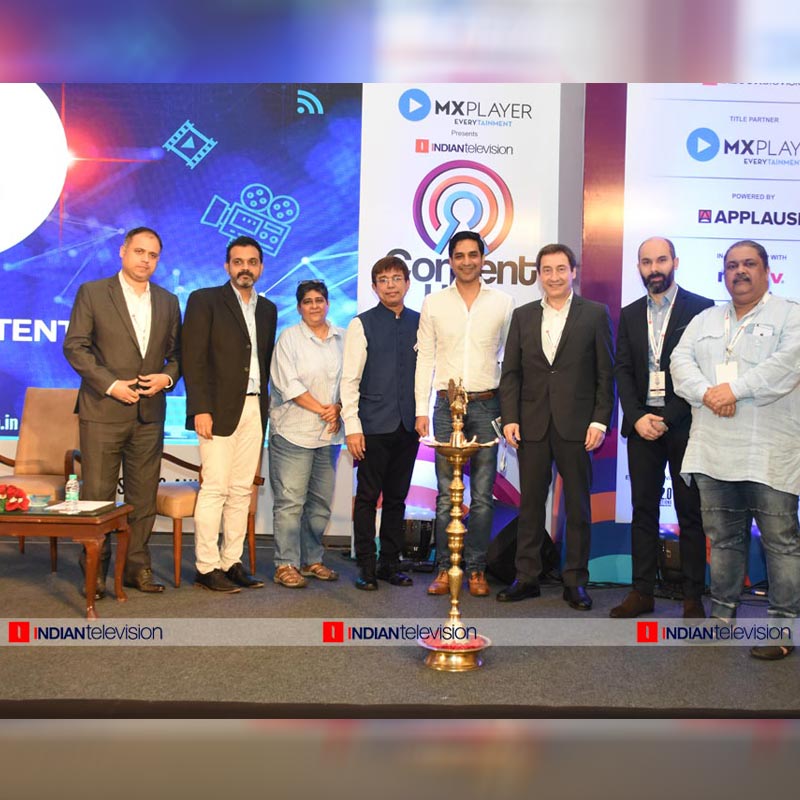
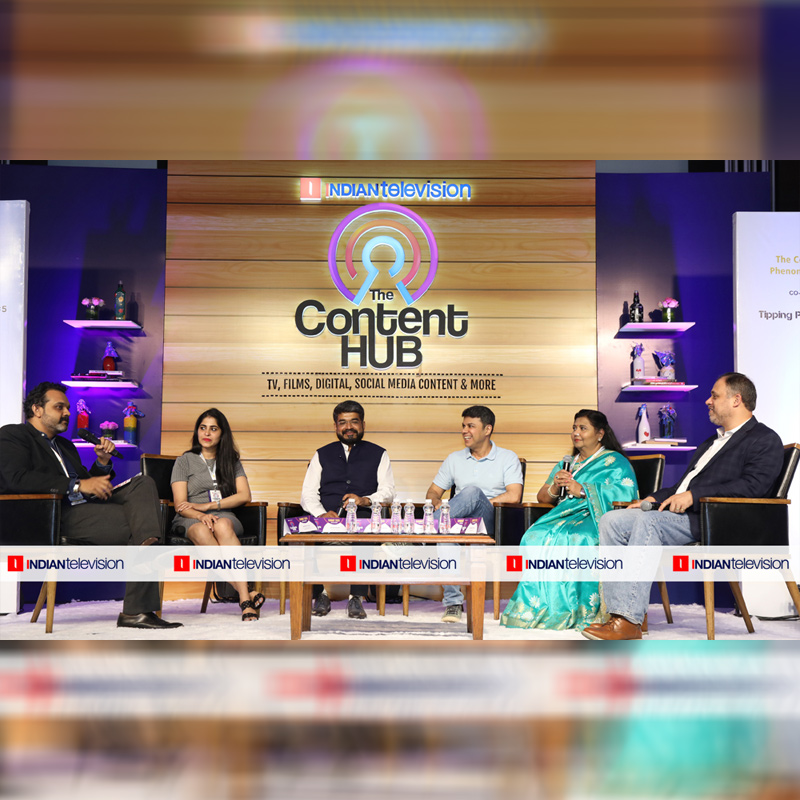
    A panel discussion on the power of regional storytelling at The Content Hub 2020 organised by Indiantelevision.com highlighted that more localised and relatable stories that connect the audiences in regional market is the way forward. The panel was moderated by Bodhitree Multimedia co-founder and director Mautik Tolia with panellists Endemol Shine India CEO Abhishek Rege, Vaishnave Mediaa Works managing director Kutty Padmini, Star Maa & Star Vijay creative consultant and Zee Network Programming Trainer Vivek Bahl, Fakt Marathi co-promoter Shirish Pattanshetty and Prime Focus Technologies SVP-global localisation Jyothi Nayak. 

    The panellists also elaborated on the need to explore regional stories, challenges faced by broadcasters and creators, dubbed content, remaking of regional content and the way forward.

    Padmini said, “Today, 45 per cent of south Indian content has grown and this year Netflix, Amazon, Hotstar, and Zee5 have invested huge money and created so much of work for people like us who are creative. The south content is very strong because it has talented technicians and writers. Hindi GEC is the largest space and the budget allotted to them is also high but South GEC has limited budget and in that limited budget we also create very good content.”

    Bahl lamented that although it is fantastic to see so many networks going into regional market he is a little disappointed that the content is similar and not unique. "We need to dive deep down and look more into local stories which are relevant in that particular market." He added the network owns all the IPR and replicate in whichever language they want without paying the writer or creator anything else and they are probably not even getting the credit. That also is holding back the talent.

    Rege said that there is a great acceptance of formats like Bigg Boss in the past few years. "More than acceptance it was always a demand to want high-quality stuff which wasn’t coming by. It helped the advertisers and broadcasters pushing it in. There is always going to be such demands again, so you put through all formats as long as you can make it viable and it's upto producers to come up with such stuff.”

    Pattanshetty said that some people from the fraternity claim that Maharashtra is bilingual so the requirement of Marathi which was classified as a P1 market a couple of years back is now going down because buyers feel that their requirement is covered by Hindi channels while that is not the case. "If we exclude Mumbai and Pune we find that Maharashtra has a lot of regional content requirement and it is growing fast. On the Marathi remake of Tarak Mehta… also we were little hesitant and we took a strong call on doing it. We saw that with that show we grew in the urban market as well.”

    Nayak said, “From 2019 to 2022, the OTT space probably is going to grow around 118 per cent. As a company, we have to ensure what is that your audience is looking at in order to scale up. If we talk about dubbing, it’s not just about translating the language, it’s about understanding that particular regional space. As a company we have to be the backbone and support and ensure that we are working hand-in-hand with content creators to ensure their expectations are met. At the same time our audiences are accepting what you are delivering. So we are in the middle of content creators and audiences and we have to satisfy both our people and that’s the challenge. Overall, the digital disruption in the media and entertainment industry has definitely impacted the market landscape and that has helped the industry while going to the next level when it comes to creating the content or serving the partners.” 

  • Top TV producers weigh in on OTT challenge, formats & IP rights

    Top TV producers weigh in on OTT challenge, formats & IP rights

    MUMBAI: Content creators today cannot rely on daily soaps to attract viewers. With OTT looming large, production houses have to broaden their content nexus. Indiantelevision.com’s The Content Hub hosted a session – ‘The TV production Story: Reality, Non-fiction’, with the panellists Contiloe Pictures producer and founder Abhimanyu Singh, Endemol Shine CEO Abhishek Rege, SOL India – Banijay Group founder and MD Fazila Allana. The session was moderated by Bodhitree Multimedia co-founder and director Mautik Tolia

    The panel discussed the hot topic of IP rights, whether it should be given to the broadcaster or kept with the creator. To this, Singh said that it is valuable for every production house to hold its IP rights, where one can syndicate and get certain revenues on a recurring basis. "If the ecosystem thinks of it then I think the law needs to protect creators just as the musicians are protected," he said and Allana agreed with him.

    Rege said that retaining IPs means financial risks for the producer. He further explained, "If we have commissioned a show in Hindi, why would you have the IP of all the languages go with the network? But while we think all this to happen, are we ready to take all the risk?”

    Discussion on the potential of content, Rege said that scripted shows are platform-agnostic. He said that the challenge here is making attractive content for the viewers and targeting the right TG. "With OTT, I don’t think it’s easy to do as many talents shows that we do on linear," he added.

    The new tariff order will bring about a change in content creation, according to Rege. With customers choosing individual channels, broadcasters need unique content to attract people. “This fight is based on non-scripted or premium scripted property," he said.  

    Allana said that non-fiction producers have a bigger challenge as opposed to fiction producers because there has been a saturation of ideas. But she added that non-fiction content is going to evolve in the OTT platform but the future belongs to scripted shows. “On OTT there will be a lot of social experimentation as well as lifestyle programming.  Earlier we all used to chase formats now we chase stories,” she said.

    The deluge of daily content has thwarted premium content from growing. Rege said, "In creating premium content, you will have to spend time in writing. Apart from that, as far as production is concerned, you will have to have the discipline of pre-producing the series and this doesn’t exist on our television. The whole ecosystem needs to move in this direction." 

  • The men of media celebrate the women in their lives

    The men of media celebrate the women in their lives

    MUMBAI: Women have the power to create, nurture and transform. The very word ‘woman’ conjures up the images of selfless love, care and affection. International Women’s Day is a worldwide event that celebrates women’s achievements – from the political to the social, professional to the personal – while calling for gender equality. It has been observed since the early 1900s and is now recognised each year on 8 March.

    Men, today, do a higher share of chores and household work than any generation before them. Yet working women, especially working mothers, continue to do significantly more. However, a real man always appreciates the important women in his life and celebrates their presence every day.

    Indiantelevision.com spoke to some of the men in the Indian media industry about their views on the subject.

    public://sunil.jpg

    ALTBalaji COO Sunil Nair

    I don’t think I need a special day to realise how important the women in my life are. At home, every day is women’s day since I live with three women—my daughter, wife and mother-and they ensure that I never forget who the real boss in house is. I believe we all can celebrate the women in our lives by respecting them, their opinions, treating them as equals and considering their views and choices as equally important.

    At workplaces, most Indian men do not know how to deal with a female coworker who is more intelligent or is more qualified. A deliberate policy that ensures that workplaces have good gender diversity helps in the longer run.

    public://rajiv_1.jpg

    Green Gold Animation founder and CEO Rajiv Chilaka

    I personally believe that women are superior to men, but unfortunately even today, most women across India are struggling to have their voices heard and are fighting hard to secure their rights. In India, gender inequality is a huge problem and that has to be fixed. Most kids TV shows today are targeted towards boys with the message that boys/men are more important than girls/women. This has to change and we need to treat boys and girls as equals. I feel we shouldn’t just dedicate a day to celebrate but rather give them respect, importance, love and independence every day. In India, we all pray to goddesses like Durga, Lakshmi, and Saraswati for power, wealth and education but yet when it comes to our households we don’t look up to our women and we treat our women shabbily. 

    At workplaces, we need to hire more women and companies need to provide security and safe transport to women who work late hours. More importantly, families need to understand that the women can also aspire to have a successful career along with a fulfilling family life.

    public://tolia.jpg

    Bodhi Tree Multimedia founder Mautik Tolia

    Women’s day is deeply significant for me as I stand the man I am today because of the women who have influenced my life in various ways by helping me evolve and grow into the person I am today. I celebrate the women in my life by constantly making them feel how special and important they are to me. Although I don’t do this enough and feel I must do this more.

    The industry needs to do more about the safety of women especially at sets, which are located in far-flung areas with late pack up times by providing them transport and ensuring their safety. The industry is very demanding on young women especially who come from smaller towns with no safety net and hence a strong support system needs to be created by the seniors in the industry to ensure their physical and mental well being.

    public://frank.jpg

    PwC India entertainment and media leader Frank D’souza

    Women’s day is a reminder of the fact that much needs to be done for women around the world, at various levels — socio, economic and political. A true test of the endeavours in this regard would be the time when we don’t feel the need anymore to celebrate a day in particular! A mother, wife, sister and daughter helps an individual to grow and flourish. I seek to recognise this contribution in the women in my life. There are times I do it well, and at times, I could do it better.

    But what needs to be done at workplace to ensure women are on equal footing as men is a debatable and tough question. Equality demands that all be treated similarly. However, one needs to be cognisant of the different needs of women at workplace, and create and implement policies to recognise such differences, primarily in issues related to career advancement. The challenge here to get the male workforce to appreciate the need for such distinction and not to feel reverse discriminated.

    public://ali.jpg

    Eros Digital COO Ali Hussein

    Women’s day is a big day for me, as it’s a good way to take a step back and recognise their contribution in my life both personally and professionally. I have two very important women in my life: my wife and daughter and I celebrate the day by taking them out for a meal.

    At Eros, we try and maintain an equal men-to-women ratio in the team. This not only ensures great productivity but more so being a consumer brand allows us to maintain a tone and culture with our viewers largely. 

    public://manav.jpg

    ALTBalaji CMO Manav Sethi

    Every day is women’s day when you live with your mom, wife and daughter. I look forward for men’s day! I celebrate the women in my life by giving them space, freedom, enablement and reinforcement that they are better than men.

    At workplace, we need to treat them as equals, give them opportunities, skill enhancement, learning and risks. Management/workplace is never a function of sex. It’s all about people, passion, commitment, common sense and brains.

  • Neo Sports scores FIFA Club World Cup telecast rights

    Neo Sports scores FIFA Club World Cup telecast rights

    MUMBAI: Neo Sports’ Harish Thawani is back with a bang! After acquiring rights for the Bangladesh Premier League (BPL) cricket, Neo Sports has now scored a goal by acquiring the telecast rights of FIFA Club World Cup.


    In its foray into club football, the sports broadcaster has acquired the rights for two editions, the first of which will unfold from 10 December, 2015. The tourney will take place in Japan this year.


    Speaking to Indiantelevision.com, Neo Sports EVP programming Mautik Tolia says, “Last time the tournament created a lot of buzz and the quality of football was also premium. We went aggressively for the rights because we feel this is a great time to have a FIFA tournament. Everyone’s eye will be on star packed Barcelona and I think there will be some exhibition of quality football.”  


    Neo acquired the broadcasting rights for the Indian sub-continent from global agency Dentsu for multiple years. “We are confident that we will recover the acquisition cost pretty soon,” adds Tolia.


    However, he refrained from revealing the acquisition cost.


    “Neo will continue to evaluate the available rights and whenever we see a premium sport available we will grab the opportunity,” Tolia says.


    FIFA Club World Cup is played between seven teams. Champions of AFC (Asia), UEFA Champions League (Europe), CAF League (AFRICA), CONCACAF Champions League (North America), Copa Libertadros (South America), OFC Champions and along with the host nation’s national champions, participate in a straight knock out.

  • Neo Sports’ Mautik Tolia opens up on the Impact of DAS

    Neo Sports’ Mautik Tolia opens up on the Impact of DAS

    DAS (digital addressable system) is here to stay. Despite the shortcomings, the hiccups in the implementation of the first two phases, the government has announced that it will not extend the deadlines of December 31, 2015 for phase III areas and December 31, 2016 for phase IV, when the entire country is expected to be digitised. After complete switchover, cable TV services will be available only through set top boxes in India.

     
    We, at the Indiantelevision.com are starting a new section – ‘The Impact of DAS’ through which thought leaders, experts from the television ecosystem will share their thoughts, ideas, and say their piece on the subject. We are beginning with the impact of DAS on the sports broadcasting ecosystem. 

     
    Our expert for the section is Neo Sports EVP programming Mautik Tolia.


    Excerpts:


    How big an impact has phase I and II digitization made when it comes to subscription revenue?


    Digitization has been a big step forward not just in terms of revenue but in providing secular access to viewers to more sports events, apart from just cricket. As India moves more and more to a multi-sport fan universe, digitization will continue to play in important role in increasing the popularity of all sports. Combined with the increasing market share of DTH platforms, which in turn enhances the reach of sports networks without whimsical interruptions (which were a constant feature in the analog domain) we at neo sports see other sports climbing to a 40 per cent share of revenue universe in 3 years time.


    From sports broadcaster’s point of view are you happy with the two phases of digitization?


    Doubtless there have been roll out issues and delays in implementation but on balance digitization has been a positive. It will be some time before more sophistication is achieved in packages and tiers, which will steadily take us to a CPS billing norm. Transparency in billing remains a challenge but we believe that too will be resolved in the next 2-3 years.


    Is the sports broadcasting industry in a subscription positive scenario? Or we are still ad dependent?


    From a 90:10 ad: subscription ratio 10 years back, the sports broadcast industry has probably moved to a 70:30 maybe even 65:35 ratio. This may even be 60:40 or 55:45 in the case of some networks. Due to significant ad spend on cricket, especially IPL this ratio will inch its way to maybe 50:50 in 3 years for the industry as a whole.


    Are sports like Football, Badminton which are hugely popular but have very little room for advertisement profitable assets for broadcasters?


    Aside of Cricket, the dominant sports are football, tennis, golf, hockey, badminton and motor sport. Except for Football and Badmnton, others have adequate ad break potential. At Neo Sports we believe that it is more a question of focus, ability and experience when it comes to monetizing sports other than cricket.


    With phase III and IV scheduled do you see a substantial inclination in subscription revenue?


    We see further momentum in subscription revenues, reach and secular access for all sports in phase 3 and 4.


    How can a non cricket sport or a sport with least ad room turn profitable for broadcasters in India?


    The profitability conundrum is more a function of irrational acquisition prices and lack of focus on monetizing all sports. We have seen at least one sports broadcaster recently pay over the top for rights that were being jettisoned by another and for which there may well have been no other takers. Ill informed and panic buying has resulted in lack of profitability for some. At Neo Sports we believe that intense discipline is required both with acquisitions as well as in monetizing assets. Wise spending may not make a sports broadcaster no 1 but there are plenty of sports rights constantly available, the universe of sports fans is rapidly expanding, advertisers are increasingly willing to spend on sports other than cricket and affiliate platforms understand that tens of millions of viewers are tuning into other sports – hence there is room for multiple sports networks and increasing opportunity for revenue and viewership expansion.

  • Bangladesh Premier League to air on Neo Sports from 20 Nov

    Bangladesh Premier League to air on Neo Sports from 20 Nov

    MUMBAI: The Harish Thawani-run NEO Sports is headed east. The sportscaster has acquired the broadcasting rights of the Bangladesh Premier League (BPL) T20 tournament. 


    The third edition  of the tournament is set to kick start from 22 November 2015. The opening ceremony is slated to take place on 20 November with some fabulous performances by Bollywood’s best. 


    The tournament which began in 2012 and continued in 2013 was not held in 2014 on account of financial complications. The rights for the Indian subcontinent were earlier with Star Sports. 


    But it was revived earlier this year and has attracted some good talent from cricketing nations the world over.


    “It has been a good tournament over the past two season in terms of quality of cricket and players’ participation and hence we acquired its telecast rights,” says  Neo Sports EVP programming Mautik Tolia.


    The broadcaster says it will consider acquiring further seasons after the current edition. And over the next few days it is going to be pushing the telecast to viewers. “We will use our network as well as other broadcasters to promote the tourney. Also what we have witnessed so far the league has been hugely popular among youth and we will be targeting them through digital media too” asserts Tolia. 


    Elite Media Works’ Nitin Anand  states, “We’re delighted to team up with Neo Sports this year as our media partners in India. Top class T20 cricket in a carnival-like atmosphere has proved a hit with fans everywhere and we expect the 2015 tournament to be bigger and better than before.”


    The six team franchise tournament consists of Dhaka Dynamites, Chittagong Vikings, Barisal Bulls, Rangpur Riders, Sylhet Superstars and ComillaVictorians. The matches will be played at National Cricket Stadium and Zohur Ahmed Chowdhury Stadium.