Tag: Mathrubhumi News

  • Battleground Kerala: News channels face off over election coverage

    Battleground Kerala: News channels face off over election coverage

    MUMBAI: Kerala is the most literate state in the country, and as a result, news consumption among Keralites is also on the higher side. At the turn of the millenium, television news channels gained massive popularity in the state, and now, it boasts of ten exclusive news channels – Asianet News, Manorama News, Mathrubhumi News, 24 News, Kairali News, News 18, Janam TV, Reporter TV, Jai Hind, and Media One. 

    News channels competing heavily in Kerala

    As the state legislative assembly elections in Kerala are going to be conducted on 6 April, news channels in the state are going toe-to-toe to affirm their dominance in the industry. All news outlets in the state have been vigorously covering election news since the announcement of the polling date, and this trend will last until 2 May when the results will be declared. 

    When it comes to viewership on television, Asianet, being the early bird in the industry, has clear dominance. The channel conducted a pre-poll survey in association with C-Fore. Asianet's pre-poll survey telecast was anchored by Asianet News editor-in-chief MG Radhakrishnan, and anchors Vinu V John and Sindhu Suryakumar. 

    "C-Fore and Asianet have been conducting pre-poll surveys since 2009. We have conducted surveys for five elections in these 11 years. The surveys were conducted in a very professional manner, and most of our predictions in the past have turned true except having some minor changes when it comes to seat counts," said MG Radhakrishnan while anchoring the survey. 

    The survey conducted by Asianet suggested that the Left Democratic Front (LDF) led by CPI(M) will win 82 to 91 of the 140 assembly constituencies in Kerala in the April election; the United Democratic Front (UDF) will bag 46 to 54 seats, while the National Democratic Alliance (NDA) will end up with three to seven seats. 

    Apart from the survey, Asianet News' satirical program Gum also succeeded in impressing audiences during this poll season. 

    Celebrated journalist Venu hosted Mathrubhumi's pre-poll survey that was carried out in association with C-Voter. Findings of the Mathrubhumi's survey also hinted at LDF dominating the 2021 elections. 

    Analysis, debates, and public polls

    Although Manorama News also conducted a pre-poll survey, it was Manorama's program Vottu Kavala that garnered positive responses from viewers. Vottu Kavala was basically a journey through 140 constituencies in Kerala which allowed the general public to participate in the show. Manorama News' Counter Point anchored by Shani was another segment that helped the channel to stay on top among Malayalam news channels. 

    Due to their Left Democratic Front leaning, Kairali News did not succeed in garnering viewers apart from their niche audiences. However, one program on the channel that impressed everyone was Votography hosted by senior journalist John Brittas, and firebrand writer Renji Panicker. Votography analysed the political scenarios in all 140 constituencies. 

    24 News conducted a mega pre-poll survey hosted by Arun, one of the most popular news anchors in Malayalam. With the implementation of advanced technology in news telecasting, 24 News is slowly emerging as one of the frontrunners among Kerala-based news channels. The channel also has a strong social media presence, and its viewers on YouTube live streaming is much ahead of Asianet News, Manorama News, and Mathrubhumi News. 

    Nikesh Kumar's Walk with Candidate was one of the top election programs aired on Reporter TV. Out of the several episodes aired, it was Walk with Superstar Suresh Gopi that garnered the maximum number of viewers for the channel. During the program, the BJP candidate lashed out at Nikesh Kumar, and videos of the incident went viral on online spaces. 

    Apart from regional Malayalam channels, popular national news channels in the state including India Today, Times Now, NDTV, and Republic TV will be also covering Kerala legislative assembly elections religiously. As the BARC data is not available, it is still unclear which channel will fare well in the upcoming Kerala polls coverage. However, regional language channels are expected to win big when it comes to a share of the viewership pie. 

    Keralites will cast their votes on 6 April, and the state will wait until 2 May to know the results of the legislative assembly elections. During this 26-day span, news channels will most likely try to keep their momentum going by conducting post-poll opinion surveys. Apart from this, news debates during prime time are also expected to draw viewers in the coming days. 

  • Mathrubhumi’s Naveen Sreenivasan aims to build new revenue streams, expand client base

    Mathrubhumi’s Naveen Sreenivasan aims to build new revenue streams, expand client base

    NEW DELHI: As the industry steps into the crucial revival phase post several months of Covid2019-induced downturn, Naveen Sreenivasan has taken charge as the new head of Mathrubhumi Group’s media solutions team for the group’s TV channels — Mathrubhumi News and Kappa TV, its radio brand Club FM, as well as all of its digital business. 

    Sreenivasan is visibly excited about his new role and is positive that the market will only grow in the coming months. He said, “The business environment in Kerala started bouncing back quite quickly post an initial couple of months of the pandemic and advertising picked up during Onam. Now, with the national festive season starting, we see the momentum carrying on. Interest in advertising is definitely alive and we have been seeing active advertising from a wide range of verticals including automobile, NBFCs, FMCGs, jewellery, and education. We have also witnessed substantial activity from local businesses especially in Club FM, which clearly indicates that the local markets are alive.”

    He noted that while the market conditions are on an upward trajectory, challenges still persist. “This is an opportunity for us to dig deep, double down on our efforts smartly, build new revenue streams and expand our client base. My experience of working with the print business will definitely hold me in good stead in leveraging synergies between our media verticals.”

    The festive season has opened up the gates of opportunities across sectors in the state, as a result of which the group is slowly getting back to its pre-Covid advertising rates, he added.

    Speaking about his strategy and initial plans, Sreenivasan said that he is looking forward to leveraging synergies amongst the group’s assets and the team’s deep understanding of the Kerala market to deliver value for various clients.

    He added, “On digital, where the market is evolving the fastest, we are looking at very aggressive growth by building on our strengths and tapping into new revenue streams. We already have a news ecosystem which delivers 100 million page views and 10 million monthly unique visitors and a social media ecosystem with five million followers. Among our other digital products, we have industry-specific offerings – like FindHome, our real estate portal.”

  • Mathrubhumi TV CEO Mohan Nair moves on

    Mathrubhumi TV CEO Mohan Nair moves on

    NEW DELHI: After a stint of more than nine years at the broadcast section of  media giant Mahrubhumi, Mohan Nair has confirmed his departure from the role of CEO of Mathrubhumi TV and Kappa TV to Indiantelevision.com. 

    It was under Nair’s leadership that Kerala-based media group had ventured into the TV medium with the launch of Mathrubhumi TV in 2013, today one of the top 10 news channels in the region. He also expanded Mathrubhumi’s portfolio of channels with the launch of Kappa TV, a Malayalam youth music channel, the same year.

    Earlier, Nair had worked as CEO of Sri Lanka-based Maharaja TV, and COO of Asianet Communications. Nair has also worked for over a decade at The Economic Times where his last role was as senior editor and bureau chief, Mumbai.

  • The news must go on! How news channels work during lockdown

    The news must go on! How news channels work during lockdown

    MUMBAI: A deft usage of virtual technology means is helping news broadcasters to stay afloat and produce the round-the-clock fresh content amid the spectre Covid2019 pandemic. Be it getting a live link from reporters or getting a guest for a live debate show, news channels have taken recourse to various video calling applications or broadcast-friendly video transmission software tools such as TVU and LiveU.

    With TV production coming to a halt, news is the only genre that has been generating fresh content for viewers. It has also been placed under the essential services category by the government during the lockdown so as to inform and create awareness.

    Tools like TUV indeed have come to the rescue of broadcasters in these unprecedented times. 

    The TVU Anywhere mobile app has seen a large increase in global use recently as TV reporters and anchors have migrated from traditional studios to reporting from living rooms, balconies and shared living spaces within their homes and apartments. The app's ease of use and fast set up – requiring just a download to the user’s mobile phone – allows anyone needing to do safe remote reporting to go live instantly. 

    TVU Anywhere can also be used remotely for non-live interview reporting. It’s PiP feature supports the use of prerecorded video. A reporter can comment live while the recorded video is playing. TVU has been working with news stations and government offices in different countries. 

    “TVU is committed to work with all broadcasters across India to support their efforts to deliver crucial updates and information to their viewers during this unprecedented time. We are providing our cloud and IP based solutions free at this time to help broadcasters transition as seamlessly and as quickly as possible to remote production to minimize disruption,” said Sushant Rai, VP, sales – South Asia, Middle East and Africa, TVU Networks. “In addition, TVU will continue to provide its renowned 24/7 global service and all support personnel are fully mobilized to support customers as well as the larger broadcast community.”

    The news channels have started taking the help of technology to keep the business running. And video calling applications have become a saviour for broadcasters along with video transmission software tools that they had already been using, such as TVU and LiveU. Most channels rely on Skype, Zoom and WhatsApp applications to bring panellists on TV screens virtually.

    Times NOW’s editor-in-chief Rahul Shivshankar says: “In the current scenario where social distancing needs to be practised as a norm, connecting with guests and experts via video (calling) applications is the most suitable option. Apart from Whatsapp and Skype, we rely on Microsoft teams.”

    “Our producers talk the guests through the procedures well in advance and even offer technical solutions to ensure that they adjust to them,” says Shivshankar. He says that the channel will also continue to largely engage with guests and viewers virtually as a means of practising social distancing.”

    Apart from video calling apps, the channel has also been using video transmission software called LiveU. All the reporters of the channel have been given access to the mobile app of the software for either a live reporting or sending a recorded link to maintain the broadcast quality.

    Malayalam news channel Mathrubhumi News has also been using the LiveU mobile application to get information from reporters. The channel uses it as per guests’ convenience for connecting them virtually to a live show or debate.

    Mathrubhumi News chief executive officer Mohan Nair says: “Each guest has their preference and understanding for a video calling application; hence we have been using the video-calling application as per their choice such as Zoom, Hangout, Google Duo, WhatsApp, etc.”

    A source close to a leading Hindi news channel also agrees that the channel is majorly dependent on Skype and LiveU. However, the channel, lately, has also been trying a video calling app called Zoom. “Not just reporters but we have given the access of LiveU application to guests, who join our debate shows. And, if need be we also send a camera crew to the guests’ place while ensuring precautions.”

    The reporters are also using the LiveU mobile application to report a story from the field. The application allows the producers to connect the reporter and other panellists without disturbing the broadcast quality.

    Echoing a similar view, Nair says: “In pre-pandemic period, the virtual connections used to take place on a smaller scale but lately this crisis has forced everyone to be connected virtually. People watch new channels for information and they do so irrespective of whether a guest comes to the studio or connected from his/her home.”

    Asianet News assistant executive editor Sindhu Sooryakumar explains that the current lockdown situation has also forced the reporters to multitask; they not only report the story but also have to fit into the shoes of the cameraman by ensuring proper video frame setting, background, and sound.  

    “The reporters and anchors of the channel use TVU mobile application to report and present news stories; a person sitting at the production control room in a newsroom patches everyone to give a flow to the show,” says Sooryakumar, who anchors a show called Cover Story on the news channel.

    What about the broadcast quality?

    Indeed, the two major issues facing the news channels while connecting guests through video calling applications are: Internet connectivity and video quality. The latter is somehow either adjusted by the producer, but the former has been the major concern of the news broadcasters.

    The broadcast quality is somewhat maintained due to the TVU mobile application as compared to other video calling software tools, Sooryakumar adds. News channels are taking extra effort to bring information to the audience and ensure that they give disclaimer about the fact that they are working from home.

    “Bandwidth issues and call drops definitely act as deterrents as it does affect the audio and visual experience. However, these challenges are beyond anyone’s control and in the current scenario, video calling is the best way to work with. We are also glad that both our guests and viewers are cognizant and accommodative of intermittent lags,” says Times NOW editor-in-chief.

    Echoing the same view, Mathrubhumi News CEO says: “The internet connectivity issue is major hindrance during a live show; however, to be flawless in our programming we do a multiple trail with guests, who are connected through a video call before going live. We ensure video quality is good, bandwidth is uninterrupted as well as the sound and background of the video frame is appropriate.”

    Another source close to a leading English news channel says: “All our reporters and guests use LiveU application for video transmission as it helps maintain the broadcast visual quality and the app also helps the producer to patch the call quite quickly and smoothly, be it a single or multi-windows.”

    He adds: “Internet being the primary issue for every news channel, we are not much concerned about the video quality as the panellists already occupy meagre space on screen as we, generally, never had less than eight experts for a live debate show on both of our news channels.”

    It is likely that the Covid2019 crisis is likely to give birth to advanced virtual connections for guests and reporters joining a show on news channels. Such technological means may become the new normal for broadcasters in the days to come just like the work-from-home phenomenon.

  • News channels under lockdown burden

    News channels under lockdown burden

    MUMBAI: The extension of nation-wide lockdown has affected the business of news broadcasters which are burdened with increased operating costs and less advertisement revenues.  

    The government has put the news channels under the essential services category. Going forward, the news channels will face the daunting task of sustaining operations with little or reduced ad revenue. The operating costs are the expenses for the maintenance and administration of business on a day-to-day basis.

    Asianet News Network chief operating officer Abhinav Khare is of the view that the extension of lockdown may impact the news channels’ business adversely. “From 30-45 days earlier, the network now is running on exceptional 90-day working capital due to this unprecedented virus situation.”

    “Revenue collection has become a massive issue for news channels and they are likely to face cash crunch issues sooner or later”, Khare says. “The advertisers are not able to pay news broadcasters immediately as their businesses are not operational due to the lockdown.”

    The lockdown, in a way, has come as a blessing in disguise for the news channels as they have been able to cut down on the operating costs of news channels. “Reporters don’t have to go out for reporting like they used to do before; they do stories digitally. Guests are joining shows virtually. Transport costs have also come down as employees have been asked to work from home,” a source from a leading Hindi news channel says.

    “Operating costs are currently manageable and measures to curb it will only be decided once this extended lockdown ends,” says Mathrubhumi News chief executive officer Mohan Nair. “With Kerala likely to be re-opened partially from Monday, there are chances that the situation may get back to normal.”

    Nair believes that it would be too early to predict anything about the future course of action with respect to the network’s business. “This is indeed true that we are unable to get advertisers on board, but expect that operating costs would normalise with the situation returning to normal.”

    Concerned about high operating costs amid the lockdown, News Broadcasters Association president Rajat Sharma has written to the central government either to reduce, remove or bring the goods and services tax in line with the print media industry. GST on advertising for the broadcasting industry is at 18 per cent and for print media it is at five per cent.

    ABP News Network chief executive officer Avinash Pandey says: “In terms of COVID-19-related programming, we have taken numerous initiatives and introduced innovative line-ups on all our news channels. These specially curated shows have garnered tremendous viewership and we have roped in sponsors for our channels.”

    Pandey, however, indicated that there won’t be any retrenchment or salary cut in order to reduce the operating costs. He believes that once the crisis is over, the network will be able to come back stronger with its strong content and programming line-up.  

    Brand and agency experts believe that despite high viewership, news channels are unable to attract maximum advertisers due to the substantial reduction in overall ad spend. They have been re-working their advertising strategy due to the COVID-19 situation.

  • Kerala Floods: GEC viewership falls, news channels witness rise

    Kerala Floods: GEC viewership falls, news channels witness rise

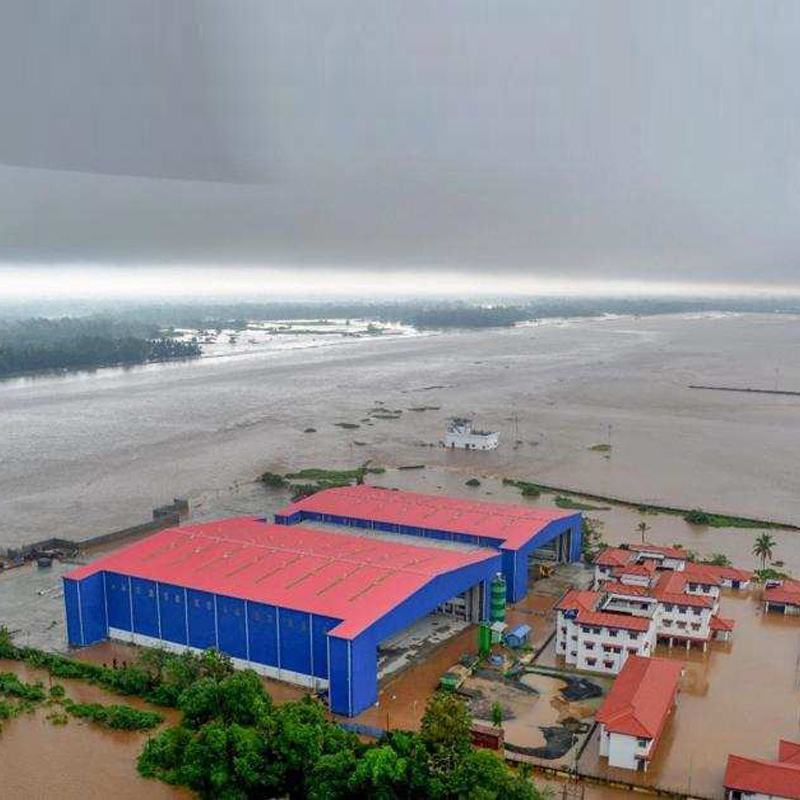
    MUMBAI: The Kerala cable and broadcast industry is just about keeping its head above the water, quite literally! The industry has been crippled due to the recent floods. We wrote about how cable operators bore the brunt of the calamity yesterday. Needless to say, broadcasters were also not unaffected.

    Kerala Vision Digital TV general secretary Rajan KV said that there is no infrastructure loss for TV channels and 500-600 cable networks are still under water. “The viewership has seen 30-35 per cent downfall as many homes were not able to see a single channel both on DTH and cable networks,” he added.

    According to BARC data, the incessant rains that derailed Kerala kept viewers hooked to their television sets that were relying on the medium to keep track of the situation. With 214.1 million impressions, week 32 (4-10 August) saw the highest peak for Malayalam news genre in 2018. The genre saw a 98 per cent growth in the week compared to the average of the previous 4 weeks.

    In a letter dated 21 August 2018, Cable TV Operators Associations (COA) stated that the cable operators have been the worst affected because of their extensive presence in the flood-affected areas. The affected include human lives and damage to property across the state while power and cable lines have suffered extensive damage and distribution has been totally disrupted.

    Mathrubhumi head-distribution Thampi P Joseph said, “Cable TV was the most affected industry by this natural calamity. No monetary losses have been faced by the news broadcasters. In the past two weeks, the GEC rating has gone down and a tremendous growth has been seen for the news channel. We saw a good spike in viewership ever since the floods had started.”

    Kerala has a total TV population of close to 31.3 million, out of which, around 25.8 million people watched Malayalam news in week 32. This means that 8 out of 10 people in the state sampled news in this week. Out of the state’s total TV viewership, 17 per cent came from Malayalam news genre alone, with every viewer spending an average of 1 hour 3 minutes watching news.

    Manorama director news Johny Lukose also believes that there was no substantial loss for the news channels and no channel in the Kerala market faced any infrastructural damage. “The news channels cancelled all the advertisements from the ad inventory to cover the disaster. Two of our channels, Manorama News and Mazhavil Manorama, have lost Rs 10 crore,” he said.

    However, there is still some financial loss that has been felt. According to Insight Media City MD R Sreekandan Nair, the TV broadcasting industry across the state has been set back by more than Rs 50 crore. “We have stopped production of shows for our channels. Apart from the news channel, other players in the market are shifting or repeating the programs. Flower TV has lost almost Rs 10 crore in the disaster. News channels are not affected much because of less tariff, but the entertainment channels have faced huge losses because of the big productions,” Nair said.

    Friday (17 August 2018) alone accounted for 34 per cent of the total news viewership for the week at 72.8 million impressions.

    Asianet News stood at the top with 36 per cent of total news viewership.

    Mathrubhumi News output editor Abi T Abraham said, “By and large, the facilities for the coverage were going as planned. As far as Mathrubhumi is concerned we had about seven Digital Satellite News Gathering vans and 10-15 reporters on the field with live units, except in the case of remote areas where network and electricity were not available. All the channels also did well in terms of covering the disaster but did not face any major damage of technology.”

    It will be a challenge to restore conditions in the state and work to make up for the losses that companies have suffered.