Tag: MasterCard

  • Mastercard launches campaign with CRED to make high-value transactions

    Mastercard launches campaign with CRED to make high-value transactions

    Mumbai: Mastercard and CRED on Monday launched a campaign that will enable Mastercard credit cardholders to make simple, secure tuition and rent payments for housing expenses using the CRED app.

    Cardholders will enjoy the convenience of making high-value transactions such as rent payments or paying maintenance and school fees for any type of education, from primary school to university, from any mobile device while benefiting from additional liquidity and enjoying exclusive cashback and credit card rewards.

    “By rewarding transactions and providing a seamless experience, we can enable more CRED members to use their cards for large value recurring transactions. Partnerships with ecosystem stakeholders like Mastercard encourage members to pay their monthly rent and education fee payments on their credit cards, enabling them to gain more credit card points and unlock greater liquidity. At CRED we are creating a system that strives to reward high trust and creditworthy individuals of India, inspiring others to be like them,” said Cred’s representative Akshay Aedula.

    Mastercard’s Vice President- Digital Partnerships, South Asia, Aditya Murthy said, “Mastercard technology offers simplicity and safety to cardholders with every transaction. This partnership with CRED opens convenient, new payment possibilities on credit card spend for millions of mobile-first users and facilitates greater choice for Mastercard cardholders.”

    “Enabling high value, recurring transactions such as tuition and rent to be paid on credit cards will make strides in accelerating India’s transition to a less cash economy. Through Mastercard’s longstanding relationship with CRED, cardholders will enjoy more secure, seamless checkout experiences,” he added.

  • ShortsTV to showcase women-centric docuseries ‘Five’

    ShortsTV to showcase women-centric docuseries ‘Five’

    MUMBAI: ShortsTV, which recently became the exclusive presenter of the Academy Award-nominated short film theatrical releases, has signed a one-year exclusive distribution deal with Mastercard for Five, a collection of documentary short films from women directors about the perseverance and passion of women entrepreneurs.

    Through the partnership, ShortsTV’s aims to spotlight short-form filmmakers and diverse perspectives in association with Mastercard’s commitment to gender balance and supporting small business. The five highlighted films will be featured on ShortsTV’s linear broadcast channels such as Tata Sky ShortsTV, Airtel Shorts TV and ShortsTV Active on Dish TV and d2h in March 2021 to mark International Women’s Day.

    This five documentary film series has been commissioned by Mastercard and includes Harfa, Justice Of The Pies, Onganic Foods, Sarah’s Bag and Talento Incluir. They follow the journey of five women from five countries across the globe who have each set out to start a purpose-driven business to improve and uplift their communities. Earlier this year, Mastercard expanded its commitment to financial inclusion with a pledge to bring one billion into the digital economy by 2025, including a focus on providing 25 million women entrepreneurs with solutions that can help them grow their businesses. Spotlighting these five stories will bring further awareness to some of the world’s most critical issues challenging inclusion.

    “We are thrilled to be joining Mastercard in highlighting five great films about five great women from around the world who have overcome significant challenges to create thriving, community-enhancing businesses,” said ShortsTV founder & CEO Carter Pilcher. “Each one of these uplifting stories speaks to the triumph of an indomitable human spirit, the subtle power of women heroes, and the ability of visual storytelling in film to inspire us daily.”

    Five is also a part of Mastercard’s gender balance commitment to design a better world for women by cultivating opportunities, resources and communities that give women the tools they need to grow their businesses.

    “Film is a powerful medium, inspiring and educating people through human stories and personal connections. It’s a natural way to drive awareness and empathy for the critical issues women entrepreneurs face every day and we’re honoured to give these five women a platform to share their experiences,” said Mastercard chief marketing and communications officer Raja Rajamannar. “Working with such an innovative partner, ShortsTV, gives our Five documentary series the ability to connect with people all over the world, sharing meaningful messages of resilience, perseverance, community and comradery.”

    Harfa, directed by Elle Mische

    Learning is a lifelong pursuit, often brimming with a wealth of books and experts on every topic imaginable. But when Irena Orlovic went searching for ways to help teach her young daughter with a developmental disability, she discovered only empty bookshelves in her native language. What began as an educational journey of her own led her to start Harfa, a publishing house founded with an entrepreneurial spirit and a desire to help teach an entire country.

    Justice Of The Pies, directed by Michelle Marrion

    Basil key lime, blue cheese praline pear, lavender lemon—mouth-watering pies by chef Maya-Camille Broussard delight all five senses. Created to honour her father’s legacy as a Chicago criminal defence attorney who could never say no to a good pastry, Justice of the Pies serves not only the most inventive pies in town but also the city’s future talent, by teaching skills like nutrition and budgeting to kids from underserved communities while they bake their first delicious pie.

    Onganic Foods, directed By Lisa Madison

    After starting her own garden, journalist Ekta Jaju uncovered that modern farming practices were causing profound health effects on small farmers in her district. Curious and community-minded, Ekta began educating hundreds of farmers about the dangers of pesticides and showing them a better way through organic farming. Her mission quickly blossomed into a thriving business based on sustainable agriculture. Onganic Foods is living proof that one small seed of change can transform a countryside.

    Sarah’s Bag, directed by Nadia Naffa

    Sarah’s Bag follows the story of solicitous entrepreneur Sarah Beydoun. While working on her thesis in Sociology, Sarah’s eyes were opened to the struggles of women who had been left behind – enduring imprisonment, abuse, and prostitution. Feeling compelled to help, Sarah found local resources and damaged materials to make handbags, while using employment to give the women their dignity back and a means to support their families. Sarah’s Bag takes you inside the lives of those given a second chance.

    On 4 August 2020, an explosion occurred that severely damaged Beirut. The horrific blast was the scale of a nuclear explosion — the size of the blast being estimated as that equivalent of 200 to 300 tons of explosives. The impact killed more than 200 people, injured more than 7,000 and left up to 300,000 survivors without their homes. The blast ripped through Sarah's business of 20 years.  The roof collapsed on Sarah but she survived. She is working to rebuild her physical and online store, both domestic and internationally.

    Talento Incluir, directed by Renata Sette

    In a split second, life changed for Carolina Ignarra. Following a harrowing accident, she would need to traverse the crowded streets of São Paulo, Brazil, in a wheelchair forever. She quickly discovered the biggest challenge she was about to face wouldn’t be her own disability, but systemic workplace discrimination for the broader Sao Paulo disabled population. Driven to educate managers on the meaning and value of inclusivity, Carolina started Talento Incluir to help promote new pathways for employers to value, hire and redefine what it means to be top talent.

  • Brands bid farewell to MS Dhoni for making India proud

    Brands bid farewell to MS Dhoni for making India proud

    NEW DELHI: Former Indian cricket team captain, Mahendra Singh Dhoni, bid adieu to international cricket on 15 August. He made the declaration through his Instagram post where he wrote, “Thanks. Thanks a lot for ur love and support throughout. From 19.29 hrs consider me as Retired.”

    Popularly known as captain cool and also one of the most successful cricket captains of India, he has led the team in many astonishing victories. Under his regime, India won three ICC trophies including the 2011 cricket world cup.

    The unexpected announcement left many people shocked and netizens poured in their tributes for Dhoni and saluted the legendary cricketer. In just a few hours, social media was abuzz with his name and #DhoniRetires was trending on top.

    The style of retirement was also very unique from the cricketer. Dhoni posted a video which highlighted some of the best moment he has experienced in his lifetime during the course of the game. It also featured other Indian cricketers like Sachin Tendulkar, Rahul David and Virat Kohli.

    Dhoni was not only the world’s highest-paid cricketer but a popular choice in the advertising world as well. Over the years, he has worked with an array of brands. In his astonishing career, he worked with multiple brands like Cars24, Mastercard, Netmeds, Dreams11, redBus, Snickers, Indigo Paints and many more. With Pepsi, MS Dhoni had the longest association of 11 years; it started in 2005 and campaigns like ‘Oh yes Abhi’ and ‘Change the game’ garnered a lot of attention.

    Recently, he was featured in CARS24 360 degree marketing campaign, “Car bechni ho, toh CARS24” where Dhoni played dual characters of a seller and buyer.

    ITC Ltd also released a film for Sunfeast Yipee when the brand expanded into the new category of pasta products. The TVC showcases him tasting six delicious pasta variants, offering the convenience of instant preparation.

    The former captain had done many back to back TVC campaigns with Dream 11 and Snickers, with a new avatar each time.

    According to the Duff & Phelps Celebrity Brand Valuation study 2019, while Virat Kohli retained his position as the biggest celebrity brand in India for the third successive year, Dhoni was ranked at number nine.

    As per Forbes, in 2016, Dhoni’s net worth was around $31 million and brand endorsements comprised a large part of this value.

    According to the Adex survey of TAM Media Research, during the January to June period of 2010, while Dhoni, at his peak, endorsed brands for 24 companies on TV, Shah Rukh Khan and Tendulkar were seen promoting the products of 16 and 15 companies, respectively.

    During the period, ‘captain cool’ appeared for a host of brands, including Reebok, Aircel, Godrej, and TVS. In July 2010, he had signed a Rs 210 crore deal with Rhiti Sports Management and Mindscapes which till date is considered as one of the highest-paid deals.

    Brands from across verticals joined the bandwagon and poured good wishes for the cricketer, and launched creatives on social media. Amul rolled out a heartwarming video, a montage of his achievement in his 16 years long international career.

    Brands like Parle-G, Zomato, KFC, Google, Netflix, Disney+ Hotstar, IndiGo and many other brands paid tribute to the legendary cricketer.

  • 74% of respondents will continue to make purchases via contactless mode: MasterCard report

    74% of respondents will continue to make purchases via contactless mode: MasterCard report

    NEW DELHI: As communities begin to slowly reopen, business owners and the consumers they serve are entering unknown territory, navigating the new normal, living with precautions. During these times, contactless and other forms of digital payments have emerged as the healthiest way of making payments as they are more secure and require minimum physical contact between the merchant and customer.

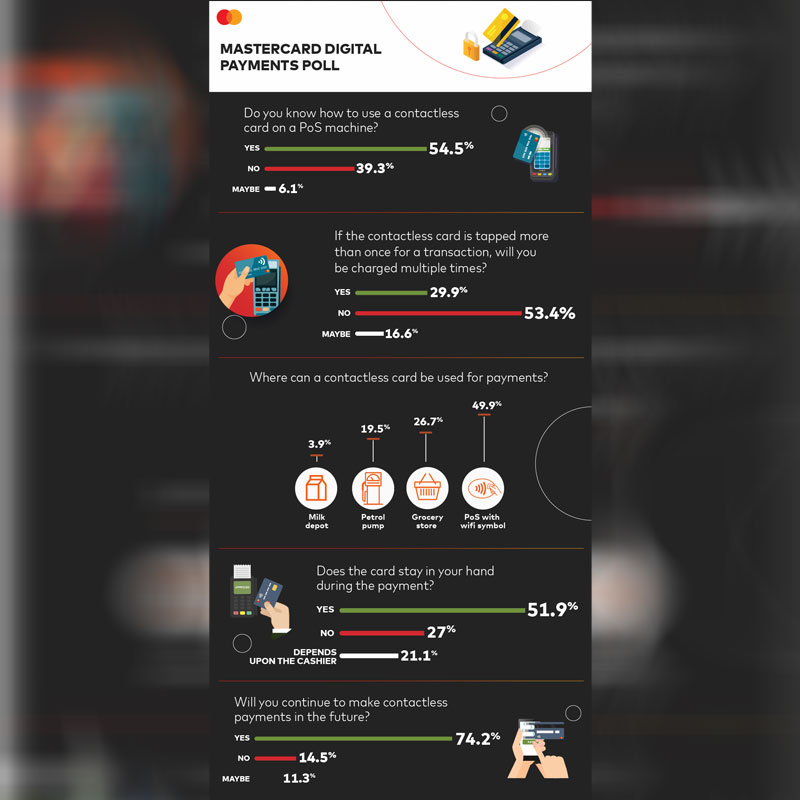
    To garner more insights on Indian consumer sentiment towards contactless payments Mastercard in India recently conducted a digital payments poll. Indian consumers show an increased awareness and positive shift in preferences towards contactless payments:

    Over 54 per cent of the respondents know how to use a contactless card on a PoS machine
    53  per cent of the respondents know that consumers don’t get charged multiple times if the contactless card is tapped more than once. However, 30  per cent   did not know this highlighting the need for more awareness of the safety of contactless payments
    74 per cent of the respondents, a high number, said that they will continue to make purchases digitally or via contactless mode in the coming times
    51  per cent   of the respondents know that contactless card remains in the hand of the customer while making a transaction
    49  per cent   of the voters know that a POS machine with a WIFI symbol will allow them to use a contactless card to make a payment

    Increase in awareness and usage of digital payments

    In the current environment, there has been significant growth in adoption of contactless payments both globally and in India. Consumers are aware that contactless technology and digital payments can ease some of the tension by reducing a measure of daily risk when we pay. This technology also empowers some of the most financially vulnerable with a safe and secure way to make and receive payments.

    According to recent Mastercard data, there is a 19 per cent increase in the actual contactless cards issued in Q1 2020 over Q4 2019. Currently, the top 5 cities in contactless transactions are Bengaluru at 16 per cent, Delhi and NCR at 12 per cent, Chennai at seven per cent and Mumbai at six per cent. The South region dominates the contactless ecosystem with maximum number of contactless transactions seen there. Bangalore has by far the highest number of contactless transactions, more than twice the next city which is Hyderabad.

    Interestingly penetration of contactless transactions is the highest in the lowest ticket size. Below $ 10 seems to be the sweet spot for contactless transactions in India and this trend bodes well for mass adoption. India is making rapid strides in bridging the digital payments divide. Penetration of contactless transactions is being driven by the top four categories that includes food stores, restaurants, fuel and drug stores dominating the contactless ecosystem. Food stores, restaurants and bars and gas stations are the only category with one million + transactions in each month of Q1 2020.

    The poll was conducted with approximately 39288 individuals between 15-19 June 2020 through Twitter. 

  • Brands and their digital-first avatars

    Brands and their digital-first avatars

    NEW DELHI: We are the natives of a digital world. Most of the resources that were earlier physical for us have turned into pouches of kilobytes and megabytes; be it our photographs, watches, or music systems. Wrapped in a screen of five inches, a big part of our hobbies, our jobs, and our social communications are now soldered onto motherboards.

    Quick to react, the marketing industry shifted a big chunk of their annual spends to digital platforms. In India alone, the digital marketing industry is growing by more than 30 per cent annually. Not just advertising, a lot of brands have been investing in revamping their identities for a digital world.

    Last year, the industry noticed a lot of brands, including big names like Mastercard and Doritos, doing away with names in their logos and sticking to just their symbols. The brands argued that simpler logos appeal better to GenZ, who do not prefer over-the-top marketing and a loud brand presence.

    This year, brands like Volkswagen, Durex, and Cadbury started another trend, called flattening of their logos. They are getting rid of any 3D elements in their logo design and shifting to bolder, simpler typefaces. Again, the wish is to connect better with a younger audience.

    Madison BMB CEO and chief creative officer Raj Nair says: “There has been, particularly in the last five odd years, a multitude of companies going in for a revamp of their logo/identity. These include companies that owe their origins to the online world as well as traditional companies, which primarily conduct their business in the offline world.  So you have online natives like Google, Pinterest, Airbnb, Spotify and GoDaddy that have conducted this exercise as well as traditional giants like Cadbury, Durex and Volkswagen that have also undergone a change.”

    However, more than appealing to a younger audience, reshaping of logos make a great sense for the mobile-dominated world of today.

    DDB Mudra Group NCD Rahul Mathew explains: “Brands have to adapt to the world their consumers live in, and logos are a big part of every brand’s identity. As more and more of brand engagement, research and even purchase are moving from the physical world to the digital one, brands are also evaluating what they can or should carry with them. Their 3D logos are like massive four-poster beds that have looked beautiful where they have been living but are a pain to move.”

    He adds: “2D logos are much more flexible. The absence of shadows and gradients makes it easy to use them across platforms and formats. The minimalism also makes digital assets easier on the eye and more recognisable.”

    Google was, probably, one of the first brands to react to this need. It came with a revamped identity in the year 2015, bringing down the size of its digital logo from 14,000 bytes to only 305 bytes. Back then, in a blog post, the technology giant had revealed that the move was made to make the logo look good on small screens. According to experts, it also made easy to load on the devices of those living in remote locations, possibly with slow internet speeds.

    And, additionally, this restructuring of logos for a digital world can open up a plethora of opportunities for the martech companies.

    According to a machine learning engineer, it is easier for machines to identify 2D logos from a low-resolution image as compared to a 3D image, as the number of vectors is lesser in the former, not taking into account other external factors. This might allow martech companies to scan user images from online sources and create a better database for better-targeted marketing.

    Havas Group India chairman and chief creative officer Bobby Pawar elaborates: “Flat logos are simpler and generally more easily identifiable. They are easier to reproduce without losing anything across all touchpoints, platforms, and user interfaces. It, therefore, will (help in creating richer databases for marketing).”

    Brands and marketers are thinking digital-first these days, thus, creating a vast playfield for martech companies to innovate and come with solutions that can utilise these opportunities. On the other hand, it is equally important for platforms and governments to safeguard user data as the technology is making it easier to access by alien parties. However, whatever may be the individual discourse from here, the world is surely entering into an exciting data-dominated phase of unusual marketing opportunities, which will be a delight to observe. 

  • Brands mourn the loss of actor Irrfan Khan

    Brands mourn the loss of actor Irrfan Khan

    NEW DELHI: Wednesday morning sent tremors of despair across the country as the news of the untimely demise of Bollywood actor Irrfan Khan broke out. The 53-year-old star, who had not only worked in some path-breaking Hindi films like Maqbool, Madari and Piku, but had also been a part of Oscar-winning international projects, including Life of Pi and Slumdog Millionaire, had been suffering from Neuroendocrine tumor. The versatile star was also the face of some popular brands, most notable being Syska LED and MasterCard. He had also appeared in advertisements of Indica Easy Hair Colour (CavinKare India), Candid Dusting Powder (Glenmark Pharmaceuticals Ltd), Envy 1000, CEAT Tyres, and Vodafone, amongst others.

    Syska Group head of marketing Amit Sethiya took to Twitter to share his feelings over the sad demise of the actor. He wrote, “No words to express the sorrow. You will continue to rule our heart Irrfan and will always be remembered for your impeccable performances and humble persona. Strength to your family members. #IrrfanKhan #RIPIrfan #RestInPeace #Legend #Omshanti (sic).”

    The brand also shared an emotional video on its Instagram handle to mark his journey as the face of Syska LED, taking snippets from the very popular ads he did for them.

    Several other brands paid tribute to the actor as well as homage with beautiful creatives and heartfelt messages.

    DLF Promenade

    Limeroad

    MTV Beats

    Oven Story

    Parle G

    T Series

    YouTube India

  • WFA launches new guide on diversity, inclusion in marketing

    WFA launches new guide on diversity, inclusion in marketing

    MUMBAI: The World Federation of Advertisers (WFA) has published a new guide on diversity and inclusion in the marketing industry, providing brand marketers and their agencies with insights and actionable recommendations to improve performance in this critical area.

    The aim of the new report is to share good practices and insights in relation to internal company policies and set-ups as well as how to improve the content of brand communications so that the myriad of different consumers, partners and employees who make up a brands’ universe feel truly represented.

    The report also celebrates work that champions accurate and progressive representations of race and ethnicity, ability, sexuality, gender identity and age in a sensitive and inclusive manner as well as highlighting the challenges that indiscriminate use of programmatic blacklists can create for brands that seek to promote diversity.  Lastly, it highlights the journeys that some leading brands have embarked on and their visions for diversity and inclusion in the industry.

    The initiative seeks to respond to a growing perception within the industry that advertising is falling short on its ability to be inclusive. A global study conducted by IPSOS found that 72 per cent of respondents felt most advertising does not reflect the world around them. Sixty-three per cent claimed they don’t see themselves represented in most advertising, and 60 per cent say they don’t see their community of friends, family, and acquaintances represented accurately.

    WFA is also setting up a task force to encourage the industry to take on these challenges and has named Belinda Smith, until recently EA’s head of global marketing intelligence, and Jerry Daykin, senior media director for EMEA at GSK Consumer Health, as WFA diversity ambassadors and co-facilitators of the new group. The brief will be to challenge the wider industry both inside and outside WFA membership to better represent and champion diverse identities and combinations of identities.

    Other members of the task force include senior executives from brands and agencies, including Bank of Nigeria, Brand Advance, Diageo, Forsman & Bodenfors, Kin, Mastercard, P&G, Publicis and Unilever.

    As a first step, WFA, with input from its task force members, will be creating a toolkit of online resources to enable brand owners and all other stakeholders in the industry to access best-practice thinking across the key areas highlighted in the report as well as areas of intersectionality, which acknowledge the complex overlapping of social and political identities.

    “We’re delighted to launch this initiative, which follows on from our previous work on progressive gender portrayals and builds on the brilliant efforts of many other members of our industry. Diversity matters now more than ever. It’s the lifeblood of empathy and creativity, two key characteristics which are coming to the fore at this time of crisis and two critical ingredients to the continued success of our industry,” said WFA CEO Stephan Loerke.  

    “Diversity is not just one thing. We cannot make meaningful change by focusing only on gender or other singular traits. Our work must be inclusive, focusing on the richness and intersections of identities that we carry both as consumers and employees. We must strive to improve the experiences of all,” said Belinda Smith.

    “Our content reaches billions of people every day; we can use that reach to positively challenge social expectations. Diversity doesn’t have to be the main subject of an advertisement – casually improving representation across your output helps to normalise diverse communities and reflects the world without virtue signalling,” said Jerry Daykin.

    To further raise awareness of the report and some of its findings, WFA will organise a webinar on 12 May outlining key steps that brands can take to improve performance in these areas, hosted by Belinda Smith and Jerry Daykin. Additional webinars will be organised over the course of the year to provide a more in-depth dive into specific areas of action highlighted in the guide.

    Marc Pritchard, chief brand officer of P&G, said: “What if all brands and companies, individually and collectively, used their reach and voice in advertising as a force for good to eliminate bias and promote equality? Imagine the impact. Each of us can individually do our part, and collectively, we can be an even more powerful force for good and growth in accelerating to equal.”

    Syl Saller, chief marketing and innovation officer, Diageo: “Through the millennia, culture has been shaped by the stories we tell and if you think about it, advertising is telling stories that are backed by billions of dollars to have them heard. I am convinced we can normalize gender equality with what we choose to show in our ads, and who we choose to make them.”

    Raja Rajamannar, chief marketing and communications officer, Mastercard, said: “As an industry, it is our job to represent and reflect the lives of the people we want to have a conversation with; that means we must authentically celebrate diversity and stand for purpose in our marketing. If we ignore them, they most certainly will ignore us—and that’s the antithesis of what we do.”

    Aline Santos, EVP global marketing and chief diversity & inclusion Officer, Unilever: “To create truly diverse, inclusive and unstereotypical branded communications we need to view people in the round and take a holistic approach to understanding the people we represent. The conversation around gender has moved on and when we consider factors beyond gender such as race, class, education, age, ability and sexuality, we get closer to the multi-faceted nature of people and the lives they live.”

    Jane Wakely, lead chief marketing officer, Mars Incorporated: “Our brands have the power to influence culture and shape the inclusive world we want to see tomorrow. With that comes a responsibility to represent the diverse world we live in today. It’s time for us to collectively step-up as an industry and use the reach and creative storytelling we are so proud of, to help shape a future that everyone can feel part of.”

    Tamara Rogers, CMO, GSK Consumer Healthcare: “We live in a world rich with diversity, and globally we are taking too long to embrace that. Brands have the power to shape and influence culture. We need to take that power seriously—to use it for good, and create un-stereotyped, meaningful, and effective communication to drive the cultural change we need.”

  • Mastercard advocates contactless payments

    Mastercard advocates contactless payments

    MUMBAI: Mastercard’s commitment towards making transactions more convenient, safe and seamless through tap-and-go card payments has taken on new urgency and importance as the spread of COVID-19 highlights the imperative for “contact-free” environments and experiences as much as possible.

    As nations implement stricter containment measures to keep their citizens protected, Mastercard has taken a leadership role by actively consulting with governments and industry partners across the Asia Pacific region to ensure consumers have sufficiently high limits for contactless payments.
     
    Having the right transaction limit helps people stock up on more essential items on each trip to public places without having to touch potentially infectious surfaces, key in a PIN, handle cash or use a pen to process their payments. It is also important for merchants and consumers to know that signatures are no longer required for card payments, which further reduces contact points and speeds up purchases.

    Consumers simply need to look for the contactless symbol on the front or back of their cards to see if they can tap when they are checking out with their purchases. For mobile devices, any change in limits has no impact on transactions or personal safety as a fingerprint, facial scan or PIN keyed into the device itself is still required and contact points are confined to the cardholder’s device.

    “Face-to-face transactions still need to happen, even in times as unusual as now. Making them as fast and contactless as possible is one way to help people to be more socially responsible, support local businesses and protect everyone in the community when they need it the most,” said Mastercard Asia Pacific executive vice president products and innovation Sandeep Malhotra.

    “Mastercard fully supports social distancing, remote working, stay-at-home measures and other efforts to contain COVID-19 and is actively working with partners and customers in every market to bring the industry together and find mutual ways to help, be it through contributing insights and consultative advice or driving more consumer education and awareness building.”

    As of February 2020, contactless payments made up approximately 50 per cent of Mastercard’s global card-present purchases, excluding the United States.

    The Asia Pacific is seeing an overall rapid expansion in contactless payments but adoption varies across the region – from widespread use in Australia, Singapore, Hong Kong, New Zealand and Malaysia to swift uptake in India and steady growth from a low base in China, Japan, Indonesia and Vietnam. Transaction limits also vary across the region as each market has the autonomy to set its own limits based on what is right for the domestic environment and for cardholders.

    Some markets including Singapore, Malaysia, Hong Kong, Taiwan and Japan already have sufficiently high limits. Australia and New Zealand have raised their limits, effective 9 April, and the Philippines will increase its limit on 17 July. Still, other markets are at a more exploratory stage in their deliberations and Mastercard stands ready to support them as initial discussions build momentum for action.

    The momentum across Asia Pacific reflects efforts globally to expand the use of contactless payments. In Europe, Mastercard continues to advocate for consumers and merchants alongside industry partners as 29 countries recently raised contactless limits, either permanently or temporarily. In Canada, Mastercard enabled a higher limit in early April.

    Limits are being raised in Kenya, Tanzania, Uganda and Mauritius as Mastercard champions efforts for increases across the Middle East and Africa and works with industry partners in Latin America and the Caribbean to enable increases.

    Extensive support around the world

    Beyond ongoing efforts related to ensuring the safety and security of payments, Mastercard is also taking many other steps to support customers, merchants and consumers during this time of need.

    To help communities at the local level, Mastercard is working with customers to bring smaller shops online and increase digital payments acceptance to support their businesses. Mastercard’s Center for Inclusive Growth is tapping into its network of thought leaders to assess the impact on some of the most affected groups, including small businesses, low-skilled workers and financially vulnerable households.  

    To speed the development and scaling of treatments for COVID-19, a partnership by the Bill and Melinda Gates Foundation, Wellcome Trust and Mastercard has committed up to $125 million in funding.

    Employees have also donated time, money and medical supplies to communities around the world as part of Mastercard’s commitment to doing well by doing good.

  • Mastercard enables priceless experiences: Manasi Narasimhan

    Mastercard enables priceless experiences: Manasi Narasimhan

    MUMBAI: There are certain experiences that money cannot buy and Mastercard truly believes that. With a Mastercard credit card, consumers can book enticing offers and life experiences through the Priceless programme. From a ballet session to experiencing fine dining with your favourite chef, Mastercard provides accessibility to unique experiences that cannot be found elsewhere, hence the name Priceless.

    On the launch of Priceless Cities in South Asia for Colombo, Mastercard vice president & head, marketing & communications South Asia Manasi Narasimhan speaking exclusively to indiantelevision.com said, “There is enough resource worldwide to show that consumers value great experiences like a moment spent with their loved ones and time pursuing their passion. These are the things that money can’t buy so, therefore, our entire grand campaign has been built on the concept of priceless. We give the exclusivity to  people who are passionate about it and who will absolutely love talking about it and will cherish it for a lifetime.”

    Introduced for the first time in New York in the year 2011, the program rejoices by connecting consumers’ passions to derive unique experiences, privileged access, and attractive programs. It has been planned in such a way that consumers feel closer to their passions like sports, dining, shopping, arts and entertainment through once in a lifetime experience and exclusive access in more than 40 places.

    While commenting about the marketing strategy of the program, Narasimhan said, “Being a global network, Mastercard wants to popularise it not just in one country or market but throughout the world. Now that we are launching Priceless Srilanka, we send circulars directly through digital marketing agencies. Banks play a major role in our sector so I want banks across the world to recognise the value that these experiences provide to high-end cardholders. In India, cardholders are travelling like never before, and they want to have local experiences so when they go with this kind of bank they are more than happy to share details with their cardholder base and that is how we end up promoting it.”

    Customer experiences have now become a top priority for brands and businesses this year will be no different. Customers no longer base their loyalty on price or product. Instead, they stay loyal to companies due to the experience they receive. A survey conducted by Walker Study stated that by the end of 2020, 86 per cent of buyers will pay more for better experiences.

    More than a campaign Narasimhan views this as a property that she is proud to launch for the first time in Sri Lanka. Commenting on the same she said, “It is more about telling consumers that Mastercard really values you and understands your passion. Some of the things that they have are spectacular Wildlife sanctuary where you can go with the forest rangers and experience the wildlife and have a lifetime photography session.” 

  • Mastercard’s Raja Rajamannar named WFA President

    Mastercard’s Raja Rajamannar named WFA President

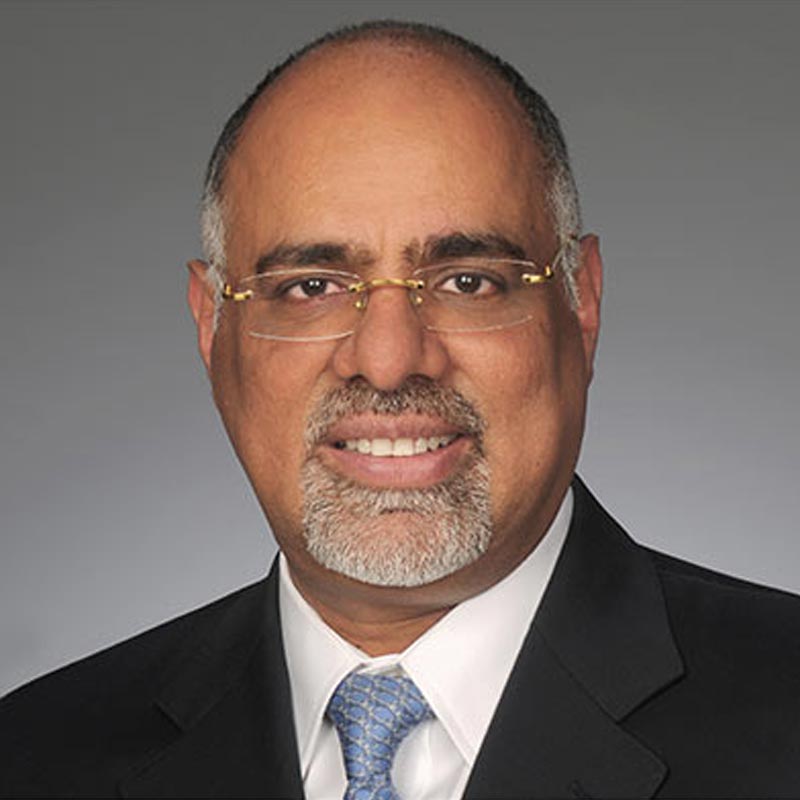
    MUMBAI: WFA has announced a new leadership team and elected Mastercard’s Chief Marketing and Communications Officer, Raja Rajamannar, as its new President. He will serve a two-year term as WFA President, with the option to extend for a further two years.

    Rajamannar has worked for Mastercard since 2013, and in particular has led the company’s marketing transformation, including the integration of the Marketing and Communication functions, evolution of its Priceless experiential platform, and creation of cutting-edge marketing-led business models into the core of the company. Recently Raja pioneered Mastercard’s move to become a symbol brand and the launch ofits breakthrough sonic brand platform.  He also serves as President of Mastercard’s Healthcare Division in addition to his role as Chief Marketing and Communications Officer. 

    With more than 30 years of experience as a global executive across multiple industries, previous roles include Executive Vice President and Chief Transformation Officer, WellPoint (now Anthem, Inc.); Chief Executive, International and Chief Innovation & Marketing Officer, Humana;Global Chief Marketing Officer, Cards and Payments, Citigroup; and CEO of Diners Club North America. Raja started his career with Asian Paints in India. He was also the winner of the 2018 WFA Global Marketer of the Year award.

    He replaces David Wheldon, CMO at RBS, who has been president since 2015. Wheldon will continue to serve on WFA’s Executive Committee as Regional Vice-President for Western Europe.

    “The opportunity in front of marketers today to make a difference for their brand, their business and even the world is tremendous. I am honouredto pick up and carry the torch as President of WFA, an organization committed to elevating and advancing the activities of our profession, and a role I am convinced will become even more important in the years to come,” saidRajamannar.

    “We’re thrilled to be working with Raja as our new President. He’s one of the very best in the business and his work at Mastercard demonstrates how marketers can deliver unrivalled business and social impact when they’re at the top of their game,” said Stephan Loerke, CEO of WFA. “I’d also like to thank David for hisinvaluable service as President. He is nothing short of a giant in the global marketing industry and he has helped lift the organisation to another level in terms of its relevance to CMOs, its strategic focus and its global expansion. We’re delighted he’s agreed to stay on our Executive Committee and help steer the organisation through future challenges.”

    The Deputy President role has been attributed to Philip Myers, Senior Vice-President, Global Policy and Government Affairs at PepsiCo, who takes over from Matthias Berninger, former Vice-President, Public Affairs at Mars.

    Philip leadsPepsiCo’s government and stakeholder relations. Previously, he oversaw public policy and communications across the company’s Europe Sub-Saharan Africa business and before that led theEuropean Retail Round Table, which brought together Europe’s leading retailers on public policy issues. His appointment reflects the dual nature of WFA’s mission working with both marketers to ensure marketing effectiveness and policy professionals to protect brands’ license to operate.

    The new President, Deputy President and Regional Vice-President roles are part of a wider change in WFA’s leadership team which also includes a number of new executive committee members:

    •    Jean-Luc Chétrit, CEO, French Advertisers Association (UDA) & WFA Treasurer
    •    Edward Bell, General Manager Brand, Insight and Marketing Communications, Cathay Pacific Airways
    •    Adam Mohamed Wee Abdullah, Group Chief Marketing Officer, CIMB
    •    Valérie Hernando-Presse, Chief Marketing Officer, Danone
    •    Gerhard Louw, Head of International Media Management, Deutsche Telekom
    •    Allyson Park, Global Vice-President, Corporate Affairs, Mars
    •    Francesco Tramontin, Director, Global Public Affairs, Mondelez
    •    Lynette Pang, Assistant Chief Executive, Marketing Group, Singapore Tourism Board
    •    Atul Agrawal, Senior Vice-President, Corporate Brand and Marketing, Tata
    •    Jan Morten Drange, CEO, Association of Norwegian Advertisers (ANFO)

    “It’s always gratifying that so many senior marketers are willing to serve on WFA’s committees and forums. We couldn’t do half the work we do without these vital contributions and the wisdom of so many senior marketers and policy professionals is critical in identifying upcoming issues and potential solutions to the many challenges faced by brands today,” said Stephan Loerke. 

    The full list of the WFA’s executive committee members can be seen at www.wfanet.org/executive.