Tag: Maruti Suzuki

  • Virtual Reality: What’s in it for marketers?

    Virtual Reality: What’s in it for marketers?

    MUMBAI: In the marketing industry, digital era is not something being anticipated but a reality that has arrived and the way one interact with digital content is also changing rapidly especially through the advent of virtual reality (VR) and augmented reality(AR). 

    The terms are often thrown in the air by marketers when citing examples of latest technology in marketing, but what few realize the ground zero report on the actual work and its effectiveness done using VR and Augmented reality as a marketing tool.

    And who better to vouch for it than Ashish Limaye the chief operating officer of Happy Finish, a creative post production studio media agency that dabbles heavily in VR, CG and AR.

    With a global presence of over 12 years, Happy Finish headquartered in the United Kingdom has managed to bag substantially big name clients since it entered the Indian market five years ago. The studio works closely with other creative agencies and caters to specific skillsets that a campaign requires while also having several clients of their own to boot.

    “We work with almost all the leading brands including brands like Unilever, Nestle and Marico to Coke and Pepsi in the beverage section,” points out Limaye, adding, “In the automobile section we work with Maruti Suzuki, Tata Motors, Toyota, and Renault.”

    Adapt or perish

    The single largest shift in the paradigm that Limaye has noticed in the last one year is the completely insulated channels that brands have established with consumers irrespective of any external stakeholders. “When I say stakeholders, I mean magazine, television, billboards etc. And this insulated channel is possible through smartphones that have penetrated the Indian market,” points out Limaye. “The shift which is happening is from all the above-the-line conventional paid media to a ‘owned by the brand’ media, which also generates organic reach through social media without spending a penny.” Coupled with the data points that smartphones facilitate, brands can now directly target their consumers and know them like never before -.not as part of some mass, but by name age and behaviour and preference. As smartphones and other smart devices can easily be used to access VR environment, its use in marketing will grow manifold in the coming years.

    Scope for VR in marketing

    When asked about the scope for VR and augmented reality he sees in marketing in India, Limaye points out the major challenges that today’s marketers are facing with conventional mediums of communication.  “There are two constants in this day and age: one if that media is getting fragmented, and second, consumer attention is getting more fragmented. Today, the consumer is bombarded with so many different media and it has become extremely tough establishing a dialogue with them. And that is where VR becomes extremely advantageous to marketers as it allows you to engage the consumer on a one-on-one basis.”

    To sum it up he adds, “Firstly, VR helps brands with a significant amount of credibility through immersive experience, which otherwise is not possible as effectively. Secondly it also allows to communicate the entire value chain with the customer, through multiple channels — be it retail, or post sale etc; from the factory to the showroom and then road.”

    Limaye explains with an example. “Suppose a telecom is launching their 4G services. With the past record of 3G services not being so favourable with people complaining of call drop, there is a lot of doubt in the market on how well the 4G will do. To counter that a marketer can create an immersive experience of a user in the 4G service and share it with prospective consumers to add credibility to 4G services.”

    VR Vs AR: 

    While VR has been cited several times for its use in experiential marketing, it is easy to confuse it with augmented reality. Limaye defines the two in a simple sentence: “Augmented reality is when I import an external element into my world, while virtual reality allows me to travel to that world.” 

    The biggest differentiating factor is that augmented reality can be consumed by more than one person at a time. “You can project a car on a table while sitting in coffee shop and show to a client or a buyer the inside of the car, its interiors, how it functions and drives. That’s augmented reality.”

    Another good example of clever use of augmented reality in a marketing campaign is what can be done for the online furniture brands like Pepperfry. “It allowed consumers to scan their living room and feed the information to their app, and then place furniture items wherever you like with the use of augmented reality to see what looks like where.”

    Adoption amongst brands:

    In India, the adoption of the technology is picking up fast. Limaye says he gets at least two to three requests daily from several big and small brands when it comes to VR, although he does acknowledge the presence of a learning curve that the industry is going through for this fairly new technology. “While there are brands interested in trying these out, when you ask them what exactly they want to do with it. They have no answer.”

    The area in which the marketers are falling behind is the lack of creative approach when working with VR and augmented reality. “You can’t be using VR for the sake of it just to sound cool or be counted amongst those who are progressive in the industry. There has to a communicative objective that the use of VR must fulfill,” Limaye said.

    The brands which have come forward in using VR and AR come from FMCG sector, beverages like Pepsi and Coke, tourism and travel, and of course automobiles. Currently 30 per cent of Happy Finish’s client base for VR is from the automobile sector.

    Accessibility and cost:

    While VR and AR paves way for endless possibility in use of the technology for marketing purpose, one can’t help but question if India is ready for it in terms of the accessibility of the experience. Can brands only target niche consumers or go brand to brand with it?  

    Knowing that similar questions have been bothering the industry for quite sometime, Limaye says: “It is a myth that you need a high-end headgear to access Virtual reality. You can access it in many ways. Firstly you have Google Cardboard, which is priced as low as Rs 100. Secondly you can access it using YouTube and Facebook that have started their 360 degree videos. Your mobile or your smart device – be it laptop or iPad – then becomes your window to the virtual reality. All one needs to do is shoot 360 media and put it up. Thirdly, if one has a budget to spare, one can go for head gears for a more complete experience. I can see big spending brands keep a gear at their showroom for showcases etc, or for B2B communication. So the distribution challenge is being dealt with in every level.”

    The ROI Factor: 

    So how much should a marketer going for VR budget for their new campaign? Typically, the feeling is that use of a new technology is more expensive as one has to set in place the infrastructure for it. But Limaye disagrees.

    Though the average budget is subjective to the brands need but for a decent campaign which includes an app development and a live action shoot, a budget of Rs 1 to s 1.5 crore is good enough for a good immersive experience using VR. That also reflects in the ROI.

    “I have metrics in place for how many people have downloaded an app, what feature they are interested in and I can even have a call to action post their immersive experience and directly lead the campaign to sales. The call to action is also well monitored and measure. When it comes to ROI, the investment too is very less when you compare it to mediums like television. To reach the Hindi Speaking Market with TVC, a marketer needs to have at least Rs 2 to 3 crore budget to reach a decent TRP number. But this is not needed when I am talking about a VR campaign while still reaching out to the relevant audience.” 

    “The quality of engagement is much higher as compared to other mediums, and the cost of acquisition of the customer’s attention is much lower, and the absolute spend is also lower. In all these metrics, the ROI is much higher,” Limaye adds in parting.

  • Straddling the extremes of broadcasting & pointcasting: The coming of age of OOH

    Straddling the extremes of broadcasting & pointcasting: The coming of age of OOH

    It is indeed no more a conjecture that digital is on a growth path and despite it blooming to a large extent in 2015, it has a long way to go! 

    Nevertheless, in the process of its bloom, digital media has pushed media-fragmentation to a new limit of ‘singlecasting,’ arguably completing media fragmentation that travelled from broadcasting to narrowcasting to singlecasting. Yes, mobile is almost a personal media device – to each, her own. 

    The story however does not end here and the media fragmentation has been pushed a tad more by OOH wherein the ‘singlecasting’ – transmission of marketing messages to one person has further been fragmented into ‘Pointcasting’ that is, transmission of marketing messages to a ‘persona’ rather than a person. 

    Persona (Pl. – ‘personae’) is defined as the ‘psychological dimension’ of a person, which in turn is defined as a ‘biological being.’ Because man has emotions and these emotions vary according to time, place and state of mind, which exactly are the elements of the ‘media aperture’, OOH media thin-slices a ‘person’ into personae and creates more adequate situation for message reception and retention.

    There is a new awakening on the exact opposite side of the above argument. Whereas OOH media is capable of pushing the fragmentation further than what digital could achieve, it is dawning on all the professionals that OOH has also emerged as ‘the only broadcast media’ capable of delivering undifferentiated audience as all other media have lost their capacity to deliver the undifferentiated audience because of the increasing complexity of their content and distribution. 

    OOH has no content and has no inherent ‘editorial or content environment’ to provide context to marketing messages. It derives the context from the emotional state of the audience and from her exact psychographic state. The media is always ‘on’ and the message is disseminated indiscriminately to anyone who pays it a fleeting glance! The distinction however, lies in the way the message is received, interpreted and retained. And this totally depends on the prevailing psychographic stage of the person, the role she is playing – of a parent or of a spouse or of an executive or whatsoever. OOH media derives its context from ‘life’.

    It is logical that last year was a great revival year in many senses as we had first begun going beyond 2008 levels. The year didn’t have many remarkable events like the general elections but a lot of things were happening. The industry revenue grew by over 18 per cent in 2015 over that of 2014. The year saw e-commerce blooming to a new high with some very high profile launches like Housing.com. 

    The industry also witnessed a reversing trend in terms of the duration of the OOH campaigns. The years before had witnessed the shrinking of campaign periods and most of the campaigns were 10 – 15 days. There were very few three months or six months campaigns, albeit annual sites remaining in fashion. Last year, we saw emergence of Apple, which brought in long term OOH campaigns and showed that OOH media works surely and every week of exposure results into ‘real volume offtake.’ Maruti Suzuki also resorted to long term campaigns and built brand Nexa from concept to a premium destination. Its galloping success with Baleno and its beating the reigning category leader i20 from Hyundai, a part of the advertising and marketing folklore in recent times. The year’s other notable contributors have been mobile phone brands and government. The categories that remained quite subdued are consumer durable, telecom services, ISPs and real estate. 

    Whole of India contributed to the growth of OOH media revenues but almost 60 per cent of spends still remains directed towards top six cities namely Mumbai, Delhi, Bengaluru, Hyderabad, Kolkata and Chennai. When we get into the next level of detailing we see that in terms of media formats that are the recipients of this revenue, billboards still rule the roost. Their share however has declined from 75 per cent three years back to about 60 per cent now. The media formats that have emerged as clear ‘growth formats’ are ambient and transit. The new metro lines, new malls, corporate parks and world-class airports have given a new boost to OOH advertising. It is no surprise that Airport, transit and ambient together account for 26 per cent of revenue share and this segment is posting steady growth. 

    The growth story was scripted by advertisers from across categories like e-commerce, retail, automobile, mobile handsets, education, consumer banking and media except cinema advertising. The top ten OOH advertisers last year were Airtel, Cadbury, Honda, Housing.com, Hyundai, LIC, Maruti Suzuki, SBI, Samsung and Quikr, not necessarily in that order. 

    I am not a big votary of ‘innovation’ in OOH media segment as OOH advertising is subtle advertising and it must ‘occur’ to the audience. I say this because OOH media is not a ‘conscious and committed consumption.’ It is consumed sub-consciously and almost always in a non-committed mode because the audience consumes this media only when it is ‘out-of-home in order to participate in life’ and as such its principal focus, attention and commitment is elsewhere. OOH media receives ‘fleeting attention’ but in the regime of CPA or ‘Continuous Partial Attention’ where no one is investing complete attention in anything or any medium, this has emerged as a distinctive strength of OOH media. Very loud innovations, demand conscious investment of attention, which is contrary to the inherent strength of this medium. 

    The year however saw some offbeat work where people tried to bring in some elements of surprise, which not only generated some interest but also lots of publicity. Maruti Baleno, LED lit innovation on a billboard in Kalkaji, Delhi was extremely innovative. The movement of light created attractiveness for the billboard and the dynamic illumination highlighted the distinct features of the car. Other innovations that generated interest were done by Oreo, Hanuman by Sony Entertainment Television and an innovation for the serial Sumit Sambhal Lega by Star Plus. Aircel executed an Umbrella branding on a bus shelter whereas Godrej Realty used LED in an innovative way to highlight its projects ‘Sky’ and ‘Trees.’ 

    The industry has not seen many take-overs and mergers though some new entities came into being. Most of these are media agencies, which is a disturbing trend as the business model does not require much capital investment. The industry, which is bereft of measurements and operates still largely in commodity-mode, mushrooming of agencies shift the pivot of the game to pricing alone. This creates an internecine war between the incumbent and the newbie, ensuing only in value-erosion for the industry. 

    The industry has been doing well as we did not see any company in the industry going belly up. Every agency has claimed a growth in billing and people also look much better-off. Despite no institutional investment coming to the industry, there has been quite a bit of expansion and upgradation, which means the internal accruals have been healthy. 

    The year ahead looks like a growth year for the advertising industry as a whole. India is conspicuous in still allowing growth to print media. The macroeconomic data have all been in favour of India and now even sectorial green shoots have started showing. With some big events like cricket World Cup T20 and launch of some 70 new automobile models will create a positive growth environment for OOH also. 

    OOH is now an integral part of the media plan in almost all categories, hence growth of advertising will mean growth in OOH revenues. The decline in overall percentage share of ad revenue of OOH media is a statistical eyesore but in absolute number terms, the OOH media industry remains healthy and finds itself in a growth arena. We hope sectors like real estate, telecom, BFSI, consumer durable, FMCG and e-commerce will find more traction and will enhance their ad spend to post better performance. 

    The OOH media industry is progressing institutionally also with IOAA having been recognised by AAAI. The industry will see new SOP being widely accepted this year and with that a lot of vexatious issues in the regulatory structure will be addressed. Smooth flow of transactions will unlock better values for all concerned. 

    The OOH media is finding a new relevance in the fast urbanising world where people are staying out of home much more – either by compulsion or by choice. Since in this fast-paced world, if one has to ‘participate in life,’ chances are that one will mostly have to step out of ‘home.’ It is only after we have taken care of all the ‘businesses’ of life, and nothing remains to be done or having been pushed to tomorrow, we return ‘home.’ It is no wonder that home has emerged as ‘residual destination’ today. This creates its own opportunities and threats for all media formats, which still get consumed mostly ‘at home.’ No wonder OTT is a fast emerging rival to the TV as we know traditionally!! 

    Even TV steps ‘out of home’!! 

    (These are purely personal views of Laqshya Hyderabad Airport Media CEO Shashi Sinha and Indiantelevision.com does not necessarily subscribe to these views.)

  • Straddling the extremes of broadcasting & pointcasting: The coming of age of OOH

    Straddling the extremes of broadcasting & pointcasting: The coming of age of OOH

    It is indeed no more a conjecture that digital is on a growth path and despite it blooming to a large extent in 2015, it has a long way to go! 

    Nevertheless, in the process of its bloom, digital media has pushed media-fragmentation to a new limit of ‘singlecasting,’ arguably completing media fragmentation that travelled from broadcasting to narrowcasting to singlecasting. Yes, mobile is almost a personal media device – to each, her own. 

    The story however does not end here and the media fragmentation has been pushed a tad more by OOH wherein the ‘singlecasting’ – transmission of marketing messages to one person has further been fragmented into ‘Pointcasting’ that is, transmission of marketing messages to a ‘persona’ rather than a person. 

    Persona (Pl. – ‘personae’) is defined as the ‘psychological dimension’ of a person, which in turn is defined as a ‘biological being.’ Because man has emotions and these emotions vary according to time, place and state of mind, which exactly are the elements of the ‘media aperture’, OOH media thin-slices a ‘person’ into personae and creates more adequate situation for message reception and retention.

    There is a new awakening on the exact opposite side of the above argument. Whereas OOH media is capable of pushing the fragmentation further than what digital could achieve, it is dawning on all the professionals that OOH has also emerged as ‘the only broadcast media’ capable of delivering undifferentiated audience as all other media have lost their capacity to deliver the undifferentiated audience because of the increasing complexity of their content and distribution. 

    OOH has no content and has no inherent ‘editorial or content environment’ to provide context to marketing messages. It derives the context from the emotional state of the audience and from her exact psychographic state. The media is always ‘on’ and the message is disseminated indiscriminately to anyone who pays it a fleeting glance! The distinction however, lies in the way the message is received, interpreted and retained. And this totally depends on the prevailing psychographic stage of the person, the role she is playing – of a parent or of a spouse or of an executive or whatsoever. OOH media derives its context from ‘life’.

    It is logical that last year was a great revival year in many senses as we had first begun going beyond 2008 levels. The year didn’t have many remarkable events like the general elections but a lot of things were happening. The industry revenue grew by over 18 per cent in 2015 over that of 2014. The year saw e-commerce blooming to a new high with some very high profile launches like Housing.com. 

    The industry also witnessed a reversing trend in terms of the duration of the OOH campaigns. The years before had witnessed the shrinking of campaign periods and most of the campaigns were 10 – 15 days. There were very few three months or six months campaigns, albeit annual sites remaining in fashion. Last year, we saw emergence of Apple, which brought in long term OOH campaigns and showed that OOH media works surely and every week of exposure results into ‘real volume offtake.’ Maruti Suzuki also resorted to long term campaigns and built brand Nexa from concept to a premium destination. Its galloping success with Baleno and its beating the reigning category leader i20 from Hyundai, a part of the advertising and marketing folklore in recent times. The year’s other notable contributors have been mobile phone brands and government. The categories that remained quite subdued are consumer durable, telecom services, ISPs and real estate. 

    Whole of India contributed to the growth of OOH media revenues but almost 60 per cent of spends still remains directed towards top six cities namely Mumbai, Delhi, Bengaluru, Hyderabad, Kolkata and Chennai. When we get into the next level of detailing we see that in terms of media formats that are the recipients of this revenue, billboards still rule the roost. Their share however has declined from 75 per cent three years back to about 60 per cent now. The media formats that have emerged as clear ‘growth formats’ are ambient and transit. The new metro lines, new malls, corporate parks and world-class airports have given a new boost to OOH advertising. It is no surprise that Airport, transit and ambient together account for 26 per cent of revenue share and this segment is posting steady growth. 

    The growth story was scripted by advertisers from across categories like e-commerce, retail, automobile, mobile handsets, education, consumer banking and media except cinema advertising. The top ten OOH advertisers last year were Airtel, Cadbury, Honda, Housing.com, Hyundai, LIC, Maruti Suzuki, SBI, Samsung and Quikr, not necessarily in that order. 

    I am not a big votary of ‘innovation’ in OOH media segment as OOH advertising is subtle advertising and it must ‘occur’ to the audience. I say this because OOH media is not a ‘conscious and committed consumption.’ It is consumed sub-consciously and almost always in a non-committed mode because the audience consumes this media only when it is ‘out-of-home in order to participate in life’ and as such its principal focus, attention and commitment is elsewhere. OOH media receives ‘fleeting attention’ but in the regime of CPA or ‘Continuous Partial Attention’ where no one is investing complete attention in anything or any medium, this has emerged as a distinctive strength of OOH media. Very loud innovations, demand conscious investment of attention, which is contrary to the inherent strength of this medium. 

    The year however saw some offbeat work where people tried to bring in some elements of surprise, which not only generated some interest but also lots of publicity. Maruti Baleno, LED lit innovation on a billboard in Kalkaji, Delhi was extremely innovative. The movement of light created attractiveness for the billboard and the dynamic illumination highlighted the distinct features of the car. Other innovations that generated interest were done by Oreo, Hanuman by Sony Entertainment Television and an innovation for the serial Sumit Sambhal Lega by Star Plus. Aircel executed an Umbrella branding on a bus shelter whereas Godrej Realty used LED in an innovative way to highlight its projects ‘Sky’ and ‘Trees.’ 

    The industry has not seen many take-overs and mergers though some new entities came into being. Most of these are media agencies, which is a disturbing trend as the business model does not require much capital investment. The industry, which is bereft of measurements and operates still largely in commodity-mode, mushrooming of agencies shift the pivot of the game to pricing alone. This creates an internecine war between the incumbent and the newbie, ensuing only in value-erosion for the industry. 

    The industry has been doing well as we did not see any company in the industry going belly up. Every agency has claimed a growth in billing and people also look much better-off. Despite no institutional investment coming to the industry, there has been quite a bit of expansion and upgradation, which means the internal accruals have been healthy. 

    The year ahead looks like a growth year for the advertising industry as a whole. India is conspicuous in still allowing growth to print media. The macroeconomic data have all been in favour of India and now even sectorial green shoots have started showing. With some big events like cricket World Cup T20 and launch of some 70 new automobile models will create a positive growth environment for OOH also. 

    OOH is now an integral part of the media plan in almost all categories, hence growth of advertising will mean growth in OOH revenues. The decline in overall percentage share of ad revenue of OOH media is a statistical eyesore but in absolute number terms, the OOH media industry remains healthy and finds itself in a growth arena. We hope sectors like real estate, telecom, BFSI, consumer durable, FMCG and e-commerce will find more traction and will enhance their ad spend to post better performance. 

    The OOH media industry is progressing institutionally also with IOAA having been recognised by AAAI. The industry will see new SOP being widely accepted this year and with that a lot of vexatious issues in the regulatory structure will be addressed. Smooth flow of transactions will unlock better values for all concerned. 

    The OOH media is finding a new relevance in the fast urbanising world where people are staying out of home much more – either by compulsion or by choice. Since in this fast-paced world, if one has to ‘participate in life,’ chances are that one will mostly have to step out of ‘home.’ It is only after we have taken care of all the ‘businesses’ of life, and nothing remains to be done or having been pushed to tomorrow, we return ‘home.’ It is no wonder that home has emerged as ‘residual destination’ today. This creates its own opportunities and threats for all media formats, which still get consumed mostly ‘at home.’ No wonder OTT is a fast emerging rival to the TV as we know traditionally!! 

    Even TV steps ‘out of home’!! 

    (These are purely personal views of Laqshya Hyderabad Airport Media CEO Shashi Sinha and Indiantelevision.com does not necessarily subscribe to these views.)

  • Curtains down on Amitabh Bachchan’s ‘Aaj Ki Raat Hai Zindagi’ on 10 January

    Curtains down on Amitabh Bachchan’s ‘Aaj Ki Raat Hai Zindagi’ on 10 January

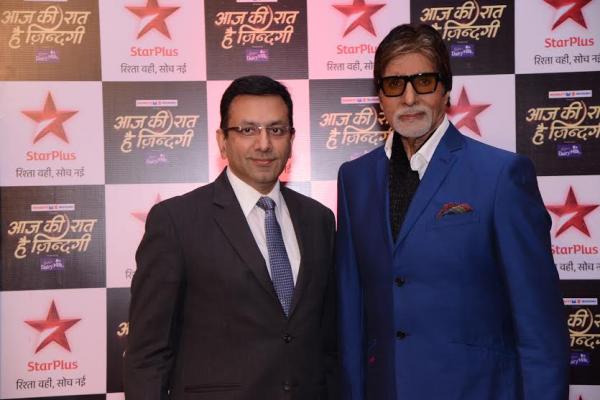
    MUMBAI: Amitabh Bachchan completes yet another inning on television as his non-fiction show on Star Plus – Aaj Ki Raat Hai Zindagi comes to an end.

    Being a finite series, the show had a life of 13 episodes and will air its last episode on 10 January.

    A source close to the development informs Indiantelevision.com that Big B signed a Rs 1.5 crore deal with Star for hosting the show. What’s more, the ad rates for the show’s 10 second slot was Rs 2 lakh.

    Additionally, the channel had roped in Maruti Suzuki as the presenting sponsor and Cadburys Dairy Milk as the powered by sponsor for the show. 

    However, despite have oodles of celebrity quotient on the show as well as having a unique feel-good factor, the show failed to generate good ratings for the channel. 

    “It didn’t do well in the terms of ratings. Despite bringing in so many celebrities on the show, it didn’t prove a profitable proposition for the channel,” said a senior media planner, on condition of anonymity.

    Dentsu Aegis Network South Asia chairman & CEO South Ashish Bhasin opined, “It’s true that having a celebrity onboard a show does give it an edge. Therefore it is helpful in the initial few days to set up its fan base and audience. But in the long run that won’t sustain a show. Ultimately it’s the content of the show that will retain eyeballs. Advertisers understand this as well. They might want to take advantage of the initial popularity of the show for a celeb, but for continuous investment they will go for a show that is doing well long term.”

    Star India COO Sanjay Gupta said, “Star India has always endeavoured to explore new and disruptive content – one that can fuel a billion imaginations. Aaj Ki Raat Hai Zindagi is one such show that, at its heart, captured the ethos of Star. Through this 13-episode finite series, our vision was to celebrate the extraordinary deeds done by ordinary people thereby inspiring people to believe that they too can make a difference and positivity can triumph. By celebrating the inherent goodness in people, we believe that people will be inspired by the feel-good and do-good spirit of the show long after the series reaches its culmination.”

    On 10 January at 8 pm, the show’s finale will see the legendary Jai-Veeru moment from Sholay being recreated on the stage of Aaj Ki Raat Hai Zindagi along with a surprise performance by Farhan Akhtar for Bachchan. 

    Whether the channel brings back the show for a second season, remains to be seen.

  • Maruti Suzuki’s AFP  gambit with Sab TV show

    Maruti Suzuki’s AFP gambit with Sab TV show

    MUMBAI: If there’s one brand which has been predominant in the television show sponsorship space, it is Maruti Suzuki. With a war chest of approximately Rs 500 crore set aside only for television spends, it is no wonder that the automobile company has been seen as the sponsor for major shows across channels throughout the year.

    From Star Plus’ Aaj Ki Raat Hai Zindagi with the suave Amitabh Bachchan as host, Bigg Boss season 9 on Colors, Sony Liv’s online series Tanlines, Colors’ India’s Got Talent 6Star Sports’ India – SA cricket series and BWF Badminton World Championships to &TV’s singing reality show The Voice, Maruti has made its presence felt on the small screen as a sponsor across various genres of programming.

    What’s more, the brand has also tied-up with the upcoming action packed fiction series – 24 Season 2 on Colors. While the first season of 24 starring Anil Kapoor in the lead, had Tata Safari Storme as the title sponsor with the car also having a placement in the series, the race this time round has been won by Maruti Suzuki S-Cross, which was launched at the IIFA Awards in Malaysia earlier this year.

    Most of these integrated the Maruti product and brand into the show;  it was not the sole sponsor.

    But it has always been pushing the envelope on doing things differently. Like it did in the case of the critically acclaimed and profitable YRF  stable movie Mere Dad ki Maruti in 2013. The central protagonist in the feature film is the Maruti Suzuki Ertaga. Maruti Suzuki’s marketing mavens pumped in Rs 6 crore in the Rs 10 crore film, convinced the film production house to include its brand name in the title, have scenes in their showrooms. The initiative got lots of traction, courtesy the theatrical release, television telecast, small video clips, which went viral on digital outlets such as Youtube, Twitter and facebook.

    It is attempting something similar in 2015. With two vehicles – the Baleno and S-Cross and a new premium sales channel to launch in 2015, it has expanded its television budget to Rs 500 crore; some of that is being channeled towards televised advertiser funded programmes (AFPs).  One of the brands getting a shot of that marketing money is the Alto 800.

    Maruti Suzuki has integrated the tagline of  the small car “Let’s Go” into in Sab TV’s newly launched show Chalti Ka Naam Gaadi, Let’s Go and the vehicl will be seen frequently in the show as it has been woven into  its storyline.

    Chalti Ka Naam Gaadi Let’s Go is about the car and how it brings happiness in a family. It showcases how everybody falls in love with that car and that was the idea behind doing the show,” says Deepti Bhatnagar who is producing the show for Sab under the banner of the production house which bears her name.

    It narrates the journey of the Ahuja family and how their life takes an exciting turn when they purchase their very first car. Ahuja, who has been working in a bank’s car loan department has always wished for his own car but he has not been able to save enough to make his dream come true. On his 50th birthday, his family decides to gift him a Maruti Alto 800. After that Ahuja’s son, Karan (Romit Raj) starts hearing voices and statements from his family car. Karan realises that nobody except him can hear those sounds. He takes advantage of this situation and decides to make the car his constant conversation companion; moreover it helps him to resolve day to day problems at home and thereby bringing the family closer.

    Chalti Ka Naam Gaadi, Let’s Go is a finite series, with a bank of nine episodes at the time of writing. It  premiered on 28 October and is to  air at 7:30 pm on Saturdays and Sundays.

    Deepti explains how  Chalti Ka Naam Gaadi Let’s Go came about. “We sent a concept note to them. I had the idea and I spoke to the channel and then we pitched it together,” she says.  “They loved the idea. Chalti Ka Naam Gaadi Let’s Go is a complete Maruti AFP and made only for the company. No other product has been tagged in the show.”

    She believes that it is a win-win for the Indian auto major. She points out:  “Maruti Suzuki is one of the biggest car companies in India. It makes much sense to the advertiser as they spend so much on many for their 30 second commercials. Here they are getting an entire show. The series also showcases the features of the car and a lot of detailing of the product is there. Also, we create awareness by showing the driving rules and hence blend the story beautifully with all these things.”

    And as Uncle Ben rightly said, with great power comes great responsibility. To this effect, Bhatnagar says, “It’s a difficult show to do because when you have a product, you have many responsibilities and you can’t say the wrong things.  Even while following rules and guidelines, we still manage to create comedy around it.”

    She says that’s what gave both Maruti Suzuki and Sab the confidence in her and her production house’s capabilities is her advertising background and the fact she produced “her first AFP show long back for Star TV and then I did a show for Sab – Jo Bhi Biwi Se Kare Pyar for Prestige, which was very successful. It was a sitcom based on cooking, which was completely a new format.” But will Chalti Ka Naam Gaadi Let’s Go take pole position on Sab?

     “It could do well,” says a media analyst. “Though it is up against fiction on Star Plus, events on Colors, it appears to have an interesting light storyline. Sab has its loyal audience.  Healthy promotion could help them to make their appointment with the show. Then the videos could also be rolled out digitally in the form of clips in order to viralise them. In the process, Alto 800 sales could well rise as it is airing during the festival season; a period when car buying rises.”

    If this prediction comes true, Maruti and the Alto 800 could well be driving in the fast lane.

  • Maruti plans 360 degree integrated campaign for new Baleno

    Maruti plans 360 degree integrated campaign for new Baleno

    BENGALURU: Recently, Maruti Suzuki launched a new premium segment hatchback Baleno to be manufactured exclusively in India for sale across 100 countries, including Japan. Now with the Indian festival season just around the corner, the company has planned an integrated 360 degree campaign.


    The car comes with new features that include Apple CarPlay, a first for an Indian car, and is going to be available at an introductory special price during the Diwali season.


    The campaign includes television, print, outdoor, in-store, internet and BTL activities. The campaign creatives are by Hakuhodo Percept, while digital creatives are by internet marketing agency Grapes Digital and public relations are by Avian Media.


    “Hakuhodo will be integrating creatives across all mediums, including creatives by other agencies,” revealed a source at Maruti. “Within a day or two you will see TVCs play across your screens.”


    Maruti plans to sell the five petrol and four diesel variants of the Baleno through its recently launched chain of premium exclusive automobile retail outlets Nexa.


    Maruti regional manager (new channel) South unveiled the Belenao as well as the first preview of the TVC to be aired in Bengaluru yesterday.

  • Star Plus’ ‘AKRHZ’ aims to infuse optimism in life with Amitabh Bachchan

    Star Plus’ ‘AKRHZ’ aims to infuse optimism in life with Amitabh Bachchan

    MUMBAI: Star Plus’ upcoming show Aaj Ki Raat Hai Zindagi is soon going to beam across television screens. The show will showcase Indian superstar Amitabh Bachchan in a pivotal role as he embarks upon a journey to celebrate life and aims to infuse optimism in people.


    As was previously reported by Indiantelevision.com, the show will go on air from 18 October and will be aired on Sundays at 8 pm.


    Aaj Ki Raat Hai Zindagi aims to inspire people to change their outlook, and cherish the good that life has to offer, apart from entertaining them of course.


    Star India COO Sanjay Gupta said, “Entertainment when done with a sense of purpose can be a very powerful tool, one that can break the cynicism and bring about happiness. As a network, we have always strived to inspire a billion imaginations while working towards giving our audience something new and exciting. And with Aaj Ki Raat Hai Zindagi, we are happy to collaborate again with Amitabh Bachchan on a project, which is so special. Off late, an overexposure of negative news has impacted our perspective towards life, so the show is an attempt to bring back a sense of optimism.”


    Sharing his views about the show, Bachchan said, ”The show is all about a celebration of life and people who have made a difference. I am working with Star after a gap of 15 years and wanted a project that befitted the legacy. Aaj Ki Raat Hai Zindagi is One such endeavour that will make you smile, dance, clap and go ‘HuuHaa’ with joy. Life Is all about living, loving and celebrating moments with pepole who put a smile on your face and it is celebration that matters most.”


    The channel has roped in Maruti Suzuki as the presenting sponsor and Cadbury Dairy Milk as the powered by sponsor.


    Maruti Suzuki India marketing and sales executive director R S Kalsi said, “We at Maruti Suzuki always believe in making a difference to every Indian and our inspiration comes from one place – India’s hopes, dreams and aspirations. It’s a privilege to be associated with a show that shares the same belief. Our vision is to be the ‘Pride of India’ and Aaj Ki Raat Hai Zindagi celebrates the pride of the ordinary people who have contributed and made a difference to the society in some form or the other.”


    “Cadbury Dairy Milk has always stood for triggering joy through unlocking relationships and this program is all about people who go beyond to bring joy to the lives of others. CDM stands for generosity, optimism and authenticity and we felt that the stories of AKRHZ mirror those very values- hence it seemed like a great,” added Mondelez India director Prashant Peres.


    The show is based on the Tonight’s The Night format, which is owned and produced by BBC Worldwide.


    The extensive marketing campaign by Star Plus before the launch of the show, has led to immense curiosity and discussions all over. The first teaser of the campaign received over one million views on Facebook in less than 20 hours, creating a new benchmark for TV shows.  The creative campaign has been conceived by O&M and produced by Bubble Wrap Films.


    The punch line of the teasers, ‘Huuhaa’ got the nation talking about the show with #HuuHaa trending on social media. The entire campaign on social media has received over 400 million potential impressions till date creating a lot of positive buzz. This will be followed by a marketing blitz on television, radio, digital and outdoor.


    HuuHaa to that!

  • Star India rakes in over Rs 100 crore from ISL Season 2 sponsorships

    Star India rakes in over Rs 100 crore from ISL Season 2 sponsorships

    MUMBAI: When the Indian Super League (ISL) launched last year with the ‘Let’s Football’ tag line, it created a significant buzz across the country. With many a ‘firsts’ like having Nicolas Anelka dribbling on Indian ground and Indian spectators getting an opportunity to witness living legends like Luis Garcia, Del Piero and Robert Pires playing in front of their eyes, 410 million people in India echoed ‘Let’s Football’ with Neeta Ambani and Star India CEO Uday Shankar.


    That said, the big looming question was: Was football a revenue generating asset for broadcasters? There is virtually no time for a single advertisement in either of the two 45 minutes halves, and in an era where constant partial attention is at its peak, for viewers to stick to same channel during half time break seemed to be an unrealistic proposition.


    Nonetheless, as the saying goes, “Where there is a will there is a way!” The second season of ISL, which kicked-off on 3 October on Star Sports, has already brought the broadcaster in excess of Rs 100 crore in revenue from multiple brand sponsorships.


    While before the season began, it was speculated that Star Sports head Nitin Kukreja and his team raked in close to Rs 97 crore excluding revenues from digital broadcast from ISL season 2, the figure has now crossed the Rs 100 crore mark.


    A source close to the development tells Indiantelevision.com, “The last minute inclusion of Servo as a sponsor has made the Rs 100 crore landmark look possible. The way Star has sold the inventory is an example for the industry. There were so many new avenues that opened up. If we include digital revenues, Star has easily crossed the Rs 100 crore mark.”


    Hero Motocorp, as the title sponsor, pays close to Rs 20 crore per year to Star. Apart from that, the channel has Maruti Suzuki, DHL, Pond’s Men, Gatorade, Flipkart, Servo, U Quit I Quit, Hewlett Packard, Puma, Volini, The Muthoot Group, Amul, Manyavar and Imperial Blue as advertisers in its kitty.


    DHL, the official partners of Manchester United and Bayern Munchen, has also joined hands with Star India to be the logistics and time partner. As a part of the partnership, DHL gets presence on the screen that shows time on ground.


    Speaking to Indiantelevision.com, DHL India country manager and senior vice president R S Subramaniam says, “Last year’s performance and prominence of the league was the main reason behind us joining the league. It is a one year deal that we have signed and we may renew it in the future too.”


    Mumbai City FC CEO and CAA Kwan COO Indranil Das Blah adds, “The league has kicked off to a flyer. Once the TV numbers are out, we will have a better understanding of the scenario. Overall, the on-ground interaction has gone up and so has the sponsor’s interest.”


    Mumbai City FC also witnessed a 20 per cent growth in terms of revenue generation as per sources.


    “Sports no longer is a sport on screen now. It’s all about packaging and Star, first with Pro Kabaddi League and now with ISL, has proved that smart packaging can make every sport lucrative. Revenue generation was never a concern this season. The concern was with expectations. Last year, ISL was a surprise. Now there is a burden of expectation and if the tourney fails to meet expectations, it would be considered as a flying bubble,” a senior media planner says on condition of anonymity.


    While it remains to be seen if the tournament will help India in becoming a footballing nation but the revenue created from the sport certainly creates new benchmarks. No doubt proper packaging and smart monetisation can make every sport lucrative.

  • Colors confident of unleashing ‘Bigg Boss’ juggernaut at 10.30 pm

    Colors confident of unleashing ‘Bigg Boss’ juggernaut at 10.30 pm

    MUMBAI: Come 11 October, 2015 and the definition of prime time viewing on Indian television history will be officially redefined as Bigg Boss season 9 will be aired in the late time slot of 10.30 pm. Accustomed with the 9 pm slot, the show has established itself as one of the finest property in the general entertainment genre, but as was reported earlier by Indiantelevision.com, this year due to the super performance of Colors’ existing prime time shows, the channel’s programming team was forced to postpone Bigg Boss to the 10.30 pm slot.


    The moment the new time slot became public knowledge, the immediate presumption that emerged was the possibility of content edging towards the adult category with more violence and at times even vulgar. However, Colors CEO Raj Nayak has pooh-poohed all such speculations. He said, “The strong point of Bigg Boss in the last few seasons has been its establishment as a family viewing entertainment entity, which helped us grow our ratings. We are not going to compromise with that. So the show will continue to be a family viewing entity.”


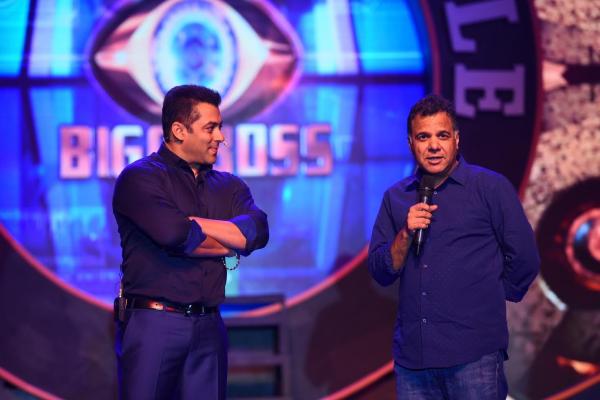
    The press conference for the official launch of the show was off with a flying start with a satirical banter between Bigg Boss host Salman Khan and Nayak. As reported earlier by this website, the show’s theme this year is Double Trouble. Khan in his inimitable style candidly asked Nayak what double trouble means to him and when does it start. Nayak smilingly replied, “For me double trouble starts with the start of April, when I start talking to your (Salman Khan) agency and they quote me a rate double of what we paid last season.” 


    The lighthearted banter continued throughout and both Nayak and Khan were sportingly part of it. When Endemol India MD and CEO Deepak Dhar was introduced Nayak reminded the audience in a tongue and cheek manner that it was not only Salman’s fee that gets doubled every year, even Endemol’s remuneration takes a substantial hike.


    Speaking about the extension of prime time, Nayak said, “I think today prime time goes on till 12 o’clock in the night, the success of Comedy Nights is a big example of that.”


    Speculations were also rife that courtesy to the late night premiering of the show, the ratings and the ad rates may face a blow. However, Nayak is unperturbed. “Bigg Boss is Colors’ biggest show. If we don’t believe in the fact that it will be successful, why would we invest such huge money? I would have liked Bigg Boss to come in at 10 o’clock but am confident about it in the 10.30 pm slot too. Research shows that in urban areas people go back to home a little late and hence 10 pm would have been the best time to unwind with a one hour show. But with God’s grace, we have the problem of plenty and a slot leader (Yeh Meri Ashique) at 10 pm so we cannot disturb leading show and put Bigg Boss in place of that.”


    Throwing light on the show’s target group, Nayak said, “Target audience is an exaggerated and over spoken factor in India where we have a huge percentile of single TV houses. Bigg Boss by default or by design appeals more towards the younger audience than the older. The older audience watches it but seldom speaks about it. People who normally never watch Hindi GECs turn out to be Bigg Boss followers. So overall the show caters to a diverse audience across all age groups.”


    Colors has a strong social media analysis team, which analyses each and every movement across all the platforms. If the analysis depicts an addressable issue, the programming team immediately looks into it, which results to better sustainability. “We may not make a change immediately but we do follow them continuously. We have a separate infrastructure to check between spam and genuine feedback. We take social media feedback very seriously,” added Nayak.


    As was reported earlier, the presented by, powered by and driven by slots in the sponsorship inventory have already been sold to Snapdeal, Oppo and Maruti Suzuki respectively. Commenting on advertisers’ reaction on the time change, Nayak said, “The sponsors are demonstrating faith in what we are doing and the fact that we already have a majority of our sponsors on board, is proof of that.”


    Endemol CEO and MD said, “The concept of Bigg Boss has always kept the audiences intrigued. The theme of ‘Double Trouble’ promises to offer double the fun and entertainment with various twists and surprises. This year too fans of this biggest reality show format will be hooked to the TV, as this season the contestants will be put in unanticipated situations that will make an interesting watch for the viewers. The production value of the show will be more enormous and the expertise of the team working on the show will leave no stone unturned to offer unlimited doze of entertainment.”


    When quizzed if 10.30 pm slot was a pressure factor for Endemol, Dhar said, “Pressure factor, yes, because it’s a new time slot that we are not yet used to but the pressure is there every year. Bigg Boss at 9 pm was up against the biggest shows of the country and it delivered commendable ratings. So I don’t see a reason why it won’t deliver at 10:30 pm. The time change is a challenge as well as an opportunity.”


    Concurring with Nayak on the prime time definition, Dhar said, “People are now creating content for 11 pm and 11.30 pm slots. So the traditional definition of prime time is no longer relevant. People now, specially from the urban areas are ready to watch television till late. And a show like Bigg Boss where it’s more of unwinding than using one’s brains, a time slot later down the night should be comfortable.”


    Snapdeal senior vice president marketing Srinivas Murthy said, “Big Boss is only getting bigger and better with every season. We joined hands with television’s most popular show last year and engaged with our audiences on a daily basis through innovative in-programme integration. We are very excited to partner with Big Boss Nau and look forward to great response from the viewers this season too.”


    Speaking on his return as the host of the show for the sixth time, Khan said, “This season with Double Trouble being the flavour, contestants have no choice but to double up and face the trouble, or remain disconnected and invite trouble! Bigg Boss Nau comes with the promise of unlimited and unadulterated entertainment, which will create a strong bond between viewers and the contestants fuelled by fun, empathy and sometimes sympathy.”


    Oppo Mobiles India CEO Mike Wang added, “We are pleased to renew our association with the immensely popular show Bigg Boss this season. We firmly believe that this partnership will help establish our reach across India giving us an opportunity to connect with a wider audience. There is no platform better than entertainment in India and we wish the show a huge success.”


    Whatever Nayak and his team at Colors are churning out these days, is turning into gold. With the channel climbing up the ratings chart to become the number one Hindi GEC recently as per BARC as well as TAM data, the Bigg Boss entertainment juggernaut comes at a perfect time. It now remains to be seen if the show’s new time slot manages to sustain ratings or better still, enhance it even further.

  • Razorfish India bags two awards at CMO Asia 2015

    Razorfish India bags two awards at CMO Asia 2015

    MUMBAI: Razorfish India has won two awards at the CMO Asia – Social Media and Digital Marketing Excellence Awards 2015 held in Singapore. The agency was awarded Social Media Campaign of the Year for Maruti Alto World Cup 2015 campaign and Best Digital Integrated campaign for the launch of Ciaz.


    “We are delighted and feel immensely proud to partner our clients, Maruti Suzuki, in this journey of success. We always like to challenge ourselves to keep doing something innovative and engaging and these awards is just a reflection of it,” said Razorfish India COO Gaurav Pathak.


    Razorfish India CEO Charulata Ravi Kumar added, “Doesn’t surprise me. A great client-agency partnership where both are passionately driving the digital agenda for one of India’s most significant brands, Maruti Suzuki, is a winning combination in itself. This important award corroborates the shared commitment to excellence.”


    Maruti Suzuki India vice president marketing Sanjeev Handa said, “This award is a recognition of Razorfish’s and our team’s efforts in ensuring that Maruti Suzuki’s digital footprint is not just exciting and impactful but also highly relevant. Our all-round sustained efforts towards meaningful innovations has made us the most popular car in India and also amongst the youth of India.”