Tag: Martin Sorrell

  • WPP accuses Martin Sorrell of unlawfully using information

    WPP accuses Martin Sorrell of unlawfully using information

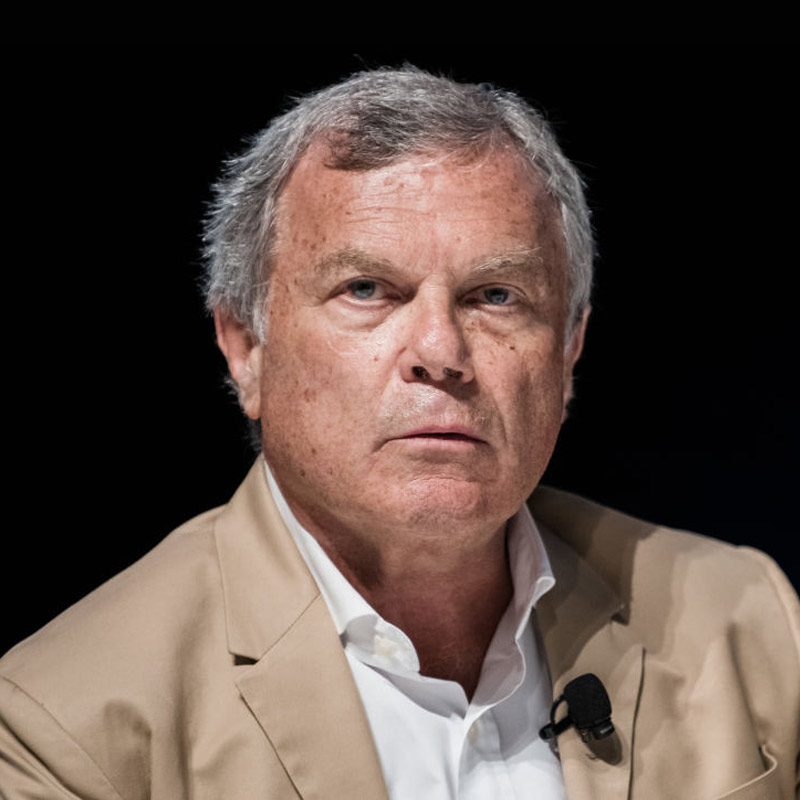
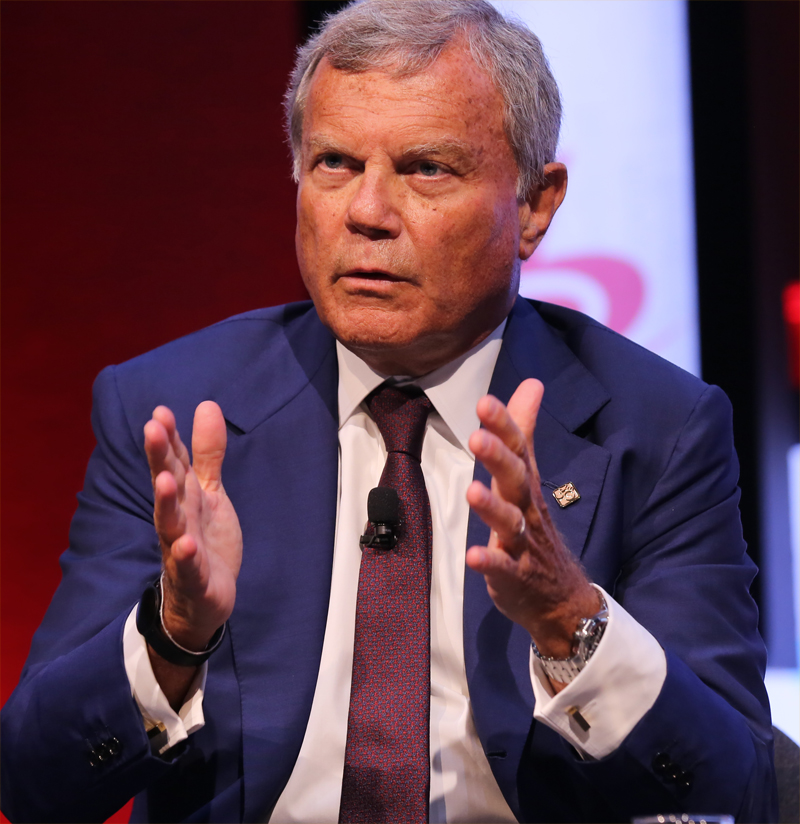
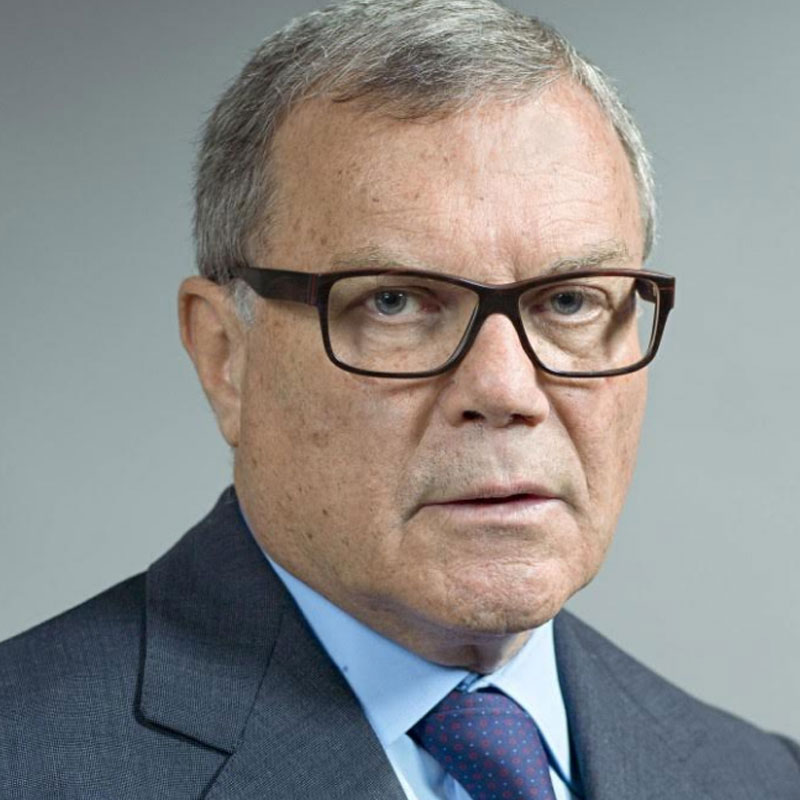
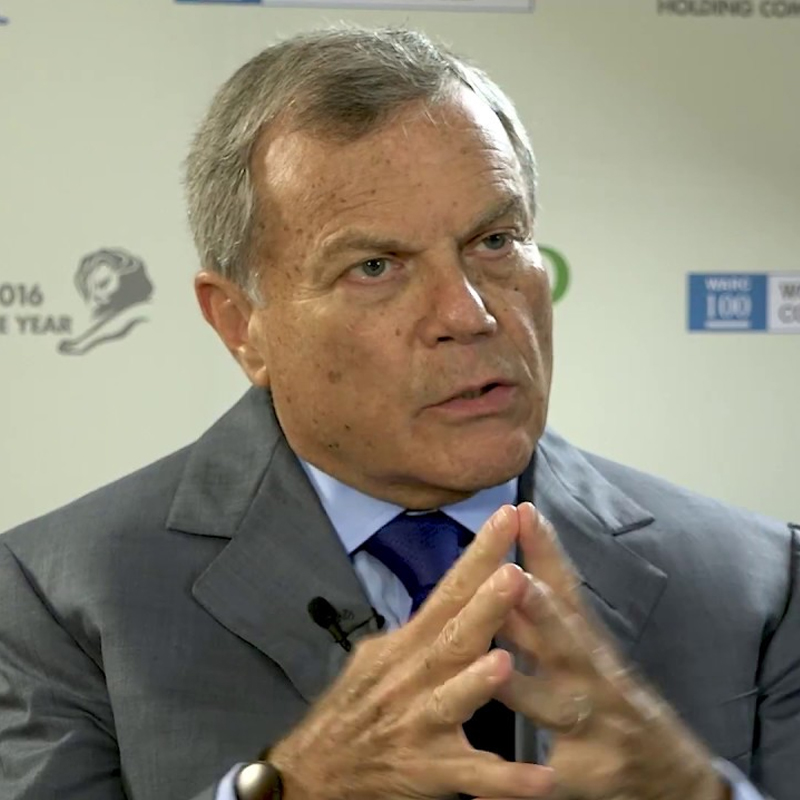
    MUMBAI: Martin Sorrell’s attempt to acquire Dutch production house MediaMonksh has run into rough weather with WPP accusing its former boss of unlawfully using confidential company information in the acquisition process.

    According to the reports, the company allegedly called in lawyers after Sorrell’s new company, S4 Capital, announced a bid for MediaMonks – a company he encountered during his tenure of WPP.

    The Guardian reported that WPP’s lawyers have told Sorrell that a MediaMonks buyout is unlawful because it would use information gathered during his course of employment with WPP, and would “likely be in breach of confidentiality obligations”.

    Meanwhile, it has been suggested that the acquisition would jeopardise Sorrell’s long-term share award, valued at around $41m, over the next five years.

    The bidding war comes after Sorrell indicated to investors that he would not seek to compete with WPP following his departure.

    Founded in Holland in 2001, the creative production house Media Monks currently has offices in Los Angeles, New York, Singapore, Shanghai, Stockholm, Dubai and Sao Paulo.

    Also Read:

    History TV18, Fyi TV18 to get dedicated Tamil channels

    Infinite shows in demand due to storyline, viewership

    Sun TV bullish on dubbed international content for kids

  • WPP learns to live without Martin Sorrell

    WPP learns to live without Martin Sorrell

    MUMBAI: British multinational advertising and public relations company WPP has decided to review its policies and codes of conduct and how these can be improved upon. The agency’s chief operating officer Mark Read in a staff memo said that the review will be conducted by leadership teams throughout the group. 

    He did not respond to allegations in reports in the Financial Times and the Wall Street Journal which stated that its former CEO Martin Sorrell resigned in the midst of investigations of having paid company money (some 300 pounds)  for services to a sex worker in a Mayfair brothel. Additionally, there were allegations in the reports that Sir Martin had a bullying nature towards junior employees and was curt with them. 

    Instead Read  stated in the memo that “Although we can’t comment on specific allegations, I feel we should remind ourselves of and reinforce the kind of values we want and need to have within every part of our business: values of fairness, tolerance, kindness and respect.”

    He added: “It should hardly need saying that all WPP working environments must be places where people feel safe and supported. They must also be places where people are able to raise concerns if they want to, and where those concerns are dealt with when they need to be.”

    The memo also mentioned about WPP’s helpline, Right to Speak. Read mentioned that the service was available for everyone across the group that allows them to raise issues without fear of reprisal. The Right to Speak service is independently operated and protects the identity of anyone who would rather not speak directly to their respective line manager or senior official about their concerns. 

    The company also had its annual general meeting with its shareholders on Wednesday, during the course of which a section of shareholders protested against the appointment of WPP chairman Roberto Quarta, the handling of the Sorrell exit and the payouts being planned for him in the form of share awards, as well as the fact that he was not  asked to sign a non-compete agreement when he departed from the agency last month, amidst controversy. 

    WPP chairman Roberto Quarta said that there was no basis to cancel Sorrell’s share awards as the company did not have any proof of misconduct. “The contract required Martin to be treated as having retired unless a definition of gross misconduct would be satisfied, which it could not, and on which the board had clear legal advice.”

    As far as the non-compete clause and the payout were concerned, Quarta stated that the conditions of Sir Martin’s employment contract predated the current board. This despite, it  managed to get him to take cuts in pay and benefits at a time when the agency had put up a stellar performance in 2015. 

    Quarta has also started an investigation within the organisation on how information about allegations against Sorrell leaked into the media.

    Read who is tipped to take over CEO was quoted by the BBC as saying that “Martin was a hard-working and hard-driving chief executive. I don’t recognise the bullying nature of some of the allegations.”

    Sorrell  has denied the allegations which have appeared in the media but decline to say anything more.

    Read meanwhile said he has spent time with group agencies and clients over the last eight weeks, reassuring them of WPP’s health today and going forward. Disclosed he in the note: “There is tremendous positivity and confidence about the future of the business. Let’s stay focused on that, and continuing to build a company we are all proud of.  We all want WPP and its agencies to continue to be home to the world’s best talent, which means creating a positive, supportive and inclusive culture in every office. More importantly, it’s the right thing to do.”

  • Sorrell pats Mukesh Ambani’s back for telecom explosion

    Sorrell pats Mukesh Ambani’s back for telecom explosion

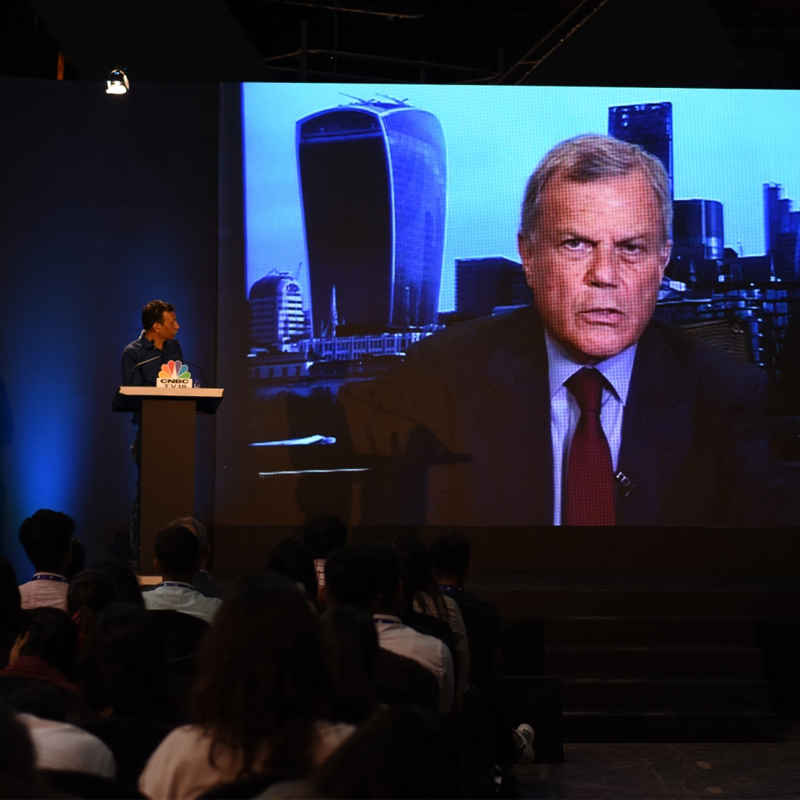
    MUMBAI: Though the announcement of ad guru and former WPP CEO Sir Martin Sorrell’s comeback strategy was announced yesterday in faraway London — a London Stock Exchange notification on Derriston Capital said so — the excitement was running equally high here at the venue where Zee Melt event was being held. And, why not? Sorrell was scheduled for a live video interaction with delegates at the event in the evening.

    But true to his style, Sorrell did not give out any juice to the media and refrained from answering anything particular about his new venture, S4. However, he did have a lot to say about the industry, in general, and India. 

    Sorrell thinks that advertising and marketing industry is in a state of flux today and will only bring opportunities for agencies and brands alike. “The discussion is whether the flux is strategic or structural. But, it is clearly a mixture of both. The A&M [advertising and marketing] industry is worth a trillion dollars with $500 billion in traditional media and traditional communication services, and $500 billion in new media,” Sorrell said speaking to the Zee Melt delegates live via CNBC’s London studio.

    “There is a clear significant change, whether it is because of Google, Facebook, Accenture, IBM or Deloitte. And this flux will bring opportunities. If you look at the $20 billion in WPP, there are parts of it that are growing and there are parts of it that are flat and parts of it that are declining. It is all about identifying those growth opportunities,” he emphasised, giving a hint at what people may expect from him in future with his new venture, which experts say could be a repeat of the WPP story with a modern-day twist.

    For the records, Sorrell is investing $53 million from his own pocket into London Stock Exchange-listed Derriston Capital, a company which will now be remade into S4 Capital, a reference to four generations of Sorrell’s family. While he will become executive chairman in the business that could explore opportunities in technology, data and content, media reports stated institutional investors have pledged 150 million pounds to buy marketing companies — a way Sorrell-founded WPP grew into a global behemoth with presence in 112 countries.

    Coming back to Sorrell-speak for the Mumbai event, the former WPP CEO, ousted on allegations of misconducts about six weeks back, hailed India as being pivotal to WPP growth with 14,000 “talented people”. He noted that India is growing fast in terms of GDP, population and potential.

    Pointing out that India, in the near future, will become the most populous country in the world with the youngest profiles, Sir Martin felt that, from a technological point of view, India has leapfrogged a lot of technologies —such as migrating directly from desktop and normal phones to smartphones. The country has seen huge distribution changes too with and Alibaba entering the market.

    On the distribution side, according to him, Mukesh Ambani’s significant investment in telecommunications and technology in Jio mobiles and SIM card has put India on the global map. In short, India represents opportunities and growth in terms of economy and technology. 

    Year 2017 saw a lot of shakeup and disruption in the industry. Of these, two iconic events that signaled disruption and structural changes for Sorrell and the industry were Unilever’s hostile takeover bid by Kraft Heinz, proving no company is safe today, and when Rupert Murdoch signaled he would negotiate 21st Century Fox business with The Walt Disney Company. What made this 21CF-Disney deal “more complicated” was the involvement of Comcast.

    Holding forth on large agencies and groups owning them, Sorrell felt that that such corporate houses have a “legacy associated with them” and come with a lot of backlog and challenges. When you have a legacy company, the business becomes more of a challenge with time as compared to when you start with a clean sheet, he said. Probably, his new venture S4 will give him and the company an opportunity to build afresh taking into account the changes taking place at client’s end and new structures and approaches that clients want.

    According to Sorrell, a major shakeup in the media industry today has been the General Data Protection Regulation (GDPR), an EU-mandated law on data protection and privacy for all individuals within the European Union (EU) and the European Economic Area (EEA). It also addressed the export of personal data outside the EU and EEA.

    The GDPR primarily aims at giving control to citizens and residents over their personal data and simplify the regulatory environment for international business by unifying the norms within the EU. Sorrell thinks these were early days to assess the impact of GDPR, but from what he’s heard Facebook’s ad sales revenue has remained un-impacted even after the news of Cambridge Analytica. He is also of the opinion that GDPR in early stages seems to favour technology giants as “we have seen smaller or media tech companies withdraw from European market rather than compete”. 

    He ended the session by applauding the Indian government and Prime Minister Narendra Modi for making a significant impact on the Indian economy, although the momentum has slowed down due to GST rollout and after-effects of demonetisation along with other factors. Pointing out that India’s economy will continue to grow and will continue to attract big brands and agencies to put their money in the country, Sorrell concluded, “I continue to be an unashamed, raging India bull and confident that the Indian economy will regain momentum soon.”

    Meanwhile, reporting on Sorrell’s new venture in detail Reuters said Derriston Capital is a little-known two-year-old listed shell company set up to invest in medical technology.

    Over 30 years ago Sorrell built WPP into a company with 200,000 staff in 112 countries by adding market research groups, media buyers, and public relations firms such as Finsbury. Worth 16 billion pounds, WPP returned millions to shareholders, including its CEO, and dominated the industry for decades. According to Thomson Reuters data, Sorrell is still the eighth biggest investor in WPP, with a 1.4 percent stake.

    The Reuters story further stated that Sorrell had vowed to break down the barriers at WPP to make it easier for clients to get all the services they needed from a small team, rather than from a range of people among the more than 400 agencies it owned. WPP competes with US groups Omnicom and IPG, France’s Publicis and Japan’s Dentsu, while thousands of small independent companies provide everything from ads for mobile phones to creative work and data analytics.

    Also Read :

    WPP board begins investigation of its CEO Sir Martin Sorrel, says WSJ

    Sir Martin Sorrell says ta-ta to WPP, Roberto Quarta becomes exec chairman

    Martin Sorrell bullish on India

    TAM or BARC, the market has to decide: Sir Martin Sorrell

  • Sorrell’s exit could lead to a breakup of the large agency structure says John Hegarty

    Sorrell’s exit could lead to a breakup of the large agency structure says John Hegarty

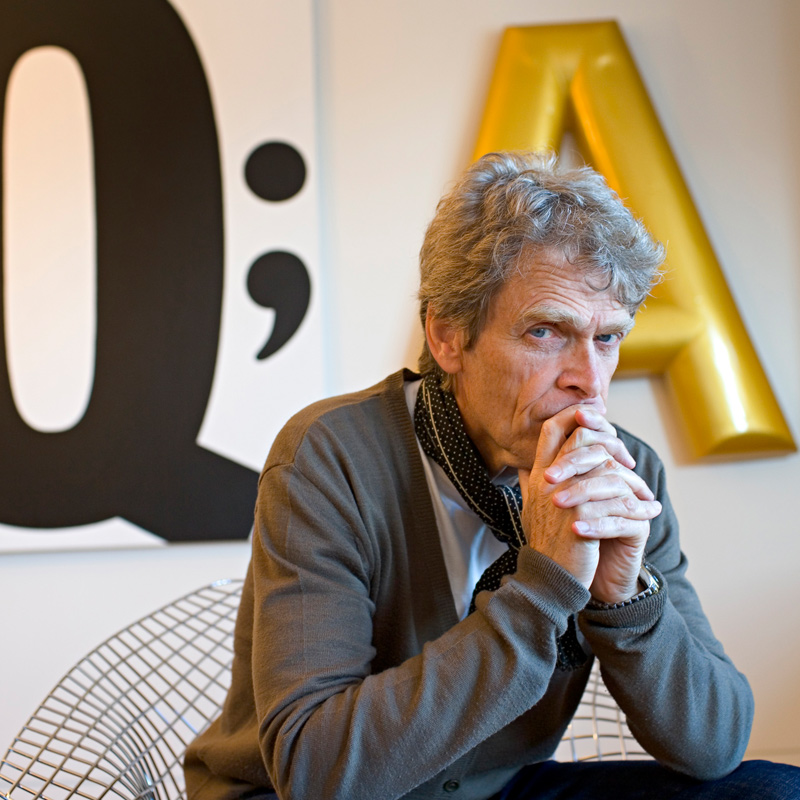
    MUMBAI: He’s seen it all – print, radio, TV and now digital. With over six decades of advertising industry under his belt, John Hegarty has had the privilege of being knighted by the UK for his services. With early days at Saatchi and Saatchi (then called Cramer Saatchi) to co-founding global media agency, Bartle Bogle Hegarty (BBH), the septuagenarian is still as youthful and optimistic as he was in the 1960s.

    After co-founding TBWA, he teamed up with partners John Bartle and Nigel Bogle to launch Bartle Bogle Hegarty in 1982. The agency swiftly became one of the most talked about and awarded advertising agencies in the world.

    The advertising mogul was in Mumbai, India recently where he spoke his heart out about creativity and advertising industry at large. The creator of acclaimed campaigns for brands such as Levi’s, Audi, BA and Johnnie Walker, Hegarty thinks that brainstorming as a concept at the modern workplace can kill creativity. According to him, just 10 per cent of the creativity today is good and advertisers inflict that tiny amount on the audience. For him, the advertising industry has a great responsibility to shoulder.

    He first came to India 25 years ago to meet Piyush Pandey. Admitting that he isn’t a hardcore follower of Indian advertising, he still believes that Indian creativity is far better than other parts of the world. 

    Hegarty warned of the danger of globalisation that has led to a bland advertising world where ad execs and brand managers from one part of the country want to target the entire world with global campaigns rather than creating local campaigns. One reason they resort to this mass targeting is their constant search for cost-effectiveness. But they don’t realise that they lose out on communication efficiency. Instead, all ad work should be more representative or reflective of the local culture. 

    Hegarty’s response to nineteenth century Philadelphia retailer John Wanamaker’s famous oft-stated quip – ‘Half the money I spend on advertising is wasted; the trouble is I don’t know which half’ –  is that those who exclaim this don’t know what they’re doing. “Brands need to go out and converse with people. Advertising is all about conversations,” he said.

    “A brand is made not just by the people who buy it but also for the people who know about it.  Agencies today have forgotten that brands need to persuade the consumer and not promote the product. We have confused persuasion and promotion, persuasion will yield long-term results whereas promotion will only last for a short term,” he said.

    While the world lauds the power of digital, Hegarty thinks that brands and agencies are still in the dark about the best way to approach the medium. Light heartedly cracking a joke at his age, Hegarty said that he won’t be around long to watch machines take over man, referring to artificial intelligence increasingly being used to help take advertising and creative decisions. “Machine-made ideas are easy to recognise and it can’t get the nuances correct all the time.”

    A writer from BBH London recently publicly accused sports television channels group Sky Sports and its agency, Sky Creative, of ripping off a recruitment video. Hegarty was not disturbed by this theft and responded by stating that plagiarism will always happen in the industry where an artist is inspired by another and has happened forever and will continue to take place ad infintum. He added, “Everything gets plagiarised today and I don’t think we need a body to regulate it.”

    He rubbished the concept of the word ‘content’ calling content marketing a boring topic. “What exactly is content? My garbage bin is full of content. I wonder who invents these words! They are completely meaningless. I think content should only be informative and useful,” he said.

    A recent major shakeup in ad world was the departure of ad mogul Sir Martin Sorrell from WPP. Hegarty said that the legend’s eviction could be a harbinger of a fission of WPP and other ad behemoths.

    “With his exit, the talk is that the company will now be broken up and the groups are now also under threat because of the value they are giving clients. It could be a serious problem for them unless they get back to basics and the core of the advertising profession: focus on creativity.”

    Well said John!

  • HSBC’s global media business moves to Omnicom’s PHD from WPP

    HSBC’s global media business moves to Omnicom’s PHD from WPP

    MUMBAI In a major blow to WPP, HSBC Bank has handed over its global media business to Omnicom’s PHD. The agency won the business following a review which began in January along with Mindshare and Dentsu.

    In a press statement, HSBC said, “We have selected PHD as our preferred media planning and buying supplier as they demonstrated strong strategic skills and advanced digital transformation capabilities. In a complex media and communications marketplace, PHD’s overall approach stood out as being forward thinking, yet straightforward and pragmatic.”

    Earlier this year, HSBC appointed Publicis-owned Saatchi & Saatchi to replace WPP’s JWT to lead its global advertising business.

    With this, WPP has lost another major client from its kitty as the HSBC account has billing of around $400 million and was worth over $20 million in annual revenue to WPP. The HSBC account was at WPP’s Mindshare, whose American Express business is also up for review. WPP is trying to hold its relationship with Ford Motor, also in review.

    Mindshare held HSBC’s business for over 13 years. Another account loss comes as a blow to Mindshare, where the network is still reeling from the sudden exit of WPP’s chief executive Sir Martin Sorrell while struggling to retain or win some of the estimated $10 billion worth of media business that went under review at the beginning of the year.

    Global media giant, WPP has recently lost several pitches including Campbell, Marriott, Amgen, AT&T, Volkswagen among others.

    Also Read :

    WPP board begins investigation of its CEO Sir Martin Sorrel, says WSJ

    Sameer Singh joins GroupM as South Asia CEO

    Sir Martin Sorrell says ta-ta to WPP, Roberto Quarta becomes exec chairman

    Has advertising finally begun to embrace AI?

  • Sorrell, people and Sorrell speak

    Sorrell, people and Sorrell speak

    MUMBAI: For many advertising and brand executives – especially the senior ones in India – Sir Martin Sorrell was a pretty familiar face. Sorrell probably visited India more than any other international advertising industry executive did.

    He was an indophile, knew many of his senior India professionals by first name. And he believed that the nation had depth of talent – both creative and business – like no other country did. He was so enamoured of the talent that he more often than not welcomed them into the higher executive corridors, giving them postings all over the world.  Several benefited: Ashutosh Shrivastas, Gowthaman Ranganathan, Vikram Sakhuja, Ranjan Kapur, Sonal Dabral, Piyush Panday, CVL Srinivas – the list is unending. Amongst the suitors he had wooed for many years was Sam Balsara of Madison Worldwide. But Balsara simply refused to yield to him. Amongst his good friends in India was Ranjan who passed away a couple of months ago.

    Over the years, Sorrell has spoken at many events and conferences making some radical statements at that time. Here’s some Sorrell speak over the years:

    “Client focus on the short term that is what is keeping me up late at night.…and as a result, they are not investing in innovation and indeed branding for the future. The future is tough…it’s a tough environment..it is a grind. Clients spend more in trade promotion..incentives, slotting allowance and getting visibility in the retail trade rather than on advertising. All this is good for the short term, but not for the long term.”

    –  B2B conference IBC 2016 in Amsterdam

    “To be a good CEO, you have to be totally committed. And that means a 24×7 commitment. You have to be optimistic. Obviously have intelligence. EQ (emotional intelligence) is as important as IQ – a balance between the two. You don’t have to be an Einstein in our business. A deep understanding of all the advertising and marketing and communication services and how they fit together. A global perspective, which means you can’t just have experience of one part of the world, you have to have experience of many parts of the world. Unilingual – we speak one language, need to speak more. Politically aware and also economically aware and how they are having an impact. You have to have a sensible strategy and be able to implement it.”

     – In an interview to The Drum

     “The rise of Amazon, Alibaba, Flipkart and Airtel have also raised questions on who has control over data and who will influence it. This is where we have a strong position in India and globally, and have tremendous opportunities to grow further. If you look forward to the next 15-25 years, the relative role and importance of India will increase. From WPP’s point of view, our Indian business is half the size of our Chinese business. The relative population is almost the same. In the next 15-25 years, India will become the most populous country on the planet…while China has an ageing issue that is likely to continue. So India, from an economic growth point of view over the next 15-25 years, is going to be an even more significant force. If you look at companies such as Reliance Industries, Tata Group, Mahindra and (Bharti) Airtel — these companies will become even more significant on the world stage.”

    – Interaction with the media in October 2017

    “Our biggest problem is the enemy within,” Sorrell concedes. “The challenge is to get people to operate as seamlessly as you can. I’m philosophical about it, but I get very upset when people don’t work together because I think the power of what we’ve got is so great when we put it together. You tear your hair out when people sit in their little box and refuse to co-operate or when they fight with one another. I do tend to focus on the bad bits. I have been described as a serial pessimist.”

    – To Campaign in 2001

    “The dogfight for content rights is going to intensify. You’re talking about some very big players becoming increasingly interested in sports rights. That will drive the price up for everyone and push rights holders to start selling them off piecemeal, fragmenting the market. Packaged goods top-line growth has been under pressure. They are looking much more rigorously at the sponsorship costs and activation costs, and they probably are less willing to invest than five or 10 years ago. The reverse is true of the technology companies. If the pricing of the bigger sports rights is sucked up by competition it means that all the sports with more limited audiences are going to become even more important and significant. There are a number of interesting opportunities for our clients.”

    – Speaking at CES 2018 in Las Vegas

     “For the past 33 years, I have spent every single day thinking about the future of WPP. Over those decades, our family has grown and prospered. As I look ahead, I see that the current disruption we are experiencing is simply putting too much unnecessary pressure on the business, our over 200,000 people and their 500,000 or so dependents, and the clients we serve in 112 countries. We have weathered difficult storms in the past. And our highly talented people have always won through, always. Nobody, either direct competitors or newly-minted ones can beat the WPP team, as long as you work closely together, whether by client and/or country or digitally. As a founder, I can say that WPP is not just a matter of life or death, it was, is and will be more important than that. Good fortune and Godspeed to all of you…now Back to the Future.”

    – His farewell note on quitting WPP

    His departure also raised some amount of angst amongst some senior executives who worked with him.

    “Martin had faults as do we all but he was entrepreneurial, client focused, knew importance of recruiting/retaining great talent, tireless, always there to help. WPP is a lot more resilient than people think but it’s a tragedy that things ended this way.”

    – Kantar CEO Eric Salama

    “Landmark story: after three decades Sorrell leaves WPP, the company he built deal by deal into a £15bn global titan; sad end to the story but plenty of people will be celebrating tonight.”

    – Campaign Global editor in chief Claire Beale

    Also:

    Sir Martin Sorrell says ta-ta to WPP, Roberta Quarta becomes exec chairman

    WPP board begins investigation of its CEO Sir Martin Sorrel, says WSJ

    Martin Sorrell bullish on India


  • Sir Martin Sorrell says ta-ta to WPP, Roberto Quarta becomes exec chairman

    Sir Martin Sorrell says ta-ta to WPP, Roberto Quarta becomes exec chairman

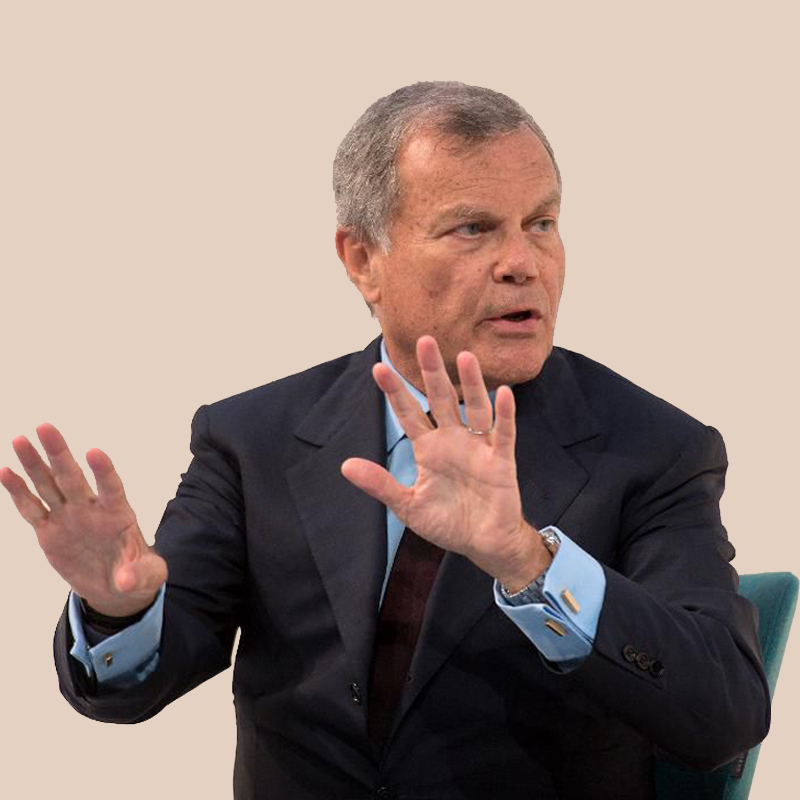
    MUMBAI: A first gen entrepreneur of Ukrainian descent, he rose out of nowhere to build the world’s largest advertising group.  And late last night  – amidst investigations into charges of personal misconduct by the WPP board – Sir Martin Sorrell packed up his things and shockingly announced that he was saying ta-ta to the CEO’s position and moving out of the corner office.

    “Obviously I am sad to leave WPP after 33 years. It has been a passion, focus and source of energy for so long,” stated Sorrell in an emotional note to WPP staff.  “However, I believe it is in the best interests of the business …in your interest, in the interest of our clients, in the interest of all shareowners, both big and small, and in the interest of all our other stakeholders, it is best for me to step aside….the current disruption is putting too much unnecessary pressure on the business.”

    He added: “We have weathered difficult storms in the past. And our highly talented people have always won through, always. I leave the company in very good hands as the board knows… Nobody, either direct competitors or newly-minted ones can beat the WPP team, as long as you work closely together, whether by client and/or country or digitally.”

    WPP released a statement stating that the change would become effective immediately and that the advertising behemoth’s chairman  Roberto Quarta would become executive chairman until the company could appoint a new chief executive. Sir Martin would of course assist with the transition.  It added that the 73 year old  would be “treated as having retired” and that his share awards would be “pro-rated in line with the plan rules and will vest over the next five years, to the extent group performance targets are achieved.”

    WPP’s corporate development director and chief operating officer for Europe Andrew Scott and , Wunderman CEO Mark  Read would don the mantle of co-chief operating officers. Said Sorrell in his note: “We have had a succession plan in place for some time. A new generation of management, led by Mark Read and Andrew Scott , are well qualified and experienced in the board’s opinion, to deal with the geographic and technological opportunities and challenges our industry faces”

    “The previously announced investigation into an allegation of misconduct against Sir Martin has concluded,” the WPP statement read. “The allegation did not involve amounts that are material.”

    Born to Jewish parents who were from Kiev, Sorrell began his career in the renowned and trendy ad agency Saatchi & Saatchi (which fashioned winning electoral campaigns for Britain’s conservative prime minister Margaret Thatcher) in 1975. He worked closely with the brothers Saatchi (Charles and Maurice) and helped fashion its rapid growth, before going solo and acquiring a shopping basket manufacturer Wires & Plastic Products (WPP).

    He used that firm as a vehicle to gobble up various other global ad icons such as Ogilvy & Mather, Young & Rubicam and another 18 other advertising service providers over three years. WPP today has  130,000 employees in 112 countries, and a market valuation of around 22 billion pounds, or about $31 billion.

    Along the way as his legend grew – so did the amounts he took as payments for his hard labour which caused heartburn to investors and shareholders.  In 2016 when he took a pay packet of 70 million pounds and the empire struck back with protests amongst the community about all his financial excesses.

    And last month  amidst slowing down of revenues and income and the growing clout of the FANGS  – the board commenced an investigation charging Sorrell with personal misconduct and misuse of the company’s assets.

    Sorrell’s last few words in his farewell note will not only tug at WPP staff’s heartstrings but almost anyone’s.

    Said he: “I shall miss all of you greatly. You have given me such excitement and energy and I wanted to thank you for everything you have done and will do for WPP and me. As some of you know, my family has expanded recently, WPP will always be my baby too.As a Founder, I can say that WPP is not just a matter of life or death, it was, is and will be more important than that. Good fortune and Godspeed to all of you … now Back to the Future.”

  • Martin Sorrell bullish on India

    Martin Sorrell bullish on India

    MUMBAI: WPP chief executive officer Martin Sorrell is bullish about India’s economy. He believes the GST switchover pangs and demonetisation were only temporary hiccups.

    Lauding India’s growth rate, Sorrell mentioned that India continued to remain among the fastest growing economies of the world, the Economic Times reported. When one had legislative change which brought about significant social change, it would lead to disruption. That was short-term pain for long-term gain, he said.

    Sorrell, who was in India yesterday to attend the company’s first board meeting, announced the appointment of CVL Srinivas as the new country head. He also hinted that GroupM, which is a part of WPP network, was seek good acquisitions.

    Sorrell said he did not believe internet companies such as Facebook and Google were particularly technology companies. They were media companies but took the position publicly as technology companies, which was wrong. He also shared that Facebook hired 4000 employees for its editorial content and social media companies should take responsibility of the content they put out.

    He said he believed the technology companies had to take responsibility of their contents appearing on extremist sites or whatever happened to be — about consumer brands, safety, about transparency, about fraud, about bots, about fake news, all those issues, he added.

    About characterising what the world was beyond India, he said, it was not growing at six per cent or 5.7 per cent. People would give their eye, teeth, they would cut off their limbs to grow at that sort of rate. The world, he said, was growing at around three to four per cent.

    The UK would be lucky if it grew at a couple of percents. In the US, President Trump would like to see the growth at four per cent, he concluded.

  • WPP appoints CVL Srinivas as country manager

    WPP appoints CVL Srinivas as country manager

    MUMBAI: In a recent development at WPP, the British multinational advertising and public relation company has announced CVL Srinivas as the country manager for WPP in India. He will look after the India business and will be replacing Ranjan Kapur who will continue to serve as the chairman of WPP India.

    CVL Srinivas will carry on with his duties as the CEO at GroupM South Asia.

    In a statement issued by the company, WPP CEO Martin Sorrell informed, “Horizontality’ is our number one strategic objective and Srinivas’s additional role in India will be to ensure that we work together as effectively as possible to provide clients with effective and efficient solutions.”

  • Martin Sorrell on how WPP is combating ad world slowdown

    Martin Sorrell on how WPP is combating ad world slowdown

    MUMBAI: It’s been sometime that we have got to listen to advertising heavyweight and guru Martin Sorrell’s unique insights. For those who have missed him, he’s still at his vintage best. The WPP CEO shared his worldview on what’s impacting the advertising business and how the industry is combating with the slowdown in a fireside chat with Goldman Sachs analyst Lisa Yan at the 26th Goldman Sachs Communacopia Conference held last week.

    Sorrell pointed out that the advertising industry has been generally  going through a slow growth-pace for a while now, though it has seen some upward movements for a short period. The reasons: low-economic growth, low-inflation, very little pricing power, and focus on cost, amongst clients. “That’s been tolerable, certainly up until, I would say the end of 2016,” expressed Sorrell. “What we started to see, a little bit of softness…certainly in Q4 of last year.”

    What caused this slowdown? Sorrell gave at least three hypotheses that could have contributed, and could continue to do so, and industry will have to have adequate responses to them.

    The first being consulting firms who have been looking at generating cost savings for bottomline-focused corporations, and the first expense they have been scratching out is advertising.  

    “I think you can build the case, so that consultants, it’s not just an Accenture or Deloitte or BCG or McKinsey or Bain, go into client and say you’re spending too much money generally, your costs are too high, we’ll see if we can do something about it, and that fans out from there,” said Sorrell.

    The second hypothesis is that increasingly agencies and brands have been diverting spends towards Google and Facebook. “Google and Facebook have become significant  destinations… we are the most significant customer with  the two – on behalf of our clients,” he said. “If Google was $5 billion, Murdoch $2.25 billion and Facebook $1.7 billion last year, this year the figures are Google $5.5 billion-$6billion, Facebook $2.5 billion, and Murdoch $2.25 billion.”

    Sorrel labeled the two digital giants as frenemies, though he acknowledged that they have become friendlier than last year, especially Google.

    The third hypothesis – which he called the most plausible reason for the impact this year – “is that in an era of cheap capital, a zero cost — or close to zero-cost capital, there are pools of capital which fund zero-based budgeting approaches or private equity activist approaches that are putting tremendous pressure on particularly packaged goods companies,” said Sorrell. “Their approach has get rid of R&D spending, get reduced marketing spending and its running across sectors…Beyond tech and pharma, top-line growth is very hard to come by. And, I think that’s the central issue. So, as long as there’s cheap capital, as long as there is this very significant pressure of a zero-based budgeting and an activist later, you’re going to see pressure.”

    Sorrell does not expect the era of cheap capital to go away quickly thanks to Hurricane Harvey and the tragedies in Houston and Florida. “The results of this is indices rise, the fed probably is going to keep interest rates down lower longer,” he expressed.

    WPP has been responding to these challenges, he pointed out, through what it calls horizontality – basically integrating the  company in a much more aggressive, seamless, efficient manner.

    The second response has been zooming in on the high growth markets of Asia, Latin America, Africa, Middle East and central and eastern Europe. “That continues. That’s a third of our business; it continues to be a high level of focus,” he said.

    WPP, has got a razor sharp eye on digital which is 40 per cent of its business. “It is very much in the target range that we identified three, four, five years ago. It doesn’t stop at 40 per cent, 41 per cent, which it was in the first half of the year; it has to go beyond that, so probably to the extent where ultimately everything is permeated in one way or another by digital. But that’s some way off, but getting closer,” highlighted Sorrell.

    “Making data, the centre or a significant part of the centre of what we do is critically important, particularly when you have disintermediation in retail from the likes of Amazon or Alibaba or Tencent or JD.com or others where the battlefield will ultimately be about who controls the data,” he added.   He, however, mentioned that the growth of data has not been as good as the industry would like to see it but that doesn’t diminish its importance in relation to horizontality.

    Sorrell expressed his worry that what’s happening in the packaging goods industry could have worrying implications as a whole for the ad business.

    “My hypothesis would be that cheap money is chasing packaged goods and driving up the valuations. And those last three quarters, if you look at revenue growth at 2.4 per cent, it’s mainly price, very little volume. And those of you know how packaged goods companies function know that the moment the volumes stutter and stagnate or even fall, which is the case with a number of packaged goods companies, the trouble starts. If you have fewer consumers, fewer customers,  that’s when the trouble starts. So, I come back to this, and it’s fundamental obviously, it’s our lifeblood, I come back to this thing that investing in innovation and brand is key, and that’s the heart of it,” the WPP chief elaborated.

    WPP has lost out on a lot of business (AT&T and VW) in recent times, and Sorrell stated that competition will always stay but it’s a question of price. “I’ve never heard any of our people say to me it was because we didn’t do a good job, they’ve always said it’s because somebody else discounted and we lost the business on the basis of price. Sometimes, that maybe the case but I think mainly it’s due to the qualitative side of the offer. But, I think we’ve got our act together much better on integration,” he added.

    Google is the biggest destination for WPP’s media spend for their clients. “It is by definition currently the most powerful media channel that you can find, search being the primary product. Boycotting that, not accessing it, I think is a mistake. Working with Google to improve the way that they manage the process is the way to go,” he said.

    Sorrell also mentioned that WPP will be changing its regional management approach encouraging more integration on shared client work across agencies. “Well, with the growth of technology, with the rise of the BRICs — Brazil, Russia, India and China should not be regional reports, they should be direct to the center. Even if that upsets regional managers,” he quipped.

    He said that he saw Amazon becoming a very serious threat to Google on search with 55 per cent of product searches in the US  emanating from it. “Amazon now has a voice activated device. Every one of the Fearsome Five has a voice activated device. What that means for brands is very serious.”