Tag: Martech

  • Wondrlab ropes in Jateen Kore as digital head

    Wondrlab ropes in Jateen Kore as digital head

    MUMBAI: Martech start-up Wondrlab has appointed Jateen Kore as its digital head. He will be based in Mumbai and report to Wondrlab co-founder & managing partner – content platform Rakesh Hinduja.

    Kore joins from IDFC First Bank where he was the head – digital marketing. At Wondrlab, he has been tasked with setting up the digital practice and bringing forth the agency’s platform-first approach to help brands win on digital.

    “Jateen’s experience straddles the entire digital funnel; his key focus area is to apply a platform-first approach for our brands to win across social, performance marketing, influencer marketing, e-commerce and martech best practices. His diverse skill-set and deep understanding at top digital-first brands like Vodafone and IDFC First Bank will help us deliver tangible creative solutions to our client partners,” Hinduja said.

    “The opportunity to work with a dynamic start-up like Wondrlab is a great chance to augment my experience and contribute to the success of brands across categories. I completely believe in its platform-first strategy and I can contribute significantly to furthering their approach thanks to my digital-first experience. I look forward to an exciting and fruitful inning here,” Kore added.

  • Throwback2020: Not in moolah but digital marketing grew in virtue

    Throwback2020: Not in moolah but digital marketing grew in virtue

    NEW DELHI: It has been quite a few years that the digital marketing industry is enjoying a fabulous run rate in India. It is a no-brainer that growing internet penetration, cheap data rates, and just the sheer availability of digital entertainment and logistical options have contributed to its stellar rise. While the traditional modes of advertising have been struggling to keep the  cash registers ringing, partly because of the continuing dip in the economy and partly due to the Covid2019 lockdown’s impact on businesses across the spectrum, digital marketing enjoyed quite a positive stay in an otherwise positively uncomfortable 2020. 

    The year was a mixed bag of challenges and opportunities for the digital marketing industry, though the latter were overpowering. Despite a slump in growth numbers, the industry seems to be staring at a rather bright future. Tech advancements, positive sentiments within the industry, and the sheer scope of growth ahead makes the ride an interesting prospect for the future too. 

    The spike in digital adoption

    For nearly two-months, starting March, the whole country was forced to stay indoors following strict lockdown rules, courtesy the global viral pandemic Covid2019. It forced people to work online, connect online, shop online, teach online, consult online and do what have you online. This led to a crazy uptake in digital adoption. 

    Logicserve Digital founder & CEO Prasad Shejale said: “The pandemic has definitely caused a huge shift in the industry. While the country’s economy and GDP took a massive hit, the digital industry has been rapidly growing with regards to its consumption, penetration as well as engagement. The global e-commerce sales growth and number of digital adopters accelerated in the initial three months; in the normal course that would have taken three years.”

    According to a Kantar report released in May this year, India’s monthly active internet user base is estimated to reach 639 million by the end of 2020, from the currently estimated 574 million. The country had clocked 734.82 million wired and wireless broadband subscribers up to 31 October 2020 according to Telecom Regulatory Authority of Indian monthly telecom data reports.

    Mobile became the preferred choice of internet consumption and the average time spent on smartphones in a day grew with average usage growing 11 per cent to 5.5 hours in March 2020 (pre-Covid) from about 4.9 hours on average in 2019. This further grew by another 25 per cent to 6.9 hours April onwards (post-COVID), a report by Vivo and CMR highlighted. 

    India also saw the biggest jump in video consumption, of 40 per cent to over 2.9 billion hours during the week starting 22 March as compared to the last week of December 2019, when it was 2.1 billion hours, as stated by an Internet & Mobile Association of India (IAMAI) and Nielsen report. 

    Naturally, this sharp spike in digital consumption had a positive impact on digital marketing and advertising too. 

    Digital marketing growth story 2020

    At the beginning of the year, a DAN report had predicted that the digital advertising industry would grow 27 per cent in 2020. However, that might not turn out to be the case entirely. 

    The sector, much like every other business, took a hit in Q1 FY21, because of the market uncertainties and lockdown. Ad rates went down as much as by 15-20 per cent according to an industry insider. 

    A panel discussing the widening scope of digital marketing with Indiantelevision.com founder, CEO, and editor-in-chief Anil Wanvari in June stressed that the growth digital marketing has clocked in the year will not be immediately visible in the CAGR, but will be a defining factor in how the advertising pies of individual marketers changed. It insisted that after six months of struggle in 2020, the industry will have a very prosperous six years ahead. 

    iProspect India AVP-strategic solutions Nihal Nambiar had said: “Digital, in 2020, will definitely not have a similar CAGR of 27 to 30 per cent as it has been recording for the past few years.” But he mentioned that he is looking forward to some positive quarters ahead in terms of brands moving to digital platforms.

    Shejale pointed out: “Various reports suggest that in spite of the slowing economy, the digital segment has seen a growth of around 20-27 per cent by November 2020. The numbers might vary in different research articles. However, this is the broad range within which the growth is seen, and it’s very promising.” 

    However, GenY Medium co-founder & CEO Yashwant Kumar is more hopeful and is expecting that the industry will grow by 35-40 per cent in 2020-21. 

    He noted: “Digital advertising has gained tremendously during the pandemic and has become the preferred medium with a huge surge in e-commerce across categories together with consumers spending a lot more time with their families at home on their connected TVs and mobiles. Digital has been consistently growing at 27 per cent CAGR over the past few years ahead of television, print and outdoor. We are seeing a significant movement towards digital in Q2 and Q3 this year after a slow Q1. My expectation is that digital advertising will grow by 35 to 40 per cent for the year 2020-21.” 

    While the industry has contrasting views towards the growth numbers, KPMG’s ‘A Year Off Script’ report released in September indicated that online advertising is expected to result in a 12 per cent growth overtaking traditional media like television which will contract by 17 per cent this year. 

    The report added, “At ₹22,300 crore, total digital advertising revenue will beat the ₹21,700 crore revenue of TV over FY21.”  

    Trends that defined the industry in 2020

    The biggest trend that strengthened the roots of the digital marketing industry in 2020 was the sheer influx of rural users in the internet world. As per a report by the Internet and Mobile Association of India (IAMAI) and Nielsen, rural India had 227 million active internet users, 10 per cent more than urban India’s about 205 million, as of November 2019. A Kantar report further suggested that this number will increase to 304 million by 2020. “Local language content and video drive the internet boom in rural India, with a 2.5 times increase in penetration among the population in the last four years,” it added. 

    This, added with digital retailers going deep into the heartland India, led to a great jump in the need for “hyperlocal” content by brands. This kept the digital agencies busy through the year. 

    Additionally, giants like Facebook, Swiggy, and Instagram entering the local market with thier own shopping platforms, growth of edtech companies like WhiteHat Jr, Vedantu, and Instagram releasing a new content section called Reels, were some new found opportunities for the digital industry to explore. 

    Wavemaker India chief client officer and head-west Shekhar Banerjee had mentioned in an earlier conversation with Indiantelevision.com that brands went heavy on performance marketing in 2020. “Apart from the usual search, social, and e-commerce mix, one platform that has become the biggest gainer during the period is the e-groceries section, taking a huge part of the digital pie. Going ahead, hyperlocal platforms, with their changing business models will be more conducive to advertising.”

    Another interesting opportunity for the digital marketing industry came in the form of online events. Almost 95 per cent of the physical events moved to online platforms giving digital agencies great opportunities to work with brands. It included marquee events like IPL, which was hosted without a live audience and saw viewers engaging with it either through TV or digital platforms. 

    OTT platforms also saw a remarkable rise in viewership during 2020. Kumar highlighted, “According to one industry report (Velocity MR Study), Amazon and Netflix saw +60 per cent growth in their subscriber base in the AMJ '20 quarter. Similar numbers have been reported for other platforms like Hotstar, YouTube and others. This massive shift towards the OTT platforms becoming the go to destination for entertainment, sports and news is driven by increased consumption of video content by consumers across all the age groups and demographic segments. Daytime video usage by the working professionals has become the new norm as they have started watching TV or streamed video content during their work breaks or while actively working.” 

    Additionally, what moved the industry significantly was FMCG brands getting more serious about digital platforms. As per industry experts, FMCG brands increased their expenditure on digital platforms to 12 per cent, compared to around 7 per cent in 2019. 

    This also paved the way for a significant hike in influencer marketing activities. 

    Mompresso co-founder & COO Prashant Sinha said, “Digital marketing has seen transitional growth in the year 2020. The majority of advertising and marketing spends by brands this year has been towards digital channels and with no doubt, this will continue to grow further in 2021. We can also expect to see big portions of these budgets to go towards influencer marketing and macro and micro-influencer led campaigns. The overall digital marketing industry has seen a boost this year, where creators, brands, and marketers have learned to work together. Brands have revaluated the metrics and shifted focus to prioritize channels where they receive the most engagement. While video content has dominated the space, more diversification is expected. Live streaming and user-generated content will continue to be popular among influencers and marketers.” 

    The growth in the e-gaming industry resulted in increased ad spends by players and also the development of a whole new media option for the brands. While most of the marketers still sat on the fence about exploiting the medium, it is expected that it will flourish in the coming quarters. 

    The year was a mixed bag of challenges and opportunities for the digital marketing industry, though the latter were overpowering. Despite a slump in growth numbers, the industry seems to be staring at a rather bright future. Tech advancements, positive sentiments within the industry, and the sheer scope of growth ahead makes the ride an interesting prospect for the future too. 

  • Nippon India Mutual Fund targets potential consumers with AI-enabled digital ads

    Nippon India Mutual Fund targets potential consumers with AI-enabled digital ads

    NEW DELHI: Nippon Life India Asset Management Limited (NAM India), asset manager of Nippon India Mutual Fund (NIMF), recently launched a first-of-its-kind geo-targeting campaign to help potential mutual fund investors connect with empanelled mutual fund distributors (MFDs).

    Insight for the campaign: most potential mutual fund investors end up delaying their investments for the want of a connect with a dependable mutual fund distributor; preferably in their vicinity. This issue has gained a lot of severity after the success of AMFI’s ‘Mutual Funds Sahi Hai’ campaign that generated a lot of positive disposition about mutual funds.

    The campaign, conceptualized by Nippon India Mutual Fund, surfaces the key issues/questions/doubts/comments in the minds of investors and then provides a solution by way of contact details of empanelled mutual fund distributors in their vicinity so that these concerns can be addressed and the wealth creation the journey is catalysed.

    Through this social media campaign, the fund house plans to help connect potential investors with local MFDs covering close to 2000 key pin codes across India; which accounts for more than 95 per cent of the mutual fund business in India. This month-long campaign uses dominant social media platform – Facebook – and is expected to reach 25 million prospective investors.

    Contact details of MFDs are displayed basis the location at which the ad is viewed; using geo-targeting at the pin code level. An algorithm customizes the ad for the viewer based on her location.

    “We have made thousands of copies of this video with contact details of local MFDs and we will be geo-targeting them at a pin-code level. This will ensure that prospective investor in Bandra, Mumbai, or Bhatinda, Punjab, with eagerness to invest in Mutual Fund but lots of unanswered questions in their minds will be helped with names and numbers of empanelled MFDs in their vicinity. This is not just a ‘nice, goodwill gesture’ but one that will actually, connect millions of information-hungry investors with thousands of small-time self-employed professionals across the country” said Nippon Life India Asset Management Limited CMO Sandeep Walunj. 

  • The challenges and benefits facing martech in India

    The challenges and benefits facing martech in India

    NEW DELHI: Martech sounds like quite a jargonistic word to many. But, put simply, it is the tech stack run by backroom geeks in glasses who use software and web-based services to manage, automate, or execute marketing tasks and processes. Data and analytics lie at the heart of martech, giving companies better customer and market insights, helping them to respond accordingly. 

    Globally, it is a booming business touching Rs 739,200 crore ($121 billion) in 2019, according to a report by advisory and research firm BDO and WARC in conjunction with the University of Bristol. In India, it is coming out of  its infancy  with marketers just about waking up to its utility, though the software development  sector has bitten a sizable piece of the global pie.

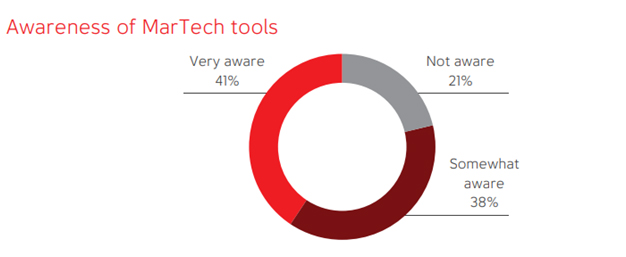
    Earlier this year,  WPP group company  Mirum India released its Martech Survey 2020 report, which did not give any indications of the sector’s size and scale, but it revealed that  marketers across India are bullish, with as many as 80 per cent of those surveyed expecting their organisation’s spends on these technologies to increase over the next five years. 

    Xaxis India country lead Bharat Khatri told Indiantelevision.com that there has been a significant rise in the investments that Indian brands and marketers are making in the martech space. “Around one-fourth of the overall marketing pie is being directed towards martech right now and this shift has occurred within the past few years only. Earlier, we were getting a minuscule share in the marketing pie, and it is definitely bound to grow further.” 

    However, according to him, despite growth in adoption, the core challenge for the industry remains that most of the people who are investing in the technologies are not aware of how it is benefiting them. “Around 50 per cent of the marketers today don’t know the exact functions of martech. There is a great need to educate the industry.” 

    Business head of a leading insurance company acknowledges in the Mirum India report that the biggest challenge is that there are too many hands involved in the martech implementation broth, thus leading to delays. “Adding to this is the pressure caused by marketers evaluating solutions only after they identify a specific business need, which leaves them with little time to plan before arriving at a decision,” he adds. He also points out to problems of integrating the martech tools with existing technologies in an organization and the pushback from internal stakeholders towards adopting change. 

    Another issue stifling  the sector’s growth is marketing budgets, which are limited. 
    Khatri explains that martech’s limitation, in the Indian context, is that one cannot instantaneously get to know if the investment being poured into it is worth it.

    “It takes two to three  years to understand the kind of impact the martech tools have had and the ROI. Now, for some marketers, it gets difficult to get the budgets sanctioned, and with a pandemic like Covid-19, when everyone is holding back their budgets, it is creating a big problem,” he says. 

    However, the industry believes that Covid2019 pandemic has certainly opened up newer and exciting opportunities for martech, and it will be wiser for the brands to latch on to it. 

    “COVID2019 has impacted consumer behaviour a lot and accentuated some of the consumer trends too. In the past four months, we have seen how the adoption and usage of online channels have increased,” says Logicserve Digital founder &  CEO Prasad Shejale. “Consumer journeys have changed significantly and have also affected brand loyalty. This is actually a great opportunity, and smart marketers are investing in analytics tools to understand changing customer behaviour.” 

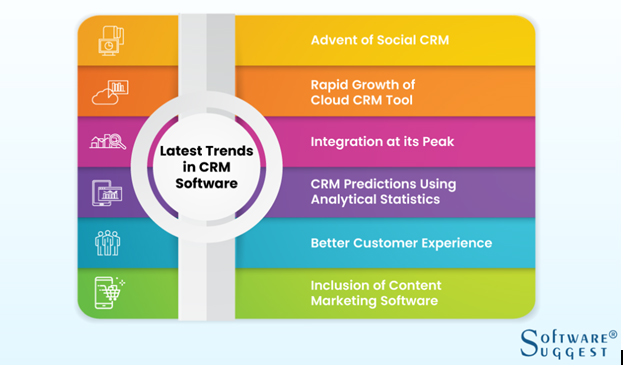
    Adds Khatri:  “What brands are using martech for most is understanding the consumer behaviour and their journeys –  what they like, where and when they shop, etc. This has resulted in marketing being market-driven instead of sales-driven. This has resulted in great demand for technologies like customer data platforms (CDMs), tools for customer relationship management (CRM), and mobile phone data.”

    Shejale agrees: “The most important tools right now are the combination of analytics-insights-CRM/CDP. These tools, along with a focused approach on the consolidation of consumer data to understand them better, are important to provide better service to the consumers across their journeys, whether online or offline. For a smooth and convenient journey across online and offline channels, CRM tools can be very effective. They can also assist in sending the right communication to your audience at the right time through the right channels.” 

    Another interesting trend that is, arguably, impacting the growth of martech in India is global domination in the arena. The Indian industry is currently dotted by a lot of foreign players who have been active in the space for a long time. Khatri suggests that platforms like Salesforce are quite popular. 

    In a e previous episode of the Media Minds  2, Zoo Media & FoxyMoron co-founders Suveer Bajaj and Pratik Gupta had said, “India, by virtue of the fact that we have been a tech hotspot so as to speak, with big boys at Infosys, Wipro  and TCS setting the agenda, is globally acting as a back office for a lot of martech and a lot of adtech companies for generations. It’s funny though, like for example, even if you look at programmatic, we are about 18 months behind and what the rest of the world is.” 

    But Indian players are also catching up fast. 

    “India has a big advantage in making technology in-house and there are a lot of independent firms and also companies like ours who are a part of big global networks investing great time and energy in creating tools and technologies here. For example, last year we launched Xaxis Places, a completely homegrown technology and now 30 plus  markets across the globe are using it,” Khatri shares.

    Adds Zoo Media’s Pratik Gupta:  “We are struggling as an agency to be able to wrap our heads around all of the marketing tech and adtech that exists pretty much out there (but) there are a lot of things that we are doing. For example, there is a marketing technology and ad technology platform that we are building inside of Instagram, which is a landing page solution providing first-party data on e-commerce.” 

    Ambient, C Lab, ROOH, Brandscope director Deepak Kumar, also sheds some light on the in house technologies that the agency is working on. “We created a tool called Star Metrics, which helps identify the geographical heat map indicating where the fanbase of a particular star is and where the consumers of a brand are. If those heat maps match, a darker hotspot is created indicating the perfect fitment of both, ensuring maximum engagement.”

    He also mentions that the team is about to launch another technology to complement this in the coming weeks. 

    According to Khatri,  many independent firms are also getting active in this space. Albeit one problem that these players might face in the coming few months is  the market sentiment that has been created due to the pandemic, but he is sure that this is temporary. 

    Indeed, with the tide now rising for martech in India, it won’t be too long before it washes over many more who have been playing a wait and watch game.  
     

  • Mirum India appoints Kalpesh Patel as director of martech services

    Mirum India appoints Kalpesh Patel as director of martech services

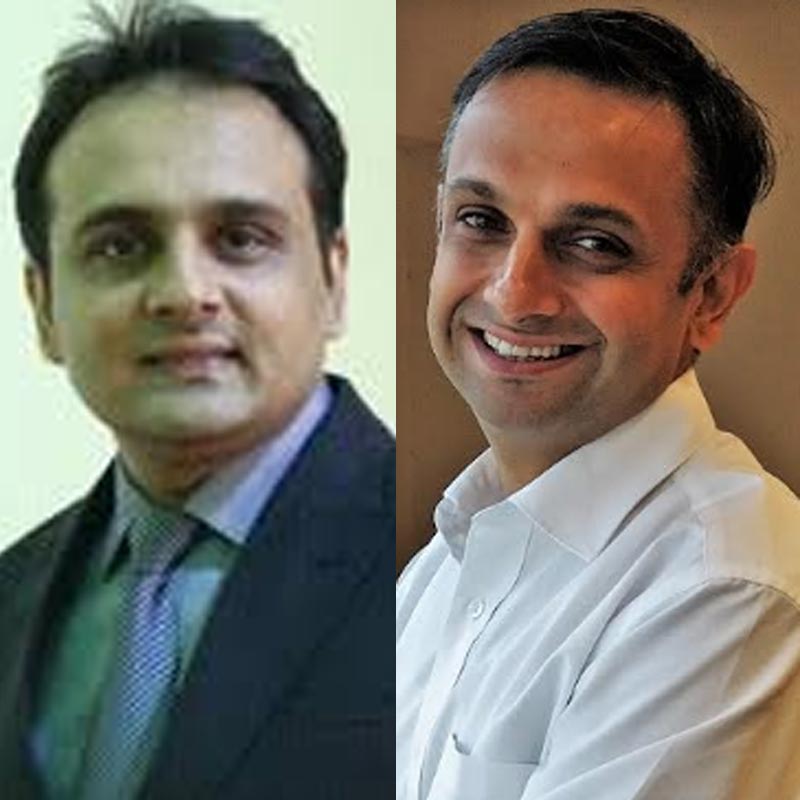
    NEW DELHI: Mirum has appointed Kalpesh Patel as director of martech services. Besides leading the Salesforce practice, Patel will also lead other areas of practice such as Sitecore, SEO, UX_UI in addition to other CMS and e-commerce solutions. Patel has more than 23 years of experience in managing and delivering technology solutions to Indian and global clients. Patel has been with Mirum for more than four years now and was earlier leading the technology practice.

    Mirum India is a Salesforce gold consulting partner for over nine years and has successfully executed more than 100 projects. Marketing automation services continues to be a major focus area for the agency. Mirum also has an in-house product engineering team, that has built numerous marketing cloud accelerators.  

    Mirum India joint CEO Hareesh Tibrewala said, “Kalpesh is a very passionate and detail-oriented leader. He brings both: the emotional quotient required to run and manage a large team;  and the discipline and processes required to ensure flawless and timely delivery. Post Covid2019, we expect to see an accelerated requirement for digital transformation for businesses. And under Kalpesh’s leadership, we are set to deliver the same for our clients.”

    “A big thank you to Mirum India for putting faith in me and giving me this big opportunity,” said Patel. “With the martech vertical, Mirum India has now combined all the offerings which brands need on their digital transformation journey. I am excited to leverage my experience in delivering technology solutions for domestic and global clients, to add value to the martech vertical. I am looking forward to my new role and keen on contributing to the success of martech and the organisation.”

  • Dan Consult appoints Milind Shah as partner – Martech, RPA & Data

    Dan Consult appoints Milind Shah as partner – Martech, RPA & Data

    MUMBAI: DAN Consult, the consulting division from the house of Dentsu Aegis Network (DAN), has roped in Milind Shah as Partner – Martech , RPA & Data . Milind will be based out of Mumbai and will report to Lalit Bhagia, CEO, DAN Consult.  As Partner – Digital, his chief mandate will be to help build and lead a client-facing Martech, RPA  and Data Consulting practise. This is part of the larger marketing transformation service offering of DAN Consult.

    Prior to joining DAN Consult, Milind was Head of Sales – India with Cognizant Technology Solutions where he helped Cognizant significantly scale their India business. At Cognizant, Milind was responsible for topline, client satisfaction, go-to-market, marketing, strategy, alliances and growing the India market. He has an astute understanding of Indian business environment and the impact of digital technologies on various industries. With 20+ years of experience, Milind has worked in leadership and consulting  roles across global organizations like IBM, HP and Capgemini  and has advised clients across industry segments to traverse through the digital disruption  in APAC . Milind has core industry expertise in industries like Retail, CPG and Manufacturing (discrete and process) and has experience of working in complex consulting projects. Milind has completed his Masters in Operations Research from University of Wisconsin – Madison, USA and is a Bachelor of Production Engineering from Mumbai. He is also a Certified Supply Chain Professional by APICs and has also completed Part time Executive Management Program from University of Cornell. He teaches part time at Business Schools.

    Commenting on the appointment, Lalit Bhagia, CEO, DAN Consult said, “We are excited to have somebody with the calibre of Milind in our team.  Having worked in large global technology firms with a huge focus on Martech, RPA and digital transformation, we believe Milind will be able to add a lot of value to our clients’ business as they look at marketing/digital transformation. Milind’s understanding of the space and thought leadership will bring immense value to us and our clients’ businesses.  As we focus on helping companies transform their business, we believe Milind will act as a true partner helping companies scale their business.  We believe while a lot of firms like consulting and technology firms are now focused on Martech and data consulting, the unique advantage that DAN Consult has, is the ability to drive revenues and deliver ROI which Milind along with our extended team will be uniquely positioned to deliver.”

    On his new role, Milind said, “It is estimated the Martech spend would overcome core technology spend in the next 5 years. Instead of balancing individual agency partners, tech firms and consulting firms in the Digital Transformation journey, DAN Consult provides a unique value proposition of growth hacking by delivering on clear business outcomes. There is a dearth of companies who  deliver on business results as well as deliver complex Martech solutions where I believe DAN Consult  plays uniquely by partnering with both technology product companies and clients. I am excited to join DAN Consult to grow their Martech, RPA and Data Practice.” 

    Milind lives in Mumbai and is a wildlife enthusiast and a PADI certified Scuba Diver.