Tag: Mars

  • National Geographic’s global rebranding date coincides with ‘Mars’

    National Geographic’s global rebranding date coincides with ‘Mars’

    MUMBAI: National Geographic channel has finally decided to put a stop at all the speculation about its rebranding in the media and entertainment industry. It has dropped the word “channel” from its brand name and has embraced a global tagline, Further. To reinforce the notion of one National Geographic, as part of this new branding effort, the network will drop the word channel both on air and off all around the world beginning 14 November.

    This evolution further builds on last year’s expanded joint venture with 21st Century Fox and cements National Geographic’s position as a leader in premium content with an unparalleled global reach.

    Its new tagline embodies the ethos and spirit that have defined the brand (channel) for over 128 years. Embracing the company’s purpose to be the leading premium content destination for science, exploration and adventure, it captures the aspirations of the National Geographic audience and serves as a rallying cry for its employees, explorers, photographers, producers and other constituencies as well as a promise to advertisers, affiliates, educators and other external partners.

    “This is a proud moment for us at National Geographic and FNG as we set forth on a journey that will redefine the way in which the genre will be seen, experienced and consumed. Our new proposition of ‘Further’ underlines the vision of a brand that has always championed the cause of a better and deeper understanding of the world around us. It also comes at a point where the need to scratch beyond the surface and explore territories we never thought possible, is more pressing than ever before,” said National Geographic India Fox Networks group business head Swati Mohan.

    The rebrand will touch every aspect of National Geographic, including the visual presentation of the global channels in 171 countries, the iconic magazine, nationalgeographic.com, all of the company’s social and digital platforms.

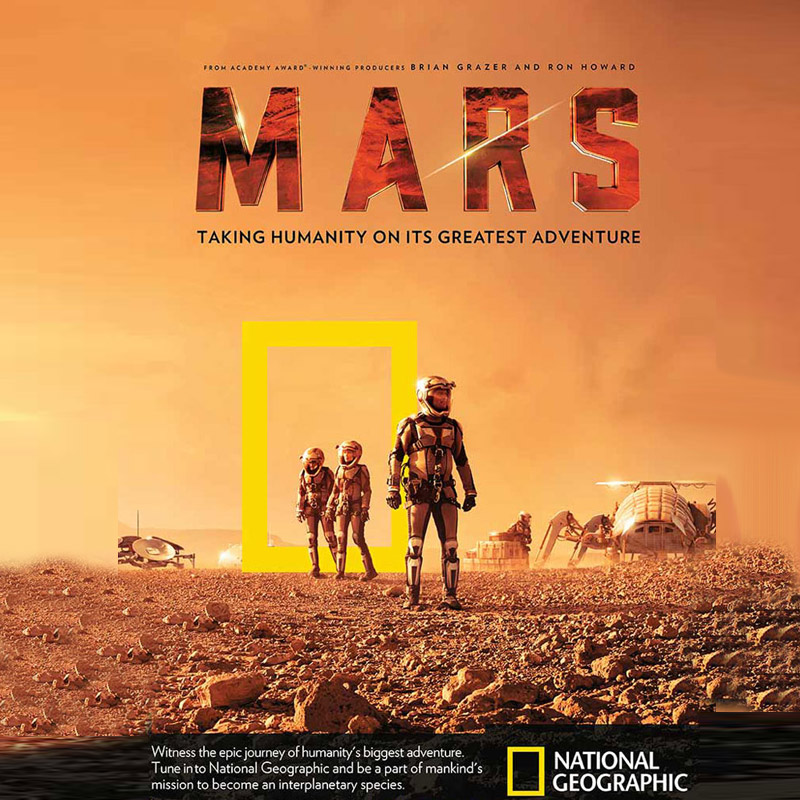
    This news also coincides with premier of the global event series Mars, an epic story of mankind’s thrilling quest to inhabit Mars, executive produced by Brian Grazer and Ron Howard.

    The epic and path-breaking, six-part series is a joint product by National Geographic (NG), Academy Award and Emmy-winning producers Brian Grazer, Ron Howard and Michael Rosenberg of Imagine Entertainment; and Academy Award-nominated and Emmy-winning producer Justin Wilkes and Dave O’Connor of Radical Media.

    She further added, “Mars is a perfect example of our ambition on ‘Further’, as it tells the story of the inevitability of inter planetary existence of mankind. The show also launches a first-of-its-kind format that combines scripted with stunning visual effects and high-class documentary sequences. And yet, this is just the beginning of a whole new world of National Geographic, which we are confident will stun and amaze its audiences like never before.”

    Globally premiering on 14 November at 9 pm on the channel across 171 countries and 45 languages, Mars, is set both in the future and in the present day. It will air every Monday at 9 pm. This series aims to redefine television storytelling by combining feature-film-quality scripted drama and visual effects with best-in-class documentary sequences to drive forward a cohesive, edge-of-your seat story of mankind’s thrilling quest to inhabit Mars.

  • National Geographic’s global rebranding date coincides with ‘Mars’

    National Geographic’s global rebranding date coincides with ‘Mars’

    MUMBAI: National Geographic channel has finally decided to put a stop at all the speculation about its rebranding in the media and entertainment industry. It has dropped the word “channel” from its brand name and has embraced a global tagline, Further. To reinforce the notion of one National Geographic, as part of this new branding effort, the network will drop the word channel both on air and off all around the world beginning 14 November.

    This evolution further builds on last year’s expanded joint venture with 21st Century Fox and cements National Geographic’s position as a leader in premium content with an unparalleled global reach.

    Its new tagline embodies the ethos and spirit that have defined the brand (channel) for over 128 years. Embracing the company’s purpose to be the leading premium content destination for science, exploration and adventure, it captures the aspirations of the National Geographic audience and serves as a rallying cry for its employees, explorers, photographers, producers and other constituencies as well as a promise to advertisers, affiliates, educators and other external partners.

    “This is a proud moment for us at National Geographic and FNG as we set forth on a journey that will redefine the way in which the genre will be seen, experienced and consumed. Our new proposition of ‘Further’ underlines the vision of a brand that has always championed the cause of a better and deeper understanding of the world around us. It also comes at a point where the need to scratch beyond the surface and explore territories we never thought possible, is more pressing than ever before,” said National Geographic India Fox Networks group business head Swati Mohan.

    The rebrand will touch every aspect of National Geographic, including the visual presentation of the global channels in 171 countries, the iconic magazine, nationalgeographic.com, all of the company’s social and digital platforms.

    This news also coincides with premier of the global event series Mars, an epic story of mankind’s thrilling quest to inhabit Mars, executive produced by Brian Grazer and Ron Howard.

    The epic and path-breaking, six-part series is a joint product by National Geographic (NG), Academy Award and Emmy-winning producers Brian Grazer, Ron Howard and Michael Rosenberg of Imagine Entertainment; and Academy Award-nominated and Emmy-winning producer Justin Wilkes and Dave O’Connor of Radical Media.

    She further added, “Mars is a perfect example of our ambition on ‘Further’, as it tells the story of the inevitability of inter planetary existence of mankind. The show also launches a first-of-its-kind format that combines scripted with stunning visual effects and high-class documentary sequences. And yet, this is just the beginning of a whole new world of National Geographic, which we are confident will stun and amaze its audiences like never before.”

    Globally premiering on 14 November at 9 pm on the channel across 171 countries and 45 languages, Mars, is set both in the future and in the present day. It will air every Monday at 9 pm. This series aims to redefine television storytelling by combining feature-film-quality scripted drama and visual effects with best-in-class documentary sequences to drive forward a cohesive, edge-of-your seat story of mankind’s thrilling quest to inhabit Mars.
  • NGC’s ‘Mars’ showcasing space revolution in Nov

    NGC’s ‘Mars’ showcasing space revolution in Nov

    MUMBAI: National Geographic is all set to initiate an unprecedented global event series called Mars. The show is produced by Imagine Entertainment and RadicalMedia for the channel. For Imagine Entertainment, Brian Grazer, Ron Howard and Michael Rosenberg are executive producers. For RadicalMedia, Justin Wilkes, Jon Kamen, Dave O’Connor, Jonathan Silberberg are executive producers. For NGC, Robert Palumbo is executive producer; Matt Renner is vice president, production; and Tim Pastore is president, original programming and production.

    Premiering this November, the series is set both in the future and in the present day. The show intends to redefine television storytelling by combining feature film-quality scripted drama and visual effects with best-in-class documentary sequences to drive forward a cohesive, edge-of-your-seat story of mankind’s thrilling quest to colonize Mars.

    This six-part global event series tells the inspiring story from the vantage point of a fictitious crewed mission to Mars in 2033. The scripted portion focuses on Earth’s first crewed mission to Mars aboard the spacecraft Daedalus. Its maiden voyage in 2033 is crewed by a carefully selected international team of six uniquely qualified astronauts, including:

    Once Daedalus successfully lands on Mars and sets up a preliminary base of operations, British nuclear physicist Leslie Richardson (Cosima Shaw) will lead a Phase 2 settlement team along with her husband, world-renowned experimental botanist Dr. Paul Richardson (John Light). Those interviewed on camera for the series include the following:

    • Charles Bolden, Administrator, Former Astronaut, NASA

    • Neil deGrasse Tyson, Director, Hayden Planetarium

    • Peter Diamandis, Chairman and CEO, XPRIZE Foundation

    • David Dinges, Director, Unit for Experimental Psychiatry, University of Pennsylvania

    • Casey Dreier, Director of Space Policy, The Planetary Society

    • Ann Druyan, Creative Director, Voyager Interstellar Mission, NASA

    • Charles Elachi, Director, LPL (Ret.)

    • Jim Green, Division Director, Planetary Science, NASA

    • John Grunsfeld, Associate Administrator, Former Astronaut, NASA

    • Jennifer Heldmann, Planetary Scientist, NASA

    • Jedidah Isler, award-winning astrophysicist; emerging Explorer, National Geographic

    • Thomas Kalil, Deputy Director, White House Office of Science and Technology

    • Roger Launius, Smithsonian Institution

    • John Logsdon, Founder, Space Policy Institute, George Washington University

    • James Lovell, Former NASA Astronaut, Apollo 13 Commander

    • Elon Musk, CEO SpaceX

    • Stephen Petranek, author, How We’ll Live on Mars

    • Mary Roach, author, Packing for Mars

    • Jennifer Trosper, Mars 2020 Mission Manager, JPL

    • Andy Weir, author, The Martian

    • Robert Zubrin, President, The Mars Society

    National Geographic will extend the show’s storytelling in an unprecedented cross-platform effort, including a six-part digital companion prequel series.

    Further, Mars will be the November cover story of National Geographic magazine and will be featured in a stand-alone National Geographic book, Mars: Our Future on the Red Planet. It will also be featured in the NG Kids book, Mars: The Red Planet.

  • NGC’s ‘Mars’ showcasing space revolution in Nov

    NGC’s ‘Mars’ showcasing space revolution in Nov

    MUMBAI: National Geographic is all set to initiate an unprecedented global event series called Mars. The show is produced by Imagine Entertainment and RadicalMedia for the channel. For Imagine Entertainment, Brian Grazer, Ron Howard and Michael Rosenberg are executive producers. For RadicalMedia, Justin Wilkes, Jon Kamen, Dave O’Connor, Jonathan Silberberg are executive producers. For NGC, Robert Palumbo is executive producer; Matt Renner is vice president, production; and Tim Pastore is president, original programming and production.

    Premiering this November, the series is set both in the future and in the present day. The show intends to redefine television storytelling by combining feature film-quality scripted drama and visual effects with best-in-class documentary sequences to drive forward a cohesive, edge-of-your-seat story of mankind’s thrilling quest to colonize Mars.

    This six-part global event series tells the inspiring story from the vantage point of a fictitious crewed mission to Mars in 2033. The scripted portion focuses on Earth’s first crewed mission to Mars aboard the spacecraft Daedalus. Its maiden voyage in 2033 is crewed by a carefully selected international team of six uniquely qualified astronauts, including:

    Once Daedalus successfully lands on Mars and sets up a preliminary base of operations, British nuclear physicist Leslie Richardson (Cosima Shaw) will lead a Phase 2 settlement team along with her husband, world-renowned experimental botanist Dr. Paul Richardson (John Light). Those interviewed on camera for the series include the following:

    • Charles Bolden, Administrator, Former Astronaut, NASA

    • Neil deGrasse Tyson, Director, Hayden Planetarium

    • Peter Diamandis, Chairman and CEO, XPRIZE Foundation

    • David Dinges, Director, Unit for Experimental Psychiatry, University of Pennsylvania

    • Casey Dreier, Director of Space Policy, The Planetary Society

    • Ann Druyan, Creative Director, Voyager Interstellar Mission, NASA

    • Charles Elachi, Director, LPL (Ret.)

    • Jim Green, Division Director, Planetary Science, NASA

    • John Grunsfeld, Associate Administrator, Former Astronaut, NASA

    • Jennifer Heldmann, Planetary Scientist, NASA

    • Jedidah Isler, award-winning astrophysicist; emerging Explorer, National Geographic

    • Thomas Kalil, Deputy Director, White House Office of Science and Technology

    • Roger Launius, Smithsonian Institution

    • John Logsdon, Founder, Space Policy Institute, George Washington University

    • James Lovell, Former NASA Astronaut, Apollo 13 Commander

    • Elon Musk, CEO SpaceX

    • Stephen Petranek, author, How We’ll Live on Mars

    • Mary Roach, author, Packing for Mars

    • Jennifer Trosper, Mars 2020 Mission Manager, JPL

    • Andy Weir, author, The Martian

    • Robert Zubrin, President, The Mars Society

    National Geographic will extend the show’s storytelling in an unprecedented cross-platform effort, including a six-part digital companion prequel series.

    Further, Mars will be the November cover story of National Geographic magazine and will be featured in a stand-alone National Geographic book, Mars: Our Future on the Red Planet. It will also be featured in the NG Kids book, Mars: The Red Planet.

  • Nat Geo partners ISRO to showcase Mangalyaan: India’s Mission to Mars

    Nat Geo partners ISRO to showcase Mangalyaan: India’s Mission to Mars

    MUMBAI: With a view to increase its focus original productions in India, National Geographic Channel has partnered with the Indian Space Research Organisation (ISRO) to celebrate the successful space mission to Mars – Mangalyaan or Mars Orbiter Mission (MOM).


    The channel will premiere an exclusive one-hour special documentary on India’s first interplanetary mission – Mangalyaan: India’s Mission to Mars on 5 November at 10 pm, which also happens to the date when the mission was launched two years back. Mangalyaan entered the Martian orbit on 24 September, 2014.


    Nat Geo will capture Mangalyaan’s journey of over 650 million km through live action visuals, graphic representations and expert interviews. The documentary will feature all the excitement, last minute preparations, the countdown and the successful launch of the mission.


    Commenting on the success of Mangalyaan, ISRO chairman A S Kiran Kumar said, “It was a proud moment for our team, and in fact for the entire country, when Mangalyaan successfully entered the Martian orbit. We are glad that a brand like National Geographic Channel has partnered us in showcasing not only this historic journey, but also the science and technology behind it. This documentary will give viewers an exquisite glimpse into the Mangalyaan journey, the salient features of the mission, and the major milestones accomplished by the team behind it.”


    Fox International Channels (India) business head Swati Mohan added, “Nat Geo is pleased to be associated with ISRO in showcasing the success of Mars Orbiter Mission. Nat Geo has been a pioneer in showcasing landmark events and ‘Mangalyaan: India’s Mission to Mars’ is another breakthrough production that underlines our focus on original productions in India. To showcase the scale of this mission, our special episode will feature the subject experts who will not only explain the nuances behind this delicate technology, but also demonstrate the subtle nature of this inter planetary mission.”

  • Mars Orbiter Spacecraft crosses half way mark of its journey

    Mars Orbiter Spacecraft crosses half way mark of its journey

    MUMBAI: India’s Mars Orbiter Spacecraft crossed the half-way mark of its journey to the ‘Red Planet’ along the designated helio-centric trajectory at 9:50 am on 9 April.


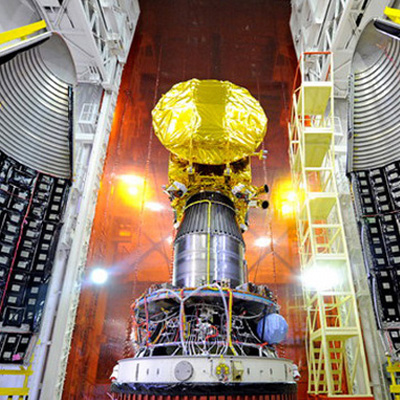
    Mars Orbiter Spacecraft was launched onboard PSLV-C25 on 5 November 2013. On 1 December 2013, Trans Mars Injection manoeuvre was conducted successfully and the Spacecraft was set in its course towards Planet Mars through a helio-centric trajectory. Soon after the Spacecraft crossed the sphere of influence of Earth, a Trajectory Correction Manoeuvre (TCM) was performed successfully on 11 December 2013.


    ISRO has been continuously monitoring the Spacecraft using its Deep Space Network complemented by that of NASA-JPL. As the Spacecraft is on its designated trajectory, the TCM planned for April 2014 is not considered essential. If required, the next TCM is planned to be carried out in June 2014.


    Mars Orbiter Spacecraft and its five scientific instruments are in good health. Periodic tests are being done on the different levels of autonomy built into the Spacecraft for managing contingencies.


    As of 9 April, the radio distance between the Spacecraft and the Earth is 39 million km. A signal from the Earth to the Spacecraft and back to Earth takes 4 minutes and 15 seconds. Soon, the High Gain Antenna of the Spacecraft will be put in service for handling communications with the ground stations.


    The Mars Orbit Insertion (MOI) manoeuvre would be performed on 24 September 2014.

  • PSLV-C24 launches IRNSS-1B

    PSLV-C24 launches IRNSS-1B

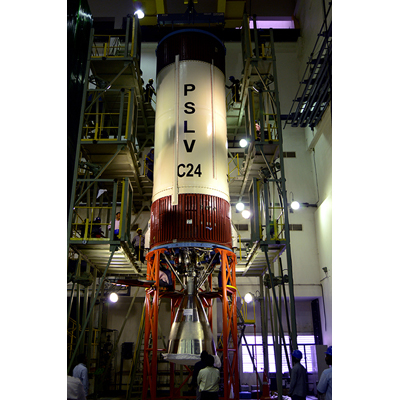
    BENGALURU: ISRO’s Polar Satellite Launch Vehicle, PSLV-C24 has successfully launched IRNSS-1B, the second satellite in the Indian Regional Navigation Satellite System (IRNSS) on 4 April at 1714 hours IST from Satish Dhawan Space Centre SHAR, Sriharikota.


    This is the twenty fifth consecutively successful mission of PSLV. The ‘XL’ configuration of PSLV was used for this mission. Previously, the same configuration of the vehicle was used five times to launch Chandrayaan-1, GSAT-12, RISAT-1, IRNSS-1A and Mars Orbiter Spacecraft.

            .                     .
    After the lift-off with the ignition of the first stage, the important flight events, namely, stage and strap-on ignitions, heat-shield separation, stage and strap-on separations and satellite injection took place exactly as planned. After a flight of about 19 minutes, IRNSS-1B Satellite, weighing 1432 kg, was injected to an elliptical orbit of 283 km X 20,630 km, which is very close to the intended orbit.

    After injection, the solar panels of IRNSS-1B were deployed automatically. ISRO’s Master Control Facility (at Hassan, Karnataka) assumed the control of the satellite. In the coming days, five orbit maneuvers will be conducted from Master Control Facility to position the satellite in its Geosynchronous Circular Orbit at 55 degree east longitude.

    IRNSS-1B is the second of the seven satellites constituting the space segment of the Indian Regional Navigation Satellite System. IRNSS-1A, the first satellite of the constellation, was successfully launched by PSLV on July 02, 2013.     IRNSS-1A is functioning satisfactorily from its designated geosynchronous orbital position.

    Being an independent regional navigation satellite system, it is designed to provide position information in the Indian region and 1500 km around the Indian mainland. IRNSS would provide two types of services, namely, Standard Positioning Services (SPS) – provided to all users – and Restricted Services (RS), provided only to authorised users.
     

    A number of ground stations responsible for the generation and transmission of navigation parameters, satellite control, satellite ranging and monitoring, etc., have been established in as many as 15 locations across the country.

    Two more satellites of this constellation, namely, IRNSS-1C and IRNSS-1D, are planned to be launched in the second half of 2014.  The entire IRNSS constellation of seven satellites is planned to be completed by 2015-16.