Tag: marketing

  • NDTV turns profitable in Q3 on back of digital gains and cost tightening

    NDTV turns profitable in Q3 on back of digital gains and cost tightening

    MUMBAI: News broadcaster New Delhi Television Ltd (NDTV) has turned profitable in the fiscal-third quarter due to gains from digitisation and internal cost controls.

    The company posted a small profit in the three-month period ended 31 December against a loss a year earlier, as cost reduction outstripped fall in income.

    NDTV earned a profit of Rs 23 million in the third quarter ended against a net loss of Rs 23.9 million a year ago.
        
    NDTV’s total income from operations in the third quarter was Rs 967.7 million, down 4.9 per cent from Rs 1.07 billion a year earlier. Its total expenses for the third quarter fell 8.13 per cent to Rs 912 million from Rs 992.7 million a year earlier.

    The news broadcaster cut sharply expenses in marketing, distribution and promotions. The broadcaster spent Rs 160.4 million on marketing, distribution and promotions in the third quarter, down 41.91 per cent to Rs 276.1 million a year earlier.

    For the nine months ended 31 December, NDTV’s net loss widened significantly to Rs 356.7 million from Rs 32.8 million a year earlier, while total income for the period was Rs 2.58 billion, 7.8 per cent lower than Rs 2.79 billion a year earlier.

    On a consolidated basis, NDTV reported a profit of Rs 148.7 million in the third quarter against a loss of Rs 60.5 million a year earlier. Its total income for the third quarter was flat at Rs 1.3 billion compared with Rs 1.27 billion a year earlier.

    In a statement, NDTV said “Profit this quarter is a result of gains from digitisation and internal cost controls.”

    A buoyant NDTV CEO Vikram Chandra said, “Yes, it’s been a good quarter. It comes on the back of cost rationalisation and by streamlining the business. Also, the benefits of digitisation are starting to flow.”

  • Vatsal Asher joins DMA: India as CEO

    Vatsal Asher joins DMA: India as CEO

    MUMBAI: Direct Marketing Association: India (DMA: India) has appointed Vatsal Asher as chief executive officer. In his new role at DMA: India, he will be responsible for strengthening DMA: India’s presence as an apex body for advocacy of direct marketing practices.

    Asher said, “With multitude of choices, Indian consumers are becoming more discerning about their brand preferences and where they spend money. Considering this consumer behaviour and the increasing media clutter, it is imperative for marketers to create data driven customer centric campaigns. From traditionally being defined as ‘response generating’ domain, direct marketing is now used for ongoing customer engagement. By emphasising on global best practices for marketing services providers and marketers, I aim to carry forward DMA: India’s vision of establishing industry standards and promote the direct marketing community.”

    Direct marketing has gained popularity in past few years with emphasis not just being laid on measuring the returns on marketing spends but also campaigns being created to initiate a dialogue with the customer. With advent of new media and innovative usage of technology to engage with customers, spends on direct marketing have also increased significantly.

    Prior to DMA: India, Asher was associated with Deepak Fertilisers’ consumer facing VARE division as VP. He has also worked with Reliance Retail, Tata Teleservices and RPG group.

    He comes with over 15 years of experience in domain of marketing communications across brand management, sales and promotions, loyalty and customer experience. With understanding of consumer behaviour and approach to engage with consumers, he has strategised and executed marketing campaigns.

    Vatsal added, “Thanks to direct marketing going digital, it now considered as targeted and customer specific media rather than an intrusive form of marketing. In coming months I look forward to promote new trends and technology in direct marketing, besides creating platforms for knowledge sharing and innovation. We envisage instituting forums with active stakeholder participation in form of industry councils and regional chapters. We shall be organising webminars, periodic meet ups and an annual colloquium modelled on global format to meet the objectives. Emphasis will also be laid on protecting consumer’s interest, thereby strengthen their belief in direct marketing.”

  • Denim Jeans Makers Looking for the perfect brand fit

    Daring, stupid, wild and innovative, are some of the campaigns that the biggest jeans brands in the country are currently running. In an attempt to connect with today‘s youth, wacky and out-of-the box below-the-line (BTL) marketing campaigns are being used, in an obvious bid to build brand connect and appeal to one‘s intellect (okay not really the latter).

    Spykar is encouraging youth to get creative with denim


    Take a look at what Levi‘s, Wrangler, Spykar, Diesel and Pepe‘s marketing teams are up to these days, and one will notice that brand building and brand positioning are the key focus area for them, as they attempt to build a loyal customer base amidst this ever changing market.

    Spykar Jeans currently has a contest running, “Denim regeneration,‘ which is specifically aimed towards fashion designing students, even though anyone who wants can participate. The basic objective of the contest is to make something out of your old denims. It could be clothes or accessories like wallets, bands etc. The top five winners get various prizes which include digital cameras, PSPs, etc. Also the winners will receive internships with the company. This contest is a part of the company‘s pan India brand building campaign, and it‘s being promoted in all the Spykar stores.


    Wrangler is sticking to its image of being rough, tough and wild, with its latest spring summer 2010 “Dirt Bike Denim” collection.

    Wrangler is targeting women to its macho wear

    Wrangler India marketing manager Anshul Chaturvedi feels, “The brand is associated with a rugged masculine image and is keen on cashing in on that. It is what differentiates Wrangler from others. While male customers are the prime focus, the brand is now trying to rope in more women customers.”

    The new dirt bike denim campaign focuses on the action, adventure and thrills of dirt bike and motorcar racing, with roughed up, greased and washed down denim jeans, and traditional biker shirts being a part of this new offering. While the posters and hoarding typically show a guy and his bike sporting the new Wrangler collection, there is of course a good looking biker girl by his side, showing off the latest in women‘s wear by Wrangler, which include racer back and off shoulder tees, molly fit jeans and much more.

    Wrangler‘s strategy for BTL marketing seems simple and time tested. It is strengthening its brand position by maintaining the brand‘s macho image across all its campaigns (the previous one being ‘forever wild‘), and even though the posters and hoardings of the cool jeans, nice bikes and hot girls are such a cliché, maybe they appeal to today‘s youth and their wild side.


    Diesel exploited “Be stupid” to create brand awareness and stand out from the rest of the pack

    Diesel jeans, which has tied up with Reliance Brands in India, probably has one of the wackiest BTL marketing campaigns ever seen in the country. “Be stupid” the Diesel campaign which was started before its first store even opened, was meant to create hype, curiosity and publicity. Celebrities sported the “Be stupid” tee shirts at social dos and in various public events. Be stupid merchandise and stickers along with tee shirts were distributed,


    Posters, store walls, flyers, and banners carried sayings like “Smart may have the brains but stupid have the balls,‘ “The stupid are the only ones carrying the banner of interesting”, “Smart may have the plans…but stupid has the stories” “Smart had one good idea…and that idea was stupid.”

    In fact, even the Mumbai marathon had wacky “be stupid” banners around, while there was even a “be stupid” party amongst other promotional activities done for this campaign. The Reliance brands marketing team felt “This campaign has been very well received. The teasers generated the right curiosity, the response has been really good and the campaign will continue as it is in line with the philosophy of the brand.”

    Levis is rewarding youth who have it through its “change the world” campaign

     
    Levi‘s current ‘Change your World‘ campaign is being done in order to celebrate its completion of 15 years in India, apart from further strengthening of its brand.

    The campaign includes three major initiatives. The first initiative is to identify 15 youngsters, through an online process, who embody the personality of Levi‘s and support them with fellowships of Rs 100,000 each. The second initiative is to identify a promising rock band for which the company will produce a music video featuring Priyanka Chopra. The band will also be given an opportunity of going on a three-city tour. And, the third initiative of this “Change the world” campaign is in association with Chevrolet and Apple, where the brand is giving customised Chevy Beats, iPhones, Mac Books and iPod Shuffles to youngsters who wear Levi‘s accessories.

    The campaign was launched on 9 April, across 40 cities in India and is expected to reach more than 25 million people. To create the required impact, over a 160 plus billboards, 80 plus bus shelters, 25 plus facades, multiplexes, 80 plus bus wraps, 100 plus cantilevers, 90 plus road medians, 70 plus kiosks, 40 plus Café Coffee Day outlets, 50 plus gantries, 80 plus unipoles and more than five mobile vans were used.

    For a better response the media were carefully mixed and balanced according to the city. In Mumbai a greater focus was on cantilevers whereas in Delhi it was on ambient media.

    Levi‘s India senior manager Vishal Bhalla said, “The Levi‘s change your world campaign is one that we are particularly excited about. I cannot overstate the stellar role that the team at Percept, led by Ovez, has played in amplifying the campaign, and giving it the scale and stature befitting such an initiative.” The over all outdoor and ambient spend by Levis on this campaign was approximately Rs 40 million.

    Pepe Jeans, is playing up its fashionable and stylish positioning

     
    The Pepe spring summer ‘10 collection introduces a contemporary and versatile range of highly trendy designs and the latest styles for the season. The collection is an ideal blend of high street elegance, eclectic bohemian styles and relaxed tomboy looks for women. For the men, the collection emphasises on high street fashion, classic summer and resort wear, promoting a more relaxed look and feel. To attract the appropriate target group and create visibility the outdoor medium is being used. The campaign is youth centric and its main objective is to introduce a larger than life image of the brand as well as serve the purpose of brand building.

    The outdoor campaign, executed by Moms, Madison‘s OOH division, principally focuses on Mumbai, Bangalore, Hyderabad, Pune, Jaipur, Cochin and Kolkata. Pepe Jeans has strategically chosen a cluster of sites on Mumbai‘s Mahim Causeway to create a larger than life impact in a high morning traffic area. Also, innovation has been carried out in their Bandra (in suburban Mumbai) hoardings to stand out, using a lighting technology which has been introduced to partially light them up; thus attempting to break the clutter and grab attention from the passer-by. Apart from this it has also used mobile vans, wherein Pepe Jeans brand ambassador Alexa Chung has been highlighted through a huge cut-out.

    “In India a very large audience falls under the age group 25 and 35 years respectively and that is the age group Pepe targets. The positioning has been consistently fashionable and stylish in terms of communication (advertising and promotions) and we planned to use the outdoor medium to be highly visible at all strategic location in the targeted cities,” says PJL Clothing India director Chetan Shah.

    Clearly, with the denim players sharply positioning and differentiating themselves and getting hyper on the promotion front, the jeans market will definitely expand further. And that is exactly what are they hoping will happen.
     

  • TV Today Q4 net profit up at Rs 135.1 million

    TV Today Q4 net profit up at Rs 135.1 million

    MUMBAI: TV Today Network has posted a standalone net profit of Rs 135.1 million for the quarter ended 31 March 2008, up from Rs 122.6 million in the corresponding quarter last fiscal.

    During the period, the company’s revenue stood at Rs 702.2 million as against Rs 612.6 million in the year ago period.

    TV Today Network’s expense has increased in the quarter to stand at Rs 493.7 million (from Rs 424.2 million). Advertisement, marketing and distribution cost has increased from Rs 92 million to Rs 137.9 million.

    For the entire year ended 31 March 2008, TV Today Network’s net profit has surged 40 per cent to touch Rs 435.5 million from Rs 310.9 million in the year ago period.

    The topline has grown by 24 per cent to Rs 2.51 billion as against Rs 2.02 billion last year.

    During the year, Aaj Tak expanded its international footprint by launching in UK and continental Europe.

    TV Today CEO G Krishnan said, “In spite of a highly competitive market, we are on the growth track. We will continue to deliver value to our investors and advertisers by further expanding the news base.”

  • Reliability issues turn off mobile TV users in Europe

    Reliability issues turn off mobile TV users in Europe

    MUMBAI: A survey of 22,000 European mobile users commissioned by Tellabs has revealed that a high percentage of early adopters of mobile TV and video services are snubbing a second helping. The research, conducted by M:Metrics in the United Kingdom, Germany, Italy, France and Spain, brought up an interesting issue: on average, former users of mobile TV and video outnumber current users by more than 19%. Users cited price, quality and reliability issues as the main reasons why they do not come back for more.

    “At 3GSM we will be treated to a feast of new mobile TV launches with millions of dollars being spent on developing, marketing and distributing mobile TV services. But if services fall short of user expectations on quality and reliability, it could be money wasted,” said Pat Dolan, Tellabs vice president for Europe, Middle East and Africa. “So while we share our industry’s enthusiasm for mobile TV, the detailed results of this survey provide important food for thought for the global operator community, who want to address network backhaul issues to improve mobile TV and video services.”

    Forty-five percent of European mobile video and TV users cited pricing issues as a factor causing them to switch off the services. And nearly a quarter (24%) of users who tried mobile video and TV stopped using the services due to concerns about service quality and reliability.

    The split between perception and reality was most pronounced in the United Kingdom. Only 6% of those who had never used mobile video and TV cited quality and reliability as reasons not to try such services, but 29% of users had stopped using services because of quality and reliability.

    “Pricing has already been highlighted as a stumbling block for recurrent use of mobile video and TV services, but we were surprised by just how much value users place on quality and reliability,” said Paul Goode, senior analyst, M:Metrics. “Once the basic requirements of quality and reliability are good enough, the focus will rightly shift to issues of programming, brands and marketing in addition to price. This research highlights the need to address quality and reliability so the industry can retain viewers, which is a key part of growing audience numbers.”

  • RADIOACTIVE

    Radio Mirchi has it, Red FM has it, so too Big FM, and now Radio City has gone and got itself one too.

    We are talking about radio activation units- the latest buzz word in radio. Although new to Indian airwaves, activation units in media have been a global trend.

    Indiantelevision.com does a quick check to see how ‘active’ is radio?

    According to radio studies conducted internationally, in most markets, radio manages to garner around 4-5 per cent of the mass media spend. Compare that to the latest TAM AdEx study (total media ad market 2006) where radio clocked in at 3 per cent. It‘s important to note that, private radio in India came into being with Radio City in July 2001. That‘s only about six years into its existence and private FM players are already looking at a 58 per cent ad revenue growth across media. (Figures: 2006 versus 2005)

    So what makes radio an attractive option for advertisers?

    Given that Radio is perceived as a personal medium, radio can bring brands closer and speak to the consumer at their level. Radio has a culture of response where listeners frequently interact with their station which they see as accessible. Couple that with the fact that a below the line event would promote both the client‘s brand and the radio station connect with its audience and you have a win-win situation. No wonder then that radio stations are adapting to the expanding market by providing add on services to their advertisers in the form of ‘activations‘ or non traditional revenue (NTR).

    ‘Experiencing a product via radio‘

    While print and television still attract the advertiser, the emphasis is shifting towards activation and non-traditional media, since the clutter level in the television space is very high. Also ad avoidance by listeners in radio is almost nil in comparison with 68 per cent in newspaper and 44 per cent in TV, and local reach makes radio a very effective medium of advertisement.

    Besides, radio offers far tighter targeting which means reducing wastage or spill over. Radio brings brands closer, as listeners identify with their radio station and see it as aimed at people like them; radio is better able to communicate the tone or character of a brand.

    Radio also offers tighter timing – within a particular time band, day of week or even week of month. This time specific character of radio is helpful since listening is highest when shops are open. So one can target a Pizza Hut ad in the afternoon and follow it up with a below the line creative activity around the product and have the consumer reaching over for a pizza takeaway immediately.

    Talking about the trend of setting up activation units by radio stations, Mirchi Activations, head Gautam Shahane says, “Activation units offer a synergy between below the line and above the line advertising. It allows access to multiple touch points through multiple creatives in a focused area. It allows immediacy, and so promoting an event can be in real time. More importantly radio can monitor responses to a particular activity almost instantly and fix it whether it‘s the lack of footfalls at an event or a change in the pitch, creative or running a contest.”

    Mirchi Activations set up as a separate unit in 2005 although the FM station had been providing BTL (below the line) services even prior to this.
    Perhaps the greatest strength of a below the line activity created by radio is its understanding and relationship with a geographical area, its people and its culture.

    He says, “We see that Pune is a booming real estate sector, so we approach clients like real estate developers or builders. We would do that in Kolkatta as well as we see a demand there. But in a Bangalore we would target the BPO or IT sector since that‘s where our client and audience both connect. Similarly, we have properties that showcase different cities in a month long cultural extravaganza.”

    ATL advertsising is more strategic and planned while BTL can be more tactical and with the kind of reach we have within the A and B category towns, our activation can be converted to a pan India initiative.”
    Most radio advertisers include FMCG, durables, auto, telecom, retail, BFI‘s (insurance, tax planning etc.)

    “This quarter will see a lot of BFI‘s clamoring for BTL activities as fiscal year end approaches,” explains Shahane.

    Red FM activation unit is an in house team called Red Active. Red FM COO Abraham Thomas explains, “We approach activations in two ways. There is activation solutions for multiple brands through a single event as long as they are non competing brands. The other approach is the single- client driven ground activation. So we will have the RED FM drive where we partner with several brands. At the same time we have a auto client like Ford who approaches us and we put a spin on that campaign through car displays at a shopping mall and integrated programming around it.”

    Why would an advertiser approach a radio station and not an event management firm for activation?

    The answer is unanimous within radio circles. Most agencies or event management companies only form part of the implementation or execution part of the campaign. An activation programme by a radio station would mean being involved in every stage of the campaign right down to monitoring the footfalls and response for the client.

    Shahane insists that radio stations claim “ownership” for the entire campaign and that is why they are attractive to advertisers.

    Also radio stations own certain unique properties that can be aligned to a brand and maximize opportunities for the client. “We partner with them on each event. It is also an opportunity to showcase our brand, and we are very sensitive to this fact. We know best how to use radio to promote events, and supplement it with other media on a case to case basis. But the strengths of radio are utilized to the optimum to promote events.”

    Mirchi Activations works with a tagline that reads ‘Not Just Radio‘. With the mammoth Times Group network behind it, it isn‘t just a tall claim. But do established networks necessarily convert to more successful activities?
    Not so says Thomas. “Although we do offer 360 degree solutions to a client and will use multimedia campaigns to promote his product, we are an independent station. Besides, every media utilized by the client would cost him a separate amount. So it would depend on how cost effective we decide to make the event.”


    ‘Big Reach‘ for Big FM

    Big FM marketing head Anand Chakravarthy adds, “With television the reach is usually national. Our clients often complain about a spillover on television advertising. So if Surf excel is looking at targeting women in Rajkot – on television they may not find their right target audience mix. But radio can easily manage that.”

    Radio City became the latest FM channel to add ‘activation‘ to its range of brand value services after Red FM‘s Red Activ and Radio Mirchi‘s Mirchi Activation. While Red and Mirchi ‘activations‘ are in house, Radio City has announced its strategic alliance with Vibgyor Brand Services.

    Radio City marketing head Rana Barua says, “Vibgyor has a senior representative on our team and the client meetings and briefs are discussed together. So we offer a one stop solution to the client. Since we act as a one stop window to our client we offer both productivity and speed.”

    Interestingly, ad spends by print houses and television networks are also seeing an increase on radio.

    As stations become more targeted they would also evolve into strong and distinctive brands, and they would deliberately cultivate their brand values in all their on-air and off-air activities – events, contests, helplines, etc. Once the brand values are established, advertisers could leverage them to give a positive effect to their own messages.

    Big FM has lined up an advertising and marketing budget of Rs 450 million across the country until March 2007. The money will be distributed across the various Big FM stations according to their revenue generations. The FM station also plans to use all traditional media, below-the-line activities as well as have used cable and cinema spots.

    Thomas says, “Red Active is a single point contact for the advertiser. Earlier, you‘d have an event taking place in Calcutta and the sales and marketing guys in Mumbai trying to figure out the response or check if the creative was being executed according to the brief. With a Red Active in place we take over the entire process from discussing brief, to providing creative solutions to implementation to measuring response. The aim is to provide an extra bang for the client‘s buck.”

    Chakravarthy says “In Mumbai, we had taken over the entire Inorbit Mall for a month for our client Coke and had a New Year‘s carnival. Our advantage is that we have a very large network of 11 stations.” He also informs us that it is the smaller markets that now look at activations.

    Not all activations are related to advertising alone or so say radio heads. Big FM organized a New Year‘s party for the Indian army and Red FM also ties up with the Tata Cancer Research institute for spreading awareness of breast cancer.

    Then you have a few exceptions to the rule as well.

    Fever FM operating in Delhi and Mumbai used artiste management company ‘Only Much Louder‘ for activations during its own launch but has no plans to set up a separate unit so far.

    Only Much Louder, co founder, Vijay Nair details the kind of campaign they mounted for Fever FM. “Since the idea was ‘less talk, more music‘ we had people donning chef costumes or dressed up as clowns lining the streets in various parts of the city with their mouths sealed shut and placards that read ‘No recipes, only music‘ or ‘No silly jokes, only music‘.”

    Fever FM station director Mumbai Sajjad Chunawala says, “We are a very small team in marketing right now and have no plans to set up a separate activations unit. But as our clients approach us, we may take on the job or outsource it depending on the client needs.

    Judging by latest trends a lot of traditional advertisers are also ready to take the risk and try the medium.

    HLL was a predominant print and television advertiser but has now included radio in its media mix. Chakravarthy tells us that HLL‘s ad spend is now divided at a 50/ 50 mix with radio playing a huge role.

    HLL advertises almost 60 percent of its brands on radio with about 2 to 3 percent dedicated to radio advertising. Mindshare Fulcrum‘s national activations head Himanshu Shekhar opines, “We use media for kinds of effects – Incremental or Impact. Radio is still seen as a ‘impact medium‘.

    Activations help radio stations connect their brands with the audience as well.

    So Radio Mirchi benefits not only in terms of revenues but also in terms of on ground presence, visibility and an opportunity to be at a consumer touch point. Activations have truly demonstrated the power of radio in driving response or footfalls.

    Last word

    Radio offers tremendous opportunities for advertisers and media planners need to explore various options by which they can effectively use radio in their media mix. Conversely, broadcasters need to develop the market by being more responsive to the advertiser‘s needs. This will provide an opportunity for the market to arrive at the final verdict on the effectiveness of the medium.

    Chakravarthy says, “In a country size like India, it is not necessary to touch every market but everybody in a certain market. What radio activation manages to do is amplify the effect of advertising. The advantage of radio is that any ground level activity or below the line marketing becomes amplified.”
    Thomas says, “Red Active is a single point contact for the advertiser. Earlier, you‘d have an event taking place in Calcutta and the sales and marketing guys in Mumbai trying to figure out the response or check if the creative was being executed according to the brief. With a Red Active in place we take over the entire process from discussing brief, to providing creative solutions to implementation to measuring response. The aim is to provide an extra bang for the client‘s buck.”

    Barua concurs, “Advertisers no longer want just plain vanilla advertising. It‘s important that the consumer is able to feel and touch the product. Activation allows for that experiential marketing.” Although declining to discuss specific clients Barua says that briefs have been discussed and the newest player in the activation field will soon launch events and properties associated with its station.

    Shekhar brings in the planning perspective when he says, “If we had to divide the HLL radio advertising spend according to ATL and BTL advertising it would have to be 3/7. The trend is to allow for more integrated programming and content led advertising rather than just plain vanilla advertising. The Surf excel campaign which we conducted across all stations was one of the single biggest campaigns where each radio station adapted it with a different creative. In that sense, it was unique. The power of the medium to cut across all target groups and appeal to both emotions and humour is immense and this is where its strength lies.”

  • Marketing rights for 2010 Fifa World Cup to reach €3 bn

    Marketing rights for 2010 Fifa World Cup to reach €3 bn

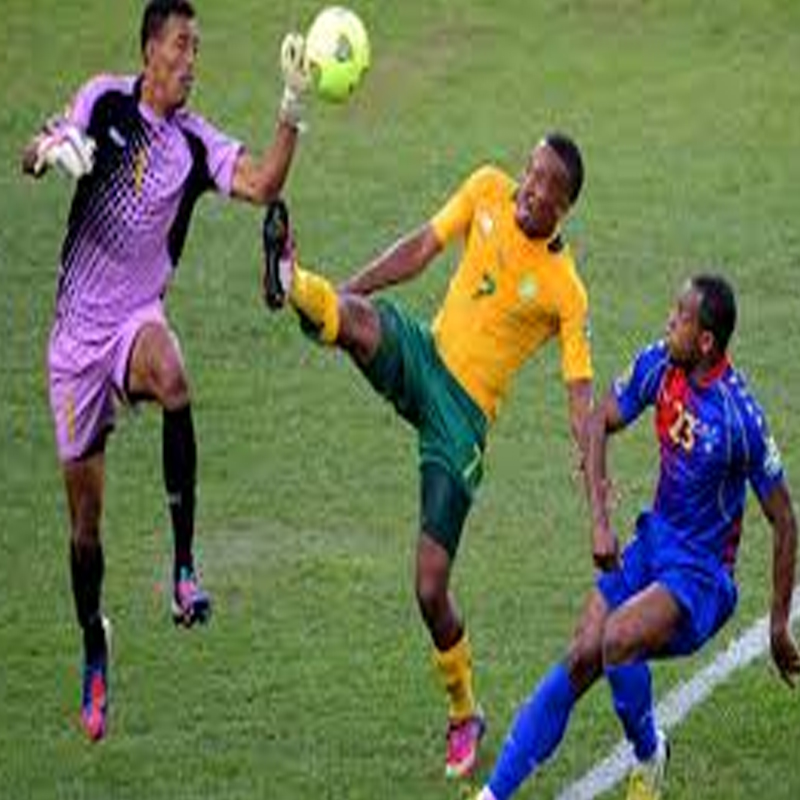
    MUMBAI: The value of the marketing rights for the 2010 soccer World Cup in South Africa is set to take a further leap to reach close to €3 billion.

    This compares with about €1.9 billion for this year’s World Cup in Germany.

    The figures are contained in Sportcal.com’s recently-published World Cup 2006: The Commercial Report. Fifa estimates that media rights, including new media, would be worth about €1.8 billion in 2010, while sponsorship would be worth €1.1 billion. Many of the main television rights deals for the 2010 event have already been concluded, together with a reduced number of six, more lucrative, deals with top-tier Fifa partners.

    The figures represent a massive increase on even a World Cup as recent as that of 1998, when the media rights were worth only about €100 million and the sponsorship rights about €70 million.

    Overall commercial revenues for the 2010 World Cup look certain to be pushed above €3 billion once ticket revenue is taken into account. For this year’s event, ticket revenues were worth about €200 million.

    The largest single contributor to 2010 World Cup revenues is once again set to be ARD and ZDF, the Germany public-service broadcasters, which are paying €200 million to acquire the television rights for the tournament in Germany. This compares with the €170 million they paid for the rights for this summer’s event.

    This year’s soccer World Cup generated €1.9 billion in marketing revenue, with the sale of television and new media rights raising €1.2 billion and the remaining €700 million deriving from other sources such as sponsorship and hospitality.

  • Filmy: Six months and beyond

    Big movies. More wrap-around programming. Heavy marketing. That is the course Filmy, the Hindi movie channel from the Sahara stable, will take as it gears up to double its audience base over the next six months.

    The initial period, as Filmy business head Ashutosh puts it, is “more than satisfactory.”

    “We have grown against established channels like Zee Cinema, Max and Star Gold. They have been in existence longer and have built a library over the period. We had to also combat against a tough distribution environment,” says Ashutosh.

    He adds: “Over the next six months, Filmy could break the 50 GRP-mark. Filmy has also broken the myth that Hindi movie channel space has no space for a fourth player.”

    Indiantelevision.com takes a look at the six-month evolution of the movie channel and the ideas that have worked for it.

    Content Strategy: Wrap-around Programming

    To break into the competitive market, Filmy adopted an innovative programming approach. The executives at Filmy fondly call it ‘Wraparound Programming’ and this phrase meant a lot of stress on non-movie programming.

    “We worked on an image, which is filmy, fun, original and progressing. This original plan of creating a different channel, with a different look and feel, was then driven by all the other innovations, such as our characters and the off-beat film news content,” says Filmy marketing and content head Shailesh Kapoor.

    The original plan: The channel will have a daily dose of three movies at 10 am, 3 pm and 8 pm. A big movie will be telecast on Sundays in the 3 pm slot.

    Then, it will also have a variety of wraparound programming; four anchors will provide a whole new experience of seeing cinema at home. While other movie channels are mere telecasters, Filmy wanted to be the mouthpiece of Bollywood.

    The flagship set of four characters are integral to the channel‘s programming formats.

    Lallan (a rustic who has migrated to Mumbai from a small town in Uttar Pradesh), Lal Gulab (a typical villain as seen in all movies), Rokkky (who has the air of a Bollywood superstar and is played by Hindi film actor Chunky Pandey) and Ruchi Reporter (who is like a sting journalist and is interested in exposing the private lives of stars).

    “We knew that, we were not anywhere near our competitors in terms of library. Hence, we wanted to score in the other areas,” says Ashutosh.

    When Filmy started, the main concern was not about the third party content (commercials or movies), which was anyway there for a start.

    “Our focus was to create our own content such as interstials and station IDs. We wanted to create a space for ourselves in the market. Otherwise, there was no point in being a fourth channel,” explains Ashutosh.

    Research goes to prove that Filmy’s strategy reaped good fortunes.

    According to channel executives, the anchor characters are doing very well in the markets they have been targeted as per the research findings.

    For example, Lallan is a huge hit in the Hindi belt, while Rokkky has caught the attention of urban India. Inspired by the findings, Filmy has decided to give new roles to both the characters now.

    “Lallan will now also drive the marketing and promotional initiatives of the channel. The channel has decided to reduce the duration of the 30-minute show anchored by Rokkky to increase the footage of the character through various other capsules,” says Ashutosh.

    Responding to the feedback received, Lal Gulab, the video parlor owner who doubles up as a don in the nights, will now be given one single avtar.

    “This character, has been very well-accepted by urban centres, while rural viewers have found difficulty in understanding the double-act. Hence we have decided to simplify the character with some modifications,” adds Ashutosh.

    Keeping in mind that the break in TVRs are high, filmy makes it a point to spend a significant amount on wraparound production.

    Without actually divulging the figures, Ashutosh claims that, the average production budget of a 30-minute wrap-around-programme on Filmy is much higher than the average budget of a normal 30-minute television programme. “You can call it cutting-edge programming,” he says.

    The push for Filmy also came from some of the innovative tools it employed to enhance movie viewing on television. Ashutosh names Recap as one such key innovation.

    Recap was targeted at viewers who drop in mid-way. As the name suggests, it presented a capsule of the exhausted part. Then we had Aunty Break Fail, which acted as a link between commercial breaks and the movie shown,” says Ashutosh.

    The average television viewing period of an individual is about 27 minutes and hence, Recap was a key innovation. Filmy capitalised on these types of small issues, which competitors “ignored.”

    In the six-month period, Filmy also claims to have re-written few market theories. Ashutosh says the channel has gave a new dimension to the 7 am – 10 am time band, which was otherwise perceived as a non-scorer.

    “The market was skeptical about Filmy introducing a 7 am to 10 am movie band. But the band has delivered for us. We found that, it was not as bad as people thought. Then our strategy of branding slots also got acknowledged,” says Ashutosh.

    Movie Content

    Filmy has expanded its library to about 450 movies from a base tally of about 300 in the six month period.

    Apart from the Sahara One Motion Pictures productions, the channel is now also looking at other producers for acquisition, according to Ashutosh.

    “We have the advantage of being part of a leading Bollywood producer with Sahara One Motion Pictures being our constant source of good movies. To explore the space further, we are now targeting non-Sahara movies also,” he says.

    Filmy is basically looking at movies, which make good business sense. Instead of acquiring all the movies coming its way, it has adopted a strategy of buying utility movies.

    Filmy, which started its innings with Sahara titles such as No Entry, Page Three and Sarkar, has now Malaamaal Weekly, Gangster and the upcoming Katputhli tucked under its belt. As the festival season approaches, the channel is gearing up for more big ticket acquisitions, according to Kapoor.

    “Filmy is getting aggressive on the acquisition front. We are looking to buy two to three big ticket properties and then a lot of other latest movies,” he reveals.

    A key initiative forward for Filmy will be taking in the August-September period when it would be introducing Hollywood dubbed movie block.

    As already reported by Indiantelevision.com, Sahara is in talks with at least three international studios, including Buena Vista Pictures Distribution, for acquiring international titles.

    “We have conducted a research on what sorts of movies would work in Hindi language, and accordingly we have set our preferences,” says Kapoor.

    Marketing

    On the marketing front, Filmy is following the strategy of taking its lead anchors off air and positioning amidst the public.

    The channel recently associated with Rakesh Roshan for his latest release Krrish and had Lallan performing in the respective theatres. Similarly, Lallan will be doing a Shahrukh act in theatres where Kabhi Alvida Na Kehna would be releasing.

    Though Filmy has a full-fledged on-air promotion strategy, the channel is yet to hit the outdoors in a big way in terms of product promotions. However, in the next phase, this may change. And driving the initiatives will be the slew of new properties the channel is about to launch.

    “Filmy may go outdoors to promote our big movie properties. Then we will be launching at least three big ticket properties in the September 2006 – March 2007 period and this would also require good amount of promotion across all media,” says Kapoor.

    Distribution

    The channel, which was to be encrypted right from the start, faced initial hiccups as it had to swap the position for sister channel Sahara One.

    Having won live cricket content, Sahara One – the general entertainment channel – decided to encrypt the channel in a short span of time. The only way to speed up distribution was to keep Filmy on the unencrypted mode while seeding decoder boxes for Sahara One.

    Filmy then waited a longer time to regain the status of an encrypted channel. Reason: It wanted to ensure the fool-proof distribution of the boxes across the market.

    “We went encrypted on 6 August. The transition has been seamless as we had to ensure that we protect our existing reach. We are now available in 79 per cent of the TAM market,” says Ashutosh.

    Though he would not spell out the carriage fee to ensure a widespread reach of the newly-launched channel, market sources put it at Rs 100 million. The focus now is to ensure better space on the cable networks.

    A separate team has been put in place with former Sony hand Sameer Ganapathy as the head. Earlier, Sahara News and the entertainment channels were handled by the same team.

    Performance

    This month, Filmy shocked its elder sibling Sahara One by overtaking the general entertainment channel in terms of GRPs.

    An average GRP of 50 at the completion of six months has boosted the morale of the channel tremendously, says Ashutosh.

    “When we began, it was a ‘by chance’ channel, rather than a ‘by choice’ one. Keeping the tough competition in mind, it was important for us to nurture that ‘force of habit’ and the Tam data validates our success. People now watch the channel by choice,” he says.

    Filmy had opened its innings with a channel share of 4 per cent against Zee Cinema’s 34 per cent, Max’s 35 per cent and Star Gold’s 26 per cent for Week 7 (12 February), as per Tam (CS4+ HSM).

    The channel kept an average market share of 6 per cent in the next 22 weeks before shooting to the double figure of 12 per cent for week 30 (29 July). The feat was powered by the telecast of movie Hanuman, which helped the channel to garner some significant numbers in the slot.

    As per Tam data, for the period of 12 February to 29 July (HSM CS4+), Filmy holds an average market share of 7 per cent against Zee Cinema (35 per cent), Max (32 per cent) and Star Gold (25 per cent). The data reveals that, the Hindi movie genre has recorded a marginal expansion with the entry of Filmy, from 14.35 per cent to 16 per cent during this period.

    “As per our knowledge, cannibalisation from other channels has been minimal. Our entry has expanded the market to a small extent,” says Ashutosh.

    “Filmy has become a channel, which you can’t ignore. It has turned out to be a visually better looking and consumer-focussed player. We are giving a lot of stress on individual addressability. We are not taking the viewers for granted,” Kapoor sums up.