Tag: marketing

  • ‘Post 2-min ad cap on TV, OOH medium will see double digit growth’

    ‘Post 2-min ad cap on TV, OOH medium will see double digit growth’

    Out of Home industry has always been categorised as a supporting medium for television; however, it has gained more popularity amongst advertisers after the two-minute ad cap on television. Interestingly, television medium has sufficient channels and different TV slots to cope up with ad cap restriction. But I really think that OOH medium will grow and see double digit growth in the next three to five years. The key reasons for OOH medium’s growth would be that people have figured out better ways to utilise this medium in terms of innovations, latest technology and result orientated campaigns  and another reason is that the young audiences is spending ample amount of time outside, therefore this medium becomes much more relevant.


    The FMCG category has never made a significant use of OOH medium. But this will change consistently and this medium has more potential for the FMCG category. But the OOH medium will see a lot of spends from the entertainment and movies categories. Also, the OOH medium will see huge impulse spends from e-commerce sites and therefore this area will grow. I also believe that it will be difficult for brands to pay such sharp increase in rates.


    I believe that outdoor advertisements are one of the most cost efficient ways to reach potential customers and clients. Additionally, we can target with OOH the consumers across culture, language, season, age, and in any format. In order to address GAPS in terms of marketing reach, OOH is the best customized solution for the organization.


    However, there is tussle between advertisement spend when it comes to Internet and OOH. In fact OOH media is used throughout the year for product launches, branding initiatives, sales activation because of its cost-effectiveness.


    But I am also sure that TV budget will never be kept nil as it is an important medium. But having said that, a brand needs to be always active in OOH medium, as it gives multiplier effect on ground level. The large format with its local communication, singular pictorial representation, minimal and bold message, strategic locations, cost efficiency and media effectiveness helps a brand deliver its key message to a large audience in an uncluttered environment.


    With new techniques, innovation and new formats, outdoors has earned its share in the market. Brands which are looking at exploring unique solutions, outdoor offer them great creativity in still media and random visibility with the help of transit media.


    Importantly, outdoor will have to compete with print, radio and most importantly social media. Innovations will play crucial role if more brands are diverting their interest on this medium. Ambient and transit media along with BTL activation will become important.  Monitoring system and assured ROI will enhance the preference for the medium.


    (The writer is the Managing Director, Global Advertising)
  • India TV getting serious about news?

    India TV getting serious about news?

    MUMBAI: Frequent allegations of sensationalist journalism notwithstanding, India TV has managed to stay at the top of its game, what with veterans like Rajat Sharma associated with the Hindi news channel.


    And now when the channel is in the middle of a refresh to let people know it has become serious about the news business, what better than ‘Brand Sharma’ to lend credibility to the exercise.


    As India TV MD and CEO Ritu Dhawan puts it: “Till recently, audiences were more interested in non-political and ‘popular’ content, so we were catering to that. Now with elections and various other news events, the flavour of hard news is back, so we have refreshed our programming completely. Today, the number of news stories on India TV is more than that on any other news channel. With Rajat Sharma leading the pack and Q W Naqvi at the helm of affairs, our viewers can be assured of the most accurate and responsible news reporting, which will further cement our leadership position in the Hindi news genre.”


    In fact, the channel’s reliance on Sharma’s popularity emanates from a position of knowledge wherein it actually commissioned research to find out how best it could highlight its repositioning. “One thing that came out very clearly is that ‘Brand Rajat Sharma’ riding on the credibility it brings in, will have a towering effect on ‘Brand India TV’. It further suggested that people may like to see that connect personified both in terms of communication and programming. And so, not only is the editor-in-chief back on prime time news with his daily analysis show, Aaj Ki Baat Rajat Sharma ke saath, he is also the face of the brand campaign,” reveals Dhawan.


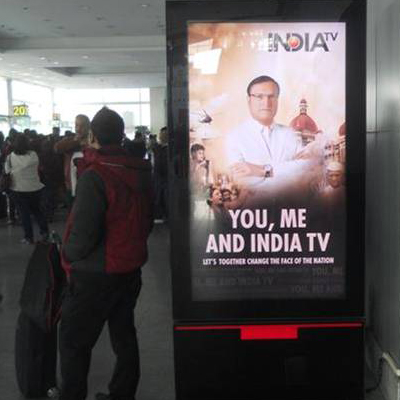
    Indeed, as part of the revamp, India TV has embarked on an ambitious, six-week-long marketing campaign which leverages Sharma’s popularity with the audience. The first leg of the campaign will run for 21 days across Hindi speaking markets like Mumbai, Delhi, Agra, Lucknow, Allahabad and Gorakhpur. Life-size images of Sharma will adorn hoardings and billboards across these cities as well as digital ports at arrival and departure terminals in Mumbai, Delhi and Kolkata.


    The banners focus on Sharma’s pensive expression along with the words, ‘You, me and India TV – let’s change the face of the nation’ and have been designed by Saints & Warriors, one of the three creative agencies that were short-listed for the job.


    “Three agencies made it to the final short-list for the job, basis what they had presented in response to the brief given. Eventually, Saints & Warriors was chosen for the assignment, basis further discussions with them. Their credentials, clarity of thought, and extended execution sampling helped us clearly decide in their favour,” informs Dhawan.


    Working on ad placement on news websites by geographically targeting them to suit audiences is Agency Ecosystem by Amar Ujala, which has a target to reach 35 million impressions through websites like Dainik Bhaskar and Amar Ujala. “We have tried to keep a close leash on expenditures. The first leg of 21 days of the campaign is to the tune of Rs 5.5 crore,” reveals Dhawan.


    It is learnt that the revamp is not only to tone down sensational news but also because of the increase in the number of news channels which has led to severe fragmentation of viewership. While India TV was launched at a time when its competitors could be counted on one’s fingers, it now has several competing channels swimming in the same pond. “With so many new and small channels taking up a large percentage of the market, it has become a highly competitive space so the brand refresh was done to mainly maintain our viewership,” a source from India TV tells this website.


    Whatever the reasons for the refresh, it’s just two days since the campaign has kicked off and people are getting used to the posters of Sharma in his signature pose with folded hands. What remains to be seen however is to what extent Sharma will help change people’s hitherto perception of India TV.

  • Aegis Media India launches Carat Fresh Rural

    Aegis Media India launches Carat Fresh Rural

    MUMBAI: Aegis Media India has launched Carat Fresh Rural, a professionally run, international rural communications agency. Carat Fresh Rural, the rural division of Carat Fresh Integrated, will provide comprehensive rural marketing and communication solutions to clients, which include rural planning, implementing outreach campaigns in rural areas, route planning, monitoring, van operations, haat and mandi contact programs, wall paintings, melas and any other marketing communication activities that may be required in small towns and villages.

    Interestingly, it has already bagged assignments from clients like Mahindra & Mahindra, Godrej Consumer Products, Escorts, Godrej, GPI, SONY MAX, Pidilite, Force Motors, Bayer Crop Science, and others. Carat Fresh Rural will be starting with a team of 30 rural marketers and a network of 1500 operators, across seven offices and 20 operation bases, led by the famous rural expert, Keshav Chandorkar, who will report to Carat Fresh Integrated head, Ravi Shankar.

    Before launching, they have already carried out activities in over 18000 villages across 21 states.

    “Rural Marketing Communications is the holy grail that no agency has successfully cracked in India, thus far. I believe that there is a universe at least equal to the size of the entire advertising industry available to agencies to explore in the rural marketing communications field. Carat Fresh Rural will, in many ways, pioneer that.  We are developing, for the first time in India, state-of-the-art rural management tools.  The Carat Fresh suite of Rural Tools will have the country’s only real time Rural Planning Tool, enabled by 3G connectivity and linked to a host of data sources including the rich census data, media data and 16 other sources of data. Since implementation in rural is key, every one of the Carat Fresh Rural operators will have an App on their GPS enabled trackers that will automatically monitor and relay data without human intervention. Several Tools and Apps are being developed to revolutionize rural communications in India” said, chairman India & CEO South East Asia Ashish Bhasin.

    Carat Fresh Rural aims to have a network of 10,000 people and 100 rural experts, across  26 states, by mid-2015. By 2015 Carat Fresh Rural expects to have covered over 100,000 villages throughout India.  In the second phase of expansion, which will span from 2016 t0 2018, it is anticipated that the network will grow to 20000 people, employees to 200+ and over 200,000 villages would have been covered.

  • Marketing lessons a la AAP

    Marketing lessons a la AAP

    MUMBAI: The recent-concluded Delhi elections, took everyone by surprise when Aam Admi Party won 28 seats. We take a look at what one can learn from the new entrant.

    When it was formed less than a year ago on 26 November, 2012, little did the Aam Aadmi Party imagine it would make such a big splash at the polls.   

    Winning 28 out of 70 seats in the Delhi Assembly elections on 8 December, the AAP came a close second to the BJP which won 31 seats, pushing the ruling Congress to an irrelevant third position. What’s more, three-time Congress CM Sheila Dixit suffered defeat at the hands of AAP chief Arvind Kejriwal. Before the elections, the now ex-CM of the national capital, didn’t think before making statements like, “Arvind isn’t even on our radar.” Dixit probably forgot the legend of David Vs Goliath.

    For a fledgling party which emerged as an offshoot of the larger ‘India against Corruption’ movement launched by activist Anna Hazare -where people took to the streets to protest the many ills plaguing the current administration – this is no mean feat.

    And neither is the fact that AAP – registered as a political party with the Election Commission (EC) only in March this year – has successfully met the EC’s criteria to become a state party.

    So what did the AAP do right to banish all the scepticism its broom-wielding members met with from seasoned politicians who dismissed the party, at least initially, as ‘chillar’ or worse, a group that made a lot of noise but had no real impact.

    Looking at the AAP’s historic win from a marketing perspective, we at indiantelevision.com believe brands may do well to take a few lessons from the party’s promotional strategy:

    * Strong USP
    Each brand need to have a very strong USP which helps position it in the minds of the target audience. AAP’s USP is that it gives the common man a belief, a hope, that there is going to be a better tomorrow, and that it has been created by the common man who is fed up of the politics of politics, and will hence deliver on its promise.

    *Be consistent
    At the heart of the AAP’s party manifesto is its stand against corruption – which cuts through classes. And it has not deviated from that. It has refused to ally with either the Congress (I) or the BJP, despite there being a possibility of it occupying the seats of power in Delhi.

    Brands need to stick to their core premise and promise and not try to ride fads.
     
    * Marry your brand USP with the brand mnemonics
    The AAP has always had one agenda – the aam aadmi, and it has stayed true to it ever since inception. Party members are common people who have volunteered and are unpaid. They come across as common people; they dress up like common people; they move around like common people. Even though many of them are well educated.
    And during this election campaign there was none of the largesse distribution or ostentation that the general political parties generally resort.

    The choice of name and the symbol in the case of the AAP was also crucial. The name says it all -Aam  Aadmi Party. Then the symbol was the killer: what is the one thing that is still common across all homes in India, even in middle-class and upper class homes and hutments – it is the broom. Using the broom as the mnemonic meant many things: it will be used to sweep clean all the dirt in the political system, while it helped identify the common man with a tool that is used in his/her home every day.

    * Know your customer; make him your network and your ambassador
    The AAP needed to connect with its customer: the electorate of New Delhi. Almost 130,000 volunteers all over the world, some of whom descended on Delhi before the election campaign became both the best focus group and research agency anyone could ask for.

    Some executives even took leave from their high paying jobs in India and overseas, housewives found time from their day to day chores, young college students, technicians, labourers, cable TV operators – everyone pitched to connect with the consumer and pass on what troubled the common Delhi-ite – crucial information to the central headquarters of the AAP. And they then propagated that further themselves to the electorate.

    With millions of products overflowing on shop shelves and online, brands need to know what their customers really want, when they want it and how they want it, and in the process make them your ambassadors and messengers.

    * Choose the correct medium at the correct time
    AAP had little financial resources at its disposal; some say less than Rs 20 crore. That’s probably what’s spent by politicians on a couple of constituencies. Once again volunteers stepped in to build the buzz.

    Twitter, facebook, online, print, and television. AAP went the whole hog on all the mediums. But not to splurge; just to have its message heard. The media were relatively complying: did not the common man also work in media? It hooked the middle class and the upper middle class through social media.

    And what about the man on the street?  Well it used direct selling: volunteers went door to door to the electorate in Delhi, connected with the common man. In trains, in buses, on auto rickshaws, in jhuggis, in bastis – there was the huge poster campaign, and it was the educated folks who went where they normally would not.

    Brands have to be careful about the medium they choose and utilise it to maximise impact. Brands too have to keep themselves in people’s mind through various activations/campaigns especially in today’s market where the sharks are ready to rip apart any competition.

  • MEC India wins at 2013 Effective Mobile Marketing Awards

    MEC India wins at 2013 Effective Mobile Marketing Awards

    MUMBAI:  MEC India has bagged an award for the ‘Most Effective Location-based Service/Campaign’ at the recently concluded 2013 Effective Mobile Marketing Awards ceremony held on 28 November in London.

    The agency received the award for one of its campaign designed for Colgate at Kumbh Mela. Centered around the Maha Kumbh Mela held in Allahabad, Uttar Pradesh, the campaign was aimed at connecting with audiences at the festival, that is one of the world’s largest religious gatherings witnessing over 80 million people in attendance this year.

    Speaking on the occasion, Red Fuse Communications CEO Shubha George said, “We feel honoured to be recognised on a renowned global platform like the 2013 Effective Mobile Marketing Awards. Executing and implementing the campaign was a challenging task for the team, especially for a mammoth project of the scale of the Maha Kumbh Mela. The prime objective at the Maha Mela was to attract and engage consumers in a highly competitive environment, which inspired us to think beyond traditional methods. The award encourages us to push further boundaries in the future.”

    Mobile phone was selected as the medium to connect with the large audiences at the Maha Kumbh Mela. “This was the very first time in India that a brand had used location-based voice communication to convey the desired message and generate direct response from the audience” said George.

    A total of over 700,000 pilgrims visited a specially erected Colgate stall during this whole Maha Kumbh Mela promotion.

  • Sweets brand to launch in India

    Sweets brand to launch in India

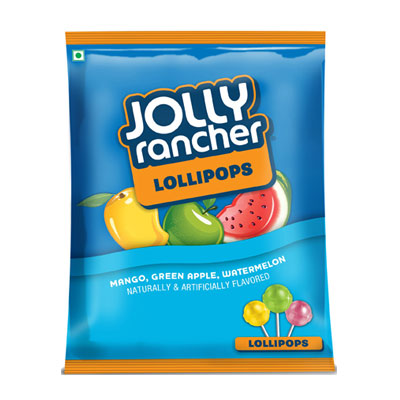
    MUMBAI: Hershey India Private Ltd., a wholly-owned subsidiary of The Hershey Company (NYSE: HSY), today announced it will bring the iconic North American sweets brand, Jolly Rancher™, to India, underscoring the importance and strength of the growing Indian confectionery market.  India is the first international market for the Jolly Rancher brand outside of North America in the brand’s 65-year history.

    The Jolly Rancher brand is known for a unique combination of sweet and tart fruity flavours that deliver a never before taste experience to the consumer. Jolly Rancher Lollipops will be the first Jolly Rancher candy introduced in India. The lollipops offer a long lasting fruit-like taste experience that is distinct from the typical lollipop currently available in India. The lollipops will come in three flavours: Green Apple, Watermelon and Mango.  Mango was developed specifically for the India market.  The three flavours were tested with Indian consumers who gave them high scores for appeal and delivering uniquely bold, fruity flavours.  

    “The Jolly Rancher brand is a perfect line of products for sweets-loving consumers in India,” said Atul Razdan, General Manager, Marketing, Sweets and Refreshments, for Hershey India.  “We’ve tailored our new Jolly Rancher products for India to appeal, specifically, to local palates with bold, fruity flavours that are unlike any other candy available in the market.”

    Priced at Rs. 5 /- in India, Jolly Rancher Lollipops are immediately available in select outlets in metropolitan cities.  The company is manufacturing the product in its Chittoor plant in India.

    The launch of Jolly Rancher brand in India will contribute to The Hershey Company’s focus on global growth. The Indian confectionery market is one of the fastest-growing markets in the world with a strong double-digit annual compound growth rate of about 18 percent. 

    Jolly Rancher is one of five brands that Hershey has identified as “global brands” that will drive the company’s worldwide growth over the next several years.  It is also the first global brand from North America to launch in India. The international expansion of Jolly Rancher in India and other iconic Hershey brands around the world is an integral part of Hershey’s global growth vision to achieve $10 billion in annual revenue by 2017. 

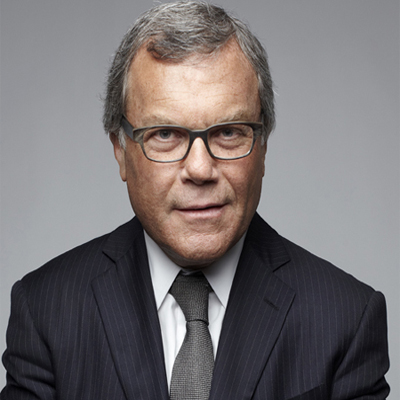
  • Explore the corporate world with Sir Martin Sorrell

    Explore the corporate world with Sir Martin Sorrell

    MUMBAI: Network18’s business channel CNBC-TV18 has got a date with one of the most powerful man in the world of media and advertising. WPP chief executive of advertising services group Sir Martin Sorrell – under whose leadership the company has escalated to the position of the world’s largest agency network – will give viewers an insight in to the world of media, advertising and marketing with a programme, 30 Minutes with Martin Sorrell.


    It is a monthly half an hour show that will go on air on CNBC-TV18 from Friday, 29 November at 7:00 pm. The show will be hosted by Anant Rangaswami, editor of Storyboard and senior editor of Firstpost where he will speak to Sorrell on recent and imminent developments in the world of media, advertising and marketing.


    Sorrell is an astute businessman with an instinctive understanding of economics, finance and markets. He has changed the landscape of the communications industry through WPP’s consolidation drive over the last decade and more.


    With this show, the channel adds another topical show to its illustrious line-up to provide programming that its viewers can continue to benefit from. By leveraging its global edge, CNBC-TV18 brings Indian audiences Sorrell’s first exclusive monthly appearance on an Indian business news channel.

  • Colgate launches new integrated marketing campaign

    Colgate launches new integrated marketing campaign

    MUMBAI: Colgate-Palmolive (India) has unveiled a new integrated marketing campaign for Colgate Sensitive Pro-Relief.

    According to the Colgate spokesperson, a survey was conducted by Colgate-Palmolive (India) Limited and Nielsen which revealed that sensitivity is one of the top oral care problems and is faced by 40 per cent Indians. The new campaign has been conceptualised on the core insight that consumers tend to believe that they can cope with tooth sensitivity by giving up hot/cold/sour food items or drinks.

    The campaign is executed by Red Fuse Communications, a Y&R agency dedicated to servicing Colgate-Palmolive (India). Red Fuse Communications national director planning Zubin Tatna says, “A nice, hot cup of tea adds freshness to our mornings and keeps us invigorated during the day. For Indians, tea is an integral part of our daily lives. Unfortunately, those who suffer from tooth sensitivity tend to quit tea and other food items that aggravate the problem. Based on this insight, the new integrated marketing campaign aims at communicating the message that Colgate Sensitive Pro-Relief provides instant relief from sensitivity while allowing you to continue enjoying your favourite food and beverages.”

    On the campaign, Colgate’s spokesperson says, “As market leaders, it is our constant endeavor to innovate and revolutionise the oral care category. Today, consumer trends are changing every day and the market is opening up to newer opportunities. Integrated marketing campaigns have to combine brand messages with newer ways of connecting with consumers.”

    Colgate Sensitive Pro Relief was launched in 2011 and then, the IMC campaign flagged off with a TVC featuring real-life consumers sharing their tooth sensitivity problems. The TVC captured their positive reactions after the use of the toothpaste on the spot, thereby highlighting the instant relief providing property of it.

    He adds, “Our newly launched integrated marketing campaign, this November, is centered on the significance of tea in our lives. Building on this facet of the consumer’s lifestyle, the campaign acknowledges the fact that sacrificing tea is not an option, even while dealing with sensitivity. Poor oral hygiene and eating habits are key reasons for sensitivity.”

    The integrated marketing campaign will be supported by a vibrant mix of communication and activation through various vehicles of mass media such as TV, print, digital, radio, retail and other professional channels.

  • JCB India to kick off marketing campaign in Jan 2014

    JCB India to kick off marketing campaign in Jan 2014

    BENGALURU: Indian construction equipment manufacturer JCB India (JCB) plans to showcase 19 innovative made-in-India machines at Excon 2013 in Bengaluru on 20 November. The company also plans to kick off a campaign at the start of its financial year, which is January-December.

    JCB’s marketing and communication plans are mainly BTL. “In the case of an automobile company, the spends would be around 70:30 skewed towards mass media, with BTL forming a small part of the spends. In the case of construction machinery companies such as ours, it would be around 85 per cent spends on BTL activities, and just 15 per cent towards mass media and that too generally in bursts,” revealed JCB Executive VP of marketing, business development and corporate affairs Amit Gossain to indiantelevision.com.

    “Our communications on television make more sense on the regional channels where, maybe, my customer doesn’t even understand English, but could be a big buyer. We do use mass media such as television and newsprint and spend some money on news channels, etc., but our core communications are more the experiential kind,” said Gossain.

    JCB takes part in events such as Excon 2013 where it claims to have booked the largest exhibition space of 4250 square meters this year. JCB holds customer-connect programmes, takes customers to visit its factories, gets dealer inputs, etc., as a part of its BTL activities. Besides, it subsidises a part of the marketing and communication expenses of its dealers.

    Industry experts say that companies such as JCB could be spending anything from 0.5 to 3 per cent of annual turnover towards marketing, a figure range that Gossain agrees with for JCB, but refuses to peg the actual spends. In the case of a company such as JCB India with revenue of Rs 6000 crore, even the lower number would translate into marketing spends of Rs 30 crore per year.

    “Despite an industry downturn of about 24 per cent, we have seen our revenue drop by just about 9-10 per cent, which means that our market share has grown,” said Gossain. “We are confident of the future in India and are setting up two new manufacturing plants in Rajasthan and have planned investments of Rs 500 crore over the next five years,” he revealed.

    Stressing on quality, a strong customer support network and fuel efficiency, JCB’s tagline is ‘We care, that is why we are everywhere.’
    New Delhi based Infinity handles the creative and media buying duties for JCB India.

  • NDTV reports improved q-o-q results with lower loss, improves EBIDTA for Q2-2014

    NDTV reports improved q-o-q results with lower loss, improves EBIDTA for Q2-2014

    BENGALURU: New Delhi Television Limited (NDTV) reported a lower consolidated net loss of Rs (-15.26) crore for Q2-2014, which was 57.5 per cent lower than the Rs (-24.04) crore for Q1-2014 (q-o-q), but about four per cent higher loss than the Rs (-14.68) crore the network reported for the corresponding quarter of last year (Q2-2013).


    However, it reported an improved EBIDTA of Rs 1.5 crore as compared to the Rs (-19.0) crore for Q2-2013. NDTV also reported a 19 per cent y-o-y growth for Q2-2014 at Rs 128 crore as compared to the Rs 108 crore for the same quarter.


    The Company has reported that it has sold its property in Noida for a sale consideration of Rs 30 crore. The gain of Rs 6.27 crore has been recognised in ‘Other Income’ in the standalone and consolidated financial statements recorded by the company. Consolidated other income for Q2-2014 at Rs 22.04 crore was almost quintuple the Rs 4.53 crore for Q2-2013 and the Rs 4.63 crore for Q1-2014.


    Let us look at the other figures for Q2-2014 reported by NDTV


    Consolidated total income from operations for Q2-2014 at Rs 106.19 crore was 2.8 per cent higher than the Rs 103.33 crore for Q2-2013 and 3.7 per cent higher than the Rs 102.4 crore for Q1-2014. Revenue from NDTV’s television media related segment for Q2-2014 at Rs 107.42 crore was four per cent higher than the Rs 103.33 crore for Q2-2013 and 4.7 per cent higher than the Rs 102.59 crore for Q1-2014. Its retail/e-commerce segment clocked revue of Rs 0.52 crore for Q2-2014. (Intersegment revenue adjustment of Rs 1.75 crore resulted in consolidated income from operations of Rs 106.19 crore for Q2-2014).


    Consolidated total expense at Rs 133.58 crore for Q2-2014 was almost flat as compared to the Rs 133.67 crore for Q2-2013 and 6.2 per cent more than the Rs 125.75 for Q1-2014. Production expense for Q2-2014 at Rs 22.84 crore was 2.2 per cent higher than the Rs 22.34 crore for Q2-2013, but 5.5 per cent lower than the Rs 24.11 crore for Q1-2014.


    In Q2-2014, the company spent 18.6 per cent less on marketing, distribution and promotional at Rs 25.43 crore as compared to the Rs 31.25 crore for the corresponding quarter last year (Q2-2013), but 17.9 per cent more than the Rs 21.57 crore for Q1-2014.


    Operating and administration expense at Rs 33.55 crore was 3.6 per cent higher than the Rs 32.39 crore for Q2-2013 and 17.4 per cent higher than the Rs 28.58 crore for Q1-2014.


    Its employee cost at Rs 44.92 crore for Q2-2014 was 10.45 per cent higher than the Rs 40.67 crore for the corresponding quarter of last year (Q2-2013) and almost the same as the Rs 44.93 crore for Q1-2014.


    The company claims that total revenue from Hindi News grew 54 per cent y-o-y. Revenue of NDTV’s digital arm, NDTV Convergence, was up by 64 per cent y-o-y. NDTV claims that NDTV Convergence registered 500 crore (five billion) page views, on an annualised basis, across mobile and web and 200 crore (two billion) minutes of streamed videos. It further says that NDTV Gadgets has become India’s biggest gadget site. NDTV’s first e-commerce venture IndianRoots.com was successfully launched on 28 July and is showing healthy sales traction says the company.