Tag: marketing

  • Forum Projects to spend Rs 35 crore for marketing & branding ‘Atmosphere’

    Forum Projects to spend Rs 35 crore for marketing & branding ‘Atmosphere’

    KOLKATA: Kolkata head-quartered real estate company, Forum Projects, which is developing a luxury residential condominium, Atmosphere, on the EM Bypass, at a cost of around Rs 617 crore, has earmarked an investment of Rs 30 – 35 crore on the marketing and branding of this unique project, which is likely to be completed by the end of 2016.


    The residential project adjacent to the Science City and opposite to ITC Hotel aims at achieving a turnover of around Rs 900 crore.


    Atmosphere will have around 80 villas in the price bracket of Rs 10 – 20 crore meant for high networth individuals (HNIs).


    The company has also imported a yacht and a recreational boat, to be given to the residents free of cost as a marketing gimmick. Going further, the company has plans to explore other unique marketing strategies.


    “We will spend around Rs 30 crore to Rs 35 crore on the branding and marketing activities of this unique project Atmosphere till it is fully sold,” said Forum Projects executive director Nirmal Lunawat.


    The company said that apart from spending on traditional media like newspaper, television, radio, hoarding and other real estate journals, it would spend a huge amount on the new media.

  • Q3-2015: Colgate Palmolive’s q-o-q marketing spends down 11.3 per cent

    Q3-2015: Colgate Palmolive’s q-o-q marketing spends down 11.3 per cent

    BENGALURU: Last quarter (Q2-2015), Colgate-Palmolive (India) Limited (Colgate-Palmolive) spent the highest amount towards advertisement and sales promotion (ASP) in a quarter at Rs 201 crore (20.1 per cent of Total Income or TI) based on the data covering the last 11 quarters starting Q1-2013 until Q3-2015.

    In the current quarter (Q3-2015), the company lowered its ASP by 11.3 per cent to Rs 178.21 crore (17.9 per cent of TI), a figure that was 33.7 per cent more than the Rs 121.46 crore (13.4 per cent of TI) in the corresponding quarter of the previous year. Q2-2015 ASP was also the highest in terms of percentage of TI.

    Note: 100,00,000 = 100 Lakhs = 10 million = 1 crore

    YTD, Colgate-Palmolive’s ASP was Rs 559.76 crore (19 per cent of TI), 63.5 per cent more than the Rs 342.32 crore (12.7 per cent of TI) in 9M-2014.

    Colgate-Palmolive’s brands include Colgate for oral care, Palmolive, Charmis and Halo for personal care, and Axion for household care.

    During the period under consideration, Colgate-Palmolive’s ASP was lowest in Q4-2013, both in terms of absolute rupees and ASP as percentage of TI at Rs 82.10 crore and 9.7 per cent of TI. Fig A below indicates an upward linear trend for ASP, both in absolute rupees and percentage of TI.

    Though the company’s TI in the current quarter was almost flat (down 0.5 per cent) at Rs 995.99 crore as compared to the Rs 1000.52 crore in the immediate trailing quarter, it was 9.8 per cent higher than the Rs 907.35 crore in Q3-2014. Colgate-Palmolive’s TI shows an increasing linear trend during the period under consideration. Historically, in Q3-2013 as well as Q3-2014, Colgate-Palmolive’s TI has shown a slight dip with respect to Q2 of the corresponding years.

    Across seven financial years starting FY-2008 until FY-2014, the company’s TI, ASP and ASP as percentage of TI show an upward linear trend, with the company’s marketing spends being the highest both in terms of absolute rupees and percentage of TI in FY-2014 at Rs 688.66 crore (19.2 per cent of TIO).

    Fig A1 above indicates the breakup of Colgate-Palmolive’s advertising and sales promotion across three financial years for which data is available. In Q3-2013 and Q3-2014, ASP was higher than Q2-2013 and Q2-2014 respectively, however, as mentioned above, Q3-2015 ASP is lower than Q2-2015.

    PAT

    Across four consecutive quarters starting Q4-2014 until the current quarter, Colgate-Palmolive’s PAT has remained almost flat at about Rs 130 crore with small variations. The company’s PAT in Q3-2015 at Rs 130.86 crore (13.2 per cent of TI) was one per cent more than the Rs 129.58 crore (13 per cent of TI) in Q2-2015, but was 16 per cent more than the Rs 112.83 crore (12.7 per cent of TI) in Q3-2014.

    Colgate-Palmolive’s PAT has been the highest at Rs 185.22 crore (21.5 per cent of TI) in Q1-2014 during the eleven quarter period under consideration, while the lowest PAT has been in Q3-2013 at Rs 111.05 crore (14.2 per cent of TI). PAT shows a flat to a slightly reducing linear trend in absolute rupees and a steeper linear slide in terms of percentage of TI. The company’s PAT in FY-2014 was Rs 539.87 crore, and unless the company’s results for Q4-2015 show a marked upsurge in absolute rupees, PAT in FY-2015 could be just about equal to or lower than PAT in FY-2014.

    In its earnings release, Colgate-Palmolive states that the market share of its toothpaste category has increased by 80 basis points to 56.7 per cent during calendar year 2014 with contribution from its flagship brands Colgate Dental Cream, Active Salt, Max Fresh, Colgate Total and Visible White.

    Colgate-Palmolive says that its market share in the toothbrush category also increased by 80 basis points to 42.4 per cent during calendar year 2014.

    Click here more

  • 2014: An astonishing year for regional cinema

    2014: An astonishing year for regional cinema

    2014 was an interesting year. It started with a great deal of promise but at the end there is a feeling of unfulfillment too.

    What started with new films of different and interesting genres doing well at the box office ended slightly unsatisfied with some big film with a lot of expectation underperforming slightly.

    English content though continued to perform well with a lot of Hollywood’s big films doing really well at our BO. There is an increasing anticipation for these films and every year we are seeing more dubbed languages adding to the size of the release.

    Regional cinema, especially Marathi, has had an astonishing year. Audiences have clearly chosen to enjoy these films because they are telling intimate stories close to their heart. Still lessons were learnt and I think 2015 again holds great promise.

    There were also various trends in content in 2014; perhaps these trends didn’t follow through that well in the second half of the year. Content is certainly king right now and audiences are becoming very selective of the films they see. This is something that will continue, I think as prices for the content rise, people will become more and more elastic, choosing only films that they really want to see.

    I think next year has a lot of terrific looking films lined up and I expect films to build on this expectation to push audiences to the cinemas.

    Social media and the connected mediums will continue to drive a lot of reaction and indeed influence content. This trend will continue to get stronger as more and more people join the medium. Content viewing online is something that will also grow strongly. Without doubt this is an area where mobile internet will help greatly and the promise of 4G will fuel the need for content and the desire to consume it.

    I also think the trend of over-marketing films will also continue. Maybe for a short term but at the moment I truly feel marketing budgets are out of sync with the feasibility of a lot of the films they are being spent on and this is a slightly worrying trend. Sadly, there are no trends this year that have died out! I think there are always trends that die out and then slowly re-emerge as a ‘new’ trend again a few years later but I don’t think trends die out completely.

    Old wine in a new bottle is what our films are based on and I don’t think our audience will tire of that anytime soon.

    (These are purely personal views of Mukta Arts MD Rahul Puri and indiantelevision.com does not necessarily subscribe to these views.)

  • Mahesh Narayanan joins Tonic Media’s advisory board

    Mahesh Narayanan joins Tonic Media’s advisory board

    Mumbai: Digital agency Tonic Media has appointed of Mahesh Narayanan to its advisory board. Formerly with Google India as Mobile country head, Narayanan is credited with taking mobile advertising in India to the next level and also seen as one of the pioneers in the digital media space.

    Commenting on the new appointment, Tonic Media CEO Chetan Asher said, “Tonic has been growing at an incredible momentum and it is time we took it to the next level with a vision of dominating the digital space. We are honored to have someone of Mahesh’s stature bringing his invaluable experience. Together, we can add value to our clients’ businesses with new brand-building strategies.”

    Narayanan comes with over 15 years of experience across businesses in the mobile, adtech and consumer internet spaces. Speaking on this development, he stated, “Tonic Media has been successful in establishing themselves as a digital powerhouse with a great roster of clients across various industries. I look forward to sharing my technology and digital advertising experience with the Tonic team to help them become market-leaders.”

    Narayanan has held various senior leadership positions across global technology media companies such as Google, AdMob and Sociomantic. He spent seven years at Google India as the founding member of Google India’s direct sales operations in 2005 and helped lay the architecture for the growth of Google in India. He joined AdMob as the Country Manager for India in 2009 and moved back to Google after the acquisition of AdMob.

    He was named the Mobile Marketing Person of the Year at the Indira Marketing Excellence awards in 2011 and has also been featured in the Digital Power 100 list as one of the icons of India’s Digital ecosystem in 2012 by Impact – a leading advertising, media and marketing publication.


  • Rahul Mishra to join IndiaCast as associate director for marketing

    Rahul Mishra to join IndiaCast as associate director for marketing

    MUMBAI: IndiaCast that distributes TV18 and Viacom18’s channels in India and abroad has roped in Rahul Mishra as associate director for marketing.


    Confirming the news to indiantelevision.com, Mishra said that his role will encompass handling trade marketing for domestic channels and consumers as well as trade marketing for its international channels such as Colors, Rishtey and News18. He will join IndiaCast from November and is currently serving his notice period at BBC.


    Mishra joins IndiaCast from BBC World News where he had a successful stint of nearly eight years as Asia Pacific marketing manager. Prior to that, he was with WorldSpace India as manager for north and has worked for the sales and marketing teams of Hyatt and Le Meridien Hotels and Resorts.

  • Nestle India’s marketing budget Rs 450 crore for FY-2014?

    Nestle India’s marketing budget Rs 450 crore for FY-2014?

    BENGALURU: One of the biggest spenders on advertisement and sales promotion in India is nutrition, health and wellness company Nestle India Limited (Nestle). The company which owns brands such as Nestle, Maggi, Everday, Barone, Munch, Kitkat, Milkybar, Polo, Alpino among others is expected to spend in excess of Rs 400 crore towards advertising and sales promotion (ASP) during the current calendar year that ends on 31 December 2014 (FY-2014).


    Notes: 100,00,000 = 100 Lakhs  = 10 million = 1 crore.


    Let us look at the company’s numbers over the last ten years starting FY-2004 until FY-2013.


    As per Figure 1 below, Nestle’s total revenue from operations (TIO) has had a compounded annual growth rate (CAGR) of 16.93 per cent from Rs 2227.57 crore in FY-2004 to Rs 9109.05 crore in FY-2013. Its ASP has grown by 14.04 per cent CAGR from Rs 121.26 crore (5.4 per cent of TIO) to Rs 395.48 crore (4.3 per cent of TIO) during the same period. Using 14.04 per cent ASP growth as a yardstick, the company is expected to spend around Rs 450 crore in FY-2014 towards ASP.


    Background: Over the last 10 years, the company’s ASP has always increased in absolute rupees with an average y-o-y growth of 14.4 per cent. However, ASP in 2004 was 10.9 per cent lower than the ASP in FY-2003, which was 9.7 per cent lower than the ASP in FY-2002, which in turn was lower by 3.0 per cent as compared to the ASP in FY-2001.


    If Nestle’s TIO rows at 16.93 per cent, it would be reach around Rs 10,640 crores for FY-2014. Assuming ASP as 4.3 per cent of TIO, Nestle should spend around Rs 460 crore towards marketing. Nestle’s TIO in FY-2014 grew at 9.2 per cent as compared to the Rs 8334.53 crore in FY-2012. Assuming a growth of 9.2 per cent and ASP as 4.3 per cent of TIO, the corresponding numbers of TIO and ASP for FY-2014 are about Rs 9940 crore and Rs 432 crore.


    While in absolute rupee terms the company’s ASP shows a linear increasing trend, in terms of percentage of TIO, the linear trend is downwards. Across 10 years, the company’s average ASP is 4.82 per cent, of TIO, with a maximum of 5.5 per cent of TIO in FY-2005 and a minimum of 4.3 per cent of TIO in FY-2011, FY-2012 and FY-2013. Hence, company’s ASP across the last 3 years of 4.3 per cent is much below the 10 year par.


    Disclaimer: Being a part of a multi-national group, the company is generally quite tight lipped about sharing financials unless it has to legally do so. Details about the company’s advertisement spends are not indicated even in the company’s annual reports – what you have is a combination of the advertisement and sales promotion spends declared as a single entry in the notes forming the part of the company’s annual financials. There is really no way that one could pin an exact number for these spends unless one has an inside track on the company’s marketing budgets. The projections in this report are pure conjecture based on the historical annual numbers revealed by the company in its annual reports. The author has no knowledge about Nestle’s strategy, past or present.


    The numbers deduced in this report may be quite similar or way off the mark from the numbers that the company will reveal in its annual report for FY-2014 early next year. The company’s financial year ends on December 31, hence Q1-2014 and Q2-2014 means quarter ended March 31, 2014 and June 30, 2014 respectively in this report.


    Some more: For Q2-2014, the company reported y-o-y growth of 9.4 per cent in TIO at Rs 2431.97 crore from Rs 2222.71 in Q2-2013, and 4.8 per cent more than the Rs 2321.51 crore in the immediate trailing quarter. Nestle’s HY-2014 TIO at Rs 4753.48 crore was 6.2 per cent more than the Rs 4478.06 crore reported for HY-2013. Even if one were to go by the lowest figure of 4.8 per cent growth, TIO for FY-2014 would be Rs 9534.09 crore. Maintaining ASP of 4.3 per cent of TIO, the company’s marketing spend for FY-2014 works out to about Rs 414 crore.


    Given the fact that the company has been witnessing consistently lowering rate of growth since FY-2011 past few years, a marketing push would help Nestle reverse the trend, besides other strategies like launch of new products or revamping of old or existing products.


    The company, in its Q2-2014 earnings release, says that it has recently launched Nestle Sweet Lassi, Nestle Buttermilk and Ayurvedic Herbs and Spices and Maggi Oat Noodles to its portfolio.


    Based on the above numbers and launches, marketing spend in range of Rs 450 crore with a variation of + 10 per cent seems a reasonable number for FY-2014.

  • Zomato appoints Rameet Arora as CMO

    Zomato appoints Rameet Arora as CMO

    MUMBAI: Zomato has appointed Rameet Arora as chief marketing officer.


    With over 17 years of experience in the field of advertising and marketing, Arora will take over as CMO from this month, and will be responsible for Zomato’s marketing efforts globally.


    Zomato co-founder & COO Pankaj Chaddah said, “It’s great to have Rameet on board. He comes with a lot of relevant experience, and we look forward to scaling our marketing efforts in potential markets as well as driving quicker growth in our existing ones.”


    A month ago, he had exited from McDonals where he served as a senior director of marketing and  menu management.


    “It’s great to be a part of such a fast-growing team. Number one on the agenda is to make Zomato a global synonym for food,” said Arora, who joins Zomato in the midst of its aggressive international expansions and extensive product development.


    Prior to McDonald’s, Rameet was Colors marketing head. Over the years, Arora has been associated with the top advertising and marketing companies, most notably Leo Burnett, where he spent over eight years.

  • OLX and Flipkart ink unique marketing tie-up

    OLX and Flipkart ink unique marketing tie-up

    MUMBAI: With more and more people accessing the internet through smartphones and tablets, the internet user base has grown to be around 243 million.  


    This has led to an exciting and booming e-commerce sector in the country. Last week, Flipkart announced that it had raised fresh capital of $1 billion; soon afterwards Amazon too announced that it will invest another $2 billion in India.


    And keeping the momentum going, OLX.in and Flipkart have tied-up for a unique marketing campaign that will leverage each other’s strengths to offer combined benefits of their platforms to the fast growing internet user base.


    OLX is marketplace for used goods, and Flipkart is a destination for online shopping, making this alliance between the two online brands an unprecedented one. The joint initiative by the two e-commerce leaders has been launched to further increase the awareness levels and accelerate the adoption of their online platforms for buying and selling. The campaign will run for one month, and will include several verticals within the electronics categories.


    OLX CEO Amarjit Batra said, “The idea for this tie-up was conceived keeping in mind the strong and independent position of OLX and Flipkart in their respective space. The rationale for the number one online classifieds platform and the leading e-commerce platform coming together for a marketing campaign is a seamless one. This tie-up will enhance consumer experience on OLX and Flipkart by giving users a more holistic online shopping experience in which they can sell their used goods on OLX before buying new products on Flipkart.”


    Flipkart sr VP marketing Ravi Vora added, “At Flipkart, our constant endeavor has been to make online shopping convenient and attractive to the masses in the country. With this partnership with OLX, we will be able to provide an end-to-end solution to customers especially in the electronics categories where selling old products is an integral part of the buying process.”

  • Sir Martin Sorrell shares 10 trends shaping the global ad business

    Sir Martin Sorrell shares 10 trends shaping the global ad business

    The world’s biggest media conglomerate, which shapes the advertising and marketing of brands globally, has good news for marketing companies even though some nations are going through economic crises.


    WPP’s founder and CEO Sir Martin Sorrell shared his views on the trends impacting the global marketing service industry on his Linkedin blog.


    “As we plan for the future of our business, looking across the 110 countries in which we operate, we try to identify the trends that we think are shaping the global marketing services industry.


    Here’s our top ten:


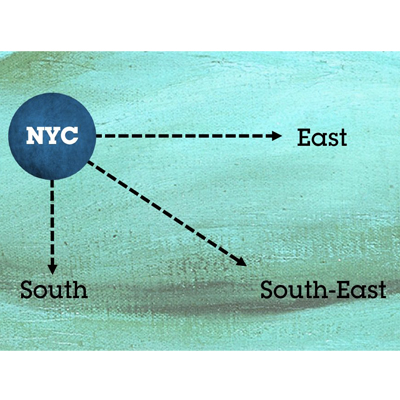
    1. Power is shifting South, East and South East

    New York is still very much the centre of the world, but power (economic, political and social) is becoming more widely distributed, marching South, East and South East: to Latin America, India, China, Russia, Africa and the Middle East, and Central and Eastern Europe.


    Although growth rates in these markets have slowed, the underlying trends persist as economic development lifts countless millions into lives of greater prosperity, aspiration and consumption.


    2. Supply exceeds demand – except in talent

    Despite the events that followed the collapse of Lehman Brothers in 2008, manufacturing production still generally outstrips consumer demand. This is good news for marketing companies, because manufacturers need to invest in branding in order to differentiate their products from the competition.


    Meanwhile, the war for talent, particularly in traditional Western companies, has only just begun. The squeeze is coming from two directions: declining birth rates and smaller family sizes; and the relentless rise of the web and associated digital technologies.


    Simply, there will be fewer entrants to the jobs market and, when they do enter it, young people expect to work for tech-focused, more networked, less bureaucratic companies. It is hard now; it will be harder in 20 years.


    3. Disintermediation (and a post-digital world)

    An ugly word, with even uglier consequences for those who fail to manage it. It’s the name of the game for web giants like Apple, Google and Amazon, which have removed large chunks of the supply chain (think music retailers, business directories and bookshops) in order to deliver goods and services to consumers more simply and at lower cost.


    Take our “frienemy” Google: our biggest trading partner (as the largest recipient of our clients’ media investment) and one of our main rivals, too. It’s a formidable competitor that has grown very big indeed by – some say – eating everyone else’s lunch, but marketing services businesses have a crucial advantage.


    Google (like Facebook, Twitter, LinkedIn and others) is not a neutral intermediary, but a media owner. Google sells Google, Facebook sells Facebook and Twitter sells Twitter.


    We, however, are independent, meaning we can give disinterested, platform-agnostic advice to clients. You wouldn’t hand your media plan to News Corporation or Viacom and let them tell you where to spend your advertising dollars and pounds, so why hand it to Google and co?


    Taking a broader view of our increasingly tech-based world, words like “digital”, “programmatic” and “data” will soon feel out-dated and obsolete as, enmeshed with so many aspects of our daily lives, network-based technologies, automation and the large-scale analysis of information become the norm.


    The internet has been a tremendous net positive for the advertising and communications services business, allowing us to reach consumers more efficiently, more usefully and often more creatively on behalf of clients. But it won’t be long before those clients stop asking our agencies for a “digital” marketing strategy (many already have). It will simply be an inherent part of what we’re expected to offer.


    4. Changing power dynamics in retail

    For the last 20 years or so the big retailers like Walmart, Tesco and Carrefour have had a lot more power than manufacturers because they deal directly with consumers who are accustomed to visiting their stores.


    This won’t change overnight, but manufacturers can now have direct relationships with consumers via the web and e-commerce platforms in particular. Amazon is the example we all think of in the West, but watch out for Alibaba, the Chinese behemoth due to list on the New York Stock Exchange later this summer in what could be the largest IPO in corporate history (and heading a capitalisation of around $200 billion).


    5. The growing reputation of internal communications


    Once an unloved adjunct to the HR department, internal comms has moved up the food chain and enlightened leaders now see it as critical to business success.


    One of the biggest challenges facing any chairman or CEO is how to communicate strategic and structural change within their own organisations. The prestige has traditionally been attached to external communications, but getting internal constituencies on board is at least as important, and arguably more than half of our business.


    6. Global and local on the up, regional down

    The way our clients structure and organise their businesses is changing. Globalisation continues apace, making the need for a strong corporate centre even more important.


    Increasingly, though, what CEOs want is a nimble, much more networked centre, with direct connections to local markets. This hands greater responsibility and accountability to local managers, and puts pressure on regional management layers that act as a buffer, preventing information from flowing and things from happening.


    7. Finance and procurement have too much clout, but this will change

    Some companies seem to think they can cost-cut their way to growth. This misconception is a post-Lehman phenomenon: corporates still bear the mental scars of the crash, and conservatism rules.


    But there’s hope: the accountants will only hold sway over the chief marketing officers in the short-term. There’s a limit to how much you can cut, but top-line growth (driven by investment in marketing) is infinite, at least until you reach 100% market share.


    8. Bigger government


    Governments are becoming ever more important – as regulators, investors and clients. Following the global financial crisis and ensuing recession, governments have had to step in and assert themselves – just as they did during and after the Great Depression in the 1930s and 1940s. And they’re not going to retreat any time soon.


    Administrations need to communicate public policy to citizens, drive health initiatives, recruit people, promote their countries abroad, encourage tourism and foreign investment, and build their digital government capabilities. All of which require the services of our industry.


    9. Sustainability is no longer “soft”

    The days when companies regarded sustainability as a bit of window-dressing (or, worse, a profit-sapping distraction) are, happily, long gone. Today’s business leaders understand that social responsibility goes hand-in-hand with sustained growth and profitability.


    Business needs permission from society to operate, and virtually every CEO recognises that you ignore stakeholders at your peril – if you’re trying to build brands for the long term.


    10. Merger flops won’t put others off

    Despite the failure of one or two recent high-profile mega-mergers, we expect consolidation to continue – among clients, media owners and marketing services agencies. Bigger companies will have the advantages of scale, technology and investment, while those that remain small will have flexibility and a more entrepreneurial spirit on their side.


    FMCG and pharmaceuticals (driven by companies like 3G and Valeant) are where we anticipate the greatest consolidation, while our own industry is likely to see some activity – with IPG and Havas the subject of constant takeover rumours. At WPP we’ll continue to play our part by focusing on small- and medium-sized strategic acquisitions (31 so far this year, and counting).”


     (These are purely personal views of  WPP’s founder and CEO Sir Martin Sorrell and indiantelevision.com does not subscribe to these views.)

  • Nielsen’s seven-step Media Compass

    Nielsen’s seven-step Media Compass

    MUMBAI: Imagine spending all your time and effort on a project, which doesn’t even give a chance for a second glance? Well, this is what is happening in case of advertising, as per Nielsen’s insights.


    The research goes on to say that in the highly volatile market today, marketers face tough competition to make a customer choose a certain brand out of many available to them.  In India, marketers spend over $5 billion each year out of which up to 30 per cent i.e. $1.5 billion is wasted as it misses its mark.


    One might look at various media landscapes to reach out to its TG but the report says that the fragmented media landscape isn’t helping anyone. According to it, companies are finding it progressively difficult to capture mind share in the segments they serve.


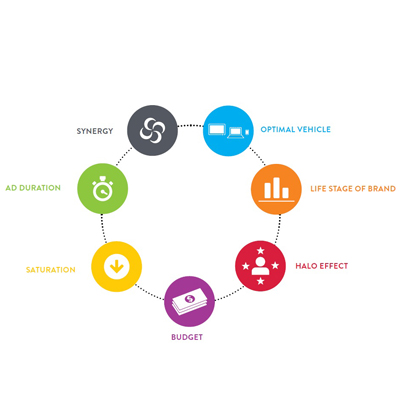
    To make things easier and to guide marketers on their budget allocations to increase their returns on investment, Nielsen has developed a seven-step framework to help them battle today’s challenges.


    The framework, christened as media compass, shares uncommon ways in which one can optimise seven steps that helps determine a marketer’s choice of media, timing of exposure and the size of investment. While every brand has its own unique dynamics, the research agency designed the framework to provide clear guidance for any brand. The framework is based on nearly 1,100 studies across 98 categories carried out globally in the area of marketing mix.


    Choosing the optimal media mix


    Marketing spend varies across industries and regions depending on where messaging resonates most with consumers, so evaluate current ROI for your brands across media platforms.


    Supporting new brands beyond early launch


    Adequate support for a new launch is required even in the second year of the launch in order to generate incremental trials and ensure repeat purchase behaviour. Ideally a new product should be thought of as ‘New’ for two years.


    Maximising the halo effect


    Advertising drives volume for the brand being directly promoted. However, such advertising may also drive volume for a sister brand if there is a connection between the two brands in the consumer’s mind. Such indirect effects are called Halo Advertising Effects, contrary to what one might expect, the halo effect from parents to the portfolio is much lower than the halo effect from extensions to the parent. Shifting a larger portion of the media support to extensions would result in higher total impact for the portfolio.


    Brand budgets – incorporate sponsorship for building equity


    Bigger budget brands can afford higher levels of advertising spend. If the budget allows, they should consider sponsorships as part of their media plans. Gross Rating Points (GRPs) spent on sponsored programmes, or impact GRPs, generate very high sales volume, and are generally three times as effective as regular GRPs. However, there’s a high cost involved in sponsorships. Brands with smaller budgets should maximise efficacy of their spends by executing within optimal GRP ranges, considering shorter length copy and ensuring good copy quality.


    The flighting opportunity


    The economic principle of diminishing returns exists in media planning too. The volume response due to TV advertising is not linear, and shows a pattern of diminishing returns beyond a certain point, leaving considerable scope for GRP optimisation.


    Timing it right


    Longer-duration ads are needed to convey a new or complex message, while shorter ones can suffice as reminder messages. The most critical question for the marketer therefore is – which parts of the copy can be cut out, and which parts are essential to the message?


    Synergy


    Synergy is the improved effectiveness of various drivers when executed together. A study conducted to test synergies between ATL & BTL activities among 25 categories revealed that a vast majority of companies do not integrate their ATL and BTL efforts. The 20 per cent companies who do integrate ATL and BTL efforts witnessed about 5-8 per cent extra sales growth. Integrate your marketing and sales efforts to benefit from synergies.