Tag: marketing

  • Making sense in chaos: evolution of marketing

    Making sense in chaos: evolution of marketing

    Here’s a ringside view of the marketing circus from an IT professional who has been ‘hovering’ around media and marketing for the past 24 years. (Information technology is not called ‘knowledge industry’ without a reason!)

    High voltage action

    Most management executives will agree that after swift decision-making, it’s a cross-functional collaboration which is key to reaching strategic goals. Yet only a very few managers are able to achieve cross-functional collaboration within their organisations.

    And this is even more pertinent for marketing, where budgets and activities are clearly on the rise. Let us look at some of these activities:

    Routine activities:                                      Parallel tasks:

    o Create new campaigns                           o Keep tabs on sales                          
    o Approve existing plans as per budget    o Track the competition
    o Monitor running campaigns                   o Define/Shuffle budgets
    o Monitor media performance                   o Analyse spends
    o Define communication strategy              o Study insights from analytics
    o Pass marketing bills                                o . . .

    Clearly, there’s a lot to be achieved on each ‘marketing’ day!

    The need for process automation in marketing departments is obvious – but there's also another aspect to it: each marketing activity generates a lot of data. This data along with other added information like sales, retail audit and market research forms the base for marketing analytics. The resultant insights are utilized for course corrections. Naturally, with real-time insights, it’s possible to make course corrections in real-time.

    Sheer variety
    What variety of flavours! At one level, there’s media, activation, production and research/consultancy. At a parallel level, there’s central (brand) marketing, regional & shopper marketing, big-ticket corporate sponsorships – with a separate effort to synchronise creatives between all three! At the third level, there are promotional discount schemes to trade as well as direct-to-consumers – which need curation and monitoring.

    To further add to the complexities, there’s tracking of sales, monitoring competition’s share of voice, the efficacy of running campaigns across media – TV, digital, print, radio, out-of-home, cinema.

    On a day to day basis, managers need to coordinate with creative teams, sales offices, distribution , etc. And constantly give approvals. There are approvals required at every stage! Approvals for budgets, plans, estimates, P.O.S., deviations, bills, and performance delivered.

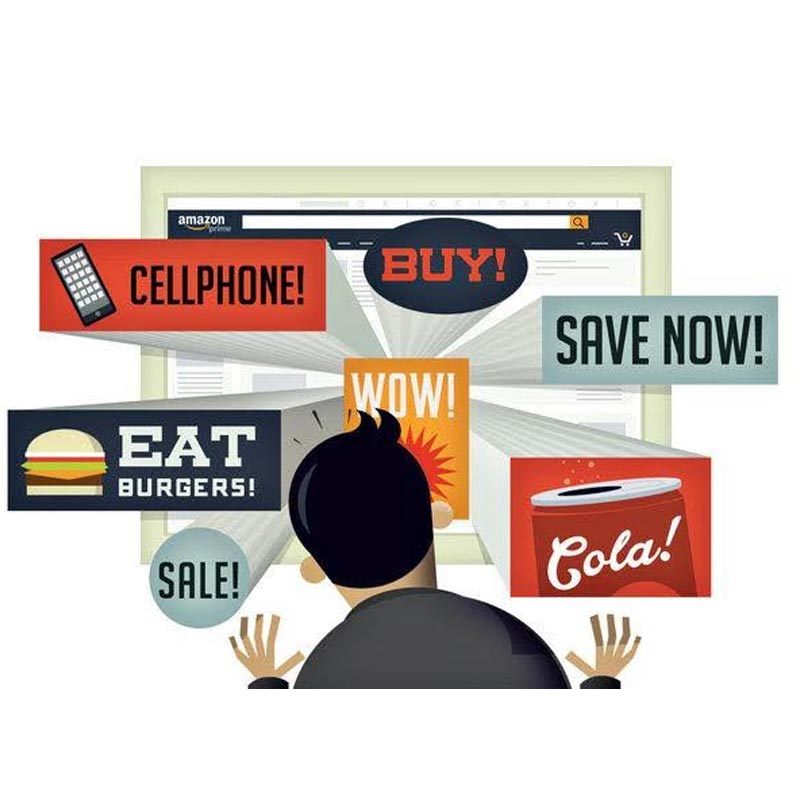
    And all through the budgeting, planning and execution stages there’s a huge amount of data being accumulated – which needs to be analyzed in real-time for immediate course correction. Else, the marketing budget may not be used efficiently.

    No wonder, they say Marketing is not easy!

    Information technology to the rescue!

    To simplify the life of Marketing, what’s basically needed is to create a private IT platform that brings all processes along with all the associated data into a Central Marketing Database. Every single marketing transaction must be automated and controlled as per marketing budgets modified in real-time, complete with process and audit compliance.  If every byte of data related to marketing investments is captured while completing transactions – across all offices in real-time, the database generated will also, take care of online reporting on a need-to-know basis.

    A simple but powerful example is the need for a common marketing approvals module (applied from budget to vendor bills). If this ‘Approvals Module’ is device-friendly (across multiple screens, PC, laptop, tablet, iPhone, Android and Windows phone), then marketing departments can easily enforce ‘Plan – Authorise – Monitor – Settle’ in a dynamic manner, where budgets change with the market dynamics and in turn, drive changes during the process of execution.

    Another example: automated monitoring of TV schedules with ADEX data, to report on missed/dropped spots and other deviations (duration, caption, language, time.) You can also in parallel, track performance parameters, which are in addition to billing units – something that’s characteristic of marketing activities. Similar modules are available for a digital medium.

    We can start with an annual brand marketing plan (calendar) module and continue seamlessly to execution, monitoring and bill settlement, integrated with the client’s ERP system like SAP – to create an end-to-end experience for the marketing team. Parallelly, all marketing investment data can be aggregated into a single private database. This will also ensure transparency across departments on a need-to-know basis.

    Create your private software platform for marketing

    Of course,you need to “on-board” your agency partners as well as vendors into your marketing process automation. But you also need to integrate with other softwares and databases in the marketing domain – in line with the collaborative style of 2020!

    This could be an out-of-home monitoring service or an activation project monitoring service. Or even a TV monitoring service. And could progress to Salesforce Automation or CRM software.

    The benefit is an extended, end-to-end process automation which goes beyond the organisation and also collects more relevant transaction data in real-time.

    Marketing analytics

    With so much at stake, big data reporting and marketing analytics is a natural next step. With continuous marketing analytics, marketing teams can benefit from trends, correlations and pattern analysis as well as predictive analysis of sales, marketing, competition, retail, audit data and various permutations along with customised dashboards, according to needs. All these insights help in making ‘course corrections’ – the more real-time insights, the faster will be course corrections.

    With a team of data scientists and domain specialists, we constantly analyse the data to identify trends, correlations and identify the best algorithms to do 'curve-fitting'. These routines are tested and the final statistical machine learning functions are made available for auto-running periodically on incoming data. The system ensures that useful analytics are generated in real-time – irrespective of how humongous the data!

    The ultimate vision:  To reduce the need for marketing corrections

    Start with process automation for Marketing Departments. Include your agencies and vendors. Upgrade to include third party software and database services and creating your platform for marketing. Subscribe to marketing analytics and consume the insights on a near real-time basis as possible.

    But the vision should be to plough back the insights from analytics as metrics into strategic points in the workflow software. This way, the decision could be made with a live roadmap on hand.

    For example, a CMO is on a business trip and needs to approve a large TV plan for a brand. What if he sees an icon with meaningful insights based on recent plans, vendor performance, rate history, media mix and budget availability?

    (The author is founder and CEO, Brandintelle Services. The views expressed are his own and Indiantelevision.com may not subscribe to them)


  • Marketing modules set to gain importance in 2020

    Marketing modules set to gain importance in 2020

    MUMBAI: Over the last decade we’ve witnessed the field of marketing transform in previously unimaginable ways. Much of this transformation has been driven by the breakneck advance of technology, leaving marketers struggling to catch up. But before the profession starts pinning all its woes on these unprecedented changes, it’s important to take a step back and view the broader picture. Marketing has always been at the very forefront of technological development and advancement. 

    Every era has seen the technologies of the day co-opted and put to use in service of the profession, from SMS marketing of the 90s and media buying during the internet boom, through to the more recent introduction of social media marketing. If we are to stay at the top of our game, it is our duty to remain constantly aware of new and evolving technologies and their applicability to our sector. As such, these are the marketing trends for 2020 that we expect will see the most traction:

    Crowd Marketing

    At its heart, crowd marketing is simply the next step in the natural evolution of influencer marketing. But whereas influencer marketing targets brand endorsements by actors, athletes, and other celebrities, crowd marketing is all about converting regular customers into brand ambassadors across their personal social media channels, regardless of follower numbers. Crowd marketing can serve as the digital analogue of word-of-mouth marketing, and stimulated by rewarding user-generated content and positive online mentions of the brand. In this way, brand loyalty is built and a vocal online community of online supporters is cultivated. This approach has resulted in the democratisation of influencer marketing and completely changed the paradigm. Marketing tools such as Brandie help companies tap engage with this segment, with leading businesses across India (including Air India, The Bowl Company, Godrej Nature’s Basket, and Raw Pressery) all reaping the benefits.

    Meme Marketing

    Memes have long been the mode of communication of choice for millennials and Gen Z-ers. Despite this, you’d be forgiven for never having heard of them before. Memes, for the uninitiated amongst us, are essentially images or videos accompanied by a humorous caption. The more socially relevant and relatable the meme, the more viral its spread across the internet. Meme culture has grown to such an extent that the most popular memes have jumped the bounds of the internet, with people incorporating them into their day-to-day conversations. As such, their allure to marketers should be immediately understandable. 

    Meme marketing attempts to integrate the virality of memes and turn them to the benefit of a brand or company. The most recent high-profile use of meme marketing was by Netflix to promote Sandra Bullock-starrer ‘Bird Box’ in 2018. The film’s striking imagery, and promotional efforts that included a Bird Box themed blindfold challenge with prominent Twitch streamers, saw the internet community produce tremendous numbers of memes, with knowledge of the film spreading through a form digital cultural osmosis. The result was an internet phenomenon and an unmitigated marketing success. According to figures released by Netflix following the film’s launch, Bird Box was viewed by more than 45 million accounts within the first week of its release – a statistic touted as the platform’s best-ever debut for an original film. 

    Dynamic Content Marketing

    Dynamic content, otherwise known as adaptive content, refers to any online content or material which changes based on a user’s behavior, preferences, and interests. By personalising a user’s interactions with a website and the marketing material they receive based on available user data, this form of marketing provides visitors with an engaging and customised experience. Once again, streaming services provide us with an example of this method done right. Through various proprietary algorithms, OTT platforms such as Netflix and Amazon Prime provide us with a selection of media tailor-made for us. These algorithms determine our viewing preferences by analysing various factors such as the genre and setting of the content we view, and then compiling a thematically similar set of options. 

    Video Marketing

    The introduction of streaming services over the past decade has led to a surge in the public’s appetite for video content. This phenomenon has spread to social media as well, with both social networking sites such as Facebook and Instagram (via Facebook Live and IGTV) and standalone video-streaming apps such as TikTok and Dubsmash carving a space for themselves in the market. A direct result of this is the emergence of a glut of video marketing tools, all trying to utilize this opportunity to develop their customer base. The popularity of video content amongst both the public and businesses is easy to understand – it provides the former with a simple, easily digestible form of content, while providing the latter with an engaging and insightful avenue through which to reach their target audience. Social media networks serve as the ideal platforms for this sort of content, and allow for video marketing to target specific audiences and groups.  Startups such as online video creator InVideo are thriving in this environment, by helping companies create marketing videos quickly and affordably through their software. 

    (The author is co-founder Brandie. The views expressed are his own and Indiantelevision.com may not subscribe to them.)

  • TheSmallBigIdea thinks big

    TheSmallBigIdea thinks big

    MUMBAI: In advertising the Big Idea comes from a small insight. That was the inspiration behind former Reliance Big executive Harikrishnan Pillai and Ex-Times Network's Manish Solanki naming their agency soon after they quit their jobs. Six years down the line, their full-service digital agency,TheSmallBigIdea (TSBI), has grown to a team of 84 professionals, having served clients such as Star Sports,&TV, Colors, Zee Bioskope, Seychelles Tourism, IDFC Bank, HDFC Life, Asian Paints, Chennaiyin FC, and Big Magic. Recently,the agency created headlines for winning the social media mandate for movies like Love Aaj kal and Shubh Mangal Zyada Savdhan.

    For Pillai, it has been a dream journey from 2014, when he started the TheSmallBigIdea as a self-funded venture, by imbibing his experience from the Zee network and Reliance Broadcast Network.  
    His fruitful stints at Zee and Reliance helped him a lot. Talking about his past experience, he said: “If we have hunger and perseverance they gave us the opportunity. It is probably the biggest legacy that I have carried into my team. As I have said, most of our team is home-grown, all trained internally with strong ethos. The team at TheSmallBigIdea is creatively strong.  They are leading the team as if they themselves are the entrepreneurs. The second lesson learnt has been a focus on delivery. A great idea without impeccable execution is nothing. So, while we are idea-driven, we are extremely focused on executions, delivery, and measurement.”

    While brands in the media and entertainment category contribute 60 per cent of its business, TheSmallBigIdea has a stronghold and focus in tourism, education, e-commerce and BFSI. Then around 15-18 months ago,  it ventured into movies. “Movies happened last year with Badhaai Ho. Then we did Bala, Good Newzz, Dream Girl, and so on. Our primary focus is on sustainability and growth. What is going to give us sustainability is the large clientele that we have; our focus has been to provide services to them so that they can stick around us. The other most important factor is growth. When you look at sustainability you also look at growth,” said Pillai. 

    Largely based out of Mumbai, it has reps in Bangalore, Delhi, Punjab and Chennai. 

    The agency also has a sprinkling of media-only clients for whom it does the planning and buying like: Seychelles Tourism, Bahrain Tourism, Welingkar Institute and Dalmia College. Realising the potential in going local, TheSmallBigIdea launched TSBI Bharat as it saw the need to reach out to the next 100 million people who are going to come online. It's not just about language translation but studying how regional markets behave, how they consume internet and the role of neo-social apps in their ecosystem. 

    “We want to understand their sentiments, what kind of content they want to consume, etc. It is about addressing a larger ecosystem rather than addressing one particular language,” says Pillai. 

    TheSmallBigIdea is expecting a lot of growth coming from TSBI Bharat. It is pushing brands to create content in regional languages using neo-social apps. “We are also focusing on TSBI studios, which is the production division at TheSmallBigIdea to create more short-format content, podcasts and ad films. Our analytics tool ACE allows business to derive actionable insight through a thorough evaluation of social and enterprise data,”he added. 

    The agency, is looking at hiring more people to reach the 100-mark. Going forward, TheSmallBigIdea envisages a brighter future. “What works for us are the insights and the content,” says Pillai confidently. “Not only our ideation team but our service team is very strong and that is reflected by the fact that 80 percent of our clients renew contract on Y-o-Y basis. What is not working for us is the reputation of being a media and entertainment company, which is not true. Like I have said we get only 60 percent of revenue from media and entertainment. This perception I would like to change.” he concludes.

    Now that’s what sounds like a sound idea. A big sound idea. 

  • Will make brands’ IPL 2020 splurge into judicious investment: Velocity MR’s Jasal Shah

    Will make brands’ IPL 2020 splurge into judicious investment: Velocity MR’s Jasal Shah

    MUMBAI: Summer and IPL are now synonymous in India. Even after a decade since its launch, the mega sporting event continues to attract eyeballs as well as brands.

    Last year, a new age consumer insights provider Velocity MR published IPL Brands Insights Book 2019 unravelling the mystery of marketing decision makings during the league. The research firm announced the second edition of the study as well.

    For the first edition, Velocity MR tracked ads worth $40 million during IPL 2019 and covered more than 70 advertisers and over 100 sponsors. Altogether, it evaluated around 150 ads.

    “This study got interests from 11 brands who aggressively promoted their brand during IPL 2019. Our book titled, IPL Brands Insights Book 2019 was very well received in the marketing corridors of brands who sponsored or advertised during IPL 2019 and have plans for 2020 as well,” Velocity MR CEO and managing director Jasal Shah commented.

    “Our unique models of ROI calculation, Impact Scores AKA 'Mother of all Insights' because just one score covers more than 10+ marketing metrics, Jersey Analysis, Viewership Trend, Loyalty Analysis, Media Basket Analysis, Sponsorship Analysis – generate quality insights for brand custodians and these make our IPL Brands Insights Study a must for all those who are going to splurge in IPL 2020. We’ll make that splurge into a judicious investment,” he added.

    Shah added that there will be new outcomes certainly in the second edition as the market dynamics are never same. According to him in this fast-evolving digital world, strategies change overnight and with multiple options, even consumers’ patronage can’t be taken for granted. He noted that they keenly study all the changes and understand more from the viewers.

    For this year’s study, the methodology remains the same as last year but new centres have been added. The research methodology includes quantitative Online Surveys for Delhi, Bengaluru, Chennai, Hyderabad, Kolkata, Mumbai, Ahmedabad and Pune (18-20 Minutes), quantitative Offline F2F Surveys for Visakhapatnam, Indore and Jaipur (18-20 Minutes).

  • OTT and digital are becoming mainstream for advertisers: MXPlayer’s Abhishek Joshi

    OTT and digital are becoming mainstream for advertisers: MXPlayer’s Abhishek Joshi

    MUMBAI: With five original web-series, Times Internet-owned over-the-top (OTT) service MX Player made its grand entry in the highly contended Indian market. While the new entrant in the market has gained enough traction within six month of its launch, the platform has kept an eye on the most promising opportunity in the ecosystem, the regional belt. Since the launch, it has been taking several interesting marketing initiatives with a special focus on the marketing of Originals to create impact for the brand.

    According to a report from RedSeer, a Bangalore-based research and consulting firm, MX Player has already acquired its place in the top three list in terms of users with 176 million monthly active users. To understand its marketing strategy, interest from advertisers, key challenges of the new player, Indiantelevision.com spoke to MX Player marketing and business partnerships head Abhishek Joshi.

    Edited excerpts:

    From local video player to a streaming service – what are the marketing initiatives you are taking to change the brand image among users?

    The biggest opportunity we face lies in the question itself. The paradigm shift from offline to online and educating the user of the same is the task we were faced with. I think the biggest step we took was rebranding ourselves and creating the brand promise of “Everytainment”. This word brilliantly echoes our brand ethos and encapsulates all that we offer – which essentially is entertainment suiting your every need, want, mood, reason or season. Our approach for this messaging to reach the consumer stretches from associating with brands across demographics/categories, TV, radio and print (enabling us to reach out to those that are not present on the internet) and social + digital mediums to name a few. The marketing of our Originals is yet another avenue to create impact for the brand and we do so by bringing you innovative campaigns that appeal to varied palettes.

    How are you leveraging the strength of your own network?

    Many in the OTT market are players who are backed by large broadcasters and each uses the might of its network which is challenged by their own set of pros and cons. But having said that – it’s always an added edge that weighs in when needed.

    Are OTT platforms, in general, seeing good interest from advertisers? Has it increased this year?

    There’s no getting around the fact that OTT and corresponding advertising offerings are in hyper drive as more content and advertising inventory becomes available. The OTT and digital window is becoming mainstream to most advertisers so this definitely seems to be a trend that is here to stay.

    A lot of campaigns are going digital-first. The way advertising is targeted to the user changes when you have a mobile in your hand. It’s the only entertainment device you carry with you 24*7. Advertisers see OTT as a compelling proposition: a high quality, brand-safe environment allowing for targeted ads along with a means for even better audience segmentation.

    We, in fact, encourage branded content as an option as well which leads to great brand visibility. For example, our association with Too Yumm! for our show Love OK Please has seen great results for us as well as the brand.

    What are the key challenges MX Player is facing in terms of marketing?

    There has been a rise in the number of platforms and hence in the number of shows which presents marketers with an opportunity to make a mark with impactful campaigns. With everyone trying to bite into the same pie, the only edge one has is to be relevant to viewers, position the brand in a way that is simple to understand and yet compels them to be engaged which I believe is the biggest challenge for any marketer today.

    Are you doing targeted advertising while attracting new consumers? Which are the key demographics you are attracting?

    Big pivots are happening. From a marketing perspective, it’s really how you engage your viewers, use your data to target and make sure your messaging is reaching the right customer at the right time. As MX Player’s TG is digitally driven, we incorporate the digital and social mediums in all our marketing strategies and tactics.

    Our approach is always dependent on the story and the narrative of what the series consists of. Based on that, we decide the route, medium and strategy to use for a particular show.

    Our app caters to not just the top 8 cities but also a lot of tier II and tier III markets. The regional belt is an area that we are actively trying to nurture and build.

    Which are the brands showing more interest in your content? Which are the new brands coming on-board?

    These are announcements that we will make alongside the launch of the respective series. But currently, the platform sees a lot of  ad traction coming in categories like FMCG, ecommerce, technology, telecommunication, banking and automobile with brands like OnePlus, Vivo, P&G, KFC, Reckitt and LIC amongst others.

  • Ad industry not kept pace with consumer and digital changes

    Ad industry not kept pace with consumer and digital changes

    MUMBAI: The last decade has been disruptive for media, advertising and marketing with the evolution of digital. However, Sam Balsara, the veteran in advertising industry, feels that media buying has not been able to keep pace with that change. He also said that the currency that really should be looked at from marketing point of view is cost per unit of brand outcome rather than CPRP or CPT.

    Throwing light on the magnitude of the change, Balsara said that the advertising market has tripled in size in the last ten years, moving up from Rs 20,000 crore to Rs 61,000 crore in 2018. He also added that the growth came on the back of digital while the share of the digital medium itself has reached 19 per cent from merely four per cent ten years back. According to him, digital will replace print as the second largest medium in the next two to three years.

    “The only thing that has not changed, I will say regretfully, is the way media buyers and media agencies buy media. It has, probably, not changed as dramatically as the media scene has,” Madison World chairman Sam Balsara commented in a session “Advertising, Media, Marketing: #10yearChallenge” on the third day of FICCI FRAMES 2019 while highlighting all the changes in the last decade.

    Ultratech joint executive president, marketing head Ajay Dang also expressed his concern on the same. Dang seemed sceptic about whether the industry, including creative agencies, marketers, content generators, has been able to keep pace with audience evolution. He also expressed his concern about the industry’s understanding of the needed change in storytelling and measuring the reach of the story to the final audience.

    “We are constantly in a phase of catch-up, we are falling behind. That’s my take. Because of our lack of putting it all together, at the end of the day our return on investment that we are supposed to deliver to our organisations is suffering,” he commented.

    Balsara also spoke on the “democratisation of advertising”. While the top 50 advertisers accounted for as high as 43 per cent of total adex in 2009, the number came down to 35 per cent last year thanks to the huge growth of regional brands.

    “We have to look at efficiency, effectiveness and innovation. I think today we are in a scenario where there is democratisation of data as well and data is threatening to become a deluge to drown companies if they do not do something about it. That’s largely becoming a priority for us to take up now,” Marico media and digital marketing head Ankit Desai said.

    BARC CEO Partho Dasgupta also pointed out the lack of talent in terms of media analytics tool. While sectors like BFSI and telecom have data analytics talent but in media finding people who understand the media domain and the big data tools of analytics is a big problem.

    It was also noted in the session that the FMCG brands are ever-inclined to TV despite the rapid growth of digital growth. On the issue of bias towards TV, experts think as the communication journey of many companies has been built around the medium over all these years, TV still plays the role for audience aggregator for these brands. However, it has also been said that the shift towards other mediums like digital has started.

    Viacom18 Hindi Mass Entertainment & Kids TV Network head Nina Elavia Jaipuria concluded the session calling for unity among all three parties including the media owner, advertiser and the media agency. She said that there is a need for all three to come together as the common goal is to drive market share for brands but sometimes a conflict of interest is good for the growth of the business.

  • Alibaba – Building a new model for marketing

    Alibaba – Building a new model for marketing

    MUMBAI: As we approach a new decade, what were once predictions are today a reality. Some of these are – India enjoys a demographic dividend, smartphone and internet penetration is constantly growing, consumer appetite is expanding beyond established markets and coming from emerging India as well. Additionally, India is now the fastest growing economy in the world. This bodes well when you weigh the potential of the market. What comes next is attracting audiences and making it easier for brands to reach consumers.

    This was the subject of a talk at the 44th International Advertising Association’s World Congress in Kochi by Chris Tung, Chief Marketing Officer, Alibaba Group. For any brand to enter a consumer’s discovery cycle that straddles Awareness, Interest, Purchase, and then Loyalty; brands need to do much more in the digital age. The need is for a cohesive, evolving, data-led ecosystem that involves content marketing, understanding consumption patterns, lifestyle preferences, and more. Through this data-led engagement, brands have the opportunity to become far more relevant to their target audiences. The data-led model allows for brands to experiment with campaigns readily and sometimes even optimise entire marketing strategies for customer acquisition.

    Alibaba has been instrumental in achieving a data-led model that it terms as uni-marketing that allows brands access to insights based on data that are anonymised and aggregated down segments that number one million in size. This allows for a test-bed that at the very least has a million users. And the results have been promising for Alibaba and the brands that leverage its platforms. Alibaba reports 50% year on year revenue growth. For brands that leverage a data-led approach championed through uni-marketing at Alibaba – in some cases, time to launch has come down to nine months from 18 months. There are more top-sellers per brand today across categories. The real power of uni-marketing shone through with an insight provided to Mars Inc., wherein Alibaba suggested a chilli-infused chocolate treat to the global confectioner. The result? Between August of 2017 and March of 2018, sales of Snickers Spicy surpassed USD 1.43 million dollars with a 92% satisfaction rating among consumers.

    That’s just the success of one product and one brand. When you scale this data-led engine out to engage with millions of users – what you arrive at is an e-commerce platform that brings brands and consumers closer to each other and a record sitting USD 30.8 billion Singles’ Day in 2018. To break that down further – that’s the ability to drive 300,000 transactions per second.

  • Mondelez India Launches Cadbury Dairy Milk Crispello

    Mondelez India Launches Cadbury Dairy Milk Crispello

    MUMBAI: After making Cadbury Dairy Milk as one of India’s favourite chocolate brands for 70 years in India, Mondelez India has launched Cadbury Dairy Milk Crispello, its ‘made in India’ innovation in the Crispy-Eat segment. Banking on Cadbury Dairy Milk’s strong equity, Mondelez India is all set to expand its premium portfolio with this new product offering. 

    Mondelez India director for marketing chocolates category Anil Viswanathan says, “With rising disposable incomes, exposure to global cultures and extensive reach of mass media, the Indian consumers have been exposed to a global palette of food experiences. More specifically, recent work with Gen-Z consumers, a key consumer cohort for us, has shown a desire for multi-textured and complex experiences. This has been an important dimension for us as we have thought about our innovations.”

    “Cadbury Dairy Milk Crispello combines the much loved Cadbury Dairy Milk taste with crispy and creamy textures in a unique ready-to-share snappy format. Its snap and share capabilities further reinforce our shared values of togetherness and collective joy,” he adds.  

    Cadbury Dairy Milk Crispello, is covered with a layer of delicious Cadbury Dairy Milk, crunchy wheat crispies and smooth chocolate cream. As one bites in, the chocolate melts in the mouth and the wheat crispies underneath bring in the crispiness, giving consumers an immersive chocolaty and crunchy experience, all at the same time. The finger-bar format makes it easier to be shared with friends and family. 

    Cadbury Dairy Milk Crispello is priced at Rs 30.

    The launch will be supported by a 360-degree communication campaign that will include a new TVC and outdoor and digital campaigns targeting the brands core target audience i.e. youth. On-ground activations at point of sale and sampling at modern trade outlets will also be part of the campaign to drive awareness for the product.

  • Kedar Teny to move on from SPN India

    Kedar Teny to move on from SPN India

    MUMBAI: Sony Pictures Network (SPN) India senior VP marketing and OAP Sports Kedar Teny has decided to move on from the company and is serving his notice period, sources close to the development informed Indiantelevision.com. He will be with the organisation till October.

    Prior to SPN India, Kedar Teny was the director marketing and digital at McDonald’s India (West & South) for around three years. He is planning to join a startup. According to Campaign India, Teny might join Tilt Brands, which was founded by Joseph George.

    Teny has over two decades of experience in marketing and digital domains. He started off as a management trainee at iB&W Communications and went on to work as category head deodorants Hindustan Unilever; general manager, brand, Bharti Airtel; senior brand planning director South East Asia, Thailand (Bangkok), Lowe and Partners Worldwide and has worked with Lowe and Partners Worldwide in various capacities.

  • AAAI Subhas Ghosal Memorial Lecture 2018

    AAAI Subhas Ghosal Memorial Lecture 2018

    Mumbai: The Advertising Agencies Association of India (AAAI) and Subhas Ghosal Foundation (SGF) is pleased to announce the Subhas Ghosal Memorial Lecture by Rajan Anandan, Vice President, Google India and South East Asia on Thursday, September 20, 2018 at 7:00 p.m. at Hotel St. Regis, Lower Parel, Mumbai.

    Mr. Rajan Anandan will enlighten the audience on what the new Internet User is like and what to expect in the Digital World we now live in, a few years from now. 

    Says Ashish Bhasin, President, AAAI says, “In a world that is rapidly being disrupted by digital, it will be extremely interesting to and important for everyone to prepare themselves. We at AAAI look forward to Rajan Anandan’s perspectives at the Subhas Ghosal Memorial Lecture.”

    Says Sam Balsara, on behalf of SGF, “Both Digital Natives and Digital Immigrants will find the lecture useful and enlightening.”

    All members of Advertising, Marketing, Media and Digital community are welcome. However, RSVP to Mr. Sudesh Kapoor at aaai@aaai.inis a must. If you need an invitation please send an email from your official email id to Mr. Sudesh Kapoor.

    This lecture is possible because of support from ABP LIVE, to whom the organisers are grateful.