Tag: marketing

  • Here’s why news genre works for advertisers

    Here’s why news genre works for advertisers

    NEW DELHI: Covid2019 impacted brands across the board and as a result, ad volumes on television also took a hit. At that point, businesses were forced to realign their advertising budgets with an eye on future projections. However, advertising is once again on a roll and there is a year-on-year growth in ad volumes across some product categories. 

    In a session titled – ‘Advertising on News’ at Indiantelevision.com’s News Television Summit, co-powered by TVU Networks, eminent advertisers and agency heads conferred on the importance of news genre in a media plan for a CMO. They discussed why advertisers continue to reach out to their audiences via the news space. The panellists included FBB, Future Group CMO Prachi Mohapatra, Policy Bazaar head of brand marketing Samir Sethi, Wavemaker CEO – south Asia Ajay Gupte, Essence SVP & MD – India Anand Chakravarthy, ITV group CEO Varun Kohli. It was moderated by E&Y partner M&E Ashish Pherwani.

    Pherwani started off by asking Mohapatra how the brand looks at news genre and why they advertise on it. “We have been actively using this platform for a long time. I think it’s not a new category for us. For our campaigns, we have given our due respect to this genre as one of the highest reach provider for us. We are a young brand and reach out to the right kind of customer segment and news has worked for us. We have seen results,” said Mohapatra.

    She further added that the brand has been able to use both FCT and non-FCT space effectively. “It’s not about platform anymore but the content that you are associating with it. Of course it became a very pertinent place for us in the pre-Covid time but post-Covid it has definitely skewed a little more towards the digital platform but news is right up there for us,” explained Mohapatra.

    Echoing the sentiment, Sethi stated that news is the anchor genre on which Policy Bazaar advertises throughout the year. “News takes approximately one third of our TV spends. During the slump of Covid, when most categories were pulling out of their advertising plan, we were extremely bullish because insurance was one of the categories that were positively impacted by the pandemic. So, during the slump as well when the overall ad volumes were down, our share of voice also increased without spending extra on that. And we will continue to be extremely bullish on news because insurance is an extremely male dominated category in terms of shoppers and the audiences we find there is very relevant.”

    Next, Pherwani asked for the panellists’ take on the impact of the impending legislation on ad-cap in the news genre. Kohli shared his view that Covid2019 was a blessing for news channels in the sense that since people were not very clear whether the information in the digital space was right or not, they came back to the news channels.  Many channels also reinvented themselves during this period and that is why the reach of the genre went up considerably. “It is the cheapest way to reach out to the audience because it is FTA. I do not see the legislation happening for news cap on news channels in the next two-three years,” he added.

    But what do agencies think about advertising on news genre? To answer this question, Pherwani turned to Gupte from Wavemaker and Chakravarthy from Essence.

    Gupte shared that rates are effectively a function of viewership. “If you put more ads in a break, the viewership tends to drop in the middle of it, but if you shorten the break, the viewership is a lot higher, there is higher TVRs and eventually one gets better rates.”

    Chakravarthy pointed out that three Cs – clutter, context and cost – determine whether the platform is going to do a good job for the client or not. “Today on FTA channels we see advertisers ranging from all kinds of products – from high end cars to the ones speaking to the last mile audiences. I believe that context will be important because there are advertisers who for the right value of the right audiences will be willing to pay a premium price,” he said.

    He went on to add that people are not on news channels to watch advertising and a 15 minute ad-break will be too long because people will switch off and move to another genre; plus there is also the ever-present distraction of the smartphone. “So, I think it is important that our advertising environment becomes consumer friendly. Yes, consumers want ads but how much advertising and how you place it and what kind of breaks you have is very critical to give the right kind of experiences and value to the entire ecosystem,” concluded Chakravarthy.
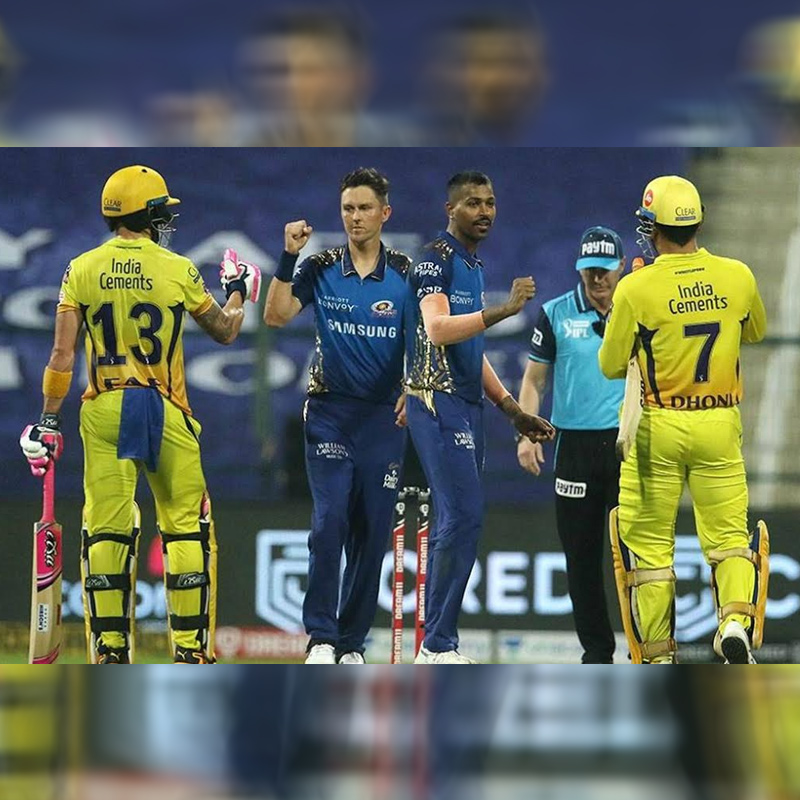
  • Chennai Super Kings is driving IPL13’s social media popularity: Wavemaker Mesh Report

    Chennai Super Kings is driving IPL13’s social media popularity: Wavemaker Mesh Report

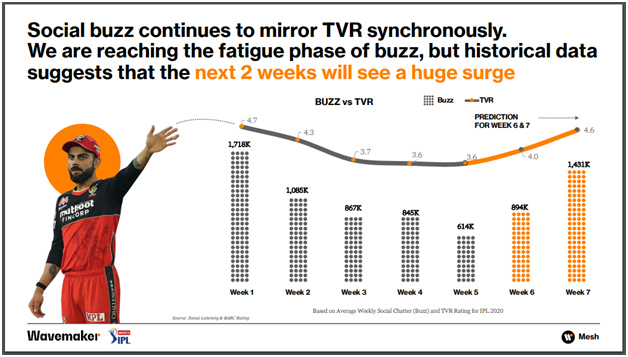
    NEW DELHI:  IPL buzz volume is on track to go two times from the last season, reaching more than 60 million, indicated the Wavemaker Mesh report, released recently. Last year, the buzz volume was 37 million. 

    The report is curated by Wavemaker using real-time data intelligence solution via reading real-time environmental signals on multiple data-points. This season report has data sources from multiple consumer touchpoints across Digital ecosystem ranging from Social Listening, Google Searches, Website visits, BARC, Video analytics in partnership with VIDOOLY, Interaction data points collected from Facebook, Twitter, Instagram, and YouTube.

    The report also indicates that the social buzz of the cricketing extravaganza is mirroring TVR and the next two weeks might see a huge surge there, after momentous buzz fatigue. Chennai Super Kings is driving the league’s social media popularity. 

    The report also highlighted the top 10 most loved ads; in pecking order: Dream11, Oppo, Tata Motors, Samsung, Paytm First Games, Gulf Oil, Make My Trip, Lifebuoy, Bingo, and Gamezy. 

    Additionally, cricket fantasy leagues are enjoying never before seen engagement with 90+ million web traffic and 300 million Google searches for the top 5 leagues in September 2020. 


  • IPL 13 scores better than IPL 12

    IPL 13 scores better than IPL 12

    NEW DELHI: IPL 13 was the most awaited live property of the year, especially after Covid2019 turned us all into house-bound hermits. It provided people with a much needed break from the pandemic-induced stress and negativity. Starting from day one, audiences have been glued to their screens (TV & mobile) to watch their favourite team progressing up the IPL scoreboard. It was widely reported that the opening match of IPL scored over 269 million views, making it one of the biggest opening day numbers for any live event in history. In the most recent update, BARC India has shared that IPL 13 has clocked over 108 million cumulative reach which is 11 per cent higher than IPL 12, which clocked 98 million cumulative reach.

    On the other hand, the tournament has already clocked 7 billion viewing minutes while the previous instalment clocked just 5.5 billion minutes. For IPL 12, the data analysed includes Week 13, 14, 15, 16 and 17, which covers 44 matches aired across 24 channels. For IPL 13, the data analysed includes week 38, 39, 40, 41, 42, which covers 41 matches aired across 21 channels. This season of IPL began on 19 September and will culminate on 10 November. The matches are aired on Star Sports and streamed on Disney+ Hotstar.

  • Facebook ad revenue up 22% in Q3

    Facebook ad revenue up 22% in Q3

    New Delhi: Facebook has announced its third quarter results. The ad revenue for the social media giant stood at $21.2 billion dollar up by 22 per cent for this quarter. The corresponding figures for the same time in 2019 stood at $17.3 billion.

    The total revenue for the quarter also stood at $21.5 billion up by 22 per cent. The corresponding revenue for the same duration in 2019 stood at $17.6 billion.

    The net income for the quarter stood at $7.8 billion up by 29 per cent. The corresponding net income for the same duration in 2019 stood at $6.09 billion.

    The earnings per share is $2.71 up by 28 per cent. The corresponding earnings in 2019 was $2.12.

    Facebook founder & CEO Mark Zuckerberg said, "We had a strong quarter as people and businesses continue to rely on our services to stay connected and create economic opportunity during these tough times. We continue to make significant investments in our products and hiring in order to deliver new and meaningful experiences for our community around the world."

    The daily active users for FB stood at 1.82 billion on average for September 2020, an increase of 12 per cent year-over-year. The monthly active users were at 2.74 billion as of 30 September 2020, showing an increase of 12 per cent year-over-year. Family daily active people were at 2.54 billion on average for the quarter showing an increase of 15 per cent year-over-year. Family monthly active people (MAP) were at 3.21 billion for the same time showing an increase of 14 per cent year-over-year. Capex including principal payments on finance leases were $3.88 billion for the third quarter of 2020. Cash and cash equivalents and marketable securities were $55.62 billion as of 30 September 2020. Headcount was at 56,653 as of 30 September 2020 witnessing an increase of 32 per cent year-over-year.

    The company further stated that it continues to face a significant amount of uncertainty in 2021. Facebook believes that the pandemic has contributed to acceleration in the shift of commerce from offline to online, and the company has experienced increasing demand for advertising as a result of this acceleration. Considering that online commerce is the company’s largest ad vertical, a change in this trend could serve as a headwind to our 2021 ad revenue growth.

    Facebook further expects more significant targeting and measurement headwinds in 2021. This includes headwinds from platform changes, notably on Apple iOS 14, as well as those from the evolving regulatory landscape.

    There is also continuing uncertainty around the viability of transatlantic data transfers in light of recent European regulatory developments. The social media company is closely monitoring the potential impact on its European operations as these developments progress.

    It expects the fourth quarter 2020 year-over-year ad revenue growth rate to be higher than the reported third quarter 2020 rate, driven by continued strong advertiser demand during the holiday season.

  • Mohit Joshi elevated to CEO, Havas Media Group

    Mohit Joshi elevated to CEO, Havas Media Group

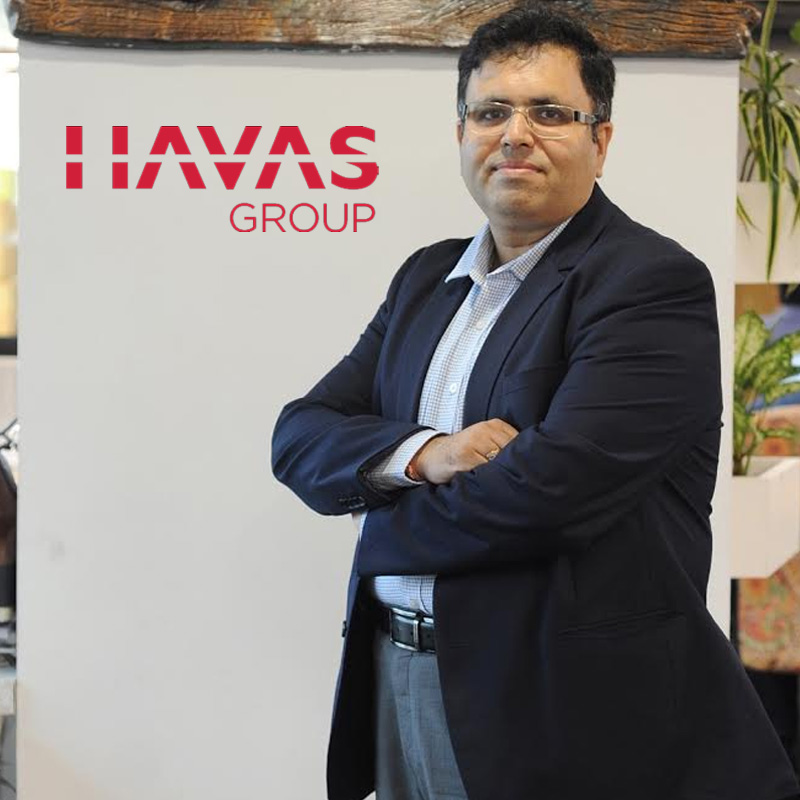
    Mumbai: Havas Group India has announced the elevation of Mohit Joshi to CEO of Havas Media Group with immediate effect. This appointment comes as part of the acceleration of the group's overall growth strategy.

    Prior to this Mohit was MD Havas Media Group. He will continue to report to Rana Barua, Group CEO, Havas Group India.

    Mohit’s 13+years at Havas Media Group has seen the agency grow exponentially. A seasoned media professional with 20+ years of experience in the industry, he has worked on a wide range of categories and brands. He has successfully straddled strategic planning, AOR management, buying functions and led multi-disciplinary teams across offices for the last many years. Some of the brands include Hyundai, Kia, Swiggy, Tata Motors, Voltas, Voltas Beko, TVS Tyres, Taj Hotels, amongst others.

    Mohit is a close observer of industry trends, he is a speaker and moderator at various leadership events including HT Leadership series, Media 360, ad:tech India, IAMAI, e-Tailing India, e4m Conclave, BW BusinessWorld; a judge at awards including Young Cannes, Spikes Asia; contributes to varied publications and is an advisory member of the MMA Forum India. Mohit is also in the mancom of AAAI and IAMAI and is actively involved in many other leading bodies.

    Havas Group Chairman and CEO – India and southeast Asia Vishnu Mohan said, “I have had the privilege of welcoming Mohit to Havas almost 14 years ago. A true dynamic leader with an in-depth understanding of consumers, brands, and the changing media landscape. 

    Mohit’s experience and long association with Havas makes him an ideal choice for the leadership role, as we look to significantly scale our presence in the media space.” 

    Barua said, “Over the last few years, Mohit has not just driven existing clients and business but has also played a lead role in driving the growth for the agency. He is a passionate and a visionary business leader, who brings invaluable expertise. His long-term vision coupled with his acumen will help us make a more meaningful difference to brands and consumers. I am happy that its Mohit who will leadHavas Media Group into the next phase of growth.”

    Joshi said, “In today’s dynamic and evolving business environment, Havas overall is undergoing a massive change to stay differentiated, relevant and meaningful. I’m excited to take on this huge responsibility and new responsibilities and combating the challenges during this crucial time and I look forward to the next chapter working closely with Rana, the senior management of Havas Group India, my wonderful colleagues and clients and the entire team across the region and all our global offices.”

  • TVS Motor Company clocks revenue growth of 6% in Q2

    TVS Motor Company clocks revenue growth of 6% in Q2

    CHENNAI: TVS Motor has reported revenue of Rs 4,617 crore in the second quarter of 2020-21 as against Rs 4,353 crore in the second quarter of 2019-20, registering a growth of 6 per cent.

    The two-wheeler maker’s PBT before exceptional items has grown by 14 per cent at Rs 267 crore during this quarter as against Rs 234 crore during the quarter ended September 2019. In the second quarter of last year, the company had reported a one-time exceptional gain of Rs 76 crore resulting in PBT after exceptional item of Rs 310 crore.

    During the quarter, it reported profit after tax (PAT) of Rs 196 crore. Despite Covid19 challenges, the company strengthened its supply chain during the second quarter of 2020-21. The production and sales improved consistently from July 2020 onwards. In the month of July 2020, the total two-wheeler sales was 2.44 lakh, it improved to 2.77 lakh in the month of August 2020 and in September 2020 sales further improved to 3.13 lakh. In the month of September 2020 sales grew by 4.2 per cent. Total two-wheeler sales of 8.34 lakh for the quarter is almost in line with last year's second quarter number of 8.42 lakh. Two-wheeler export sales grew by 7.8 per cent compared to Q2 of last year.

    Motorcycles registered sales of 3.66 lakh units in the quarter ended September 2020 as against sales of 3.42 lakh registered in the quarter ended September 2019. Scooter sales of the company for the quarter registered sales of 2.70 lakh as against sales of 3.33 lakh in the quarter ended September 2019.

    Read more news on TVS Motor Company

    Total three wheelers registered sales of 0.33 lakh units in the quarter ended September 2020 as against sales of 0.43 lakh in the quarter ended September 2019. Half-year results are not true reflection of the demand since Q1 of 2020-21 got severely impacted due to COVID lockdown.

    The total two-wheeler sales of the company for the half-year ended September 2020 is 10.90 lakh units as against 17.26 lakh units recorded in the half-year ended September 2019. The total three-wheeler sales for the half-year ended September 2020 is 0.45 lakh units as against 0.83 lakh units registered in the half-year ended September 2019.

    The total export of two and three wheelers for the half-year ended September 2020 is 2.96 lakh units as against 4.20 lakh units in the half-year ended September 2019. Total revenue in the half-year ended September 2020 is Rs 6,051 crore against Rs 8,823 crore in the half-year ended September 2019. PBT before exceptional items for the half-year ended September 2020 is Rs 78 crore as against Rs 443 crore in the half-year ended September 2019.

    During last year, the company had reported a one-time exceptional gain of Rs 76 crore resulting in PBT after exceptional item of Rs 519 crore. During the half-year ended September 2020 the company reported Profit After Tax of Rs 57 crore.

  • WPP Q3 Results: Global revenue drops by 9.8%, India down 16.3%

    WPP Q3 Results: Global revenue drops by 9.8%, India down 16.3%

    NEW DELHI: Global advertising conglomerate WPP reported a 9.8 per cent decline in revenue from last year to £2.97 billion for the third quarter ended September 30, 2020.

    The result brought the company's total revenue for the first nine months of 2020 to £8.6 billion, down by 11.5 per cent on the same period in 2019. On a like-for-like basis, Q3 revenue was down 5.5 per cent.

    The top five markets for the advertising major also did not fare well in Q3 LFL revenue less pass-through costs: US -5.5 per cent; UK -6.5 per cent; Germany -1.8 per cent; Greater China -16.7 per cent; and India -16.3 per cent.

    WPP said in a statement that it showed a resilient performance despite the challenging environment. Its results also stated there was an improvement in the second quarter with strong new business momentum and tight cost control.

    The agency bagged business of around $1.6 billion in Q3, taking the year-to-date wins to $5.6 billion. It has strong liquidity and balance sheet, supported by tight working capital management: year-to-date average net debt £2.5 billion, down £2.0 billion year-on-year. The agency is on track to be towards the upper end of £700-800 million cost reduction target.

    WPP CEO Mark Read said, “We have maintained our new business momentum as clients seek out our creativity and our skills in media, technology, data and ecommerce. This month, Uber joined a growing list of major assignment wins that includes Alibaba, Dell, HSBC, Intel, Unilever and Whirlpool, and we continue to lead the new business rankings. We have also renewed and expanded our relationship with Walgreens Boots Alliance to encompass its data- and technology-driven marketing strategy.”

    “Our people have done a superb job in serving our clients, largely working from home, but the events of 2020 have of course created new pressures for everyone. We have increased our investment in employee support services, with a particular focus on mental health and wellbeing, and this will be an ongoing priority for our leadership,” added Read.

    The conglomerate includes several global agencies such as Ogilvy, GroupM, JWT, Essence and others.

  • Maruti Suzuki clocks 1% net profit in Q2

    Maruti Suzuki clocks 1% net profit in Q2

    NEW DELHI: Maruti Suzuki India has reported a net profit of Rs 1,371, a slim growth of one per cent year-on-year for the quarter ended 30 September 2020.

    The Q2 bottom line of India's largest car manufacturer is still an improvement from a year-on-year loss of Rs 249.5 crore in the previous quarter, owing to Covid2019 related disruptions and lockdowns.

    Production across the company’s factories and supply chain was progressively ramped up, with total sales of 393,130 vehicles during the quarter, higher by 16.2 per cent compared to the same period the previous year. Sales in the domestic market stood at 370,619 units, higher by 18.6 per cent. Exports were at 22,511 units, lower by 12.7 per cent.

    During the quarter, Maruti Suzuki registered net sales of Rs 17,689.3 crore, higher by 9.7 per cent compared to the same period previous year. The operating profit for the quarter was Rs 1,167.7 crore, a growth of 71.7 per cent over the same period previous year on account of higher sales volume, lower sales promotion expenses, lower operating expenses and cost reduction efforts partially offset by an increase in commodity prices and adverse foreign exchange movement.

    The net profit in quarter two of the previous year FY19-20 was higher due to mark-to-market gains on the invested surplus and lower tax provision. As a result of this, while the operating profit increased by 71.7 per cent over the same period the previous year, the net profit increased by one per cent.

  • Pawan Soni quits National Geographic

    Pawan Soni quits National Geographic

    NEW DELHI: Pawan Soni, VP, head of programming & marketing has moved on from National Geographic. 

    At Nat Geo, Soni was responsible for overall P&L and building the network's content and marketing strategy along with overall business affairs. He spearheaded many campaigns involving various ministries dealing with central and state-level ministers while managing political sensitivities. He identified opportunities, led and built teams, improved business process flows and supervised daily operations.

    Prior to that, Soni was AVP at Fox International Channel, followed by a two year run as commercial head at Fox Networks Group Asia. He spent over 9 years at the group.

    Prior to joining Fox Channels, he worked with J Walter Thompson and Promodome Communications in his 15 year-long career.

  • Titan Company shows strong recovery rate in Q2

    Titan Company shows strong recovery rate in Q2

    NEW DELHI: Titan Company reported an 89 per cent recovery in sales in Q2 of FY 2020-21 led by sharp recovery in the jewellery division post the significant disruption caused by the Covid 19 pandemic in India in the first quarter of the fiscal.

    The total income for the quarter was Rs 4,389 crore, including sale of gold bullion to the extent of Rs 391 crore, resulting in a decline of less than 2 per cent compared to the income of Rs 4,466 crore for the same quarter in the previous year.

    The decline in total income excluding bullion sale was close to 11 per cent. The total income for the first half of the fiscal (Hl) was Rs 6,290 crore (including bullion sale of Rs 992 crore), a decline of 34 per cent against the income of Rs 9,461 crore in the corresponding period last year. The decline without considering the bullion sale was 44 per cent.

    With the lockdowns being lifted in most parts of the country, the company was able to operate most of its stores across all its divisions. Customer walk-ins have started improving even as social distancing norms remain. The recovery rate of revenue improved substantially in the quarter, with the rate being 55 per cent for the watches and wearables division, 98 per cent for the jewellery division and 61 per cent for the eyewear division.

    While the customer sentiment improved substantially in the quarter, there was greater willingness to spend on plain gold jewellery and gold coins rather than pure discretionary items, explaining the reason why the recovery rates in watches and eyewear and even studded jewellery within the jewellery division were lower.

    The jewellery division recorded an income of Rs 3,446 crore for the quarter (excluding gold bullion sales) as compared to Rs 3,528 crore last year, a decline of 2 per cent. The watches and wearables business recovered well in the quarter to record an income of Rs 400 crore against Rs 719 crore in the previous year, a decline of 44 per cent.

    The eyewear business also improved with revenues declining by 39 per cent in the quarter, recording an income of Rs 94 crore as against Rs 154 crore last year.

    Other segments of the company comprising Indian dress wear and accessories recorded an income of Rs 23 crore compared to Rs 44 crore in the previous year, a decline of 48 per cent. Consequent to the recovery, the company declared a profit before tax of Rs 238 crore, compared to Rs 429 crore in the previous year, a decline of 45 per cent for the quarter. The result is after a provision of Rs 34 crore for dues from a broker relating to commodity hedging. Despite the profit in the quarter, the company has recorded a loss of Rs 97 crore in Hl compared to a profit before tax of Rs 952 crore in the previous year.

    The jewellery division declared earnings before interest and tax (EBIT) of Rs 285 crore for the quarter compared to Rs 384 crore in the previous year and Rs 231 crore for Hl compared to Rs 826 crore in the previous year. The watch division reported a loss of Rs 4 crore for the quarter (EBIT of Rs 113 crore in the previous year) and loss of Rs 168 crore for Hl (EBIT of Rs 241 crore in the previous year). The Eyewear division turned around remarkably in the quarter with EBIT of Rs 9 crore (loss of Rs 31 crore in the previous year) and a loss of Rs 22 crore for Hl (loss of Rs 10 crore in the previous year).

    Titan Company MD C K Venkataraman said, "The recovery that the company has witnessed in the quarter has been very satisfying and the positive consumer sentiment witnessed gives rise to hope that the festive period could be good for all the divisions. The company continues to gain market share in its key businesses. The focus on cost and capital employed has helped manage our bottom line and cash flows very well."  

    The principal subsidiaries of the company also performed well. Titan Engineering and Automation Ltd (TEAL) recorded revenues of Rs 167 crore (decline of 16 per cent) and profit before tax of Rs 25 crore (decline of 19 per cent) for Hl FY 2020-21.

    CaratLane clocked a growth of 10 per cent and a positive EBIT in the quarter and ended with a revenue of Rs 194 crore (decline of 28 per cent) during Hl and a net loss of Rs 24 crore.