Tag: marketing

  • Over three decades, marketing has seen a paradigm shift

    Over three decades, marketing has seen a paradigm shift

    MUMBAI: On a long trip, the mode of travel may encompass an assortment including air, train, road, boat. Even within these legs, the experience could differ significantly, for example driving on a mountain road, versus regular old ride through the city.

    Similarly, a marketer’s journey over the last three decades has seen multiple metamorphoses, entailing a continuous need for change and adaptation.

    Those were the days, when planning media spends was a simple matter of allocating monies between Ramayana, Hindi feature films, and Chitrahaar on DD, with the option of throwing in Krishi Darshan for the adventurous rural marketer. The satellite TV boom, bringing in hundreds of channels and programmes, added complexity to media planning, and forced marketers to slice and dice the communication target group in terms of multiple demographic parameters. “Focused communication” really took shape in the nineties.

    And then the internet explosion, along with the advent of smartphones, dramatically changed the rules of the game. Digital marketing and social media are the buzzwords now. Engaging the viewer is paramount. Communication can now be targeted at a specific age group, even at a micro level of a city. Youth today interact with the world through their devices. TV viewing and print media are almost skipping this generation. Even a few years ago, advertising on live sports telecasts was a sure-fire way of reaching the youth. Today, even that is transitioning to the Hotstar and Cricbuzz of the world.

    This is having a significant impact on consumer buying behaviour, and the purchase decision-making process. The erstwhile classical marketing’s five step process – spanning problem identification, information search, evaluation of alternatives, purchase decision and post-purchase behaviour – is passé. The three Moments of Truth (MOT) theory has been flipped on its head.

    As per traditional theory, the first MOT is when the consumer interacts with the brand for the first time, say, on a supermarket shelf, and decides to pick up a brand, over others. The second MOT is when she experiences the brand, which may be once (for example, in a restaurant), or maybe multiple times (like a shampoo). A few proceed to the third MOT, and become advocates (positive) or critics (negative), based on their individual experiences. This journey has now been collapsed to what is termed the Zero Moment of Truth (ZMOT). Thanks to the explosion in internet usage, every new brand or product is now researched, where consumers are vicariously exposed to the entire journey at one shot, through others’ experiences. Managing social media is critical now. For example, while evaluating options to buy a car, if one comes across half a dozen negative comments about a specific brand, it is very likely that this brand will drop out of one’s consideration set.

    A few decades ago, there was allegedly a thumb rule across the world – that a happy consumer will tell five others, while a dissatisfied consumer will crib to 21 people. Today these numbers have magnified manifold, and are probably in thousands, if not millions, thanks to the power of viral posts in social media.

    30 years ago, fashion and lifestyle trends in the western world would take their own sweet time, maybe two to three years, to catch on in India. Today all brands need to keep pace with global innovations, since consumers are constantly exposed to these. Discerning powers of consumers, thanks to the plethora of information available, have taken quantum leaps. Earlier, ‘value-for-money’ was the key for mass marketing. Today’s informed consumer is willing to pay for value-added features, leading to the ‘money-for-value’ concept.

    Changes, and the necessity to adapt to these, will be keeping marketers on their toes. From print/radio/cinema, to TV (single channel to hundreds), to the internet with its multiple social media platforms, to live streaming and OTT – the milestones and the route map keeps evolving. It’s perhaps foolhardy to even attempt to predict what’s coming next.

    (The author is Navneet Youva stationery division chief strategy officer. The opinions expressed here are his own and Indiantelevision.com may not subscribe to them.)


  • Guest Column: The greatest brands are the ones that take ‘Onus’ of customer experience

    Guest Column: The greatest brands are the ones that take ‘Onus’ of customer experience

    NEW DELHI: Customer experience is about brands demonstrating their commitment to prioritizing and anticipating the problems of the customers and taking the onus to provide a solution to the customers. One of the frequent problems that were most customers face while purchasing online is the whole complexity of the 'return' process.

    Agile brands are managing this, by using technology to simplify this process and some cases even ensuring that the need to return itself reduces. Service technology is changing the face of customer support and service and empowering the customers to make their lives convenient at all hours of the day.

    The three, brands that are emerging as shining stars by using technology in effective ways to deliver effortless convenience.

    a) Zomato 

    When buying from an aggregator, the problem often becomes about who takes the onus in case of a product quality issue. In a recent experience, there was a wrong order delivered by a restaurant via Zomato, an Indian restaurant aggregator. The fault according to me lay with the restaurant, as it was a wrong variation of the dish that had been served up. It did not a case of an incorrect order picked up by the delivery boy. The restaurant in itself was unreachable / not contactable. None of the numbers worked. However, a simple chat exchange solved my problem; Zomato took onus and refunded the amount without the need for an actual conversation with a customer service executive or even any follow-up on emails/chats, etc. A simple chat message that can resolve the consumer’s concern, can create a lasting impact in the customer’s mind.

    b) UNIQLO 

    Given the pandemic, physically shopping for clothes is becoming an 'preferred' option for many, and rightly so. Yes, online shopping for apparel is possible. And it has its perks like saving time and effort, allowing us to compare brands, filter and shortlist our options at the convenience of a click, the aftermath of dealing with returns because of 'size' related issues just makes the shopping process longer. It is then that I do miss the occasional suggestion of the salesperson for the right size. Uniqlo’s size measurement technology tool solves this problem so efficiently for people like me. This simplistic technology on their website for online shopping requires you to enter your physical measurements, and it prompts a recommended size for you for that particular apparel, thus making the customer experience significantly much better. Gone are my days of taking the onus of opening size charts and trying to assess which size would be comparable basis a standard size chart and hence a better fit for me.

    c) Amazon

    Amazon has always been at the forefront of introducing innovations aimed at making the experience easier for its customers. It provides customers with a whole host of options to ensure minimal effort and convenience for the user. Minimal effort is a key and a determinant of your experience regardless of whether you are buying or returning a product. Effortless experience is what leads to customer loyalty. Many retailers are reaching new heights in ensuring a seamless purchase experience however only a few can surpass expectations when it comes to the 'return, ' experience. Amazon is a stand out brand in this aspect. Both the process and policies are aimed to please the customer and require minimal effort. Customer support is technology-driven yet easy to access, pick up is prompt and convenient to organize again via technology, and policies are fair, which are essential elements to ensure a seamless 'return experience.’

    (The article is written by Hansa Research senior VP and national head – CX Practice Piyali Chatterjee. The views are personal and Indiantelevision.com may not subscribe to them.)

  • Inox Leisure’s QIP raises Rs 250 crore

    Inox Leisure’s QIP raises Rs 250 crore

    MUMBAI: Multiplex chain Inox Leisure has raised Rs 250 crore through a qualified institutional placement (QIP) of shares. Under the QIP issue, over-subscribed by 3.5 times, Inox allotted 9,803,921 shares of face value of Rs 10 each at Rs 255 per share to highly reputed and marquee global and Indian institutional investors. 

    Some of the global investors included Abu Dhabi Investment Authority and Eastspring Investments, while the Indian investors included some of the largest domestic mutual fund houses like ICICI Prudential, Birla Mutual Fund, Nippon India Mutual Fund, DSP Mutual Fund and Sundaram Mutual Fund. The issue allocation is approximately 69 per cent and 31 per cent to Indian and foreign investors respectively. 

    Inox Group director Siddharth Jain said, “The stupendous response to our QIP endorses the faith our investors have in the future of our business model and the strength of the management team. We are delighted with the participation and support of high quality investors, which will fuel the journey of Inox 2.0 in the future. I extend my deepest gratitude towards our investors for the trust they have bestowed upon us.”

    The funds raised through the QIP would be utilised by Inox to meet capital expenditure requirements for ongoing and future projects, to sustain growth in the business, for expansion and to improve the financial leveraging strength of the company. 

    The funds raised will also be invested towards working capital requirements, towards debt repayments including repayment of any existing or future debt incurred for any purpose including for paying off any liability, for investments in subsidiary companies as well as for general corporate purposes, including but not limited to pursuing new business opportunities, acquisitions, alliances etc. Overall, Inox aims to augment its business growth with the freshly accrued funds.

  • Chrome DM week 43: Hindi news genre emerges as top gainer

    Chrome DM week 43: Hindi news genre emerges as top gainer

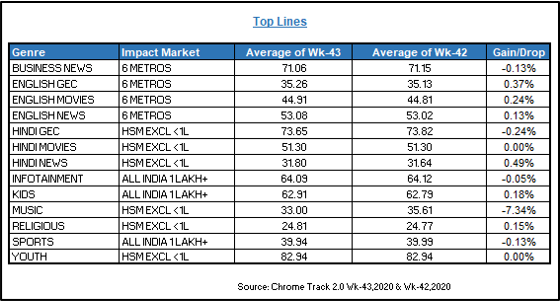
    NEW DELHI: Hindi news genre is the top gainer for week 43, 2020 of Chrome Data Analytics and Media data, with a marginal growth. The genre has grown by 0.49 per cent.

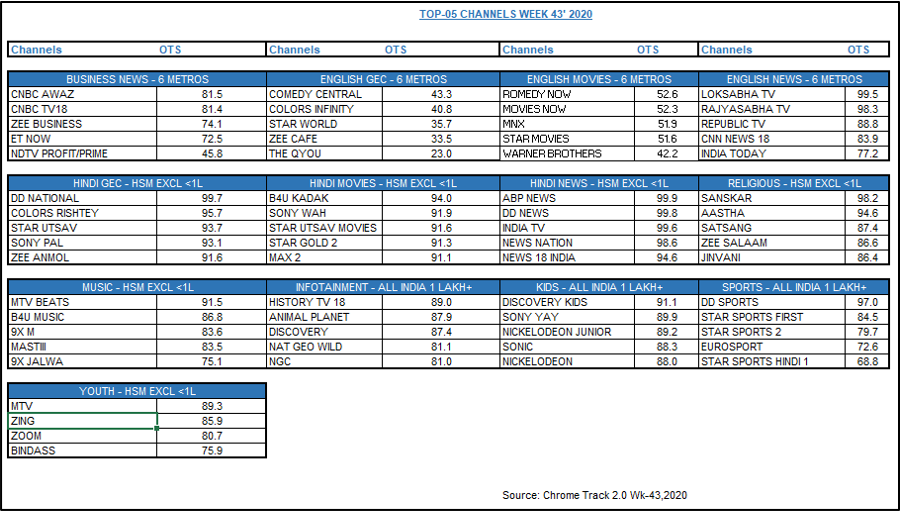
    In this genre, ABP News has gained the highest OTS with 99.9 in the HSM excl < 1 market. OTS is the actual census-based percentage connectivity of a channel spread across 81 million homes, as reported by Chrome DM, across analogue cable, digital cable, and DTH.

    This week, English GEC genre has emerged as a close second on top gainers list with a growth of 0.37 per cent in the six metros market. In this genre, Comedy Central has gained the highest OTS with 43.3 per cent.

    Read more coverage on ChromeDM

    Among other genres, Religious, English movies, English news, kids, have grown negligibly.

  • Republic Bharat’s Shamsher Singh joins ZEE Hindustan as Managing Editor

    Republic Bharat’s Shamsher Singh joins ZEE Hindustan as Managing Editor

    New Delhi: Shamsher Singh has joined ZEE Media Corporation as the Managing Editor of ZEE Hindustan and its digital properties.

    He was last serving as editor at Republic Bharat.

    "ZEE Hindustan is a channel that brings light to the India of the 21st Century. A channel that does not just shows the land of mystics but also shows the land of Chandrayaan, the biggest IT sourcing hub worldwide, the biggest movies and entertainment industry in the world and the land of engineering marvels. Hence the tagline – 'Sare Jahan Se Acha' perfectly fits the channel. In these changing times, the vision of ZEE Hindustan becomes even more relevant and we believe that Mr. Shamsher Singh, a stalwart of this industry will bring his proven and prudent experience in the media industry to successfully take it beyond the vision and expectations of the channel” said ZEE Media CEO Purushottam Vaishnava.

    ZEE Media executive cluster head of sales Manoj Jagyasi said, “ZEE Hindustan has a great potential as a national news channel which can be clearly seen in the past few months through the response to our content and through multiple splendid conclaves & discussions conducted through the channel which were on par and even better than some of the long-time leaders in the national news genre. We are glad to have Mr. Shamsher Singh amongst us and be a part of ZEE Hindustan family and we trust that he would take ZEE Hindustan and its digital properties to new heights with his hands-on knowledge in the field of journalism especially in these changing dynamics of the news industry."

    Singh has a rich experience of 22 years in the media and broadcast industry and has worked with networks like TV Today, India TV & Republic Bharat in his past endeavors.

    He has also been the winner of one of the nation’s most prestigious awards – the Ram Nath Goenka Awards 2008-09 for his exemplary work in journalism.

  • How Covid2019 impacted ad rates & consumption of news genre

    How Covid2019 impacted ad rates & consumption of news genre

    NEW DELHI: Covid2019 impacted every category of the television business. In the news genre, ad volumes, as well as ad rates, were hit initially, but have since regained momentum. There was a massive surge in viewership, which is now beginning to stabilise. And with more and more people getting onto the digital platform, the news consumption pattern has witnessed a slight change.

    In a session titled – ‘Advertising on News’ at Indiantelevision.com’s News Television Summit, co-powered by TVU Networks, eminent advertisers and agency heads discussed how stakeholders in this business are analysing the rapid changes and adjusting their strategies to it. The panellists included FBB, Future Group CMO Prachi Mohapatra, Policy Bazaar head of brand marketing Samir Sethi, Wavemaker CEO – south Asia Ajay Gupte, Essence SVP & MD – India Anand Chakravarthy, ITV group CEO Varun Kohli. It was moderated by E&Y partner M&E Ashish Pherwani.

    Pherwani began by asking Kohli how he sees the ad rates at news channels in the current scenario. Kohli mentioned that Covid2019 had hit everyone adversely big time. “The FMCG brands that were operating on the other genre started coming to the news genre because the latter was growing. All other genres were lacking fresh content, except movies where the channels just played their libraries. Overall, the news genre was impacted for the first two months of the financial year but then it regained,” added Kohli.

    He elaborated that in the post-Covid scenario, especially during the festive season and election times, the frequency news channels will be able to get their old rates back. “So maybe the leaders might not have gained it yet but the frequency channels have started getting their rates back in some order because they are making a lot of sense to the agencies and advertisers in terms of CPRP mix.”

    Adding to this Gupte from Wavemaker shared that Covid was a big blessing for the news genre. “GEC was not launching fresh content and newspapers also suffered during that time, which led to news on television doing really well. During that time, there was a high viewership throughout the day and the viewership among women also went up. Interestingly, we are also seeing a lot of appointment viewing coming into play, which was not there earlier. Previously, the news channels sold on the basis of TRPs or day parts, but now it’s also selling some shows that command a premium,” explained Gupte.

    He went on to add that during this time a lot of extended family viewed news channels, so it will be interesting for the latter to think about creating content that works for other family members too.

    Pherwani then touched upon changes in consumption of news on the digital front, especially more after the Covid period, to which Chakravarthy from Essence responded that people are fast moving towards digital consumption.

    “I think with English news genre, building a product which is completely differentiated and is able to add value over and above what a digital platform to my mind will determine how long this genre will exist. If we do not change the nature of how English news channels position themselves and their content and what they offer, I fear that they may be over indexed today and will start witnessing a decline in ad revenue before it starts moving to digital very quickly – especially in a country like India, which is rapidly becoming digital. On the other hand, in the language news sector, the content and consumption of news is picking up slowly. It is happening but there is a possibility of a longer run,” he outlined.

    Seeking a marketers point of view, Pherwani called upon Mohapatra, who mentioned that the digital consumption has rapidly increased especially from the start of the lockdown. However, her mantra regarding spends on digital news is that she seeks a brand-safe environment to operate and a clear RoI on it.

    On the other hand, Sethi from PolicyBazaar stated that his brand continues to stay bullish on TV as it is extremely RoI focussed. Moreover, television offers the consumer freedom to surf the internet. He mentioned that whenever a PolicyBazaar spot runs on television, a simultaneous surge within 10 seconds is observed by the brand while it is mapping the data. People can watch the spot and engage with the brand on the website but when a similar set of audience is watching news on OTT, they hold back from exploring the internet.

  • ASCI investigates surrogate ads in liquor category appearing during IPL

    ASCI investigates surrogate ads in liquor category appearing during IPL

    MUMBAI: The Advertising Standards Council of India (Asci) has, for the past few weeks, intensely monitoring possible surrogate advertising during the ongoing Indian Premier League (IPL). Asci has put in place daily updates on the monitoring of alcohol brand extension advertising, instead of its regular weekly feeds, for immediate processing of complaints. Complaints against eight such advertisements, which are in potential violation of the Asci code,  have been registered over the past one month.  These include whisky, beer and white liquor brands. In all these cases, Asci has written to the advertisers within 24-48 hours of airing of the commercials, seeking a response.

    The advertisements picked up range from those selling music CDs to packaged water, non-alcoholic beverages, and merchandising. The key to Asci's investigation is determining what are surrogates for liquor and what constitutes genuine brand extensions.

    Asci’s codes and guidelines are clear about what qualifies as a genuine brand extension:

    ·   For a brand extension of a product (liquor, tobacco, etc) to be considered genuine, it must be registered with an appropriate government authority such as the Food and Drug Administration and the Food Safety and Standards Authority of India etc.

    ·   In-store availability must be at least 10% of that of the leading brand in the category that the product competes, or sales turnover must exceed Rs 5 crore per annum or Rs 1 crore per annum in each state it is distributed in

    ·   It must have a valid certificate from an independent organisation for such turnover and distribution data

    Advertising for such brand extensions cannot feature what is prohibited by law or banned products. Neither can the advertising allude to or hint at products that cannot be advertised. 

    As per the law, advertisements for liquor brand extensions can run on TV if they have a CBFC certificate. The IPL broadcaster for TV has confirmed to Asci that all advertisements are checked for CBFC clearance so that they are not in violation of the Cable TV and Network Act. Keeping that in mind, Asci has processed complaints on advertisements appearing in OTT, digital and print media.

    Asci secretary general Manisha Kapoor said: “We are being extra vigilant because the IPL is one of the biggest marketing platforms in India. We are looking at advertising across media – print, OTT, digital. When we spot potential violations, we ask advertisers to substantiate their claims of their product or service being a genuine brand extension within seven days. This includes sales, distribution and market share data that must be certified by an independent body. Only if they fulfil the criteria for a genuine extension, is the advertisement allowed to continue.  If the advertiser fails to respond within the allotted time, the complaint is taken up ex-parte by Asci’s independent consumer complaints council.”

    Asci is the self-regulatory body of the advertising industry that has as its members, agencies, advertisers, media houses and other stakeholders. Its mission is to increase consumer trust in advertising by ensuring honesty and adherence to ethics in all marketing claims. 

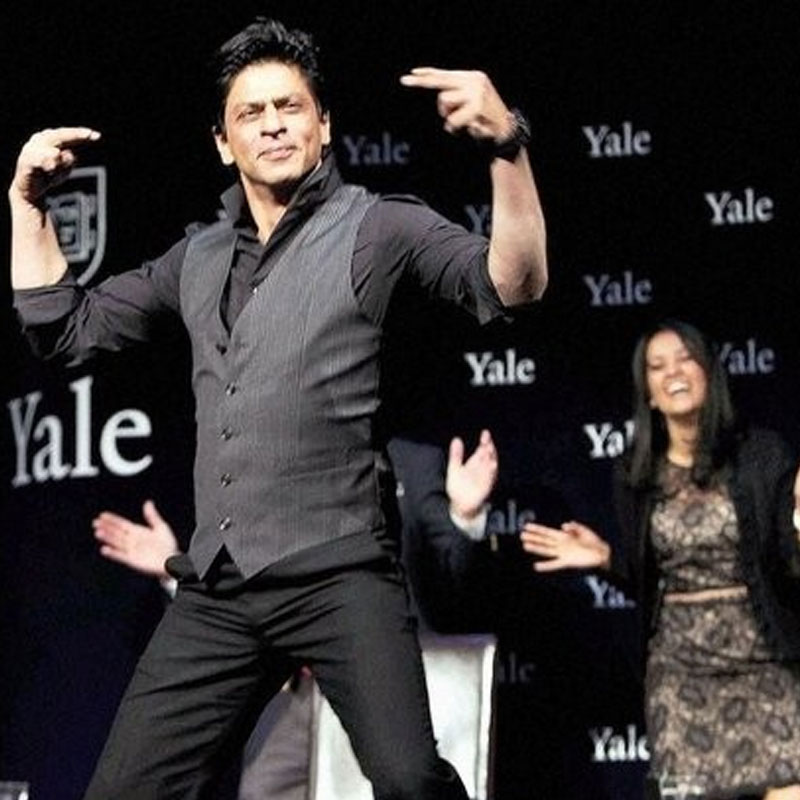
  • Shah Rukh Khan: King of Bollywood & brands

    Shah Rukh Khan: King of Bollywood & brands

    MUMBAI: That boyish charm, that dimpled smile, that romantic effervescence – Shah Rukh Khan has effortlessly won viewers' hearts, be it on the silver screen with his movie personas, or on the small screen with his brand endorsements.

    to the golden days of advertising.

    Here’s a look at the King of Bollywood’s journey as one of the most dynamic and bankable faces in ad campaigns:

    Videocon

    The young Indian side under the leadership of MS Dhoni won the ICC World T20 in 2007, and Videocon came up with this droll commercial featuring the Indian captain and SRK. The duo played long-lost brothers in childhood and have their real-life roles reversed. While Dhoni plays an actor, SRK is a cricketer!

    Byju’s

    Ed-tech company Byju’s has partnered with Khan to unveil their new offering – Byju’s Classes to parents across the country. In the campaign, Khan is seen essaying the role of a teacher to a group of parents and discusses the common worries they have regarding their children’s after-school tutoring needs.

    D’Decor

    Home furnishings brand D’Decor memorable campaign ‘Beautiful Homes tell Beautiful Stories’ was a series of short films featuring Gauri and Shah Rukh Khan. The brand marked 10 years of association with the couple with this campaign. The film transported viewers straight into Gauri and Shah Rukh’s living room where they’re celebrating their 22nd wedding anniversary.

    Hyundai

    Shah Rukh Khan has played an instrumental role in building brand Hyundai in a competitive market like India. He had a contract with the auto company from 21 April 2017 to 20 April 2019. This was his longest association with a brand. Here’s a look at King Khan’s ad for the auto company:

    LUX

    LUX has featured Shah Rukh Khan in their creatives for a long time. Among all the ads he has done with LUX, the most love he got from the audience was when actresses were seen assisting him into a bathtub.

    DISH TV

    DISH TV signed Shah Rukh Khan in 2007 for the first time. Since then, he is the face of the brand. During their decade-long association, he has played a key role in delivering DISH TV’s communication strategy.

    Denver

    Denver is another brand that has used the image of Shah Rukh Khan to promote its range of fragrances for men. He has been seen endorsing Denver deodorant in various marketing and promotional campaigns.

    Pepsi

    The Oye-Bubbly ad featuring Shah Rukh Khan, Sachin and Amitabh Bachchan created a storm in 2014. Ye Dil Maange More campaign is another example where Khan has successfully conveyed the beverage brand’s messaging in his signature style.

  • Bajaj Auto clocks 11% sales growth in October 2020

    Bajaj Auto clocks 11% sales growth in October 2020

    NEW DELHI: Bajaj Auto registered 11 per cent year-on-year growth in the overall sales of its vehicles (across portfolio) in October 2020. It sold 512,038 vehicles in October 2020 against 463,208 vehicles in the same month last year.

    Two-wheelers drove numbers, recording unit sales of 4,70,290 in October 2020 for an overall growth of 18 per cent. 2,68,631 vehicles were sold in the domestic market, clocking 11 per cent growth, while another 2,01,659 vehicles were exported, registering 29 per cent growth. Notably, Pulsar alone sold 1,70,000 units – a record high for the brand.

    On the commercial vehicle front, Bajaj Auto sold only 12,529 vehicles domestically, witnessing a negative growth of 65 per cent and exported 29,219 vehicles registering a growth of four per cent. The company sold 41,478 commercial vehicles in October 2020 and recorded a slowdown of 35 per cent.

    The overall domestic sales saw a marginal growth of one per cent and exports saw a growth of 25 per cent.

  • Nivea, Taapsee Pannu say ‘Don’t Face Wash, Milk Wash!’

    Nivea, Taapsee Pannu say ‘Don’t Face Wash, Milk Wash!’

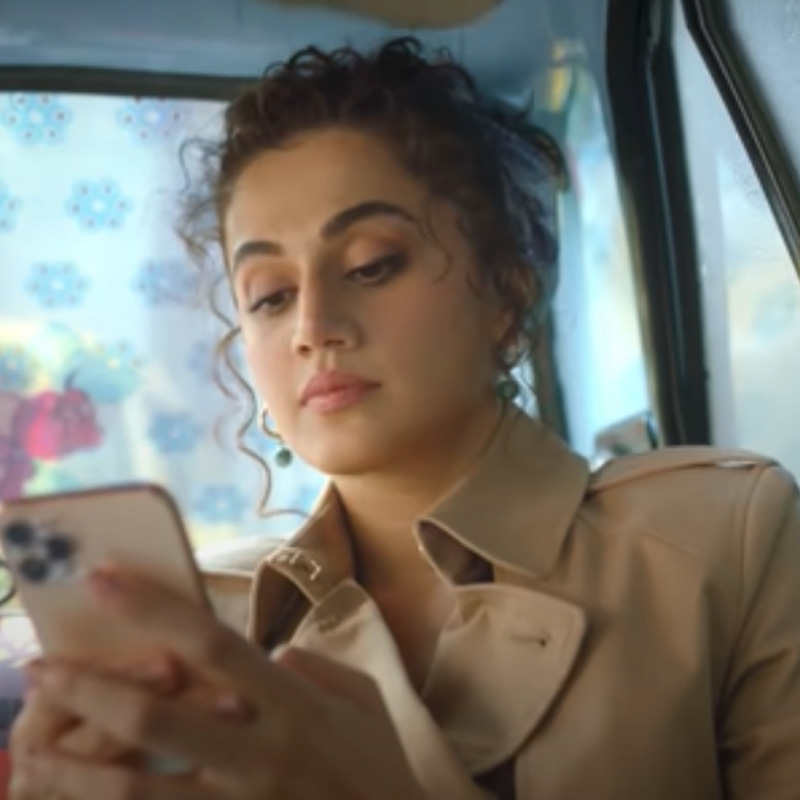
    NEW DELHI: Nivea has launched a video campaign Taapsee Pannu to promote the revamped Nivea Milk Delights Face Wash, which encourages consumers to not just “face wash” but “milk wash” instead for a natural, healthy glow.  

    The digital film showcases the importance of milk as an ingredient that is more beneficial than a regular face wash in a fun tête-à-tête between two friends. Taapsee and her friend are hanging out together, when the latter asks the actor the secret behind her healthy glowing skin.  

    The 360-degree campaign conceptualised by FCB will be launched on digital platforms and will be further amplified through various other mediums.

    FCB Interface ECD – Mumbai Rakesh Menon said, “Most face washes cleanse well but take moisture away from the skin, leaving it feeling dry. But Nivea Milk Delights adds nourishment and moisture to the skin, thanks to the milk. Through this campaign, we simply wanted to urge people to upgrade to this ‘Milkwash’ that is so much better for their face.”

    Nivea marketing director Sachin Killawala said, “Friends are one of the biggest influencers in our lives while choosing personal care products and this campaign brings that alive in a playful manner. Through this communication, both visually and verbally, we wanted to showcase how Milk Delights facewash brings together the goodness of milk & home remedies for a natural, healthy glow.”