Tag: marketing

  • Social Beat’s Avinash Shenoy joins Tilt Brand Solutions

    Social Beat’s Avinash Shenoy joins Tilt Brand Solutions

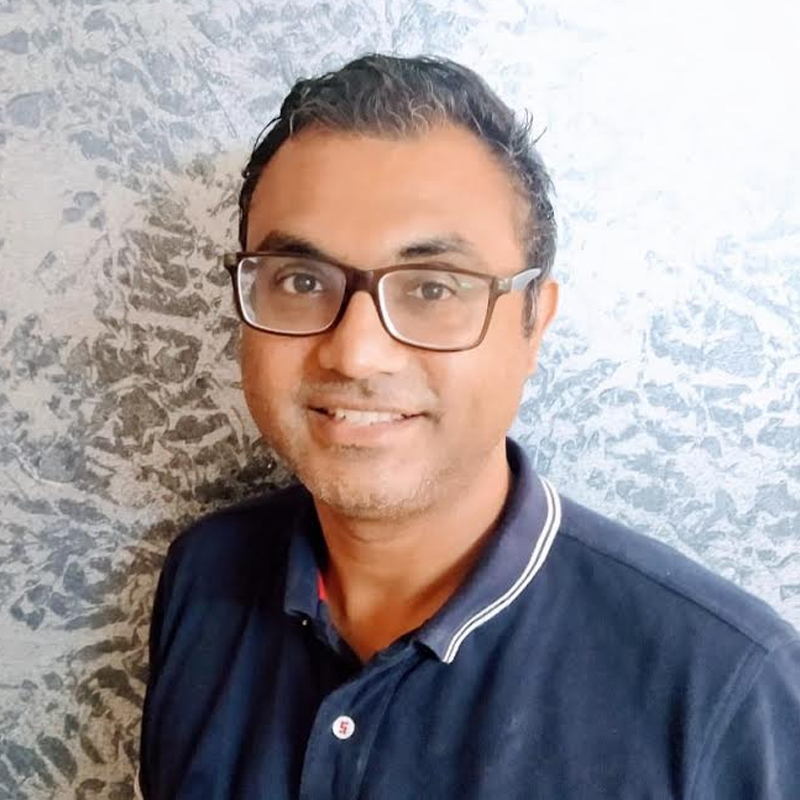
    NEW DELHI: Avinash Shenoy has joined Tilt Brand Solutions as senior business director. He makes the move from Social Beat, where he was last serving as lead – business development and growth.

    At Social Beat, Shenoy was leading growth, focusing on brand strategy for business building communication, digital marketing, creative strategy, content marketing, and process control.

    Shenoy has over two decades of experience in advertising, brand management and marketing communications. In the past, he has worked with Pepsico and Reliance Capital and worked on execution of strategies for various marquee brands. On the agency side, he has managed key personal care brands for Unilever ads at Lowe and was part of a popular online jewellery brand where he worked towards delivering their growth hacking and digital marketing initiatives. Shenoy has also been associated with Famous Innovations, Publicis Groupe and Grey Worldwide.

    Tilt Brand Solutions was launched by former MullenLowe Lintas group CEO Joseph George in 2018. 


  • #Throwback2020: Big CMO appointments

    #Throwback2020: Big CMO appointments

    NEW DELHI: No doubt Covid2019 had an impact on nearly each and every category, but it could not deter the long-term objectives of brands. They ensured that work did not stop and it was business as usual, albeit under vastly different circumstances. As the lockdown lifted, several businesses started regaining pre-Covid sales and revenues, while others are still working their way to it with optimism.

    Even though there were layoffs at all levels, there were also those who picked up new roles during this challenging time. In the marketing domain, there were several big movements across brands throughout the year that surprised the industry and became the talk of the town. Some of these industry leaders joined emerging start-ups, vouching to scale them with their skills and market understanding; while others took charge of large and established brands, ensuring that their user base remains intact, and the communication with the consumer evolves further.

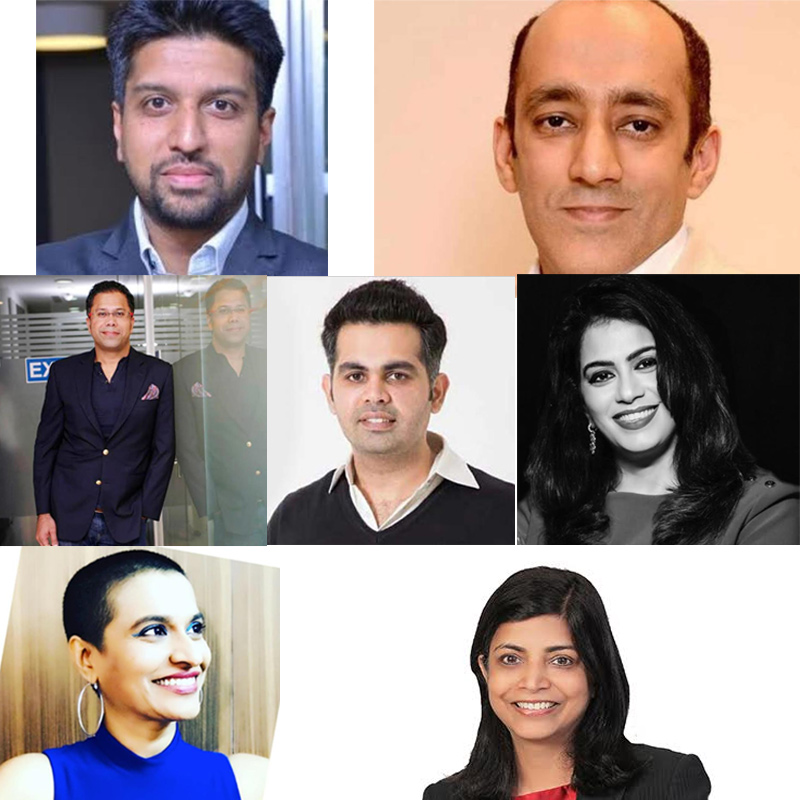
    Some of the noteworthy appointments include:-

    Kapil Grover, Burger King

    The quick-service restaurant space has witnessed rapid growth in India, though it, too, hit a stumbling block courtesy the pandemic. Home delivery and take-away options sustained the category, but with the fifth phase of Unlock underway, people have started dining out again. In order to further grow and consolidate its business, Burger King India appointed Kapil Grover as chief digital officer. He returned to Burger King after nearly two years at Jubilant FoodWorks’ Domino’s Pizza as CMO.

    Grover is a successful marketer with close to two decades in the industry. He has had stints with KFC India, Radico Khaitan, and Luxor Writing Instruments in the past.

    Aparna Mahesh, Great Learning

    The star of edu-tech continues rising in India, and competing brands are leaving no stone unturned to ensure their campaign outshines the rest. Amid this high-stakes fight, Great Learning appointed Aparna Mahesh to lead its global marketing strategy, development and delivery of brand communication, strategic marketing partnerships and user engagement. She joined from BankBazaar and has two decades of experience under her belt and a track record of building and nurturing successful brands nationally and internationally.

    Under Mahesh’s leadership, GreatLearning hit it out of the park this IPL with its Power Ahead campaign featuring Indian cricket’s golden boy Virat Kohli.

    Deepika Warrier, Diageo

    Liquor is one of the most difficult categories to market as the government does not allow any kind of advertising in it. The marketers in this category experiment with different formats to create a recall for their brand. This year, during the pandemic, Diageo brought ace marketer Deepika Warrier on board as CMO to lead its portfolio. Warrier has spent over two decades at Pepsico across different roles in India and markets overseas. 

    Gayatri Yadav, Sequoia Capital

    Star India’s former top executive and one of the most trusted hands at the broadcast network, Gayatri Yadav joined Sequoia Capital as chief marketing officer – India. Yadav spearheaded numerous initiatives at Star India and has over 20 years of experience in marketing across consumer products and media industries. She was last serving as president of consumer strategy and innovation at the broadcaster. Yadav has worked with brands such as Procter & Gamble and General Mills and was responsible for launching the Pillsbury brand. She is known in the industry for her leadership skills, brand management, business development, competitive analysis, business strategy, and keen customer insights.

    Gaurav Verma, PharmEasy

    Online medicine delivery is an extremely vibrant category that has only skyrocketed with the onset of the pandemic. It consists of several players competing for the mind space of consumers. PharmEasy, which accounts for 25 per cent of revenue in the e-pharmacy market, recently hired Gaurav Verma as CMO. He joined the organisation from Zomato, where he was working in the same capacity. Verma has over 15 years of experience and has worked at PepsiCo, TATA Tea, Lenovo and ITC.

    Suman Varma, Hamdard Wakf Laboratories

    Earlier this year, Hamdard Wakf Laboratories brought Suman Varma onboard to lead the marketing strategy for its extensive portfolio, which includes classical medicine, patented medicines, OTC products, and wellness centres. Varma is a veteran agency professional and marketer with over 30 years of experience. She has worked at J. Walter Thompson and Rediffusion Brand Solutions, and served on the boards of several brands as an independent director.

    Pradeep Hejmadi, Hathway

    Hathway Cable and Datacom appointed Pradeep Hejmadi as its chief marketing officer in April 2020. He joined the MSO from Aidem Ventures where he was serving as CEO. Hejmadi has over two decades of experience and has previously been with ZeeL, TAM, MTV India, Turner Research, Discovery Networks, BCCL, and J Walter Thompson.

    Avneesh Khosla, Vodafone

    Over the years, the telecom sector in India has expanded services across multiple portfolios – broadband, enterprise solutions, VAS, telecom services, cloud, security, cybersecurity, shared solutions, and others. Vodafone, one of the leading telcos in the country, elevated Avneesh Khosla as the brand’s chief marketing officer in April this year.

    Khosla is an old hand at Vodafone and was last serving as director, marketing. He has over 20 years of experience and has seen the transformation of Hutch into Vodafone. During his tenure, the company underwent yet another change in brand identity, as is now known as Vi.

    Meghna Apparao, Licious

    Industry stalwart Meghna Apparao joined Licious to grow the meat, meat-products and seafood brand as a chief business officer. From strategising for growth, to launching new categories, building business verticals, leading pioneering assignments across India and global markets to transforming consumer behaviour in the online space; Apparao has done it all. An able leader, she has led and mentored high-performing, multi-disciplinary teams throughout.

    Apparao came from Godrej Consumer Products where she was serving as a CMO. She has been associated with some of the biggest names in India Inc, viz, Hindustan Unilever, Amazon and Godrej.

    Kedar Apte, RBML

    A veteran marketer, Kedar Apte joined RBML, a 2019 joint venture between Reliance and BP for fuels and mobility in India, as CMO to lead categories such as fuel, convenience retail, and electric vehicles charging. He is a part of brand Jio-BP.

    Apte joined RBML from Castrol, where he was serving as VP marketing. He joined the firm in 2011 and spent a total of nine years at the lubricants giant. Prior to that he worked with HUL for nearly nine years.

    Manav Sethi, Octro

    With leadership experience across ecommerce, omnichannel marketplaces, local search, maps and classifieds, Manav Sethi joined Octro as global chief marketing officer.

    Prior to that, he was with Eros International, where he was working as group chief marketing officer. At Eros, he supervised growth of OTT platform and brand Eros Now. He was also the founding CMO for ALTBalaji. During his two-decade-long career, Sethi has worked with Zenith Infotech, PSI Data Systems, Webdunia.com, Reliance Big Entertainment, Bigmaps and AskMeBazaar.

    Karan Shroff, Unacademy

    The edu-tech brand which brought Karan Shroff from Xiaomi to lead the marketing function elevated him as the chief marketing officer for the brand. He is responsible for product growth, marketing, strategy, user retention, acquisition and several other portfolios. An ace marketer with sharp analytical skills, Shroff is an entrepreneur turned marketer. He founded his events company and then moved up the ladder step by step to reach this position. He spearheaded Unacademy’s first TV campaign ‘Let’s Crack It’, which became a viral success.

    Viral Oza, Mahindra Life Sciences

    A veteran marketer with experience across media, handset, FMCGs, realty, and technology sector, Viral Oza joined Mahindra Life Sciences as CMO. He has nearly three decades of experience and has worked with a variety of brands such as HUL, Nokia, BCCL, Microsoft, Lodha Group and others.

    Oza is leading the brands product portfolio, building deep market understanding and strengthening customer insight capabilities. He steers this transformation across the company’s residential and industrial businesses.

    Anupam Bokey, Allied Blenders

    India’s alcohol market includes domestic as well as foreign brands. With more disposable income in peoples’ hands, the category has been taking off of late and brands are launching newer variants, and marketing across multiple channels to connect with audiences. Allied Blenders and Distillers, which hosts brands such as Jolly Roger, Sterling Reserve, Officer’s Choice and others, roped in Anupam Bokey as CMO to lead marketing across its product portfolio. He joined from Too Yumm! He has over 25 years of experience and has worked with brands such as HUL, Britannia, and RPSG, to name a few.

    Meenu Bagla, Cyient

    Cyient, a digital technology and engineering solutions provider, appointed Meenu Bagla as VP and CMO. She is responsible for strengthening the brand reach, relevance, and advocacy to deliver accelerated business growth in new and existing markets.

    Prior to her Cyient stint, she was with Tech Mahindra as global head of. She has held marketing leadership positions at major multinational companies, including Quinnox, Wipro, Oracle, Aditya Birla Group, and CSS Corp. Bagla has evangelised and implemented a lean marketing strategy that is fuelled by digital technologies and powerful storytelling.
  • Digital media budgets, e-commerce selling surge in 2020: MMA report

    Digital media budgets, e-commerce selling surge in 2020: MMA report

    MUMBAI: The Covid2019 pandemic has triggered a definite shift in the consumer and business landscape. The advertising and marketing industry has had to quickly adapt to the new normal, realigning monies and deploying new tools and tactics to connect with audiences; in this regard, digital ecosystem has been the biggest gainer. In fact, digital media budgets have registered a 34 per cent increase over the past several months, states the Modern Marketer Reckoner report released by GroupM and MMA India.

    The report, which takes a deep dive into the business and media ecosystem of the country, underlines that 23 per cent of business respondents have focused on ecommerce selling this year.

    It further states that 54 percent of businesses in India have been impacted by the pandemic, of which retail, travel and tourism have been hit the hardest. It highlights that almost 90 per cent of people are more careful about how they spend their money in the new normal. 50 per cent of people have delayed big purchases and almost 38 per cent have cut down on day-to-day expenses.

    Most affected by consumers' tightened purse-strings are the discretionary categories – 77 per cent have reduced eating at restaurants, while 55 per cent have cut down on purchasing clothes and fashion accessories. Further, 48 per cent respondents have reduced spending on consumer electronics.

    What has seen a positive impact are the areas related to health and hygiene – 29 per cent are exercising more at home, 24 per cent are consuming more vitamins and supplements, and 23 per cent are spending more on groceries.

    With the onset of the pandemic, people stepped out of their comfort zones, tried something new, picked up diverse skillsets. Among the digital-first timers – 45 per cent streamed movies, 33 per cent used an e-learning app, 28 per cent purchased grocery online, and 22 per cent consulted a doctor online. As work from home became the norm, 43 per cent respondents utilised software to smoothen the workflow.

    This year’s Modern Marketer Reckoner report focuses on two major perspectives – the consumer lens and the marketer lens. The consumer lens focuses on the theme “Nothing Is Certain” and it captures the uncertainty and the changes which happened in 2020 at various levels from a consumer’s point of view. The first half of the report talks from a consumer sentiment perspective and the impact it has had at a socio-cultural level. It also highlights the media consumption perspective, with a special focus on digital and mobile app ecosystem. This looks at the growth in the mobile and digital ecosystem in the last few months and how it has leapfrogged. And lastly, it highlights the shopping perspective, focusing on how the shopping basket has changed for consumers, the shift towards essentials and the huge increase in ecommerce as a mode of shopping.

    The second half of the report – ‘Everything is Possible’ – focuses on providing a modern marketing reckoner to marketers on the key strategic tentpoles they should look at, so as to navigate the ambiguity and the uncertain business and economic landscape. It highlights the strategic pillars of modern marketing which marketers should deploy to not only deal with the current uncertainty but is a reckoner, even beyond. This part focuses on how the way consumer content has been changing and therefore how the content ecosystem is seeing the emergence of new formats and trends. Thus, it showcases and discusses how brand communication has moved from creativity to proliferation and thereby what should brands do to retool their strategies. It also highlights the growing importance of accountability in marketing and why it is more critical at times like this.

    GroupM south Asia CEO Prasanth Kumar said, “The advertising and marketing industry has been encountering some fast changes in the past few years with the advancement in innovation and technology. In this current wave of uncertainty and ambiguity, it becomes even more critical for marketers to measure ROI and therefore, invest in data and technology to do the same. This year with the report we wanted to decipher the changing face of content and influencers, new communication formats and channels, and the ways to build powerful brands.”

    “The reckoner underlines the marketing industry’s certainty when it comes to the rapidly expanding mobile channel,” said MMA MD APAC Rohit Dadwal. “The industry, on the whole, recognises that the modern era of the market is upon us and we need to embrace it. This new age of marketing is going to be built on tools and technology that this report helps to outline along with great examples through the lens of various industry leaders who are the torch bears of this change… helping shape the future for marketers and agencies in India and abroad.”

    GroupM south Asia president Tushar Vyas said, “One of the biggest areas of impact that has emerged is the digital ecosystem. It plays a huge part in the way the business landscape of today has unfolded. We believe that modern marketers will have an advantage if they can apply deep insights to understand the changing landscape. In this period of uncertainty, we need to be more outcome-driven and mobile aligned to usher hope and dynamism into the life of the consumer again. With this report, we wanted to address the huge changes in the industry and talk about the new ways to embed data into every part of the business and decode them to get powerful insights which in turn can help brands communicate better.” 

  • We want to be a differentiated platform first company: Wondrlab’s Saurabh Varma

    We want to be a differentiated platform first company: Wondrlab’s Saurabh Varma

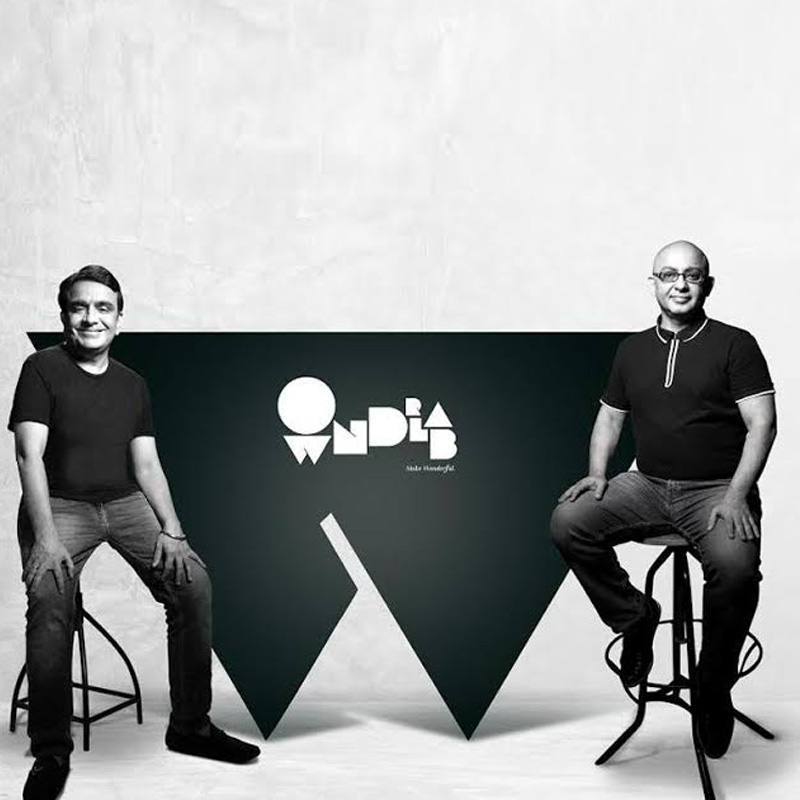
    NEW DELHI: Saurabh Varma along with two other co-founders – Rakesh Hinduja and Vandana Verma – launched his own martech agency Wondrlab in November this year. Within no time, the firm announced a slew of appointments in leadership roles, and registered some account wins. However, the biggest surprise came when Varma announced the acquisition of Amit Akali’s What’s Your Problem. Akali, an old hand in the agency business, became the co-founder of Wondrlab. The development clearly stated that Varma, a hardened marketing professional with over two decades of experience, has a vision beyond just starting another agency.

    Indiantelevision.com’s Devesh Gupta got into a conversation with Varma and Akali to understand more about how their synergies matched, what led to the acquisition, plans for the Indian market, and the way forward in the near future. Excerpts from the interview:-

    On the reason what's Your Problem (WYP) partnered with Wondrlab.

    Amit: I have been analysing the developments before and after the acquisition and I don’t think that WYP could have partnered with anybody else. The kind of work we do, our partner also needed to have the same vision and hunger for great work. We are five years old, a completely flat structure team, entrepreneurial in nature and with a mindset of a startup.

    We have always focused on integrated solutions and Wondrlab from day one had the same vision. It is the only agency that has everything. In terms of vision, the future is in technology, creating products, and platforms. Currently, all the networks are servicing clients but they are not creating products, platforms, and that is our intention here at Wondrlab. I obviously went for the vision and there was a certain vibe and chemistry between the co-founders.

    On how, why and when the acquisition talks began.

    Saurabh: Amit and I have been friends. The discussion started at a pitch where I was representing a client. We had invited various agencies and got the opportunity to see the WYP team in action. When my turn came to comment on which agency to select, I said that the best understanding for this problem is with WYP and I made a casual comment: "I should buy them out." I had no intention of doing so at that point of time, but it bothered me — I made a statement like that and I could do nothing about it. So, the next day, I called up Amit and told him, "Let's do something together." I shared with him our vision and we found common ground.

    On who designed the logo and crafted the name of the agency.

    Saurabh: After I decided to go on my own, several industry friends offered their help. The brand name was courtesy of former Leo Burnett executive chairman Mark Tutssel. I wanted the name to reflect a combination of magic and technology because that is what we are. When I told Mark about Wondrlab, he said this is it. So, the name and the tagline are a gift from Mark. And the logo and identity came from Amit (WYP).

    On the skillsets that WYP bring to the table for Wondrlab.

    Saurabh: We were very clear that we did not want a traditional set up and the great thing was that WYP was not traditional. Their frame of reference has always been problem-solving. I have always mentioned that your solution is only as big as your problem. So, first we agreed on that philosophy of problem-solving. It was built in a way that I would have built a content agency. It had in-house production. We did not want to be glorified scriptwriters but content creators and own our production house.

    Also, there is a huge component of new age and digital in WYP. The structure of WYP was design integrated. If you look at the mid-level start-ups and some of the agencies, none of them are structured for the new age apart from WYP. Or they are not good with the understanding of branding. WYP has both.

    On how WYP will operate under the Wondrlab umbrella.

    Saurabh: WYP would be a separate entity within Wondrlab. It's become a Wondrlab company and we retain it in totality. Amit becomes a part of the co-founding team and he comes on board to shape our future and will be at the helm irrespective of what we acquire. So, between WYP and Wondrlab, there are close to 80-85 people and then there are another 15 people making the total strength of 100.

    It is high time that somebody builds an Indian network that exists in India. There is so much talent here but why can nobody build a network? Somebody has to make that effort.

    Amit: There has never been an Indian network. There is a French, British but never been an Indian network in India or anywhere. Indians typically founded agencies and that is what even I did. Our intention is to create a network and grow it by acquisition.

    On the size of the acquisition.

    Saurabh: As an industry practice, it is difficult to talk about the acquisition because these are multi-layered and multiyear deals. 

    On whether Wondrlab will take the merger and acquisition route for growth.

    Saurabh: It is one tool that is available and we can use it as and when it fits in the strategic framework. There is a lot of organic growth and key leaders are driving that growth for the various pillars we have. There are a lot of tools available that help in creating what we call a platform-first company.

    On the investors in Wondrlab,.

    Saurabh: There has been lots of gossip and rumours in the industry around who our investors are. Let that come out over a period of time. We need to take specific approval from investors before commenting anything about them.

    On whether Amit’s roles and responsibilities will expand.

    I am the chief creative officer at Wondrlab, of which WYP is a part.

    On how the team will ensure that technology remains at the core of integrated solutions?

    Amit: It is our vision from day one. The first credential we wrote – the agency that offers strategy like a traditional set-up basis technology will be the agency of the future. We are very used to thinking integrated and offer tech solutions. This partnership has helped us create an inhouse technology production platform. We have always thought of ourselves as people who integrate technology with creativity and strategy, and with Wondrlab, we can now go out and put this into practice.

    On whether Wondrlab plans to get on the media side of the business?

    Saurabh: Of course. We have already started with digital media, which is simpler and efficient. There are many components of digital media done in-house that are already offered to our clients.

    On the targets, you have set for the next fiscal year?

    Saurabh: The ambition is to set ourselves as a platform-first company and that essentially means a differentiated offering. The acquisition of WYP is a great first move but over the next 12-18 months, a lot of the tech platforms that we have been working on will start to reveal themselves and that distinction in the market place – which adds a very different kind of value to the client – is what we want to establish in the first year of business.

  • Chrome DM week 49: English GEC genre emerges as top gainer

    Chrome DM week 49: English GEC genre emerges as top gainer

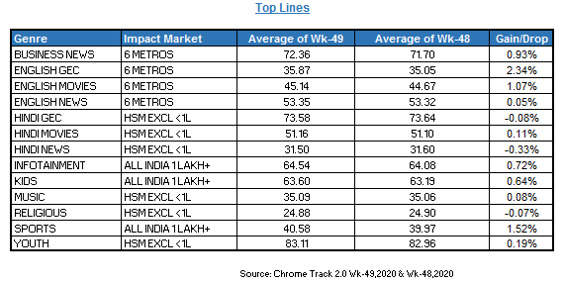
    NEW DELHI: English GEC is the top gainer for week 49, 2020 of Chrome Data Analytics and Media data. The genre clocked a marginal growth of 2.34 per cent.

    In this category, Comedy Central has gained the highest OTS with 42.8 in the HSM excl < 1 market. OTS is the actual census-based percentage connectivity of a channel spread across 81 million homes, as reported by Chrome DM, across analogue cable, digital cable, and DTH.

    This week, the sports genre has emerged as a close second on the top gainers list with a marginal growth of 1.52 per cent in the all India market. In this genre, DD Sports gained the highest OTS with 97.3 per cent.

    Read more coverage on ChromeDM

    Among other genres, English Movies, Business News, and Infotainment have grown slightly by 1.07 per cent, 0.93 per cent and 0.72 per cent.

  • SBI’s quirky commercial pushes for EMI on debit card offering

    SBI’s quirky commercial pushes for EMI on debit card offering

    NEW DELHI: SBI has launched a campaign titled #KhushiyanOnEMI to promote its EMI through debit card facility. Through this facility, consumers can make high ticket purchases like new durables, electronics or even jewellery items and convert them to easy monthly instalments, without causing much of a dent in their finances.

    Facilities like these were previously only available through credit cards, consumer durable loans or personal loans, which involved longer processes and stringent financial background checks. This made it impossible for a section of the population to afford them. With the debit card EMI, consumers can get pre-approved loans with no documentation and KYC Verification.

    Conceptualised by Rediffusion Brand Solutions, three quirky films have been rolled out highlighting the offering. The first film opens with a father installing a new TV at home. The son is taken aback, followed by the father revealing that a new TV will help make a good impression on his son’s special friend who is visiting the next day. The second film showcases a humorous mother-in-law and daughter-in-law duo, in which the daughter-in-law gifts the former a new tablet to complain to her son. The third film features a pair of siblings, of whom the sister is vegetarian and the brother non-vegetarian. The brother asks why there is a new double door refrigerator in their kitchen. The sister explains that one door is hers and the other his, so no more bickering for fridge space.

    Rediffusion Brand Solutions executive creative director and Mumbai creative head Pramod Sharma said, “What happens when you have the power of EMIs on your debit card? Buying things for loved ones becomes easier than ever. Through three quirky films we have tried to establish this fact.”

    The films have been released on the digital platform and will soon be taken to television to ensure greater reach amongst the intended target group.

  • Tata Tea focuses on West Bengal in regional marketing blitz

    Tata Tea focuses on West Bengal in regional marketing blitz

    NEW DELHI: Tata Tea Gold has initiated a hyperlocal strategy to its marketing, shifting the needle from not just celebrating ‘India pride’ but to also evoking ‘regional pride’. The brand aims to usher in a new era of hyperlocal advertising and communication in the FMCG category and stay away from the clutter. So far, it has released campaigns for Odisha, Delhi, UP, and is extending to other states.

    In its quest to celebrate regional pride, the brand has recently launched its latest film focusing on West Bengal.

    The campaign is aimed at celebrating the ‘Bengali way of life’. When it comes to their love for food, the people of West Bengal take great pride in their rigorous selection, approach and an eye for detail. The new campaign is a celebration of this uniquely Bengali cultural code – khutkhute-ness – that is evident in everyday situations.

    The film, conceptualised by Mullen Lintas and created by veteran Bengali filmmaker Shoojit Sircar, opens in a Kolkata street food stall where a young office going woman, who has just taken the first bite of jhalmuri, stops in between and asks the vendor to give crunchier ones. More such illustrations follow, whether it is for measuring the exacting thickness in a perfect plate of kosha mangsho or the softness and warmth of a roshogolla or the right firmness in a fish, all showcasing the Bengalis’ penchant for perfection in every little thing around food. It reaffirms that Bengalis will never settle for anything less than perfect.

    The film then pans out to a woman asking for aromatic tea leaves. While evaluating some tea in her hand, she looks unsatisfied. She asks for tea that would lend the taste buds a relishing flavour. The shopkeeper hands over the shiny gold pack of Tata Tea Gold, assuring her of a flavourful tea.

    Tata Consumer Products senior vice president marketing – packaged beverages Puneet Das said, “We wanted to celebrate the West Bengal way of life by bringing alive this core idea of ‘a perfectionist mindset’ of Bengalis, especially when it comes to their everyday food and beverage choices. This is very well expressed through this colloquial term of khutkhute-ness and we have tried to capture this through situations that will be relatable to most Bengalis.”

    Mullen Lintas chief creative officer Garima Khandelwal added, “The journey of this commercial was about landing on an insight that holds completely unmistakably true for the region, just how many brands of Tata Tea portfolio are doing with region-specific insights that evoke extreme relatability and makes the tea one’s own. What followed was then sharpening it with creative juices and partnering with the right talent. While sarcasm has long been the brand tonality, this was the first time we attempted it, in this humorous avatar.

    A few weeks ago the brand launched its film focusing on Odisha. It illustrates how the people of Odisha don’t indulge in unnecessary confrontation but shows them taking charge when it counts. The proposition of that campaign is ‘Kadak iraadon vale Odisha ke liye kadak Assam chai’.


  • ITC Mangaldeep evokes scent of nostalgia in new spot

    ITC Mangaldeep evokes scent of nostalgia in new spot

    NEW DELHI: Incense sticks are a big part of India’s culture. People use them to offer their prayers to the gods and deities they believe in. The market for incense sticks is extremely huge and is growing at a rapid pace. According to KVIC, India’s agarbatti consumption is pegged at 1,490 tons per day, however, 760 tons per day is produced. 

    India's agarbatti industry is mainly in the form of cottage industry, a highly labor-intensive process with each incense stick being handcrafted. The market includes both organised and unorganised players that offer a variety of products, from premium, organic, to aromatherapy variants. Some of the national players include — Cycle, ITC Mangaldeep, Zed Black and others. These brands regularly advertise across mediums to reach out to their audiences. 

    Mangaldeep, the incense stick brand from ITC, has launched a new TVC campaign titled ‘The Tradition of Sandal’. The campaign aims to reinforce the sandal variant’s strong preference with consumers. Bhumika Chawla, the brand ambassador, plays the protagonist in the film and is seen passing on the tradition of Mangaldeep Sandal.

    The film revolves around tradition, nostalgia and legacy associated with the variant. The scent of Mangaldeep’s original sandal agarbatti takes the protagonist back to her childhood, to the tradition of making sandal paste with her grandmother for daily puja. Now Bhumika and her children continue the legacy of sandal with Mangaldeep original sandal agarbatti.

    ITC chief executive agarbatti and safety matches business Ravi Rayavaram said, “Devotion is the ethos of Indian culture, and when we talk about devotion, agarbattis inevitably become of immense significance. Our new communication celebrates the tradition of original sandal and its close association with the fragrance of Mangaldeep Sandal agarbattis.”

    Ogilvy group creative director Rajesh Mani said, “Sandalwood has a huge legacy in India; right from the ancient times to the modern. And now times are such that people are actively seeking solace in familiarity and nostalgia. The scent of real sandalwood never fails to evoke a sense of nostalgia in people. Creatively it’s a trip down the memory lane for our brand ambassador Bhumika Chawla when she lights up a Mangaldeep Sandal agarbatti. The fragrance of real sandal transports Bhumika to her childhood. In short, Mangaldeep Sandal evokes the fragrance of real sandal.” 

    The category is growing at a rapid rate of 10 per cent in the last couple of years. A wide variety of incense sticks are available in different shapes, sizes, colors, and fragrances at very competitive prices, from sandalwood to lavender, and rose to jasmine.  

  • Chivas urges people to stay safe at home & enjoy responsibly

    Chivas urges people to stay safe at home & enjoy responsibly

    NEW DELHI: Chivas India has launched its latest digital campaign ‘Celebrate Within’ to revive the true meaning of celebration. The campaign features five eminent personalities who through individual films express the joy of celebrating what is within.

    India’s reputed designer duo Shivan and Narresh; actor Kunal Kapoor; acclaimed Indian architect and designer Rooshad Shroff; renowned Indian stylist and fashion entrepreneur Pernia Qureshi; and prominent entrepreneur Kalyani Chawla came together in a series of immersive films that elucidate how moments of celebration are defined by lasting bonds and meaningful relationships that each one enjoys within: at home and with their loved ones. During these unprecedented times, the greatest celebration is one in which you express gratitude, embrace a healthy life, and rejoice the safety of loved ones. This is the lifeblood of celebration and responsible enjoyment.

    Pernod Ricard India CMO Kartik Mohindra said, “True festivities are about a generosity of heart. It is about a gracious giving and gratitude for all that we have: hope, health, happiness, love of family and friends. And wishes for universal wellbeing. Of sharing what we have by opening our hearts and lighting up lives. Expanding the circle of joy by including all in our extended family called humanity. Celebrate the spirit of giving. Enjoy responsibly.”

  • #ActNow for mental health awareness, says Times Network

    #ActNow for mental health awareness, says Times Network

    MUMBAI: In 2017, 197.3 million people had mental health disorders in India (lancet psychiatry 2020), implying that while at least 14 per cent Indians are living with such issues, an alarming 86 per cent is behind a veil of ignorance. India’s mental health landscape presents a grim reality of poor implementation of mental health policies, age old discriminatory attitude towards those suffering from mental health illnesses, compounded with shortage of qualified personnel and low perceived need for care. With the Covid2019 outbreak triggering implications that reach far beyond the direct impact on people’s physical health, there has been an exacerbated spiralling of tension and anxiety, further increasing the load on India’s overtaxed mental health machinery.

    Addressing the rampant stigma and discrimination around mental health problems, Times Network has launched #ActNow, an initiative to spread awareness, normalise conversations around the issue and sensitise people to be responsive to the mental health needs of others.

    A special campaign film #ActNow  takes an outside-in view of the problem and targets the ‘people around’ to act, rather than the one living with mental health issues. Mirroring how societal structures treats a person living with a mental ailment with ignorance, pity, annoyance and utter disbelief, the film unravels the state of mind of someone who is besieged by misinterpreted advice of his near and dear ones as he fights a lone battle. A clarion call to realign our minds to escape from the entrapment of the prevalent social stigma and recognize mental health as an existential crisis for humanity, the impactful film urges public at large to remain receptive to the deteriorating mental health of people around and take appropriate course of action to offer support without prejudice and fear. The initiative launched on a special edition of Mirror Now’s Urban Debate, hosted an expert panel that analysed and discussed the deteriorating condition of mental illness in India.

    The initiative which encourages the essential steps of acknowledging the signs, choosing the right words and urging people to talk to an expert, draws relevance from Times Network’s nationwide research study commissioned to Nielsen India titled, ‘How Urban India Perceives Mental Health’. The study indicates that while awareness levels related to mental health ailments have gone up recently, there is a pressing need to disseminate the factual information to tackle the strong undercurrents of stigma and lack access to quality mental healthcare. Mental health conversations remain the single most important detriment and solution for this issue. The quantitative study that examines the dynamics, culture, mindset and perceptions of the people towards mental health was conducted through three prolonged evaluations based on secondary research, in depth interactions with mental health experts and a survey with India’s cross-section of urban population.

    Key findings as follows:

    ·         70 per cent of urban India claim to suffer/know of someone who has suffered from a mental health ailment

    ·         Among people who are suffering/know someone suffering from mental health ailment, depressions come out as the most prominent at 58 per cent.

    ·         76 per cent perceive that “People are not open to talk about mental health to everyone” and there is still shame and stigma associated around mental health ·          52 per cent of the people face problems in accessing a mental health professional and 63 per cent perceive that there is difficulty in procuring medication

    ·         54 per cent people are not completely aware about the diseases covered in a health insurance policy and 47 per cent of the people are unaware of the government mandate for health insurance policies to cover treatment of mental health ailments

    ·         57 per cent of urban India considers financial pressures to be the leading cause of negative impact on mental health

    The study took a sample size of 2,440 people across Mumbai, Delhi, Chennai, Kolkata, Hyderabad, Bangalore, Jaipur, Patna, Ahmedabad, Mangalore, Vishakapatnam, Bareilly, Guwahati, Raipur, and Mangalore.

    Times Network president – strategy and business head – news and English entertainment cluster Vivek Srivastava said, “The new normal has triggered anxiety and deepened emotional turmoil, consequently leading to a quieter but concerning rise in the number of people grappling with mental health issues. ActNow is our endeavour to spread awareness and drive dialogues to break barriers around the mental health issue. Through our multi-faceted campaign, we urge the society at large to look beyond the happy faces that conceal the sufferings and encourage healthy and judgement-free conversations on mental health.”

    Refining and bringing a comprehensive view on mental health with the expert voices, the Network has onboarded Jaslok Hospital as the knowledge partner. Psychologists and mental experts from the hospital will provide critical inputs and steer the campaign with relevant information and decode the complex challenges associated with mental health crisis. Fostering positive mental health and evoking a sense of response amongst the millennials, Times Network has partnered with youth marketing firm, Viral Fission to drive community engagement through student advocates of mental health.

    #ActNow will be driven across Times Network channels and digital assets, print sds across The Times of India daily and a dedicated page on the network's digital news destination, Timesnownew.com, which will host a curated series of articles on mental well-being.