Tag: marketing

  • Thomas Cook’s Abraham Alapatt on looking beyond the pandemic

    Thomas Cook’s Abraham Alapatt on looking beyond the pandemic

    MUMBAI: Travel and tourism were among the first sectors to be hit in 2020, due to the outbreak of the Covid2019 pandemic and the resultant closure of borders. It has also been one of the most affected industries and probably will take the longest to revive, with both leisure and business travel taking the brunt. According to the World Travel and Tourism Council (WTCC), the pandemic is likely to cost the tourism sector almost $22 billion and 50 million jobs. Last year alone, India's hospitality and tourism sector suffered an economic wipe-out estimated to be up to Rs 15 lakh crore. And just when it began to show signs of recovery, the country is witnessing a resurgence in cases, dimming the outlook for the sector.

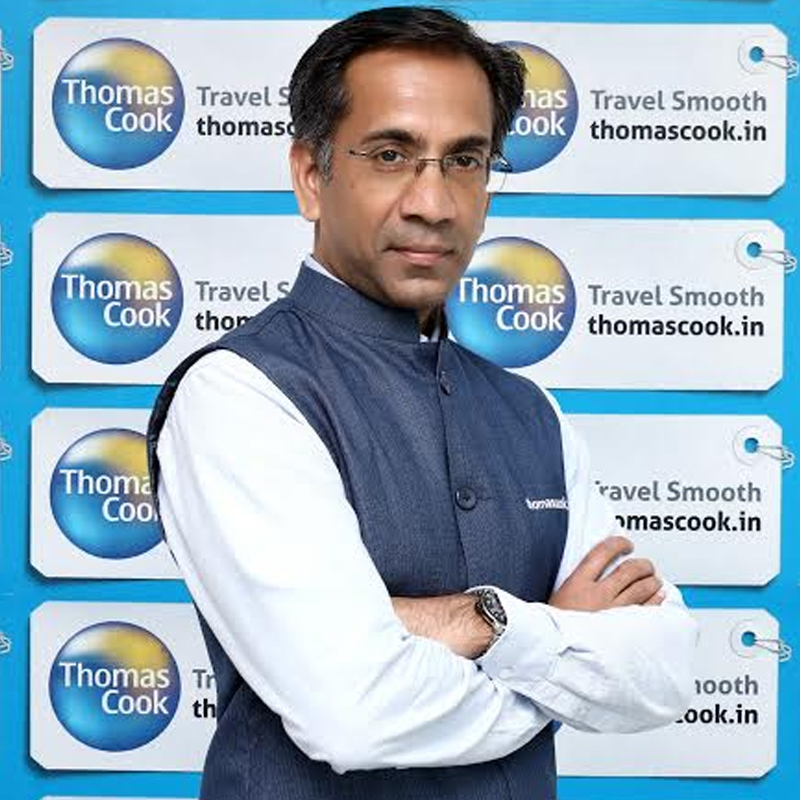
    Indiantelevision.com’s Anupama Sajeet spoke to Thomas Cook (India) president and group head of marketing Abraham Alapatt about how the travel industry plans to beat Covid 2.0 and assuage consumer fears. Alapatt also talked about the company's roadmap to deal with the large-scale disruption caused by the second wave of the pandemic.

    Edited excerpts:

    On the humongous challenge facing the tourism industry.

    The travel and tourism industry has been one of the hardest hit due to the Covid2019 pandemic. Given the vaccine rollouts, we are now witnessing a growth in positive consumer sentiment and are seeing fear being replaced with cautious optimism. In the short to medium term, the opportunity for tourism will be dominated by a few new keywords — safety and hygiene, clear focus on less crowded, more open space, sunshine-oriented destinations, and as a result possibly more unexplored, undiscovered, destinations and experiences.

    Going forward in the new normal, marketers have talked of the post-pandemic ‘3C’ customer, who is effectively going to be constrained — mentally, physically, and financially and will be connected to what’s happening in their country and the world. The post-pandemic customer is going to be defined by 4Ds, especially for travel:

    · Will Deliberate more on decisions on leisure travel

    · More Discerning about the choice of destinations

    · Demanding/Detail-oriented regarding all aspects of the travel programs

    · Discovery-oriented

    On marketing strategies for the upcoming summer holiday season.

    Summer is one of the primary seasons to travel for families given that most school vacations are during this time. While our marketing strategy in 2020 had been primarily digital, we have now reintroduced print to our mix of promotions. We believe in an omnichannel approach, giving the customer the choice to connect with us digitally, at our outlets, or via our toll-free numbers. Customers have now become more digital-savvy post-2020. We have seen an increase in the web traffic on our sites as well as walk-ins at our stores for final discussions and closures. We will continue to invest digitally and boost our retail network across the country.

    Also, we quickly adapted to the new normal and created products and services in line with the requirements of the Covid2019 era. The consumer wish-list had changed and our teams worked accordingly to create easy to book, practical holidays such as workations, staycations, drivecations, affordable luxury holidays. We focused on quick breaks to counter the stress of work from home and home chores at convenient short drivable distances.

    As international borders reopened, our teams negotiated deals with our vendors/partners to offer customers the best rates at Dubai and Maldives’ luxury and super-luxury resorts. The reopening of borders for additional countries has boosted outbound demand to destinations like Russia, Turkey, Egypt, and Seychelles. We have added the exciting Aurora Borealis/Northern Lights experience in Murmansk and launched our Nepal tours with a special offer. We are seeing growing confidence in international travel and the return of group travel. 

    On Thomas Cook’s roadmap for 2021 and beyond.

    We conducted a survey with over 2500 customers across India’s metros and tier-1 and tier-2 cities to understand key consumer behaviours and trends. Our Holiday Readiness Travel Report – Future of Travel post-Covid2019 revealed key drivers in this new era of travel. Health and safety ranks as the primary concern for 75 per cent of respondents. We took this challenge head-on and put together a three-pronged customer confidence-building program in the form of 'Assured-Insured-Secured', that covers every aspect of physical safety, as well as mental and financial security to give the customer complete peace of mind.

    We also launched the Assured Safe Travel Program and Doctor on Call 24×7 service in partnership with Apollo Clinics; a free-service offering expert guidance and assistance for safe holiday planning via a tie-up with ICMR accredited labs.

    Given the situation, the demand for virtual and contactless sales and services has accelerated. Our survey also revealed that given the prevailing uncertainty, a significant 71 per cent of respondents stated that they require the guidance of a holiday expert and preferred to visit an outlet/Virtual Store/video chat while planning their holidays. We introduced Virtual Holiday Store and our dedicated team of travel experts will be available over video chat to guide customers with contactless and convenient holiday planning. This is in addition to our retail outlets pan India, that are operational where permitted by local authorities.

    (In addition to Thomas Cook, the Thomas Cook India Group operates leading B2C and B2B travel brands including SOTC, Asian Trails, AlliedTPro (ATP), Australian Tours Management (ATM), Desert Adventures, Luxe Asia, Kuoni Hong Kong, TC Travel, Private Safaris East & South Africa and Sterling Holidays.)

  • Upstox urges us to take the first step towards investing

    Upstox urges us to take the first step towards investing

    NEW DELHI: Days after announcing its association with the 2021 edition of the Indian Premier League (IPL), Ratan Tata-backed brokerage firm Upstox has rolled out a new campaign, Start Karke Dekho, that aims to promote better financial participation in the country.

    By speaking to the fact that sometimes it’s all about just taking the first step, the campaign emphasises that with Upstox, investing is extremely simple and effortless, right from the get-go.

    It features a series of videos capturing insights from everyday situations. The campaign’s underlying objective is to create financial awareness and foster an investment culture across the country.

    The campaign includes commercials on television, OTT, digital, and social media platforms. While digital and OTT platforms are employed to reach out to target segments in metros and big cities, television dominates the media mix for tier-2, tier-3, and tier-4 towns.

    Upstox co-founder & CEO Ravi Kumar said, “The most important aspect of the campaign is that it gives first-time users confidence to start their investment journey. At Upstox, we want to refresh the way investing is done in India, just like IPL has reinvented cricket as a sport in India. We believe that our campaign Start Karke Dekho will create a significant impact on the millions of young people who want to manage their funds better.”

  • Gaming revenue surged 20% in 2020, audience more diverse: Essence report

    Gaming revenue surged 20% in 2020, audience more diverse: Essence report

    MUMBAI: Last year, the world stayed at home. Outdoor divertissements like live sports and events, and catching a movie at the multiplex were off the table, owing to the Covid2019 pandemic. People had to find new ways to distract themselves from the grim reality; apart from online video streaming, gaming saw a marked uptick in adoption. In fact, 2020 was a breakthrough year for the gaming industry, with revenue spurt of 20 per cent over the previous year, according to a report published by global media agency Essence, a part of GroupM.

    The 'Gaming in the 2020s: Reach, rewards and the new meditation' report is aimed at brands and will help marketing heads understand the full scale of the opportunity presented by this up and coming category, and what they can expect to gain from their efforts. 

    "In recent years, the gaming sector had been steadily growing in note amongst the marketing community but was yet to become a mainstream consideration. It had neither been seriously appraised for its reach potential nor wholeheartedly embraced as a lever for driving brand connection," wrote Essence in their study report. 

    The report stated that an enforced focus on home entertainment and folks spending more time with their children due to the shelter at home guidelines has played a crucial role in elevating the popularity of the gaming sector. 

    Contrary to the previous belief, the Essence report suggested that gaming is not just confined to young people –  it is considerably more diverse, and 83 per cent of all women, and 85 per cent of all men can be classed as gamers. The study report also noted that a massive 71 per cent of 55-64 year-olds engage in the gaming space. 

    "Mobile gaming, in particular, has broad appeal across genders and age groups, and it’s here that older generations certainly feel most comfortable," the report claimed. 

    One of the many effects was a huge increase in exposure to and exploration of gaming, resulting in a greater understanding of its appeal amid widespread news coverage of family-friendly, stand-out titles such as Animal Crossing. All of a sudden, gaming exploded into the general consciousness of consumers and marketers alike. 

    Essence suggested two main reasons for brands to engage, which in turn determine how building gaming touchpoints into the communications plan should be approached. 

    · Incrementality for non-endemic brands — gaming touchpoints should be evaluated in line with any other video, display or out-of-home opportunity.

    · Building equity in the service of growth —  gaming touchpoints can be leveraged in the service of campaigns that are not specifically relevant to the genre, just like all kinds of campaigns can sit happily on the cinema screen, for example.

    Key highlights of the report 

    The global gaming market was valued at $151.55 billion in 2019 and is expected to reach revenue of $256.97 billion by 2025. The pandemic helped spur a revenue surge of 20 per cent to $179.7 billion in 2020.

    For marketers engaging with the gaming sector for the first time, there is an appreciation that gaming is not a ‘channel’ but a form of entertainment around which a unique set of consumer behaviours have been built. These behaviours are broad and exhibited across a hugely fragmented space, inclusive of vastly differing devices, platforms, locations and types of content.  

    NewZoo estimates that the global audience for esports – organised forms of competitive gaming using tournaments or leagues – totalled 495 million in 2020 and will rise to 646 million in 2023, with around 45 per cent watching at least once a month. 

    Beyond esports, streaming has been harnessed by individual players who also broadcast their gaming to live audiences. Users typically employ one of three major platforms, which vary in popularity around the globe. YouGov claims that 49 per cent of Indian gamers engage with YouTube Gaming.

    When it comes to the choice of engaging with rewarded ads versus making an in-app payment, a vast majority of mobile gamers prefer consuming the ad. However, as per a proprietary Mobile Annoyance study conducted by Essence India, mid-game banner ads scored the highest on the Annoyance Index when compared to a range of other mobile ad formats (served both in-game and across other types of publisher content).

  • #WearYourColor & reclaim the beauty narrative: Lotus Herbals

    #WearYourColor & reclaim the beauty narrative: Lotus Herbals

    NEW DELHI: Beauty brand Lotus Herbals is encouraging women to reclaim the narrative by defying stereotypical beauty standards and wear the colours that define them.

    The campaign, #WearYourColor, is a new manoeuvre for women to make their own rules of beauty. Designed by HerHQ Media in partnership with Stylecraze and Lotus Herbals, the initiative playfully dwells upon the premise that a woman can conquer the world with the right shade of lipstick. Whether they choose to ramp it up with red lips, be bodacious with burgundy, or keep it nonchalant with nudes, the campaign emboldens women to express themselves through colours.

    Lotus Herbals head of digital Vishal Singh says, "Women have always been the driving force behind change and revolution. Reclaiming fashion as their own is one of them. For today’s woman, fashion is the freedom to wear what she wants, when she wants, and how she wants. Through #WearYourColor, we want to acknowledge all these women who are undeterred, confident, and do not fear the judgments that follow. Your unfettered freedom is an inspiration for many."

    IncNut VP – business development & strategic partnership Natasha Garyali says, "Lipstick has always been seen as a powerful statement in a patriarchal society that has constricted the choices a woman can make by forcing norms and regulating their freedom. Leveraging Stylecraze, we power up the bold and powerful  #WearYourColor message by bringing the lipstick back to the forefront as a language of protest, rebellion, self-assertion, confidence, and liberation for women. Nothing can be more liberating than the power to choose what you want and the confidence to be you at all times."

  • Chandrasekar Radhakrishnan is Emaar Group’s new head of marketing

    Chandrasekar Radhakrishnan is Emaar Group’s new head of marketing

    NEW DELHI: UAE-based real estate developer Emaar Group has appointed Chandrasekar Radhakrishnan as its new head of marketing. He joins Emaar this month after stints with leading global FMCG and telecom players for over two decades.

    Radhakrishnan, known informally as Chandru, will be responsible for the strategic marketing and communications for Emaar across the group, including Emaar Properties, Emaar Development, Emaar Malls, Emaar Hospitality, Emaar Entertainment and Emaar Leisure.

    Emaar Properties founder Mohamed Alabbar said, “Chandru is a global marketer with a proven track record of building reputable brands and a deep understanding of the digital landscape. He will lead the centralised group marketing team and spearhead the transformation of marketing to drive equity and growth for the organisation globally, in today’s digitally connected world.”

    With a combination of international and domestic experience, Radhakrishnan will also be responsible for driving marketing effectiveness and efficiency, while strengthening Emaar’s brand presence globally.

    Prior to his new role, the Columbia Business School graduate was with Coca-Cola India as vice president – strategy & insights. Across his various roles at consumer goods majors like Nestlè, Airtel, Marico and Britannia, he has led domestic and global brand teams, built digital competencies, driven creative excellence and strengthened external partnerships.

  • Wonder Women 100: Mindset needs to change first for more inclusion, diversity

    Wonder Women 100: Mindset needs to change first for more inclusion, diversity

    KOLKATA: Women are increasingly coming out and taking up more challenging roles against all odds. The media, entertainment and advertising industry is no exception. Despite the great strides made over recent years, there are still issues like fewer women leaders in upper management positions and salary gaps that need to be addressed for a better tomorrow.

    In a panel discussion, ‘Women, inclusivity and change’, industry leaders shared their views on the existing gaps and how that can be tackled to bring about positive change. Zee5 head-customer strategy and relationships Anita Nayyar, ABD CMO Anupam Bokey, Lodestar UM CEO Nandini Dias, NXTDigital group chief technology officer Ru Ediriwira, Madison Media Sigma – Madison World CEO Vanita Keswani, Hollywood actress and producer Rashaana Shah and Indiantelevision.com founder and editor-in-chief Anil Wanvari were part of the discussion. The session was moderated by Indiantelevision.com editorial lead Srishti Choudhary and online lead Arunima Bhattacharya.

    First off, the panelists expressed their opinions on whether corporate India has finally adjusted itself to bring more women professionals into leadership roles. Nayyar said we are miles away from where we actually should be given the kind of women leaders that are there in any industry, not only in advertising and marketing. Women have taken leadership roles in sectors like manufacturing, banking, and automobile; which most people considered no space for a woman.

    Dias brought up another important aspect of addressing the issue. While organisations across the board are hiring more women, these recruitments are happening mostly at the starting level. As time passes, the women get into different life stages, some of them even drop off. Corporates, governments do not enable their female employees to stay in the workforce, there are not enough policies to ensure they don’t quit midway because of changes like marriage and pregnancies.  

    Not everything is grey though. According to Keswani, there is not any gender if looked at from the perspective of microenvironment of media. She added that the industry believes in a person’s capability and does not uphold any bias. Moreover, it is about the individualistic approach. She also highlighted an issue that even some women don’t prefer working with women. “A lot of spirited action and ambition to move up the ladder,” she emphasised. The drive to work and climb up the ladder depends not just on an organisation’s policies, but the person’s family, upbringing, and education.

    Bokey, who works in the liquor industry where gender disparity has been prevalent, said that he joined his current organisation because it had a very transformative agenda. The agenda was not only about market share and sales but also internal management. He asserted that there is no option to not have this diversity because business or brands will suffer otherwise. Equal the numbers better would be the work, he stated.

    Hollywood actor and entrepreneur Shah said women are more well accepted in Hollywood, compared to the Indian film industry. Hollywood is much more inclusive too. She had to go through a great deal of unlearning after moving to Los Angeles. There are more women on sets these days, and there is no code of conduct expected from women particularly, making the experience more liberating. However, she faced a unique problem when she was pitching to venture capitalists to invest in her production house. The investors did not trust women with so much money, making the overall pitching much harder for her.

    The issue with such a mindset is also a big reason for the wage gap among male and female leaders. Nayyar said that everyone, including women, should stop seeing things in terms of gender. There is a wrong perception across industries that female resources can be hired at a cheaper cost. Most of the industries are not equating capability with remuneration, she pointed out. The salaries are not at par because these organisations are, by and large, headed by men. Dias shared a similar view, adding that women don’t negotiate often because they get overwhelmed after breaking the glass ceiling. Experts opined that belief in self can give them a place at the negotiation table.

    Ediriwira highlighted the lack of mentorship in many organisations is another reason for many women just stopping at middle management. “We have the responsibility to mentor and help other women who are coming up behind us,” she shared.

    “Diversity, inclusion – these are not words. These are facilities to be done, things to be done. We don’t want clones of men. A woman will think differently, she will behave in another way, her bodily function will be in a certain way. We want diversity, inclusion in the real sense of the word and that will bring nuances which are different and organisations need to facilitate that,” Dias emphasised.

    Most importantly, being true to yourself, taking care of yourself, empowering and encouraging other women, asking for help rather than going it on your own, are mandatory to bring the change from within.

  • LG showcases next gen products at CES 2021

    LG showcases next gen products at CES 2021

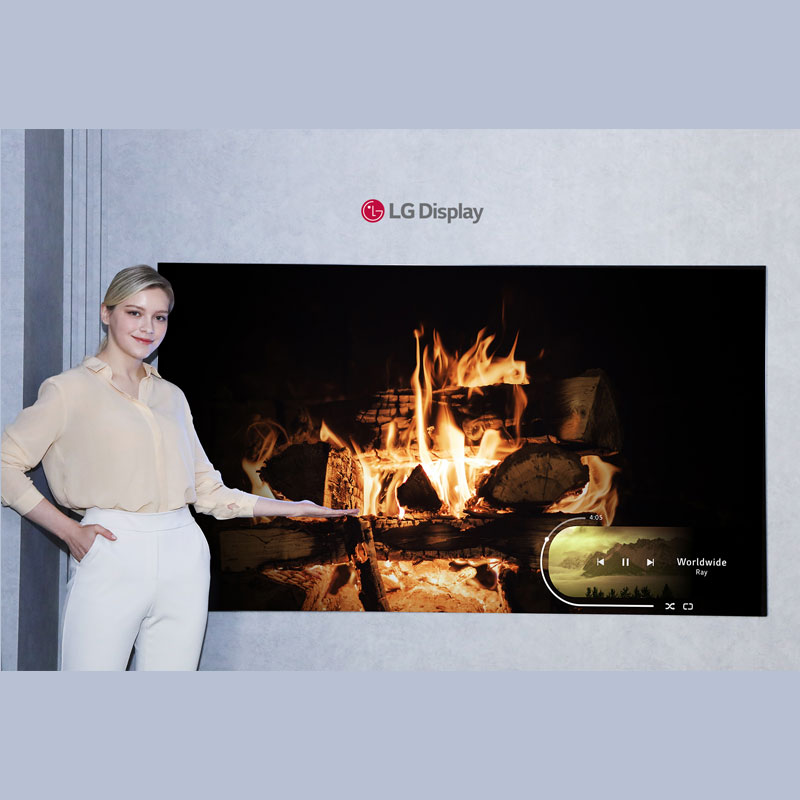
    SEOUL: LG Electronics is showcasing its products and technologies under the theme of ‘Display, now the real world comes to you’ at CES 2021. The company is emphasising on the redefined role of displays in the contactless era as well as presenting various display solutions optimised for the lifestyle of customers during CES.

    LG Display is presenting cutting-edge display products through 11 lifestyle theme zones organised to not only demonstrate the excellent picture quality of OLED displays but also to introduce how displays can provide solutions for upgraded and more convenient lives. By doing so, the company will highlight three values of displays, which are ‘Natural Reality’, ‘Lifestyle in Harmony’, and ‘Better for People’. Furthermore, the company stresses the role of a ‘display that cares about people’ by showing functions that are safer and designed to protect users’ health.

    LG Display’s new 77-inch OLED display shows significant progress in picture quality through newly developed and highly efficient materials as well as the addition of a layer to the display, thereby improving its efficiency by around 20 per cent. Higher efficiency means that the display improves its brightness to realize more vivid images.

    LG Display is planning to apply its advanced next-generation OLED technology to high-end TV models that will be launched this year and gradually expand its adoption. In addition, the company is set to strengthen its lineup by producing 83-inch and 42-inch OLED TV displays starting this year, adding to the existing 88-inch, 77-inch, 65-inch, 55-inch, and 48-inch OLED TV displays. It also plans to significantly expand its mid-range TV display lineup down to the 20-30-inch range, enhancing not only TV, but also gaming, mobility, and personal display options.

    It will also introduce differentiated products such as film cinematic sound OLED (Film CSO), which is able to feature an even slimmer design and to generate sound directly from the screen without separate speakers.

    While 200,000 displays were shipped during the first year of OLED TV production in 2013, the number of units shipped reached 4.5 million last year, and LG Display plans to expand that to between 7 and 8 million displays this year to solidify its competitive advantage in the next-generation TV market and accelerate the OLED trend.

    “Through the evolution of OLED, LG Display will expand its differentiated competitiveness and market dominance in premium TV markets,” said LG Display executive VP and head of the TV business unit Chang-ho Oh.

    The company will also demonstrate a variety of professional display products for monitors and laptops, ranging from 15.6-inch to 27-inch to 31.5-inch displays. These are premium IT products incorporating high-definition IPS LCD technology, which has been recognised as being comfortable for the viewer’s eyes.

    The Smart Home Zone will feature a bed with a 55-inch transparent OLED named Smart Bed, which you can use to check weather information or watch movies. At the push of a button, the Smart Bed’s 55-inch Transparent OLED display rises from its frame to show information or TV contents in various screen ratios without compromising its clear image quality. The Smart Bed display’s movable frame can easily be taken to various locations in a house to serve the diverse needs of users.

    The Game Zone will present the best gaming environment, providing the ultimate sense of realism with visual immersion and vivid sound through LG Display’s 48-inch bendable cinematic sound OLED (CSO) gaming TV, which is being unveiled for the first time in the world. It can be turned into a flat screen while watching TV or used as a curved screen while gaming for an extreme immersive viewing experience. With the company’s CSO technology, this OLED display vibrates and makes its own sound without the use of speakers.

    Moreover, LG Display is proposing a new display concept needed for consumers in the contactless era caused by Covid2019. The Restaurant Zone will recreate a sushi bar environment, in which a 55-inch transparent OLED and a 23.1-inch in-touch display are installed in the space between customers and chefs, allowing menu checking and ordering to be easily done via these displays.

    In the case of the Metro Zone, it will give passengers the chance to check route maps or weather and regional information on a 55-inch Transparent OLED display installed on a subway train’s windows, while they will still be able to enjoy the view outside with high transparency.

    The Retail Zone will also introduce 29-inch and 23.1-inch in-touch products, making it convenient to order and pay in a contactless environment at various consumer stores.

  • Tata Consumers Products strengthens beverage wellness portfolio

    Tata Consumers Products strengthens beverage wellness portfolio

    New Delhi: Tata Consumer Products is strengthening its wellness portfolio in the packaged beverages category to cater to consumer needs. It has introduced two new products – Tata Tea Tulsi Green and Tata Tea Gold Care, and reformulated its existing Tetley Green Tea with added Vitamin C. These new offerings are developed with beneficial ingredients that are known to help improve the body’s immunity and enhance overall wellness.

    Tata Tea, Desh Ki Chai has a rich heritage of over 30 years and is known for catering to the local tastes & preferences in various geographies. The two new product offerings combine the refreshment of everyday tea with the goodness of Indian herbs which are known for their health benefits: Tata Tea Gold Care is infused with a medley of five native ingredients that provide wholesome goodness in every cup and promote wellbeing. It packs the goodness of immunity boosting ingredient tulsi and other native ingredients ginger, cardamom, mulethi and brahmi that not only make for a perfect cup of masala tea but also are known to provide specific health benefits.

    Tata Tea Tulsi Green is a blend of green tea and real tulsi leaves. Tulsi is traditionally known to boost immunity and green tea is known for its multiple health benefits. These two were brought together to create a product that tastes and feels good. The blend has been crafted keeping in mind the preference of consumers to use native ingredients along with home-made mixtures in their regular cup of tea. The promise of the brand is ‘Tulsi wali immunity, ab tasty bhi’. This has become even more relevant in current times when consumers are increasingly valuing authentic ingredients in food and beverage products without a compromise on taste.

    Tetley, the second largest tea brand globally, has an offering Tetley Green tea, which is the second biggest green tea brand in India. Tetley Green Tea is an excellent source of antioxidants that are known to have various beneficial effects on health. Now, Tetley green teabag range in India has been reformulated with added Vitamin C and is relaunched as Tetley Green Tea Immune. Hence, Tetley Green Tea Immune has all the goodness of antioxidants rich green tea and added vitamin C, which helps support the Immune system. Tetley Green Tea Immune is available in four exciting variants, (Classic, Lemon & Honey, Ginger Mint and Lemon and Mango variant), to ensure rejuvenation in every sip.

    Tata Consumer Products president packaged beverages (India, Bangladesh and middle east) Sushant Dash said, "We are enhancing wellness offerings in our beverage portfolio with the launch of two exciting variants in our Tata Tea brand- Tata Tea Gold Care and Tata Tea Tulsi Green and the re-launch of Tetley Green Tea Immune. The pandemic has seen consumers showing a significant preference for trusted health and wellness products. Tata Tea and Tetley are reputed brands in the tea segment and our new offerings will give consumers great quality teas along with the added benefits of these natural ingredients and Vitamin C. Consumers can also buy these variants from the convenience of their homes, through e-commerce platforms. We will continue to invest in our brands and innovate to create quality and distinctive products for our consumers.”

  • Group M research reveals consumers affinity for latest tech

    Group M research reveals consumers affinity for latest tech

    NEW DELHI: GroupM has released a new research that reveals that one in two (54.3 per cent) consumers believe it’s important to be equipped with the latest technology.

    Conducted by GroupM’s Live Panel in December 2020, this original research looks at the importance of new technology in consumers’ lives. The agency surveyed 1000 US consumers on their attitudes toward technology across six general categories: attitudes toward technology, information sharing and privacy, virtual reality-based devices and services, smart appliances, mobile devices and digital services, such as visual search, streaming audio and streaming video.

    The key highlights of the research are –

    · Attitudes toward technology:

    54.3 per cent respondents agree with this statement: “It’s important my household is equipped with the latest technology.” Males, younger people and higher-income households all “completely agree” with a much higher propensity than other groups.

    · 5G connected devices:

    More than half (51.5 per cent) respondents said they have a 5G device such as a mobile phone that can connect to a 5G network. Among the half of the population without a 5G connected device, 59.6 per cent of 35-54 year-olds said they expect to buy one in the next year, while 45.2 per cent of 18-34 year-olds said the same.

    · Digital services:

    Voice assistance/Visual search: 96.1 per cent respondents use an Amazon or Apple connected product to help with their shopping.

    Streaming audio services: The responses were significantly higher for females than males regarding YouTube Music (49.1 per cent to 42.4 per cent), Pandora (53.4 per cent to 39.7 per cent) and local online radio station (19.6 per cent to 15.4 per cent).

    Streaming video: In order to maintain a lower monthly bill for streaming services, 66 per cent respondents said they would accept having to watch commercials.

    · Virtual or augmented reality: 

    The higher the income, the more likely a consumer would respond “yes” to having a “virtual travel experience” like visiting a museum or a foreign city— eight per cent of the highest quintile, while only 24.7 per cent of the lowest quintile. Overall, males across each age group showed a higher propensity to have accessed a “virtual” trip.

    · Information sharing and privacy for health and fitness trackers: 

    81.7 per cent of respondents believe that either they or a family member should be the only ones with access to this data. On the other hand, only 6.9 per cent of respondents believe the company that made the device or software should have access.

    · Smart appliances: 

    48 per cent agreed that they would like a home appliance to “automatically order replacements when I am running out of related products” (i.e.: a washing machine ordering new detergent or a refrigerator ordering food).

    GroupM global president of business intelligence Brian Wieser said, “New technologies change the ways in which consumers engage with brands and introduce new ways to drive long-term growth. Exploring the contours of new technology adoption laid out in this research is critical for marketers to better understand how to allocate their resources in 2021 and beyond.”

  • Castrol India elevates Jaya Jamrani as VP marketing

    Castrol India elevates Jaya Jamrani as VP marketing

    Mumbai: Castrol India has elevated Jaya Jamrani as vice president – marketing, effective from 1 January 2021 to lead the company’s marketing functions in India.

    In her new role, Jamrani will lead the marketing strategy for India across business segments, including forging strategic partnerships for growth.

    Jamrani has spent over a decade across various verticals in Castrol both in India and globally, after a stint with Unilever. Her broad-based experience and understanding of changing consumer needs has helped her lead some iconic campaigns for Castrol like the Castrol CRB Truck Aasana and Castrol Super Mechanic, drive successful media and content partnerships including Castrol Activ Scooter Girl in the City and Castrol Power1 Roadies as well as steer strategic associations like the Castrol-3M collaboration. 

    Jaya Jamrani said, “I am humbled by this opportunity to lead marketing for the iconic 100-year young brand that is Castrol. The future promises to be just as exciting as we continue on our transformation agenda with the evolution of lubricants usage and shifts in attitudes towards mobility and convenience.”

    Castrol India managing director Sandeep Sangwan said, “I am delighted to welcome Jaya as the vice president – marketing for the India business. Along with her strong knowledge of our business and proven ability to drive results, Jaya can be credited with some of our successful purpose-led marketing and influencer-advocacy campaigns in the recent past. I look forward to her contributions as we aim to strengthen our position as a leading lubricants brand in the Indian market and drive the Castrol brand to newer heights pivoting from products to integrated solutions.”