Tag: Marketing Strategies

  • Sunaina Jairath joins RPG group as VP – group brand & communications

    Sunaina Jairath joins RPG group as VP – group brand & communications

    MUMBAI: Communications professional Sunaina Jairath has been appointed as vice president – group brand & communications at RPG Group. In her new role, she will oversee brand management, corporate communications, CSR, employer branding, and reputation management.

    Sunaina brings extensive experience to this role, with a career spanning over two decades across diverse industries, including corporate communications, policy advocacy, marketing strategies, and social impact campaigns. She has previously held senior positions at organizations such as Bencos Research Solutions, Cred, Aliaxis, and Dentsu Creative, where she contributed to building robust communication protocols, spearheading digital campaigns, and mentoring cross-functional teams.

    A graduate of Delhi University with a Postgraduate diploma in communication from Xavier Institute of Communication, Sunaina is known for her leadership, strategic acumen, and expertise in branding, stakeholder engagement, and market intelligence.

    A big Calvin & Hobbes fan, the first things she looks out for in any newspaper is the comic strip. of her favorite characters And of course she loves her cuppa – nothing like coffee to freshen her up.

    She expresses  her enthusiasm for the new assignment:  “Excited to join RPG Group and contribute to its legacy through impactful branding and communications strategies.

  • Guest Column: Think globally, advertise locally: The key to reaching local customers

    Guest Column: Think globally, advertise locally: The key to reaching local customers

    Mumbai: Although an American brand, Colgate is the only brand in India purchased by more than half of all households. Another interesting fact about the brand is that even though Colgate products target the mass population, the middle class is where most of its sales come from. Colgate’s understanding of the target market and developing region-specific marketing strategies are among the many driving forces behind its success. To give you a perspective, Colgate uses Bollywood celebrities for advertising in North & West India and Tollywood celebrities for South & East India. Not only that, when promoting online, the brand uses region-specific influencers to attract gen z. Why so? In this highly developed era, brands like Colgate, Coke and Hero Honda understand that the non-metros relatively rule the Indian economy. Hence, they build their promotion strategy in a way that suits the needs and requirements of tier two and three consumers.

    As a marketer, one needs to do more than what Colgate does. In order to get through, brands need to get even more vernacular. This is particularly true in India, which is home to over 120 officially recognised languages and more than 19,000 dialects. However, promotions in tier two and three cities have become the biggest challenge to marketers today, who have to skillfully communicate with a much larger but scattered audience characterised by language, culture, and lifestyle variations. Brands have to adopt the principle of multinational companies, i.e., think global, act local, and understand that people cannot be influenced by faces they don’t relate to. Therefore, brands must have a localised marketing/promotional strategy targeting regional audiences to reach local customers.

    Here is how it can be achieved ~

    Speak the language of your customers

    In India, reaching local customers is only possible by vernacular word-of-mouth marketing. The ingredients to a perfect regional marketing strategy are discovering your local market and understanding your customers and their community. This includes deploying region and language-specific social media campaigns featuring local ambassadors and connecting with their peers. Another suitable option is being updated with the traditions and values of mass consumers and planning the marketing strategies accordingly. Until you know who you are catering to, you will not be able to sell properly. Take the example of Bisleri, which carries the brand name in both English and local languages to ensure that the end consumer gets Bisleri and does not mistake any other brand for Bisleri.

    The unsaid power of word-of-mouth marketing

    A brand’s region-specific customer advocate is more likely to influence the people within their region than a ‘one face for all’ celebrity campaign. This is because people trust the opinions or recommendations of an “insider” over a popular face telling them what to do. Marketing strategies in tier two and three cities are most effective when personal selling is involved. As in the case of Hero Honda, they appointed regional sales representatives to go to the major areas and talk with the people and tell them the benefits and features of the bikes. Such a strategy not only builds relationships and trust but also organically enables word-of-mouth marketing.

    User-generated content

    Due to initiatives like Digital India, small towns in the country now have access to the internet and are consuming content via social media. It has also led consumers to become increasingly savvy about the tactics marketers use to reach them and they can quickly tell organic from paid. Brands can instead leverage the online presence of potential local consumers through targeted user-generated content and incentivise local advocates to create content that will gain the traction of local audiences and direct them toward the brand’s social media page.

    Celebrities vs local brand advocates

    Certain connotations get associated with a brand when a celebrity endorses it. For example, people perceive that since a rich celebrity promotes the brand, it must be expensive or not readily available in their small town. However, when a localite endorses the same brand, the result is the stark opposite. Since the customers and the promoter are of the same socioeconomic level, the phrase “If he/she can do it, so can I” works its magic. It pushes potential customers to try out the brand at least once, and after a good customer experience, they join the chain of word-of-mouth, bringing in more customers. Another example from the pages of Hero Honda’s marketing strategy is based on building relationships with people who have a strong influence in the area, such as teachers, doctors, etc., to advocate for them.

    In the mistrust society, word-of-mouth is an easy, effective, and quick way to gain the trust of local customers. They are naturally inclined toward listening to and making a purchasing decision based on the genuine feedback of local brand advocates. The flexibility and adaptability of word-of-mouth marketing can get your brand in front of a broader local audience. The age-old tradition of increasing business by word-of-mouth is the way to reach locals in India’s tier two and three cities. The simplicity and community-oriented approach of word-of-mouth make it the best practice to attract local customers.

    The author of this article is Brandie co-founders Pranav Kosuri & Douglas Andersson.

  • GUEST ARTICLE: How to evaluate the effectiveness of mobile marketing strategies and campaigns

    GUEST ARTICLE: How to evaluate the effectiveness of mobile marketing strategies and campaigns

    Mumbai: In the modern era driven by technology, organisations across sectors and industries are leveraging tech-enabled solutions to streamline business operations. The surge in digital transformation is also changing the metrics of key business areas, including product development, marketing, and communication, among others. Brands have been readily using the advantages of digital presence for awareness, promotion, and establishment. Soaring digitalisation has reluctantly changed the patterns of customer behaviour along with their needs. New-age tech-savvy users such as gen-z and millennials are now reliant on digital devices, and among them, smartphones have become the most preferred device for online shopping, news, utility, payment, shopping, entertainment, games, finance, etc. Therefore, to cater to the needs of these modern-day netizens, brands are using mobile marketing strategies to connect with them at multiple touch-points and lure them into the marketing funnel via personalised content (ads). However, the main point to ponder is how the effectiveness of the marketing campaigns is measured and the methods to optimise them according to the changing demands of the customers. 

    Key metrics to measure the effectiveness of mobile marketing campaigns 

    Mobile marketing is gaining momentum to be a comprehensive marketing strategy thanks to the rise of smartphones, internet accessibility, and social media. The measurement typically points out the customer’s behavioural pattern and lets the brands know their problems to improve. For instance, if the interface of an application is lagging, the customer might bounce back to other competitors, leading to the declination of reputation and sales. Therefore, to determine whether a brand is performing well in the market, it is essential to segregate a few pre-requisite metrics on which the campaign’s success can be measured. These KPIs help to determine the performance of the marketing strategy in terms of customer acquisition, loyalty, retention, awareness, etc.

    The effectiveness of the marketing campaign must align with the end-mile goals of the brand. These goals can include: driving sales of the product or service; initiating support for customer engagement and retention; increasing brand awareness and promoting the business via ads across viable platforms. There is also a need to analyse these goals at a regular interval of time to address the progress and optimise the strategies for desired outcomes.

    Social metrics to hear customer’s voice

    Until this day, word of mouth is considered a well-recognized metric to determine a product/brand’s popularity. This metric usually indicates how well a brand is performing on social media platforms. Modern-day marketers often use social media monitors to track how well the organisation, brand, or product is perceived by prospective customers online. The collective measurement is in the gist of audience sentiment, whether positive or negative. It is a crucial criterion as the marketers must take hold of the time and effort they are spending, which can directly affect the ROI. However, social media conversations are dispersed and far-flung, making it difficult for marketers to consolidate the information in a meaningful way. With social media analytics tools, they can gather data and make advances in data visualisation, analysis and predictive modelling to convert scattered information into useful statistics. By successfully implementing these techniques, the effectiveness of mobile marketing strategies can be measured efficiently and insight into the customer’s needs can be congregated. 

    Retention for measurement of churn rate

    While launching an application, a brand must know how the user is meant to interact with it. Customer retention rate is an essential metric which sheds light on why and how users stay on the app over a long timeframe. However, sometimes the app experiences a churn, which is a measure of how many potential customers have stopped using the app in a given period of time (one day, seven days, and 30 days). App retention is calculated by dividing monthly active users by monthly installations.

    The strategy can be structured based on the user-base the brand is targeting i.e. android or iOS. This can also include the measurement of CPI (cost per install) and CPLU (cost per loyal user) in response to seeing an advertisement. Both of these metrics when used ARPU (average revenue per user) determine the return on investment for the brand’s marketing efforts. The crucial element is to reduce the CAC (customer acquisition cost) and calculate the ROAS (return on ad spend), which is the measure of revenue earned for cost spend on the advertisement campaign.

    Measuring user engagement to build a ‘cohort’ 

    A brand employs a variety of strategies to capture the attention of netizens and convert them into loyal customers. This method can include curating content that is personalised and targeted based on an analysis of the visitor’s behaviour. Engagement is a strategy in which the brand wants customers to use the application frequently and for longer periods of time. The most important metrics to monitor are session length, session interval, and application screen per session, as well as the conversion rate in the case of an event, interaction rate, and opt-ins and opt-outs.

    Engaged customers act as bread and butter for the brand. They not only give decent reviews of the application/product/service but also recommend them to other users, making the campaign profitable. With cutting-edge strategies such as offers and discounts, these customers can be ‘cohorted’ to unwind the behavioural trends and gain insight into the actions that lead to higher engagement.

    All things considered 

    The main things that count in any marketing strategy are agility, flexibility, and creativity. Measuring the effectiveness of marketing campaigns can save a brand from exhaustive decision-making and save costs, which sharply leads to higher ROI. KPIs also help the brand to create better content (text, video, etc.) and measure what is performing well, engaging better customers so that the underperforming content can be eliminated. A brand must create an emotional connection with its customers in order to expect loyalty. 

    Personalisation and localisation are crucial factors in creating several touch-points under a marketing strategy. Audio, video, blogs, and content partnerships are some of the methods to make brand communication mobile-friendly. Organisations must be updated with megatrends such as multi-device behaviour, omnichannel approach, attribution strategies, A/B testing etc., to optimise advertisement campaigns for cost-effectiveness. 

    According to Statista, mobile advertising spending will surpass $339 billion by 2023 and the mobile marketing market size will nearly double by 2024, clearly stating how deeply mobile technologies are embedded in digital infrastructure. Therefore, with its growing significance, brands must make sure to use it efficiently and make the most of its potential to retain a competitive edge in the digital space.

    The author of this article is XY Ads head of supply Girish Chowdhary.

  • GUEST COLUMN: Digital innovation in the advertising industry

    GUEST COLUMN: Digital innovation in the advertising industry

    Mumbai: While the age-old basic tenets of advertising (4Ps) remain the same, digital innovations have opened more channels than ever before. Back in the day digital innovations ran speedily and dynamically changed how marketeers approached these basic tenets. But, today there are no drastic innovations, only steady transformation. New technologies have now become an integral part of marketing strategies and their ecosystems. 

    Having said that, are we future-proofing our marketing strategies? No, but there are a few innovations that will grow on us and become fundamental to how we are going to develop marketing concepts.

    Amalgamation:

    Gone are the days of linear model. Today, technological innovation and consumer behavior have created a complex reality. The key to combat this challenge is to amalgamate creativity with data to maximise consumer experience. While storytelling will remain fundamental to the process but data will give the marketing strategies an impactful edge. Art and science have always sat on different silos in the traditional method but in the new world they will converge and we will have to think holistically.

    Decentralisation:

    Many agencies have a centralised marketing structure, but nearly half of them plan to decentralise their operations in the near future. As data hacking becomes more common, demand for decentralisation will rise, and decentralisation is a solution since it places a greater emphasis on privacy and security. 

    Here are a few more advantages of decentralisation:

    1. It has a higher level of customisation for brand-specific campaigns.
    2. Content is distributed much more quickly.
    3. It will enable agencies to be more innovative and work more quickly for their clients.
    4. It will assist you in making quicker decisions.

    AI, ML, IoT, and NFT:

    When we talk about the future of going digital, we’re talking about AI, machine learning, and the Internet of Things (IoT). The new world would not exist without it, because these technologies provide us with the dynamism of what our future can be and how we can shape it. Personalisation at scale requires AI, which collects enough consumer data to see trends and offer more relevant communications to their target audience. It can learn new information as it comes in using machine learning, and then make modifications to increase performance without having to be programmed to do so. IoT improves performance across the board, from content to interactive advertising. In the year 2021, the globe will also witness a recent innovation known as NFT. A digital asset, such as a patent, can now be owned by anybody.

    CTV advertising:

    TV advertising will work harder as a result of smart TV and the entire web and connected devices ecosystem. People are already replacing their televisions with Smart TVs, which is causing a significant increase in the Indian market share for TVs. It will play a major role in the commercial experience as the traditional linear TV format loses its relevance. Connected to the internet platforms it is paving the way for selective, targeted, and flexible advertising formats. The CTV evolution has already entered India and has made significant inroads (growing in double digits month on month), as the web ecosystem is enabling connectivity through smart TVs, dongles, gaming consoles, etc.

    Just when we thought that we have mastered Facebook, metaverse caused unimaginable disruption. The treadmill of innovation doesn’t show any sign of slowing down in the near future. In such a scenario how creativity will pan across devices, experiences and platforms, how you will tell your story effectively through voice-enabled, geo-tagging, and wearable chatbots will now become crucial to us dream merchants. We will have to adapt fast and adapt with humility as we break down silos and embrace the new world order.

    (About Author: Arun Fernandes is the Hotstuff Medialabs founder and CEO)

  • Namita Tiwari joins Wipro as director & head of CIS marketing

    Namita Tiwari joins Wipro as director & head of CIS marketing

    Mumbai: IT major Wipro has brought Namita Tiwari on board as director and head of CIS marketing.

    Announcing her new role, she wrote on LinkedIn, “I’m excited & grateful to share that I have joined Wipro, as Marketing Director & relocated to Bangalore. Looking forward to the challenges and finding smarter, innovative and faster ways to overcome them.”

    In this new role, Tiwari will be responsible for the innovation of the marketing strategies of the company and will be based in Bengaluru.

    She is a business storyteller and strategic marketing leader with expertise in creating next-gen marketing programmes that converge digital, brand and content. Prior to Wipro, Tiwari was associated with Tata Communications as senior manager, digital and content marketing. Previously, she worked with a number of companies such as Accenture, Coforge, HCL, Polaris and Infosys. 

    She is also a well-recognised guest speaker at the Symbiosis Institute of International Business and the Indian Institute of Management, Sirmaur. She has been a member of the CMO Councill since May 2021. 

  • GUEST COLUMN: How D2C brands can level up their digital marketing game in 2022

    GUEST COLUMN: How D2C brands can level up their digital marketing game in 2022

    Mumbai: In today’s times, Direct-to-consumer is an extremely exciting space, primarily because there are so many interesting brands coming up in multiple industry verticals. Right from food to technology to health and many others, there are home-grown D2C brands making it big while raising investors’ money handsomely. And we are seeing some very interesting products and services rolled out for the end-users.

    Here are some focus areas on the top digital marketing activities that the D2C brands need to keep in mind when they want to market their products and services in 2022 –

    Advertising on Google, Facebook, and Instagram

    While this is something that most D2C brands are already doing to a very large extent, there is still a big gap in the way these campaigns are executed. Funnel wise break up of your ad campaigns on these platforms is going to be very crucial to be able to run profitable ad campaigns for your brand. In our experience of working with D2C startups, we have always advised having – remarketing campaigns right from the start, campaigns focused to maximise conversions, and using lookalikes as much as possible.

    Retention Marketing

    I primarily would like to talk about the usage of user engagement tools that help you retain. You want to focus on the lifetime value of your customers and while you do that the prime objective of your campaigns should be to use sophisticated tools like Webengage to bring the audience over and over again to your website and to have them purchase from you more than once in a year as per your product life-cycle.

    Conversion Rate Optimisation

    While D2C brands have spent quite some money in the acquisition game, the bleeding cost of sale has always been quite an important matter of discussion. In today’s time and age when the bottom line is super important from day zero, it becomes imperative that you focus on the conversion rate of the website as much as the number of conversions on your website. Reports which will help you understand where your users are dropping off and where you probably need to do a quick fix need to be generated regularly.

    Do not take an SEO any less seriously than earlier

    SEO is still one of the primary factors that will give you a long-term arbitrage on your cost per sale or cost of acquisition. This is primarily because when you are spending a lot of money in your acquisition campaigns using advertising models there is a very good chance that your organic growth will help you lower the overall cost for acquisition in your acquisition spree and help you remain sustainable in the long term. In our experience working with several D2C businesses, long-tail keywords with high intent and medium competition work best.

    Social Media Marketing

    Connecting with your customers is going to be much more important in 2022. With customers determining the persona of a brand depending on the kind of content they publish on their social media handles. If you want to be a cool brand you will have to have cool content on your social media channels for your customers to take interest and be connected to your brand in the long term. Start talking to your customers like a real person and not a suited-up brand.

    Similarly, the kind of influencers that your brand intends to associate with is going to matter a lot. The kind of content your influencers have been pushing is going to also affect the kind of personality you’re going to build for your brand in front of your customers. Personalisation, thought leadership, and focusing on building a strong brand image will separate you from the crowd.

    Being present omnichannel

    Being present omnichannel is going to be as important in 2022 as never before. This is primarily because of the kind of user behaviour that customers today have started from checking out a product online but probably going off-line and purchasing the product. You have to be in sight so that you are in the top of mind recall for your customers And hence being available at their favourite offline or local stores is going to impact your sales numbers more than ever.

    Creative Packaging

    Having great packaging for your products will be important. This is primarily because no matter how good or bad the eventual product is, the way it is packaged paints the first impression for the customer.

    (Deep Mehta is the co-founder of DigiChefs. The views expressed in this column are personal, and Indiantelevision.com may not subscribe to them.)

  • Joy Personal Care goes heavy on digital media marketing for Revive

    Joy Personal Care goes heavy on digital media marketing for Revive

    MUMBAI: Joy Personal Care has always been different in its approach to marketing its products. Its advertisements tell stories that are worth listening to. Be it Bharti Singh’s body-positive ad, or Mouni Roy telling that beauty and brain make a combination not so rare; Joy has been pitch-perfect with its approach to target the new age woman.

    With the launch of its new collections, Joy Revive, the brand is only looking forward to selling some more charming experiences. It has now roped in Mithila Palkar as the brand ambassador for its sunscreen from the Revive range along with the face wash for its Joy Personal Care Range. The web star who is known for her roles in series like Little Things, Mithila Palkar brings in a fresh youthful vibe to the brand.

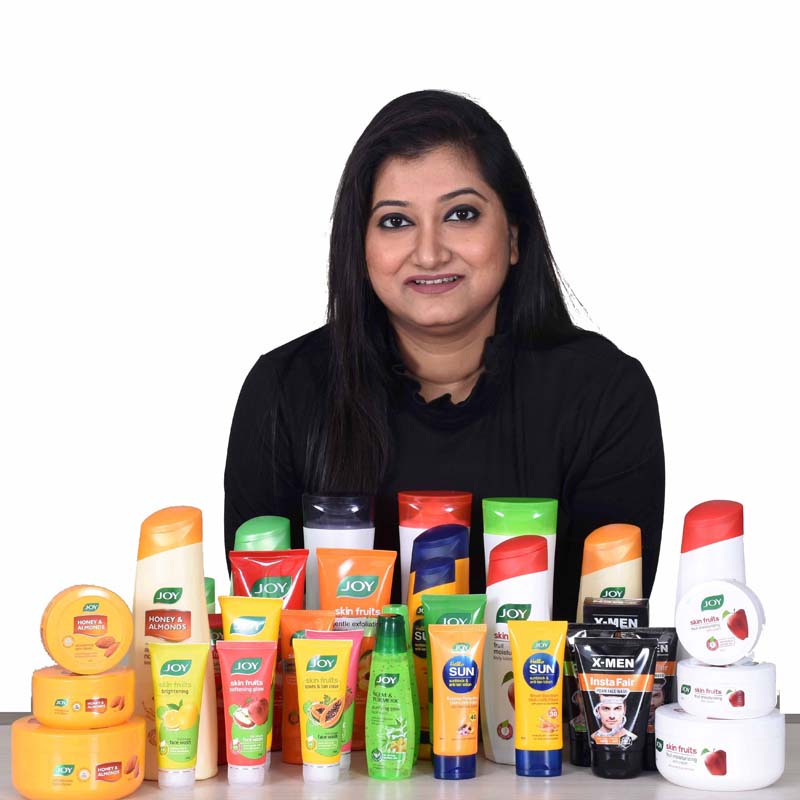
    Talking about the same with Indiantelevision.com, RSH Global (which own Joy Personal Care) CMO Poulomi Roy shared that bringing Mithila on-board was a strategic decision on the brand’s side for two prime reasons – one she is young and thus caters to the TG of Joy Revive, and second, she has a great influencer in her. She has the capability to influence the younger lot to buy things that are necessary for them.

    Roy says, “Historically, the brand ambassadors of Joy have been a little different for us. We first think about what we want to communicate, what is the brand story, and then have a celebrity on board who can facilitate that for us. Today when we talk of celebrities, the definition has become very different. The bloggers, influencers, film actors, as well as television actors—everybody is a celeb till the time one has the power to influence. This girl does have that. Her journey has been unique. She represents a part of the youth, which will form a very big part of the population.”
    Mithila also shares her views on getting associated with Joy. She says, “I know that it is a homegrown brand and that is something that I endorse in real life. Also, the pigments in its sunscreen are natural. Its face wash is fruit-based and personally, I love everything that is fruity or sweet smelling. And that all that had me sold to the brand (chuckles).”

    She adds, “Also, Joy doesn’t try to ‘accentuate’ your beauty. It promotes that you are ‘beautiful by nature’. It just restores the beauty you have. And that’s something very beautiful and special.”
    With the brand catering to a slightly younger population that Joy Personal Care and having Mithila, who is a digital media star, on board, the brand is also working on improving its media planning strategies. The brand usually had more than 70 per cent of its budget allocated to TV ads earlier but is now shifting the focus towards improving its digital presence.

    Roy shares, “Digital is going to be very big for us in 2019 as a mandate. We will have a good 25 per cent spend on digital but it will be wrong to benchmark it right now. It is for the first time that we are going this big on digital. So, we are going to make spends this year and next year we will again look at our budgeting. We will figure out what worked for us, and then we will set the benchmark for funds at the optimal level of spends.”

    She adds, “Brands that have to successful have to have cultural relevance. With digitalisation, the cultural game online has completely changed. There are a lot of sub-cultures that now lie in the digital space. As a brand, we need to understand and fit in the sub-cultures that are relevant to us. While we clearly know who our target audience is and which aspects of the marketing we are looking at, we still need to be very careful about our media planning.”

  • Brand Joy’s agenda is to be known to everyone: Poulomi Roy

    Brand Joy’s agenda is to be known to everyone: Poulomi Roy

    MUMBAI: As a nation, we are growing, our disposable income is rising and the world is looking at us when it comes to pushing the global economy. From a layman's or a consumer’s perspective, when he rises up the ladder, the second thing after good food is to look and feel good. This is the belief that CMO of RSH Global, which owns Joy Personal Care, Poulomi Roy holds. For her the personal care market of India is a huge industry that offers a wide scope for a brand like hers to bloom.

    The opportunity is vast but so is the fierce competition from legacy brands like Ponds and Himalaya. In an exclusive conversation with Indiantelevision.com, Roy elaborates on the brand’s marketing strategy to establish its identity and drive a steady year-on-year growth amidst all the ‘big’ names.

    Roy reckons that in today’s time, it is important for brands to have a relationship with their customers. “Of course your product has to be good and the pricing strategy has to be right but beyond that, every brand today wants to have recognition in the mind of the consumer,” she says.

    “We have been marketing our brand since 2011 and our strategy for all these years has been to reach out to maximum people. Therefore, television plays a major role in whatever we do. Also, we like to create content that is unique and relevant, establishing communication that is slightly differentiated from the rest of the brands,” she adds.

    Joy’s communication has definitely been unique and different. The campaigns with comedian Bharti Singh and the latest one with actress Mouni Roy are examples of the meaningful stories Joy has been weaving with its ads. She believes that these types of campaigns make the consumer feel closer to the brand.

    Another interesting anecdote, which Roy shares with much humility, is her understanding of the fact that no consumer will switch to Joy products overnight after watching the ads. She says, “The fact of the matter is that when you do something interesting and make something that resonates with the people, you start getting compared to the brands that are in existence for the past 30-40 years. Due to the language you use to communicate, the consumers start taking notice. I am not saying that from tomorrow they will stop using what they are using and will get converted to our brand, but the next time they are shopping and see my product placed amidst several others, it will not be unknown to them.”

    She further adds, “They will recognise my product and will feel to give it a try. After testing it they will see that it is light, gets absorbed easily, feels good on the skin, and is also very reasonably priced. And that’s my chance to convert them. Thus, my communication agenda is very clear—my brand Joy should not be anonymous to anyone.”

    The aim is to show that Joy is about good quality products at affordable prices. The target for the brand is the middle-class segment of the Hindi heartland and it has already been performing exceptionally well in cities like Jaipur, Lucknow, Kanpur, Varanasi, Allahabad, Indore, Bhopal, Jabalpur, Amritsar and Ludhiana. For the next growth phase, Joy is looking towards tier 1 and tier 2 cities of Maharashtra and eastern India to establish its products.

    With such a target-specific approach, Joy is spending most of its advertising budget on television. Roy reveals that around 80 per cent of her ad spends goes to TV while just 7.5 per cent is spent on print and digital. Rest 5 per cent is contributed towards product placement and activation.

    Roy also shed some light on the brand’s plan for 2019. She reveals that Joy will be launching more products in the moisturising category in the coming year. She also notes that further in the coming future, Joy will be focussing more on providing targeted action-oriented complete solutions under one umbrella so a person who is using Joy’s moisturisers is not using some other brand’s soap or shampoo.

    She is hopeful that soon Joy will be standing shoulder-to-shoulder with all the legacy brands that are dominating the Indian market currently and is relying on the strong research and development backing of her team in creating natural products that give longer-lasting results without any side-effects.