Tag: marketers

  • ‘Digital marketers need to be more confident:’ Digital Marketer Awards

    ‘Digital marketers need to be more confident:’ Digital Marketer Awards

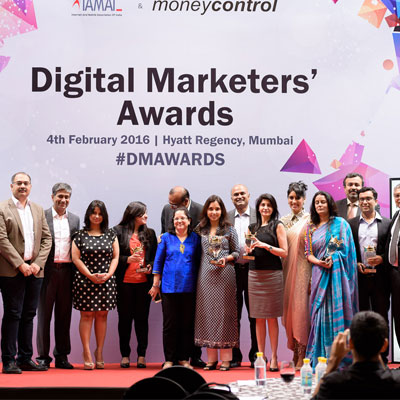
    MUMBAI: For the first time, India’s top digital marketers came under one roof to appreciate and uphold the brilliant work that their peers are doing exclusively on the digital front. Put together by Moneycontrol and IAMAI, the maiden Digital Marketing Awards saw a healthy turnover of CMOs, executives and creatives from various sectors in the industry.

    Dentsu Aegis Network chairman & CEO South Asia Ashish Bhasin set the tone of the awards function with his address to the audience. “Digital marketers should get confident,” he said, adding, “We must move on from convincing others and ourselves about the imminent digital future with quotes, studies and results. If someone isn’t convinced already, leave them be. They will soon follow after.”

    Staying true to the medium that the show was vouching for, attendees were requested to tweet about the event with #DMAwards, with a live Twitter feed visible to all on the monitor.

    Network18 group board of director Rohit Bansal was the Keynote Speaker at the award ceremony and shared his views on the future of digital marketing where new trends were being introduced every day.

    On the difficulty in categorising the entries, jury and Mahindra Holidays & Resort India CMO Deepali Nair shared that the first edition of the awards was definitely a learning experience and based on the results and feedback the jury is considering to club or separate a few categories. “When deciding on how many categories to have it is always a debate as to what to club and what not to. After we got the entries, there was a bit of learning on how to categorise the digital campaigns. You may see one or two more categories next year because in clubbing some categories, we saw some entries losing out. Some brands are restricted by virtue of their categories and hence we are thinking of separating them. A category like Travel and Hospitality is vast and there is a lot of good work, so each deserve their own category for the awards,” Nair said.

    Conversely, she added, “In several awards we have seen bank, insurance and mutual funds as separate categories. But when you think of financial services and what they are doing on the digital front in their digital brand communication, I feel that is a category we can club together.”

    Speaking on the occasion, Moneycontrol COO Rubeena Singh said, “Brands have started investing a lot of money in digital marketing, which is significantly growing every single day. We at Moneycontrol have also taken path breaking initiatives to reach out to the youth through this medium. Being the face of India’s digital growth story, we feel there couldn’t have been a better opportunity for us to recognise the leaders in the digital marketing industry today.”

    The awards come at a crucial juncture when the industry upgrades itself to the changing times and not only churn out serious digital work but have yardsticks and standards to compare and appreciate the trends setters.

    The winners, who took away the Digital Marketing Awards are as follows:

    • Karthi Marshan, Kotak- Digital Marketer of the Year, Banking/ Insurance

    • Gaurav Suri, UTI mutual fund – Digital Marketer of the Year, Mutual Fund / Broking

    • Naveen Kukreja, Policy Bazar – Digital Marketer of the Year, ECommerce / Online Classified

    • Manmeet Vohra, Starbucks – Digital Marketer of the Year, Travel /Hospitality

    • Bedraj Tripathy, Godrej Interio- Digital Marketer of the Year, FMCG / Consumer Durable

    • Aparna Lal, Microsoft – Digital Marketer of the Year, IT / ITES

    • Karan Sarin, One Plus – Digital Marketer of the Year, Mobile Service/Hardware

    • Reema Kundnani, Oberoi Realty – Digital Marketer of the Year, Real Estate

    • Amit Tiwari, Philips – Digital Marketer of the Year, Healthcare

    • Virat Khullar, Renault – Digital Marketer of the Year, Automobile

  • “Think mobile as ad dollars are heading there”: CVL Srinivas

    “Think mobile as ad dollars are heading there”: CVL Srinivas

    MUMBAI: Several market forecasts that we have seen in the past couple of months project digital advertising and marketing growing by leaps and bounds this year. The historical galloping growth rates have led marketers and planners to consider the possibility that the medium will overtake television spends in the near future.
     

    Brand custodians are no longer investing in digital as an added benefit but are thinking about investments on that front from the get-go. So is digital gnawing away at television’s share of ad spends or is its growth coming courtesy a new breed of brand builders?


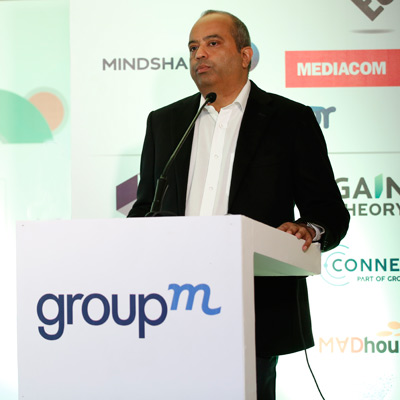
    Group M South Asia CEO CVL Srinivas does not think that TV is losing its edge. “Television is riding the digital wave, and smartly so”, says the veteran waving off any worries of television ad revenues seeing a dip this year. Not denying the obvious growth one sees in the digital space, Srinivas gives indiantelevison.com a complete breakdown of  how the digital growth works in favor of broadcasters and content providers, while also touching upon the key trends in the market, the changing role of media agencies and his take on the currently mushrooming of several digital agencies in the market. Excerpts from an interview with indiantelevision.coms Papri Das. 


    Here it is:


    How was 2015 for GroupM as a whole? What were the agency’s benchmark developments?


    2015 was a great year for us in GroupM. All our agencies performed well, especially when it comes to client retention which I consider most important. On the client acquisition front as well, we grew our business with several new accounts.


    Last year has also been kind to us when it came to awards. The GroupM Office of Year award, which is given out by GroupM APAC, was given to us last year. That’s something I consider as another high for us.


    For me, 2015 would be the year when we truly broke out of the mould of pure play media agency and delivered a range of different services to our clients to help them keep ahead of the curve. Over the years we have made investments in data, analytics and experiential marketing, cinema advertising and rural marketing and so on. All of that delivered excellent value to our clients last year. That has helped us diversify our offerings and in turn win us new and interesting mandates as well. Apart from that we have actively involved ourselves in the Mobile Marketing Association to help set standards and get some measurements going.


    Out of the four agencies under GroupM in India, which one do you think performed the best?


    I think all of them did exceptionally well and I say this with confidence based on each of the agency’s client retention and the newer arenas that they ventured successfully into.


    How was the year for the industry at large? Did you notice any changes that majorly impacted the industry?


    Last year we projected 12.7 per cent growth in ad expenditure and I must say we erred on the conservative side at the start of the year and we ended up with 14.2 per cent, but no one’s complaining!


    Several factors led to this development. The FMCG sector despite all the pressure it is facing continues to invest big money behind brands. You also saw huge growth coming in through e-commerce and there were quite a few brands that continued to invest throughout the year.


    What key trends do you see emerging in the market in 2016?


    Very clearly, our clients and brands in general are adapting to mobile as a medium. Till few years ago we hardly had ten or twenty clients, today the count is around 150. Advertisers are actively investing in campaign after campaign, month after month, by experimenting with new formats and following the measurements.  That is something I see taking off in a major way this year as several enablers are supposed to come into place in 2016.


    E commerce is emerging as a platform for advertisers in 2016 which can give an interesting spin to ecosystem.


    Apart from this we see several interesting initiatives happening in the content space, especially in the video and branded content space. This can give a further push to mobile advertising. The real big headline for me is mobile driving digital growth and in turn driving ad growth in India, and getting all traditional medium owners – be it broadcasters or be it print publication – to think mobile fast and think mobile first, because that’s where most of the advertising dollars are gonna flow to.


    What do you think will dictate how marketers spend this year?


    Right now we observe that marketers are a bit circumspect on where and when to invest. We are not yet seeing any major budget cuts otherwise our numbers in the GroupM This Year Next Year report for 2016 wouldn’t have looked so good.  But there is definitely an amount of cautiousness creeping in amongst advertisers.


    I think this year they are going to look at a lot more Return On Investment (ROI) and accountability across different media platforms. I also think they will wait and watch the market before deploying any of their long term campaigns and investments across media channels. Unless a property is tried and tested it will go through intense scrutiny before marketers decide to invest. Tracking of ROI and tracking of what the marketing spends are doing to the overall business will be key drivers for brands this year.


    Brands are increasingly seen as the sum of all customer touch points and this in turn increases the scope of marketing. In this context, how is the role of agencies changing?


    We think we are becoming even more relevant in the current scenario and important at the end of the day given the way the marketing and the media landscapes are shaping. Today consumers have multiple choices when it comes to brands and media consumption channels. In the same way advertisers and marketers also have multiple options to invest in. It can become highly confusing for the clients. That’s where GroupM  went ahead of the curve and started investing in multiple media investment management  services so that our clients can have a holistic marketing strategy and solution.


    What percentage of your business is “traditional” or core media now?


    I can’t share the break up but if you look at the market split, and the fact that we are future focused we tend to concentrate on wherever the marketing is moving to step ahead of it.


    A lot has been said about digital advertising overtaking television as the primary medium. What’s the ground reality?


    If you look at the trends in the last few years, not just in India but across markets we see a lot of synergy between television and digital. Looking at it from a consumer’s lens, you and I watch television and also consumer media on our second screen be it mobile or laptop. There is some amount of interplay happening between the screens.


    Looking at it from a broadcaster or content providers angle, most major broadcasters today have their own digital arms. And hence, I say television is actually riding the digital wave. Broadcasters are doing it very smartly, unlike other media which are getting swamped by digital. We see that trend continuing. Inf act if you look at our forecast figures, TV and digital account for close to 60 per cent of the market share of the total ad expenditure, and we see that number move to 70 to 80 per cent in near future.


    Is India truly ready for mobile marketing? Do we have a road map for it?


    There are several developments that have happened in the recent past. I have been personally involved in setting up the Mobile Marketing Association (MMA). Despite India being one of the top markets globally for mobile, we did not did not earlier have a body that monitors the digital marketing space. Therefore we needed this body where all stakeholders can come and ideate and put in place systems and structures for the medium. A lot of useful discussions have happened in the recent past be it on measurement and advertising standards and MMA as a body has done phenomenal work across the market. That is one of such several initiatives that will show its effect in 2016.


    What impact did BARC rural inclusive data have on the TV industry and on advertisers?


    I think it’s still early days to comment on BARC’s rural ratings. It’s only few weeks that they have come out. It is a very positive development. Rural India’s viewership accounts for a sizable chunk of our market. It’s a very aspirational class and important segment for many products and categories. To have data for this segment is a very good development.


    Though we will have to wait on watch how the data impacts the market, it is sure that advertisers are going to look at rural markets a lot more seriously especially in terms of media investment deployment across TV and other media options. Similarly content creators are also going to look at that space a lot more seriously today and come up with relevant products and offerings.


    And over all it is good for the economy and the country because we are finally becoming a lot more inclusive.


    How will the advertising landscape change with the completion of cable television digitization in India?


    Funny thing about India is that nothing ever happens sequentially…..everything happens together….somehow amalgamating. This actually makes our job fun because on the one hand you have the whole cable TV digitization playing out and DAS phase III being rolled out, and a lot of DTH players have gotten very active. On the other hand you have the 4 G launch that will open up a lot more bandwidth and infrastructure in digital and you have mobile crossing 1 billion connections.


    For marketers and advertisers what this means is to be aware of the developments, keep a close eye on them and see what are the opportunities they can capitalize on in short term and where is it that they need to invest, test and learn so that they can start capitalizing on them in the long term.


    The big lesson for us and specially me has been that we need to be constantly in a state of beta. What do we keep testing and learning today which could become a big thing tomorrow. Staying dynamic is the way to go.


    2015 also saw several well-known creatives and executives setting up their own startups, resulting in a mushrooming of several branded content and digital agencies. What is your take on this development?


    I think it is a good thing that bright young individuals are setting up companies on their own.  In fact some of us wouldn’t have jobs if this wasn’t done earlier. It also shows that today there are so many different areas that are emerging, and with the way the industry is being revolutionized there are many different expertise and special skill sets that the marketers need. I believe all of us can co-exist as one happy family because of the way the whole pie is getting fragmented. A lot of them are my dear friends and I wish them all the best.
     

  • “Think mobile as ad dollars are heading there”: CVL Srinivas

    “Think mobile as ad dollars are heading there”: CVL Srinivas

    MUMBAI: Several market forecasts that we have seen in the past couple of months project digital advertising and marketing growing by leaps and bounds this year. The historical galloping growth rates have led marketers and planners to consider the possibility that the medium will overtake television spends in the near future.
     

    Brand custodians are no longer investing in digital as an added benefit but are thinking about investments on that front from the get-go. So is digital gnawing away at television’s share of ad spends or is its growth coming courtesy a new breed of brand builders?


    Group M South Asia CEO CVL Srinivas does not think that TV is losing its edge. “Television is riding the digital wave, and smartly so”, says the veteran waving off any worries of television ad revenues seeing a dip this year. Not denying the obvious growth one sees in the digital space, Srinivas gives indiantelevison.com a complete breakdown of  how the digital growth works in favor of broadcasters and content providers, while also touching upon the key trends in the market, the changing role of media agencies and his take on the currently mushrooming of several digital agencies in the market. Excerpts from an interview with indiantelevision.coms Papri Das. 


    Here it is:


    How was 2015 for GroupM as a whole? What were the agency’s benchmark developments?


    2015 was a great year for us in GroupM. All our agencies performed well, especially when it comes to client retention which I consider most important. On the client acquisition front as well, we grew our business with several new accounts.


    Last year has also been kind to us when it came to awards. The GroupM Office of Year award, which is given out by GroupM APAC, was given to us last year. That’s something I consider as another high for us.


    For me, 2015 would be the year when we truly broke out of the mould of pure play media agency and delivered a range of different services to our clients to help them keep ahead of the curve. Over the years we have made investments in data, analytics and experiential marketing, cinema advertising and rural marketing and so on. All of that delivered excellent value to our clients last year. That has helped us diversify our offerings and in turn win us new and interesting mandates as well. Apart from that we have actively involved ourselves in the Mobile Marketing Association to help set standards and get some measurements going.


    Out of the four agencies under GroupM in India, which one do you think performed the best?


    I think all of them did exceptionally well and I say this with confidence based on each of the agency’s client retention and the newer arenas that they ventured successfully into.


    How was the year for the industry at large? Did you notice any changes that majorly impacted the industry?


    Last year we projected 12.7 per cent growth in ad expenditure and I must say we erred on the conservative side at the start of the year and we ended up with 14.2 per cent, but no one’s complaining!


    Several factors led to this development. The FMCG sector despite all the pressure it is facing continues to invest big money behind brands. You also saw huge growth coming in through e-commerce and there were quite a few brands that continued to invest throughout the year.


    What key trends do you see emerging in the market in 2016?


    Very clearly, our clients and brands in general are adapting to mobile as a medium. Till few years ago we hardly had ten or twenty clients, today the count is around 150. Advertisers are actively investing in campaign after campaign, month after month, by experimenting with new formats and following the measurements.  That is something I see taking off in a major way this year as several enablers are supposed to come into place in 2016.


    E commerce is emerging as a platform for advertisers in 2016 which can give an interesting spin to ecosystem.


    Apart from this we see several interesting initiatives happening in the content space, especially in the video and branded content space. This can give a further push to mobile advertising. The real big headline for me is mobile driving digital growth and in turn driving ad growth in India, and getting all traditional medium owners – be it broadcasters or be it print publication – to think mobile fast and think mobile first, because that’s where most of the advertising dollars are gonna flow to.


    What do you think will dictate how marketers spend this year?


    Right now we observe that marketers are a bit circumspect on where and when to invest. We are not yet seeing any major budget cuts otherwise our numbers in the GroupM This Year Next Year report for 2016 wouldn’t have looked so good.  But there is definitely an amount of cautiousness creeping in amongst advertisers.


    I think this year they are going to look at a lot more Return On Investment (ROI) and accountability across different media platforms. I also think they will wait and watch the market before deploying any of their long term campaigns and investments across media channels. Unless a property is tried and tested it will go through intense scrutiny before marketers decide to invest. Tracking of ROI and tracking of what the marketing spends are doing to the overall business will be key drivers for brands this year.


    Brands are increasingly seen as the sum of all customer touch points and this in turn increases the scope of marketing. In this context, how is the role of agencies changing?


    We think we are becoming even more relevant in the current scenario and important at the end of the day given the way the marketing and the media landscapes are shaping. Today consumers have multiple choices when it comes to brands and media consumption channels. In the same way advertisers and marketers also have multiple options to invest in. It can become highly confusing for the clients. That’s where GroupM  went ahead of the curve and started investing in multiple media investment management  services so that our clients can have a holistic marketing strategy and solution.


    What percentage of your business is “traditional” or core media now?


    I can’t share the break up but if you look at the market split, and the fact that we are future focused we tend to concentrate on wherever the marketing is moving to step ahead of it.


    A lot has been said about digital advertising overtaking television as the primary medium. What’s the ground reality?


    If you look at the trends in the last few years, not just in India but across markets we see a lot of synergy between television and digital. Looking at it from a consumer’s lens, you and I watch television and also consumer media on our second screen be it mobile or laptop. There is some amount of interplay happening between the screens.


    Looking at it from a broadcaster or content providers angle, most major broadcasters today have their own digital arms. And hence, I say television is actually riding the digital wave. Broadcasters are doing it very smartly, unlike other media which are getting swamped by digital. We see that trend continuing. Inf act if you look at our forecast figures, TV and digital account for close to 60 per cent of the market share of the total ad expenditure, and we see that number move to 70 to 80 per cent in near future.


    Is India truly ready for mobile marketing? Do we have a road map for it?


    There are several developments that have happened in the recent past. I have been personally involved in setting up the Mobile Marketing Association (MMA). Despite India being one of the top markets globally for mobile, we did not did not earlier have a body that monitors the digital marketing space. Therefore we needed this body where all stakeholders can come and ideate and put in place systems and structures for the medium. A lot of useful discussions have happened in the recent past be it on measurement and advertising standards and MMA as a body has done phenomenal work across the market. That is one of such several initiatives that will show its effect in 2016.


    What impact did BARC rural inclusive data have on the TV industry and on advertisers?


    I think it’s still early days to comment on BARC’s rural ratings. It’s only few weeks that they have come out. It is a very positive development. Rural India’s viewership accounts for a sizable chunk of our market. It’s a very aspirational class and important segment for many products and categories. To have data for this segment is a very good development.


    Though we will have to wait on watch how the data impacts the market, it is sure that advertisers are going to look at rural markets a lot more seriously especially in terms of media investment deployment across TV and other media options. Similarly content creators are also going to look at that space a lot more seriously today and come up with relevant products and offerings.


    And over all it is good for the economy and the country because we are finally becoming a lot more inclusive.


    How will the advertising landscape change with the completion of cable television digitization in India?


    Funny thing about India is that nothing ever happens sequentially…..everything happens together….somehow amalgamating. This actually makes our job fun because on the one hand you have the whole cable TV digitization playing out and DAS phase III being rolled out, and a lot of DTH players have gotten very active. On the other hand you have the 4 G launch that will open up a lot more bandwidth and infrastructure in digital and you have mobile crossing 1 billion connections.


    For marketers and advertisers what this means is to be aware of the developments, keep a close eye on them and see what are the opportunities they can capitalize on in short term and where is it that they need to invest, test and learn so that they can start capitalizing on them in the long term.


    The big lesson for us and specially me has been that we need to be constantly in a state of beta. What do we keep testing and learning today which could become a big thing tomorrow. Staying dynamic is the way to go.


    2015 also saw several well-known creatives and executives setting up their own startups, resulting in a mushrooming of several branded content and digital agencies. What is your take on this development?


    I think it is a good thing that bright young individuals are setting up companies on their own.  In fact some of us wouldn’t have jobs if this wasn’t done earlier. It also shows that today there are so many different areas that are emerging, and with the way the industry is being revolutionized there are many different expertise and special skill sets that the marketers need. I believe all of us can co-exist as one happy family because of the way the whole pie is getting fragmented. A lot of them are my dear friends and I wish them all the best.
     

  • NDTV Car and Bike Awards 2016 embraced by leaders

    NDTV Car and Bike Awards 2016 embraced by leaders

    MUMBAI: It was a night celebrating fast paced thrills and glamour, the coveted NDTV Car and Bike Awards, presented by Future Generali and powered by Mobil was a scintillating affair indeed. 


    Renault Kwid won the NDTV car of the year award 2016 and Bajaj Pulsar RS 200 was awarded the NDTV two wheeler of the year 2016. Leaders from the automobile industry, marketers, jury members and PR persons joined on the occasion.


    This year, the NDTV Car and Bike Awards saw a panel discussion on the state of the industry, the status of the crucial road safety bill, and how the industry is looking to play its part to tackle growing air pollution. The eminent panellists included Hero MotoCorp managing director and CEO Pawan Munjal and Maruti Suzuki India managing director Kenichi Ayukawa. The discussion was moderated by NDTV group CEO Vikram Chandra.


    Renault India CEO Sumit Sawhney was awarded the coveted automotive man of the year 2016 for the launch of the KWID, and his bold strategy behind that success. The 11 edition of the awards also honoured products launched over the past year, across both car and bike segments and recognised industry leaders, advertisers, marketers and PR professionals from the industry.


    The Mobil CNB Viewers’ Choice Awards for both cars and bikes provided NDTV viewers the exciting opportunity to vote for their favourite car and bike nominees and stand a chance to take the year’s hottest wheels home. Renault Kwid and Bajaj Pulsar RS 200 were announced as the Mobil CNB viewer’s choice car and two wheeler respectively. Virat Kohli was awarded the brand ambassador of the year while the BMW i8 took home the trophy for automotive technology of the year. 


    On the eve of the 11 edition of the awards, NDTV group’s editor auto and head of automobile programming  Siddharth Vinayak Patankar said, “What a superb year it has been, that has given us such competent and exciting products. The industry is also climbing back from its worst days, which is encouraging for us all. I remain proud that we deliver India’s most credible automobile awards! I have fiercely guarded the awards process and we had fantastic juries for the various categories, which made it even more comprehensive. As always we credibly honour the best of the auto industry while also reflecting the choices and sentiments of customers, manufactures and auto lovers alike.”


    The Marketing and Communications awards categories had a special jury made up of Madison World chairman and MD Sam Balsara, Clea Public Relations chairman and MD Vinod Nair, Ogilvy & Mather national creative director Rajiv Rao, McCann Worldgroup Asia Pacific chairman and lyricist Prasoon Joshi, Asylum Films founder Razneesh Ghai , NDTV Prime strategy head editor and anchor Shruti Verma Singh, and  NDTV group editor-auto and head of automobile programming Siddharth Vinayak Patankar.


    The product awards boasted a panel of eminent jury members including Car India and Bike India editor Aspi Bhatena, DC Design, Racers CEO Dilip Chhabria,   Aditya Patel, Karun Chandhok and Rayomand Banajee, senior industry consultant Dr V Sumantran, rallyist and auto enthusiast Kamlesh Patel, Man’s World managing editor Pablo Chaterji,  Evo India editor Sirish Chandran, NDTV  Assistant Editor-Auto PS Balakrishnan,  and NDTV Group Editor-Auto Siddharth Vinayak Patankar.


    The key categories include: NDTV car of the year, NDTV two wheeler of the year, car manufacturer of the year, two wheeler manufacturer of the year, CNB viewers’ choice car and two wheeler of the year, and automotive man of the year.


    To ensure a seamless and transparent selection process, jury members got a hands-on experience of each car and bike at the Buddh International Circuit, along with the nominee’s specifications, its market performance and details on its immediate competition. The jurors then led through a sanitized process filled out their assessment on each nominee and awarded points to all the contending vehicles. The scoring and voting system instituted by the World Car of the Year Awards was used in the selection process.


    Ballot voting was conducted in isolation to other jurors and is monitored and organised by auditors Ernst and Young.  

  • Ad budgets in US shift from television to digital platforms

    Ad budgets in US shift from television to digital platforms

    NEW DELHI: Even as the switch over to digital technology is beginning to show pace in India, digital video ad spend grew by 42 per cent over the past year to total $7.46 billion in 2015 in the United States for the sixth consecutive year.


    Within the next four years, that number is expected to nearly double and reach over $13 billion by 2019, according to a report on 2015 US State of the Video Industry by Verizon’s AOLPlatforms.


    According to the report, marketers are reprioritising traditional advertising budgets and adding dollars to digital video. TV budget growth is stagnating, with a sizeable portion of those dollars being reallocated to video advertising.


    Mobile and video are converging, posing new opportunities and challenges to the industry. Overall mobile video advertising spend increased 18 per cent since 2014, but marketers say measurement remains a key pain point.


    Almost 91 per cent of brands and agencies are buying video programmatically and continue to make larger investments into the technology year-over-year. Eighty-eight per cent of publishers claim they sell their video inventory programmatically, a noticeable 37 per cent leap from 2014.


    Programmatic TV is gaining popularity as audience fragmentation hits an inflection point. Over the next year, 41 per cent of television buyers–a 3x increase since 2014–plan to rely on programmatic technology to make more strategic TV investments.


    Advertisers and agencies devote over 30 per cent of their overall video budgets to branded video content. Brands intend to grow these investments 10 per cent in the next year.


    AOL Platforms surveyed nearly 300 US brands, agencies and publishers to get a holistic view of the current state of video advertising.

  • BARC India adopts NCCS as new classification

    BARC India adopts NCCS as new classification

    MUMBAI: In its endeavour to interact, engage and share with its stakeholders – key developments and initiatives – Broadcast Audience Research Council (BARC) India has embarked upon itself to unravel the puzzle of TV audience measurement system in India.
    One of the biggest changes that the measuring body has adopted is the New Consumer Classification System (NCCS).  The ‘New SEC’ system as it is referred to in the MRSI documents was co-developed by Market Research Society of India (MRSI) and Media Research Users Council (MRUC) as the new classification system for industry use.
    The new SEC system, which has been in existence since 2008, was developed after rigorous research as a better discriminator of the purchasing power of a household compared to the SEC. “Research has to evolve over time; and so have systems. In the 80s, MHI was used to classify purchasing power, which gave way to a better system called the SEC in the 90s. It is now time to embrace the new age system,” points out BARC India CEO Partho Dasgupta.
    Alternative systems – a point-based system including education of CWE, press exposure of housewife, ownership of durables and usership of consumer goods; and a system considering ‘best type’ of consumer durables owned – were considered before settling on the present NCCS.
    It is based on the assumption that a system that throws up more inequalities is more discriminating.
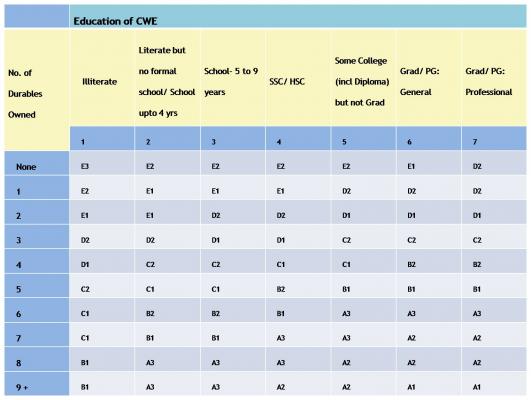
    The new SEC system is used to classify households in India and is based on two variables:  education of chief wage earner and number of consumer durables (from a predefined list) owned by the family.
    The 11 shortlisted durables (electricity connection, ceiling fan, gas stove, refrigerator, two wheeler, washing machine, colour TV, computer, four-wheeler, air conditioner, agricultural land (in rural areas) were identified as the best discriminators of the ‘purchasing power’ of a household after evaluating the series of variables, including education of housewife, type of dwelling (house), amenities, number of rooms, ownership of durables and usership of consumer goods.
    Dasgupta believes that the new system will be of great value to the industry due to various factors. “To name a few; (a) Advertisers do not discriminate between urban and rural India from their sales perspective; and the NCCS is a single system for urban and rural India, (b) It is not linked to only one individual in the household, but to the entire household, (c) It is dynamic, having the ability to change over time as discriminators change, and (d) It captures the affordability quotient of household and hence marketers can target more precisely.”
    NCCS v/s SEC – A Comparison:

    NCCS Grid has 12 grades ranging from A1 to E3:


  • 9 takeaways from GoaFest 2014!

    9 takeaways from GoaFest 2014!

    GOA: Contrary to popular perception, GoaFest is not just about beer, beach and a break from deadlines.


    Barely my second year at the fest and energy levels seem to be hitting the roof, speculations of certain biggies giving the event a miss notwithstanding.


    As they say the show must go on and so it is that we’ve had our share of sundry speakers, some getting a standing ovation and others tickling our funny bone. On my part, I’ve put down nine observations as key takeaways from this edition of GoaFest.


    Clients love their agencies


    Yes, you read it right. Britannia’s ever energetic Anuradha Narsimhan made a candid observation yesterday. She said she loves her associates (agencies) who care for her brands. Agency types were obviously bubbling with joy when they heard this.


    Pepsico’s Deepika Warrier presented her ‘one’ philosophy saying the thought of being ‘one team’ had worked wonders in the relationship PepsiCo had with its agency partners. How often do you hear a client saying all this at a public forum? These thoughts put a smile on my face.


    It’s time for ‘social relevance’


    The marketing world may be talking about the power of social but is digital marketing only about being powerful on social? Wondered Preethi Mariappa of Razorfish Germany and said it was time for brands to give consumers memorable experiences on social.


    2014 will be the age of social relevance, according to Mariappa. She sounded a note of caution however that while there is much optimism about the social space changing marketing dynamics, it was left to be seen whether brands towed the line.


    Comedy sells best on social


    Unlike the impression I had that the fest would be all too serious, a few surprises threw me. When team All India Bakchod (AIB), India’s foremost comedy podcast creators took centre stage, I was sure that there would be some great points of view coming their way, no pun intended.


    The funnies shared their success story and said to create an impressive podcast, you needed to follow your heart, mind and punch in some great flow of ideas. I realised that in India, content needs to be crafted, keeping in mind cultural implications. As people open up their minds, content too will take newer shapes on social.


    Digital media in search of creativity 


    A common point that came up over the three days was that brands need to get out of their comfort zone. A good idea can come from anywhere; said MEC’s Melanie Varley. She said that brands should do something to make people talk about them. Though creativity is subjective, it is essential that brands put on their thinking cap to grab attention on social.


    Everyone likes storytellers


    Storytelling is an art that makes every conversation memorable. The digital case studies that were showcased by various local and international experts had one thing in common – shareability


    Content on digital is a hit only when people share it. Thus, brands need to be great storytellers even on digital.


    It’s all about digital


    Everyone is talking about digital. Everyone wants to be on digital. Time demands brands and agencies think digital! The ‘just a click away’ culture has changed many lives and businesses.


    You can be an inspiration at any age


    No one had expected two kids all suited to go up on stage and confidently share their business story. With a grin and passion in their eyes, Shravan and Sanjay won hearts and got a standing ovation with their story. They are the country’s youngest app developers. If there is such a thing as age is only a number, truly, these two are an inspiration for people of all ages.


    Impressive new entrants in the Abbys


    PR and Broadcaster – the newbies in GoaFest this year, got an overwhelming response. The Advertising Club and chairman of the Awards Governing Council president Pratap Bose mentioned that the 10 member jury for the PR category was excited to see some good pieces of work. PR locally doesn’t have a platform to showcase its work. The move to introduce these categories is a wise one.


    Cooperative competition


    As I am about to finish this piece, a fellow journalist comes and waves to me. A newsletter from competition which is right in front of me features one of my tweets about GoaFest. Another reporter from a rival publication calls out to me for a stroll along the beach. Did someone say competition? We’re here to learn and absorb from one another.


    Apart from the takeaways, here’s a big shout out to all the winners from indiantelevision.com

  • EFFIES 2013 achieves an all time high, with 419 entries

    EFFIES 2013 achieves an all time high, with 419 entries

    MUMBAI: The EFFIE 2013 awards in its 13 year history, has received the highest number of entries ever this year.

    Last year the Ad Club received 357 entries – the highest then. This year it has surpassed the tally with an impressive figure of 419.

    On the escalation, EFFIE 2013 committee chairman Ajay Kakar said: “A growth of about 20 per cent in the number of entries and participation of over 50 agencies shows the growing importance of ‘effectiveness’ of a marketing campaign and its direct impact on a business. In recent years, this has also been one of the key requirements of businesses from marketers and agencies. I am sure that this year we will witness a wide range of ideas that has created a lasting impact on brands across diverse categories.”

    The award showcases the most effective in marketing and advertising and it’s the only award which celebrates the success of not only the agencies but also the clients.

    From 2011, the Ad Club has conducted the judging of EFFIEs and EMVIEs in Delhi, in addition to Mumbai. This has helped the Ad Club to engage with a large marketing fraternity from Delhi also.

    This year Colors is the presenting sponsor and Zee Media Corporation Limited is the associate sponsor. Lenovo has also come on board as the technology sponsor.
    The ceremony is scheduled for 15 January 2014 at the Royal Western India Turf Club, Enclosure II, Mahalaxmi in Mumbai at 6:30 pm.

  • Twitter has edge over Facebook in real-time TV, says report

    Twitter has edge over Facebook in real-time TV, says report

    MUMBAI: When it comes to so-called “TV talkers”, those who use social media while watching television programs, Twitter still has an edge over Facebook, a report said Thursday.

    As per the report, Twitter is still more attractive to advertisers and marketers than Facebook when it comes to real-time TV, according to eMarketer.

    “Facebook is further behind, but it has several advantages—such as its massive size—that will, over time, make it an attractive option,” said the report.

    Still, with more than a billion users, compared to Twitter’s base of more than 215 million, Facebook’s real-time TV promise is huge. A major reason is that, compared to Twitter, it has more user data for advertisers to tap.

    Twitter, the report noted, “integrated with TV shows and networks and developed ad products that align with marketers’ television advertising.” Twitter has reported that “95% of public social conversations around TV happen on its service,” the report said.

    Twitter’ strong TV potential has become more prominent as the San Francisco-based social network moves toward going public. Analysts sizing up the Twitter offering have consistently pointed to TV as one of its core strength.

    In a way, Twitter’s TV edge is based on how it quickly emerged as “a place where people have gone to discuss what they are watching on TV.”

  • Prestigious “Webby Awards” Honors Grandmother India Design

    Prestigious “Webby Awards” Honors Grandmother India Design

    MUMBAI: Grandmother India Design, Pvt., Ltd (GMI) is pleased to announce the addition of another award for their work with “Magma Fincorp”. The design agency has won the title of “Official Honoree” at the 17th annual Webby Awards in the Financial Services/Banking category for their exceptional work.

    The Webby Awards (www.webbyawards.com), hailed by the New York Times as the Internet's Highest Honour announced this year’s “Webby Winners Gallery & Archive” at an event held May 21st, 2013 in New York City.

    Speaking about the project that won the award, Cyril-Vincent Michaud, Head of New Media says, “our task was to position online, the Magma Fincorp’s brand as ‘the’ benchmark and to promote the company amongst investors and potential employees. The website had to extend the brand’s services to the end consumer, drive in more traffic to the site and create a wider awareness of Magma in the online medium. The task was also to inform and provide detailed up-to-date information for the company’s target audience. The solution that we conceptualized and executed provides not only an excellent first impression to Magma’s audience, it also conveys Magma’s main value proposition, which is to empower internal communication and provide an online marketing tool to establish a dialogue between the company and its audience.”

    The Webby Awards celebrates those developers, designers, coders, writers, marketers, dreamers and boat rockers who make every aspect of the web (no matter how technical) a work of art. Now in their 8th year, they have added new social categories to ensure cutting edge ideas have a place on the table. The awards are meant to honor creative excellence on the internet and recognize the creative and marketing professionals behind award winning sites, videos, marketing programs and mobile sites/apps from all levels of budget and organizational reach.

    Speaking about this milestone for GMI, Mr. Pradeep Datwani, Director, Business Development, Grandmother India Design Pvt. Ltd. says, “It’s an honour to be recognized for our contribution to the industry and we are truly humbled by this accomplishment. At Grandmother, it has always been our endeavour to be the best in the class and bring the latest trends of design and quality execution. We will continue to do so across all our projects with a clear vision to develop excellent designs that make our customers happy.”