Tag: marketers

  • Brands miss a trick with gTLDs as Icann opens digital land grab

    Brands miss a trick with gTLDs as Icann opens digital land grab

    MUMBAI: A fresh survey from the Internet Corporation for Assigned Names and Numbers (Icann) reveals that 52 per cent of marketing leaders see serious brand-boosting potential in owning a bespoke top-level domain—but a third haven’t the faintest clue what a gTLD actually is.

    Top-level domains (the bit after the dot, like .london, .tech or .love) are about to hit the market again, with Icann gearing up to open its first application window in over a decade come April 2026. But despite the looming gold rush, many brands are snoozing through the starter gun.

    Of the 2,000-plus marketers surveyed across eight countries—including the UK, US, China and India—only 19 per cent had ever worked at a firm that applied for a gTLD. Yet once they were told what a gTLD is, a staggering 92 per cent could see the upside. Chief attractions? Brand differentiation (46 per cent), improved trust (45 per cent), tighter online control (44 per cent), and better SEO (44 per cent). In short, more power behind the dot.

    Still, roadblocks remain. Cost (31 per cent), ignorance (27 per cent), and tight resources (24 per cent) are keeping the gTLD dream on ice for many. Regional views are anything but uniform: Nigeria (74 per cent) and India (61 per cent) are bullish on the potential, while China is more split—half the marketers there think gTLDs are worth it, the other half call them a waste of money.

    This matters. Marketers say standing out online is their top challenge (53 per cent), followed by grabbing the right audience (52 per cent) and keeping up with digital trends (47 per cent). A gTLD—essentially your own walled garden on the Internet—could be a game-changer. Think trust, exclusivity, and a domain that actually means something.

    Icann SVP of global domains & strategy Theresa Swinehart says: “The New gTLD Program: Next Round presents an opportunity for businesses, communities, governments, and others to apply to operate their own secure space online, tailored to fit their organization, community, culture, language, and customer interests. Now is also the moment for brands to consider applying for a gTLD, and this research tells us there is still a lack of awareness. Icann can help provide information and raise awareness of the Next Round and the opportunity it presents for global communities, organizations, and businesses, including brands.”

    For brands looking to own their digital patch—whether it’s .coffee, .africa or .you—the clock is ticking. And with consumers more sceptical than ever online, trust might just come in three characters or more.

    Read the full report: Understanding the gTLD Opportunity for Brands

  • The CTV India market maybe small, but it surely packs a big punch: mediasmart’s Nikhil Kumar

    The CTV India market maybe small, but it surely packs a big punch: mediasmart’s Nikhil Kumar

    With the changing digital landscape, consumers are warming up to connected TVs (CTVs) like never before. As Indian audiences increasingly embrace OTT content while gradually making the shift from traditional linear TV viewing, the change also presents an untapped advertising goldmine for brands and advertisers alike.

    On the sidelines of the Indian Digital Brand Fest organised by Indiantelevision.com, we caught up with mediasmart vice-president of India & SEA Nikhil Kumar, an Affle company, to understand how advertisers can buckle up to face this new beast in advertising. Last year, mediasmart commissioned research that helped understand the CTV behaviour patterns in India to provide greater market understanding. With mediasmart recently releasing its latest industry report on the CTV ecosystem in India that would help fast-track the growth of this industry, we take a deep dive into some of the underlying challenges and come away with some key takeaways.

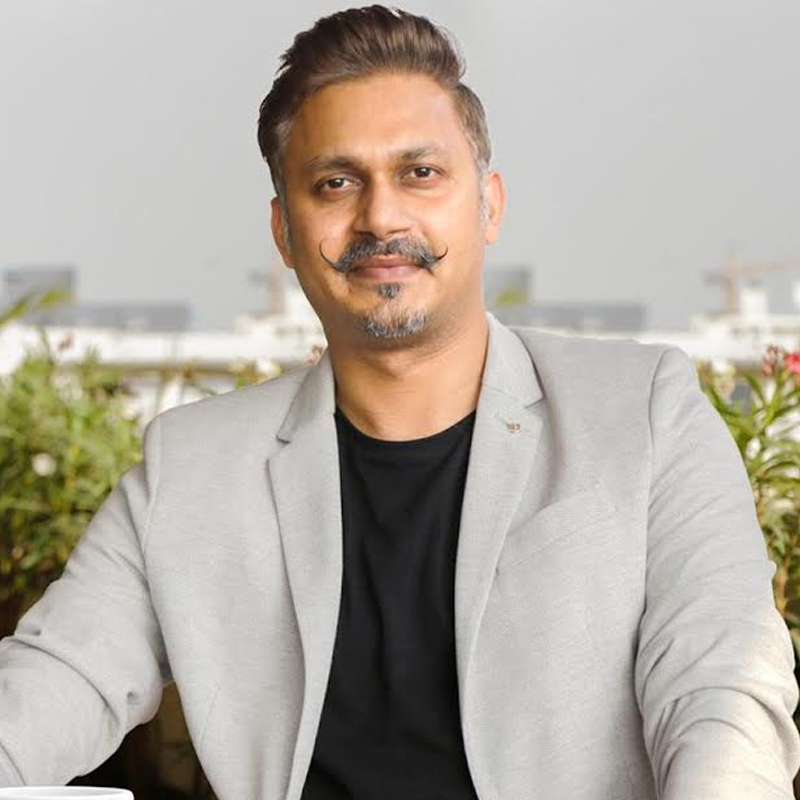
    Kumar, a consumer marketing professional with over a decade of experience working in FMCG , retail, F&B, and ad-tech set-ups with global brands like TikTok, Puma, L’Oreal, Cafe Coffee Day, and InMobi, is extremely bullish about the current and future role of CTV as a medium for delivering impact for brands. He believes that CTV consumption today goes beyond the inhibitions of individual consumption on mobile screens and probably also brings back the family-viewing phenomenon of linear television, but with very measurable metrics of targeting and delivery.

    In an in-depth interaction with Indiantelevision.com, Kumar also talks about his journey from primarily marketing brands spread across the consumer goods sector, food retail, and sports & wellness, to now navigating the ad-tech space. While managing marketing for multiple brands, there were great learnings towards understanding consumer behaviour and sentiments, advertising objectives, media channel goals and analysis, and so forth. What I have really enjoyed after switching sides and working within ad-tech/mar-tech set-ups is the understanding of how each dollar spent is effectively reaching or not reaching the intended consumer. More importantly, the journey from ad exposure to intended purchase & the continued lifetime journey are built on strong data tech stacks with due diligence on consumer privacy. So for me, the whole journey from the brand side to now the adtech side has been an immense learning curve.”

    My learning, which I often share with my team, is—”Never sell the product, sell the insight—sell the solution to the problem that the marketer is intending to solve—that’ll bring better adoption for your offering,” shares Kumar.

    Edited excerpts:

    On why advertisers are cautious adapting to the CTV medium, despite the rapid adoption of it by consumers

    We live in an era that can be defined as pre-covid and post-covid. Covid played a huge catalyst in the growth of connected TVs as people realised that they could view the same content they see on their mobiles on a bigger screen via connected TV , thereby providing a better experience.

    For advertisers, the caution is actually natural, primarily because of the newness of the medium—connected TV & the scale/reach it brings from a planning lens. I think the hesitancy could also be derived from not understanding whether CTV reach spend should be bucketed under offline or digital spend, because it’s still TV and that’s well covered by most large spenders.

    Most large traditional advertisers feel they are already advertising on TV to a much more mass audience on broadcast, so why do they need to spend extra to advertise on CTV?

    When CTV started getting sold in India as an inventory for monetisation, it was being talked about as a digital medium. But then they are doing enough advertising for OTT already on mobile. And suddenly there’s this new accessibility for users via CTV. So you have to educate them that OTT is not CTV. The subset of CTV can be OTT, but that’s not the totality of it. There’s so much more that you can do on CTV, like play games, watch live news, etc., which led to its phenomenal growth. I think brands and advertisers, rather than being hesitant, are becoming more inquisitive.

    A year back, there was hesitancy, which has turned to inquisitiveness, and today, if you look at it, it’s a Fomo (Fear of missing out) created for every media planner or agency owing to the scale of CTV growth globally. If they don’t have CTV as a top priority, clearly it’s a miss. Even the agencies catering to smaller brands from tier II and tier III categories feel the need to hop onto the CTV bandwagon. More so because of the sheer pressure that the clients are creating on how to get their brand’s ads on the medium. Because that is where their audience is, watching their content.

    On whether the decline of DTH and linear TV viewing is leading to the spurt in CTV or vice versa

    It’s important to understand that sometimes users weren’t even contributing to DTH for them to decline from the database. These are the cord-nevers beyond the cord cutters.

    Suddenly, people are realising that the decline of DTH doesn’t mean the growth of CTV. Yes, it does imply that. But connected TV by itself as a base is growing. There’s a section of consumers who have never had a cable/DTH connection (cord-nevers), who bought a smart TV and immediately connected it to the internet and started watching it.

    Advertisers are also understanding that some of the audiences they want to reach out to are not there on TV. Thus, more than being hesitant, I think they are convincing themselves that this is a medium that’s creating more impact and providing a way to reach audiences they can’t reach otherwise on TV.

    Around 2.5 million DTH and cable subscribers have declined in the past two years or so, while comparatively, nine million wired broadband subscribers have increased. According to these two data points, the home wifi/broadband ecosystem is growing. There’s an accessibility to TV, while at the same time, there’s a decline in DTH, and last but not least, there’s suddenly a growth pattern in the availability of content. The number of OTTs that are available in the market is not just restricted to Hotstar, Netflix, Amazon, Sony, Zee, and Mx Player. There are 40 plus OTT players today—vernacular, regional, multi-lingual, event dialect-specific OTTs—there’s so much happening in the space.

    We have recently released a report titled “India CTV Report 2022,” which is one of the most comprehensive reports on this subject. Last year, when we first released it, it became a bespoke reference point for most avid marketers and media houses. This year, we did a very interesting comparison of the prices that you are paying. A comparison of the cost of these OTTs versus the average price of a DTH plan has not been put into perspective . If you compare the prices, it is actually not that expensive. So you can have all the content from around the world that you want to see at a price that is affordable. These are some of the factors that are really contributing to the growth of the connected television market in the country.

    And it’s not restricted to Gen-Z or millennial users, as we realised from our survey report. In our first-party survey covering a diverse audience segment across metros and non-metros, we realised more than 84 per cent claimed to be watching CTV with someone in the household rather than alone, similar to the TV broadcast era, in which family viewing was the dominant form of consumption. The TV broadcast era was followed by the era of mobile phones, which meant we went from a family viewing/co-viewing to a personalised content consumption experience on our mobile devices. This received a huge boost with the Jio revolution from 2016 onwards. And now, in a post-pandemic era, the connect TV experience has brought everybody back together for co-viewing, implying we have come full circle, but now with a way to answer the question: what happened after the TV ad was served?

    On how can agencies & advertisers overcome the lack of standard industry metrics- one of the key reasons limiting faster advertiser adoption of CTV

    There are always challenges related to a new medium in how measurability is going to happen. In fact, globally, one of the reports released recently claimed that there’s massive ad fraud happening already within the CTV space globally. If you see, most of the OTTs are owned by large broadcast networks. The OTT, or the platform, is evaluating the user reach and where your ads were served, along with who saw them. How does one evaluate ad fraud, which is obviously a difficult area?

    This is where programmatic advertising is becoming more and more important for advertisers, because for them it’s not important where the ad is shown, it’s more important to whom the ad is shown. The idea is to target audiences as opposed to targeting platforms where your ad is running, and hence, targeting the same user across multiple platforms becomes possible.

    Additionally, programmatic advertising provides transparency. You can access the dashboard. You can see the ads getting served, what time they were served, how they were served, which audience segments they were served to, and which audiences are engaging with them. Today we have technology where you can map a TV to a device id on a mobile phone. Hence the intuitive understanding that “this is the guy who has a TV at home; this is the device ID so I can continue the lifetime journey of engaging with that consumer either on his TV or on his mobile.”

    Technologies like ours are building that trust so that while currently there’s no measurement for what can happen on TV, you can link that journey to a user on their mobile where all possible mobile measurement options exist.

    And you can control it because it’s digital. So we know who saw the ad. Because you can track it down to a TV, to a location, to the size of a TV, to a certain household. So many data points can come up. You can target users by the size of the screen, by location, etc.—so many targeting options are available because of the digital nature of the medium. Hence, the trackability of success is also there. And hence, it’s clearly an impactful medium.

    On some of the underlying challenges & emerging trends in advertising on CTV in the domestic market

    So challenges can also be opportunities, and some of them we saw were in education, as India is still a market with high spending on traditional platforms like TV and print. We need to focus on educating advertisers and agencies on how CTV, as a digital medium, is a growing channel and an incremental reach medium at that. For instance, the festive season this time is all going to be about going back to retail, OOH, a massive print spend, and a big burst on television across brands. But, was your brand able to reach the users on CTV where they are most engaged and spend close to 4 hours a day? If not, you have clearly missed an opportunity. So that’s the first challenge in the ecosystem’s education.

    If we talk about trends, the growing trend is that gaming has grown by leaps and bounds on CTV and is going to become a destination. Another major trend is programmatic advertising via CTV to avoid spillovers. We are a country that does almost 60 per cent of media buying directly as opposed to 40 per cent programmatically. But how do you integrate the user’s journey across multiple ecosystems and screens that he operates on into one experience? That’s where programmatic advertising comes into the picture, which can help you build a unified view of the consumer.

    On how can marketers maximise viewer engagement on ads and improve the ad viewing experience for users on CTV?

    That’s an interesting premise because on CTV there are multiple ecosystems that clearly users spend time on—there is the OTT or on-demand content ecosystem, and the other is user-generated content (UGC) platforms. Beyond this, we also have news, gaming, and music, which are growing very fast.

    What does a user tend to do when they see an ad on a UGC platform? They are more likely to skip it since the 20-or 30-second ad in a three-minute video is more of a distraction.

    The user’s behaviour on on-demand OTT is observed to be very different, where on average they spend anywhere between 30 mins and an hour watching their favourite on-demand show or movie. The user is committed to spending a longer time there and hence doesn’t mind watching a 20-second ad here. Another thing to note here is that, as per the Ormax OTT Audience Report: 2022, only 31 per cent of India’s digital video audience is paid users, while the remaining 69 per cent is an advertising-based video-on-demand (AVoD) audience. Clearly, a huge chunk of the audience is reachable via ads on OTT and CTV.

    Also, CTV, with its immersive brand storytelling on the large screen, along with the ability to connect the journey from TV to mobile, can create an ecosystem that enables a user to retain the ad better for all kinds of segments like beauty, cosmetics, auto, FMCG, e-commerce, app-first etc. Ad retention and a CTA (call to action) created via omnichannel audience targeting, CTV household sync, and drive-to-store technologies enable users to act upon the ad that they have seen. Because at the end of the day, what is advertising for if not to act upon it?

    On how does the India market differ from the US and European markets in this aspect

    From a CTV advertising standpoint, I think the US and Europe are more evolved markets. They saw the trend almost three to four years ago. In the US, almost 90 per cent of households have at least one CTV device—clearly, it is a highly evolved CTV market. Besides, non-pay TV households are set to exceed pay TV households by 2023, indicating cord cutting and cord nevers are on the rise in the US.

    The European Union is very similar, though it obviously has GDPR (General Data Protection Regulation) laws and other regulations that affect how users are tracked. But in both global markets, the share of CTV impressions is growing really fast. In fact, in the US, the share of CTV impressions has exceeded the share of mobile, which has skewed the global average as well, in favour of CTV. If you look at the US, CTV ad spending will touch almost 10 per cent of the total ad spending by 2024. And within that high share, most ads are being transacted programmatically, not even direct buys. They have moved from a system dealing with multiple publishers. So, that’s the evolution and mindset that we are moving towards.

    If you compare it to India, it’s a very small market in terms of adoption. It’s been just two years since we started CTV advertising. So it’s early days, but last year we grew almost 30-40 per cent. We have seen the CTV reach go from six million to nine million and now to 14 million, and the pace is only increasing Q-o-Q. So, while the size of the market is small today, the adoption rate is very high in the domestic market. CTV penetration is growing really fast, and we predict that it will be 40–50 million by 2025. So, even though the Indian market is small, it is surely packing a big punch. CTVs are here to stay and grow.

  • Social Donut acquires publisher first network Traffic Venue

    Social Donut acquires publisher first network Traffic Venue

    Mumbai: A performance-driven network, Traffic Venue, has been acquired by Social Donut for an undisclosed amount. Traffic Venue will become part of Social Donut, a global digital marketing and performance agency. From now on, the network will be known as Traffic Venue, a Social Donut Company.

    With marketers demanding increased accountability for their marketing spend and building brands through performance marketing channels, Social Donut’s continued growth strategy will be supported by the acquisition of Traffic Venue. In addition, it extends Social Donut’s suite of performance marketing solutions for marketers.

    With a vision that creativity and marketing should combine in an era of digital transformation, Social Donut was established in 2018. Besides emphasising creativity, the firm develops data-driven concepts targeted at new-age clients, as well as outreach skills to influencers and talent. This acquisition will provide Social Donuts clients with better access to new data-driven solutions, and the existing clientele of Traffic Venue will benefit from the overall creative emphasis in marketing.

    “Creating brands online through smart targeting, engaging creative, and seamless experiences is what advertisers care about, and Traffic Venue is the leading solution provider in this hyper-growth category. The combination of their expertise in this segment and our experience working with large portfolio enterprises and global performance marketers has enabled us to offer clients at all stages of their growth a full suite of performance marketing solutions,” said Social Donut co-founder and head of performance marketing Himanshu Pandey.

    Traffic Venue was founded by Anurag Kalra and combines expertise in digital performance and ad platforms.

    “We truly share the same DNA. Together with Social Donut, Traffic Venue serves the leading brands on a global scale, extending our capabilities and offerings to provide solutions beyond traditional solutions,” said Kalra.

  • GUEST ARTICLE: How web 3.0 can take full advantage of streaming’s potential making it accessible to all users

    GUEST ARTICLE: How web 3.0 can take full advantage of streaming’s potential making it accessible to all users

    Mumbai: Web3 promises to be the renaissance for how we use internet services. It is fundamentally an idea for a more open, decentralised, and secure internet, governed by anti-monopoly and pro-privacy norms. Naturally, the scale and allure of OTT services’ revenue and seemingly insatiable demand make it a prime industry to attempt to ‘disrupt’. The proposition boils down to ‘what value addition does this new technology and ownership structure bring’. It’s an idea we have experimented with for a few years now being on both 1.0 and 2.0 versions of the web.

    Web3 splitting the pie

    There are broadly three models that can exist at scale with web3 characteristics—one, where users are owners [I own a piece of Netflix and I watch it], two, where creators are owners [the studios or the producers or the individuals], and three, where ownership is split between creators, users, and intermediaries [marketers, platforms, other intermediaries, etc.]. Depending on the market this hypothetical business operates in, some of the business models become viable based on the negotiable split amongst these many stakeholders.

    Cutting the middlemen

    The promise of web3 essentially posits ‘cutting the middlemen’ who supposedly ‘do not add value to the flow of creation to consumption, or at least reduce their ‘cut’. “Hey, why is the app store taking 30 per cent?” and “Wait, XYZ label makes millions of dollars off her song, but my favourite artist lives in a rented house?” are the kinds of questions that can be approached two ways. First, since the relationship between creator and consumer is paramount, and since the audience makes someone famous by consuming created content, the value should primarily be distributed between these two.

    Second, stars and hits are made, not born. So, the backers, marketers, technology developers, and distributors (who work thanklessly behind the stage, risking their time and money) deserve a large part of the credit (aka value).

    Therefore, the model of web3 works well for already established creators who can rely on fanfare and loyalty to create subsequent work. However, they will have to choose between their audience’s capital or the existing pool of professional backers. They do acknowledge that the former carrier risks additional work in raising capital, but with the benefit of doing it on their own terms.

    For the new and upcoming creators, it offers them better terms, but at the risk of losing mainstream system support that has proven its success so far.

    Race to the start

    There is now an increasing list of examples of creators across movies, music, social media content, and TV experimenting with the web3 path, which has led to a crop of new web3-only services. Even incumbent studios, distributors, and platforms are making investments in web3 businesses. Following sufficient examples, existing incumbents will further adapt to offering web3-based models as well.

    The fact remains that the entertainment industry overall has very clear risk-reward profiles. If creators take the risk simultaneously with their hopeful audience, they can all potentially gain from it, but will then be on opposite sides of the table. And to create what we deem “hits,” large-scale distribution is still a professional industry, the providers of which will always demand a high fee for their services.

    The web3 model’s adoption will thus grow at the rate that the creators are willing to take it—and help create more stars and hits than the “industry” has allowed since it offers an alternative path to grow. To the end audience, for any type of content, the key criteria remain quality, price, and on-demand. Adding the proposition of being an earning shareholder makes the deal sweeter depending on the potential earnings. What could eventually emerge is a model where audiences contribute to a diversified pool of creators of their choice, while creators will choose who provides intermediary services to them. Some may argue that this is not too different from existing models, but the creatives are pathbreakers by nature.

    The author of the article is Vistas Media Capital & Fantico chief strategy officer Dhruv Saxena.

  • Here’s how brands are counting on a post-Covid summer

    Here’s how brands are counting on a post-Covid summer

    Mumbai: With the Covid-19 third wave receding quicker than anticipated, the country is witnessing its first relatively ‘normal’ summer after a gap of nearly two years of the world going into shutdown mode. Little wonder then that with the soaring temperatures, hopes and anticipations of marketers and brands are soaring high, too.

    After what seemed like an endless phase of cautious optimism and playing the wait-and-watch game, summer-specific brands like beverages, consumer electronics such as fridge, AC, air cooler, and FMCGs can now finally look forward to what a ‘regular’ summer entails – with their advertising campaigns, promotions et al. While it remains to be seen whether it will lead to buoyant demand for these products, it promises to be an exciting summer as ad spends are expected to see a spike, more so with the IPL and upcoming cricket season doubling the anticipation levels.

    Beating the Covid-19 downturn

    There is zero impact of global factors on Indian brands’ marketing plans this summer, according to Carat India associate vice president of planning Anil Suryavamshi. “Retail will be back in a big way this season after two years of relative quietness and more consumers with increased availability of money in hand to spend this summer. Expect heavy advertising from FMCG, consumer electronics, auto, banking/insurance and investment brands,” he adds.

    Already the last few weeks have seen a flurry of campaigns for the summer with brands going all out to make the most of the current positive consumer sentiment by gaining visibility on media channels across the board. Summer drinks and beverage brands like Pepsi, Thums Up, Frooti, Slice, Tropicana, PaperBoat, etc have already rolled out their campaigns, positioning themselves as the go-to drink of the season.

    “We see huge demands for cooling products like air conditioners in the summers, however, the last two years were a setback for the business due to Covid and lockdown,” says consumer electronics major TCL India marketing head Vijay Kumar Mikkilineni. “But now with things coming back to normal brands have pulled up their socks and geared up for the upcoming season. The brands would look ahead for revival strategies and the spending would be realistic rather than bullish,” he further says while emphasising on the brand’s new range of AC.

    There has been a gradual increase in the ad spends as we travel into the peak of the season, with the Holi campaigns and activations setting the stage in a big way, affirms SoCheers co-founder and CEO Mehul Gupta. “Moreover, industries which were strongly impacted by the pandemic like travel & tourism, hospitality, cinema, events and more, have amped up their ad spends, and we can expect to see a further spike, given that the relative normalcy and the seemingly post-pandemic era re-opens the opportunities for them to engage and attract consumers.”

    Splitting the summer adex pie

    As the consumers overcome the effects of the pandemic and plan to ramp up their spends for the summer season, the brands are gearing up to meet the renewed and evolved demands. “Over the last year, we are expecting a growth of at least 12-15 per cent in overall ad spends in summer 2022. TV and digital will lead the advertising pie at par with the 2021 levels. Digital growth will continue with Youtube, Facebook, Sharechat, and OTT being on top for campaign considerations,” says Carat India’s Suryavamshi. “We can expect a high clutter on video, OTT, CTV through summer, which will further impact CPMs and buys,” he says, adding that, “the brands will continue to maintain their tried and tested strategy of either efficiency planning or impact (IPL).”

    “All major categories/advertisers have closed their IPL and non-IPL campaigns. GECs and movie channels are almost sold out for March and are reporting over 90 per cent sell rate for April,” he further says, while adding that except for Crypto brands, all major advertisers are back on IPL this year as well.

    The ad spending for the Summer 2022 campaigns is looking to be the period with the highest ever spending due to one major factor: mass digital adoption, according to Digimaze co-founder and CEO Vatsal Rajgor. “Previously, brands felt restrictive in the digital medium due to consumption issues, but as people have moved online, brands can now look at a holistic approach and tie their evolved strategy together, with digital being the main component. The bottom line is that more and more marketers and advertisers realise that investing their time, money, and effort into digital marketing will give them the ROI they need,” he says.

    Rajgor adds, “Now that we’re in the Summer season, we’ll see brands explore a healthy mix of mediums in their overall advertising strategy. While TV and digital remain the core of the strategy, we will see a large variety of different types of advertising. On-ground advertising especially will be a medium that many marketers will explore due to the surge of attendees in cinemas, concerts, festivals, meets, etc. “

    However, it’s not just video that is seeing a spike in ad spots – OOH (out-of-home), print and radio are back in the channel mix as well to capitalise on the season. The print inventory sell rate is 100 per cent for March/April and Covid induced rate benefits are no longer available for either print or radio, according to Suryavamshi.

    While retaining their efforts on digital, brands would be seen increasing their placement on outdoor media and ATL marketing, recognising the return of certain traditional mediums after the effects of the pandemic gradually wash away. The reopening of offices across the country and physical movement getting back in groove will lead to a steady and definite increase in the brands’ attention towards mediums like OOH.

    “As the situation normalises, we can certainly expect that now brands would look forward to investing in offline ads,” agrees TCL India’s Mikkilineni. “If we speak about the split in advertising we can expect 60 per cent for offline mode and 40 per cent for digital mode.”

    Riding the IPL wave

    With the IPL celebrating its return to the summer window, armed with a brand-new title sponsor and the addition of two new teams, there has been an added boom in the advertising market leading to further normalisation of spends this summer.

    Carat India’s Suryavanshi says IPL is the only performing impact property this summer despite losing 30 per cent ratings in 2021. “For regular IPL advertisers and cash-rich D2C apps economy brands, IPL is the #1 reach medium. Most of them have already closed IPL deals either on TV or Hotstar. Outlays are up by 5-15 per cent over the last year,” he adds, “A longer, bigger IPL will mean an increase of at least 15 per cent for the top brands on their summer campaign budgets. We see a majority of advertisers investing in multiple TVCs or Digital films for the same campaigns due to the longer advertising window. More brands are exploring Hotstar IPL this year due to high entry cost for TV.”

    This time around with the game making a comeback to the country and fans returning to the stadiums after a wait of two years, marketers believe it will help brands and spectators alike to get out of the pandemic blues. Brands are expecting the stadium to be the perfect place to showcase their most effective and hard-hitting advertisements, while delivering on their brand expectations.

    On brands going bullish on the hot cricket property, TCL India’s Mikkilineni is in complete agreement. The brand’s summer 2022 campaign starts with the much-awaited IPL 2022, having partnered with Sunrisers Hyderabad for the third time in a row. “In India, if there is one sport with a huge fan base it certainly has to be cricket. IPL being a shorter format of the game has a lot of thrill and yes, it’s one of the best properties and most of the brands would look forward to leveraging this opportunity to the fullest,” adding that the brand has started 360-degree activations to leverage the partnership.

    Leveraging celebrities or influencers to amplify the connect

    The use of celebrities has seen a big uptick with brands bringing on board all levels of cricket, regional and Bollywood celebs, and the trend is only expected to grow with social media influencers joining the bandwagon in recent times.

    Several beverage brands have in the recent past launched summer campaigns with celebrities such as Slice’s new brand film with Katrina Kaif, Pepsi’s latest TVC with Salman Khan, Sting’s ad with Akshay Kumar, and Thums Up’s latest campaign with Shah Rukh Khan to name a few. Leveraging celebrities and influencers for social media marketing campaigns has become, more or less, the norm and with the high consumer engagement that it attracts, it’s justified, say the marketers.

    A relevant celebrity can help a brand generate instant trust, brand recall and create a predisposition towards the brand thus reducing the time to connect with TG, believes Khabri co-founder and COO Dushyantt Kohli. “This summer, we can expect multiple startups to also start using celebrities considering the hyper-growth some of the startup are experiencing in India,” he adds.

    Another unprecedented shift observed during the pandemic was of brands investing heavily in influencers. “59 per cent of marketers have a standalone budget for influencers, while 75 per cent are looking at having a dedicated budget for influencers due to the quality of content they can produce, the relatable aspects in their content, and how they were able to reach an untapped market section,” remarks Digimaze’s Vatsal Rajgor.

    The kind of brand and budget availability also play a role in determining the brand’s choice of a celebrity or an influencer. Over the last two years, several brands have opted out of celebrity marketing in favour of influencer marketing due to the vital role played by influencers and the exponential growth in their following through the pandemic.

  • Women’s Day: How are brands capitalising on it?

    Women’s Day: How are brands capitalising on it?

    Mumbai: Its that time of the year when brands across categories serenade the fairer sex with the customary promotional offers and endless freebies. And if that isn’t enough, there are campaigns launched with themes raking up every possible ‘women’s issues’ one can think of. Yes, it’s the 8th of March and with yet another International Women’s Day (IWD) upon us, the annual trend of a marketing blitzkrieg continues unabated. The occasion today has become as big as a festival, and one of the prime events in a brand’s marketing calendar.

    Brands and marketers using special days to connect with their TG is, of course, as old as advertising lore. And with women comprising nearly 50 per cent of a target consumer group, while also being principal stakeholders when it comes to critical purchases and decision-making in a household, brands, naturally, are keen to serve their cause. Advertising, however, is just one aspect of a brand. True commitment means investment of time, money as well as resources.

    So just, how much are brands actually investing on Women’s Day?

    “Lifestyle and fashion/apparel brands are one of the biggest spenders, spending in crores leading to the day,” notes Tonic Worldwide national strategy director Anjali Malthankar. “On the other hand, you have high impact influencers, collaborations, contests and giveaways – these activities are spent in lakhs.” So, it’s either a performance campaign to drive sales or an impact campaign to participate with a point of view in the Women’s Day conversation.

    “We anticipate the advertising budgets for Women’s Day to be similar to last year and not significantly higher,” say Lyxel&Flamingo co-founder, CEO Dev Batra and creative director – copy Nishant Singh. “As a practice, Women’s Day narratives tend to be longer and thus the majority of the brands will end up advertising only on digital formats only and not that much on television,” add the duo.

    This is also a time when brands try to up the engagement quotient by running contests and giveaways. Some even indulge in banter with other brands on social media as a way to garner share of voice or grab attention.

    “There has been a shift in thinking by many brands whose core target audience are women,” believes White Rivers Media head of client partnerships Darrell Fernandes. “While most are still trying to communicate offerings, for some brands it’s an opportunity to create an emotional connect with women. It also allows us to deliver a far more engaging message which is not possible otherwise in the product campaigns.”  

    “What a brand should not do is force fit their business agenda in something that doesn’t land well on the brand philosophy or product,” Fernandes asserts.

    This thought is echoed by Jayshree Sundar, the advertising veteran and author of “Don’t forget 2004” – a book on crafting a blockbuster marketing strategy for a political campaign. “The consumer today is able to see through shallow messaging that makes him/her buy something by offering freebies. They know when it’s a gimmick,” she says, adding that, “I think the way for brands to make a significant mark is by using the day to announce something more long-term that you’re doing for women, or how your brand supports women- What’s being done regarding women’s issues or to empower them, to make equality happen- things like that- if brands can dig a little deeper and it’s not a message just for that day.”

    Sundar cites examples of brands like Dove and Tanishq which have been doing amazing campaigns around relevant themes for women, not only around Women’s Day but throughout the year. “If such a brand does something on Women’s Day, It will be accepted with open hands because that’s what they have been doing consistently. That’s the key to long-term returns,” she remarks.  

    While several leading brands have released video content focusing on women-related themes apart from recognising their contribution- while directly or subtly integrating their products in it, a very small percentage of brands practice such focused curated content as a consistent feature.

    “The number of women-focused D2C brands who have grown astronomically in the last two years or so, could have taken the lead and become flag bearers of such campaigns but the expected action hasn’t yet taken place with IWD already upon us,” affirm Dev Batra and Nishant Singh. “However, we still witness a lot of brands doing tactical interventions – like a post or rolling out an offer closer to International Women’s Day. Sadly, they continue to simply acknowledge the day without doing much beyond.”

    According to Mankind Pharma general manager – sales and marketing Joy Chatterjee, generating campaigns that are relevant in the day-to-day lifestyle of consumers helps the brand to connect and be more relevant to them. “For us, our target audience is not only women but rather every member of the household. We believe in connecting to households while spreading awareness, intense market penetration and a strong social media presence,” he says.

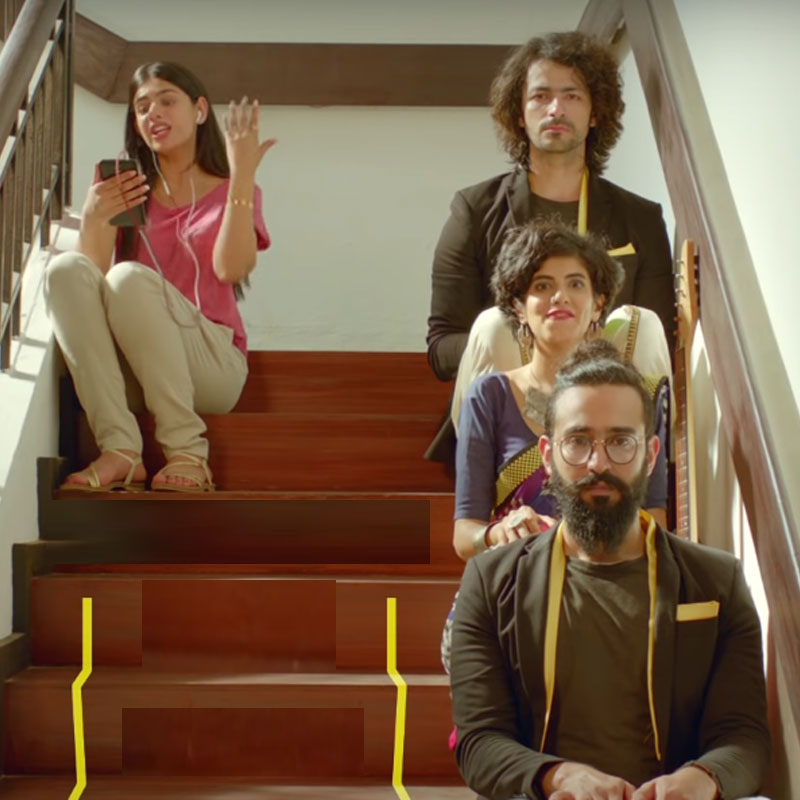
    The company has released a Women’s Day campaign for its brand Prega News #SheCanCarryBoth. The campaign video depicts a relatable conversation between four women at different stages of life talking about balancing motherhood and a demanding career.  “Our Women’s Day campaign 2022 showcases how society at large assumes that it’s difficult for women to nurture motherhood and be working professionals at the same time.”

    He further adds, “Our budget for the entire campaign has been kept minimal, maintaining our focus on the content that was being produced and its amplification.”

    The brand has onboarded four celebrity influencers and 15 macro-influencers who are mothers themselves and who share their stories to help the brand reach a wider audience. For better reach and mass society penetration the campaign has been launched in several regional languages.

    For many of the women-centric brands, days like women’s day are not targeted towards amplifying their sales but rather in generating brand awareness. “Our actual ROI through the campaign will be more aware and sensitised to the masses. Being category leaders we believe that it’s our responsibility to educate the masses and talk about our consumer’s issues,” says Chatterjee.

    With social media being the new normal, most brands also try to maximise use of that space by collaborating with Instagram or YouTube influencers and content creators to touch base with their customers and also create more customer base in the time to come. Marketers believe these campaigns and initiatives undertaken on special occasions helps garner more attention from the prospective audience, resulting in increased sales. “These initiatives help create awareness. Therefore, it is better and more beneficial than an advertisement in the long run,” says The Haelli founder Neha Sahu. “The unique content curated for the customers increases customer engagement and is shared further with family and friends with similar interests, helping us expand our peripherals.”          

    Fynd, a tech-first omnichannel platform, has crafted a campaign called #LeadLikeHer that aims to shed a spotlight on the leaders behind the brands on the platform. “Through this campaign, we wanted our audience to have a sneak-peek into the stories of the women who create the products that make them look fabulous.” says the Fynd co-founder Farooq. “The impact of a campaign such as #LeadLikeHer is beyond mere ROI and profitability. The power & authenticity of women in leadership roles is something Fynd truly believes in. Through this campaign, our aim is to start a conversation on the disproportionate male to female ratio in leadership roles. And act as a catalyst to push for gender equality and close the gap.”

    To mark the occasion of Women’s Day, Candere by Kalyan Jewellers has come out with an inclusive campaign for its latest ‘Aadya’ collection, featuring diverse women, regardless of their age, size or appearance. The film is a shoutout against ageism and body shaming, signifying that every woman should celebrate and embrace themselves. The brand is also taking initiatives to celebrate real women on platforms such as Linkedin. “We are also getting in touch with platforms and are celebrating the women who have dared to keep their heads high and took charge of their own journey reaching for the stars,” says founder and CEO of the jewel-tech brand Rupesh Jain.  

    The brand believes its ‘Return on Investment’ is through its marketing standpoint. “When the communication of our campaign reaches our TG and when our audience connects with our Vision and Mission.” He adds, “Our brand vision is first to create understanding and relatability for our audience, engage them with our brand, and then create communication with them, which keeps them connected with our brand for the long run.”

    [[{“fid”:”1064489″,”view_mode”:”default”,”fields”:{“format”:”default”,”alignment”:””,”field_file_image_alt_text[und][0][value]”:false,”field_file_image_title_text[und][0][value]”:false},”link_text”:null,”type”:”media”,”field_deltas”:{“1”:{“format”:”default”,”alignment”:””,”field_file_image_alt_text[und][0][value]”:false,”field_file_image_title_text[und][0][value]”:false}},”attributes”:{“height”:320,”width”:640,”class”:”media-element file-default”,”data-delta”:”1″}}]]

    So how can brands ensure a deeper connect with their TG on Women’s Day?

    “First of all, don’t miss the trees for the woods,” says Tonic Worldwide’s Anjali Malthankar. “If you are a brand celebrating her only for a day to ride on a marketing opportunity and ignoring her issues for the rest of the year, then this can damage a long-term relationship with her. Stay focused and sincere.”

    “I think slowly the brand world is opening up to campaigns which raise awareness and solutions about real issues like property ownership rights or breaking the bias in hiring etc and recognition campaigns, celebrating real women heroes- and not limited to doing gimmicky promotions only,” she adds.

    Today women have become more conscious and they want brands that think like them. Especially younger millennials and GenZ respond to brands that are more humane, more empathetic and those who take a stand on pressing social issues. While sweepstakes and offers may come and go, and depending on the category, it may even increase sales, but scratching the surface runs the risk of either being forgotten or not noticed at all or worse – being called out.

    Campaigns that are curated to start a genuine conversation and not just to jump on the marketing bandwagon give the consumer a deeper understanding of what the brand is and what it stands for. It all boils down to whether the brand can really walk the talk or not, believe the marketers.

  • Podcast Advertising: Opening new doors for marketers

    Podcast Advertising: Opening new doors for marketers

    Mumbai: With ABP Live, Clubhouse, and other similar platforms making the right noise, the long format of audio content has gained popularity, and drawn the attention of marketers too. Previously, podcasts were mostly extended content pieces coming out of radio channels because of their understanding of the medium. However, they have grown immensely over the last few years.

    According to KPMG, India is the third-largest podcast-listening market globally and is expected to be valued at Rs 176.2 million by 2023, growing at a CAGR of 34.5 per cent. The audio was also noted as the most preferred medium among listeners as well as advertisers last year. As per eMarketer’s report from April 2020, 49 per cent of users prefer using audio platforms. According to experts, the age group of 18-25 years has formed an important and growing audience set in the last year for this type of content, while the age group of 35-45 years is positively moving towards consuming podcast content, which is a great platform for brands to be present.

    ABP Live Podcasts: A new favorite for advertisers

    ABP Live podcast has found a loyal listener base too, proving its immense growth potential.  By offering advertising opportunities, the podcast is emerging as an influential platform. The key reason behind brands’ interest and increasing spending on podcast advertising is that it works, and it works more effectively compared to the traditional advertising mediums that have become increasingly less effective. It is a popular medium especially among millennials and GenZ as the medium lets them learn more about self-love, discover something new, cope with anxiety, or simply entertain themselves.

    As one of the leading players in the industry offering a comprehensive platform for advertisers, ABP Live brings a plethora of audio-based content, quenching listeners’ thirst for knowledge, entertainment, sports, news, health, and business. The popular podcast by ABP Live- ‘Car Mein Patrakaar’, has also won wide recognition.

    The podcasts provide a diversity of original content to the listeners that are smart, culturally relevant, highly information-driven, and filled with invigorating conversations. ABP Live has about 30 podcasts under its umbrella as of now which translates into 150 hours of audio content, which further opens doors for advertisers. Furthermore, the ABP Live Podcasts team has also been innovating in the podcasting space by fusing ASMR in their content and audio dramas, to provide the listeners with an immersive storytelling experience.

    Apart from podcasts on Personal Finance, Health, Explainers, Motivation, ABP Live includes “Car Mein Patrakar”– a talk show wherein ABP News’ star anchor Sumit Awasthi indulges in a candid conversation with a popular celebrity. “FYI-For Your Information”– a series of audio explainers which talk about everything under the sun that holds relevance for the common man. “Bollywood, Binge and Beyond”– an English podcast that gives  a detailed hawk eye view about everything from the world of entertainment. “Sange Suman” projects major news and debates from West Bengal, hosted by noted journalist Suman De.

    Opening Doors For Advertisers

    Considering the growing demand for podcasts in India, ABP Live has provided a significant opportunity for advertisers. However, before we decide whether to invest in podcast marketing, we must first understand what, how and what the results could be. Here are the things that make podcasts an ideal medium for advertising:

    ●      Great hosts make great deals : Listeners might skip what a 30-second spot is narrating but they pay high attention to unique, live ad reads narrated by their favorite trusted hosts.

    ●      Higher attention span than radio: Unlike radio listeners, podcast listeners are dedicated enough to tune in at a particular time to listen to their favorite show. Hence, they are much more likely to pay attention. They do not skip ads, simply because they do not want to miss out on any part of the show they’re listening to.

    ●      Hosts make a personal approach: Word of mouth is important in advertising and it becomes 10x more important when it comes from a trusted host. People tend to develop personal relationships with their hosts or podcasts personalities. It’s a psychological process that unknowingly takes place over time. Subsequently, the host becomes an important person to disseminate brands’ messages to the listeners.

    Podcasts like ABP Live podcasts have reached masses and seen tremendous results for early-stage brands who conduct marketing programs that are synergetic to their target profiles. Interestingly the channel has gone too narrow in terms of marketing. It has regional podcasts which allow brands to tap into niche marketing.

    An Opportunity To Tap Into Regional Market

    ABP Network has a language-first approach. Starting from the culturally rich state of West Bengal, the network serves regular content in Hindi, English, and Bangla and is equipped to handle content in all Indian major languages. In the past, ABP Live has created innovative audio content in Marathi and Bangla too. Also for a brand or advertiser, they get to deliver their message directly to their target audience in the language they speak and understand. This opens a big door of opportunities for regional podcasters who can leverage this by keeping a ‘language first’ approach.

    This format of regional language content creation is beneficial for the podcaster in terms of reach maximisation and also revenue growth. Regional podcasters can create their own set of loyal audience bases and can attract brands and advertisers to be associated with them. Going forward, we expect podcasters to grow by exploring innovation in the audio content space.


  • Marketers hopeful about consumer spending in 2021, advertising to regain normalcy by 2023

    Marketers hopeful about consumer spending in 2021, advertising to regain normalcy by 2023

    MUMBAI: As the entire world went into sleep mode in 2020 due to the Covid2019 pandemic, the marketing sector faced a drastic setback. According to a recent FICCI-EY report, 2020 was a watershed year for advertising spends, as the industry slowed down by 29 per cent, the highest one-year drop ever witnessed in the history of Indian advertising expenditure. 

    Traditional media faces setback, digital media stays intact

    The Covid pandemic resulted in a drastic shift in the consumption pattern of customers, and being home-stuck with more time on their hands, many people started showing increased dependency on the internet before making any buying decisions. As a result, advertising in traditional media de-grew by 37 per cent in 2020. However, digital media remained flat, and was not badly affected by the new market trend. 

    Print media and radio, which were already on a downwards trajectory, continued to de-grow in 2020 as they lost some consumers due to reverse migration, cost-cutting, and changing habits. According to the FICCI-EY report, most of these lost consumers may eventually return as the market continues to grow, but some portion of the earlier consumer base will turn out to be a permanent loss. 

    Due to the decreased mobility of customers, OOH (out of home) and radio were also impacted. As people started maintaining strict social distancing measures, the experiential industry comprising events and cinemas too declined last year. 

    Marketers optimistic about 2021

    Even though the industry faced an unprecedented setback in 2021, marketers believe that advertising will grow by 27 per cent in 2021, and it will regain its earlier level by 2023. 88 percent of marketers believe that consumer spends will increase in 2021, while 12 per cent claim that it will stay the same. 

    As consumer spends are expected to increase in 2021, marketers believe that ad spends will also witness a rise this year. According to the report, 66 per cent of marketers expect that their ad spends would increase in 2021. However, 10 per cent of the marketers suggest that ad spends will reduce by over 10 per cent in 2021. 

    There are several factors that play their crucial role in determining the increased ad spends, and it includes key sporting events that include the Indian Premier League, Asia Cup, ICC T20 World Cup, and Olympics. Apart from these big-ticket events, several upcoming launches in the automobile sector, elections, growth of OTT, and mobile gaming could also contribute to rising ad spends in 2021. 

    In the meantime, the Covid crisis has accelerated direct-to-customers (d2c) initiatives in 2020. Most marketers enabled e-commerce channels during the lockdown, and even began to spend money to promote the same. Marketers during the lockdown period also experimented with online events, apps, communities, and martech. 74 per cent of the marketers expect to spend over 20 per cent of their spends on digital media, a sharp rise from 45 per cent of marketers last year. 

  • Digital media spends to increase by 49 per cent next year: Nielsen Report

    Digital media spends to increase by 49 per cent next year: Nielsen Report

    MUMBAI:  A Nielson report has now confirmed what many believed of the growing ad spends in the digital world. The study has found that digital ad spends have now eclipsed traditional marketing budgets of brands.  The report also says increase in digital media budgets are poised to jump considerably over the next 12 months. However, over the top (OTT)services have to go a long way to win over marketer.

    The responses for the report were gathered through in-depth interviews of marketers and extensive surveys of  marketing executives from across verticals. The goal was to identify their most valued digital media channels categorised as social media, search, mobile, programmatic, OTT-TV/Connected TV(CTV).

    Important digital media channels

    Social media and search engines are considered extremely important by marketers . 79 per cent of respondents ranked search as “very” or “extremely” important, while 73 per cent thought the same about social media. A large majority also considered online video (64 per cent) and email (59 per cent) to be critical.

     Surprisingly, while a bunch of OTT platforms are mushrooming worldwide, marketers showed least reliance for OTT or Connected TV (CTV). Fewer than 8per cent of respondents considered it extremely important (and 18 per cent very important) at this point. Nearly 25 per cent of respondents ranked it as “not so” important or “not at all” important to their current media strategy.

    public://Figure 1.JPG

    Effectiveness of digital media channels for business:

    Other than zeroing in on the most important digital channels, the report also found effectiveness of each of these digital media channels. Again, search (68 per cent), social media (68per cent) and mobile (59 per cent) were ranked as “very” or “extremely” effective by a large section of respondents.

    Only 28 per cent of marketers ranked OTT TV/CTV as a “very” or “extremely” effective channel, the lowest among the individual categories. Over 30 per cent of respondents have yet to dedicate media budget to OTT TV/CTV. Over time when these channels will be more established, that number may decrease.

    public://figure 2.JPG

    “We are moving more and more toward [digital] marketing…social, search and [display] advertising driven. But we have just begun so the confidence in results is still being analyzed,” the report quoted one anonymous respondent.

    “Respondents reported digital media as representing 37.6 per cent of total advertising spend. This is remarkably similar to the percentage of advertising budget dedicated to traditional media (when calculated the same way), which was only a percentage point off at 36.6per cent,” the report read.

    However, the next 12 months are  going to be very different. 82 per cent of respondents agreed that digital media spend is going to increase, with only 4 per cent forecasting a decrease. Respondents expect a  49 per cent increase in digital media budgets in the next 12 months, with some even suggesting a higher spike.

  • Guest column: Digital outlook for 2018

    Guest column: Digital outlook for 2018

    MUMBAI: The year 2017 is behind us and, as we peek into 2018, there is so much to look forward to. The digital landscape is so dynamic and ever-evolving that an annual trend-spotting article would be unfair. But still there are key areas where digital is heading and I can safely say that 2018 is going to be a year of technology and innovation. 2018 is also the year of the dog, according to the Chinese calendar, and brands and agencies who remain loyal to their technological prowess and who are open to newer territories will emerge as differentiators in the cluttered space. 

    Consolidated big data

    Data is going to the king going forward. Empirical evidence suggests that with exhaustive consumer behaviour and spending patterns, marketers can position their brands accordingly. This, coupled with improved data analysis and research, can improve customer experiences and journeys, personalise marketing initiatives and make the whole experience meaningful and convenient.

    AI will lead the way

    If AI were added to the mix, it becomes a formidable weapon in interpreting data. The data is useless unless there is an intelligent way of analysing it. And AI does that precisely. 2018 will be the year we will see this going mainstream. AI will help to not just optimise customer experiences but also reduce marketing investments by finally removing the subjective nature around the question of what worked and what didn’t.

    Focus on visual search  

    The latest mobile phone from Google has a feature called Google Lens. This was used by Nokia also few years ago but Google is now backing it with their redoubtable AI technology. For instance, Google Lens will help users learn all about a retail outlet by simply pointing their phone camera at it.  The search could throw up discount coupons, too, leading to direct footfalls. Visual search can be leveraged by retail and travel brands. As the feature matures, we will see use cases across the spectrum. 

    Algorithms will keep evolving

    Machine learning will make algorithms much smarter and we will see marketing models changing. 2018 may just be the year that will define the direction marketing automation will take in years to come.

    Blockchain and IndiaChain

    Blockchain was the buzzword of 2017. Blockchain was used by Bitcoin but the scope is not limited to cryptocurrencies only. In lay man’s terms, blockchains are encrypted and secured distributed ledgers of economic transactions. On the same lines, NITI Aayog has an ambitious plan to develop its own blockchain called IndiaChain. The idea is to build a distributed ledger system that makes data manipulation virtually impossible through verification by other stakeholders in the network. Not just across the nation, once operational, IndiaChain will also be the largest blockchain in the world. What’s in it for marketers? Well to start with, Indian fintech companies will benefit a lot from IndiaChain. It will allow them to leverage this network to their advantage. This will speed up contract enforcements, minimise fraudulent transactions, increase transparency and precision in operations.

    Talk and search

    Back in 2016, when Google introduced its new assistant and messaging platform, there were quite a few eyebrows raised. The question was, in the cluttered messaging environment, was this any different? Well to be fair, Google has answered its detractors. The Google Assistant can engage in a two-way conversation with the user and this has been possible because of Google’s language-processing algorithm. With the rise of voice-driven search assistants from Amazon and Apple, spoken search-terms will be the norm.

    The author is founder and CEO of Tonic Worldwide. The views expressed are personal and Indiantelevision.com may not subscribe to them.

    Also Read :

    India ad spend to grow by 12.5% in 2018: DAN report

    Industry applauds Sam Balsara as he turns 67