Tag: Mark Zuckerberg

  • Facebook & Reliance tie-up to launch Internet.org in India

    Facebook & Reliance tie-up to launch Internet.org in India

    MUMBAI: They are both large corporations in their respective fields, having almost the same two identical colours as part of their logo. And now after its tryst in African nations, Facebook today launched its product, Internet.org services in India by partnering with telco Reliance Communications.

    Reliance Communications consumer business CEO Gurdeep Singh said that the idea behind it was to provide free access to 33 popular websites to its consumers without any cost, thereby democratising the consumption of internet.

    Adding some insights, Singh explained that one fourth of the world’s consumers who are yet to be “online” were present in India, out of which a further 70 per cent of India’s mobile users are yet to touch base with the evolving cyberspace.

    In a video taped message, Facebook founder and CEO Mark Zuckerberg said, “We needed to make data more affordable and offer free services to the people of India. The idea was born during my visit to India last year where we met and discussed with the team from Reliance and decided to collaborate together.”

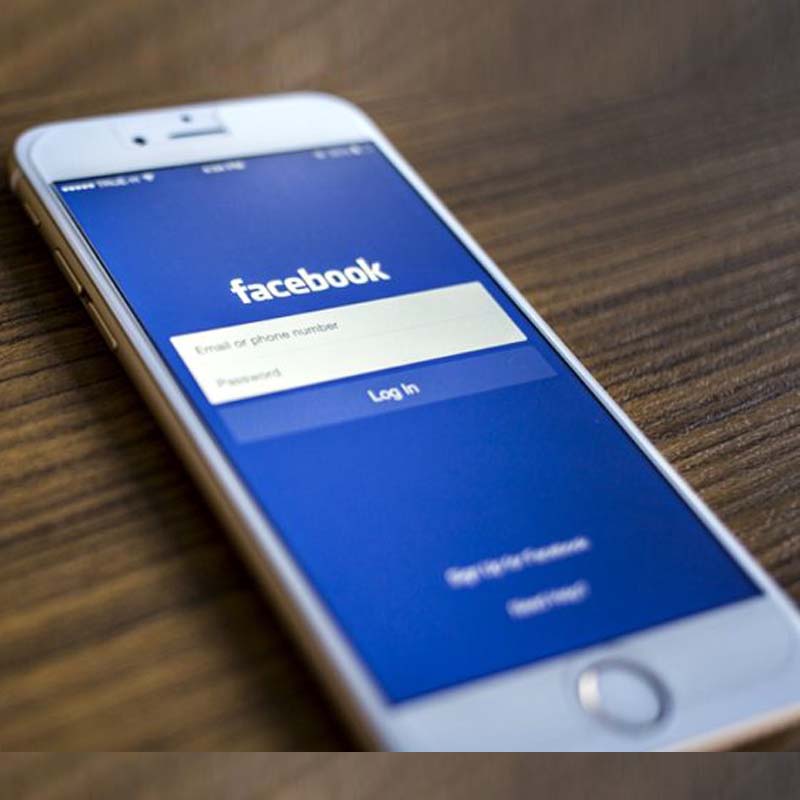
    Internet.org services is a bouquet of 33 popular websites put together, that besides entertaining consumers also provides a few utilities services free of cost. For now, only Reliance subscribers will be able to access the bundle by downloading the “FreeNet” connection app. To do so, a subscriber has to log on to www.internet.org or call up on 1800 300 25353.

    Facebook Internet.org vice president Chris Daniels informed, “After meeting the Reliance team in October last year we decided to come up with 30 free basic services across genres. We also are working with the Andhra Pradesh government and have come up with “AP Speaks” through which users and citizens will be able to send real time feedback and ideas to the government of the state.”

    The bouquet for now will consist of the following websites:

    Careers and Jobs: TimesJobs, Babajob.

    Education and Knowledge: Wikipedi, wikiHow, Dictionary.com, Translator, Reuters Market Lite, Jagran Josh.

    Health and Social Welfare: Facts of Life (UNICEF), BabyCenter&MAMA, Girl Effect (Nike Foundation), iLearn (UN Women), Malaria No More, Social Blood, AP Speaks.

    News: BCC News, Times of India, India Today, NDTV, BBC News, IBNLive, Aaj Tak,Amarujala.com, Daily Bhaskar, Maalai Malar, Maharashtra Times, Jagran, Newshunt, Manoramanews.com

    Search: Bing (from Microsoft)

    Social: Facebook, Facebook Messenger

    Sports: ESPN Cricinfo

    Utility: OLX, Astro, Cleartrip, AccuWeather

    But the free Facebook app present in the bundle is a compressed version and currently cannot support video viewing option that otherwise is present on the normal version of Facebook. Only when consumers activate a data plan, will they be able to access the normal version of Facebook.

    Low consumption of the internet in India was attributed to reasons like user capability, lack of awareness of the internet, language fragmentation and the key factor of cost and affordability. To address these hurdles, Singh said that the app has been designed in a manner that it is not bandwidth hungry. It will also be available in six local languages like Tamil, Telugu, Malayalam, Guajarati, and Marathi apart from English and Hindi. For now Reliance subscribers in seven telecom circles of Gujarat, Mumbai, Maharashtra, Kerala, Andhra Pradesh, Tamil Nadu and Chennai will be able to avail the facility. No data pack is required to avail the bouquet and all phones which are internet capable can make use of the bundle.

    The marketing of the Internet.org services will be carried entirely by Reliance Communications. When asked about the revenue model and who would bear the cost of the initiative, officials from both sides declined to comment.

    When questioned if Facebook was looking at expanding the service with other telcos, Daniels told Indiantelevision.com, “We have so far not been approached by other companies except Reliance. We will look at options when approached further on.”

    Singh on a concluding note said that the service will be offered free for lifetime and in the coming 90 days will be launched pan India. The focus will also be on strengthening the content of the bundle.

  • India’s ad spend estimated at 13.3 per cent by Magna Global Forecasts 2015

    India’s ad spend estimated at 13.3 per cent by Magna Global Forecasts 2015

    MUMBAI: In its latest study of global media owner advertising revenues, covering 73 countries, Magna Global estimates that ad revenues grew by more than 5.5 per cent this year, to reach the half-trillion mark ($512 billion). Advertising sales will grow by more 4.8 per cent in 2015 to reach $536 billion.

    Some of the most significant revisions in the 2015 forecasts are found among BRIC markets. China and Brazil advertising revenues are still predicted to grow by a decent amount (+8.6 per cent and +5.9 per cent, respectively) although two to three points below previous expectations. Russia is the single biggest negative revision, due to the combination of declining energy prices and the partial withdrawal of Western investors amidst geopolitical tensions; the 2015 advertising growth forecast is cut from 7.0 per cent to 0.8 per cent.

    India will, thus, become the most dynamic among the four BRICs, with an expected ad spend growth of +13.3 per cent following a similar pace of 2014 (+13.2 per cent).

    The general elections that took place in the first part of the year generated massive incremental spend. The outcome of the election, bringing a new BJP-led Government to power, improved business and consumer confidence, is what prompts ad growth forecast in the coming year. The new government is also committed to invest billions in order to connect millions of rural Indians to broadband internet, in a plan advertised through a recent meeting between the new Prime Minister Narendra Modi, and the Facebook founder Mark Zuckerberg.

    Magna Global global forecasting director and author of the report Vincent Letang said, “In 2014, the long-awaited European recovery finally came in time to partly offset a weaker- than-expected growth in the US and the BRICs. In 2015, the lack of non-recurring events, the continued slowdown of the BRICs and the deflationary effects generated by the rise of digital media will inhibit global advertising growth, in a slight disconnect with the positive acceleration in the macro-economic environment.”

    The report highlights that in the APAC, within digital, the fastest growing formats are social (+58.6 per cent growth), followed by video (+37.6 per cent growth) and search (+25.5 per cent growth). Mobile spend on social formats continues to lead the way, and other formats will follow.

    Television remains the dominant format for advertising spend in APAC, and spend will grow by 3.5 per cent this year and represent slightly over 40 per cent of all advertising dollars. Broadcast television continues to dominate the TV landscape, although multi-channel television is gaining share due to slightly higher growth rates, and by 2019 will represent nearly one quarter of TV dollars. Print continues to lose market share, and newspaper and magazines together will represent less than one in five advertising dollars this year. This is down from one third of all spending as recently as 2008.

    APAC will continue to be one of the stronger regional drivers of global advertising spend, although its lead on the global growth rate continues to narrow. Its total share of global ad spend will only increase slightly between this year and 2019, from 29 per cent to just over 30 per cent of total spend.

  • Facebook to join hands with Indian government

    Facebook to join hands with Indian government

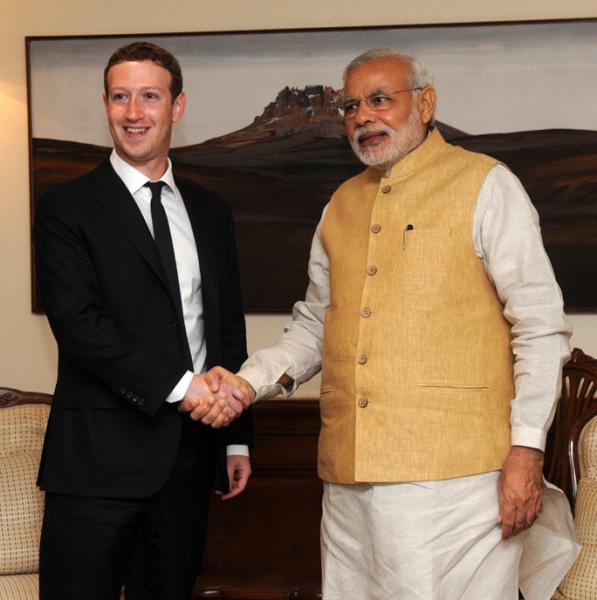
    MUMBAI: After swooning the nation with his ideas to enhance the internet connectivity in India in the Internet.org summit, Facebook founder Mark Zuckerberg, who was in the country on a two-day visit, met Prime Minister Narendra Modi on 10 October.

    Soon after the meeting, the PM tweeted, “It was wonderful meeting Facebook CEO Mark Zuckerberg. We discussed a wide range of issues.”

    The discussion included an array of topics revolving around the innovative use of Facebook as a platform to engage with a large audience in the service of humanity; from helping in the digital India campaign to fighting terrorism using social media.

    “I spoke to him about Swachh Bharat Mission. Zuckerberg shared that Facebook would assist the Government of India in the Clean India mobile application. This will surely give an impetus to Swachh Bharat Mission. “

    “Zuckerberg is excited about Digital India initiative. I requested him to identify certain areas where Facebook can help us in that. I also requested Zuckerberg to identify how Facebook can help promote India’s rich tourist potential across the world,” Modi posted on his Facebook page.

    They also talked about the Digital India initiative. A statement on Modi’s website said, “Zuckerberg said that he is extremely excited about the Digital India initiative of the Government of India. Prime Minister Shri Modi asked him to identify some domains of Digital India where Facebook can get involved and help.”

    The Prime Minister appealed to Facebook co-founder to look at how to enhance Internet literacy along with Internet connectivity.

    Adding to the same, Zuckerberg stated that Facebook wants to work with the Government of India in the fields of healthcare, education and provide a gamut of services to the people.

    He further added that Facebook will also help in the creation of the Clean India Mobile App and that it would be launched soon. This would give a strong impetus to the Swachh Bharat Mission.

    In the meeting, PM also pointed out that lots of terrorist elements are using social media platforms to recruit members, according to an official statement.
    “This is unfortunate and we need to think of the role the social media can play to stop terror,” Modi said.

    Earlier in the day, the Facebook co-founder also met Information Technology Minister Ravi Shankar Prasad as part of the Centre’s ambitious Digital India plan which seeks to expand internet access across the nation.

    “Mark’s interest in India impressed me. Facebook wants to work with the Digital India program and the Indian govt is happy to support them in their launch of internet.org,” Prasad said.

    “He has shown profound interest to involve Facebook in the Digital India program and in broadband distribution, e-Health, e-Education etc. Really there is a great scope to work together. His idea to promote entrepreneurship among Indians in the field of IT was truly remarkable,” he posted on his Facebook page.

    They also spoke about the National Optical Fiber Network (NOFN) project during their meeting which aims to connect 2.5 lakh village panchayats through high-speed broadband by 2017.

    Prasad said that he believes there exists a great opportunity for Facebook to harness the vast potential of Indian entrepreneurs in retailing of internet connectivity to the masses by involving local entrepreneurs. Government would extend all cooperation to Facebook in this endeavor.

    He proposed that Facebook could contribute to India’s Rs 21,000-crore NOFN project on last-mile connectivity.

    Zuckerberg also spoke of alternate technology such as drones and satellite communications playing a critical part in this last-mile linkage.

    “India could be the first country in which Facebook deploys drones to provide broadband connectivity in remote and inaccessible areas, with CEO Mark Zuckerberg proposing a pilot project to bridge this digital divide during his meeting,” the IT Minister added.

    Facebook’s Connectivity Lab is actively developing large, inexpensive, solar-powered drones that will be able to fly for years at a time, the division’s engineering director Yael Maguire announced earlier this year. These unmanned vehicles will be about the size of a Boeing 747 but weigh only as much as four car tyres while serving as large connectivity hubs.

    The drones would fly at a height of 60,000 to 90,000 feet above the ground, far above commercial jetliners and at a level where they wouldn’t be affected by the weather, effectively making them invisible.

    In order to continuously provide Wi-Fi coverage, they would be powered by the sun, Maguire had said, adding that these could be tested in the US as early as next year.

    On 9 October, while addressing media persons, Zuckerberg had said that Facebook is working extensively in rural India to enhance connectivity. “Internet.org  is an effort to bring basic Internet services to all”, he added. The pilot project of Facebook has already helped to connect more than 3 million people with this program.  “If we can connect people over here, we can help bring this rich Indian culture to the world.”

    Stressing on the importance of connectivity, Zuckerberg had said while India has about 243 million Internet users and have 100 million plus Facebook users, there are over a billion people in the country who do not have access to the net.

    The 30-year-old billionaire is the third high-profile head of a US-based tech firm to visit India in the last few weeks, after Satya Nadella of Microsoft and Jeff Bezos of Amazon.


  • Facebook is working extensively in rural India to enhance connectivity, says Mark Zuckerberg

    Facebook is working extensively in rural India to enhance connectivity, says Mark Zuckerberg

    MUMBAI: Stressing on the importance of enhancing internet connectivity in India, Facebook  founder and CEO Mark Zuckerberg today said, “Connectivity can’t be restricted to just the rich and powerful. Cost of internet access has to be made affordable.”


    The Facebook CEO is in India on a two-day visit and was speaking at the first summit for Internet.org, an organisation led by Facebook.


    Mark Zuckerberg has said that he would meet PM Narendra Modi on 10 October to discuss connecting Indian villages to the internet, and Facebook’s role in doing so.


    Pitching for free ‘basic net access’, Zuckerberg reckoned that it should be like dialing 911 in the US or 100 here in India. “There needs to be a 911 for the internet. We’ve been working with operators to offer free basic Internet for everyone, to break down the social barriers. With this model, we’ve already helped people connect 3 million people.”


    “Connectivity is a human right. We want to build an internet that works for all,” he added.


    The 30-year old also announced that Facebook will fund apps and services in local Indian languages for women, students and farmers.


    He pointed out that only about a third of people in the world had access to the Internet – 243 million in India and a recent survey showed that 69 percent of people in India said they didn’t know why it would be useful for them.


    The biggest barrier, he said, was that “lots of people who have never experienced the internet don’t know why they need it.”


    He also added that lack of relevant local language content is why most Indians don’t use internet and Facebook is working extensively in rural India to enhance connectivity.


    “Facebook is focusing on content in local languages. It is crucial to internet penetration in Asia, especially India,” said the 30-year-old billionaire. “80 per cent of content on the internet is just in 10 languages, while there are 22 official languages in India; 65 per cent of people use Facebook in a language other than English, including 10 Indian languages.”


    Zuckerberg stated that the next generation has the opportunity to bring the world to India and India to the world. The whole world being robbed of creativity and ideas because so many people in India are not online yet, he further said.


    He further revealed that Facebook has launched a new contest to develop local apps for farmers and social services in local languages with a $1 million fund dedicated for it.


    “We’re also going to extend a program called FB Start,” he added, “which provides $40,000 (Rs 25 lakh approximately) to developers who build and develop apps in these categories,” he added.


    Praising India, Zuckerberg credited it for ‘making leaps in revolutions that changed the world’. “Inventions have changed the world throughout history. ’Mangalyaan’ is a huge achievement for India,” he said.


    The CEO is of the opinion that lowering data costs by operators is not a sustainable solution. “Mobile operators invest a lot of money, lowering costs is not easy,” he said. “Infrastructure is the biggest barrier to internet, then technical issues. Language barriers are huge impediments to the internet,” he added.


    “Connected people have better access to technology, education and jobs. When people are connected, accomplishments are easy,” Zuckerberg said.


    Internet.org aims to make internet access affordable for people acrossthe globe. Focused on enabling the next five billion people without internet access to come online, the founding members of the project include Facebook, Ericsson, MediaTek, Nokia, Opera, Qualcomm and Samsung.


    The partners are collaborating on developing lower-cost, higher-quality smartphones and deploying internet access in under-served communities.


    Zuckerberg’s visit comes three months after Sheryl Sandberg, COO of the social networking giant, visited India which is Facebook’s second biggest market. She also met Modi, who has effectively used social networking during his election campaign and later even in governance.


    Zuckerberg is the third high profile CEO of a US-based corporation, after Amazon’s Jeff Bezos and Microsoft’s Satya Nadella, to visit India in last few days.

  • We had a good second quarter: Mark Zuckerberg

    We had a good second quarter: Mark Zuckerberg

    MUMBAI: Social networking site, Facebook has had a good second quarter. The company declared its financial results for the quarter ended 30 June 2014 on 23 July. Its founder and CEO Mark Zuckerberg said, “We had a good second quarter. Our community has continued to grow, and we see a lot of opportunity ahead as we connect the rest of the world.”


    Operational highlights


    Daily active users (DAUs) were 829 million on average for June 2014, an increase of 19 per cent year-over-year


    Mobile DAUs were 654 million on average for June 2014, an increase of 39 per cent year-over-year


    Monthly active users (MAUs) were 1.32 billion as of 30 June 2014, an increase of 14 per cent year-over-year


    Mobile MAUs were 1.07 billion as of 30 June 2014, an increase of 31 per cent year-over-year


    Financial Highlights


    Revenue: Revenue for the second quarter of 2014 totaled $2.91 billion, an increase of 61 per cent, compared with $1.81 billion in the second quarter of 2013. Excluding the impact of year-over-year changes in foreign exchange rates, revenue would have increased by 59 per cent. Revenue from advertising was $2.68 billion, a 67 per cent increase from the same quarter last year. Excluding the impact of year-over-year changes in foreign exchange rates, revenue from advertising would have increased by 65 per cent. Mobile advertising revenue represented approximately 62 per cent of advertising revenue for the second quarter of 2014, up from approximately 41 per cent of advertising revenue in the second quarter of 2013. Payments and other fees revenue was $234 million, a 9 per cent increase from the same quarter last year.


    Costs and expenses: GAAP costs and expenses for the second quarter of 2014 were $1.52 billion, an increase of 22 per cent from the second quarter of 2013. Excluding share-based compensation and related payroll tax expenses, non-GAAP costs and expenses were $1.2 billion in the second quarter of 2014, up 18 per cent compared to $1.02 billion for the second quarter of 2013.


    Income from operations: For the second quarter of 2014, GAAP income from operations was $1.39 billion, up 147 per cent compared to $562 million in the second quarter of 2013. Excluding share-based compensation and related payroll tax expenses, non-GAAP income from operations for the second quarter of 2014 was $1.71 billion, up 116 per cent compared to $794 million for the second quarter of 2013.


    Operating margin: GAAP operating margin was 48 per cent for the second quarter of 2014, compared to 31 per cent in the second quarter of 2013. Excluding share-based compensation and related payroll tax expenses, non-GAAP operating margin was 59 per cent for the second quarter of 2014, compared to 44 per cent for the second quarter of 2013.


    Provision for income taxes: GAAP income tax expense for the second quarter of 2014 was $595 million, representing a 43 per cent effective tax rate. Excluding share-based compensation and related payroll tax expenses, the non-GAAP effective tax rate would have been approximately 36 per cent.


    Net income and EPS: For the second quarter of 2014, GAAP net income was $791 million, up 138 per cent compared to $333 million for the second quarter of 2013. Excluding share-based compensation and related payroll tax expenses and income tax adjustments, non-GAAP net income for the second quarter of 2014 was $1.09 billion, up 124 per cent compared to $488 million for the second quarter of 2013.


    GAAP diluted EPS was $0.30 in the second quarter of 2014, up 131% compared to $0.13 in the second quarter of 2013. Excluding share-based compensation and related payroll tax expenses and income tax adjustments, non-GAAP diluted EPS for the second quarter of 2014 was $0.42, up 121 per cent compared to $0.19 in the second quarter of 2013.


    Capital expenditures: Capital expenditures for the second quarter of 2014 were $469 million.


    Cash and marketable securities: Cash and marketable securities were $13.96 billion at the end of the second quarter of 2014.


    Free cash flow: Free cash flow for the second quarter of 2014 was $872 million.


    Click here to read the financial report

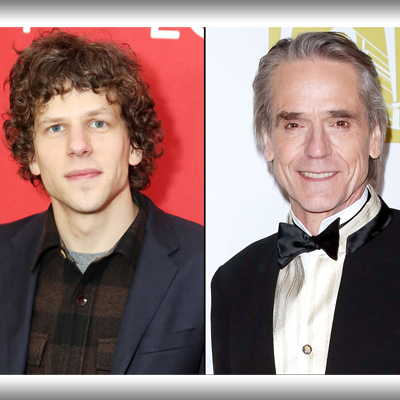
  • Jesse Eisenberg and Jeremy Irons to act in the upcoming Superman-Batman film

    Jesse Eisenberg and Jeremy Irons to act in the upcoming Superman-Batman film

    MUMBAI: Warner Bros. Pictures announced today in an official press release that, Jesse Eisenberg has been set to star as Lex Luthor and Jeremy Irons will play Alfred in the upcoming Zack Snyder untitled Superman/Batman film. The dual announcement was made today by Greg Silverman, President, Creative Development and Worldwide Production, and Sue Kroll, President, Worldwide Marketing and International Distribution, Warner Bros. Pictures.


    In the official press release, Snyder stated, “Lex Luthor is often considered the most notorious of Superman’s rivals, his unsavory reputation preceding him since 1940. What’s great about Lex is that he exists beyond the confines of the stereotypical nefarious villain. He’s a complicated and sophisticated character whose intellect, wealth and prominence position him as one of the few mortals able to challenge the incredible might of Superman. Having Jesse in the role allows us to explore that interesting dynamic, and also take the character in some new and unexpected directions.”


    The director further added in the release, “As everyone knows, Alfred is Bruce Wayne’s most trusted friend, ally and mentor, a noble guardian and father figure. He is an absolutely critical element in the intricate infrastructure that allows Bruce Wayne to transform himself into Batman. It is an honor to have such an amazingly seasoned and gifted actor as Jeremy taking on the important role of the man who mentors and guides the guarded and nearly impervious façade that encapsulates Bruce Wayne.”


    Eisenberg has received Academy Award, Golden Globe Award, Screen Actors Guild Award and BAFTA Award nominations for his starring role as Mark Zuckerberg in David Fincher’s The Social Network. He also starred in Woody Allen’s To Rome with Love and Louis Letterier’s Now You See Me. He will next be seen in The Double and Night Moves.


    Irons won the Academy Award for his portrayal of Claus von Bülow in Reversal of Fortune. His work in the film also garnered him a Golden Globe Award. He won an Emmy Award and a Screen Actors Guild (SAG) Award for his performance in the TV miniseries Elizabeth I, opposite Helen Mirren, and recently starred on the small screen as Rodrigo Borgia in Neil Jordan’s highly acclaimed Showtime series The Borgias, for which Irons earned a Golden Globe nomination. He was recently nominated for a SAG Award for the PBS Great Performances television miniseries The Hollow Crown, for his performance as Henry IV.


    Snyder’s film stars Henry Cavill, reprising his role as Superman/Clark Kent, Ben Affleck as Batman/Bruce Wayne, and Gal Gadot as Wonder Woman/Diana Prince. The film also reunites Man of Steel stars Amy Adams, Laurence Fishburne and Diane Lane.


    The new film is currently being written by Chris Terrio (Argo), from a screenplay by David S. Goyer (Da Vinci’s Demons). Charles Roven (The Dark Knight) and Deborah Snyder (300, Suckerpunch) are producing, with Benjamin Melniker (Constantine), Michael E. Uslan (The Spirit), Wesley Coller (Watchmen), David S. Goyer and Geoff Johns (Smallville, Arrow) serving as executive producers.


    The film is set to open worldwide on May 6, 2016, and is based on Superman characters created by Jerry Siegel & Joe Shuster, Batman characters created by Bob Kane, and Wonder Woman created by William Moulton Marston, appearing in comic books published by DC Entertainment.

  • Sony bags the rights to Facebook COO Sandberg’s ‘Lean In’

    Sony bags the rights to Facebook COO Sandberg’s ‘Lean In’

    MUMBAI: Sony Pictures has confirmed that it has acquired the rights to make the Facebook COO Sheryl Sandberg’s book into a movie.


    Published in March 2013, Lean In: Women, Work and the Will to Lead encourages women to advance their careers. If the film is able to capture the essence of the book, it won’t be so much a biography of Sandberg, who recently became one of the youngest female billionaires ever, as a manifesto advising women on how to achieve professional success.


    Sandberg also launched an organisation, Lean In, to further promote her message. She will donate her proceeds from the film to the foundation, according to Deadline, 

    which reported the story earlier.


    While there were few specifics available about the movie or the deal, Deadline said Sony Pictures, which made The Social Network about Facebook CEO Mark Zuckerberg – tapped Nell Scovell to write the script. Scovell helped Sandberg write the book as well.

  • Facebook prepares to insert video ads into users’ news feeds

    Facebook prepares to insert video ads into users’ news feeds

    MUMBAI: According to media reports the social network giant Facebook plans to let marketers insert 15-second video ads directly into people’s news feeds. This step needs to be taken with caution as it may not go down well with its users.

    Buyers could target the age and gender of the users who’d find the ads in their feeds reports claim citing “two people familiar with the matter.” Ads could sell for as much as $2.5 million a day depending on how many people watch them.

    Execs appear to appreciate the possibility of a backlash: CEO Mark Zuckerberg has delayed the plan “at least twice” as he considers ways to minimise user ire over the ads, for example by offering them in high-def and ensuring that people won’t see the same pitch more than three times a day. But the sales opportunity apparently is too lucrative to resist.

    Advertisers likely will spend nearly $64 billion in the US this year on TV ads vs $36 billion on the web. That’s why digital powers including Google, Yahoo, and AOL are gunning for TV advertising – including by staging their own NewFront sales pitches to ad buyers as they also gather for television networks’ upfront presentations.

    Last week Facebook COO Sheryl Sandberg told analysts that her company has “a massive and engaged audience around the world that brands can use to build awareness and drive sales. Every night 88 million to 100 million people are actively using Facebook during primetime TV hours in United States alone.” Nielsen has been working with Facebook to come up with ratings for online videos that would be similar to TV ratings.

  • Venture capitalist Jim Breyer to leave Facebook’s board

    Venture capitalist Jim Breyer to leave Facebook’s board

    MUMBAI: Accel Partners‘ Jim Breyer will leave Facebook‘s board of directors in June. The company was an early investor in Mark Zuckerberg‘s online social network.

    Accel has enjoyed a 337 times return on investment. Facebook said, “On 23 April, James W Breyer notified Facebook of his decision not to stand for reelection to the Board of Directors at the company‘s annual meeting of stockholders to be held on 11 June. He will continue to serve as a director until the date of the annual meeting.”

    “Jim made many, many important contributions during his long tenure on the board and we were well-served by his presence. We will continue to have a strong relationship with Jim and going forward, we‘re thankful we can continue to rely upon the tremendous depth and expertise of our recently expanded board.” The social networking site added.

    Breyer wrote, “It has been a genuine honour to serve as an investor and board member since April 2005 as Facebook has grown from an emerging social network for US college students to a global service that connects over a billion people.

    “After over eight years of board service, it‘s time to step aside in light of my other responsibilities, including my recent election to the Harvard University Corporation Board. I will leave the board knowing that Facebook is a global internet leader with exceptional leadership within the company and on the board.”

    When Accel invested, Facebook had twenty employees and less than $1 million in revenue per quarter. Now it has over 4,500 employees and more than $1.5 billion in revenue per quarter.

  • Facebook unveils updated news feed

    Facebook unveils updated news feed

    MUMBAI: Online social network Facebook has announced changes to its news feed. The aim the company says is to reduce clutter and focus more on stories from the people that users care about.

    Users Facebook explains will see all the stories they saw in the news deed before, but with a fresh new look. Each story has been completely rebuilt and the aim is to be much more vibrant and colorful and highlight the content that friends are sharing.

    To make sure users are seeing all the stories that they want to see, Facebook has introduced several new feeds to explore in addition to the same News Feed that users have:

    All Friends – a feed that shows users everything that friends are sharing

    Photos – a feed with nothing but photos from friends and the Pages that the user likes
    Music – This is a feed with posts about the music that the user listens to
    Following – a feed with the latest news from the Pages that the user likes and the people followed.
    Facebook adds that with the new design, it now has the same look and feel on mobile, tablet and web. For example, the left-hand menu is accessible anywhere one goes on Facebook. Users also have a way to jump right to the top of News Feed whenever new stories come in.

    Facebook founder Mark Zuckerberg has described the revamped news feed as being richer, simpler, more beautiful. Facebook plans to roll out the redesigned feed in the coming weeks.

    on web and mobile. If users want to get it early, they can visit www.facebook.com/newsfeed and add themselves to the waiting list. These design updates will be available on the iPhone and iPad in the coming weeks and to Android soon after.

    This news comes at a time when teens are losing interest in the social network. In its annual 10-K filing with the Securities and Exchange Commission report Facebook noted, “We believe that some of our users, particularly our younger users, are aware of and actively engaging with other products and services similar to, or as a substitute for, Facebook. For example, we believe that some of our users have reduced their engagement with Facebook in favor of increased engagement with other products and services such as Instagram. In the event that our users increasingly engage with other products and services, we may experience a decline in user engagement and our business could be harmed.”