Tag: Mark Zuckerberg

  • Facebook to train 5 mn Indians by 2021 in digital skills

    Facebook to train 5 mn Indians by 2021 in digital skills

    MUMBAI: Facebook in India is planning to train five million people with digital skills in three years, to help small businesses reach the global economy, according to ET telecom.

    The social media giant has already trained one million people across 150 cities and 48,000 villages with support from 50 partners. These numbers were disclosed at the inaugural day of the two-day Facebook community boost programme aimed at helping small businesses gain digital marketing skills.

    Facebook public policy director India, South and Central Asia Ankhi Das said, "We have a very strong framework of partnership with local partners and state governments. We are very excited that our programmes such as BoostYourBusiness, SheMeansBusiness, that are run in partnership with State and Central Government, civil society and private institutions, focus on facilitating economic transformation and mainstreaming of small businesses at the grassroots level into the formal economy. The company also works closely with the Ministry of Skill Development And Entrepreneurship on digital training."

    The Facebook training programmes entail simple lessons that help to build a digital presence, avoiding expensive fees for creating and hosting websites, tap into the growing mobile economy, gain market access by learning to market their products to more than two billion people globally who use Facebook, increase awareness about their products and services.

    According to Das, the training programmes for India will also help people learn how to utilise Facebook-owned photo-sharing platform Instagram.

    The training modules for these businesses in digital marketing and online safety developed by Facebook are available in 14 local languages.

    Facebook said its programmes reached 29 states in India, including Uttar Pradesh, Karnataka, Punjab, Maharashtra, Gujarat, Arunachal Pradesh, Assam, Odisha and Rajasthan among others.

    "More than 80 per cent of SMBs (small and midsize businesses) on Facebook say they have increased sales because of the platform and access to global and local market," Das said, citing the findings of a recent survey.

    The results showed that over 70 per cent of SMBs on the social networking platform built their business on Facebook.

    On concerns of businesses generating fake like or page views, Das said that Facebook is aggressively fighting spread of misinformation on the platform by taking down fake accounts.

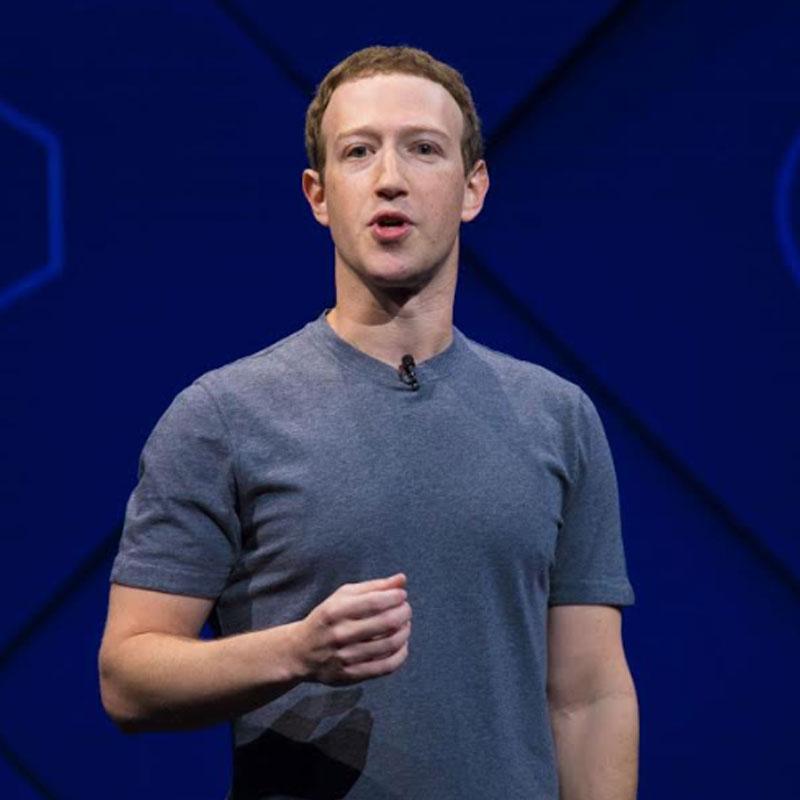
    In the last two quarters, Facebook has removed more than 1.5 billion fake accounts, Facebook CEO Mark Zuckerberg said in a note last week.

  • Instagram co-founders resign from Facebook

    Instagram co-founders resign from Facebook

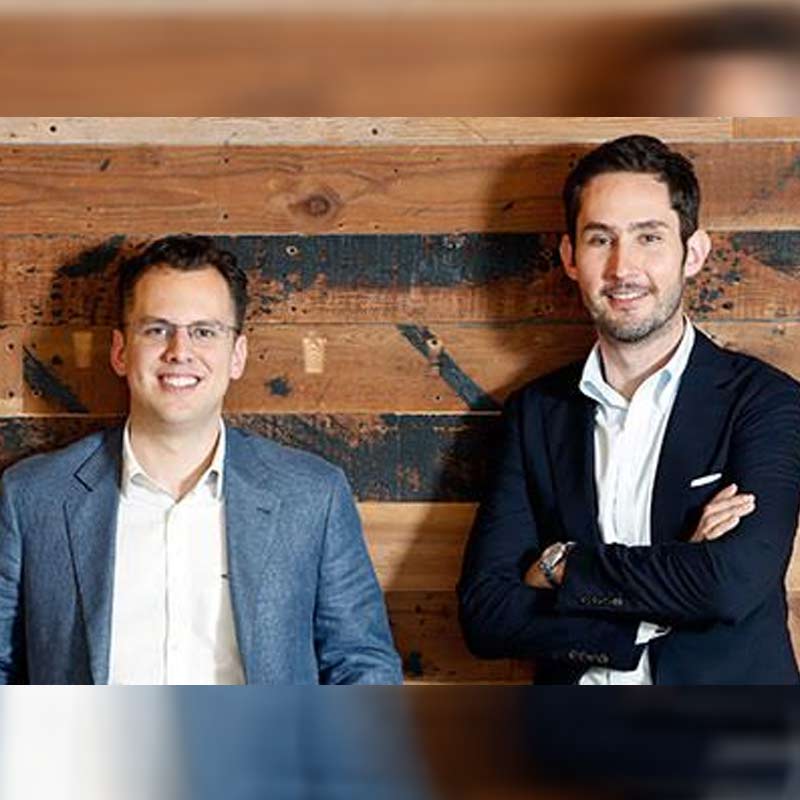
    MUMBAI: There’s trouble brewing at the Facebook group. Mike Krieger and Kevin Systrom, the co-founders of the photo-sharing app Instagram which was acquired by the social media site in 2012, have decided to leave the company. The duo have put down their papers and will leave the company in a few weeks, adding to the challenges facing Instagram’s parent company, Facebook.
    In a statement issued by Krieger, he informed Instagram’s team about their decision to leave the company. While he did not give a reason for stepping down, he said: “We’re planning on taking some time off to explore our curiosity and creativity again. Building new things requires that we step back, understand what inspires us and match that with what the world needs; that’s what we plan to do.”
    Their departure adds to questions about Instagram’s future as concerns about Facebook’s approach to user data and foreign interference begin to take a toll on business.
    The resignation of Instagram founders is an echo of the exit of Whatsapp founder Jan Koum who resigned from the company in April after his rising concern about Facebook’s approach to user data.
    Facebook acquired Instagram in April 2012 for $1 billion and WhatsApp in 2014 for a steep $19 billion.

  • Mark Zuckerberg, Facebook boss, loses $16.8 bn in just 2 hours

    Mark Zuckerberg, Facebook boss, loses $16.8 bn in just 2 hours

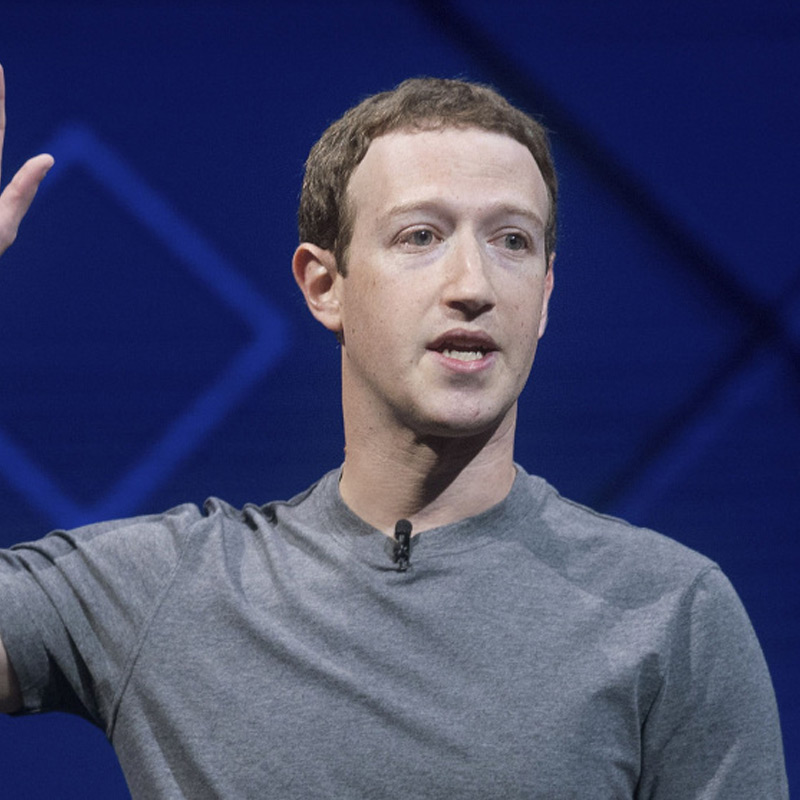
    MUMBAI: After a trembling quarter which was full of controversies regarding data security, Facebook faced the hit on stocks too. Following the Cambridge Analytica scandal, the social media giant lost the faith of users and faced backlash from policymakers. Now, after a poor Q2 result with a weaker-than-expected revenue growth, the company lost about $130 billion in market value in just two hours. CEO Mark Zuckerberg, the third richest man according to the Bloomberg Billionaires Index, lost $16.8 billion in extended trading.

    If Zuckerberg’s loss holds through Thursday, he will slide to sixth place in the Bloomberg Billionaires Index.

    In Q2, Facebook could not reach the Wall Street-projections for growth in revenue as well as daily users. Moreover, the company also told the numbers won’t get better this year. The stock slide started right after Facebook posted the result which was later triggered by chief financial officer David Wehner’s comment on slow growth throughout the year. Shares plunged as much as 24 per cent afterwards.

    Facebook had 1.47 billion daily active users in June, compared with the 1.48 billion average of analysts’ estimation. In Europe, the implementation of strict new data regulations led to 1 per cent decline in daily visitors. Even in its biggest markets, the US and Canada, the user base did not grow. The company added 22 million daily active users, lower than the 41 million it added in the same quarter a year earlier. While analysts projected $13.3 billion, the revenue increased 42 per cent to $13.2 billion in the quarter.

    “I think many investors are having a hard time reconciling that deceleration,” an analyst at Jefferies LLC Brent Thill told Facebook executives. “It just seems like the magnitude is beyond anything we’ve seen, especially across a number of the tech (companies) we cover,” he added. However, some analysts think the harsh truth is that the platform can’t grow forever. “The core Facebook platform is declining,” an analyst at Pivotal Research Group Brian Wieser said.

    Facebook will increase spending to make investments in video content, artificial intelligence, and virtual reality. The company is growing its video play with new sports broadcasting rights and content deal for news. However amid all new plans also, it could not live up to expectation. Since 2015 Q1, this is the first time it could not meet revenue growth.

  • Facebook to end discriminatory ad targeting

    Facebook to end discriminatory ad targeting

    MUMBAI: Facebook has signed an agreement with the state of Washington to stop third-party advertisers from excluding protected groups and minorities from seeing their ads.

    The social media platform has announced that the move is part of a long process to make sure that the tools and filters used to target ads on Facebook are fair, civil and safe, according to Reuters. 

    “We’ve removed thousands of categories related to potentially sensitive personal attributes — like race, ethnicity, sexual orientation and religion — from our exclusion targeting tools,” the company said in a statement. 

    Washington attorney general Bob Ferguson said, “Facebook’s advertising platform allowed unlawful discrimination on the basis of race, sexual orientation, disability and religion.”

    Now, Facebook will have to make the necessary changes on the platform nationwide within 90 days.

    The agreement will also include a 20-month investigation by Washington State’s office that began after non-profit ProPublica published an article on Facebook’s advertisement targeting alleging advertisers could exclude users by race.

    Facebook vice president of state and local policy Will Castleberry said in a statement: “Discriminatory advertising has no place on our platform, and we’ll continue to improve our ad products so they’re relevant, effective, and safe for everyone.”

    Facebook has faced several legal actions over its advertising policies. In March this year, National Fair Housing Alliance sued the social media giant for excluding groups of people based on characteristics such as family status or sex from receiving ads about housing.

  • Instagram introduces a new feature- ‘You’re All Caught Up’

    Instagram introduces a new feature- ‘You’re All Caught Up’

    MUMBAI: Instagram has come up with a new feature named ‘You’re All Caught Up’ that informs the user when they have seen every posts on their feeds in the last 48 hours. A green tick appears on the screen along with the message ‘You’re All Caught Up’ helping the user to have a better understanding of their feed and to inform them that they haven’t missed recent photos or videos.

    This update is a supposed antidote to Instagram’s algorithmic which shows posts in a non-chronological order which was launched about two years back and was widely criticised. People objected that the feature will use information based on user’s interaction in the app to plan its feed which will spoil the usual way of scrolling through the app.

    This feature is also supposed to help users to manage the time that is spent on the app and stop them from ‘over programming’. Not just this, Instagram also might be working on a ‘Do Not Disturb’ feature to help the users.

    Facebook  CEO Mark Zuckerberg  has been vocal about prioritizing well-being over profits, to the point that the network reduced the prevalence of viral videos in the feed so much that that app lost 1 million users in the U.S. and Canada in Q4 2017. “I expect the time people spend on Facebook and some measures of engagement will go down. If we do the right thing, I believe that will be good for our community and our business over the long term too,” said Zuckerberg as quoted by Techcrunch.

    Apple is going to introduce Screen Time in iOS 12. Google’s Dashboard, which is going to be a part of Android P. These features are going to let the user track their usage patterns and understand which apps are taking up most of their time.

    Also readsInstagram valued at $1000 billion

    Instagram crosses 500 million members


  • Mark Zuckerberg says ‘sorry’ for Facebook’s privacy crisis

    Mark Zuckerberg says ‘sorry’ for Facebook’s privacy crisis

    MUMBAI: Mark Zuckerberg has finally broken his silence five days after the Cambridge Analytica data scandal engulfed Facebook over the weekend.
    The Facebook CEO pledged on Wednesday to take a series of steps to protect data and fix what he called a “breach of trust” between the social network and its users.
    “We have a responsibility to protect your data, and if we can’t then we don’t deserve to serve you,” Zuckerberg wrote in a Facebook post. “I’ve been working to understand exactly what happened and how to make sure this doesn’t happen again.”

    In an interview to CNN yesterday, Zuckerberg told Laurie Segall that “I’m really sorry that this happened.” 

    News broke this weekend that Cambridge Analytica, a data firm with ties to President Donald Trump’s campaign, reportedly accessed information from about 50 million Facebook users without their knowledge.
    Facebook says the data was initially collected by a professor for academic purposes in line with its rules. The information was later transferred to third parties, including Cambridge Analytica, in violation of Facebook’s policies.
    “I wish we’d taken those steps earlier,” Zuckerberg told Segall. “That is probably the biggest mistake that we made here.”

    In 2014, Facebook changed its platform to limit the amount of data that third-party developers could access.
    Aleksandr Kogan, the data scientist who passed along data to SCL Group and its affiliate Cambridge Analytica, built a Facebook app that drew data from users and their friends in 2013. He was allowed access to a broad range of data at the time.

    Though Kogan’s data was properly obtained, he breached Facebook’s policy when he shared that information with a third party, Facebook has said. When Facebook learned about the information being shared, it asked Cambridge Analytica to destroy the data. Cambridge said it had.

    Zuckerberg said Facebook plans to alert everyone whose data was accessed by Cambridge Analytica. But he added that he wished the company hadn’t waited so long to tell people what happened.

    Also Read :

    Facebook to ban cryptocurrency ads

    RoW, APAC revenue grows fastest for Facebook in 2017

  • RoW, APAC revenue grows fastest for Facebook in 2017

    RoW, APAC revenue grows fastest for Facebook in 2017

    BENGALURU: Social media giant Facebook (FB) reported 47.1 per cent revenue growth for the year ended 31 December 2017 (FY 2017, the year under review) at USD 40,653 million as compared to USD 27,638 million for FY 2016. Growth during the year under review was led by 55.2 per cent and 54.1 per cent growth in revenue from Rest of the world (ROW) and the Asia-Pacific (APAC) regions respectively. The contributions to FB’s revenue from these regions also grew in FY 2017 as compared to the previous year. ROW’s contribution to FB revenue increased to 10 per cent from 9.5 per cent, while the A-Pac regions contribution increased to 16.6 per cent from 15.9 per cent. FB reports revenue from four regions–ROW, APAC, Europe and the US and Canada (US).

    Contribution to FB’s revenue from the European region grew 24.3 per cent in FY 2017 from 23.7 per cent in FY 2016, while the contribution from the US region declined in FY 2017 to 49.1 per cent from 50.9 per cent in the previous year.

    However, during the quarter ended 31 December 2017 (Q4 2017, quarter under review), it was the European region that led FB’s growth in revenue. FB’s revenue in Q4 2017 grew 47.3 per cent to USD 12,972 million from USD 8,809 million in the corresponding year ago quarter (y-o-y). FB’s revenue from the European region grew 57.4 per cent followed by the A-Pac region with 52.6 per cent. Revenue from ROW and the US grew 51.5 per cent and 40.3 per cent respectively.

    FB’s advertisement revenue increased 48.6 per cent in FY 2017 to USD 39,942 million from USD 26,885 million in FY 2016. Revenue from payments and other fees declined 5.1 per cent during the year under review to USD 711 million from USD 753 million in the previous year. Ad revenue in Q4 2017 increased 48.1 per cent y-o-y to USD 12,779 million from USD 8,629 million. Revenue from payments and other fees grew 7.2 per cent y-o-y to USD 193 million from USD 180 million.

    In Q4 2017, about 38.9 per cent (828 million) of FB’s 2,129 million monthly active users were from the RoW region, 32.5 per cent (692 million) were from the A-Pac region, 17.4 per cent (370 million) were from Europe and 11.2 per cent (239 million) were from the US region.

    Facebook’s average revenue per user (ARPU) in Q4 2017 grew 28 per cent y-o-y to USD 6.18 from USD 4.83 in Q4 2016; APRUs from ROW grew 31.9 per cent to USD 1.86 from USD 1.41, from -Pac grew 22.7 per cent to USD 2.54 from USD 2.07, from Europe grew 48,2 per cent to USD 8.86 from USD 5.98 and from US grew 35.1 per cent to USD 26.76 from USD 19.81.

    In its earnings release, FB says that mobile advertising revenue represented approximately 89 per cent of advertising revenue for the fourth quarter of 2017, up from approximately 84 per cent of advertising revenue in the fourth quarter of 2016.

    “2017 was a strong year for Facebook, but it was also a hard one,” said Facebook founder and CEO Mark Zuckerberg. “In 2018, we’re focused on making sure Facebook isn’t just fun to use, but also good for people’s well-being and for society. We’re doing this by encouraging meaningful connections between people rather than passive consumption of content. Already last quarter, we made changes to show fewer viral videos to make sure people’s time is well spent. In total, we made changes that reduced time spent on Facebook by roughly 50 million hours every day. By focusing on meaningful connections, our community and business will be stronger over the long term.”

    Also Read :

    Facebook to ban cryptocurrency ads

    YouTube, FB to corner major ad spend globally over 5 years

    Social media most significant for snackable content: NBA India MD

  • Now ‘Watch’ original videos & shows on Facebook

    MUMBAI: FB is excited to see how creators and publishers use shows to connect with their fans and community.  Watching video on Facebook has the incredible power to connect people, spark conversation, and foster community. On Facebook, videos are discovered through friends and bring communities together.

    As more and more people enjoy this experience,  FB has learned that people like the serendipity of discovering videos in News Feed, but they also want a dedicated place they can go to watch videos. That’s why last year  FB launched the Video tab in the U.S., which offered a predictable place to find videos on Facebook. Now  FB wants to make it even easier to catch up with shows you love.

    FB will be introducing Watch to a limited group of people in the U.S. and plan to bring the experience to more people soon. Similarly,  FB will be opening up Shows to a limited group of creators and plan to roll out to all soon.

    Introducing Watch

    FB is introducing Watch, a new platform for shows on Facebook. Watch will be available on mobile, on desktop and laptop, and in our TV apps. Shows are made up of episodes — live or recorded — and follow a theme or storyline. To help you keep up with the shows you follow, Watch has a Watchlist so you never miss out on the latest episodes.

    Watch is personalized to help you discover new shows, organized around what your friends and communities are watching. For example, you’ll find sections like “Most Talked About,” which highlights shows that spark conversation, “What’s Making People Laugh,” which includes shows where many people have used the “Haha” reaction, and “What Friends Are Watching,” which helps you connect with friends about shows they too are following.

    FB has learned from Facebook Live that people’s comments and reactions to a video are often as much a part of the experience as the video itself. So when you watch a show, you can see comments and connect with friends and other viewers while watching, or participate in a dedicated Facebook Group for the show.

    A Platform for Shows

    public://newsroom-hero_final-blue-11_1.pngWatch is a platform for all creators and publishers to find an audience, build a community of passionate fans, and earn money for their work.  FB  thinks a wide variety of Facebook shows can be successful, particularly:

    Shows that engage fans and community. Nas Daily publishes a daily show where he makes videos together with his fans from around the world. The Watchlist makes it easy for fans to catch every day’s new episode.

    Live shows that connect directly with fans. Gabby Bernstein, a New York Times bestselling author, motivational speaker, and life coach, uses a combination of recorded and live episodes to connect with her fans and answer questions in real time.

    Shows that follow a narrative arc or have a consistent theme. Tastemade’s Kitchen Little is a funny show about kids who watch a how-to video of a recipe, then instruct professional chefs on how to make it. Each episode features a new child, a new chef, and a new recipe. Unsurprisingly, the food doesn’t always turn out as expected.

    Live events that bring communities together. Major League Baseball is broadcasting a game a week on Facebook, enabling people to watch live baseball while connecting with friends and fellow fans on the platform.

    FB  thinks Watch will be home to a wide range of shows, from reality to comedy to live sports. To help inspire creators and seed the ecosystem,  FB has also funded some shows that are examples of community-oriented and episodic video series. For example, Returning the Favor is a series hosted by Mike Rowe where he finds people doing something extraordinary for their community, tells the world about it, and in turn does something extraordinary for them. Candidates are nominated by Mike’s fans on Facebook.

    Addressing Cloaking

    public://cloaking_inlinegraphics_0.jpgFB  has always been working to combat the spread of misinformation and the financially-motivated bad actors who create misleading experiences for people. FB is now sharing additional steps  FB ’ve taken to remove even more of them from Facebook, so that what people see after clicking an ad or post matches their expectations.

    Some of the worst offenders use a technique known as “cloaking” to circumvent Facebook’s review processes and show content to people that violates Facebook’s Community Standards and Advertising Policies. Here, these bad actors disguise the true destination of an ad or post, or the real content of the destination page, in order to bypass Facebook’s review processes. For example, they will set up web pages so that when a Facebook reviewer clicks a link to check whether it’s consistent with our policies, they are taken to a different web page than when someone using the Facebook app clicks that same link. Cloaked destination pages, which frequently include diet pills, pornography and muscle building scams, create negative and disruptive experiences for people.

    Since cloaking exists across many of today’s digital platforms, we will also be collaborating closely with other companies in the industry to find new ways to combat it and punish bad actors. Over the past few months  FB  have been ramping up our enforcement across ads, posts and Pages, and have strengthened our policies to explicitly call out this practice.  FB  will ban advertisers or Pages found to be cloaking from the platform.

    How  FB Identifies Cloaking

    FB is utilizing artificial intelligence and have expanded our human review processes to help us identify, capture, and verify cloaking.  FB can now better observe differences in the type of content served to people using our apps compared to our own internal systems.

    In the past few months these new steps have resulted in us taking down thousands of these offenders and disrupting their economic incentives for misleading people.

    How Will This Impact My Page?

     FB sees cloaking as deliberate and deceptive, and will not tolerate it on Facebook.  FB will remove Pages that engage in cloaking. Otherwise Pages should not see changes to their referral traffic.

    ALSO READ :

    Facebook to reduce unintentional ad clicks, announces new metrics

    We are seeing consumption in languages & low-connectivity areas, says Facebook India’s Saurabh Doshi

    Just 11% video viewership is on OTT: Akamai’s Reddy
  • Facebook rev, net income up in first quarter on higher mobile ad revenue

    BENGALURU: Facebook Inc., (FB) reported 51.1 percent year-on-year (y-o-y) growth in ad revenue for the quarter ended 31 March 2017 (Q1-17, current quarter) as compared to the corresponding year ago quarter. Facebook in its earnings release says that Mobile advertising revenue represented approximately 85 percent of advertising revenue for Q1-17, up from approximately 82 percent of advertising revenue in Q1-16. The social media giant reported ad revenue of $7,857 million in the current quarter as compared to revenue of $5,201 million in Q1-16. a

    Total revenue however increased 49.2 percent y-o-y due to a decline of US$ 6 million (about 3.3 percent decline) in payments and other fees in the current quarter vis-à-vis the year ago quarter. FB reported total revenue of $8,032 million in Q1-17 as compared to $5,382 million in Q1-16.

    Net income in Q1-17 increased 76.3 percent to $3,064 million (38 percent profit margin) as compared to $1,738 million (32 percent profit margin) in the year ago quarter.

    Total cost and expenses increased 39.5 percent y-o-y to $4,705 million in the current quarter from $3,372 million in Q1-16. FB says that capital expenditures for the first quarter of 2017 were $1.27 billion.

    “We had a good start to 2017,” said Facebook founder and CEO Mark Zuckerberg. “We’re continuing to build tools to support a strong global community.”

    The company says that Daily active users (DAUs) – DAUs were 1.28 billion on average for March 2017, an increase of 18 percent y-o-y. Monthly active users (MAUs) – MAUs were 1.94 billion as of March 31, 2017, an increase of 17 percent y-o-y.

  • FB adds India-specific options, shows how to build communities

    MUMBAI: Facebook hosted an interactive product showcase for Facebook community to experience in Mumbai. Facebook: A place to connect, showcased brings to life Facebook’s mission, shared across our family of products and apps, which is to make the world more open and connected.

    The event centered around three subjects: Me, My Community and My World. The featured products included Facebook Live, Facebook Lite, Full Camera, 360 Photos, Groups, Events, Oculus, Instagram, WhatsApp as well as our suite of safety, and security tools including Safety Check, Community Help, Safety Center, Parents Portal, Bullying Prevention Hub and Suicide Prevention tools.

    The event served as an opportunity for the teams to listen and receive feedback from the community as they worked to ensure everyone’s Facebook experiences is great, regardless of where they connect. Facebook is building better experiences to work on all connections, devices, and communities.

    Products such as Facebook Lite, which makes it easier for people to access Facebook on older Android devices or slower connections, counts India as one of the top (client) countries. Now, conversations on FB Lite can be enhanced through reactions including “Love”, “Haha”, “Wow”, “Sad” and “Angry.”

    Since the global rollout of Facebook Reactions in 2016, there have been 300 billion reactions on Facebook posts. The most popular reaction is Love, making up more than half of all of reactions.

    Facebook also rolled out local camera effects designed for India. In addition to the frames and effects that come standard in the Facebook camera, they have designed several custom effects for India — so people can create and share photos and videos that showcase the expression of Namaste as well as capture geo-specific experiences in Delhi, Mumbai, Goa, and other places.

    “India is a very important country to Facebook, and we’re proud to have more than 184 million monthly active people in India who use Facebook to connect with their friends and family, and to build supportive communities online and offline,” an FB executive said.

    Facebook founder and CEO Mark Zuckerberg recently shared a letter to the community about giving people the power to build a global community. For the past decade, Facebook has focused on connecting friends and families. With that foundation, our next focus will be developing the social infrastructure for the community — for supporting us, for keeping us safe, for informing us, for civic engagement, and for inclusion of all that will bring us together as a global community so we can have the most positive impact in the world.

    Last month, Facebook rolled out its new camera feature. “We want to make it fast, fun and easy for people to share creative photos and videos with whomever they choose, for however long they choose — and the more we share with each other, the more open and connected our community can be,” the executive said.