Tag: Mark Zuckerberg

  • Meta shakes up public affairs policy team with Trump set to become president

    Meta shakes up public affairs policy team with Trump set to become president

    MUMBAI: Well, well, so, that’s how the cookie crumbles.

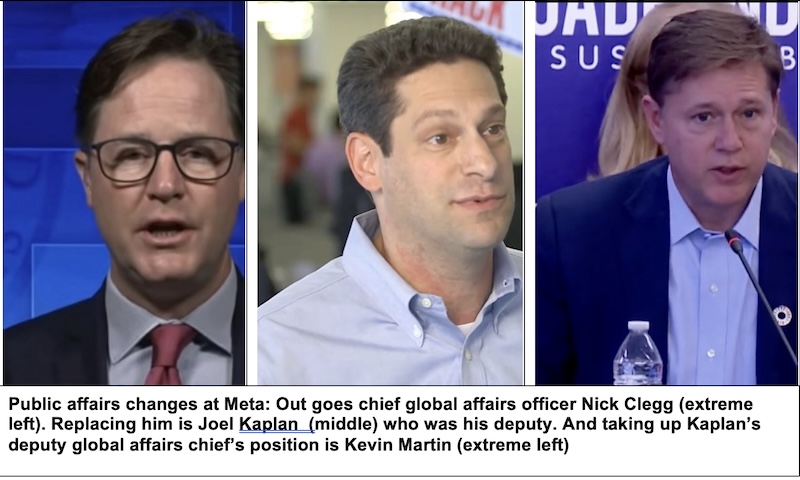
    Meta has replaced its Democrat-leaning chief global affairs officer Nick Clegg with Joel Kaplan who is known for his Republican leanings and was Clegg’s deputy.  Kaplan   was the deputy chief of staff for policy at the White House during the presidency of George W. Bush between 2006 to 2009.

    Clegg a former British deputy prime minister and  an ex-leader of the country’s liberal democrats,  joined Meta in 2018, playing a key role in developing policies related to content and elections. He was named president in 2022.

    Kaplan joined Meta in 2011 and was once vice-president of US public policy at Meta.

    Kevin Martin, the current head of US public policy at Meta, will step into Kaplan’s former role and will be just below him. Kevin was once appointed to the Federal Communication Commission  by George Bush and is also known to be Republican in his leanings.

    The changes are happening just as the Republican party’s Donald Trump is set to take over as the US president. 

    Mark Zuckerberg and team are doing their best not to take steps that can attract his ire and, if anything inadvertently does, his team should be in a position to get it fixed quick.

    If readers recollect, Facebook had taken extreme steps like banning Trump from the social media network for a while but had reinstated his account a while later. Clearly, Meta and Mark Zuckerberg will have to tread carefully as far as the president is concerned.

  • Meta Rolls out its first generative AI-powered ad features

    Meta Rolls out its first generative AI-powered ad features

    Mumbai: Meta has announced that rolling out its first generative AI-powered features for ad creatives in Meta’s Ads Manager, with global rollout complete by next year. These unlock a new era of creativity that maximizes the productivity, personalization and performance for all advertisers. The new features – Background Generation, Image Expansion, and Text Variations – will add to the AI-powered experiences and tools Meta continues to build for businesses.

    Background Generation: Creates multiple backgrounds to complement the advertiser’s product images, allowing advertisers to tailor their creative assets for different audiences.

    Image Expansion: Seamlessly adjusts creative assets to fit different aspect ratios across multiple surfaces, like Feed or Reels, allowing advertisers to spend less time and resources on repurposing creative assets.

    Text Variations: Generates multiple versions of ad texts based on advertiser’s original copy, highlighting the selling points of their products/services and giving them multiple text options to better reach their audience.

    What Meta learned from advertisers

    Earlier this year, Meta announced the AI Sandbox where they have been testing these generative AI features with a small and diverse set of advertisers. These advertisers have been providing Meta with valuable feedback, including helping it ensure these products are built responsibly. Here’s what they’ve said about Meta’s generative AI for ads:

    Generative AI can save time and resources while spurring productivity – According to a survey of advertisers that participated in early testing, most advertisers expect saving time and half of them estimate that generative AI will save them five or more hours a week – the equivalent of one month per year – noting they’ll be able to create multiple asset variations with the click of a button, reducing time spent between creative and media teams on time-consuming editing tasks and allowing for more strategic work.1 Nearly all advertisers also agreed that the products being tested in AI Sandbox will eventually help marketers drive campaign performance by enabling quicker development of more ad creative variations at scale.

    “As an early adopter of Meta’s AI Sandbox, Publicis is excited to experience how it will apply to important client use cases,“ said Publicis Media Content Innovation EVP – head of innovation Keith Soljacich. “Ad creative development that is faster, smarter and integrated into the larger Meta ad platform will be a game changer.”

    Generative AI eases creative fatigue, but there is still room to customize – Creatives have a large impact on the performance of an ad,2 and yet advertisers find it challenging to identify the best-performing creative at scale. Generative AI enables advertisers to introduce new ad creative faster, yet there is still work to do on delivering outputs customized to every brand’s unique voice and visual style. Meta will need to define new ways of partnering with brands and agencies to help train these models on brands’ unique perspective.

    What’s next

    Meta’s generative AI investments are focused on helping marketers to do their best work, by allowing them to launch & test ad creatives faster and easily reach the audiences they care about.

    Today’s generative-AI powered ad features are just a start. Meta plans to offer advertisers more ways to generate ad copy to highlight product selling points or generate background images in minutes with tailored themes, like outdoor images for an athleisure brand. And as Meta shared at Connect, businesses will soon be able to use AIs for business messaging on Messenger and WhatsApp to engage with customers – helping with commerce, engagement, and support, unlocking instant conversational responses. Meta is testing with a small number of businesses in Alpha and plans to scale it further next year.

    With millions of businesses advertising on Meta’s platform, it will continue to take a collaborative approach in developing these features and experiences so that they provide value to businesses and people.

  • Sandhya Devanathan joins Meta India as head and VP

    Sandhya Devanathan joins Meta India as head and VP

    Mumbai: Meta announced the appointment of Sandhya Devanathan as the vice president and head of Meta India. Devanathan will begin her new position on 1 January 2023. She will report directly to Meta APAC vice president Dan Neary.

    Devanathan will transition to her new role on January 1, 2023 and will report to Dan Neary, Vice President, Meta APAC, and be a part of the APAC leadership team. She will return to India to oversee the India organisation and strategy, as per company statement.

    With over 22 years of experience in banking, payments, and technology, Devanathan will focus on aligning the organisation’s business and revenue priorities in order to better serve its partners and clients, while also supporting Meta’s long-term growth and commitment to India. In her current role, she will spearhead the company’s India charter and strengthen strategic relationships with the country’s leading brands, creators, advertisers, and partners in order to drive Meta’s revenue growth in key channels in India.

    In 2016, Meta appointed Devanathan to lead the growth of its Singapore and Vietnam businesses and teams, as well as its Southeast Asian e-commerce initiatives.

    In 2020, she was promoted to lead gaming for APAC, one of Meta’s largest verticals globally. She also has a strong interest in developing female business leaders and is the executive sponsor for women in APAC at Meta, as well as the global lead for Play Forward, a global Meta initiative to improve diversity representation in the gaming industry. She is also a member of Pepper Financial Services’ global board of directors.

    As per media reports, Meta chief business officer Marne Levine said on this new appointment, “India is at the forefront of digital adoption, and Meta has launched many of our top products, such as reels and business messaging, in India first. We are proud to have recently launched JioMart on WhatsApp, which is our first end-to-end shopping experience in India. I’m pleased to welcome Devanathan as our new leader for India. Devanathan has a proven track record of scaling businesses, building exceptional and inclusive teams, driving product innovation, and building strong partnerships. We are thrilled to have her lead Meta’s continued growth in India.”

  • Mass layoffs undoubtedly tarnish a brand’s image

    Mass layoffs undoubtedly tarnish a brand’s image

    Mumbai: Seems like Elon Musk’s takeover of Twitter has proved to be ominous! Ever since the business tycoon took the reins of the social media company in his hands and sacked a hefty number of employees, the news hasn’t been too favourable for the workforce of most digital and information technology (IT) companies. Not that it was any better before that. The last three months have been exceptionally bleak for IT personnel in India and across the globe. In a conversation with Indiantelevision.com, industry experts gauge factors concerning brand image and brand trust in such a situation.

    To put things in perspective, as per Layoffs.fyi Tracker, around 787 companies across the world have let go of a total of 1,20,699 employees this year. Majority of them owe this to the global recession that the world is undergoing.

    Meta, which had employed 87,000 people across the globe as of September, has fired the most number of employees ever done by any organisation—it sacked more than 11,000 employees, which is about 13 per cent of the social media firm’s global task force. Its Indian counterpart was affected too. The company has also decided to freeze hiring until Q1’24. The company’s feeble Q3 performance and a rise in the overall costs of the firm by a fifth in the previous quarter made Meta CEO Mark Zuckerberg take such a step.

    After Musk stepped in at the helm of Twitter, he dismissed about 3,700 employees (including the top-level management of the firm), which amounts to about 50 per cent of the company’s overall working strength. The marketing and communications team of the social media company’s India bureau was shown the exit door; a total of 180 people were fired from the Indian office. Musk reasoned that he couldn’t let the firm lose four million dollars a day.

    Very recently, media and entertainment conglomerate Walt Disney announced a layoff as well as a freeze in its hiring process. The firm’s chief executive, Bob Chapek, made this decision as part of a cost-cutting measure as the firm’s streaming business goes through losses.

    Computer software major, Microsoft, fired around 1,000 employees across multiple divisions last month, owing to setting business priorities and making structural adjustments. According to some media reports, chip maker Intel, was also considering job cuts by 20 per cent in the previous month. The organisation went through a dip in sales and profits in its second quarter performance this year.

    Salesforce, an enterprise software company that had previously thought of sacking about 2,500 people, has let go of about 1,000 personnel. In what could be termed as a hypocritical scheme of events, edtech company Byju’s has fired about 2,500 employees in the name of cost-cutting and in turn hired one of the most expensive brand endorsers in the world, celebrity footballer Lionel Messi, for its social initiative.

    Unacademy, the SoftBank-backed edtech giant, laid off about 10 per cent of its workforce, or about 350 employees, in accordance with the current funding crisis that is being faced by start-ups.

    Udaan, a B2B e-commerce platform that raised $120 million last month, decided to forego hiring about 350 employees.

    Also, media reports suggest that Snap, the company that runs Snapchat, was considering downsizing its staff by 20 per cent, in August. This was due to the 80 per cent drop in its stock price this year.

    Affecting brand image

    Considering that these are not just sizeable firms but also successful brands in their respective domains, how does this chain of mass layoffs affect the brand image of these companies?

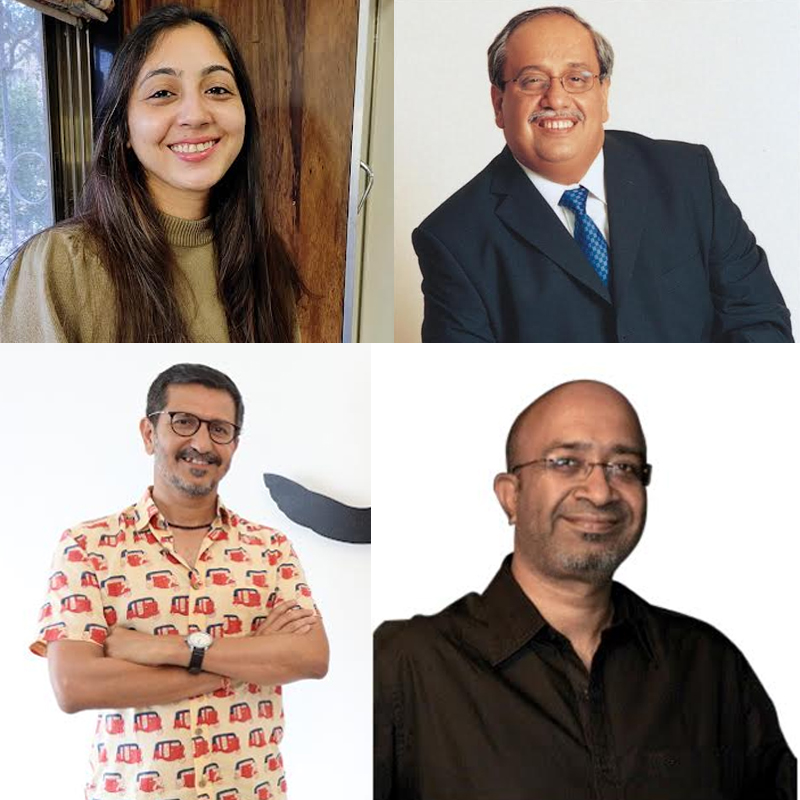
    Brand guru and Samsika Marketing Consultants founder, chairman & managing director Jagdeep Kapoor explains that every company represented by a brand has two types of customers. External customers who are consumers. Internal customers who are employees.

    “The brand’s image gets affected by both external customers (consumers) and internal customers (employees). Brands are built in the minds and hearts of customers. Any such large layoffs affect and shake hearts and minds, and hence the brand image does get affected,” he cites.

    He adds, “Ultimately, companies are showcased through brands, which are served by employees and consumed by consumers. This kind of ‘earthquake’ leads to a ‘shake’ of internal and external confidence and faith. Instead of the brand being in the ‘make’ mode, it goes into the ‘shake’ mode.”

    Sideways Consulting co-founder Abhijit Avasthi agrees that for certain brands, the image gets dented. “For the established tech companies, the consumer brand might not be affected that much, but the employer brand will take a beating for sure. For the newer ones, like the edtech ones, the consumer brand will suffer big time as well because it will raise questions about their ability to deliver the service well,” he points out.

    Communications consultancy, Treize Communications founder & CEO Sonam Shah believes that while this does affect the brand’s image to a certain extent, employees today are more accepting of the fact that they can lose their jobs at any time.

    She believes that if this is handled sensitively, the brand will not have a difficult time managing its public image. She goes on, “Public memory is short, and there is enough and more for the audience to read and talk about. Once people get new jobs and the situation gets better, the brand can work on reviving its brand image easily.”

    Advocacy platform, Socxo chief marketing officer Ajit Narayan, feels that the layoffs all around will have a negative buzz, as is natural. And these are not one or two but in thousands. “People will talk about it. For a while. But then, as with everything else, people’s memories are short. And life goes on as usual. Depending on the company and how they manage the situation. And if they do turn around. Then all will be forgotten,” he emphasises.

    He spells out, “The ‘be negative’ impact will be temporary. More like a setback. The ones that ease out of it better will be the ones that show empathy for those being told to go. And then there will be those who will be ego-driven. And if the turnaround does not bring results, they will carry the negative image with them.”

    Building trust

    By taking such harsh steps in terms of downsizing, how easy or difficult will it be for these firms to revive their brand name and build trust after being splashed about so negatively in the media and undoubtedly through word-of-mouth too?

    Avasthi is of the opinion that it will take a fair bit of time. “Companies very often confuse increasing awareness with trust. Big budget splashes can help you build awareness, but earning trust takes time and patience and consistently delivering the goods with integrity,” he reiterates.

    “Trust is another word for a brand. It takes decades to build brands and trust. It just takes a moment to let it slide. Building a brand or an organisation is difficult. Re-building it is even tougher because a lot of intangibles like feelings, emotions, and sentiments also need to be rebuilt, not only of internal and external customers but also of their families,” Kapoor highlights.

    On the contrary, Shah thinks, “It will not be a very difficult road, but a lot of this depends on the business model of the company and if the company needs to restructure its core offerings or work on escalating the current ones.”

    Narayan, too, thinks that this is a temporary phase, and most of the brands will come out of it over the next few quarters. “Also the market reality and future plans will have a major impact. There is a recession looming large, and this and other stories now will be washed away if that becomes a reality,” he specifies.

    Layoffs particularly in the digital and IT industry

    There is an economic recession across the globe, which has affected and continues to affect a lot of industries. Surprisingly, most of these layoffs seem to be happening in the digital and IT industries. What could be the reason behind this?

    Avasthi mentions that the reasons for the layoffs vary from company to company, so one can’t attribute them to any generic reason. However, he brings out, “Broadly speaking, for some of the newer venture capital (VC) funded startups, it’s simply because they were badly run businesses that were trying to move ahead of themselves—trying to do too much in too little time—chasing unrealistic, unsustainable growth. There is a sense of misplaced arrogance that some of the founders had; it’s catching up with them.”

    “For the big, established tech giants, I feel it’s another manifestation of insatiable capitalist greed. I can understand layoffs to save a sinking ship, but if you are sitting on billions of dollars, I can’t comprehend why it’s not okay to make a little less money for a few years and let people keep their livelihoods till optimal solutions are found. But then that’s a larger philosophical debate,” he expresses.

    According to Narayan, tech is the industry which has given large scale employment and also the large paychecks. “The industry has been driven by the scale and adoption idea and not profitability. To achieve scale and the speed at which it is being envisaged, it needs people. So they hired for scaling plans,” he brings out.

    Further, he points out, “The ‘what if’ of growth not leading to profitability had been discounted. And that is what is playing up as access to capital dries up. And demand for profitability goes up. Business is driven by profits. And the leaders of the business will have to keep that in focus as they run their businesses. Not just fancy talk of scale, growth, and adoption. This is the hard truth.”

    Shah sheds light on some facts – the layoff spree has been frequently happening within the start-up and tech space. There was a phase for a few years, pre-pandemic, where IT companies and even start-ups had a series of layoffs. Pink slips were shown to employees.

    She says, “The market and economic conditions are too dynamic for job stability, especially in the IT and tech sector. People who join here are aware of this. So what’s important here is how the process is executed and if all the HR policies and compensations are in place or not.”

    “These things have happened in many industries. But the service sector, which is dependent on people, gets affected and highlighted more. But these companies and brands will rebound back after a time lag. One will have to watch to see whether these companies and brands have a permanent layoff or just a time lag off,” Kapoor signs off.

  • Meta lays off 11,000 employees which equals 13% of its workforce

    Meta lays off 11,000 employees which equals 13% of its workforce

    Mumbai: Meta CEO Mark Zuckerberg has sacked about 11,000 employees, which is about 13 per cent of the company’s workforce.

    As per media reports, in an official statement, Zuckerberg said, “Today I’m sharing some of the most difficult changes we’ve made in Meta’s history. I’ve decided to reduce the size of our team by about 13 per cent and let more than 11,000 of our talented employees go. We are also taking a number of additional steps to become a leaner and more efficient company by cutting discretionary spending and extending our hiring freeze through Q1.”

    This is considered to be one of the largest layoffs in the US this year. As of September, Meta employed over 87,000 people across the globe.

    As stated in media reports, Zuckerberg informed employees on Tuesday about the job cuts. The social media company is looking at slashing costs after its feeble Q3 performance and due to the rise in the overall costs of the firm by a fifth in the previous quarter.

    He added, “I want to take accountability for these decisions and for how we got here. I know this is tough for everyone, and I’m especially sorry to those impacted.”

    This mass firing comes some weeks after one of Meta’s largest shareholders, Altimeter Capital, wrote to Zuckerberg highlighting the need to cut costs at the company.

    In an open letter, Altimeter Capital founder & CEO Brad Gerstner mentioned, “Meta has drifted into the land of excess—too many people, too many ideas, too little urgency. This lack of focus and fitness is obscured when growth is easy, but deadly when growth slows and technology changes.”

    He had suggested that Meta would have to cut jobs and reduce capital expenditure to stay on track. This comes at a time when the social media firm is struggling with the current economic slowdown.

    The social media company, Twitter, under the new reign of Elon Musk, laid off a hefty number of employees across its offices. Biggies like Amazon, Google, and Microsoft have also announced a freeze in hiring.

  • Mark Zuckerberg expects Meta to return to healthier revenue growth trends next year

    Mark Zuckerberg expects Meta to return to healthier revenue growth trends next year

    Mumbai: In a conference call with analysts to discuss the third quarter 2022 results, Meta CEO Mark Zuckerberg said that in terms of the business, total revenue grew slightly this quarter on a constant currency basis. “We’re still behind where I think we should be, but we believe that we will return to healthier revenue growth trends next year. That said, it’s not clear that the economy has stabilised yet, so we’re planning our budget somewhat more conservatively.”

    He noted that the company in the quarter had launched JioMart on WhatsApp in India. “It’s our first end-to-end shopping experience that shows the potential for chat-based commerce through messaging.” He said that beyond Reels, messaging is another major monetisation opportunity. “Billions of people and millions of businesses use WhatsApp and Messenger every day, and we’re confident we can connect them in ways that create valuable experiences.”

    For the record, Meta’s share price fell by 20 per cent in after-hours trading after it reported its fourth straight quarterly decline in profit. Analysts want Meta to cut costs. Some analysts describe Meta’s investments as being confusing and confounding.

    Zuckerberg also said that Meta’s product trends look better than what the commentary that he has seen suggests.

    “Our community continued to grow this quarter. We now reach more than 3.7 billion people monthly across our family of apps. And while we continue to navigate some challenging dynamics—a volatile macroeconomy, increasing competition, ad signal loss, and growing costs from our long-term investments—Iq have to say that our product trends look better from what I see than some of the commentary I’ve seen suggests.”

    He said that three of the areas that Meta is very focused on are the AI discovery engine, the ads and business messaging platforms, and the future vision for the metaverse. “I believe the tougher prioritisation, discipline, and efficiency that we’re driving across the organisation will help us navigate the current environment and emerge an even stronger company.”

    Reels, which is its short-form video platform, continues to grow quickly across apps—both in production and consumption. “There are now more than 140 billion reels played across Facebook and Instagram each day. That’s a 50 per cent increase from six months ago. Reels are incremental to time spent on our apps. The trends look good here, and we believe that we’re gaining time spent on competitors like TikTok.”

    While analysts are unsure about whether the big bets on areas like the Metaverse will pay off, Zuckerberg expressed confidence in the work being done in the Metaverse space. “We just had our Connect conference and announced Quest Pro, which we just started shipping. It’s our new high-end VR headset that delivers high-resolution mixed reality so you can blend virtual objects into the physical environment around you. It’s pretty amazing when you see it, and it’s going to enable all kinds of new experiences in socializing, gaming, fitness, and work. I’m really looking forward to seeing what people build with this new capability.

    Working in the metaverse is a big theme for Quest Pro. There are 200 million people who get new PCs every year, mostly for work. Our goal for the Quest Pro line over the next several years is to enable more and more of these people to get their work done in virtual and mixed reality, eventually even better than they could on PCs.”

    He dwelt on the importance of partnerships. “To deliver a great work and productivity experience, I’m excited about the partnerships we announced with Microsoft bringing their suite of productivity and enterprise management services to Quest, Adobe and Autodesk bringing their creative tools, Zoom bringing their communication platform, Accenture building solutions for enterprises, and more.

    “There’s still a long road ahead to build the next computing platform, but we are clearly doing leading work here. This is a massive undertaking, and it’s often going to take a few versions of each product before they become mainstream. But I think our work is going to be of historic importance and create the foundation for an entirely new way that we will interact with each other and blend technology into our lives, as well as a foundation for the long term of our business.”

  • Meta and Jio Platforms team up to launch JioMart on WhatsApp

    Meta and Jio Platforms team up to launch JioMart on WhatsApp

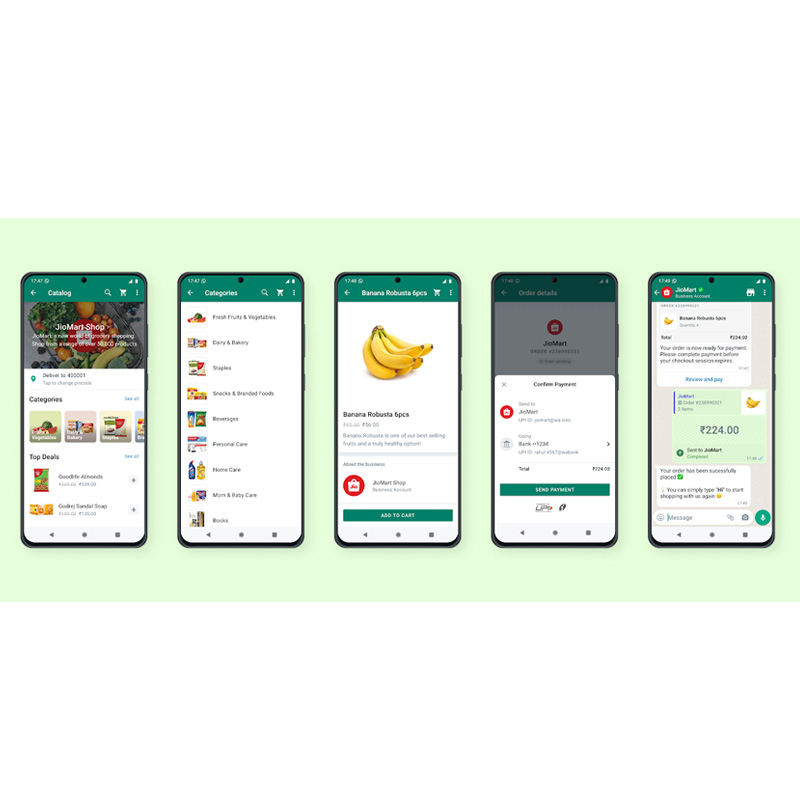
    Mumbai: In a global first, Meta has partnered with Jio Platforms to launch an end-to-end shopping experience on WhatsApp, where consumers can shop from JioMart right within their WhatsApp chat. JioMart on WhatsApp will enable users in India, including those who have never shopped online before, to seamlessly browse through JioMart’s entire grocery catalogue, add items to their cart, and make the payment to complete the purchase – all without leaving the WhatsApp chat.

    Meta founder and CEO Mark Zuckerberg said in a Facebook post, “Excited to launch our partnership with JioMart in India. This is our first-ever end-to-end shopping experience on WhatsApp—people can now buy groceries from JioMart right in a chat.”

    “Business messaging is an area with real momentum, and chat-based experiences like this will be the go-to way people and businesses communicate in the years to come,” he added.

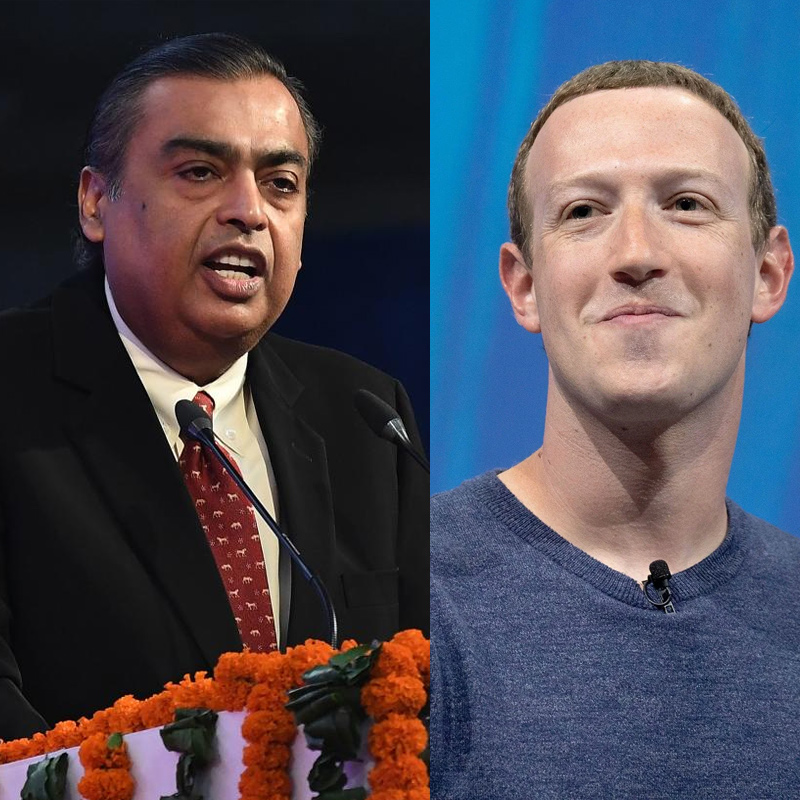
    Making the announcement, Reliance Industries chairman and managing director Mukesh Ambani said, “Our vision is to propel India as the world’s leading digital society. When Jio platforms and Meta announced our partnership in 2020, Mark and I shared a vision of bringing more people and businesses online and creating truly innovative solutions that will add convenience to the daily lives of every Indian.”

    “One example of an innovative customer experience that we are proud of developing is the first ever end-to-end shopping experience with JioMart on WhatsApp. The JioMart on WhatsApp experience furthers our commitment to enabling a simple and convenient way of online shopping for millions of Indians,” he further said.

    The launch is part of a strategic partnership between Meta and Jio Platforms to accelerate India’s digital transformation and provide people and businesses of all sizes opportunities to connect in new ways and fuel economic growth in the country, the company said in its statement.

    Consumers can start shopping on JioMart via WhatsApp by simply sending ‘Hi’ to the JioMart number on the networking app, it added.

  • Sheryl Sandberg logs out from Meta after 14 years

    Sheryl Sandberg logs out from Meta after 14 years

    Mumbai : Sheryl Sandberg has decided to step down from her position as a chief operating officer at Meta, ending a stint of 14 years at the tech major- the parent organisation of Facebook, Instagram, and WhatsApp, among other subsidiaries. Sandberg will leave the company this fall, after transitioning her direct reports over the next few months. She will, however, continue to serve on Meta’s board of directors.

    Announcing on her Facebook page, Sandberg wrote a detailed, candid post about her time at the networking conglomerate. She also shared anecdotes of her initial struggles and work-life there, even as she recounted the highs and lows of her personal life during the period.

    Today, I am sharing the news that after 14 years, I will be leaving Meta, she wrote. Talking about her initial days at the company, formerly called Facebook, Sandberg penned, “When I first met Mark, I was not looking for a new job – and I could have never predicted how meeting him would change my life. We were at a holiday party at Daniel L Rosensweig’s house. I was introduced to Mark as I walked in the door, and we started talking about his vision for Facebook. I had tried Facebook, as it was first called, but still thought the internet was a largely anonymous place to search for funny pictures. Mark’s belief that people would put their real selves online to connect with other people was so mesmerising that we stood by that door and talked for the rest of the night.”

    Sandberg also touched upon the ongoing debate around privacy concerns in social media in her post, saying, “The products we make have a huge impact, so we have the responsibility to build them in a way that protects the privacy and keeps people safe.”

    Talking about her future plans, she continued further, “When I took this job in 2008, I hoped I would be in this role for five years. Fourteen years later, it is time for me to write the next chapter of my life. I am not entirely sure what the future will bring – I have learned no one ever is. But I know it will include focusing more on my foundation and philanthropic work, which is more important to me than ever given how critical this moment is for women.”

    “Over the next few months, Mark and I will transition my direct reports and I will leave the company this fall. I still believe as strongly as ever in our mission, and I am honoured that I will continue to serve on Meta’s board of directors,” she added.

    Calling it “The end of an era”, Facebook founder Mark Zuckerberg responded to Sandberg’s post, writing: In the 14 years we’ve worked together, you’ve architected our ads business, hired great people, forged our management culture, and taught me how to run a company. I’m going to miss working alongside you every day, but grateful to have you as a lifelong friend.

    “Thank you for all you’ve done for me and my family, for our company, and millions of people around the world. You’re a superstar,” he further added.

    Prior to joining Facebook in 2008 as its COO, Sandberg was vice president of global online sales and operations at Google.

  • Meta launches first brand campaign after rebranding from Facebook

    Meta launches first brand campaign after rebranding from Facebook

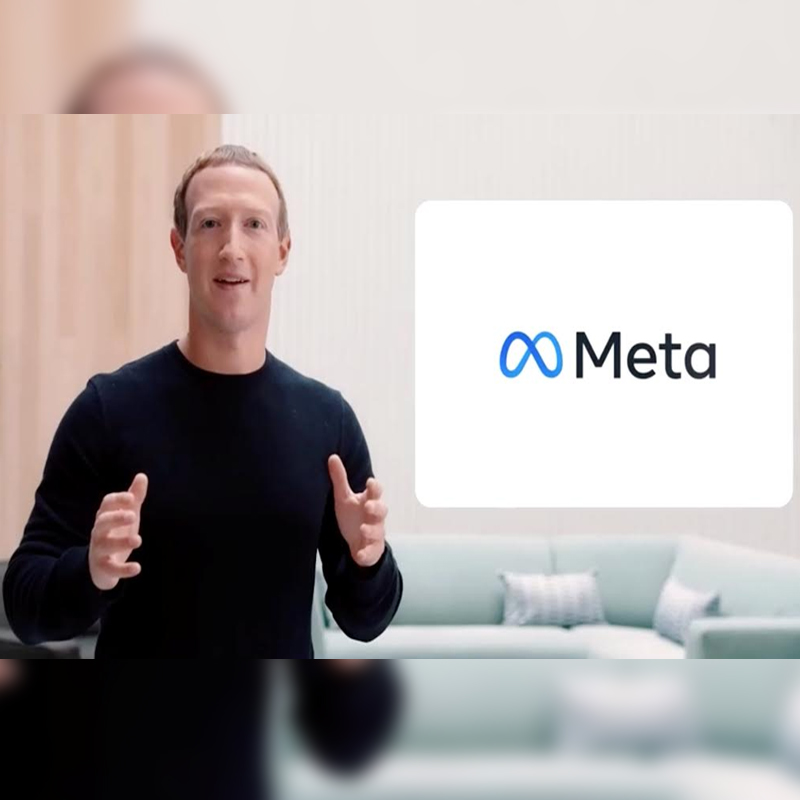
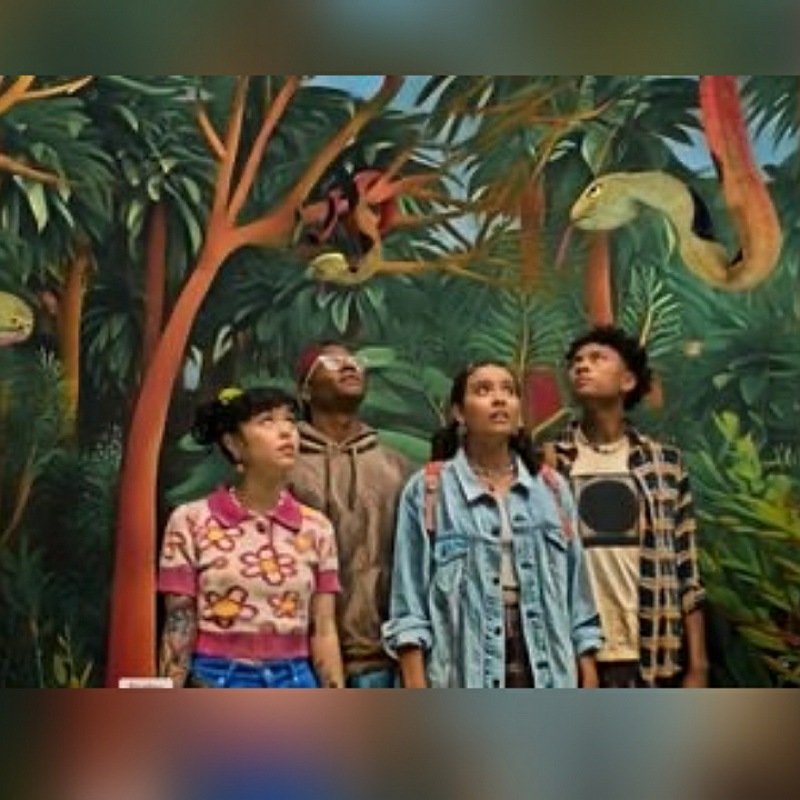
    Mumbai: Social media giant, Meta, formerly known as Facebook has launched its first brand campaign post the rebranding. The first advertisement from the organisation shows a classic painting that celebrates the possibilities of the metaverse and gives out the message, “Step into a world of imagination with Meta and the endless possibilities as 2D becomes 3D.”

    The video shows a bunch of youngsters looking at some classic 2D paintings, even as one of the paintings depicting a tiger preying on a buffalo seems to come alive in 3D. The campaign showcases the possibilities of virtual experiences through Meta and the metaverse’s ambitious goals.

    Founder Mark Zuckerberg shared the campaign’s launch on his social media handles with the words, “This is going to be fun.”


    A post shared by Meta (@wearemeta)


    This comes almost a week after Zuckerberg announced the company was rebranding its name to Meta Platforms Inc or simply Meta amid declining popularity and mounting controversies.

    As the battle in this space heats up along with the rebranding, Zuckerberg is betting big on what he believes to be the future of the internet and what he thinks will be a part of the digital economy.

    Zuckerberg had shared another post some days earlier, highlighting the endless possibilities the metaverse would unlock: “It’s been fun to imagine the types of experiences the metaverse will unlock, like giving everyone the ability to fence with Olympic gold medalist Lee Kiefer.” The caption was accompanied with a showing him indulging in a virtual battle with the champion fencer along with a tongue-in-cheek disclaimer “Spoiler alert: she will win every time.”

    https://www.facebook.com/zuck/videos/327135132552066/?app=fbl

    Earlier this week, the social networking giant also announced it will discontinue its automatic facial recognition feature for photos and videos after a decade citing concerns. The Mark Zuckerberg-owned company said it will also delete the face scan data of over one billion users. This feature, notably, has raised a lot of privacy concerns in the past.

  • Facebook now has 2.85 billion MAUs, income skyrockets 94%

    Facebook now has 2.85 billion MAUs, income skyrockets 94%

    New Delhi: Facebook on Thursday reported stronger than expected financial results for the first quarter with soaring ad revenue during the pandemic. The social media giant said it earned $9.5 billion in the January-March quarter, a pole vault of 94 per cent from $4.9 billion last year. The total revenue grew 48 per cent from $17.44 billion to $26.17 billion in the previous fiscal, backed by a surge in digital ad spending during the pandemic when consumers mostly shopped online.

    The main driver of this growth was Facebook’s advertising business.

    “We are pleased with the strength of our advertising revenue growth in the first quarter of 2021, which was driven by a 30 per cent year-over-year increase in the average price per ad and a 12 per cent increase in the number of ads delivered. We expect that advertising revenue growth will continue to be primarily driven by price during the rest of 2021,” said Facebook CFO David Wehner as the company reported first quarter results.

    Wehner added that the company expects its year-over-year revenue growth rate for the period “to remain stable or modestly accelerate relative to the growth rate in the first quarter of 2021 as we lap slower growth related to the pandemic during the second quarter of 2020.”

    Facebook now has 2.85 billion monthly active users (MAUs), an increase of 10 per cent year-on-year. Concurrently, its daily active user base has reached 1.88 billion on average, an increase of eight per cent. The company currently employs 60,654 people, bolstering its workforce by 26 per cent year-over-year.

    Looking ahead, the world’s largest social network will focus on expanding its e-commerce offerings to strengthen its ad business. “We will continue to invest aggressively to deliver new and meaningful experiences for years to come, including in newer areas like augmented and virtual reality, commerce, and the creator economy,” said Facebook CEO Mark Zuckerberg in a statement.