Tag: Mark Spicer

  • “Through loyalty programmes we aim to maintain the profitability of our customer”: Mark Spicer

    “Through loyalty programmes we aim to maintain the profitability of our customer”: Mark Spicer

    Loyalty and incentive programmes from brands are not new to India, right from the points that one accumulates by swiping a credit card to the free recharge that groups such as the Future Group offer.


    Multi-national loyalty and incentive programme player ICLP says that it helps customers connect and transact with brands in new ways every day and helps increase customer engagement with the brand. 


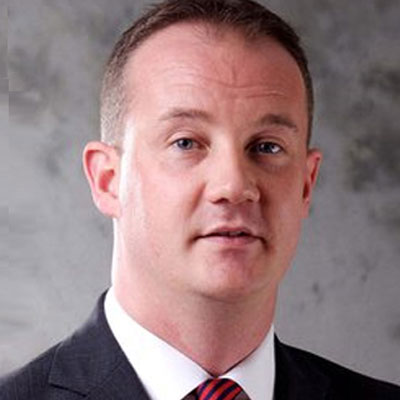
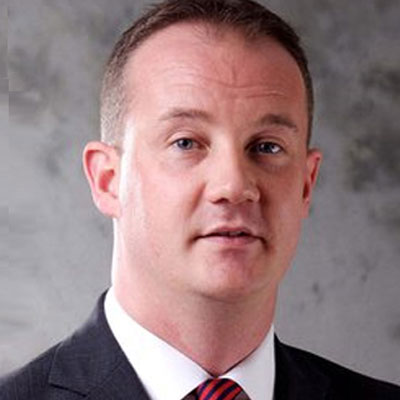
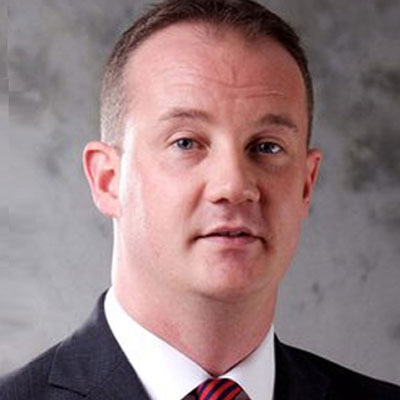
    ICLP India operations general manager Mark Spicer has over 20 years experience in the loyalty and incentives industry across all sectors with previous roles at Aimia, Maritz, Grass Roots and Skybridge Group. With particular experience in the telecoms and financial services sectors he has managed and delivered programmes for clients including Mobily, T-Mobile, O2 and Vodafone in addition to coalition programs and other pre-paid plastic card products. Spicer is responsible for managing the business, existing client relationships and driving continued commercial growth throughout India.


    Excerpts of an interaction between Spicer and Tarachand Wanvari:


    What are the various solutions that you offer?  Could you elaborate with examples – in India and other countries?


    With over 25 years of global experience, ICLP has a unique understanding of loyalty and a fully comprehensive range of solutions and capabilities to enable brands to meet their business and marketing objectives. We offer a full range of B2C and B2B end-to-end loyalty services – from consulting and understanding the clients business, through the customer journey right up to creating and development of a loyalty program to drive customer engagement and loyalty. The biggest part of the work we do is helping the client understand who their customers are by uncovering customer insights and analytics.


    Are your loyalty solutions, card based or smartphone based or something else for the end consumer?


    Our loyalty solution is customised based on the understanding of client’s business objectives and reasoning for the programme. Our solution can be anything from a simple card based system to non-card based system to digital/smartphone application but as per our experience ‘cards based system’ are still popular as it creates a sense of belonging and provide recognition to the customers. Take a look at some of the renowned frequent flyers programme like Miles and More, Asia Miles, Jet Privilege etc. there is a sense of pride among the higher tier members of owning a membership card.


    What verticals are your target groups and why?


    In the last few years, Indian market is going through considerable change. Companies have to adapt to the speed of the market to drive customer engagement and also to ensure customer returns.  Indian companies that are focussing on acquiring and retaining their customers have become aggressive in implementing loyalty programmes.


    We are targeting all the leading Indian MNCs across varied sectors but our core focus is financial services, telco and retail as they are highly competitive markets, customer churn rate is incredibly high and need the help in understanding their customer to ensure they remain loyal.


    What according to you is the market size for your products/services in India? What kind of growth rates do you predict?


    There are different estimations available in the market. As per our estimate, the exact size of the loyalty market in India is difficult to estimate or predict, as India is undergoing a lot of changes in terms of policies and processes. The loyalty market in India is still on a rise and at a nascent stage when compared to other developed countries.


    There is tremendous scope of growth in this industry and at this stage estimation of the market size will not provide a correct picture.


    You have entered quite late-there are a number of loyalty programmes already in India –Reliance or the Star cards, or discount offers from medical dispensaries like Religare or Apollo Pharmacy, or retail such as Future group, petro cards, tie up with credit and debit cards, etc.


    I would argue we have arrived at the right time! Whilst there are programmes that have been around for a long time, the Indian consumer is greatly informed and therefore it’s now that an understanding of the customer is even more critical.


    With more competitors in the market place – customers are shopping around and with the introduction of international brands, this too has increased competition – our arrival is at the same time as the market place changes and we are able to help with Glocalisation i.e. global expertise to act local.


    Indian brands often devalue the points that have accumulated? Why? Do you think that this is appropriate and will not lower/dilute brand trust/faith? Does this happen in other countries?


    As a programme grows, develops and changes, the value of point changes over time. No different to the fluctuation of currencies. Points are a currency and their value changes over time, sometimes increasing and sometimes decreasing.


    As with foreign currencies, it does affect brand trust so therefore the business model attached to the programme has to take into account potential fluctuations to avoid them.


    What kind of growth rates do you think your customer could achieve using your business intelligence, solutions and tools?


    Our focus is to help organisations demonstrate the positive commercial impact that loyalty marketing strategies have on their organisation. Each loyalty programme will have differing results – but the goal is to at least maintain the profitability of the customer/actually keeping them as a customer. As the understanding of customers increases, then you can start to target them with offers which then potentially can increase their profitability.


    One thing we do know – status tiers – once a customer has reached a high level of status tier, they try to maintain it. Therefore maintaining their level of profitability and ensuring they remain as a customer.


    I understand that you intend to use inputs and data picked up from other geographies and use your experience in other countries for Indian brands. Do you think that you could slot businesses/brands catering to the Indian price sensitive consumer with other geographies?


    We certainly spot similar behaviour across geographies and the example above is a great example of where customer behaviour is consistent across the globe.


    Though India is particularly price sensitive market, these conditions are changing rapidly. With its young demographic pattern, India has a huge population in the younger age bracket and typical consumers in this group are ready to pay a price. They have large disposable income and earning more than yester years. Nobody could have thought of buying a cell phone for Rs 30,000+ years ago. Today, this age group across gender are buying iPhone, Samsung etc. all the latest gadgets.


    India is in transition phase of being a smart market whereby the consumers are price sensitive but is also willing to pay a price for the right product suited to their needs. This has also become evident from our recent global consumer loyalty research that ICLP commissioned in association with Forrester Consulting – Crossing the Loyalty Chasm demonstrated that Indian consumers were more willing than consumers in any other market to pay a premium for products and services of brands that they are loyal to and are amongst the most likely to make recommendations and brand advocates. 


    What of consumer fatigue? What about the points accumulation/redemption infrastructure? A pique that one has often heard about point of sale (POS) expressing inability to swipe the points onto a card because of poor connectivity/infrastructure?


    Nothing stays the same for long; therefore a loyalty programme must not stay the same. Programmes have to grow, develop, change and evolve in order to avoid consumer fatigue. Consumers are also changing at a fast rate so therefore it’s even more important that the programme changes at the same pace – which is hard and tricky to do – but doing nothing is not an option.


    There are some great programmes in the Indian market, but customer expectations are continually increasing and therefore everything else has to keep up.

  • New wave of loyalty in India – Digital & Data

    New wave of loyalty in India – Digital & Data

    Retailers and many other companies in India have been struggling with loyalty programmes as consumers have remained cold to the concept which was introduced a decade ago. However, the face of loyalty marketing in India is beginning to change as marketers are seeking to engender a new wave of loyalty to connect with the consumers and to delve deeper into their behaviour by moving beyond transactions to create effective and engaging interactions.


    Today, the virtual world is gaining prominence and consumers prefer easy access to everything around them with ‘Just One Click Away’ approach. This has compelled many marketers to adopt digital as a new wave for loyalty marketing in India, using mobile phones and social media to connect with their member base, creating two–way active channels of communication.


    Indian companies too are realising that the profile of their member base is changing with time. Once a realm of older and well-heeled patrons, exclusive loyalty clubs today are breaking down many of these barriers. Members are becoming younger, networked and more demanding. It is no longer about funneling seemingly special offers to a loyal customer, today, the consumers want to be heard and instantly gratified for their behaviour. They want programmes to be tailored encompassing their needs.


    Whether it is airlines, retailers, hoteliers, financial services or other companies, all are using or switching to this emerging digital platform to drive consumer engagement. One of the leading low cost carriers (LCCs) in India has introduced their loyalty programme purely based on mobile – from checking of points to redeeming of points to receiving trigger-based communication. Beyond travel, this technology is also seeing a huge acceptability among the retailers from lifestyle to footwear to fine dining to QSR. Even the niche players like spa and salon, cafes and lounges and frozen yogurt are using mobile-based technology not only to connect with the consumers but also to drive involvement through two-way dialogue.


    The increasing usage of smart phones among India’s core population is paving way for new technologies, and companies are focusing to capture this momentum by providing an enriching experience with a customised solution. Brands are driving loyalty strongly through social media where, today, consumers can earn points for tagging a location, reviews, comments, participating in polls and more.


    In fact, one FMCG company in India is riding on this new medium to move beyond transactions and create more interactivity directly with consumers. The consumers enrolling for this programme can earn points for participation in polls, votes, referrals, reviews, recommendations and more which can then be redeemed for the goodie bags by the company. The company is trying to build a direct communication channel with the consumers who were majorly served by local store or modern trade.


    This emerging technology is not only being limited to drive acquisition or engagement but also to increase retention of consumers through their purchase frequency. A growing multinational men’s apparel that is expanding its footprints in India is adopting mobile technology and social media to drive online purchases. They are introducing a mobile application which is integrated with social media to drive engagement and will also be utilised at POS for making purchases. They are designing a virtual apparels display application which will be tailored made to the historic purchase trend of the consumers. This will be integrated with the mobile application, so that the consumers can select and purchase via their mobile. Through this, the brand will be able to delve deeper into consumer insights and gain a better understanding of their behaviour. 


    The time has come when a greater attempt is being made by many brands to understand the consumer using smart analytics, so that the promotions and discounts being offered to the consumers are relevant and can convert to purchase action. This will help to enhance their attractiveness and keep pace with the connected consumer.


    A spate of irrelevant marketing emails after signing on a loyalty programme is one of the biggest complaints by consumers, like a company sending offers about motherhood products to an unmarried customer for whom it has no relevance or ability to meet a need.


    So, to counter this problem, companies are employing technological tools to gather information about the consumers that includes details beyond their demographic profile like age, frequency of visit, buying patterns, item purchase to design offers and promotions that are focused and targeted and are more likely to generate a response from the consumer.


    Through this growing avenue, consumers are demanding ease of accessibility. They want offers, promotions and rewards to be easily accessible to them from anywhere whether mobile, social networking or their preferred location and more. They are also looking for seamless experience across all the different channels being used to connect with them.


    Real–time offers on the mobile


    Today, companies want to capture the attention of consumers while they are on the shop floor to translate into faster turnaround time. Many retailers are broadcasting real-time offers, for example, when a consumer is purchasing a product, the loyalty system will analyse the information and offer him a discount, benefit or freebie on buying that product. These coupons are immediately forwarded to their mobile for a stronger call to action. 


    Similarly, some apparel stores offer rewards to the consumer whenever they visit their store and tag them on social media. The system will read the information and based on their historic data will forward on the spot reward/offer on their mobile to lure them into impromptu in-store purchases.


    (These are purely personal views of ICLP India general manager Mark Spicer and indiantelevision.com does not subscribe to these views)

  • “Competition is the biggest challenge in loyalty marketing”

    “Competition is the biggest challenge in loyalty marketing”

    MUMBAI: With retail chains, international labels, new airlines and hotels entering India in a big way, the brands are trying to woo consumers interestingly. One way in which brands are connecting with consumers more efficiently is by getting in to loyalty marketing. Loyalty marketing, which is considered to be personal, is now trying to use the power of technology in a big way.


    To understand more on this,indiantelevision.com recently met with ICLP India general manager Mark Spicer, who has been in the loyalty and incentives industry for over two decades now. Spicer spoke about marketing during tough times, the potential of loyalty marketing and much more…


    What according to you is the size of loyalty marketing in India?


    It can be noted that the current size of loyalty marketing in India is around $1.5 billion, as of the beginning of this calendar year. The numbers are expected to shoot up and one can expect double digit growth by end of the year.


    What are Indian brands doing right by getting into loyalty marketing?


    Many Indian brands have started interesting initiatives using loyalty marketing. What brands now need to focus on is to take communication to the next level. According to me, this is the right time when brands can jump into the picture to grab the attention and confidence of consumers. Today, consumers’ expectations have become dynamic. It will be extremely difficult to track their moves if you are not focused.


    What makes you say that it is the right time for loyalty marketing to take off in India?


    The changing market scenario is the major reason why I think brands should be keen in gaining the confidence of consumers. The Indian economy is showing a slowdown and this is an apt time for brands to jump in. Loyalty marketing has an immense potential in an emerging market like India.


    It can be observed that with an increase in inflation rate, consumer decisions are most likely to fluctuate. How can loyalty marketing help brands sustain themselves?


    The first step that brands should take during tough times is to clearly understand their consumers. The task that brands should put on their list is to make clear the road plan. Consumers like being valued. Also, it can be noted that brands need to make communication individual-specific. All this can happen only when brands start getting engagement in marketing. Consumers look for alternative product lines during inflation. Brands need to consider this as an opportunity and make the best use of it.


    Many brands use personal media such as social media and mobile in their loyalty marketing mix. Don’t you think this can intrude on a consumer’s privacy?


    Brands should give consumers the liberty to choose their medium of communication. Consumers are choosy about where they receive their marketing messages. Even though permission marketing exists with emergence of social media today, a lot of communication reaches a consumer at a faster rate.


    Consumers today have better control on communication. Brands need to map a costumer’s journey in loyalty marketing. Having said that, it is necessary that brands take note of how many times a message reaches a consumer and the medium through which it is sent.


    What are the challenges loyalty marketing can face in a diverse market like India?


    Competition is the biggest challenge in loyalty marketing. With cultural and political diversity, brands need to cater to different needs and deliver memorable experiences to consumers. It is also important for brands to keep on par with the ever evolving technology.


    Does talent in India have the right skill sets to take loyalty marketing to the next level?


    Talent in India is rich; what needs to be taken care of is to groom them to put data in the right context. Also, talent here can take learnings from other markets to sharpen their skills. The future looks very positive and bright.


    Marketing to millennials is a hot topic of discussion these days. How do you think loyalty marketing can deal with millennials who are believed to have a variety of choices?


    While dealing with millennials, it is necessary to think ahead of time.  Marketers need to be instant in the way they communicate and need to speak to them in the tone that they understand. Most importantly, data needs to be used smartly to understand their psychology. Marketers also should embed technology in their line of communication.

  • ICLP announces Mark Spicer as new General Manager, India

    ICLP announces Mark Spicer as new General Manager, India

    MUMBAI: Global loyalty marketing and CRM specialist, ICLP is pleased to announce the appointment of Mark Spicer as General Manager for its India operation.
     

    Based in Mumbai he will report to Dion Maritz, ICLP’s Regional Director for Middle East, Africa and India.
     

    Mark joins ICLP from Aimia in the Middle East where he managed the leading telecom loyalty programme for Mobily in Saudi Arabia. He has in excess of 20 years’ experience in the loyalty and incentives industry across all sectors with previous roles at Maritz, Grass Roots and Skybridge Group. With particular experience in the telecoms and financial services sectors he has managed and delivered programmes for clients including T-Mobile (USA), O2 (UK) and Vodafone (UK) in addition to Nectar and other pre-plastic card products.

     
    Mark will be responsible for managing existing client relationships and driving continued commercial growth in the country. The last few years has seen ICLP continue to invest in India and its comprehensive range of loyalty solutions and services will help develop the local loyalty market. ICLP provide loyalty solutions across varied sectors including Travel & Hospitality, Retail and Technology, Its client base has steadily increased to include both local and international brands such as Air India, Ethiopian Airlines and Café Coffee Day to name a few.  ICLP in India is also a regional centre of excellence across the Middle East, Europe and Africa for data analytics, insight and operational services, supporting international clients such as Hilton and Avios.

    Commenting on his appointment Mark Spicer, General Manager India, ICLP, said: “India’s vibrant market is going through considerable change and with consumers being even more aware and informed, competition between brands to acquire and drive customer loyalty is stronger than ever. ICLP research has shown that consumers are demanding greater value, instant gratification and choice, but also want communication that is more personalised. Brands have to adapt to the speed of the market to drive customer engagement on a more emotional level, but also to ensure the customer returns for that vital next purchase. Driving insight through data analytics is of vital importance in enabling engagement success and ICLP has a proven track record in analysing and understanding customer behaviour to increase loyalty and profitability for its clients.

    Dion Maritz, ICLP’s Regional Director for Middle East, Africa and India said: “Mark’s background and depth of international experience will be a real asset to ICLP in India as we invest more in the region. We recognise the value our product and service offering has for the region and we plan to leverage our group skills and assets to capitalise on the increasing demand of companies and brands for best practice loyalty initiatives in local markets.”


    Mark will be delivering a keynote presentation and is also a member of the judging panel at the forthcoming Loyalty Summit Awards on January 29-30th in Mumbai.