Tag: Marico

  • Hershey India onboards Rajeshwari Jayaraman as general manager – marketing

    Hershey India onboards Rajeshwari Jayaraman as general manager – marketing

    NEW DELHI: Hershey India has appointed Rajeshwari Jayaraman as general manager – marketing (category lead).

    "Excited about this journey… Onward and upward," she wrote on professional networking site LinkedIn on her new role.

    Jayaraman joins the company from Nivea, where she was serving as senior product manager for around two years. She has more than 10 years of experience in the FMCG industry across personal care and foods categories.

    Prior to joining Nivea, she also worked with General Mills for around four years as associate marketing manager. In the past, she has had stints with Cavinkare and Marico.

    Rajeshwari pursued her MBA in marketing/marketing management from SP Jain Institute of Management & Research.

  • Puneet Das elevated to Tata packaged beverages president India & south Asia

    Puneet Das elevated to Tata packaged beverages president India & south Asia

    NEW DELHI: Tata Consumer Products (TCP) has elevated Puneet Das as president – packaged beverages, India and south Asia. Das, who has been associated with Tata Consumer Products since 2017, was earlier senior vice president- marketing for the India beverages business.

    Das takes over from Sushant Dash, who was recently named chief executive officer for coffee chain Starbucks in India. 

    Before joining Tata Consumer Products, Das held senior marketing roles in companies such as Marico, PepsiCo, GSK Consumer. He comes with about 20 years of experience in the FMCG sector, having worked in India, Africa and other international markets.

    In a recent statement, TCP stated that Das has played a crucial role in formulating marketing strategies for Tata Tea and Tata Coffee Grands. 

    "We are happy to elevate Puneet Das as president for packaged beverages. This is in line with our aspiration to recognise and groom internal talent. We have an exciting time ahead for our packaged beverages business with focus on scaling up our distribution and reach, building on product innovation while strengthening the core portfolio. Puneet’s appointment comes at a time when the organisation is going through its transformation journey and we are confident that his experience and leadership will help us accelerate the business and achieve new heights," said Tata Consumer Products managing director & CEO Sunil D'Souza. 

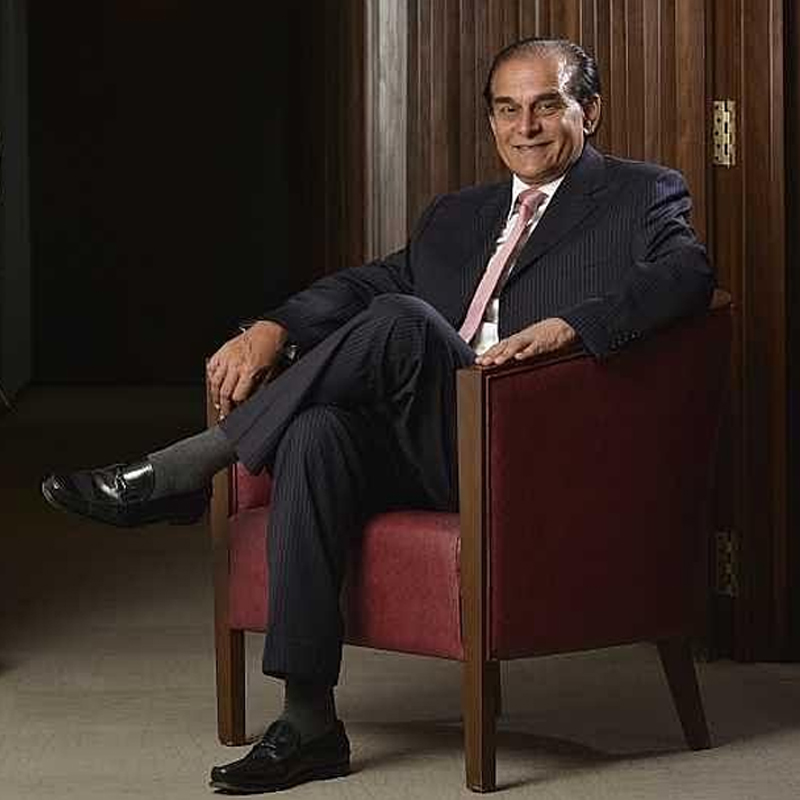
  • Innovation and pioneering helped Marico grow: Harsh Mariwala

    Innovation and pioneering helped Marico grow: Harsh Mariwala

    MUMBAI: Harsh Mariwala transformed his family's trading business in spices and edible oils into Rs 7,300-crore FMCG giant Marico, led by flagship brands such as Saffola and Parachute which sell in 25 countries. The company recently launched Saffola FITTIFY, a range of healthy soups and shakes. Mariwala's other businesses include Kaya, a chain of skin care clinics.

    The company also scouts for young Indian entrepreneurs and facilitates the start-up ecosystem through the mentoring platform Ascent Foundation.

    Mariwala is someone who walks the talk and lives by example – a catalyst of positive change, said Raj Nayak during a tete-a-tete with the affable Marico founder.

    “We started in phases, earlier the name of the company was Bombay Oil Industries. It's an edible oil business where we were selling coconut oil, refined oils to trade as well as some industries. That business was not doing too well, lots of businesses depend on how well you cover your raw material or how the raw material prices behaved, so it was very erratic in terms of margin and performance,” shared Mariwala.

    So he thought of converting the oils business from unbranded to branded in order to make it more profitable and sustainable, a bold move which paid off. And that’s how it all started. He started travelling to internal markets, appointed distributors, talent managers, advertising agencies in the interiors of Maharashtra and Gujarat. The consumer product is highly de-licensed, which helped Mariwala to gain profit. Apart from licensing, one clear no for him was entering the high-tech business.

    Mariwala mentioned that while his iconic Parachute brand was a success, it was mainly selling in 50 litre tins. Initially, the retailers would buy it and sell it in bottles which were later purchased by consumers. Back then, the market of packed coconut oil was much smaller than what it is today. Later, the idea struck him to create a packaged product which was sold in various parts of Maharashtra. Mariwala’s initial foray was to scale up the existing business across India.

    Another well-known brand, Saffola was neglected for a very long period of time, he revealed. After starting the business, his focus was to identify further opportunities. He added, “I wanted to be in the number one position, to be a market leader, as it helps you to get more margin. We grew by innovating in the coconut oil market, during that time the whole market worked on tin containers, then we converted it to plastic. It was not an easy journey; it was a tough conversion. However, it ensured that our growth rate jumped up multiple times. We applied the same innovation in Bangladesh, and now we are the leading coconut player in the Bangladesh market.”

    Another key innovation was the lice-killing hair product Mediker, a must-have in Indian households with young kids.

    “We acquired Mediker from Proctor & Gamble and introduced it in oil format, the sales just doubled. So, innovation and pioneering helped us to grow,” the business tycoon remarked.

    Relating an interesting anecdote behind how the Revive detergent was launched in the early ‘90s and creating a market for a product where none existed, Mariwala said, “We came up with our product Revive out of a personal necessity. I liked crisp clothes, that is how we made Revive which helps to starch clothes without any hassles.”

    According to him, for any product, there must be a consumer need which is big enough to build a brand. Moreover, to become a market leader, advertising is very important and once a certain mass is created, one can go back to devising effective cost structures and improving margins.

    Everybody still wonders, from where the name Parachute emerged. Mariwala jokingly said that is the question that the nation wants to know. He shared that Bombay Oil Industries was formed in 1947, shortly after the second World War when a lot of Indians got to know about parachutes – and that’s how Mariwala’s uncle thought of creating a brand by this name, which is now a huge success.

    On the subject of world wars, Mariwala opined that there is an ongoing war for talent, and one has to treat hiring like marketing. “When there is a shortage of good talent, you have to market yourself first,” he quipped. “That means you have to identify what is unique about you, you arrive at what we call employee value proposition, which is unique in the job market. In our case, unlike big MNC corporations where decisions are taken in closed headquarters, we empower our employees.”

    Spoken like an entrepreneur who knows how to make a difference.


  • Marico reports double-digit volume growth in Q3 FY21

    Marico reports double-digit volume growth in Q3 FY21

    NEW DELHI: FMCG major Marico has posted strong performance with double-digit volume growth in its India business in Q3 2021. In an investor update on BSE, the company has shared an update on the overall summary of its operating performance and demand trends witnessed in the quarter ended 31 December 2020.

    The quarter was characterised by a faster than expected recovery in consumer sentiment in India, aided by the festival season and a declining Covid2019 graph. The company registered strong performance across its portfolio with general trade continuing to grow healthily and rural markets staying ahead of urban. In the new age channels, while e-commerce continued its stellar run, modern trade fared better in Q3 after a soft first half. CSD continued to decline, albeit improving sequentially.

    Revenue growth was in tandem with volume growth. Parachute Coconut Oil delivered ahead of its medium-term aspiration. Saffola Edible Oils continued its growth momentum, delivering double-digit volume growth. Value added hair oils also exhibited strength with a broad based sharp recovery across sub-segments leading to overall double-digit growth for the category. The foods portfolio continued to witness exponential growth in line with the near-term aspiration, backed by strong performance in both the base foods and the new product launches. There was a steady revival in discretionary categories with the premium personal care portfolios witnessing improving trends sequentially, however, still posting a modest decline on a year-on-year basis.

    The quarter was also characterised by inflationary pressure in key raw materials necessitating cutting back of some promotions and taking effective price increases across both Parachute and Saffola edible oil portfolios. The company expects to deliver a healthy profit growth on the back of various cost optimisation initiatives and judicious A&P spends.

    International business had a resilient quarter with high-single digit constant currency growth, led by double-digit constant currency growth in Bangladesh and recovery in few other markets.

    Marico maintains an optimistic outlook for the rest of the year provided the Covid2019 and the economic situation continues to improve. The company remains steadfast in its medium-term aspiration of delivering sustainable and profitable volume led growth, building on strong brand equity across core franchisees and progressively driving and scaling up new engines of growth.

    In Q2 2021, the company increased its advertising spends, taking it back to its pre-Covid2019 levels. While its food segment, Saffola, and Parachute performed well, the brand also launched several new products during this time. 

  • Honeygate: A sweet tale turns bitter for brands

    Honeygate: A sweet tale turns bitter for brands

    KOLKATA: Honey is one of the most loved home remedies or immunity booster in Indian households. With the onset of Covid2019, the sweet miracle has attracted more Indian consumers, even global buyers. But a plot-twist has changed the narrative, as top brands in the category are allegedly adulterating the product with the addition of sugar syrup.

    An investigation by the Centre for Science and Environment (CSE) has found that leading brands sell honey which doesn’t meet purity standards. Dabur, Patanjali, Apis Himalaya, Baidyanath, Zandu failed to clear the Nuclear Magnetic Resonance Spectroscopy (NMR) test. What’s more concerning is the fact that the business of adulteration has evolved to hoodwink stipulated Indian tests.

    “The honey category stands stirred and shaken. Sugar syrup is sure an adulterant. The next time a consumer reaches out for a jar of honey, there is going to be suspicion around. And rightly so. The brand equity of the category is stirred,” Harish Bijoor Consults Inc. brand guru and founder Harish Bijoor said.

    Will brand reputation and business suffer?

    As the brand reputation of honey is based on health benefits, the controversy is not going to bode well for manufacturers. Brand consultant Shubho Sengupta stated that the category is very close to Indian families, unlike new age brands. Certainly, the consumers will be disappointed, thereby impacting the brand equity. Consumers might look at it as “tampering with Indian tradition,” remarked Sengupta adding that there are many emotions at play. However, it is hard to make out what would be the impact on sales.

    Business strategist Lloyd Mathias echoed the sentiment, and noted that the addition of sugar syrup is damning, because consumers buy honey for its health benefits and some of the prominent brands like Dabur, Jandu, Patanjali being on the list is disheartening.

    “Honey, as an overarching category, promises purity. If that purity comes under question, then it is a huge blow on the brands that are failing the test. Today, a lot of consumers must be thinking about what they are buying. It impacts large brands very badly. Last time when something like this happened, brands like Pepsi, Maggie had a tough time coming back,” pointed out Naresh Gupta, co-founder & chief strategy officer at Bang In The Middle. He added that food is a very high involvement category and consumers will not be quiet if they found anything wrong with what they consume.

    Will this cause a long-term impact?

    However, Alchemist Brand Solutions founder and managing partner Samit Sinha differed slightly. He went on to explain that many of these brands have a wide portfolio and honey is not their flagship product and not even the biggest contributor to their revenues. Moreover, the brands in the rejected list are very large, established, and riding on strong momentum. Hence, they have the ability to ride out the storm.

    Moreover, a lot of developments happen but they are restricted to the intellectual community, and it is not certain if this one will actually reach the target consumer – the middle-class Indian housewives, he noted.

    “Our expectations on substantiating claims and superior products have been historically far-fetched and the attitude on the ground has been more like 'adjust karlenge'.  Also, the impact on the category will be short-term as the consumer mindset is like 'aisa toh sab karte hain' (everyone does this), so it is a possibility that people will get over it,” Sinha added.

    Mathias, too, held the view that while the report may cause a bit of a hub-bub now, public memory is short-lived. But if these brands don’t go and correct themselves, they will continue to lose in terms of consumers’ faith.

    “The only good thing is the brands will hopefully address the issue and will make sure they are not adulterating natural honey,” he said. Sinha’s also optimistic that one good thing that will emerge from the incident is that the brands will no longer sell fabricated products but superior products.

    However, after a huge face loss, the brands have started defending themselves. According to Gupta, these companies cannot debunk the claim just by releasing an ad saying “I am pure,” because the whole report has been covered widely across media. They will have to put their money where their mouth is to win back the consumers’ trust.

    While the experts agree that CSE is a reputed organisation which has carried similar movements in the past, Sengupta mentioned that consumers will, unfortunately, believe the brands’ claims because brands like Dabur will spend huge to kind of own the narrative. Very few consumers will care about an NGO report unless the competitors promote it.

    Will it help the brands that passed the test?

    You can count on one hand the number of brands that passed the quality test, among them being – Marico’s Saffola Honey, Markfed Sohna and Nature's Nectar. These products will jump in to maximise the impact, acknowledged Sengupta. Mathias concurred, adding that it is a positive endorsement for those brands. “Those two-three brands will be preferred hugely and they might come up with campaigns. That will bring a systematic change in the category. It’s a category dominated by heritage players for a very long period but suddenly the category will change,” Gupta commented.

    Saffola lost no time in tooting its horn and advertising the fact that it “has launched the best quality honey in its purest form” in India.

    “Every batch of Saffola Honey is tested using NMR (Nuclear Magnetic Resonance) technology, which is one of the most advanced tests in the world, in the best in class laboratories to ensure that it is 100 per cent pure, free from added sugars and free from any form of adulteration. Saffola Honey is produced at a USFDA registered plant with state-of-the-art technology ensuring robust quality checks and controls. Saffola Honey is also compliant with each of the quality parameters mandated by FSSAI,” a Marico spokesperson said.

    Right now, the biggest brands producing honey are like the magician whose best trick has been suddenly exposed for what it is – a sleight of hand. It will be interesting to see how the magic syrup makes its comeback.


  • Top honey brands fail international quality test

    Top honey brands fail international quality test

    KOLKATA: Among top honey brands in India, majority have failed to make it through a stringent quality test. According to the Centre for Science and Environment (CSE), brands including Dabur, Patanjali, Emami have flunked the Nuclear Magnetic Resonance (NMR) test that was carried out at a lab in Germany, bringing focus on the adulteration of packaged honey in Indian markets.

    Food researchers at CSE selected 13 top brands and some smaller brands that sell processed and raw honey in India to check their purity. The researchers found that 77 per cent of the samples were adulterated with sugar syrup. Out of the 22 samples that were checked, only five passed all the tests.  

    Marico’s Saffola Honey has cleared the litmus along with two other brands – Markfed Sohna and Nature's Nectar. However, Dabur has already countered saying its honey has passed NMR test. For the record, the NMR test is required only for exporting honey, and not for local marketing in India.

    After the report was released, Dabur has categorically stated that its honey is not adulterated with sugar syrup. “Dabur is the only company in India to have an NMR testing equipment in our own laboratory, and the same is used to regularly test our honey being sold in the Indian market. This is to ensure that Dabur Honey is 100 per cent pure without any adulteration,” it said in a statement.

    On the other hand, Patanjali Ayurved MD Acharya Balkrishna claimed that the CSE report is an attempt to downplay Indian honey and promote German technology. An Emami spokesperson also said that its Zandu Pure Honey conforms to all the protocols during production and adheres to quality norms and standards.

    “It is a food fraud more nefarious and sophisticated than what we found in our 2003 and 2006 investigations into soft drinks; more damaging to our health than perhaps anything that we have found till now – keeping in mind the fact that we are still fighting against a killer Covid2019 pandemic with our backs to the wall. This overuse of sugar in our diet will make it worse," Centre for Science and Environment (CSE) director general Sunita Narain said.

  • Rajiv Mathrani quits Star Sports

    Rajiv Mathrani quits Star Sports

    NEW DELHI: Rajiv Mathrani has decided to move on from Star Sports. He was serving as EVP & head, Star Sports marketing.

    Sources close to the development have confirmed the news.

    The news comes right after the high profile exit of Star Sports CEO Gautam Thakar.

    Mathrani joined Star Network in 2018, prior to which he was serving as chief brand and online officer at Airtel between 2015 and 2018. He has also worked at Pepsico between 2010 and 2015. During this stint, Mathrani worked on snacks category, beverages and innovation. He also worked on the Asia, middle east and Africa region.

    Mathrani has over two decades of experience and has also worked at Marico, Citibank and GSK.

    Along with Mathrani, two other top executives have also called it quits. Ashok Namboodiri who was working as executive vice president, business head – regional sports network and Rupali Fernandes executive vice president – emerging sports have put down their papers. While Namboodiri joined the network in 2016, Fernandes was associated with it for nearly two decades.
  • Marico ups advertising spends in Q2 FY21

    Marico ups advertising spends in Q2 FY21

    Leading FMCG player Marico stated in its quarterly report that the brand has upped its advertising spends in Q2 FY21 (July, August, September 2020) to pre-Covid levels. This is a good sign for the industry that has been reeling under the declining ad expenditure from brands these past few months.

    The report further stated that Parachute, a flagship brand from the company, reaffirmed its strong brand equity and clocked growth ahead of medium-term aspirations. Saffola edible oils continued its stellar run and delivered strong volume growth in line with past few quarters. Value added hair oils showed resilience and returned on a growth trajectory in the quarter from a sharp decline in Q1.

    Foods portfolio, riding the tailwind and on the back of innovations, continued its momentum and registered exponential growth in line with the company’s near-term expectations. Discretionary portfolios of premium hair nourishment and male grooming performed better than Q1 but continued to face headwinds.

    The company also launched new products in the health and hygiene segment that were tracking well across most channels. Marico has strengthened its position in the healthy foods and immunity-boosting segment with the launch of the Saffola ImmuniVeda range.

    Read more news on Marico

    The international business has clocked mid-single digit constant currency growth. Bangladesh continued to lead from the front with double digit growth while other markets have shown improvement sequentially.

    As per the company, rural continued to perform better than urban aided by government’s focused relief packages, relatively lower impact of the pandemic, the resilience of the agricultural sector in a declining GDP context and the consumption shift due to reverse migration of labour. Although there were intermittent supply chain disruptions across locations due to localized lockdowns, the distribution network has rebounded back to near pre-COVID levels. Traditional trade and e-commerce continued to drive growth. While modern trade fell behind, it did improve sequentially.

    Although the key raw materials have seen an inflationary trend towards the end of the quarter, the brand expects to deliver healthy earnings growth on the back of robust volume growth and a host of cost-saving initiatives.

    As lockdown restrictions are progressively easing, the company maintains a positive outlook for the rest of the year provided the ongoing health crisis does not escalate further and economic activity revives steadily. Given that the medium-term potential of the franchises remain firmly intact, we believe the company is on track to deliver sustained profitable volume-led growth, through a focus on strengthening the franchise in the core categories and driving the new engines of growth towards gaining critical mass.

  • Dabur files case against Marico for copying its packaging

    Dabur files case against Marico for copying its packaging

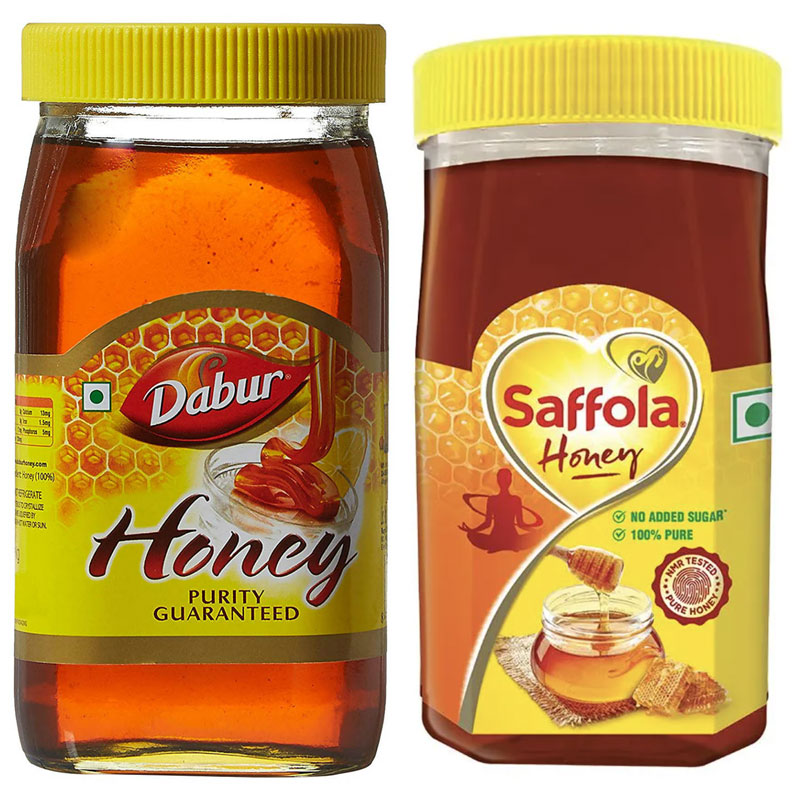
    NEW DELHI: FMCG brand Dabur has filed a case against its competitor Marico alleging that the brand has copied the packaging of its honey product. Marico launched its honey product last month and Dabur claimed it copied the entire packaging i.e., the shape of the bottle, its yellow cap, dome-shaped label, usage of honey combs on the label and other similarities, according to court documents.

    The Delhi high court in its observation mentioned that both the products prime facie show a similarity, which can cause confusion in the mind of the buyer even though the brand name Saffola is mentioned on the product.

    “An overall comparison of the two products would prima-facie show a similarity causing confusion in the minds of the buyer, even though the trade name Saffola is prominently noted on the bottle,” the court said in its interim order last week. “It is clarified that this interim injunction would not apply to the products already sold by the defendant in the market and the defendant will maintain the accounts thereof, which will be submitted to this court,” the order further said while setting the next date in August.

    Meanwhile, in a subsequent appeal by Marico both the parties agreed that the “order be kept in abeyance since the interim application preferred by the plaintiff/respondent herein is still pending consideration and has not been disposed of," according to a court order of 17 July.

    In the court documents, Dabur mentioned that the company has been selling the honey products since many decades, and revamped the new packaging and shape of the current bottle in 2013. The brand also said it generated sales of Rs 482 crore in 2019-20 from its honey business.

    Follow Tellychakkar for the consumer facing news & entertainment