Tag: MarCom

  • Marcom firm Tute Consult hires Shweta Mehrotra as Strategy Head

    New Delhi: Integrated marcom and PR agency Tute Consult on Tuesday strengthened its leadership team with the appointment of Shweta Mehrotra as the strategy head.

    Mehrotra will be working closely with Tute Consult founder Komal Lath and oversee strategies and operations across the board. Her repertoire of experience will help build and strengthen the D2C and traditional businesses in the paid, owned and earned services offered by Tute, said the agency in a statement.

    In her career spanning over 18 years, Mehrotra has managed clients from a wide variety of sectors. In the past, she has worked at Good Relations India, Lintas Live, Avian Media and MSL Group amongst others and led highly successful and award-winning campaigns for clients. Prior to joining Tute Consult she was consulting with multiple companies including Ogilvy and The Prophets PR. She also teaches PR and Communications at SCoRe (School of Communication and Reputation) and in the past has been connected with EMDI and University of Madras.

    Talking about her new role, Mehrotra said, “Tute today is redefining communication, innovating, integrating, and delivering in every aspect that makes for a growing marcom agency.  Having worked with leading agencies in the past and then having provided independent consultancy services, this role is going to come with interesting challenges and new learnings. I am looking forward to servicing the varied range of clients and managing the dynamic teams while expanding the business to help it reach newer heights.”

    Tute Consult founder Komal Nath said, “Shweta comes to us at a very crucial juncture where growth, learning and creativity intersect. In our dynamic field, we always want people with rich experience who can grow the vision and create their own benchmarks. This relationship is sure to be a long and lovely one.”

  • Yellophant Digital Bags the Integrated Digital Mandate for Mezaya

    Yellophant Digital Bags the Integrated Digital Mandate for Mezaya

    Mumbai: Yellophant Digital, an alliance of Merge Infinity Global, won the integrated digital mandate for Mumbai’s authentic Turkish and Lebanese Baklava brand, Mezaya. The mandate includes managing and amplifying the brand’s 360-degree digital marketing duties, including creative strategy, SEO, SEM, ORM, media spends, website maintenance and social media marketing across digital platforms.

    Commenting on this, Mezaya co-founders Shazia and Raies said, “After scouting across various agencies, we have now found the right ROI-driven agency that understands Mezaya’s long-term vision and can justify the spends meticulously. Baklavas are something which is new to the audience and we are thrilled to collaborate with Preksha and her team. Mezaya is really excited about this collaboration with Yellophant Digital and looks forward to seeing the brand’s overall performance and increasing ROI in the forthcoming days.“

    Yellophant Digital co-founder Preksha Seth said, “We are excited and delighted to have Mezaya on board. We Indians live for desserts and they are something that has always been a part of our day-to-day consumption.  With the rise of craving for desserts, we look forward to strategizing and managing the brand’s digital marketing duties and introducing this Mediterranean delight to our Indian audience on a creative platter. Our extensive experience of collaborating with F&B establishments comes in handy at this point. Being an ROI-driven agency, we plan to execute ideas that yield significant results in a brief time.”

  • KBC 12 and the sponsorship puzzle

    KBC 12 and the sponsorship puzzle

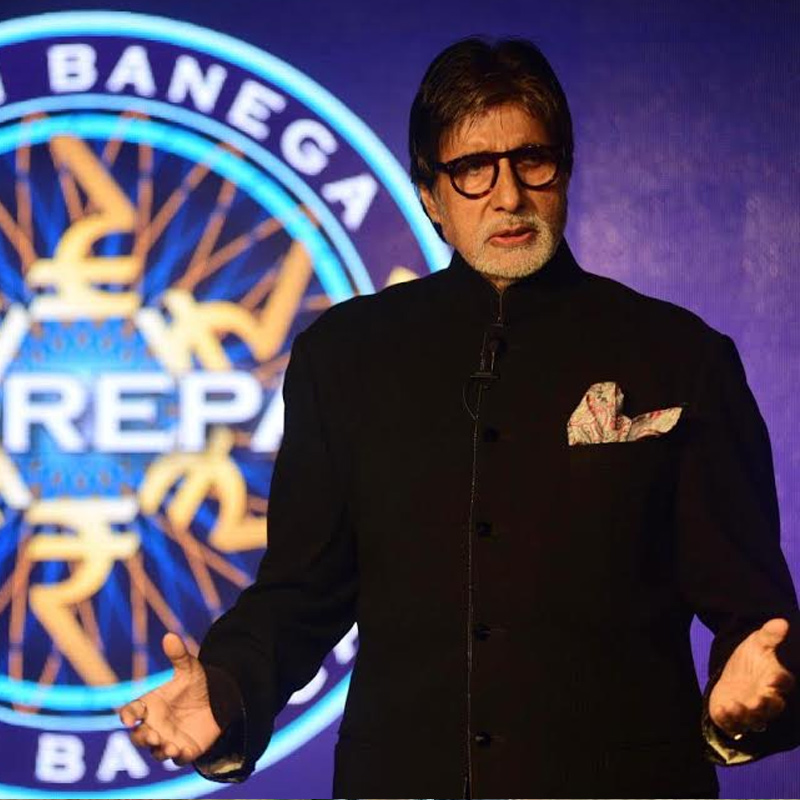
    MUMBAI: Sony TV’s Kaun Banega Crorepati is one show which has stood the test of time. In its twentieth season in India, the game show is still popular and appreciated by people of all ages. KBC has always been synonymous with knowledge; it is a platform where contestants’ brains have got them big winnings year-on-year. And, of course there is the iconic host of the show upon whom India dotes, the thespian Amitabh Bachchan. SET has already released the promo for this year.

    However, this year, KBC is going to be different. To start with, the contestant selection process has gone digital owing to the SARS-CoV-2 outbreak in the country. Interestingly, SET shared the first glimpse of the KBC’s newly constructed set where the shoot starts from today. It has been reported that there will no audiences during the shoot, but only one member with the participant will be allowed to be present in the seating area.

    The broadcaster has already signed two premium co-presenting partners for the game show – Tata Salt and Vedantu. The race for lining up other sponsors is on; however no new names have been released by the broadcasting team, until the filing of this report.

    Media planners and buyers opine that Sony is currently charging Rs four lakh for a 10-second spot, which would be aired on the standard definition and high definition feeds. The industry view – in the best case scenario – is that KBC being a flagship property, will see those rates holding and, in the worst case, getting shaved by five to 10 per cent on the upper side.

    “All big properties have opened at similar to last year’s rates,” says Shripad Kulkarni & Associates principal Shripad Kulkarni. “Nobody is expecting overall ad spends to be more than 80 per cent of the last festive season. Moreover, IPL will suck away a big chunk of the budget, so all the big properties are staring at a 15-20 per cent lower yield. Other television genres would see a bigger hit in net yields,” mentions Kulkarni.

    Media Ant founder Samir Chaudhary also echoes a similar sentiment and suggests that the rate card for KBC is similar to what it was last year. “In the usual scenario the channel would have booked 80 per cent of the inventory in advance and only 10 percent would be left for spot selling. The situation has changed now due to festivities and the IPL. Since all of these are getting bunched up in terms of timing, the spends will get distributed,” he avers.

    Chauudhary adds that the network does not have too much time before the show comes on air, so it might have to do both sponsorship and spot sales simultaneously, unlike prior years when it first got the sponsors in and then sold FCT at a premium.

    KBC has always been a premium property that has attracted brands from across the categories. In 2019, Vivo V11 pro and Mahindra Marazzo were the co-powered sponsors along with additional associate sponsors. The game show has the ability to cut across all ages and the brand equity of the legendary actor Bachchan has helped it make a grand success over the years.

    Havas Media buying national head R. Venkatasubramanian believes that KBC will finally get support from advertisers and sponsors even though that looks like a challenging task currently. Says he: “This is a high investment property and clients will choose a vehicle on which they are getting ROI and KBC does offer that.”

    According to ex- Madison Media chief operating officer Anita Bose, as agencies and clients are not meeting, one can see a big difference between closing a deal face to face versus doing it online. She notes that even if KBC is a successful property with a great track record, clients are not willing to spend that kind of money that’s being asked. It is one of the reasons why KBC got postponed, she shares, adding “starting a reality show will be challenging because of the pandemic, the client portfolio will also be different now. They are being very cautious.”

    The pessimists and naysayers are of the view that due to the fact that cases of Covid2019 are continuing to rise and the IPL is coinciding with the festive season, television is not finding the going easy. Their view is that IPL may end up eating 40 per cent of viewership, which could lead to a drop in GEC viewership, with the movie and news genres continuing to hold strong. Red lights may start blinking for the entire TV sector if the festive season doesn’t live up to its promise and expectation, setting TV channels back for the rest of the year.

    Bose further reveals that due to the economic slowdown, clients are hesitant to spend. As far as discounts or incentive plans are concerned, she thinks there will be no cash price offs from channels. “I think there will be other value offers which will make sense to clients. The channel will not reduce the price, as it is a matter of prestige but what makers can do is to give more value addition on the network and that is how the selling will happen. Also, depending upon the client’s requirement they can tailor it accordingly.”

    She adds that since KBC is a format which follows the original, there are lots of dos and don’ts which advertisers have to adhere to, unlike other shows where the flexibility is more.

    Venkatasubramanian highlights that the show will also get support from mobile, consumer durables, automobiles, and tyre categories that are more than willing to pick up a slot on the 12-strong KBC sponsor rack. He believes that “ecommerce brands will probably go in for spot buy deals with edtuech companies stepping on to the podium.”

    We can only wait and watch and see if his predictions will come true.

  • MPL appoints Himanshu Raj to head brand communications

    MPL appoints Himanshu Raj to head brand communications

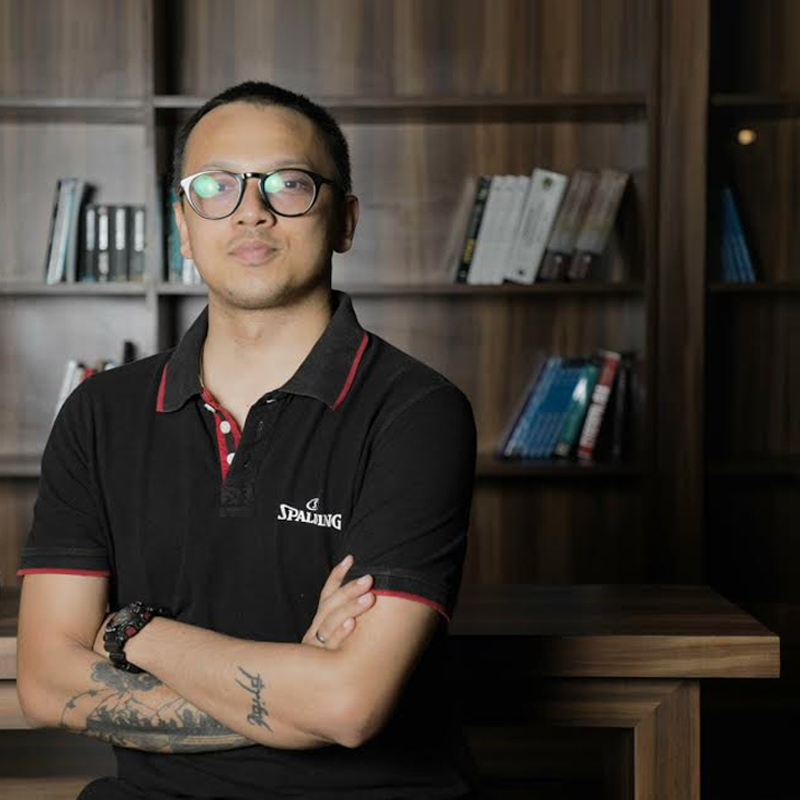
    NEW DELHI: Mobile Premier League (MPL), India's largest esports and mobile gaming platform today announced the appointment of Himanshu Raj as head brand communication. A seasoned MarCom professional, he brings to the table a vast repertoire of experience in driving strategic communications. In his new role, he will be responsible for taking MPL’s reputation and messaging forward through strategic corporate reputation management campaigns, as well as positioning the brand as a thought leader in the booming Indian esports universe.

    In his previous avatars, Raj has been associated with a diverse range of industries such as technology, sports, aviation, retail, FMCG, and hospitality. He has led brand communications for Zeta, Flock, IBM Labs (India/South Asia), as well as managed reputation for brands like Nike, Procam, Speedo, Philips R&D and several other brands that are global leaders in their respective categories. Over the years, he has also been associated with several leading sporting events  including the Karnataka Premier League, Bengaluru Bulls Pro Kabaddi team, elite football league of India, Indian, Rugby India, Mahindra Racing, Aircel chennai open, JK tyres (Motor sports) and many more.

  • Thought leaders discuss future of MarCom at IAA World Congress day 2

    Thought leaders discuss future of MarCom at IAA World Congress day 2

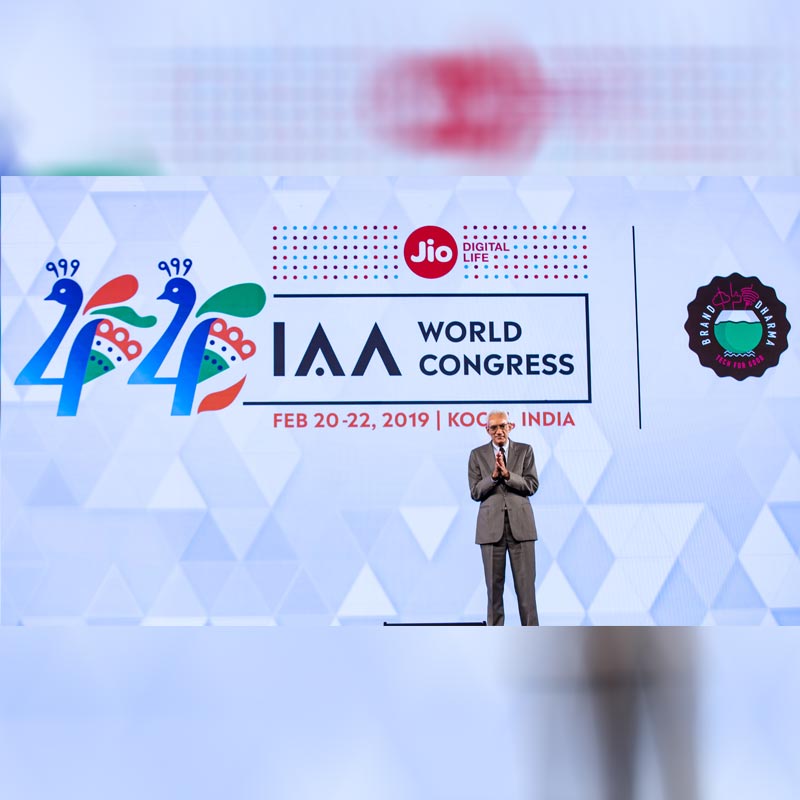
    KOCHI: The International Advertising Association (IAA) had an enthralling second day of the first ever IAA World Congress in India. The second day of the event saw a great mix of thought leaders, entertainers, domain experts and industry professionals discussing the future of the marketing and communications industry through the theme ‘Brand Dharma’.

    Yusuf Ali, chairman and owner, Lulu Group, was felicitated by Srinivasan Swamy, chairman & world president, International Advertising Association. In his speech, keeping with the theme of the conference, he reiterated to all the marketing and communications stakeholders to act responsibly towards the society and stay true to their business values.

    The IAA Golden Compass Awards were conferred to Marc Pritchard, chief brand officer, Procter & Gamble and Andrew Robertson, president & CEO, BBDO Worldwide. The IAA Inspire Champion Awards was conferred to Raj Nayak, former chief operating officer at entertainment network Viacom18 from India. The IAA Inspire Honorary Life Member Award was conferred to Ranil De Silva from Sri Lanka.

    Excerpts from key sessions:

    Paul Polman, President of the ICC, Chairman of the B-Team and Vice-Chair of the UN Global Compact. CEO Unilever (Jan 2009 to Dec 2018) gave a passionate talk and urged companies to run their businesses by heart, because he felt that businesses can't succeed in a society that fails.

    Polman stated that value and trust are two important elements for a company. However, currently, trust is low in the industry because of fake news, frauds, unethical employment practices, sexual harassment etc.

    As advertisers, we should look and hear from a consumer’s view point since consumers judge us by what we do, not by what we say. One won't have long term profit if the business is run without purpose. Citizens expect companies to address on critical social issues. If businesses don’t have advocacy, consumers won't trust a brand.

    In this world we have enough to fulfil human needs but not human greed. He mentioned to face the challenges we face today we have to look to decarbonize, have longer term business model, move towards circular economy and be sure to have inclusive economy, We have to take stereotype out of Advertisement. Drive social standards on social platforms.

    He further stressed that “You cannot run business with freedom without responsibility. If we don't protect it, we won't have a future.  Partnership is important to work on sustainable growth. A partnership, which is for a common good. Putting other's interests before ours is very important because although we have the resources to help the society, all we are missing is human will power. Tech has connected us better with people, but has also given us loneliness. He closed his speech by requesting the audience that “if you belong to 2% of population, think about 98% population and live responsibly.”

    Simon Kahn: Chief Marketing Officer on Future of Digital Immersion

    According to Kahn next wave of technology will assist us, augment our experience and will help us accelerate things we need to get done.

    The digital tech has started to help us in all practical areas, most progress which we have seen is in the area of speech recognition. We are now up to near human quality in speech recognition.  In India recently, we worked with Flipkart when wanted to add the experience of haggling for the big billion day sales and it the result was many millions interaction with the tool with average time of engagement for min 6 minutes. Communication is also about gesture and nonverbal cues, hence we are training computers to replicate the same hence breaking down physical world barriers

    We are moving from the world from online to offline to the non-line world, augmenting our experience. Think about handmade tailor-made clothes with so many processes. We hot   involved with ZoZo town, the largest online fashion store in Japan for an application called ZoZo suit that can take 15,000 measurements of your body so the clothes fit exactly as you want.

    Another ability we have developed is to use camera to be able to put it for practical use and that’s why we develop google lens. You can do a lot with google lens and make it more insightful and use it for practical application

    We are able to accelerate a lot of change through Tech with advancement in AI and Machine Learning, now we can address fundamental challenges of human race. We have an open source platform that help people tackle issues in developing countries. For example we have trained computer model to do diagnose health issues like diabetic retinopathy and cardiac problems and we are already close to level of specialists.

    In India we are working with start-ups like nebula that is working for challenge for rural community for fair pricing of their agricultural produce. Their team uses grains to sample the quality to settle on price so they don’t have to be at a disadvantage by selling cheaper to traders at the same time consumers have the exact information on what they are buying 

    Radical changes are coming in next few years, digital tech s will transform and will become will assist us, augment our experience and accelerate our learning to to tackle biggest problem faced by the humanity 

    Tom Doctoroff, Business Leader and Global Brand Builder on Derisk the future in conversation with Michael McQueen, Trend forecaster and Author and Tim Reid, Comedy Writer and Innovation Expert

    Tim Reid, Comedy writer and innovation expert: imagine the future and reinvent business:

    “Best ideas come as jokes make your thinking as funny as possible” Tim started his presentation with this counter intuitive statement

    He suggested, “What makes is laugh are two things, first is the truth (as it is relatable) and the second is surprise, we experience, when something doesn’t quite fit in in the normal trend. Truth with the twist is the biggest thing that make us laugh. In an idea session, if we can get people to say something which has point of truth with an element of surprise and you will probably see a genius idea there somewhere and hence there is a science behind it creativity works better with humour.

    When you launch, you stimulate the part of the brain associated with problem solving and creative thinking.

    · You have to Be Playful , be childish with the idea of outcome

    · Be Brave best ideas come as joke I think this might people make people laugh and I am going to say it

    · Act It out getting ti improv gets us to more creative with the brands

    · Knowing how to Push it an idea allow us to not settling for an average idea

    Michael Mcqueen, who has done a lot of work with the millennial on what are they thinking and what are they looking at, shared his insights on decoding the millennial mind-set and how do we bridge the gap with next gen the millennial in advertising world.

    There are 34% millennial population in India, which is very important numerically and economically as they will enter spending peak by 2026.

    The generation X, as we know, is digitally tethered and constantly switched on and addicted to the digital screens. Around 54% of their total purchase was made online and only 11% of the millennial would prefer to visit physical stores before making a purchase, and brands should remember that.

    They are also experience driven as 78% of them cash on experience rather than physical item. Hence, the brands have to create an experience. The experience should also be sharable on the social media platforms as 70% of the millennial would buy a product only if it is sharable on social media platforms.

    The generation is also socially minded as 2/3rd of them project their choices on the basis of corporate values and ethics. Around 73% population buys a product on the basis of how sustainable the business model is and whether or not a brand lives up to its corporate values.

    McQueen also advised the marketers to market their products through them and not to them.

    Marc Pritchard, Chief Brand Officer, Procter & Gamble:

    Marc Pritchard started the conversation with an interesting proposition of ‘What if brand could be force for good and a force growth’. He emphasised on living the brand’s purpose and not just talk about it.

    He stressed on the need of brands to align themselves with a purpose. He covered three major problems faced in the business diaspora; Gender Equality, Sustainability and Technology.

    Gender equality is not equal and gap are more pronounced for women with colour, LGBT category and with physical challenge. In the advertisement industry, 29% of women are still inaccurately or negatively portrayed. He further added, people expect more from brands. They want the brand to take a stand on the social issues. 9 out of 10 consumers want brands to live with their values, they want brands to take stand.

    In sustainability there is a difference between what people say and do. 67% of the population talks about sustainability but only 30% of them actually act on it. Sustainable goals are equally good for the growth of the brands. Advertising affects our language what if brands improve society buy promoting gender equality. Brands are still using 29% if time women as inaccurately or negatively we have to eliminate this stereotypes changes attitudes and drive growth.  He questioned what if brand could help the environment by driving sustainable behaviour what if brands can make products that our sensitive to this issues. He spoke about how P&G is doing its bit by using technology is work on a product that can eliminate need of water in cleaning,

    I urge to reduce renew and recycle water, energy and waste. It will be nice if all brands can come together. My call of action is all brands to join to achieve this.

    Technology: Digital advertising. has changed the face of advertising , e commerce is growing ,new brands are bypassing media networks. The Pervasive data, analytics and tech is changing everything. Things like block chain, AR, VR and AI  is affecting all aspects of daily life

    I would like to Pivot and use tech go beyond and reinvent and see if brands can use cutting edge tech to improve everyday life. We have to careful of unbridled growth of tech on security and privacy, we cannot let this happen, we have to get ahead of next gen tech and hence we should unite as an industry and take action for tech for good. We have to set standard of ethical use of machine learning and my call of action is to put standard and policies in place so that tech is used for good.

    If all these thee done well and together collectively we can have power full impact. This will require for all the brands to step up and become a force for good.

    Chris Tung , CMO, Alibaba, A unique Alibaba model for brand growth

    This is my first time India, and to personally the fastest growing economy Alibaba is constantly  are posting year on year of revenue growth and I would like to share the secret of driving such growth Alibaba did start as an ecommerce company for international trade but Alibaba , as a company now does pretty much everything in china. Alibaba is now combination of Amazon+Facebook and Google Alibaba has built an ecosystem of brand building for the future. Alibaba is uniquely positioned as provider of a single source of consumer truth by Digitalising the entire lifecycle of consumer brand relationship.

    Mark D’Arcy, VP of Global Business Marketing and Chief Creative Officer, Facebook

    (In conversation with Neeraj Roy) on Crowd Sings Back – The Best Ideas Shaping Culture Are Shaped By Culture

    India is 2nd largest market for FB. In 2 years the country has seen 10x growth in data penetration, as the data gets cheaper. In US, digital will eclipse traditional with 54% spending.

    Media should shift where people are and where they consume content. There are so many changes around, that we forget the simple things around and the incredible era we are living in. People have a potential to act on any idea they have through the resources available.

    He shared some interesting advice for the mainstream brands on content marketing to be always being interesting and relevant, the right place for the brands is to start is the audience and customer and how there is a constant need of listening to people and reaching out to them accordingly.

    Facebook has a Fundamental responsibility to protect the data of all users and make space for everyone to connect across globe. Facebook has a responsibility to businesses and individuals to open the platform, remove barriers and take the ideas of individuals to as many people as possible.

    Currently 6 million companies using are the platform to take their products to people. We would like to give control to people and transparency to be provided in terms of their data and create value out of the data consumer provides. People tell us how they want to use the tech and it's our job to meet those needs.

    The journey from attention to action is interesting. All the touch-points in the journey should be engaging and seem-less. FB is deeply committed to innovation too. We have curiosity of constantly learning as an organisation is important. It helps in growing the business and help improve the culture.

    Rahul Welde, EVP Digital Transformation, Unilever, Getting Future Ready – The Unilever Way

    In past, the scenario was simple. A marketer would make a TVC that would create an impact which will lead to purchase of a product. In today’s digital world, there are multiple channels to reach-out to the customer making it difficult to create an impact. Hence, for the digital age five most important elements to consider in the marketing communications are technology, machine learning, data driven marketing, automation and personalization in messaging.

    Today, internet is the biggest focus group where you can get 10000+ participants to share their opinion and help curate the content. All these opinions and information flows in real time helping to break customer segment and target specifically.

    The biggest change in marketing and technology sector is speed. The results are quick which enables faster changes meeting the needs. Apart from technology, the most important assets in marketing are skills and talent. To make a greater impact, one needs to have a skilful leadership and talent pool in the organisation.

    Lindsay Pattison, Chief Cient Officer, WPP, Getting Future Ready – The WPP Way

    Disruption is affecting everybody and every brand. India has a 14% ad spent growth which is highest in the world, making it the most potential market for the advertisers.

    The world of the clients is changing on following fronts:

    ·Intense disruption in fourth industrial revolution, transforming consumer behaviour

    ·New competitors making disruption a business imperative

    ·Mega data available but tensions of being useful vs privacy & regulation

    ·Making the best use of newest technologies requires open-ness

    ·Brand purpose is more important than ever to sustain a competitive edge

    Ms. Lindsay ended her address to the congress by defining the pillars of marketing communication as:

    · Communication: Breakthrough creativity and thinking that differentiates and inspires

    · Experience: Experience is the interaction between business and consumer across thousands of touch-points online and offline

    · Commerce: technology has upended where, how and when consumers undertake the most important action for business, Purchase

    · Technology: technological innovation is the differentiator that divides the disruptor from the disrupted

  • Printer TVC shows printing cheaper than price of toffee per page

    Printer TVC shows printing cheaper than price of toffee per page

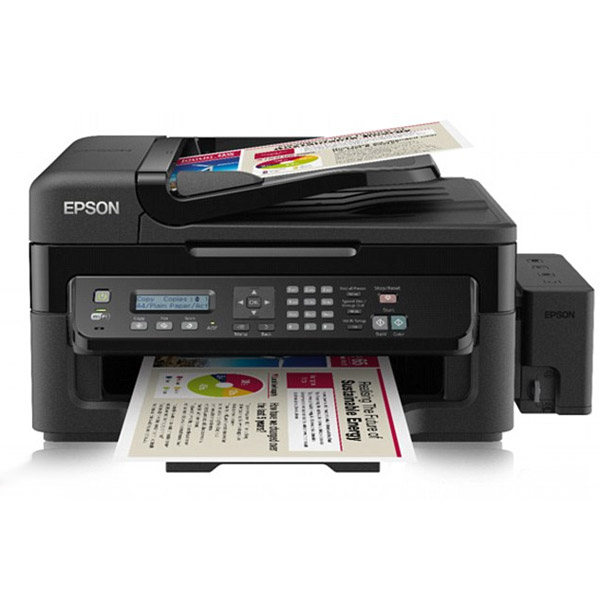
    New Delhi: Digital Imaging and printing solutions company Epson has launched a new TVC for what it terms as its ‘revolutionary’ InkTank Inkjet printers in India.

    The new commercial targets value-conscious working professionals with children who have their own printing needs (SOHO, small office, self-employed) and who are keen for their child to be ‘ahead’ and to ‘have the best’. The key message for the TVC is focused on the unified cost advantage (8 and 28 paise per print), which now allows everyone to print without any worries.

    Epson says its ultimate objective is to develop a brand Image as a ‘lifestyle technology brand’ and to grow brand affinity (or ‘likeability’) with a wider audience base. The creative idea was intended to communicate with anyone who has a printing requirement, across segments, with a bias towards the Home/SOHO/Professional segment.

    The television commercial was conceived by Bangalore-based OpusCDM, Epson’s Brand and Marcom agency for several years, and produced by Mumbai-based Equinox. 

    Epson India Brand & Communication senior general manager Tushad Talati said, “Having made massive, successfully inroads into the business and commercial market with our InkTank printers we felt the time was right to open up the larger home market to the benefits of ultra-economical and convenient Epson InkTank printing. While a large number of evolved consumers had caught on early and were already buying Epson InkTank printers for home use, we needed to get the message out to a larger base of home users in a simple, effective and easily understood way. The “Keya” commercial very simply and effectively conveys the benefit of low cost printing to the home user while continuing to appeal to the existing base of commercial and business users. The response to the ad so far has been phenomenal and we expect to build on our current market share of 51% in the Inkjet printer segment.”

    OpusCDM strategy planning Nagesh Manay said, “Printers is a challenging category – consumer involvement is low, consumable buying is an issue, and it historically ran on price points. Epson took a bold leap by introducing InkTanks at a higher-than-traditional price point, forcing a dramatic shift in the category. The key in this film is, of course, the toffee that Keya holds. We discovered that people don’t really know how much it costs for a print. Everyone’s been using expensive cartridges but never quite knew how many prints it gave them and at what cost. The toffee is the trigger for low cost, and it’s something everyone can relate to.  Keya is more than just a little girl. She is a metaphor for the freedom we wish to exercise everyday. Smart and obvious. This is where our creative connect from product to consumer was. Not to have to say that choosing an Epson is the smart and obvious thing to do, but to show it. That’s why she has an attitude that’s easy and witty. Keya is relevant even to the little DTP shop owner. We had quite a task finding the right actor for the film, someone who could pull off the conversation with the somewhat absurd, theatrical context and inter-play. We needed a natural, instinctive child who is not fazed by moment, and Nitin Parmar, the director, did a great job in making it all come alive.”

    While the idea was to convey that the freedom to print without thinking or worry is now truly here, it was essential to lift the low cost per print advantage to an everyday benefit. This is done with a little girl called Keya, who clearly has a mind of her own. She has an almost normal conversation with an unseen adult male, but instead of responding to his questions with her voice, she uses words and symbols on printouts, holding them up instantly, without thinking.

    This drives home the ease of printing, emphasized by her saying in one of her printouts – “it’s more fun this way”. Finally, when she is asked about why she is wasting her father’s money, she whips out a colourful condiment from her pocket, licks it, and says, “no no, it costs less than my toffee!” This introduces the benefit in a simple way for everyone, people young and old and across regional boundaries, to understand. This was an important consideration in the creative approach. Keya has today become the “cheeky toffee girl with the infectious laugh” as the commercial, which has been aired in multiple languages, has resonated with consumers across various markets.

    A combination of media – with TV for affinity, and Print and Online for rationale, creates a complete, optimum, emotio-rational connect. On the ground, the Keya campaign has been extended into retail as well.

    With a market share of close to 80% in the Business and Commercial segments, Epson intends through its new television commercial to expand its appeal to the Home & SOHO segment as well, without disturbing its core business and Commercial franchise.

  • Printer TVC shows printing cheaper than price of toffee per page

    Printer TVC shows printing cheaper than price of toffee per page

    New Delhi: Digital Imaging and printing solutions company Epson has launched a new TVC for what it terms as its ‘revolutionary’ InkTank Inkjet printers in India.

    The new commercial targets value-conscious working professionals with children who have their own printing needs (SOHO, small office, self-employed) and who are keen for their child to be ‘ahead’ and to ‘have the best’. The key message for the TVC is focused on the unified cost advantage (8 and 28 paise per print), which now allows everyone to print without any worries.

    Epson says its ultimate objective is to develop a brand Image as a ‘lifestyle technology brand’ and to grow brand affinity (or ‘likeability’) with a wider audience base. The creative idea was intended to communicate with anyone who has a printing requirement, across segments, with a bias towards the Home/SOHO/Professional segment.

    The television commercial was conceived by Bangalore-based OpusCDM, Epson’s Brand and Marcom agency for several years, and produced by Mumbai-based Equinox. 

    Epson India Brand & Communication senior general manager Tushad Talati said, “Having made massive, successfully inroads into the business and commercial market with our InkTank printers we felt the time was right to open up the larger home market to the benefits of ultra-economical and convenient Epson InkTank printing. While a large number of evolved consumers had caught on early and were already buying Epson InkTank printers for home use, we needed to get the message out to a larger base of home users in a simple, effective and easily understood way. The “Keya” commercial very simply and effectively conveys the benefit of low cost printing to the home user while continuing to appeal to the existing base of commercial and business users. The response to the ad so far has been phenomenal and we expect to build on our current market share of 51% in the Inkjet printer segment.”

    OpusCDM strategy planning Nagesh Manay said, “Printers is a challenging category – consumer involvement is low, consumable buying is an issue, and it historically ran on price points. Epson took a bold leap by introducing InkTanks at a higher-than-traditional price point, forcing a dramatic shift in the category. The key in this film is, of course, the toffee that Keya holds. We discovered that people don’t really know how much it costs for a print. Everyone’s been using expensive cartridges but never quite knew how many prints it gave them and at what cost. The toffee is the trigger for low cost, and it’s something everyone can relate to.  Keya is more than just a little girl. She is a metaphor for the freedom we wish to exercise everyday. Smart and obvious. This is where our creative connect from product to consumer was. Not to have to say that choosing an Epson is the smart and obvious thing to do, but to show it. That’s why she has an attitude that’s easy and witty. Keya is relevant even to the little DTP shop owner. We had quite a task finding the right actor for the film, someone who could pull off the conversation with the somewhat absurd, theatrical context and inter-play. We needed a natural, instinctive child who is not fazed by moment, and Nitin Parmar, the director, did a great job in making it all come alive.”

    While the idea was to convey that the freedom to print without thinking or worry is now truly here, it was essential to lift the low cost per print advantage to an everyday benefit. This is done with a little girl called Keya, who clearly has a mind of her own. She has an almost normal conversation with an unseen adult male, but instead of responding to his questions with her voice, she uses words and symbols on printouts, holding them up instantly, without thinking.

    This drives home the ease of printing, emphasized by her saying in one of her printouts – “it’s more fun this way”. Finally, when she is asked about why she is wasting her father’s money, she whips out a colourful condiment from her pocket, licks it, and says, “no no, it costs less than my toffee!” This introduces the benefit in a simple way for everyone, people young and old and across regional boundaries, to understand. This was an important consideration in the creative approach. Keya has today become the “cheeky toffee girl with the infectious laugh” as the commercial, which has been aired in multiple languages, has resonated with consumers across various markets.

    A combination of media – with TV for affinity, and Print and Online for rationale, creates a complete, optimum, emotio-rational connect. On the ground, the Keya campaign has been extended into retail as well.

    With a market share of close to 80% in the Business and Commercial segments, Epson intends through its new television commercial to expand its appeal to the Home & SOHO segment as well, without disturbing its core business and Commercial franchise.

  • Carat Media Services appointed AOR of SCA Hygiene in India

    Carat Media Services appointed AOR of SCA Hygiene in India

    MUMBAI: Carat Media Services has bagged the media duties of SCA in India. The business will be handled by Carat’s Mumbai office.

    SCA is a leading global hygiene and forest product company that develops, produces and markets personal care products in categories such as baby diapers, incontinence care and feminine care, the world’s third largest suppliers of tissue, forest products and packaging solutions.
    SCA India VP consumer goods Cecilia Edebo

    The brands that SCA intends to launch on the Indian market in the coming months include Libero baby care, Tempo – for hand and face hygiene, TENA – the world leader in incontinence care, and Tork – the global leader in the away-from-home tissue segment.

    India being one of the emerging markets there would be under significant focus and investment towards fulfilling the needs of Indian customers and consumers in a spirit of innovation, through continuous efficiency enhancements and with a clear desire to contribute to sustainable development.

    On the launch, SCA India VP consumer goods Cecilia Edebo said: “SCA aims to grow organically and has extensive experience in the hygiene business, which should help to provide better hygiene for the Indian consumer. The large population and the low penetration of hygiene products provide the potential for SCA’s future growth. In this endeavor, we had a series of presentations and discussions to evaluate the strategic thinking capabilities of Carat to enable our differentiation at the market place, demonstration of tools and passion of the team. We are happy that Carat India’s team demonstrated great ability in strategic thinking capabilities backed by a solid integrated offering to support the Marcom. We are happy to have them as our media partner.”

    Carat India Sr. VP Himanka Das said: “We are delighted to extend our partnership with SCA in India, they have some great personal care and incontinence care brands in their portfolio to offer and we do look forward to partnering them in their India plans. We have been working with them for the last one year to firm up the launch strategies based on extensive media market analysis.”

    Carat is part of the Aegis Media Group. Other companies in the group include Vizeum, Posterscope the global OOH sector leader, Brandscope, Hyperspace (Retail), Carat Fresh Integrated (Activation), PSI (Airports), Doosra (Creative), Isobar, the global communications agency with digital at its heart and iProspect, the global leader in search and performance marketing.

  • Allied Media appoints Saurabh Gupta in his new role as business head

    Allied Media appoints Saurabh Gupta in his new role as business head

    MUMBAI: In his new role as business head, digital media Saurabh will be responsible for providing holistic digital solutions for all clients of Percept Media and also only Digital direct clients. He would be taking care of India region, and integrate digital in the marcom solutions of all Percept Group clients.

    With his experience of almost 10 years in the industry, he has worked with renowned companies like Reliance Entertainment Digital and Wipro Technologies. He played a major role in Zapak Digital as national sales head and has serviced brands like PepsiCo (Change the Game Campaign and Pepsi T20 Football), Mountain Dew (Dew Extreme Tours, Hrithik launch and MTV Roadies Integration), Michelin Tires (Malaysia Pilot Experience, Lemans), Airtel (F1 Online Activity) and many more

    He is a professional with qualitative experience in brand building, business development, sales, process implementation, client servicing and team management.

    Allied Media CEO Shripad Kulkarni said, “It’s not about digital marketing but a fresh way of looking at marketing to digital savvy customers of our clients. So, we will have two digital teams – a digital strategy team which is a part of the core strategy team of Percept Media and a business team”.

    On the digital strategy, business head – digital Saurabh Gupta added, “Digital media behaves in a very different form factors according to businesses and categories. But, most businesses are shortsighted and consider digital media as only a marcom instrument. We are here to change the way brands perceive digital as a medium and transform the entire marketing making it a catalyst to achieve business objective and transform the brand life stage. Our digital strategy blueprint will be: digital led business re-engineering customised for brands.”