Tag: Marathi

  • Website, reference handbook launched on general elections 2014

    Website, reference handbook launched on general elections 2014

    NEW DELHI: ‘General Elections 2014: Reference Handbook’ , a compendium on past elections and the latest provisions relating to the general elections, was released on 3 April to  disseminate information about the mammoth exercise to elect the sixteenth Lok Sabha. 
     

    The Press Information Bureau has made the book made available in English, Hindi and 11 regional languages, namely, Assamese, Bengali, Gujarati, Kannada, Malayalam, Marathi, Oriya, Punjabi, Tamil, Telugu and Urdu. 


    The Bureau has also launched a web-portal, dedicated for the general elections 2014:  pib.nic.in/elections2014This will be used for dissemination of important instructions, orders and press notes of the ECI. The Reference Handbook also will be made available on this portal. On Counting-Day, i.e. 16 May, this portal shall also be used to disseminate official trends and results, based on real-time data made available by the Election Commission of India. These trends and results will also be shared on social media, and through SMS. 
     

    A number of factsheets, backgrounders and features have already been issued on various aspects of the general elections. The backgrounders cover detailed and in-depth analysis of various aspects of past elections, with special focus on the fifteenth Lok Sabha elections (2009 general elections). State-wise fact-sheets impart information on various states pertaining to electorate, Parliamentary Constituencies, past elections etc. 

    Many of the features have been contributed by senior officers of the Election Commission of India. The features range from the topics like ‘Evolution of Election System in India’, ‘Electoral Laws in India’, ‘Salient Features of Representation of the People Act 1952’, ‘SVEEP- Tool for Voters Awareness’. New developments like NOTA and VVPAT also figure in the topic-list and Guidelines for media, Paid News, Opinion Polls & Exit Polls have also been covered under features. 

    Once the results have been declared, this office will analyse the data of the sixteenth general elections in detail, and a compiled version thereof will be released. 


  • Star Pravah chalks out marketing strategy to promote new look

    Star Pravah chalks out marketing strategy to promote new look

    MUMBAI: The blue has given away to silver with a red streak and that is how Star Pravah aims to align itself with its parent network Star India. Starting 3 February, the channel came up with a fresh look with a new logo, tagline and a completely different philosophy.


    The new tagline ‘Swapnanna Pankh Nave’ (dreams have new wings) is to indicate that the focus is shifting towards a younger female audience. Three new shows launched are also promoting its new philosophy that of encouraging modern young Maharashtrian women to channelise their dreams. “The fiction shows we are coming up with talk about individualism of women. They aren’t regular saas bahu shows. Our story characters will support the tagline,” says Star Pravah creative head Jayesh Patil. The current shows are also going to have tweaks introduced soon to suit the younger CS 15+ SEC A B C audiences as opposed to the earlier universal audience.


    The three new shows are Be Dune Daha (produced by Dashmi creations), Lagori Maitri (Endemol India) and The Supriya Sachin show- Jodi Tujhi Majhi (produced by Sachin Pilgaonkar). More shows are slated for a mid April launch. Lagori Maitri has replaced Swapnanchya Palikadle at 8:00 pm while the latter has been shifted to 6:30 pm due to stagnant ratings. Be Dune Daha at 9:00pm has replaced Ambat God which has been taken off air. “We are looking to target a slightly more upscale audience. We have also altered the broadcast design by bringing in different visual grammar and stay away from the traditional way of storytelling,” says Star Pravah channel head Prem Kamath.


    Promotions of the new look have already begun in its marketing campaign and will run till mid next week. The focus of the campaign, created majorly by an in-house team, is outdoor and TV and not the usual print medium. Both BTL and ATL activities have been used across Mumbai, Pune, Nashik and Nagpur for which sources say Rs 5 crore has been spent. “Given the exposure on TV, print wasn’t bringing additional reach,” says Kamath.


    ATL activities involve promoting it predominantly on Star Pravah and network channels as well as some other Marathi news channels like IBN Lokmat, ABP Majha and TV9 Maharashtra. Outdoor promotion is focussed in metros and 1 million plus towns in Marathi localities tipping more towards using stations than hoardings. An OBD service has been created inviting people to sample their new shows by making telephonic calls to them which will have recorded voices of the protagonists.


    The BTL campaign specifically involves a Mentorship Programme that will begin by 1 March for women who have dreams to achieve something in various fields. Five women from various cities will be selected after a round of entries. They will be brought to Mumbai for a day and given training by mentors from the profession they want to enter. The TG for this outdoor activity is women in the age group 18 to 34 years, both single as well as married. The first edition of this month long activity will be telecast somewhere in April. The radio medium will be used to call out entries for this event.


    Although the channel was aiming to refresh itself some time ago, it only took complete shape now. Soon, old shows will be giving way to new, modern and younger shows. Seems like even the regional channels are looking to tap the youth quotient of the country.

  • Sri Adhikari Brothers to raise Rs 100 crore

    Sri Adhikari Brothers to raise Rs 100 crore

    MUMBAI: It is one of the more successful Indian-origin companies in the media industry that delved into the comedy genre with SAB TV, which it sold to the Sony Entertainment Television in India. It followed that up with niche channel forays, the most recent of which is a Marathi comedy and music channel Maiboli. Now, Sri Adhikari Brothers Television Network Ltd (SABTNL), has once again drawn up ambitious expansion plans and has decided to raise funds of upto Rs 100 crore to bankroll them.


    In a disclosure to the Bombay Stock Exchange, SABTNL  says that it will be offering 100 lakh warrants with an option to subscribe for equivalent number of equity shares of Rs 10 each at a price that may be determined by SEBI regulations. The warrants are to be issued on a preferential basis to the persons in the promoter group and others.


    The purpose of the fund raising exercise, says SABTNL, is to meet general long term financial and working capital needs and also to expand its successfully growing broadcasting business. The plans are subject to shareholder approval  which it will be seeking through postal ballot.

  • ETV Marathi’s Crorepati eyes double bonanza in Season II

    MUMBAI: Viacom 18 took its first bold step in the regional space after acquiring a clutch of ETV channels by introducing one of India’s biggest and boldest non-fiction shows on its Marathi channel. Thus, Kaun Banega Crorepati became Kon Hoeel Marathi Crorepati on ETV Marathi. Now back for a second run, just four months after the last season ended, the channel is looking at increasing its cash inflow as well as eyeballs from the flagship show.


    The second season will see Sachin Khedekar back as host but facing not one, but two contestants as the theme this year is about couples or jodis. The prize money has also been doubled to Rs 2 crore. “The dynamic of two people changes a lot of things. These two people may be anyone in a family,” says BIG Synergy MD Siddhartha Basu.


    A huge marketing campaign had rolled out on TV and radio about four weeks ago emphasising on the number ‘two’ that is the theme. 


    The print campaign will strike on 13 January, the day the show launches. A digital app is expected to roll out soon after the launch of the show that will try to engage the younger audiences through social media. With the response it received from season 1, this time the channel has gone overboard on its marketing, spending nearly about Rs 4 to Rs 5 crore.


    Airing on Monday and Tuesday from 9:00 pm to 10:30 pm, it will replace two shows on these two days, which will now air four times a week. The current season is expected to run for three months with 36 episodes in all. According to sources, the cost of production is approximately Rs 8-10 crore for season two.


    The studio set up was created in Film City in December and six episodes have been shot so far with average shoot hours daily totting up to 12 hours.


    Last season, KHMC garnered about 3 TRPs and this time the channel is looking at starting off at that and doubling it amongst Marathi speaking audiences.  “It is worthy to say that nonfiction shows don’t really get such high ratings in languages,” says Viacom 18 EVP and business head Anuj Poddar. Last year KHMC doubled the channel’s overall ratings.


    Conversations are on with a slew of advertisers and sponsors, with Lever brand Clinic plus already coming on board as the presenting sponsor and the target is to reach about five to six advertisers, this time. The average per 10 second rate for commercials has been pegged at Rs 70,000 that is about 60 to 70 per cent higher than last year.


    Although only Marathi speaking people are allowed to participate in the show, it has seen a 50 per cent increase in the participants claims the channel.


    “The show is a very generous one. Our average pay out per episode is about Rs 6.5 lakh,” says Basu. “With growing viewership not just broadcasters but also advertisers and sponsors are also putting their money into such formats. A broadcaster takes it as a game changer and it is a huge investment for him as well.”


    The targets it has set for itself are high but will the channel be able to live up to its own as well as the people’s expectations? We will soon find out as it launches this Monday.

  • Ormax Media changes gear; talks expansion

    Ormax Media changes gear; talks expansion

    Five years is not a long time to learn the ropes of a business. But media insights firm, Ormax Media seems to have not just learnt the tricks of the trade but is also branching out well. Just a little over five years, the company already boasts of a clientele including big names in the film and television industry. The agency has witnessed continuous growth of 30 to 40 per cent year-on-year with annual turnover having grown three-fold in the last three years.

    Now, the company is busy reaching out to more markets with its different tools. It is also doing a lot of research work for the Marathi and Bengali film industry and soon wants to expand its operations to the South, Gujarati and other regional markets.

    Also, while till now the company has mostly been catering to the big film studios, it now plans to work with smaller producers who aren’t a part of the studios. Also on the anvil are many new products – one of its ambitious products is a “Promo Testing Tool” that will help test the promos of films and TV shows within a short span of two-three days.

    With Cinematix, one of the most popular tools for the film industry in its basket, it plans to expand to more markets by this weekend. It started by tapping six different markets, moved to 19 and now plans to spread to 29.

    Apart from general entertainment channels (GECs), kids and infotainment channels too are now coming on board. Recently, Ormax started working with National Geographic Channel, AXN, and has also entered the regional market.

    Colors' carries out extensive research along with Ormax to study the market. A still from 'Balika Vadhu'

    The best part is that almost the entire industry is admiring the organisation for its work. Recently, with its research, Ormax helped NGC understand the equity of the brand NGC and dive deeper into analysing interesting insights about the channel’s loyalists and what kind of variety seekers is it reaching out to. “With this research findings, we are well-armed while aligning the strategy and focusing on the target markets for the channel,” says National Geographic Channel VP, marketing Debarpita Banerjee, who thinks the company is target-oriented as far as achieving the objectives of the research study is concerned.

    Ormax Media has seen a meteoric rise under the leadership of CEO Shailesh Kapoor, an alumnus of IIT-Delhi and IIM-Kolkata.

    Always a TV and film fanatic, Kapoor’s heart beats for anything that is related to entertainment. However, that isn’t the reason he started Ormax Media. Growing up in the 90s, Kapoor instinctively knew that the entertainment industry was going to witness a boom with lot of scope for experimentation and thus after nearly 10 years of occupying key positions across functions like content, marketing, sales and strategy in channels such as Filmy, Zoom, Zee Cinema, indya.com and Sony Entertainment Television, Kapoor realised that just like in any other industry, even in media, “Consumers needed to be at the heart of a lot of decisions that a company takes.”

    That’s when he joined hands with Vispy Doctor, already into consumer research since a quarter of a century, to start Ormax Media in July 2008. “Doctor’s experience in the consumer sector helped us hugely in growing. He is still one of the driving forces,” says Kapoor, who also thinks that understanding the client’s perspective has worked in favour of the company.

    Arnab Das from Colors says that the research for TV is very different

    Over the years, Ormax has developed many different products to study the audience’s mindset. One of its most popular products is Ormax Brand Matrix (OBM), a viewership maximisation tool (VMT) that is used by broadcasters to increase their consumer base by up to 50 per cent. OBM can be used by channels across genres, such as GECs, news, movies, youth, music, infotainment, lifestyle, etc. The project design, such as markets and target audience demographics, is customised to the channel’s requirement.

    Colors head strategy and research Arnab Das informs that the channel has very strategically used the “Ormax Brand Matrix” to get a detailed understanding of its brand health. The channel has also used tools like “Showtracks” that is used to make content and communication changes to a running program for improved viewership, “Showbuzz” and “Character India Loves”.

    “We have worked with them across most of our major shows, including fiction and non-fiction, including Balika VadhuBigg BossSasural Simar Ka, MadhubalaUttaranKhatron Ke KhiladiAamna Saamna, etc.,” says Das, who is of the view that research in TV space is very different from other categories, purely due to the dynamic nature of the day-to-day business. “It is extremely important for any research agency to understand and work around these limitations – something that Ormax definitely has an edge on over others,” he says.

    NGC's Debaprita Banerjee thinks Ormax Media is target-oriented

    Even other channels have used its products well. Sony Max senior VP Neeraj Vyas says that they often work with Ormax Media with many different tools. “It’s quite a frequent affair to conduct a research along with them to study the consumer behaviour. The best part is that we get a fairly deep insight in to the consumers’ mind. Once the research on a certain programme is conducted, we model our campaign accordingly. It just doesn’t give us an organised way to go about it, but at times also gives us a reality check,” he says.

    After starting out as a TV research firm, Ormax spread it wings in 2010 and expanded to the film industry as well. However, it proved to be trickier terrain considering there was no concept of consumer research for films at all. “But once we started, we realised working on films is easier. Now, 30-35 per cent of our revenue comes from films,” says Kapoor, whose tryst with films started with Yash Raj’s Lafangey ParindeyRa.OneDum Maaro Dum and Khichdi: The Movie, among others.

    Interestingly, the Ormax Cinematix tool worked really well for the company with nine studios having subscribed to it. Cinematix tracks a film’s weekly report and measures awareness and interest of audiences to watch it.

    Yash Raj Films VP Marketing and Communications Rafiq Gangjee says that Ormax Media is their agency of first choice. “This largely stems from the fact that they are willing to listen and understand the brief. Often this becomes difficult in such a passionate industry,” he says and adds, “The film industry has always believed in ‘gut feels’ and it is nice to see someone factor in that aspect when chatting with us and come back with a grounded approach to the research required.”

    Lafangey-Parindey was one of the first films for which Ormax Media conducted a study

    Yash Raj recently commissioned an exclusive and extremely pertinent study with Ormax for its film Shuddh Desi Romance aptly titled – Shuddh Desi India ki Romantic Soch. “This was done essentially to figure out the changing face of perceptions, tolerance and acceptance of social and romantic norms we have so far held sacrosanct. We had done this to understand if we needed to approach our marketing somewhat differently since we were going out exclusively to the youth,” says Gangjee.

    After being so inclusively involved with its client, it doesn’t come as a surprise that Ormax has close to 40 clients in the film industry and they have tested 275 films in the last three years.

    “In the last one month, we have tested the marketing strategy, concept, TG, etc. for nine films. Unlike TV where channels don't talk to each other, the movie industry is very close-knit where word of mouth spreads very fast. We have grwon in the industry through such word of mouth,” says Kapoor.

    Besides working with its permanent products, Ormax also conducts research from time to time to test certain aspects of viewers. For instance, a particular research was: ‘And the remote goes to…’ where it studied ‘who controls the remote control in the Indian household’.

    Ormax Media recently conducted a research for Yash Raj Films for Shudh Desi Romance

    “These tools or products are developed to help the industry in whichever way we can. When we were taking up the study on who controls the remote, we didn’t really get a good response from the industry as most of them thought they knew the answer. But the revelations were surprising as unlike the general perception that youngsters handle the remote, it was women up to 35 years of age who controlled it,” says Kapoor.

    Since the company has tested waters in almost all areas in some way or the other, it is hoping that all its expansion plans will work well. “Now, at any stage, we don’t feel handicapped. In the five years of working, we have developed our resources well to take up multiple projects, big projects and go into the areas that were thought to be unreachable till sometime back,” he says.  
  • RIP Manna Dey

    RIP Manna Dey

    MUMBAI: Manna Dey is no more.

    The legendary singer, whose golden voice mesmerised audiences for decades, breathed his last early this morning at a Bengaluru hospital, where he had been admitted for respiratory problems for the past few months. He was 94 years old.

    Having started his career as a playback singer in the 1943 film Tamanna, Dey has nearly 3,500 songs in languages including Hindi, Marathi, Gujarati, Bengali, Malayali, Kannada and Assamese to his credit. The more memorable among these being Pucho Na Kaise, Pyaar Hua Ikraar Hua, Ae Maalik Tere Bande Hum, Kasme Vaade Pyaar Wafa, Ae Meri Johra Jabi, Laaga Chunari Mein Daag and Yaari Hai Imaan to name a few.

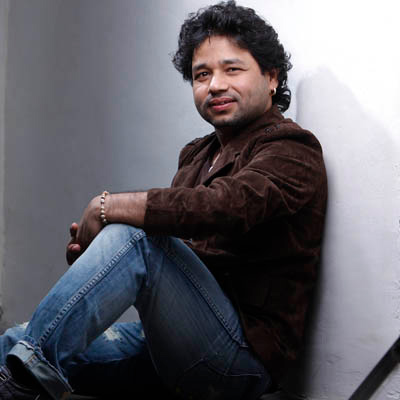
    For Kailash Kher, Dey was nothing less than an institution, whose inimitable style of singing influenced many like him to do better in their career


    The distinctive timbre and classical bent of Dey’s voice made him a hot favourite among the heroes of the time, not to mention generations of music composers. Not surprisingly, he went on to receive the country’s highest honours – the Padma Shree and Padma Bhushan, among a slew of awards and accolades.


    As news spread of his sad demise, the entire film industry was plunged into a state of shock and grief.


    One of the first ones to tweet was Amitabh Bachchan, who wrote: “Manna Dey, stalwart of the music world, passes away. Flooded with memories and his songs. In particular his rendition of Madhushala.”


    Shabana Azmi too tweeted: “Manna Dey had a unique voice. He will live on through his songs Ai Meri Zohra Jabeen/ dil ka haal suney dilwala/ poocho na kaise maine RIP.”


    Not just the industry veterans, even younger artistes and composers fondly remembered the iconic singer.


    Speaking to indiantelevision.com, National Award-winning singer Rekha Bharadwaj said Dey had been an inspiration for almost all those interested in music.


    “He had a completely distinctive style. No one can match that. Whether it was Ae Mere Pyaare Watan…, Koi Sagar Dil Ko Behlata Hai…, or Ek Chaturnaar…, he made each of these songs unique in itself with a certain pathos and melody,” said Bharadwaj, who remains a fan of all the songs from the film Anand, still humming them whenever she is in a mood.


    “Ae Mere Pyaare Watan has been a favourite among almost everybody across all generations,” she said, regretting the fact that she never got a chance to meet Dey in person. “But people like Kavita Krishnamoorthy and Suresh Wadekar kept me abreast about him and also shared many anecdotes. It’s nice to know all that,” she said.


    For Kailash Kher, Dey was nothing less than an ‘institution’, whose inimitable style of singing influenced many like him to do better in their career.


    “He is an inspiration. He has left so much behind him for generations to come,” Kher said, recalling how as a teenager, he never knew who had sung his favourite song, Zindagi Kaisi Hai Paheli…, till he discovered through a magazine interview that it was none other than Dey, and became an ardent fan since.


    “I had read this interview sometime in the 90s and was in awe of the singer after reading everything about him. He sung a comic song or a peppy number with as much ease as he sung an emotional song,” said Kher, also referring to the fact that Dey lent his voice not only to the Hindi film industry but also to many other languages and genres.


    Shibani Kashyap thinks Dey had the ‘most unusual voice’. “I cry when I listen to the songs from Anand. Very few singers have the power to move you to tears. He is iconic. And though he is not around us any more, his songs will always keep him alive. The songs that he has sung are out of the world and they will continue to enthuse younger generations of aspiring singers and musicians,” said Kashyap, ruing the fact that he wasn’t celebrated as much as he should have been. “He hasn’t got the due that he should have. We let him leave the industry too soon. I just wish his songs stay with us forever,” she concluded.

  • Amish’s SHIVA TRILOGY crosses 2 million copies in print and gross retail sales of Rs. 50 crores

    Amish’s SHIVA TRILOGY crosses 2 million copies in print and gross retail sales of Rs. 50 crores

    MUMBAI:  The Shiva Trilogy, written by Amish, is a compelling, fictional tale of a Tibetan tribal called Shiva, whose adventures nearly 4000 years ago, morphed into the mythical legends of the Hindu God Shiva. The Shiva Trilogy (The Immortals of Meluha, The Secret of the Nagas & The Oath of the Vayuputras) has more than 2 million copies in print with gross retail sales of over Rs 50 crores, making it the fastest selling book series in the history of Indian publishing.


    Over the last few months, The Oath of the Vayuputras, The Immortals of Meluha and The Secret of the Nagas have remained at the top in the A C Nielsen bestseller list in India, one of the rare occasions where one author’s books dominate the national bestseller lists so completely!


    Published by Westland Ltd, the books have been released across the Indian subcontinent in various languages, including English, Hindi, Marathi, Gujarati, Telugu, Bengali, Assamese. It has also been released in the Indonesian language, Bahasa Indonesia. They will also be released very soon in other languages like Tamil.


    Additionally, Jo Fletcher Books (an imprint of Quercus Books) have bought the English language rights outside of the Indian sub-continent and has published the first book, The Immortals of Meluha, in the UK in January 2013. The book will be released in the US in Summer 2014. The book is also due for release in Vietnam soon.


    The Shiva Trilogy has attracted a wide and devoted audience since its publication, with publishing gurus calling it a genre-creating book series. It has also received positive reviews from various eminent personalities. Spiritual guru, Deepak Chopra, complimented the books saying, ‘Amish’s mythical imagination mines the past and taps into the possibilities of the future. His book series, archetypal and stirring, unfold the deepest recesses of the soul as well as our collective consciousness.’ Renowned Film Director, Shekhar Kapur, called Amish ‘India’s first literary popstar’, while celebrated author Anil Dharker called him ‘a literary phenomenon’.


    Many marketing innovations have also been attempted for the Shiva Trilogy. For the 1st book, The Immortals of Meluha, the first chapter had been printed and distributed, free of cost, as a sampler. A trailer film had also been made and uploaded on YouTube, probably for the first time in the history of Indian publishing. For the 2nd book, The Secret of the Nagas, a professional film-quality trailer film had been made and showcased in cinemas, once again for the first time in Indian publishing history. The string of innovations has continued in the marketing of the 3rd book of the trilogy, The Oath of the Vayuputras. For the first time in Indian publishing, an original soundtrack album has been created for a book series called ‘Vayuputras: the soundtrack of the Shiva Trilogy books’. For the festive season a box set of the Shiva Trilogy books is being released as a special hardbound edition for gifting.


    Giving the life of music to the soul of the words, all the 10 songs in the album have been originally created out of various sections of the 3 books of the Shiva Trilogy. Top-notch musical artistes like Taufiq Qureshi, Sonu Nigam, Palash Sen & Bickram Ghosh have contributed their talent to this album. A professional, world-class music video has also been produced which is being telecast in various music channels.

  • Now ‘Mahabharat’ on Star Pravah

    Now ‘Mahabharat’ on Star Pravah

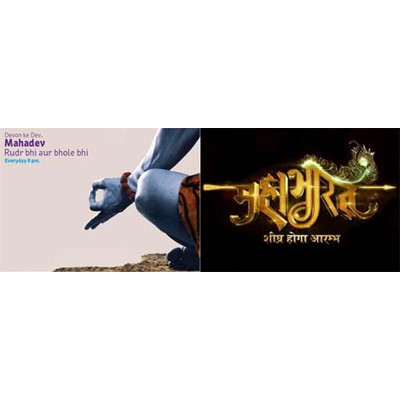
    MUMBAI: Marathi GEC viewers are set to be taken back into time. Marathi viewers will soon be introduced to two popular mythological shows for the first time. Come 21 October, between 6:00 pm and 7:00 pm, a new slot has been created on Star Pravah called Mahaparv that will start airing two of Star India’s biggest properties in this genre – Star Plus’s magnum opus Mahabharat and Life OK’s Devon Ke Dev… Mahadev. The difference being both the shows will be telecast, dubbed in Marathi.


    “The Marathi space has been missing this genre and these two shows are the network’s prime properties. The whole idea behind spending so much is that the whole network gets to share it,” explains Star Pravah programming head Jayesh Patil, pointing out that the astronomical costs involved in producing such shows was the very reason they hadn’t been tapped so far by the Marathi GEC space.


    Mahaparv will also serve as an experiment in how well (or otherwise) mythology is received by the Marathi audience. The question however remains whether Marathi GECs will be willing to spend several times more on original mythological shows.


    “We are spending a lot on dubbing to establish them. Once the market is open for mythology, we can shell out more,” replies Patil, adding that there’s a lot of scope for showcasing mythological tales from Marathi literature. As it is, each episode of either of the two shows takes nearly a day for dubbing in Marathi, with costs ranging between Rs 1.5 to Rs 2 lakh per episode, according to industry sources.


    According to Patil, 6:00 -7:00 pm is a good time to air these shows however Madison Media COO Karthik Lakshminarayan feels prime time would have been more suitable.


    So will these shows work for the Marathi audience? Life OK GM Ajit Thakur believes that mythological shows are universal so they will work everywhere. Mahadev has already been aired on the Star network’s Kannada, Oriya, Malayalam and Tamil channels, he points out.


    Lakshminarayan however feels Mahadev might fare better in the Marathi space. “Mahabharat has been treated like a movie and Marathi audiences are unused to such grandeur on TV shows. In terms of set and costumes, it may just be a bit too much for them,” he opines.


    Star Pravah is in the midst of negotiations to get advertisers on board and Lakshminarayan feels that shouldn’t be a problem considering both the shows are established.


    Will this time travel work for the Marathi audiences?

  • Techzone and Aircel launch Re 1 store

    Techzone and Aircel launch Re 1 store

    MUMBAI: After Techzone’s alliance with Aircel for Re 1 video store four months back, the encouraging response has prompted the launch of another promising platform – Aircel’s Re 1 store!  Powered by Techzone as their technology and platform partner, Aircel has enhanced its offerings for their users by opening the exciting Re 1 store that includes downloading videos, full tracks, images and games just for Re 1.


    Techzone not only offers its vast library of more than 10,000 pieces of content across multiple categories in more than 12 languages to this store but has also powered the VAS platform for Aircel. Consumers can access this latest value added service on mobile via WAP or GPRS/2G/3G and download the same on mobile handset at just Re1 per content. The social media savvy youth can also share their content preference on Facebook and Twitter along with referring the same to their friends.


    The content at store for Re 1 covers over 12 languages including English, Hindu, Marathi, Gujarati, Assamese, Bhojpuri, Tamil, Telugu and Malayalam amongst others. This new VAS would let the consumers download the videos across 8 genres including bollywood, Hollywood, reality shows, lifestyle, music, regional, comedy and more from a vast collection of 10,000+ videos. Along with the latest music, Techzone also offers their aficionados retro music too.


    To engage more customers, the Re 1 store will have ‘Goodies Section’ and Premium section where the customers can collect points on every download and later redeem those points for recharge, movie tickets and much more and Premium section will offer high on value combo offers wherein a user can avail packs for Rs 10 or for Rs 25 and enjoy different services. Users can also book mark by downloading the icon on the handset where the icon would direct them to the WAP page directly, thus making the process simpler. This service is aimed at introducing more Aircel customers to the mobile internet experience. The charges for browsing the portal is as per the data plans opted by the users.


    Explaining the expansion of their VAS offering, Techzone MD Naveen Bhandari said, “Increased usage of smart phones and internet penetration in the Tier II & Tier III cities, has led the VAS industry to grow leaps and bounds resulting us to provide innovative services to the customers. With approximately more than a billion subscribers in India there is a strong potential market for expansion in terms of services. Sticking to our pull based strategy our content team is constantly making an effort to add plethora of new services and features so as to reach out to those billion consumers. The VAS market, though currently facing turbulence for a short term, is likely to see an upward surge and grow by 15-20 per cent by the end of 2013. This growth is majorly due to cheaper handsets and growing digital space and we are expecting positive response for our services.”

  • Jayesh Patil takes charge of Star Pravah’s programming

    Jayesh Patil takes charge of Star Pravah’s programming

    MUMBAI: A change of face will mark a change of programming strategy on Marathi GEC channel Star Pravah. Jayesh Patil has been roped in as the new programming head for the channel, filling in the shoes of Shrabani Deodhar who has been elevated to a higher position which is yet unknown.

    Patil was previously with Reliance Big Productions for nearly two and a half years where he led the programming as fiction head. Prior to that, he has been a writer for several popular shows starting off with Ek Mahal Ho Sapno Ka and continuing with trend setters such as Kumkum, Jassi Jaisi Koi Nahi, Laagi Tujhse Lagan and more recently with Bade Achche Lagte hain.

    Taking charge on 26 August, he has already got to work to study the market and to strategise new plans. “Marathi space is very attractive. There is lots of scope for experimentation and there will be a lot of focus on events,” says Patil. He says he has had enough of writing and now it is time for him to reinvent himself as well as the programming strategy of Pravah.

    As far as competition is concerned Patil says that it is always good to have competition. Marathi as a genre has been lagging as compared to other regional genres but Patil says that this was the case a few years ago, but not anymore.

    Pravah faces competition from Zee Marathi and E TV Marathi but as of now it is leading in the genre.