Mumbai: Marathi language channels have the highest viewership share in the Hindi Speaking Market (HSM) after Hindi language channels. In Maharashtra/Goa, Marathi language channels constitute 34 per cent of the viewership share whereas Hindi language channels have 54 per cent viewership share. This is lower compared to other language markets such as West Bengal where Bengali language channels have 53 per cent viewership share and Tamil Nadu where Tamil language channels have 90 per cent viewership share.
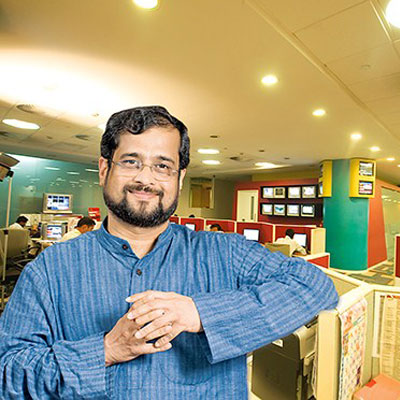
These data and insights were shared by Broadcast Audience Research Council (BARC) India, head client partnerships and revenue, Aaditya Pathak at Indiantelevision.com’s Tele-wise Marathi: The Power of Television, a virtual summit presented by COLORS Marathi and media partners AnimationXpress.com, TellyChakkar, and radioandmusic.com.
Overview of the market
There are 210 million TV-owning households in India out of which 26 million are in Maharashtra. The state has a 12 per cent share of the total TV homes. The 109 million audiences living in these homes contribute 13 per cent to the overall TV viewership and five per cent of that viewership goes to Marathi language channels. The average time spent watching TV in Maharashtra is much higher compared to all India or the HSM and stands at an average of four hours and six minutes every week.
BARC TV Universe monitors ~580 channels. There are 25 Marathi language channels comprising GECs (nine), news (six), movies (five), music (four), and a kids channel.
TV viewership for Marathi language channels has increased by 10 per cent over 2019, whereas Hindi channels have seen a decline and other language channels remain relatively flat.
Within the sub-genres, Marathi GECs have grown by 22 per cent over 2019, while Marathi movies and news viewership remained the same. The growth of Marathi GECs also beat Hindi GECs.
“The viewership of Marathi channels remained relatively unchanged post-Covid, even as viewership of non-Marathi channels peaked in the first wave of the lockdown. The peak was a complete India and HSM phenomenon which could be attributed to initiatives taken up by channels such as Doordarshan to rerun their old shows like ‘Ramayan‘ and ‘Mahabharat‘ which were lapped up across different town classes and geographies,” said BARC India’s Pathak.
“Among the Marathi genre channels, Marathi GECs used to constitute 20 per cent of the average weekly viewing minutes. In the first lockdown due to the absence of original programming that share dropped to eight per cent but has returned to 23 per cent,” he said, adding that, “Viewership share for Marathi movies and Marathi news is higher than what it used to be before the lockdown.”
Battle for eyeballs: Marathi vs Hindi
Most Marathi audiences are bi-lingual and hence consume content in both Hindi and Marathi. Marathi language channels have grown their market share in Maharashtra/Goa market from 30 per cent in 2019 to 34 per cent in 2021. In the same period, Hindi channels share has decreased from 57 per cent to 53 per cent.
“We have observed that the rural markets skew towards local languages and similarly there’s a greater skew towards Marathi language channels in such markets. When you move to a town class, Marathi language channels increase their share to 40 per cent and when you move to an urban landscape their share moves down to 25 per cent while Hindi channels increase to 62 per cent,” said Pathak.
He also dissented with the view that there is a big overlap in Hindi and Marathi TV viewing audiences. “If we were to look at pure Marathi audience, there were 4.8 million in 2019 which has grown by 21 per cent to 5.8 million in 2021. This clearly goes to show that there are more people lapping up local content available on the 25 Marathi channels,” he said.
The viewership of Marathi GECs is almost on par with Hindi GECs on weekdays. However, on weekends there is a significant movement of audiences from Marathi channels towards Hindi movie channels. “It should also be noted that a lot of Marathi original programming is scheduled on the Fixed Time Chart (FTC) from Monday to Saturday,” Pathak said.
Advertising opportunity on Marathi channels
The positive sign is that Marathi channels are seeing a return in the number of advertisers and brands, although it is yet to reach 2019 levels. “Total TV ad volumes grew by 14 per cent in 2021 over 2019. If you look only at Marathi language channels, the growth has been 44 per cent. Even though the base is different, we know that this is a very healthy growth,” said Pathak.
The growth in ad volumes has been highest for the news and movie genres while GEC saw only a marginal increase. Exclusive advertisers on Marathi channels have also grown by 18 per cent.
Ad volumes from the top five categories barring auto have increased significantly. FMCG ad volumes have grown by 77 per cent, e-commerce by 38 per cent, infrastructure (building, industrial, land materials/equipment) by 29 per cent, and BFSI by 60 per cent.
The affluence of consumers in Maharashtra has also increased. “32 per cent of audiences that watch Marathi channels are from the NCCS A classification. This augurs well for advertisers who are targeting affluent Marathi households. The cluster of NCCS A and B constitutes almost 67 per cent of the TV viewership in this market. The ratio of male to female TV viewers is almost aligned at 41:59,” Pathak said.
According to Pathak, while the market is not under-indexed, there is room to grow in terms of ad volumes. He said, “We need to be cognisant that there are 25 Marathi channels compared to Bangla language market where there are 35 channels. As the affluence of the market increases, we expect the number of TV connections going up.”
Sources: BARC data (TV UEs 2020, All India 2+, Maha/Goa 2+, HSM 2+, Average Weekly VM’Bn, 2019 and 2020 entire year, Wk 14-30’2021)